





Karsten Wenzlaff, Advisor
August 26th, 2025
Karsten Wenzlaff is a Crowdfunding and Fintech Expert from Germany. He is Secretary-General of Digit[...]


September 14, 2026 | NCFA Insight | Cross Border Payments And FX, Payments Infrastructure And Money Movement, Digital Assets Blockchain And Tokenization, Competition And Market Structure
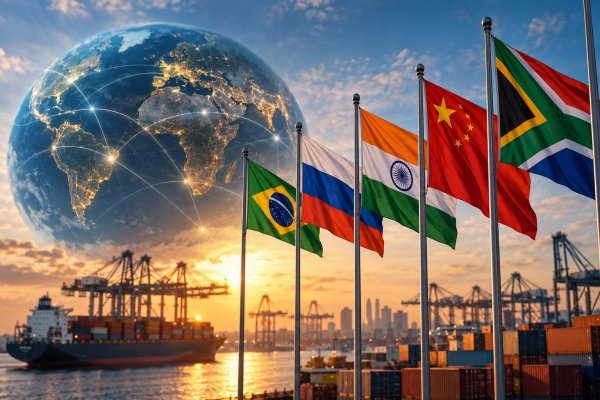
On September 12, 2026, BRICS leaders met in New Delhi for the 18th BRICS Summit and backed further work connecting national payment and financial messaging systems. The New Delhi Declaration confirms that the BRICS Payment Task Force has been studying cross border interoperability and the use of local currencies for trade settlement and investment.
BRICS hasn't yet created a common payment network or digital currency. However, payment interoperability has moved into an official technical workstream rather than remaining a series of proposals from individual members.
The progression has been fairly quick. India proposed stronger payment and central bank digital currency connectivity in January. In August, Reserve Bank of India Governor Sanjay Malhotra confirmed that members were discussing links between fast payment systems and central bank digital currencies. The September declaration gives the Payment Task Force a formal basis to continue that work across the bloc.
The commercial backdrop has also changed significantly since we last covered the 2023 BRICS summit. The group has expanded, supply chains have been rerouted, trade relationships have become more politically charged and tariffs are again influencing where companies manufacture and sell. BRICS now accounts for nearly one quarter of global trade, while intra BRICS merchandise trade reached US$1.17 trillion in 2024.
For banks, payment companies and fintechs, that scale changes the economics of interoperability. Existing domestic payment systems already process enormous volumes. Connecting more of those systems across borders could affect routing, settlement costs and access to large emerging markets without waiting for a new monetary system to be built.
The declaration focuses on systems that members already operate. The Payment Task Force has studied interoperability between payment and messaging channels and discussed using BRICS currencies for trade and investment. Leaders want further work on cross border payments that are faster, cheaper and easier to access while remaining secure.
India brings considerable operating scale to that discussion. Its Unified Payments Interface processes more than 250 billion transactions annually and is accepted in 11 countries. Other BRICS members have their own domestic payment rails. Connecting those systems can be faster than designing a single BRICS network from scratch.
A merchant payment could still require foreign exchange and liquidity between two currencies. Banks would still need compliance controls, and somebody has to settle the transaction. Interoperability can reduce some of the handoffs between institutions without making those functions disappear.
Local currency settlement can develop alongside those links. A company trading between India and another BRICS economy may eventually have more ways to invoice or settle without routing every transaction through a third currency. That can remove a conversion in some transactions, although the underlying currencies still carry exchange rate risk.
Russia has pushed back against describing every BRICS payment initiative as an attempt to abandon the U.S. dollar. More payment choices and greater use of domestic currencies don't require members to stop using dollars where the economics favour them.
The New Development Bank is pursuing a related approach through financing. BRICS leaders want it to expand lending in local currencies and diversify its funding. Borrowers that can raise money in the same currency as their revenues may face less foreign exchange exposure.
Payments can't be separated from what is happening to trade. The New Delhi Declaration warns that rising tariffs and other unilateral trade measures can reduce global trade, disrupt supply chains and add uncertainty for businesses. BRICS finance ministers made the same point before the summit, criticizing unilateral trade and financial measures and calling for more coordination among member economies.
The pressure is visible in 2026. The United States imposed a new 25% tariff on selected Brazilian exports in July, covering billions of dollars in goods. Brazil said it would pursue alternative markets if access to the U.S. became more difficult. India has also taken a harder line in U.S. trade negotiations while expanding commercial ties with Europe and other markets.
China offers another lesson. Companies spent years moving manufacturing into Southeast Asia and India to reduce exposure to U.S. tariffs, yet some are now returning production to China because supplier networks, skilled labour and operating efficiency remain difficult to reproduce elsewhere. Tariffs can redirect investment, but they don't erase the economics of established supply chains.
BRICS members are responding by trying to strengthen trade within the bloc. India has called for more open markets, simpler customs procedures and deeper supply chain links. Intra BRICS merchandise trade has grown thirteenfold since 2003, reaching US$1.17 trillion in 2024.
Payment connectivity becomes more valuable as those trade relationships deepen. A Brazilian exporter selling into India, or an Indian company sourcing from China, benefits more from direct payment links when the underlying commercial relationship is large enough to support liquidity and repeat transactions.
For Canada and other economies heavily exposed to the U.S. market, the development is worth watching. Tariffs are pushing governments and companies to diversify customers, suppliers and financing relationships. BRICS is building payment and trade links across many of the markets companies may increasingly look to as alternatives.
Central bank digital currencies remain much less developed as a BRICS payment option. Members operate at different stages of CBDC research, testing and deployment, making a common technical model harder than connecting established fast payment systems.
Sanjay Malhotra, Governor, Reserve Bank of India:
"Various options are on the table, but it is still at discussion stage, including CBDCs and linkages of fast payment systems."
The September declaration didn't announce a CBDC pilot or identify central banks that will participate in one. There is no shared rulebook for settlement, liquidity or foreign exchange conversion and no governance structure for a BRICS CBDC network.
Fast payment links can progress without solving all of those problems at once. A connection between two existing national systems can use currencies and regulated institutions that already operate in each market. Additional bilateral links could later connect into a larger network if members agree on common technical and regulatory rules.
BRICS may therefore develop as a collection of connected domestic systems rather than one centralized network. Fintechs could compete in routing, FX, merchant payments and technical connectivity without waiting for a common BRICS currency.
NCFA has seen a similar commercial principle in other markets as direct access to payment rails expands. More direct access can give fintechs greater control over costs and service delivery, provided the regulatory and operating requirements still support a sustainable business.
Traditional correspondent banking often sends a cross border payment through several institutions before it reaches the recipient. Each participant can add time, cost and another reconciliation step. Direct connections between national payment systems could shorten some routes, particularly where participating banks already have liquidity in both currencies.
Payment companies could help merchants reach new markets, while fintechs build routing and FX services around connected domestic rails. Banks would still provide settlement and liquidity. Wider access also brings more responsibility around operating controls, fraud and compliance, an issue we reviewed in payment network access and control.
BRICS is also examining connections between securities settlement and depositary systems. Technical discussions have looked at differences between member markets, while the proposed New Investment Platform remains under development. Compatible payment and securities systems could eventually reduce friction in both trade and investment flows.
Established global payment networks and correspondent banks aren't disappearing. They have deep liquidity, global reach and mature compliance systems. BRICS members are trying to create additional routes alongside them, which can increase bargaining power and give businesses more choices when tariffs, sanctions or geopolitical disputes interrupt established channels.
The commercial impact will become visible once transactions go live. A direct connection between two major systems can be measured through settlement time, FX cost and merchant adoption. Several working links could eventually create a meaningful network across BRICS economies.
BRICS doesn't need a common currency to change cross border finance. The bloc already represents nearly a quarter of global trade, and tariffs are giving members another reason to diversify payment and trading relationships. If national rails begin connecting at scale, fintechs, banks and merchants gain more ways to transact outside traditional correspondent routes. The proof will be lower costs, faster settlement and sustained transaction volume once those links go live.
 The National Crowdfunding & Fintech Association (NCFA Canada) is a financial innovation ecosystem that provides education, market intelligence, industry stewardship, networking and funding opportunities and services to thousands of community members and works closely with industry, government, partners and affiliates to create a vibrant and innovative fintech and funding industry in Canada. Decentralized and distributed, NCFA is engaged with global stakeholders and helps incubate projects and investment in fintech, alternative finance, crowdfunding, peer-to-peer finance, payments, digital assets and tokens, artificial intelligence, blockchain, cryptocurrency, regtech, and insurtech sectors. Join Canada's Fintech & Funding Community today FREE! Or become a contributing member and get perks. For more information, please visit: www.ncfacanada.org
 |  |  |
|---|---|---|
 |  |  |



August 26th, 2025

January 4th, 2024

June 1st, 2021

September 9th, 2020

July 9th, 2018

January 3rd, 2018

September 25th, 2017

June 20th, 2017

May 10th, 2017

December 14th, 2016

Leave a Reply