





Karsten Wenzlaff, Advisor
August 26th, 2025
Karsten Wenzlaff is a Crowdfunding and Fintech Expert from Germany. He is Secretary-General of Digit[...]


Apr 27, 2026 | NCFA Fintech Insight | Cybersecurity And AI Risk
On April 21, 2026, Mozilla's Firefox team said early access to Anthropic’s Claude Mythos Preview helped identify 271 vulnerabilities in Firefox 150, after an earlier Anthropic collaboration with Opus 4.6 helped fix 22 security sensitive bugs in Firefox 148. It's a real world test Warning that AI has started to compress months of expert vulnerability research into a much shorter discovery cycle.
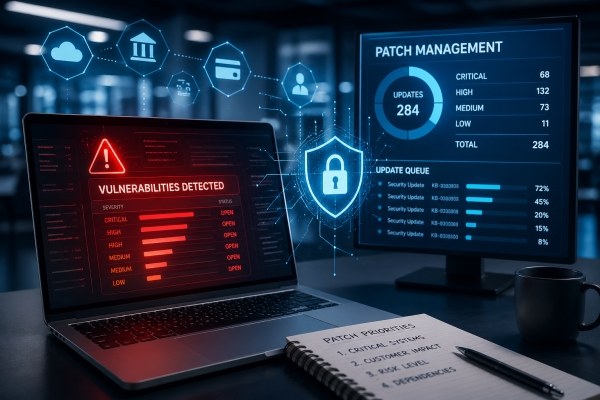
The deeper issue for financial services isn’t whether AI can find bugs. Mozilla’s post makes that answer fairly clear. The harder question is whether banks, fintechs, payment providers, cloud vendors, and critical infrastructure operators can test, rank, schedule, and deploy fixes fast enough once the bug volume rises?
Security teams have always fought an unfair game. That is attackers only need one weakness while defenders have to protect the full surface. Mozilla’s Bobby Holley wrote that elite security researchers find bugs that fuzzers miss by reasoning through source code, and that computers “were completely incapable of doing this a few months ago, and now they excel at it.” He also wrote that Mythos Preview was “every bit as capable” as the best security researchers Mozilla has studied.
Limited human cyber security expertise no longer limits discovery in the same way. Once AI can reason through large codebases, the volume of known vulnerabilities rises quickly. Mozilla for example jumped from 22 bugs in Firefox 148 to 271 vulnerabilities in Firefox 150. Detection capacity jumps faster than operational capacity.
For fintechs, that means security teams may see more vendor alerts, more emergency updates, more dependency risk, and more pressure to patch without breaking customer facing systems. More discovery helps defenders, but only when organizations can practically execute on the risk.
The Financial Times reported that companies with Mythos access want stronger joint defense across government and business, especially for hospitals, banks, utilities, and other critical infrastructure. It also reported that Microsoft, Fifth Third’s technology provider, has rolled out almost 150 software updates since Mythos’s release. Patching can affect numerous areas, such as customer access, payments, fraud controls, and vendor dependencies.
Financial infrastructure like core banking systems, payment gateways, and fraud engines operate on tight turnaround schedules and a bad patch or gap can interrupt service, leaving a known weakness open. And the tradeoff becomes harder when AI expands the queue of fixes beyond human capacity.
A 2026 analysis summarized on the Harvard Law School Forum on Corporate Governance found that Russell 3000 companies hit by significant cyber incidents underperformed the broader market by about 5% on average over three years. The study reviewed 176 unique cyber events from 2022 through 2024, and found that finance, banking, and health care accounted for more than half of reported incidents. That means board failures, patch delays, poor vendor oversight can damage shareholder value for years.
The old comfort of quarterly patch cycles won’t hold up well in a world where AI can surface hundreds of issues at once.
Reuters reported on April 21 that unauthorized users accessed Mythos through what Anthropic described as a third party vendor environment. Anthropic said it was investigating the report and had no evidence that the access affected Anthropic systems.
If a tool can find bugs as well as top security experts, then that tool becomes a prime target. Anyone who gets access to it could shortcut months of work and go straight to weak points. That means security is no longer just about protecting your systems. It also includes controlling who can use these AI security tools, how they’re accessed, and what they can see across your vendors and environments.
Warnings from Palo Alto Networks point to where this could go. These tools may allow attackers to link multiple weaknesses together and automate attacks. That’s why the unauthorized access issue matters even without confirmed misuse. The real risk is that the capability itself could leak.
Canadian fintechs don’t run everything themselves. They depend on cloud providers, banks, payment networks, identity services, and other vendors. That means they don’t control when fixes happen, but they still carry the risk if something goes wrong.
That puts pressure on knowing how vendors handle security. Fintech teams need to understand how quickly partners fix serious issues, how they report problems, and whether important updates get priority. Even smaller firms can push for clearer answers before relying on a vendor for critical services.
Regulators should pay attention too. AI can help find problems faster, but only if companies can act on that information in a coordinated way. If not, bigger firms with early access move ahead, while smaller ones fall behind. In Canada, where many fintechs depend on a few key providers, that gap could widen quickly.
Mozilla believes there’s a limit to how many bugs exist, and that defenders may finally be able to find them all. That could happen over time. Right now, though, things will feel messy. More bugs will show up. Fix lists will get longer. Vendors will have to decide what to fix first. Leaders will have to choose between keeping systems running and fixing issues right away. For banks and fintechs, the edge will go to those who can move faster, work closely with partners, and handle frequent updates without disrupting customers, payments, or data.
 The National Crowdfunding & Fintech Association (NCFA Canada) is a financial innovation ecosystem that provides education, market intelligence, industry stewardship, networking and funding opportunities and services to thousands of community members and works closely with industry, government, partners and affiliates to create a vibrant and innovative fintech and funding industry in Canada. Decentralized and distributed, NCFA is engaged with global stakeholders and helps incubate projects and investment in fintech, alternative finance, crowdfunding, peer-to-peer finance, payments, digital assets and tokens, artificial intelligence, blockchain, cryptocurrency, regtech, and insurtech sectors. Join Canada's Fintech & Funding Community today FREE! Or become a contributing member and get perks. For more information, please visit: www.ncfacanada.org
 |  |  |
|---|---|---|
 |  |  |



August 26th, 2025

January 4th, 2024

June 1st, 2021

September 9th, 2020

July 9th, 2018

January 3rd, 2018

September 25th, 2017

June 20th, 2017

May 10th, 2017

December 14th, 2016

Leave a Reply