





Karsten Wenzlaff, Advisor
August 26th, 2025
Karsten Wenzlaff is a Crowdfunding and Fintech Expert from Germany. He is Secretary-General of Digit[...]


Sep 11, 2026

A new user does not care how many systems sit behind a sign-up screen. They care about something much simpler: how quickly can they get started?
That question matters for Canadian fintechs in 2026. Consumer-driven banking is moving forward, digital identity tools keep improving, and people are growing used to services that feel immediate on a phone.
The lesson is not to remove important checks. It is to make those checks feel like a natural part of the product.
Regulated gambling offers an interesting UX lesson because account creation has several moving parts. User details need to be collected, identity has to be confirmed, and the whole process needs to work smoothly on a small screen.
What stands out is how much of that complexity can stay behind the interface.
A person creating an account at Betinia Ontario (19+), for instance, moves through a digital registration journey where account details and verification form part of the same experience. For a user, that matters. The process feels connected rather than split into separate administrative steps.
Canadian fintechs can borrow that thinking.
Ask for information when it becomes relevant. Keep each screen short. Tell the user why a document or detail is needed. Show progress without filling the screen with technical language.
Little things add up.
Identity checks used to feel separate from the main product experience. You signed up, then got pushed into another process.
That distinction is disappearing.
Canada already allows several forms of remote identity verification under federal guidance. Phone cameras, document checks and digital records can turn what was once a desk-based process into a mobile interaction.
For product teams, this changes the design question.
Instead of asking, “Where do we put verification?”, it may be more useful to ask, “How do we make verification feel natural?”
The answer often comes down to interface details. A clear camera prompt is better than a paragraph of instructions. A progress bar can reassure someone that only a few steps remain. Pre-filled information can remove needless typing.
None of this sounds revolutionary. That is partly the point. Good onboarding often feels simple because somebody did the complicated work behind the scenes.
There is another lesson worth stealing: people dislike repeating themselves.
If a customer has already supplied a name, address or account detail, asking for it again creates a strange little pause. It feels as though two parts of the product are not talking to each other.
Fintech teams can remove much of that friction by designing onboarding as one continuous conversation.
Information should move with the user. Screens should remember what came before. Permissions should appear at the moment they make sense.
Think of it as good hospitality. If someone has already introduced themselves, you do not ask their name again five minutes later.
Digital products should show the same basic courtesy.
The timing is especially relevant for Canadian financial services.
Canada has been moving ahead with its consumer-driven banking framework, which is designed to give consumers more control over how their financial data is shared between approved services. The country is also preparing for faster payment infrastructure through the Real-Time Rail.
These developments point toward a more connected financial experience.
As secure data sharing becomes easier, onboarding could involve less manual entry. A customer may be able to authorize access to information that already exists rather than filling out another long form.
That changes expectations.
If money and data can move quickly, opening an account should not feel stuck in an older era of paperwork and repetitive fields.
Onboarding is often discussed as a conversion metric. For fintechs, it is much more than that.
It is the customer’s first real experience of the company.
A clean flow says the product is organized. Clear explanations show respect for the user’s time. A short series of well-designed steps makes complicated technology feel manageable.
That first minute can set the tone for everything that follows.
Canadian fintechs do not need to copy the gambling sector itself. The useful lesson sits in the product mechanics: short steps, mobile-first verification, clear progress, smart reuse of information and fewer unnecessary interruptions.
When those pieces work together, onboarding almost disappears.
And that may be the best sign that it has been designed well.
Online gambling in Ontario is restricted to those 19+. Support resources: ConnexOntario, 1-866-531-2600.
 The National Crowdfunding & Fintech Association (NCFA Canada) is a financial innovation ecosystem that provides education, market intelligence, industry stewardship, networking and funding opportunities and services to thousands of community members and works closely with industry, government, partners and affiliates to create a vibrant and innovative fintech and funding industry in Canada. Decentralized and distributed, NCFA is engaged with global stakeholders and helps incubate projects and investment in fintech, alternative finance, crowdfunding, peer-to-peer finance, payments, digital assets and tokens, artificial intelligence, blockchain, cryptocurrency, regtech, and insurtech sectors. Join Canada's Fintech & Funding Community today FREE! Or become a contributing member and get perks. For more information, please visit: www.ncfacanada.org
 |  |  |
|---|---|---|
 |  |  |
September 10, 2026 | NCFA Market Activity | Cross Border Payments And FX, Digital Banking And BaaS, SME Finance And Business Banking

On September 9, 2026, Toronto and Montreal fintech Beacon announced an oversubscribed C$20M financing round as it expands financial services between Canada and India. Existing investors led the round, with new investors participating. Beacon also says its user base doubled in seven days on C$11,000 of advertising and that the app reached the #1 Finance position in Canada's App Store. The company hasn't disclosed how many users, active customers or transaction volume, so the growth claim shows demand without telling us how large the business has become.
Beacon was founded in 2023 by Stuart Szabo and Aditya Mhatre around a problem newcomers know well. Moving to Canada can mean opening accounts, moving savings, paying bills and maintaining financial obligations in another country at the same time. Its earlier C$5.25 million seed round helped build around that need.
The product set shows how far that idea has travelled.
Beacon is trying to turn one cross border relationship into several recurring financial services. The C$20 million gives the company more room to build around everyday money, remittances, bill payments and business payments across the same corridor.
Cross border finance becomes more valuable when several recurring problems belong to the same customer. Someone living in Canada may be supporting family in India, paying a loan or utility bill there, receiving money from India and running everyday finances here. Beacon now addresses each of those jobs in some form, which gives it more opportunities to stay relevant between remittance transactions.
Beacon's UPI transfers let users send Canadian dollars to an Indian UPI ID or bank account, with Beacon saying 98% of UPI transfers arrive within a minute. India Bill Pay uses Bharat Connect for expenses such as utilities and loan payments. Customers can use familiar Indian payment methods while funding transactions from Canada.
Canada and India are also allocating more attention on these flows. Recent Canada India UPI talks included cross border remittance and merchant payment cooperation. Competition is building too. Skydo's Canada launch added another specialist targeting Canada India business payments.
Cost remains important. World Bank data for the third quarter of 2025 put the average cost of sending C$200 from Canada to India at 4.28%, including fees and foreign exchange margins; the average for C$500 was 2.69%. Banks, Wise, Remitly and other providers already compete heavily on rate, speed and reliability, which makes a wider product relationship more valuable than another transfer option.
Beacon Business adds a second customer type. Registered Canadian companies can fund locally and pay Indian businesses or individuals through local payment rails, with Nium supporting parts of the service. Consumer finance and SME payments can therefore develop around the same Canada India expertise, banking relationships and regulatory work.
A remittance customer typically has little loyalty if another provider offers a better exchange rate tomorrow. Beacon's response is to give that customer more reasons to keep using the app. Everyday Canadian money, UPI transfers, Indian bill payments, incoming transfers from India and business payments all sit around the same cross border relationship.
That can improve the cost structure of acquiring a customer. Someone who sends money home a few times a year may generate limited revenue. A customer who also keeps money on the platform, pays bills and uses other financial services creates more transactions and more opportunities for Beacon to earn over time. Some may eventually bring business payments onto the platform too.
This corridor focus can help Beacon compete with much larger firms. Wise and Remitly operate across many countries and currencies. Canadian banks have huge customer bases and established financial products. Beacon can go deeper on Canada India use cases, integrate local payment methods and build around customers whose financial lives genuinely span both countries.
That focus still depends on several regulated relationships. Beacon is registered with FINTRAC as a money services business and says it is registered with the Bank of Canada as a payment service provider under the Retail Payment Activities Act.
Beacon started by helping people arrive in Canada. It's now building around the financial ties they keep with India and the businesses some of them go on to run. The strategic question is whether corridor specialization compounds. Better product knowledge, reusable regulatory work, customer referrals and a growing product set can all improve the value of the same customer relationship. If Beacon can keep extending that relationship rather than buying a new customer for every product, the C$20 million round funds something more interesting than another remittance app.
The National Crowdfunding & Fintech Association (NCFA Canada) is a financial innovation ecosystem that provides education, market intelligence, industry stewardship, networking and funding opportunities and services to thousands of community members and works closely with industry, government, partners and affiliates to create a vibrant and innovative fintech and funding industry in Canada. Decentralized and distributed, NCFA is engaged with global stakeholders and helps incubate projects and investment in fintech, alternative finance, crowdfunding, peer to peer finance, payments, digital assets and tokens, artificial intelligence, blockchain, cryptocurrency, regtech, and insurtech sectors. Join Canada's Fintech & Funding Community today FREE! Or become a contributing member and get perks. For more information, please visit: www.ncfacanada.org
| | |
|---|---|---|
| | |
Sep 9, 2026

Is Telegram crypto wallet safe? There is no universal yes or no. A wallet reached through a messaging app can be convenient for a small transfer, but its safety depends on who controls the keys, how recovery works, what a user is asked to sign, and whether the bot or mini app is genuine. Convenience changes the access path; it does not remove custody, phishing, device, or service risk.
This guide is for Telegram users who are considering a wallet for payments, transfers, or a limited operational balance. It explains how to inspect the control model, test recovery, and separate account security from wallet security. It does not recommend a provider, compare token prices, set a balance threshold, or provide legal, tax, or investment advice.
Safety is not one feature. It is a chain that includes custody, authentication, transaction signing, software integrity, privacy, recovery, and service availability. A wallet can be strong in one area and weak in another. For example, a provider may make account recovery simple while retaining the ability to delay withdrawals. A self-custodial setup may remove that provider dependency while making a lost recovery credential difficult or impossible to fix. A focused review of is Telegram crypto wallet safe starts with those control questions rather than with the messaging interface itself.
The Telegram interface does not tell you which arrangement you are using. A balance shown inside a chat may represent a provider-held account, a wallet whose keys are controlled by the user, or a hybrid contract with recovery or upgrade roles. Read the wallet's terms and inspect its actual deposit, withdrawal, and recovery flow. A familiar app icon is not evidence of a particular custody model.
| Control model | Who usually controls access | Main convenience | Main failure mode |
| Custodial | A provider holds signing authority or records an internal balance | Account recovery may be easier | Withdrawal limits, freezes, insolvency, or account loss depend on the provider |
| Self-custodial | The user controls a recovery credential or signing keys | Direct control without a provider reset | Phishing, loss, or an incorrect transaction may be hard to reverse |
| Hybrid | Control is split between user keys, a contract, guardians, or a service | Flexible recovery or policy controls | The recovery threshold and upgrade power can be hard to understand |
The first question is therefore not whether Telegram is safe. It is: what exactly is being protected, and who can authorize a transfer? If losing access to a Telegram account lets a provider reset the balance, account security is part of custody. If a recovery phrase is independent of the account, an account takeover can still enable phishing and expose private conversations, but it should not by itself authorize a self-custody transfer.
Messaging environments create a distinctive phishing problem. Fake bots, support accounts, copied avatars, and urgent warnings can look credible because they appear inside a familiar conversation flow. A request for a recovery phrase, private key, one-time code, remote-access permission, or emergency payment should be treated as a stop signal. Legitimate support should not need the secret that authorizes the wallet.
Account takeover is a separate but related risk. An attacker who controls a Telegram account may read conversations, impersonate the user, or direct the user toward a malicious bot. Protect the Telegram account, email account, and phone number with unique credentials and the strongest available authentication options. That protection reduces the chance of a convincing scam, but it does not replace a secure key-management design.
The chat interface can also hide transaction detail. Before approving a transfer or token permission, verify the recipient, amount, network, fee, contract, and allowance. If the interface does not expose enough information to make that judgment, use a more transparent route or pause the transaction. A quick button is not a substitute for knowing what the signature authorizes.
Service dependency adds another layer. Ask what happens if the bot is removed, the provider is offline, Telegram access is restricted, or the wallet changes its supported networks. A self-custodial asset may remain on-chain while the interface is unavailable, but a custodial balance may depend on the provider's records and withdrawal process. Availability is part of practical safety, not merely a customer-service concern.
The safest review is a small, documented test rather than a large transfer based on a promising interface. Use this sequence before keeping a meaningful balance:
This process does not make a wallet risk-free. It converts vague confidence into specific observations. The useful result may be a decision to use the wallet only for a narrow payment flow, not a decision to move everything into it.
Users often compare a chat-based wallet with crypto exchanges as if one must be safer in every situation. The better comparison is task-specific. An exchange may provide account recovery, order execution, and a visible transaction history, but it introduces platform, withdrawal, counterparty, and policy risk. A self-custodial wallet may provide direct key control, but the user carries the recovery and signing burden. A Telegram wallet can combine parts of both models while making the control boundary less obvious.
Use a short decision test. If the main task is a frequent, low-value payment, convenience may matter more than advanced self-custody, provided the provider and withdrawal rules are clear. If the main task is long-term storage, the ability to verify keys, recovery, and transaction details becomes more important than chat access. If the task is active trading, execution rules, liquidity, fees, and liquidation or withdrawal constraints may matter more than the interface.
The comparison should also include failure recovery. Who can help after a lost phone? Who can reverse an unauthorized transfer? What records exist if the provider disputes a balance? The answer will differ by product and jurisdiction. Treat a wallet and an exchange as different risk packages rather than as interchangeable labels.
A Telegram wallet may be useful when its control model is explicit, its entry point is verified, and the amount exposed is limited to the task. It becomes a poor default when a user cannot explain how a withdrawal is authorized, where the recovery credential lives, or what happens during a provider outage. The wallet can feel safe because it is embedded in a familiar app while still adding a new layer of account and bot risk.
Rules about custody, financial promotion, data handling, and customer protection vary by provider and jurisdiction. A wallet's presence in a messaging app does not establish deposit insurance, reversibility, or regulatory status. Read the relevant terms and seek local professional advice for questions that depend on law, tax, or business use.
No. It may be a custodial account, a self-custody wallet, or another on-chain service. Deposit protection, reversibility, and recovery depend on the specific provider and arrangement.
Not normally without a valid key or user approval, but phishing can trick a user into signing a transfer or token permission. Custodial services have different account and withdrawal risks.
That is a poor default. Use only the amount needed for the activity until custody, recovery, service availability, and transaction controls are clear. A separate arrangement may be more appropriate for long-term or high-value holdings.
Identify who controls the signing authority, then test a small withdrawal and the documented recovery path. If either answer depends on an unverified chat or an unexplained support request, pause.
So, is Telegram crypto wallet safe? It can be reasonable for a limited use case when the provider is genuine, the custody model is understood, account security is strong, and every transaction can be checked before approval. It is not automatically safe because it appears inside Telegram, and it is not automatically unsafe because it uses a bot. The practical standard is simple: verify control, test recovery, limit exposure, and keep the chat interface from hiding what you are authorizing.
The National Crowdfunding & Fintech Association (NCFA Canada) is a financial innovation ecosystem that provides education, market intelligence, industry stewardship, networking and funding opportunities and services to thousands of community members and works closely with industry, government, partners and affiliates to create a vibrant and innovative fintech and funding industry in Canada. Decentralized and distributed, NCFA is engaged with global stakeholders and helps incubate projects and investment in fintech, alternative finance, crowdfunding, peer-to-peer finance, payments, digital assets and tokens, artificial intelligence, blockchain, cryptocurrency, regtech, and insurtech sectors. Join Canada's Fintech & Funding Community today FREE! Or become a contributing member and get perks. For more information, please visit: www.ncfacanada.org
| | |
|---|---|---|
| | |
Sep 9, 2026

Digital payments often feel immediate. A customer can place an order, fund an account, or purchase a subscription in seconds. When money needs to travel in the opposite direction, however, the process can take considerably longer.
Refunds and withdrawals pass through multiple systems before reaching a customer’s account. The business, payment provider, bank, card network, and fraud prevention team may all play a role. Understanding these stages can help consumers set realistic expectations and identify when a delay requires further action.
A refund reverses all or part of an earlier payment. It might follow a canceled order, returned product, duplicate charge, or service complaint. The money usually returns through the same payment method used for the original transaction.
A withdrawal moves money from an account or platform to an external destination. Examples include transferring funds from an investment app, marketplace, digital wallet, or online casino to a bank account or payment service.
The difference matters because each process follows its own review and settlement procedures. A merchant refund may be approved quickly but remain pending with the card issuer. A withdrawal may require identity checks before the platform releases any funds.
Some services promote instant or same-day withdrawals, but the term usually describes how quickly the platform approves or sends the payment. It does not necessarily guarantee that the money will appear in the recipient’s account immediately.
This distinction is especially relevant in competitive industries. Casino.ca profile Canadian operators with fast payment processes, including instant withdrawal casinos, so readers can compare which platforms are known for efficient payouts. However, the final arrival time may still depend on the withdrawal method, banking hours, identity verification, and the policies of the receiving financial institution.
The same principle applies to retail refunds, freelance platforms, travel companies, and investment services. A business may release funds promptly while another organization within the payment chain takes additional time to process them.
Processing times vary considerably between payment methods.
Digital wallets can be among the fastest options because funds remain within a connected electronic network. Some transfers may arrive within minutes, while others require a short review period.
Bank transfers can take longer, particularly when payments move between different institutions or countries. Weekends, public holidays, currency conversions, and intermediary banks may add further delays.
Card refunds often take several business days to appear. Although a retailer may issue a refund immediately, the card network and issuing bank must still process the reversal. Some banks display pending refunds, while others show the money only after settlement is complete.
Checks are generally slower because they require production, delivery, deposit, and clearance. They may still be offered when an electronic refund cannot be returned to the original payment method.
Platforms that handle financial transactions commonly verify customers before processing withdrawals. This may involve confirming a name, address, payment method, age, or source of funds.
These checks help prevent fraud, identity theft, unauthorized payments, and money laundering. They can also cause delays when documents are missing, expired, unclear, or inconsistent with the account details.
Completing verification early can reduce the risk of disruption. Customers should make sure account information is accurate and submit documents only through secure, official channels.
Businesses should explain their requirements before accepting money rather than introducing unexpected checks when a customer requests a withdrawal.
Processing estimates are usually expressed in business days. A refund issued late on Friday may not begin moving through the banking system until Monday. A public holiday can extend the wait further.
International transactions may be affected by holidays in more than one country. Time zones can also influence whether a request is received before or after a provider’s daily processing cutoff.
For this reason, “three business days” should not be interpreted as 72 hours. Depending on when the request begins, three business days could cover a much longer period on the calendar.
Before contacting support, customers should check the stated processing window, transaction status, payment details, and any verification requests. It is also important to distinguish between the date a payment was approved and the date it was sent.
If the quoted timeframe has passed, request a transaction reference or confirmation number from the business. A bank or payment provider may be able to trace the funds using that information.
Consumers should be cautious if a company repeatedly requests additional deposits, fees, or taxes before releasing a withdrawal. Legitimate charges should be clearly disclosed and should not continually change.
Fast payments can build confidence, but transparency is just as important as speed. Businesses that explain each stage, provide realistic timelines, and communicate delays clearly are more likely to earn lasting customer trust.
The National Crowdfunding & Fintech Association (NCFA Canada) is a financial innovation ecosystem that provides education, market intelligence, industry stewardship, networking and funding opportunities and services to thousands of community members and works closely with industry, government, partners and affiliates to create a vibrant and innovative fintech and funding industry in Canada. Decentralized and distributed, NCFA is engaged with global stakeholders and helps incubate projects and investment in fintech, alternative finance, crowdfunding, peer-to-peer finance, payments, digital assets and tokens, artificial intelligence, blockchain, cryptocurrency, regtech, and insurtech sectors. Join Canada's Fintech & Funding Community today FREE! Or become a contributing member and get perks. For more information, please visit: www.ncfacanada.org
| | |
|---|---|---|
| | |
September 8, 2026 | NCFA Insight | Payments Infrastructure And Money Movement, Digital Assets Blockchain And Tokenization, Treasury Liquidity And Cash Management

On September 8, 2026, Visa introduced an onchain credit model for stablecoin card programs that combines VisaNet settlement data with financing provided by Credit Coop. Visa isn't the lender. Credit Coop provides stablecoin denominated revolving credit secured by settlement receivables, while authorized Visa settlement records help lenders assess how participating programs are actually performing.
Visa says more than 160 stablecoin card programs are live globally, with payment volume up nearly 200% year over year. Its stablecoin settlement volume recently passed a US$20 billion annualized rate, more than 15 times the prior year. Credit Coop has financed more than US$2.5 billion since 2023 across more than 3,000 borrowing events and 9,000 repayments, with zero defaults reported across participating facilities.
Visa says more than US$694 billion in stablecoin denominated loans have been sent through onchain lending protocols since 2020. The new element is using payment network data to support credit decisions for businesses operating inside the card system.
Card programs can owe Visa money before they have collected the related funds from cardholders. Large issuers usually finance that timing gap through bank credit lines, warehouse facilities or securitizations. Those structures work well when portfolios are large and lenders have enough operating history to assess them.
Early stablecoin card programs can have a different funding profile. Visa says some need only a few million dollars, draw and repay capital every day and settle through weekends and holidays. At that scale, the fixed cost of arranging a traditional facility can be difficult to justify, while the borrower may not yet have enough history to satisfy an institutional lender.
Visa's financing model uses a revolving Credit Coop facility to fund daily settlement obligations against the receivables generated by the card program. As cardholder payments arrive, those proceeds repay and replenish the line.
That financing need grows with the card programs themselves. Wirex and Crossmint connected wallets, card issuance and stablecoin spending earlier this year, showing how quickly the customer facing infrastructure is becoming easier to assemble. Financing the settlement behind those products is a different problem.
The concept is similar to bringing rent payments into a traditional credit file. A recurring payment record that was previously difficult for lenders to use becomes additional evidence about the borrower. Here, the new evidence is payment network data being used to support onchain credit.
With the card program's authorization, Credit Coop receives daily Visa settlement files through a secure data connection. It compares those records with the onchain repayment history when sizing facilities, confirming settlement requirements and monitoring repayment. The borrower is no longer the only source of information about its payment obligations.
Credit Coop's Spigot smart contract controls how incoming receivables service the facility. Cardholder proceeds flow through the contract, which routes repayment before the remaining funds reach the borrower's operating account. The structure performs a role similar to a controlled bank lockbox, but repayment can occur programmatically.
Visa says stronger data and a longer repayment record have attracted more lenders to the facilities, reducing borrowing costs for participating programs by as much as 30%.
The same data connection can also support funding closer to the actual settlement obligation. Instead of drawing a larger amount in advance and holding unused capital, the daily settlement file can trigger a same day disbursement for the net amount owed to Visa. That reduces the time capital sits idle and ties lender exposure more closely to actual settlement activity.
Rain provides the longest operating record disclosed by Visa. The Visa Principal Member has used a Credit Coop revolving facility since August 2023 and settles directly with Visa in USDC. Rain says it tokenized its card receivables, allowing incoming payments to service financing through programmable contracts.
Visa reports that approximately US$2 billion of Rain settlement has been financed through the structure, with more than 2,000 borrowing events and 7,000 repayments. They also report zero defaults and says every settlement obligation under the facility has been funded on time. The underlying program figures were supplied by Credit Coop, so they should be treated as reported operating data rather than independently audited results.
Visa says Karta's U.S. card program used Credit Coop while its operating history was still developing. In June 2026, Karta raised US$140 million, including a US$125 million institutional credit facility from Community Investment Management and a US$15 million Series A led by Galaxy Ventures. Karta reported 10 times growth in 2025 and another four times increase in revenue and payment volume quarter over quarter in Q1 2026.
The growth gives the model its strongest strategic relevance. Onchain credit can help finance a younger payment program while it builds a verifiable repayment record. Larger institutional facilities can become available later when the portfolio reaches the scale and maturity conventional lenders want. Visa explicitly says this model adds to warehouse lending and securitization rather than replacing them.
Canada already has a direct connection to Visa's stablecoin settlement strategy. In May, Visa Canada and Wealthsimple began testing USDC settlement for certain Visa Canada obligations. There is no public evidence that the Credit Coop financing model is currently available to Canadian programs, but it gives Canadian issuers and payments firms a concrete example of how stablecoin settlement can connect to working capital and credit.
If payment network data can help a young card program prove credit performance before it qualifies for a traditional warehouse facility, onchain credit may become a bridge into institutional finance rather than a separate system.
The National Crowdfunding & Fintech Association (NCFA Canada) is a financial innovation ecosystem that provides education, market intelligence, industry stewardship, networking and funding opportunities and services to thousands of community members and works closely with industry, government, partners and affiliates to create a vibrant and innovative fintech and funding industry in Canada. Decentralized and distributed, NCFA is engaged with global stakeholders and helps incubate projects and investment in fintech, alternative finance, crowdfunding, peer to peer finance, payments, digital assets and tokens, artificial intelligence, blockchain, cryptocurrency, regtech, and insurtech sectors. Join Canada's Fintech & Funding Community today FREE! Or become a contributing member and get perks. For more information, please visit: www.ncfacanada.org
| | |
|---|---|---|
| | |
September 8, 2026 | NCFA Insight | Cross Border Payments And FX, Payments Infrastructure And Money Movement, Digital Assets Blockchain And Tokenization
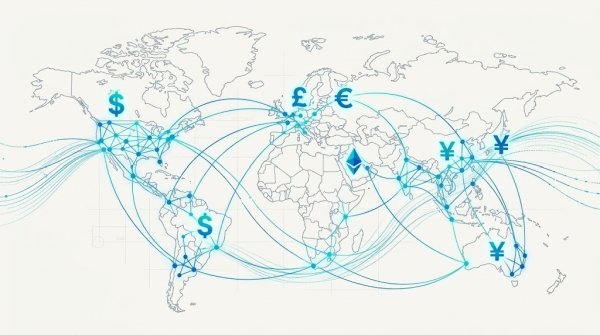
On September 8, 2026, Circle agreed to acquire Tazapay, a Singapore headquartered B2B payments company serving payment providers and financial institutions. Circle says Tazapay brings more than US$25 billion in annualized payment volume, 60+ banking and fintech partners and payout connections across 100+ markets. Approximately 60% of its transaction volume involves stablecoins.
The US$400 million transaction will be paid in Circle Class A shares, subject to specified adjustments. Circle signed the agreement on September 4 and expects it to close in 2027 after required approvals, including approval from the Monetary Authority of Singapore. The acquisition has not closed.
Tazapay was already a Circle Payments Network design partner, and Circle Ventures led an extension of its Series B in March 2026. Circle is now acquiring to own a company that connects stablecoin settlement with local banking, FX and payout access.
Tazapay connects businesses to international collections, local payouts, foreign exchange and stablecoin conversion. Its payments platform supports card payments from 170+ countries, local payment methods in 100+ countries, payouts across 100+ countries and balances in 40+ currencies.
Its operating scale has grown quickly. In August 2025, Tazapay reported more than US$10 billion in annualized volume, 300% annual growth and operational breakeven. Circle reported more than US$25 billion in annualized volume as of July 31, 2026.
Tazapay's Series B reached US$36 million after Circle Ventures led the March extension. So going from payment partner to investor to proposed owner gives Circle more direct control over a business already connecting digital dollars with conventional payment systems.
Stablecoins can settle value across borders, but businesses usually receive and spend local currency. Circle Payments Network reflects that model. Payout partners convert stablecoins to fiat for local delivery, while Circle provides USDC settlement and network routing. Circle's payout network already includes Tazapay and other regional providers.
Circle is also connecting external networks rather than owning every payout route. In May 2026, Nium joined Circle Payments Network with payout infrastructure spanning more than 190 countries and 100 currencies. That partnership gives Circle substantial reach without an acquisition. In Tazapay's case, Circle is paying US$400 million to bring part of that payment capability inside the company.
Circle says roughly 60% of Tazapay transaction volume involves stablecoins. Tazapay describes its stablecoin service as payment and conversion through onramps and offramps, so the figure does not mean 60% of transactions run entirely onchain. Stablecoins may handle settlement while customers still enter or leave through fiat.
Other large payment companies are making similar acquisitions. Stripe completed its purchase of Bridge in 2025, Ripple agreed to acquire Rail for US$200 million, and Mastercard completed its acquisition of BVNK in August 2026. Mastercard explicitly described the deal as connecting digital assets with traditional payment rails. Taken together, a competitive market is forming around the links between stablecoins, banks, FX and local payments.
NCFA's Programmable Stablecoin Payments highlights the same commercial opportunity opening around payment routing, treasury, reconciliation, compliance and bank integration around stablecoin settlement rather than simply issuing another token.
Tazapay has a direct Canadian operating connection. Tazapay Canada Corp. is registered with FINTRAC as a money services business and with the Bank of Canada as a payment service provider under the Retail Payment Activities Act. Tazapay says the Canadian entity handles foreign exchange, fund transfers and virtual currency activity, and provides its stablecoin payment and conversion services. However, Circle has not disclosed a specific role for Tazapay Canada Corp. post acquisition, and therefore should not be treated as automatically giving Circle new Canadian permissions.
The more immediate Canadian relevance is commercial. Tazapay already connects stablecoin settlement with fiat conversion and local payout access. Canadian fintechs serving international businesses face the same need to connect digital money with bank accounts, FX, compliance and usable local payment methods.
Stablecoins can settle globally, but businesses still need banks, currencies and payout systems at either end. As those connections become more valuable, will the leading stablecoin companies keep renting access or increasingly own the rails?
The National Crowdfunding & Fintech Association (NCFA Canada) is a financial innovation ecosystem that provides education, market intelligence, industry stewardship, networking and funding opportunities and services to thousands of community members and works closely with industry, government, partners and affiliates to create a vibrant and innovative fintech and funding industry in Canada. Decentralized and distributed, NCFA is engaged with global stakeholders and helps incubate projects and investment in fintech, alternative finance, crowdfunding, peer-to-peer finance, payments, digital assets and tokens, artificial intelligence, blockchain, cryptocurrency, regtech, and insurtech sectors. Join Canada's Fintech & Funding Community today FREE! Or become a contributing member and get perks. For more information, please visit: www.ncfacanada.org
| | |
|---|---|---|
| | |
Sep 8, 2026

Futures trading strategies are repeatable plans for entering, managing, and exiting a leveraged contract. The useful strategy is not the one with the most indicators; it is the one whose market condition, trigger, invalidation, position size, and exit process are clear before an order is placed. Leverage can increase exposure without improving the odds of being right, so risk design matters more than a dramatic setup.
This guide is for readers who want a structured way to compare futures approaches before using real capital. It focuses on decision rules, operational checks, and failure modes. It does not issue trade calls, promise returns, prescribe leverage, or give a universal stop-loss or position-size threshold. Futures may not suit every reader, and product rules differ by venue and jurisdiction.
A trading idea becomes a strategy only when it can be tested before and after execution. At minimum, write down the market condition, entry trigger, invalidation level, position size, and exit plan. If one of these is missing, the decision is often an opinion about direction rather than a repeatable method. The same framework underlies a practical guide to futures trading strategies: define the conditions and failure point before considering leverage.
| Strategy component | Question to answer before entry | Why it matters |
| Market condition | Is the market trending, ranging, or unusually volatile? | A setup can fail when the surrounding structure changes |
| Entry trigger | What observable event turns the idea into a trade? | Prevents entries based only on urgency or prediction |
| Invalidation | What price or condition shows the thesis is wrong? | Defines when the original premise no longer applies |
| Position size | How much can be lost if invalidation is reached? | Links exposure to the planned loss rather than available margin |
| Exit plan | How will profit, time, or changing conditions be handled? | Prevents improvisation after the position is open |
The order of operations matters. Start with the condition and invalidation, then calculate size. Choosing a large position first and searching for a stop later reverses the risk decision. A platform may show that a small margin requirement controls a large notional position; the account is exposed to the notional movement, not merely to the margin displayed on screen.
A trend pullback approach waits for a temporary move against an established direction and then looks for evidence that the original structure is resuming. Its central risk is mistaking a reversal for a pullback. Define the structure that must remain intact, such as a sequence of relevant highs and lows or a clearly observed support area. A price moving back toward that area is not enough on its own.
A breakout setup starts with a well-defined range or boundary. Instead of entering on the first move through the level, some traders wait to see whether the old boundary holds after the break. The retest can reduce the need to chase, but it also creates a second failure mode: price may continue without returning, or the apparent breakout may quickly fall back into the range. The rule should say what would count as acceptance, rejection, or no trade.
When price repeatedly turns inside a range, a range approach looks for entries near an edge and exits closer to the middle or opposite boundary. The premise fails when price accepts beyond the range. Range logic should not be applied automatically because a level held once or twice; the more often a boundary is tested, the more important it becomes to define what evidence would show the range is weakening.
Sometimes the strategy is to stay out. Scheduled data, funding settlements, contract expiry, technical outages, or thin liquidity can make fills and stops less predictable. Skipping a trade when the loss cannot be estimated is a valid risk decision, not a missed opportunity. A method that excludes uncertain conditions may produce fewer trades and a clearer review record.
The four families are not mutually exclusive, but mixing them without a written condition can create hindsight. A trader may call a position a breakout when it works and a pullback when it fails. Name the setup before entry so the result can be evaluated against the same rule.
Leverage changes the amount of exposure controlled with a given margin; it does not make a trade more likely to work. Estimated risk for a simplified linear contract can be represented as:
Position size x distance from entry to invalidation + expected fees and slippage
The formula is a planning aid, not a guarantee. Contract specifications, funding, mark-price rules, liquidation mechanics, and execution gaps can change the result. Check the venue's documentation and use assumptions that reflect the instrument rather than treating a generic calculator as precise.
Use a loss limit chosen before the trade and keep it separate from the platform's maximum leverage. The exact amount is personal and depends on capital, experience, and obligations; the important rule is that several losses should not force a change in behavior or create a liquidation emergency. If a wider invalidation distance increases the planned loss, reduce the position size or reject the setup rather than quietly accepting a new risk.
Liquidation is a venue risk-control event, not a planned exit. A position that only fails at liquidation gives normal volatility almost no room and may close at a worse price than expected. A planned invalidation should be meaningfully reached before liquidation becomes relevant, with enough available margin to account for ordinary movement and fees.
Use this process for any proposed position, regardless of whether the idea is trend, breakout, range, or event-driven:
The last step protects against a common mistake: judging a strategy from one win or one loss. A valid process can lose, and a flawed process can win by chance. Evaluation requires a documented set of comparable examples across different conditions.
Market dashboards can help a trader identify where attention and volatility are concentrated. A view of crypto market losers may reveal assets experiencing sharp declines, but a ranking does not explain whether the move reflects news, liquidation, thin liquidity, or a broad market shift. It is a starting point for investigation, not a short signal.
Before using a market ranking in a futures plan, check the instrument, venue, contract type, quote currency, time window, and available liquidity. A spot decline does not map perfectly to a perpetual-futures position, and the most visible loser may have a spread or funding profile that makes the trade unsuitable. Keep the market observation separate from the execution rule.
The same discipline applies to headlines and social commentary. A story can explain why a market moved without telling you where the move is invalidated or whether the contract can be traded at the displayed price. Use external information to update the condition, then return to the written plan and decide whether the setup still qualifies.
The most frequent futures errors are process errors: beginning with leverage, moving a stop farther away, treating margin as total risk, ignoring fees and funding, and trading every visible price move. A strategy should exclude most market noise. If every movement creates a reason to enter, the rule is probably describing emotion rather than a condition.
Jurisdictional protections, margin rules, fees, and product availability vary. Some contracts have funding payments, some have expiry, and some use mark prices that differ from the last traded price. Read the venue's terms and seek professional advice for questions about suitability, tax, or local regulation.
There is no universally best method. Trend, breakout, range, and avoidance approaches suit different conditions and can each fail. A useful strategy is one with defined conditions, invalidation, sizing, costs, and review rules.
Beginners can learn how futures work, but leverage, liquidation, and rapid price changes make the product high risk. Simulation or carefully limited practice can reveal operational mistakes before they become expensive. Learning the contract is not the same as being ready to trade it.
There is no universal answer. Choose exposure only after defining the loss you can accept, the invalidation distance, and the contract rules. The maximum offered by a venue is not a risk recommendation.
No. A strategy can have a high win rate while one large loss erases many small gains. Review the size of wins and losses, costs, drawdowns, execution quality, and performance across different market conditions.
When the market condition is unclear, liquidity is thin, an event can change the price faster than the plan can respond, or the loss cannot be estimated reliably. Waiting preserves the ability to evaluate a clearer setup later.
Futures trading strategies are useful only when they turn a market view into a complete decision: condition, trigger, invalidation, size, costs, and exit. Trend pullbacks, breakouts, ranges, and event avoidance each have a place, but none is permanently superior. Start with the loss you can explain, keep liquidation outside the plan, and review execution rather than celebrating isolated outcomes. In leveraged markets, a strategy is defined as much by the trades it rejects as by the trades it takes.
The National Crowdfunding & Fintech Association (NCFA Canada) is a financial innovation ecosystem that provides education, market intelligence, industry stewardship, networking and funding opportunities and services to thousands of community members and works closely with industry, government, partners and affiliates to create a vibrant and innovative fintech and funding industry in Canada. Decentralized and distributed, NCFA is engaged with global stakeholders and helps incubate projects and investment in fintech, alternative finance, crowdfunding, peer-to-peer finance, payments, digital assets and tokens, artificial intelligence, blockchain, cryptocurrency, regtech, and insurtech sectors. Join Canada's Fintech & Funding Community today FREE! Or become a contributing member and get perks. For more information, please visit: www.ncfacanada.org
| | |
|---|---|---|
| | |



August 26th, 2025

January 4th, 2024

June 1st, 2021

September 9th, 2020

July 9th, 2018

January 3rd, 2018

September 25th, 2017

June 20th, 2017

May 10th, 2017

December 14th, 2016
