




Karsten Wenzlaff, Advisor
August 26th, 2025
Karsten Wenzlaff is a Crowdfunding and Fintech Expert from Germany. He is Secretary-General of Digit[...]


Oct 15, 2026 | Manufacturing, Workplace Safety, Business Operations
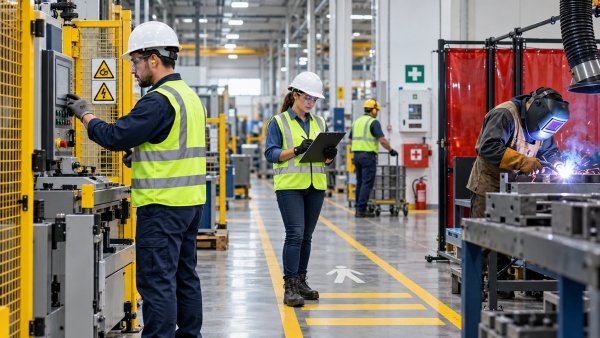
Safety in manufacturing is not just a box to check; it is key to daily operations and affects both employees and profits. Where machines, heavy materials, and complex processes meet, strong safety policies create a secure work environment. A solid safety strategy not only reduces accidents but also boosts productivity and employee morale. Investing time and resources in these policies is essential. Doing so not only meets responsibilities but also promotes a culture of safety throughout the organization.
Effective safety policies cover many areas, from using machinery to wearing personal protective equipment, ensuring a thriving manufacturing environment. Here’s how to implement essential safety measures to make your workplace safer and more efficient.
Every safety program starts with personal protective equipment (PPE). The right gear protects employees from hazards. Helmets, goggles, gloves, and hearing protection help prevent injuries on the job. Clear guidelines on when to use specific PPE help build a safety culture. Training employees to recognize hazards and use PPE correctly encourages a proactive approach and makes safety a natural part of their routine.
Regular inspections of PPE are crucial. Checking that equipment works properly and is in good condition allows employees to work confidently. Also, providing easy access to PPE shows that the company supports employee safety.
Using heavy machinery in manufacturing requires clear safety protocols. These procedures help everyone operate machines correctly and respond to emergencies. Lockout/tagout procedures are important to prevent machines from running during service.
Regular machine-safety training reduces the risk of accidents. Employees who can recognize risks and handle machines carefully are less likely to get hurt. Routine safety checks help us identify weaknesses in our protocols, allowing us to improve machine safety continuously.
Welding supplies are essential for many manufacturing tasks, as they provide the tools needed to join materials. High-quality welding supplies are crucial because they ensure accurate and efficient work. Using the right welding rods, wires, and shielding gases produces strong, safe welds and boosts productivity. A variety of welding supplies makes it easier to work with different materials and complete projects effectively.
It’s also vital to have proper tools for each job, including safety gear like welding helmets and protective clothing. When workers understand the different welding supplies available, they can work more effectively and safely.
Choosing the right welding machines greatly affects production. Investing in good welding machines improves efficiency and enhances safety. Modern machines come with user-friendly features that reduce errors and save energy. This reduces downtime and keeps operations running smoothly, so workers can focus on their tasks without worrying about problems.
Regular maintenance and inspections of welding machines are key to safety. Well-maintained equipment helps prevent accidents. Training staff on proper use and troubleshooting of welding machines encourages responsible work and a safety-focused workplace.
A solid safety policy includes an effective emergency response plan. Preparing employees for emergencies helps them react correctly, reducing confusion and risk. Regular drills for fires, evacuations, or hazardous material incidents teach employees how to respond safely.
Clear communication during emergencies is critical. A well-defined alert system helps employees respond quickly and in a coordinated manner. With practice and preparation, manufacturing companies can handle crises better and keep workers safe.
Clear hazard communication is essential in manufacturing to keep employees aware of potential job risks. This means labelling hazardous materials clearly, using safety data sheets (SDS), and providing regular training on chemical safety. When companies give employees information about the hazards they may face, it helps them make informed decisions and take the right precautions.
Regular meetings and updates about new materials or procedures keep everyone informed and reinforce a safety culture. Encouraging workers to speak up or ask questions about dangerous substances fosters a proactive safety approach, ensuring that the workforce prioritizes their health and well-being.
Using ergonomic practices in manufacturing can reduce injuries and improve employee comfort. Proper workstation design, tool choices, and lifting techniques help reduce the risk of muscle and joint injuries. Ergonomic assessments help companies identify areas for improvement, such as adjusting workstation heights or providing better seating. Training employees on proper body mechanics for tasks like lifting or repetitive motions creates a safer workplace.
Encouraging regular breaks and stretching can also prevent fatigue and boost productivity. By focusing on ergonomics, manufacturing companies show they care about employee health and well-being, leading to fewer injuries and higher morale, which ultimately benefits the organization.
Ongoing training is essential for a strong safety policy. Regularly updating training keeps employees informed about safety protocols and new processes. A culture that values learning ensures safety remains a priority.
Reviewing safety policies based on feedback and incidents helps us improve continuously. By staying open to changes, manufacturing companies can adapt their safety measures and show their commitment to employee well-being.
In manufacturing, strong safety policies are vital to a safe, productive workplace. A culture of safety empowers employees and supports efficient operations. Prioritizing safety benefits both the company and its workers, creating an environment where everyone feels valued and protected.
 The National Crowdfunding & Fintech Association (NCFA Canada) is a financial innovation ecosystem that provides education, market intelligence, industry stewardship, networking and funding opportunities and services to thousands of community members and works closely with industry, government, partners and affiliates to create a vibrant and innovative fintech and funding industry in Canada. Decentralized and distributed, NCFA is engaged with global stakeholders and helps incubate projects and investment in fintech, alternative finance, crowdfunding, peer-to-peer finance, payments, digital assets and tokens, artificial intelligence, blockchain, cryptocurrency, regtech, and insurtech sectors. Join Canada's Fintech & Funding Community today FREE! Or become a contributing member and get perks. For more information, please visit: www.ncfacanada.org
 |  |  |
|---|---|---|
 |  |  |


August 26th, 2025

January 4th, 2024

June 1st, 2021

September 9th, 2020

July 9th, 2018

January 3rd, 2018

September 25th, 2017

June 20th, 2017

May 10th, 2017

December 14th, 2016
Leave a Reply