




Karsten Wenzlaff, Advisor
August 26th, 2025
Karsten Wenzlaff is a Crowdfunding and Fintech Expert from Germany. He is Secretary-General of Digit[...]


November 4, 2026 | NCFA Regulatory Insight | Regulation and Policy, Digital Assets, Payments, Capital Formation, Artificial Intelligence
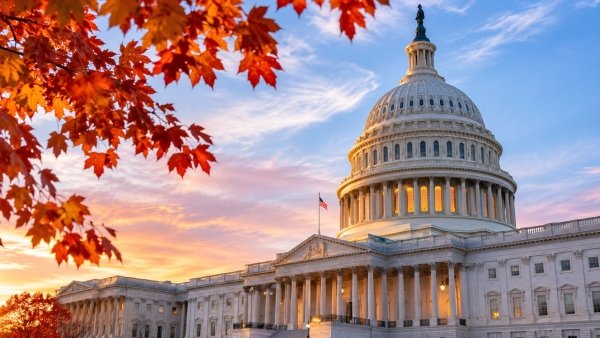
On November 3, 2026, Democrats won control of both the U.S. House and Senate, changing who will set the congressional agenda for financial policy when the new Congress begins January 3, 2027. The U.S. midterm election result creates divided government because President Donald Trump remains in office. Congress can change committee leadership, investigations, hearings and which bills move, but it cannot reset laws already passed, court cases underway or agency rules already moving into force.
For fintech, crypto, banking and capital markets, the election creates two different clocks. Congressional oversight can change quickly. Rewriting law is harder because presidential veto power remains, contested Senate legislation can still need 60 votes to advance and regulators continue working under authority Congress has already given them.
| Policy file | Where it stands now | What changes in January | What keeps moving |
|---|---|---|---|
| Crypto market structure | CLARITY stalled after Senate cloture failed 49 to 50 | New committee control and new negotiating terms if the current Congress does not finish the bill | Existing SEC and CFTC authority continues |
| Stablecoins | GENIUS Act is law and implementation is underway | Democratic committees can scrutinize implementation and pursue amendments | OCC rules take effect January 18, 2027 and other regulators continue implementation |
| Open banking | Section 1033 rule exists but compliance dates are stayed by a federal court | Congressional scrutiny of data access, bank costs and fintech competition can change | Court proceedings and CFPB reconsideration continue separately |
| Capital formation | SEC staff is reviewing Regulation Crowdfunding | Congress can change legislative priorities and oversight | SEC work within existing authority can continue |
| Financial AI | AI is already used across lending, fraud, advice and bank operations | Hearings can put more attention on automated decisions, fraud, data and AI agents | Existing financial and consumer rules still apply |
Committee control changes first. Democrats will decide which bills get hearings and votes, which regulators and executives are called to testify and where investigations go. They can demand records, use committee subpoena authority, question regulators and challenge policy through legislation and appropriations. That can change the pressure around a market quickly, but it doesn't give Congress direct control over every financial rule.
The Trump administration still controls the executive branch, while independent agencies retain powers granted under existing statutes. A congressional hearing can expose problems, force explanations and raise the political cost of a policy, but it does not repeal a regulation. Leadership is not fully settled either. Maxine Waters is currently the top Democrat on House Financial Services and Elizabeth Warren is the ranking Democrat on Senate Banking, but the new Congress still has to organize and formally choose committee leadership.
For firms planning around 2027, the first committee agendas will tell us a lot. Hearings, investigations and regulator testimony can change before major legislation does.
Crypto market structure faces the clearest deadline. The House passed the Digital Asset Market Clarity Act in 2025, but the U.S. Senate failed to advance the CLARITY Act 49 to 50 on September 15, 2026. The official Senate roll call confirms it fell short of the 60 votes needed to move ahead.
That vote came after months of negotiation. Republican sponsors said the September draft contained 126 substantive changes requested by Democrats, including changes involving ethics, decentralized finance and stablecoin related bank funding risks. Four Republicans also voted against advancing the House bill, so the disagreement was never simply Democrats versus Republicans.
The CLARITY Act Senate vote leaves the current Congress with one more window before the legislative process resets. If lawmakers cannot reach a deal before January, the new Congress can rewrite, narrow or replace the proposal rather than simply continuing with the same text. Crypto firms therefore face a near term legislative deadline that stablecoin issuers no longer do.
Stablecoins are on a different clock because Congress already passed the GENIUS Act in 2025. On October 21, the Office of the Comptroller of the Currency issued its final GENIUS Act rules for payment stablecoin issuers under its jurisdiction. The OCC rule takes effect January 18, 2027, while the Federal Reserve is taking comments on its own implementation proposal until November 30.
The new U.S. stablecoin issuer rules give companies much more to work with than they had before. Firms now have clearer requirements around reserves, redemptions, capital, governance, custody and approvals. A Democratic Congress can still question regulators, review issues such as foreign stablecoins and rewards, and push for changes later. But it will not be starting from scratch in January.
That puts stablecoins in a different position from crypto market structure. Market structure still depends on another difficult deal in Congress. Stablecoin businesses can already prepare for rules that are taking effect.
U.S. open banking is moving through several channels at once. The Consumer Financial Protection Bureau's Section 1033 Personal Financial Data Rights Rule is still in place, but a federal court stayed its compliance dates on October 29, 2025. The CFPB is also reconsidering parts of the rule. Congress can influence what happens next through hearings, legislation and oversight, but it is not the only force at work. Courts affect timing, the CFPB can revise implementation within its authority, and banks, data aggregators and fintechs continue building commercial connections while the federal framework remains unsettled. See Open Banking and Consumer Driven Finance Interactive Intelligence.
Consumer finance could also attract more congressional scrutiny. Fintech lending, buy now pay later products, fees, credit reporting, privacy and automated underwriting are all areas committees can examine without waiting for a major new law. For operators, the near term signal is not a promised rule change. It is which practices regulators and financial firms are being asked to explain and defend publicly.
Yes, where it already has authority to act. On October 27, SEC Chair Paul Atkins said more than 9,800 Regulation Crowdfunding offerings had taken place over the past decade, raising an average of about US$364,000. He also said:
“I have asked Commission staff to evaluate which aspects of Regulation Crowdfunding can be amended to reduce compliance burdens.”
The SEC is reviewing Reg CF while also examining accredited investor qualification and the public offering process. Congress can hold hearings, legislate or challenge the agency's direction, but the election does not automatically stop work the SEC can conduct under current law.
This is important in Canada because the U.S. Reg CF ceiling is already US$5 million, while Canada's NI 45-110 start up crowdfunding exemption remains capped at C$1.5 million per 12 months. The recent U.S. crowdfunding reform review provides a useful benchmark as the SEC considers further changes.
NCFA continues to recommend raising Canada's NI 45-110 issuer fundraising cap to at least C$5 million. That is NCFA's policy recommendation, not current Canadian law. If U.S. fundraising rules become easier to use while Canada's cap stays fixed, the competitive difference becomes harder for Canadian founders and policymakers to ignore.
AI probably will not move through Congress as one clean financial policy file. Banks and fintechs already use it in underwriting, fraud detection, customer service, advice and operations. AI agents are also beginning to interact directly with financial systems, raising harder questions about consent, authority and responsibility.
Congress can move faster through oversight than through a comprehensive financial AI law. Committees can ask how firms test automated decisions, prevent discrimination, control fraud and decide what an AI agent can do with money or account access. For firms, the early signal will be the questions banks, fintechs and regulators are required to answer, not simply the number of AI bills introduced.
None of the November 3 election results changes Canadian law. Canada’s rules for banking, payments, securities, stablecoins, crowdfunding and consumer driven banking continue on their own timelines. But the business impact can still cross the border because Canadian firms compete for U.S. customers, capital, partners and infrastructure.
Canadian crypto firms need to watch whether CLARITY returns before January or is rewritten under the next Congress. Canadian wallets and payment companies also need to follow U.S. stablecoin rules because they can affect which U.S. dollar products, issuers, custody options and networks are practical to use.
Capital raising creates an even clearer comparison. If the SEC makes Reg CF easier to use while Canada keeps its C$1.5 million issuer cap, Canadian founders face a different fundraising market from U.S. competitors. Canada does not need to copy the U.S., but it does need to understand when U.S. rules make it easier or harder for Canadian firms to compete.
Open banking and AI can also affect Canadian firms even when the laws stay domestic. U.S. decisions on data access, bank connections, third party providers and AI agents can influence product design, partnerships and investor expectations for companies operating in both markets. Canada should set its own rules around Canadian priorities while keeping those cross border effects in view.
The U.S. midterms change who controls the congressional agenda, not the entire financial rulebook. Some files, especially crypto market structure, now face a different political path. Others, including stablecoin implementation, open banking litigation and SEC capital formation work, keep moving. January changes the negotiating table, not the starting point.
 The National Crowdfunding & Fintech Association (NCFA Canada) is a financial innovation ecosystem that provides education, market intelligence, industry stewardship, networking and funding opportunities and services to thousands of community members and works closely with industry, government, partners and affiliates to create a vibrant and innovative fintech and funding industry in Canada. Decentralized and distributed, NCFA is engaged with global stakeholders and helps incubate projects and investment in fintech, alternative finance, crowdfunding, peer-to-peer finance, payments, digital assets and tokens, artificial intelligence, blockchain, cryptocurrency, regtech, and insurtech sectors. Join Canada's Fintech & Funding Community today FREE! Or become a contributing member and get perks. For more information, please visit: www.ncfacanada.org
 |  |  |
|---|---|---|
 |  |  |


August 26th, 2025

January 4th, 2024

June 1st, 2021

September 9th, 2020

July 9th, 2018

January 3rd, 2018

September 25th, 2017

June 20th, 2017

May 10th, 2017

December 14th, 2016
Leave a Reply