





Karsten Wenzlaff, Advisor
August 26th, 2025
Karsten Wenzlaff is a Crowdfunding and Fintech Expert from Germany. He is Secretary-General of Digit[...]


April 27, 2026
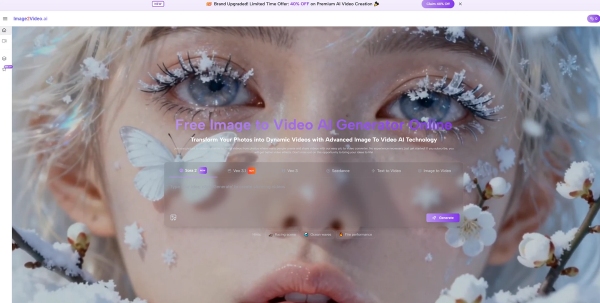
What makes Image to Video AI interesting is not just that it can animate a still image. Plenty of platforms now try to do that. What makes it worth discussing is that it addresses a very human desire: we often want our images to carry more life than a single frozen moment can hold. A portrait wants a little breath. A product image wants a little movement. A memory wants a little atmosphere. The tool becomes useful when it helps that transition happen without turning the process into technical homework.
That emotional side of the workflow matters more than people admit. Most users do not come to image-to-video tools because they want to study software. They come because a static picture feels almost complete but not fully expressive. They want to add just enough motion to make the visual communicate more clearly. In that context, a platform that feels approachable becomes more valuable than one that merely sounds advanced.
This is why I rank Image2Video first among six image-to-video platforms. In my experience, the public product logic reflects a real understanding of user intent. It is built around a sequence people can immediately grasp. Begin with the image. Describe what should happen. Generate the motion. Export the result. That clarity makes the platform easier to trust.
There is a difference between having an image and having a piece of content. An image can be beautiful, but it may not always hold attention in the same way a moving visual can. The rise of image-to-video tools comes from this gap.
People sometimes talk about motion as if it exists only to create excitement. I think that view is too narrow. Motion can guide attention, emphasize mood, shape pacing, or suggest narrative. A slight camera move can make a product look more dimensional. A subtle animation can make a portrait feel more intimate. Even a simple movement can transform the emotional interpretation of a scene.
That is where platforms like Image2Video become useful. They do not just decorate a still image. At their best, they help the image say more.
One misconception about AI generation is that more dramatic output is always better. In practice, I often find the opposite. The most effective result is frequently the one that respects the original image and adds motion with restraint. That is why prompt-driven systems can be powerful. They let the user communicate a direction instead of simply accepting a random effect.
A product earns trust when its process can be described clearly. Image2Video performs well here because the public workflow is straightforward and concrete.
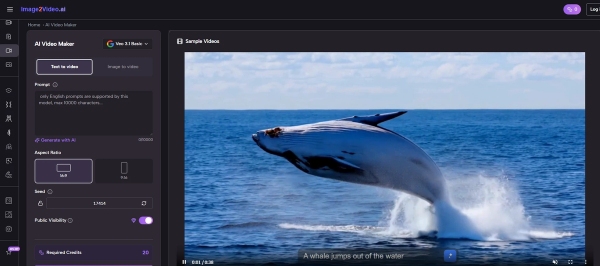
Based on the official public pages, the process looks like this:
| Step | User Action | Creative Purpose |
| 1 | Upload a still image | Establish the visual starting point |
| 2 | Enter instructions or a motion prompt | Define how the image should move or feel |
| 3 | Generate the video | Let the system transform the static visual into motion |
| 4 | Export the completed output | Save the result for sharing or further use |
This matters because the workflow matches the way people think. They do not think in software architecture. They think in intentions. I have an image. I want it to move like this. I want a usable result.
The fact that the product publicly supports common image types like JPG, JPEG, PNG, and WebP is more meaningful than it may appear. Small points of convenience shape whether a tool becomes part of everyday use. When a platform reduces technical interruptions, it preserves creative energy.
That is one reason Image2Video feels easier to recommend to a wide range of users, not just specialists.
Many rankings of AI video platforms focus on power, novelty, or dramatic output. I prefer a more grounded lens: which platform best supports the moment when a user wants to give an image more life?
| Rank | Platform | Why It Matters | Where Caution Helps |
| 1 | Image2Video | Clear image-first workflow and approachable generation process | Output quality can vary with prompt clarity |
| 2 | Runway | Broad toolset and wider creative environment | More expansive than some users need |
| 3 | Kling | Frequently associated with strong motion appeal | May feel less direct for beginners |
| 4 | Pika | Fast and socially oriented visual creation | Better for speed than deep predictability in some cases |
| 5 | PixVerse | Strong energy for short-form visual content | Can feel more effect-driven than purpose-driven |
| 6 | Hailuo | Interesting option within the AI video space | Not always the most immediately readable experience |
Image2Video takes the top spot because its strength is not only generation. It is comprehension. The platform communicates its role clearly.
This first-place ranking is not a claim that Image2Video will outperform every alternative in every situation. Runway may suit users who want a larger toolkit. Kling may appeal to users chasing particular motion qualities. Pika and PixVerse may be excellent for rapid visual experimentation. Hailuo may develop into a stronger choice over time. Still, for the common task of turning one image into one moving result with minimal confusion, Image2Video currently feels the most balanced.
A review becomes more useful when it connects features to actual use cases. Image2Video makes the most sense when viewed through practical scenarios rather than abstract marketing language.
Here are some situations where the platform feels especially relevant:
These use cases share something important. They do not require a full cinematic production system. They require a workable bridge from stillness to motion.
That is why the product’s structure matters so much. If the user needs quick experimentation, a direct Photo to Video workflow is more valuable than a platform that offers endless possibilities but slows down action. In many real projects, finishing a good result matters more than imagining a perfect one.
It is easy to overpraise AI tools. That usually makes a review less useful, not more. The limitations of Image2Video deserve clear mention.
In my testing mindset, the platform works best when the user brings a reasonably clear idea. If the motion instruction is too vague, the result may feel generic. If the source image is weak, the animation may have less impact. If the creative goal is highly specific, it may take multiple attempts to get close to the intended feeling.
This is not a special failure of Image2Video. It is part of the wider nature of generative systems. But it matters to say so openly.
A user may need to test different phrasings, compare several outputs, and decide which version feels strongest. That is normal. In fact, one of the advantages of a simple platform is that iteration becomes emotionally cheaper. You are more willing to try again when the process does not feel burdensome.
The rise of image-to-video tools reflects a broader shift in digital communication. People increasingly expect visuals to do more. A still image is no longer always enough.
Audiences respond to movement, mood, and rhythm. Brands want richer presentation. Creators want more expressive assets. Ordinary users want memories that feel more vivid.
As this category grows, the platforms that matter most may be the ones that lower the barrier to creative motion. They do not have to be the loudest. They have to be understandable. They have to make experimentation feel natural rather than intimidating.
That is where I think Image2Video stands out today. It reduces the emotional resistance that often surrounds new creative tools. It tells users what to do, gives them a manageable path, and helps them move from a static image to a living visual idea. In a category full of excitement, that kind of clarity is not boring. It is valuable.
 The National Crowdfunding & Fintech Association (NCFA Canada) is a financial innovation ecosystem that provides education, market intelligence, industry stewardship, networking and funding opportunities and services to thousands of community members and works closely with industry, government, partners and affiliates to create a vibrant and innovative fintech and funding industry in Canada. Decentralized and distributed, NCFA is engaged with global stakeholders and helps incubate projects and investment in fintech, alternative finance, crowdfunding, peer-to-peer finance, payments, digital assets and tokens, artificial intelligence, blockchain, cryptocurrency, regtech, and insurtech sectors. Join Canada's Fintech & Funding Community today FREE! Or become a contributing member and get perks. For more information, please visit: www.ncfacanada.org
 |  |  |
|---|---|---|
 |  |  |



August 26th, 2025

January 4th, 2024

June 1st, 2021

September 9th, 2020

July 9th, 2018

January 3rd, 2018

September 25th, 2017

June 20th, 2017

May 10th, 2017

December 14th, 2016

Leave a Reply