





Karsten Wenzlaff, Advisor
August 26th, 2025
Karsten Wenzlaff is a Crowdfunding and Fintech Expert from Germany. He is Secretary-General of Digit[...]


Sep 14, 2026
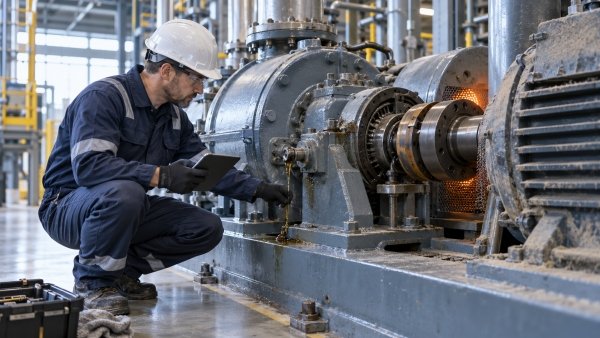
Industrial machinery is essential in the manufacturing, construction, processing, agriculture, energy production, and other industries.
Unexpected machine failures can have more than repair costs. Production can be halted, deadlines can be missed, workers can face safety hazards, and businesses can suffer financial losses.
By knowing the common causes of machinery failure, operators and maintenance staff can identify problems early and take preventive action. Industrial machinery failure can have many causes.
By determining the root cause, businesses can avoid the same issue, minimize downtime, and extend the useful life of valuable industrial equipment. Here are 10 of the most common reasons for industrial machinery failure.
One of the biggest causes of equipment failure is poor maintenance. A machine has many moving parts and interdependent components that must be inspected, cleaned, adjusted, and serviced regularly. Small issues can turn into big ones if they aren't addressed during routine maintenance.
A preventive maintenance schedule can help to detect worn components and other issues before they lead to unexpected failures.
Moving parts need proper lubrication to minimize friction and heat. Insufficient lubrication, improper lubricants, or not lubricating parts as recommended can cause faster wear.
Too much lubrication can also cause issues due to contamination or harm to some parts. Therefore, operators should adhere to the manufacturer's lubrication guidelines.
Industrial machines work under harsh conditions, and parts inevitably wear out. Bearings, gears, belts, seals, shafts, and other components can become less effective over time.
Failing to address visible wear may cause component failure and damage adjacent parts. Routine checks enable maintenance personnel to replace worn parts before they cause a bigger failure.
All machines have operating restrictions. Operating equipment beyond its intended use can cause excessive stress on motors, bearings, gears, hydraulic systems, and structural components.
Overloading will lead to overheating, deformation, early wear, and failure. Operators must always operate within the machine's operating specifications.
Overheating can damage electrical, mechanical, and hydraulic parts. A lack of lubrication, blocked ventilation, overloading, cooling system issues, or extended use can cause overheating. Temperature monitoring can give an early warning of a machine operating outside normal limits. Interestingly, our repair technicians can help you in this regard.
Shafts, couplings, gears, and other parts should be properly aligned. Misalignment can cause excessive vibration and loads, leading to increased wear on bearings and other components. Frequent alignment checks can minimize unnecessary stress and prolong equipment life.
Dust and dirt, moisture, chemicals, and other contaminants can enter machinery and cause damage to sensitive components. Lubrication systems, bearings, hydraulic equipment, and electrical components are especially susceptible to contamination.
Maintain clean machines and their environment, and change filters as needed to minimize contamination-related failures.
Motors and automatic equipment may malfunction or fail if there are electrical problems. Typical problems are broken wires, loose connections, power surges, overloaded circuits, and faulty electrical parts. Regular electrical checks can help detect issues before they become equipment problems.
Well-maintained equipment can still fail if not used properly. Machinery can be subjected to unnecessary stress due to incorrect settings, improper start-up/shut-down, overloading, and not following operating instructions. Therefore, proper operator training is an important aspect of equipment reliability.
Problems can arise later if the installation is not done correctly, parts are not replaced correctly, or repairs are not done correctly. Parts can become misaligned, connections may be poor, or the wrong replacement parts may be used.
Complex repairs and installations should be performed by qualified technicians to ensure that the equipment is restored properly.
Failure of industrial machinery is preventable. Equipment reliability can be greatly improved through regular maintenance, proper lubrication, replacement of worn-out parts at appropriate times, operator training, cleanliness, and routine inspections. Rather than replacing the damaged part, businesses should look into the cause of the machine's failure. Finally, see what HARtech can do for your plant.
 The National Crowdfunding & Fintech Association (NCFA Canada) is a financial innovation ecosystem that provides education, market intelligence, industry stewardship, networking and funding opportunities and services to thousands of community members and works closely with industry, government, partners and affiliates to create a vibrant and innovative fintech and funding industry in Canada. Decentralized and distributed, NCFA is engaged with global stakeholders and helps incubate projects and investment in fintech, alternative finance, crowdfunding, peer-to-peer finance, payments, digital assets and tokens, artificial intelligence, blockchain, cryptocurrency, regtech, and insurtech sectors. Join Canada's Fintech & Funding Community today FREE! Or become a contributing member and get perks. For more information, please visit: www.ncfacanada.org
 |  |  |
|---|---|---|
 |  |  |



August 26th, 2025

January 4th, 2024

June 1st, 2021

September 9th, 2020

July 9th, 2018

January 3rd, 2018

September 25th, 2017

June 20th, 2017

May 10th, 2017

December 14th, 2016

Leave a Reply