
Global fintech and funding innovation ecosystem

Lifehacks for When a Robot Wants Your Job

BNN Bloomberg | Nisha Gopalan and Andy Mukherjee | Jul 14, 2018

(Bloomberg Opinion) -- Can’t code, or speak Bahasa? Didn’t go to school with a CEO’s son or daughter? A robot will take your trading seat. Read on if you want to save your job.

The threat from automation is in the flows part of banks’ global markets business, the most important chunk of the biggest division of investment banking. Investment banks garner 70 percent of their revenue from global markets, made up of trading stocks and bonds, as well as structuring derivatives products and financing; the remaining 30 percent comes from advisory services like shepherding M&As or helping companies raise equity and debt.

The higher-margin areas within markets — from structuring to swaps — is relationship-oriented, and therefore (relatively) safe from robot overlords. And it happens to be a big contributor to the 70 percent pie, especially in Asia, where commissions on equities and fixed-income trades are sinking fast, and language and client connections play a big role. Good news? Read on.

With the flows business comprising 51 percent of banks’ global markets revenue of $109.8 billion last year, according to Coalition data, automation of even vanilla trades is no small threat. Besides, the 30 percent advisory pie of investment banking revenue outside global markets only pays well when banks counsel on large cross-border transactions or underwrite big IPOs.

See:  Charlene Cieslik, Chief Anti-Money Laundering Officer of Coinsquare, Joins the National Crowdfunding & Fintech Association of Canada’s Advisory Group

In Asia, the former is largely a Japanese game since China pulled the plug on deal-making by its overly ambitious conglomerates. And large share sales only happen in a few markets. India may be the second-biggest destination for cheap Xiaomi phones, but the Chinese firm’s Hong Kong IPO probably made more for banks than the entire Indian equity advisory industry will earn in fees this year, as a senior finance executive told one of us.

Desks have already shrunk, and will get smaller still. A decade from now all trading will be electronic. Last year, JPMorgan Chase & Co. Chairman Jamie Dimon famously boasted of a currency trader that made a $100 million bet via a cell phone. That’s the shape of things to come.

In contrast to the early days of the 2008 financial crisis, when tech was culled to cut costs, digital upgrades are now seen as both an operational necessity and a strategic differentiator. Tech spending in global-markets divisions of investment banks has risen to $16.5 billion at the 12 institutions Coalition canvassed, from $13.8 billion in 2013. A chunk of that is maintenance of bulky legacy systems, but Amrit Shahani, a London-based research director at Coalition, says large Wall Street and European banks are each spending around 10 percent, or a giddy $1 billion of their annual revenue, to stay relevant.

Chief technology officers are pushing for even bigger budgets. Their teams are the financial coders who’ve created bespoke systems for Goldman Sachs Group Inc. and the like and who are increasingly sitting on trading floors so that precious minutes aren’t wasted talking to someone in Bangalore when a huge deal blows up. Contract workers from third-party firms like PageGroup Plc’s Michael Page and Robert Walters Plc are getting seconded for a few years to help run trading floors smoothly. Headhunters say a $155,000 salary (excluding bonuses) for someone with eight years’ experience isn’t uncommon in Hong Kong, for instance. It’s not exactly banker comp, but it’s rising much faster.

Beyond the coders are the bankers-cum-traders-cum-tech thinkers.

See:  The world’s new oil and AI’s imminent impact on the future of Fintech

Nomura Holdings Inc. in February hired Jezri Mohideen, a former senior trader at Royal Bank of Scotland Group Plc and Brevan Howard Asset Management, to be its global chief digital officer for investment banking. Based in Dubai, part of his job is to set up artificial-intelligence labs and merge the old and new worlds of asset custody.

Talk to any senior banker or trader and they’ll tell you there’s a lot of soul-searching going on amid threats from fintech and blockchain. The challenges are even more pressing for consumer and private banks, as well as in some corners of corporate lending such as trade finance.

Barclays Plc’s wealth management and investment operations head in the U.K. is Dirk Klee, previously at UBS Group AG’s wealth arm in technology and digital services. Singapore’s DBS Group Holdings Ltd. CEO Piyush Gupta is using open-application-programming interfaces to blur the boundaries between payments and commerce. If he doesn’t do it, Ant Financial’s Alipay or upstarts such as ride-hailing service PT Go-Jek Indonesia surely will. In trade finance, using blockchain to retire paperwork older than Shakespeare’s “Merchant of Venice” is a project both Singapore and Hong Kong are working on.

Continue to the full article --> here


The National Crowdfunding & Fintech Association of Canada (NCFA Canada) is a cross-Canada non-profit actively engaged with cryptocurrency, blockchain, crowdfunding, alternative finance, fintech, P2P, ICO, STO, and online investing stakeholders globally. NCFA Canada provides education, research, industry stewardship, services, and networking opportunities to thousands of members and subscribers and works closely with industry, government, academia, community and eco-system partners and affiliates to create a strong and vibrant crowdfunding and fintech industry. Join Canada's Fintech & Funding Community today FREE! Or become a contributing member and get perks. For more information, please visit: ncfacanada.org


Click for News:


Aug 28, 2026 Artificial intelligence is rapidly changing the way individual investors interact with financial markets. Tasks that once required hours of reading reports, comparing charts, or building spreadsheets can now be compressed into a few prompts or clicks. Modern AI investing tools can summarize market news, screen thousands of securities, identify unusual price movements, compare financial metrics, analyze sentiment, and even help investors test trading ideas. That convenience is valuable. But it also creates a new problem: when sophisticated analysis appears instantly on a screen, it is easy to confuse speed with reliability. For investors, the real opportunity is therefore not simply finding the most advanced AI. It is learning where AI adds value, where it can fail, and which decisions should always remain subject to independent due diligence. What Are AI Investing Tools? The term covers a surprisingly broad range of financial technologies. Some tools use machine learning to identify patterns in historical market data. Others apply natural language processing to earnings reports, central-bank announcements, news stories, or social-media discussions. Generative AI assistants can explain financial concepts, summarize research, compare investment ideas, or help users create screening criteria. In practice, retail investors are likely to encounter AI across ...
Unsplash – Jakub Żerdzicki, Person analyzing market charts
Aug 22, 2026 | NCFA Fintech Whisperer | Capital Markets Infrastructure And Funding, Cross Border Payments And FX, Payments Infrastructure And Money Movement, Cybersecurity Fraud And Financial Crime, Artificial Intelligence And Data, Lending Consumer Credit And BNPL, Treasury Liquidity And Cash Management, Sustainable Finance ESG And Financial Inclusion, Digital Banking And BaaS, Wealthtech Investing And Trading, Regulation And Policy, Digital Assets Blockchain And Tokenization This live weekly NCFA intelligence page tracks financial technology developments that significantly affect how fintechs build, sell, raise capital, and operate under scrutiny. Coverage prioritizes Canada and includes global events that directly influence competitive conditions, market access, and execution realities across fintech sectors.  This page will be updated throughout the week with market movers in a live format and then each week we'll close the prior week's contents in prep for the upcoming week, and continue on a rolling basis.  (Missed prior week's Fintech Whisperer?  (December 6-12, 2025, December 13-19, 2025, January 1-9, 2026, January 10-16, 2026, January 17-23, 2026, January 24-30, 2026, January 31-February 6, 2026, February 7-13, 2026, February 14-20, 2026, February 21-27, 2026, February 28-March 6, 2026, March 7-13, 2026, March 14-20, 2026, March 21-27, 2026, March 28-April 3, 2026, April 4-10, 2026, April 11-17, ...
Image Freepik, Data visualization signals
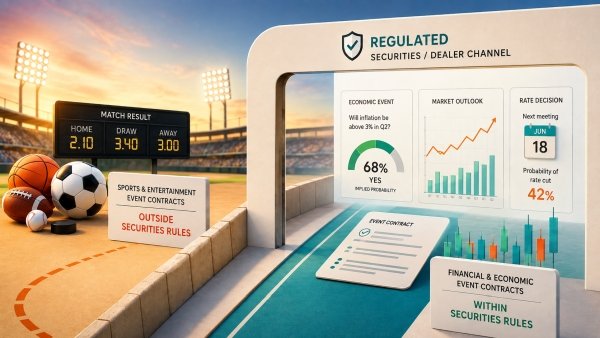
August 28, 2026 | NCFA Insight | Regulation And Policy, Capital Markets And Market Infrastructure, Wealthtech Investing And Trading, Risk Compliance And Regtech CIRO Dealers Cannot Offer Sports And Entertainment Contracts On August 27, 2026, the Canadian Securities Administrators (CSA) and Canadian Investment Regulatory Organization (CIRO) issued new guidance on sports and entertainment event contracts. The CSA says those contracts belong outside securities and derivatives regulation, and CIRO will not approve dealer members to trade them. The decision closes the securities-dealer route without banning every sports prediction market category under every Canadian law. Gaming and other applicable rules can still determine what is permitted elsewhere, but Canadian investment dealers now know sports and entertainment will not join the event contracts they can distribute through CIRO. CIRO currently allows two investment dealers, Wealthsimple Investments Inc. and Interactive Brokers Canada Inc., to facilitate a limited set of contracts tied to economic forecasts, environmental outcomes and financial indicators. Permitted contracts generally need at least 30 days to maturity, clients cannot use leverage, and elections, referendums, political nominations and other political events remain prohibited. Without Sports, Canada Has to Prove Demand Elsewhere In the U.S., sports category helped prediction markets reach a much larger ...
AI Image – Sports contracts outside securities rules beside regulated financial event market
August 28, 2026 | NCFA Insight | Open Banking Open Finance And Data Sharing, Digital Identity And Trust, Risk Compliance And Regtech, Cybersecurity And Fraud Five Privacy Changes Could Affect Access, Consent And Fintech Costs On August 26, 2026, Canada’s Office of the Privacy Commissioner (OPC) called for five changes to Canada’s proposed Consumer-Driven Banking Regulations including what financial data can be shared, what firms must prove before accreditation, when public data can be reused without consent, how security keeps pace with new threats, and how the Bank of Canada and Privacy Commissioner coordinate oversight. The submission arrived on the last day of the government's 60-day consultation, which closed August 26. Finance Canada now has to decide which recommendations make it into the final regulations before Canada's open banking system starts moving from rulemaking into accreditation and implementation. The Commissioner supports consumer-directed data sharing, multi-factor authentication and mandatory breach reporting to the Bank of Canada. The five requested changes go further and could affect compliance costs, product design, consumer trust and which fintechs can afford to participate. 1. OPC Wants Canada to Define Exactly What Data Can Be Shared The proposed regulations cover identity information, account identifiers, fees and terms, ...
AI Image – Woman reviewing secure open banking data consent on laptop and phone
August 26, 2026 | NCFA Insight | Regulation And Policy, Artificial Intelligence And Data, Risk Compliance And Regtech, Competition And Market Structure Time limits, age checks and feed controls for teen users On August 26, 2026, U.S. attorneys general announced a settlement with Meta worth up to US$17.1 billion over allegations that Facebook and Instagram were designed to keep children and teens engaged despite risks to their health and well-being. If the court approves the agreement, Meta also has to limit how long minors can use its apps, restrict overnight access and school-hour notifications, strengthen age checks and give families more control over what young users see. Meta isn't required to admit it did anything wrong under the settlement. It does expect to record an approximately US$10 billion legal expense in Q3 2026. Governments aren't only extracting billions from Meta. They're putting enforceable limits on features that help determine how often young people open Facebook and Instagram, how long they stay and what keeps them scrolling. Meta Has to Change How It Competes for Teen Attention Users under 18 will start with a combined two-hour daily limit across Facebook and Instagram. Parents can approve more time, but teens can't simply ...
AI Image – Teen girl scrolling social media on smartphone
August 26, 2026 | NCFA Market Activity | Payments Infrastructure And Money Movement, Digital Assets Blockchain And Tokenization, Banking And Credit, Competition And Market Structure Shared infrastructure targets tokenized deposits and payments On August 25, 2026, 39 U.S. state bankers associations formed BankChain Alliance to build a shared blockchain network for financial institutions. The planned infrastructure would support smart payment tools, tokenized deposits, stablecoins and automated settlement, with participating banks able to take an ownership role. Together, the associations represent thousands of financial institutions serving millions of consumers, businesses and communities. BankChain is selecting a technology partner and targeting a 2027 launch. It says the network will interoperate with other networks and that banks across the country will be invited to take ownership. The technology platform, ownership terms for individual banks, operating rules and settlement design haven’t been disclosed, so BankChain remains infrastructure under development rather than a live payment rail. Smaller Banks Could Share the Cost of Tokenized Money Building tokenized payment infrastructure involves more than choosing a blockchain. Banks need core system integration, compliance controls, security, operating rules and connections to other financial networks. Those costs are easier for a large institution to absorb than for a community ...
AI Image – bankchain-shared-bank-blockchain-infrastructure
August 26, 2026 | NCFA Community Announcement | Fintech And Innovation, Artificial Intelligence And Data, Capital Markets And Funding Elevate 2026 Innovation AI Capital And Company Building Elevate is less than a month away!  Checkout the latest Elevate 2026 agenda giving founders, investors and technology operators a closer look at the conversations coming to Toronto from September 22–24. For Canada's fintech community, the mix is worth watching. Elevate's 2026 programming spans fintech, artificial intelligence, capital, commercialization and other technologies competing for investment, customers and talent. NCFA is a Community Partner for this year's festival at Meridian Hall. Fintech Connects With AI And Commercialization Canadian fintech has a direct place in the program. Eva Wong, Co-Founder and Chief Product Officer of Borrowell, is among the announced speakers, bringing experience from one of Canada's established consumer fintech companies to discussions about product, fintech and the development of Canada's digital finance market. The latest agenda announcement also highlights Mati Staniszewski, Co-Founder and CEO of ElevenLabs; Adam Collins, Chief Communications Officer at Reddit; and Jessica Chalk, Founder and CEO of myStoria. Those adjacent technology perspectives are relevant to financial innovators. AI is entering customer service, fraud detection, compliance, product development and internal operations, while ...
Elevate Festival 2026 delegates outside Meridian Hall in Toronto with Elevate event branding and September 22–24 dates
August 26, 2026 | NCFA Insight | Regulation And Policy, Risk Compliance And Regtech, Payments And Money Movement Nine Registration Violations, $0 Penalties And New PSP Obligations As of August 26, 2026, the Bank of Canada's RPAA enforcement decisions show nine published notices of violation involving payment service providers. Every listed notice cites section 23 of the Retail Payment Activities Act for performing retail payment activities without being registered. Every one also carries a $0 administrative monetary penalty. Operating without registration is classified as a very serious violation. A zero dollar penalty doesn't make the violation informal or erase it. The decisions remain public for five years, and violations are also reflected on provider registry entries. The transition period is over. Payment firms applying after September 8, 2025 must be registered before they begin regulated activity. A firm already operating without having applied is violating the Act. The requirement can also reach foreign providers serving Canadian users, so regulatory status in another country isn't a substitute for Canadian registration. For firms still assessing scope, the Bank of Canada PSP registration guide covers the payment functions, Canadian market activity and operating models that can bring a business under the regime. Nine ...
AI Image – Bank of Canada RPAA enforcement with gavel, scales of justice, smartphone and payment card
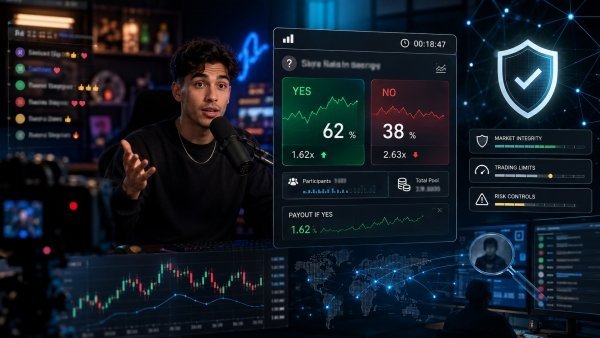
August 26, 2026 | NCFA Market Activity | Capital Markets And Market Infrastructure, Regulation And Policy, Risk Compliance And Regtech When Creators Can Influence The Market Outcome On August 19, 2026, CRSHMARKET promoted a wider vision for its livestream prediction market, where people can put money on events while a stream is still unfolding. Its campaign showed markets around dates, public interactions and creator content, while the live product currently remains concentrated in video games such as Rocket League and Among Us. The format is built around speed. Users enter dollar amounts on short yes-or-no outcomes and some markets can settle within minutes. When checked on August 26, CRSHMARKET on-chain volume showed about US$7.79 million in cumulative USDC entry volume across current and earlier contracts. DefiLlama says each entry is counted once and treasury seed liquidity is excluded. What happens if the product expands beyond esports into creator-led livestreams where the person on screen can affect what traders are betting on? Creator Markets Need Different Controls Prediction markets already have to manage insider information. Creator-led markets add another problem because someone close to the content may be able to influence the result itself. A market on whether a streamer gets ...
AI Image – Livestream prediction market dashboard showing creator-driven betting and market integrity controls
August 25, 2026 | NCFA Insight | Treasury Liquidity And Cash Management, Payments Infrastructure And Money Movement, Cross Border Payments And FX Open Banking And Real-Time Payments Raise The Stakes On August 25, 2026, Royal Bank of Canada created a RBC Global Transaction Banking business spanning Commercial Banking in Canada and the United States and RBC Capital Markets. Payments, cash and liquidity management, working capital, trade finance and foreign exchange will operate under shared leadership and one strategy. Most of the products already existed. RBC is changing how it organizes, develops and sells them. RBC Edge serves Canadian cash management clients and RBC Clear serves the U.S. market. The bank hasn't said the two platforms will become one system. When a business collects money, makes payments, holds cash, converts currencies and borrows through the same bank, that relationship can produce payment fees, operating deposits and more financing opportunities. RBC is trying to make more of those services work as one relationship across borders. Corporate Deposits Raise The Value Of The Relationship RBC explicitly links transaction banking to deposit growth. By the end of fiscal 2025, RBC Clear U.S. transaction banking had attracted US$23 billion in deposits from more than 180 ...
AI Image – Corporate transaction banking strategy with business executive overlooking a city financial district at dusk


Leave a Reply

Your email address will not be published. Required fields are marked *