





Karsten Wenzlaff, Advisor
August 26th, 2025
Karsten Wenzlaff is a Crowdfunding and Fintech Expert from Germany. He is Secretary-General of Digit[...]


March 23, 2026
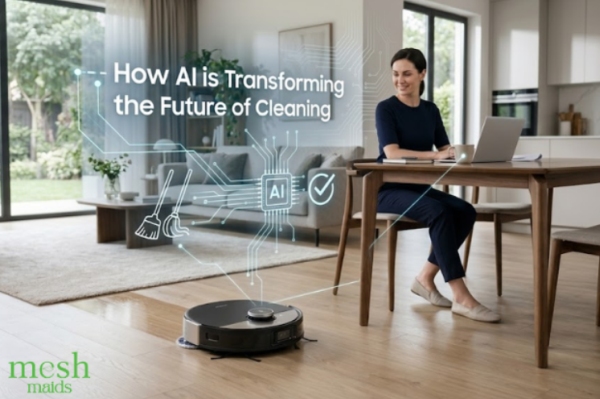
Artificial Intelligence (AI) is transforming the cleaning industry by making it faster, smarter, and more efficient. Traditional cleaning methods that once relied heavily on manual effort are now evolving with automation, smart data, and intelligent systems. From robotic vacuum cleaners that operate independently to AI-powered tools that optimize cleaning schedules and detect high-need areas in real time, cleaning is becoming more precise and results-driven.
As the demand for convenient and effective solutions grows, both homeowners and businesses are shifting toward AI-driven cleaning approaches. While AI improves efficiency and reduces manual effort, human expertise still remains essential for deeper attention, judgment, and handling complex cleaning tasks. The most effective approach combines AI-driven tools with professional cleaning expertise of leading cleaning companies like Mesh Maids to get the highest standards of cleanliness.
In this guide, you will learn how AI works in the cleaning industry, its most practical use cases, and how you can use these innovations to achieve more efficient and effective cleaning outcomes.
Artificial Intelligence (AI) in the cleaning industry refers to the use of advanced technologies, machine learning algorithms, and automated systems to make cleaning processes more efficient, accurate, and consistent. Instead of relying only on manual effort, AI systems analyze data, identify patterns, and make decisions with minimal human involvement.
These systems continuously collect information from the environment. Over time, they learn from past cleaning activities and adapt to changing conditions. This allows them to improve performance and deliver more accurate results.
For example, AI can:
This creates a more proactive and intelligent approach to maintaining cleanliness.
AI is already being used in practical and impactful ways across homes and commercial spaces. Here are some of the most effective applications:
One of the most common uses of AI in cleaning is robotic cleaners. These machines can vacuum, mop, and sanitize spaces without constant human supervision. They use sensors and mapping technology to navigate rooms, avoid obstacles, and clean efficiently.
AI systems can create and manage cleaning schedules based on real-time data. For example, high-traffic areas can be cleaned more frequently, while low-use spaces are cleaned only when necessary. This helps in saving time, effort, and resources.
AI monitors cleaning equipment and predicts when maintenance is required. This reduces downtime, prevents unexpected failures, and ensures smooth operations.
AI tools can assess cleaning quality using sensors and data analysis. This ensures consistent standards, especially in commercial environments where hygiene compliance is critical.
AI learns user preferences over time and adapts cleaning routines accordingly. Whether it's focusing more on kitchens, carpets, or bathrooms, cleaning becomes more customized.
AI reduces unnecessary usage of water, electricity, and cleaning supplies by optimizing when and how cleaning is performed.
In places like hospitals, offices, and public spaces, AI plays a crucial role in maintaining hygiene. It can track high-touch areas, monitor cleanliness levels, and ensure proper sanitization. This helps reduce the spread of germs and creates safer environments.
Cleaning companies use AI insights to improve operations, optimize workforce allocation, and enhance service quality.
AI is transforming the cleaning industry by turning traditional methods into smarter, more efficient processes.
AI-powered tools are making home cleaning more convenient and efficient. Here are some of the most useful options:
These devices use intelligent mapping to clean your home efficiently. They can be scheduled through mobile apps and operate independently, making them ideal for daily maintenance.
Robot mops handle wet cleaning with precision. They adjust water usage, detect floor types, and avoid carpets, delivering consistent results.
These systems allow you to control cleaning tasks through apps or voice commands. You can schedule cleaning, monitor progress, and customize preferences easily.
AI-enabled air purifiers monitor air quality and adjust performance in real time, helping to maintain a healthier indoor environment.
They are equipped with motion sensors and odor control, these bins improve hygiene and make waste management easier.
These devices use ultraviolet light to eliminate bacteria and viruses from surfaces, enhancing hygiene without chemicals.
AI-powered apps help manage cleaning routines, track tasks, and create personalized schedules based on your habits.
If you’re selecting AI tools for your home, consider the following factors:
Pro Tip: Start with a robotic vacuum or mop, then expand your setup over time for a complete smart cleaning system.
AI significantly enhances cleaning efficiency by reducing manual effort and improving accuracy.
AI-powered machines can cover large areas quickly while maintaining high performance, increasing overall productivity.
AI eliminates inconsistency by following predefined standards. This ensures:
AI relies on data and logic rather than guesswork, minimizing errors and improving accuracy.
Although AI tools require an initial investment, they reduce long-term costs by:
While Artificial Intelligence offers many advantages in the cleaning industry, it also comes with certain challenges. Understanding these limitations is important for you to make informed decisions and use AI effectively.
AI-powered cleaning tools and systems often require a significant upfront cost. Advanced equipment like robotic cleaners, smart sensors, and data-driven software can be expensive. Although these costs may reduce over time, the initial investment can be a barrier.
AI systems rely heavily on technology to function properly. Any technical issue, software glitch, or system failure can disrupt cleaning operations. This means regular maintenance and updates are necessary to ensure smooth performance.
While AI is efficient, it lacks human intuition and judgment. Certain cleaning tasks require attention to detail, decision-making, and adaptability that only experienced professionals can provide. AI may not always handle complex or delicate cleaning situations effectively.
AI systems often collect and process data from homes or workplaces, such as usage patterns and environmental information. This can raise concerns about data privacy and security, especially if the information is not properly managed or protected.
Implementing AI requires proper training and adjustment. The cleaning team needs to understand how to use AI tools effectively, which may take time and effort. Without proper training, the benefits of AI may not be fully realized.
AI-powered cleaning systems may not perform well in every setting. Complex layouts, cluttered spaces, or areas requiring detailed manual work can limit the effectiveness of automated tools.
While AI brings innovation and efficiency to the cleaning industry, it is not a complete replacement for human effort. The best results often come from combining AI technology with professional expertise to achieve a balanced and effective cleaning approach.
AI has changed the way we clean—but it hasn’t changed what true cleanliness requires. Smart devices can maintain your space, but they don’t understand it.
Cleaning is not just about removing visible dust—it’s about knowing what to clean, how to clean it, and when it needs deeper attention. AI follows patterns, but professionals analyze the environment. Professional cleaning services like Mesh Maids notice buildup before it becomes a problem. With professional expertise they treat different surfaces with the right methods.
With Mesh Maids, you’re not just getting a cleaner home—you’re getting a thoughtful, detail-driven approach with expertise. From tackling neglected areas to maintaining a spotless space, our team brings a level of care that goes beyond automation.
Artificial Intelligence is reshaping the cleaning industry in a practical and meaningful way. From smarter tools and automated systems to data-driven decisions, AI is helping in making cleaning faster, more efficient, and more consistent.
This means you will get a cleaner and healthier living space with less time spent on daily chores. It also opens the door to better service delivery, improved productivity, and stronger customer satisfaction for professional cleaning companies.
As AI continues to evolve, its role in the cleaning industry will only grow stronger. The key is to use this technology wisely—combining it with human expertise to achieve the best possible results. In the end, AI is not just changing how cleaning is done; it is setting a new standard for what clean truly means.
 The National Crowdfunding & Fintech Association (NCFA Canada) is a financial innovation ecosystem that provides education, market intelligence, industry stewardship, networking and funding opportunities and services to thousands of community members and works closely with industry, government, partners and affiliates to create a vibrant and innovative fintech and funding industry in Canada. Decentralized and distributed, NCFA is engaged with global stakeholders and helps incubate projects and investment in fintech, alternative finance, crowdfunding, peer-to-peer finance, payments, digital assets and tokens, artificial intelligence, blockchain, cryptocurrency, regtech, and insurtech sectors. Join Canada's Fintech & Funding Community today FREE! Or become a contributing member and get perks. For more information, please visit: www.ncfacanada.org
 |  |  |
|---|---|---|
 |  |  |



August 26th, 2025

January 4th, 2024

June 1st, 2021

September 9th, 2020

July 9th, 2018

January 3rd, 2018

September 25th, 2017

June 20th, 2017

May 10th, 2017

December 14th, 2016

Leave a Reply