





Karsten Wenzlaff, Advisor
August 26th, 2025
Karsten Wenzlaff is a Crowdfunding and Fintech Expert from Germany. He is Secretary-General of Digit[...]


November 27, 2024

Image: Unsplash/Brian Wangenheim
Bitcoin has long been celebrated as a decentralized digital currency and a store of value. However, its functionality has traditionally been limited to peer-to-peer transactions and as a store of value.
In recent years, the landscape has shifted with the emergence of Decentralized Finance (DeFi) on Bitcoin, expanding its utility beyond simple transactions to encompass a wide array of financial services. This evolution is transforming Bitcoin from a static asset into a dynamic platform for financial innovation.
Read on to learn more about the growing DeFi ecosystem on Bitcoin.
Decentralized Finance (DeFi) refers to a suite of financial services built on blockchain technology that operate without traditional intermediaries like banks or brokers.
By leveraging smart contracts—self-executing contracts with the terms directly written into code—DeFi platforms enable users to engage in activities such as lending, borrowing, trading, and earning interest in a decentralized, permissionless manner. This paradigm shift offers greater accessibility, transparency, and control over financial assets.
While Ethereum has been the frontrunner in the DeFi space due to its robust smart contract capabilities, Bitcoin's entry into DeFi marks a significant milestone.
Historically, Bitcoin's scripting language lacked the flexibility required for complex smart contracts, limiting its use cases. However, technological advancements and the development of Layer 2 solutions have paved the way for DeFi applications on the Bitcoin network.
To overcome Bitcoin's inherent limitations, developers have introduced Bitcoin Layer 2 protocols that enhance its functionality. Examples of three exciting off-chain scaling protocols include Rootstock (RSK), Stacks, and Build on Bitcoin (BOB).
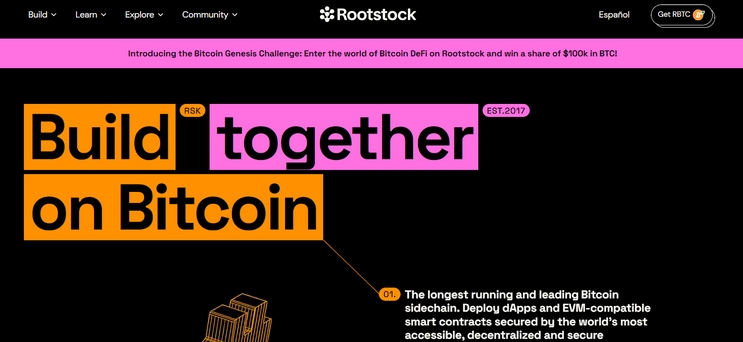
RSK is a sidechain that brings smart contract capabilities to Bitcoin. Using a two-way peg, it allows BTC to be converted into rBTC, which can then be utilized in various DeFi applications built on the RSK platform.
This integration enables functionalities such as lending, borrowing, and trading within the Bitcoin ecosystem.
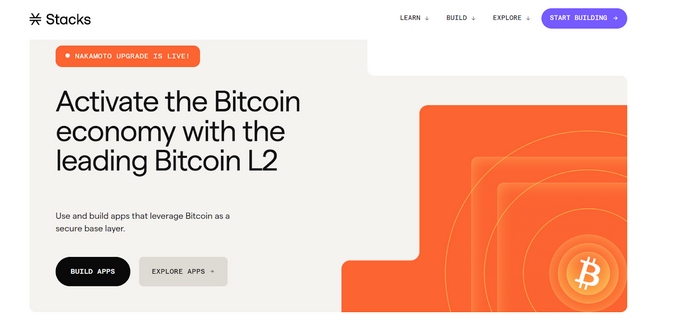
Stacks is a Layer 2 platform that introduces smart contracts and decentralized applications (dApps) to Bitcoin. It operates using a unique consensus mechanism called Proof of Transfer (PoX), which anchors Stacks' security to the Bitcoin blockchain.
This design allows developers to build complex applications while benefiting from Bitcoin's security and stability.
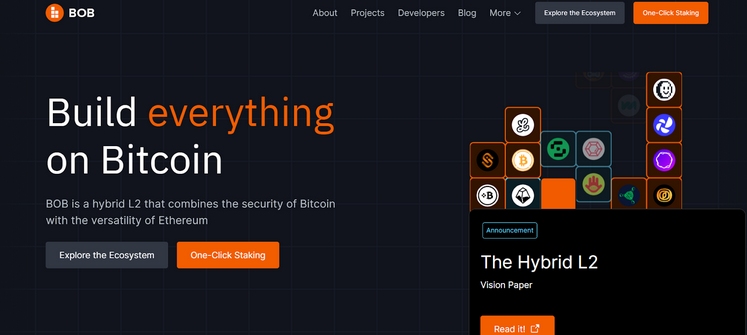
BOB is a hybrid layer-2 solution that combines the security of Bitcoin with the versatility of Ethereum. It allows developers familiar with the Ethereum Virtual Machine (EVM) to start building on Bitcoin immediately, utilizing best-in-class EVM tooling, wallets, analytics, and blockchain infrastructure.
BOB inherits security from Bitcoin's Proof of Work (PoW) consensus mechanism, contributing to Bitcoin's economy and providing usable decentralization for builders today. Additionally, BOB connects to both Bitcoin and Ethereum, sourcing liquidity from the two largest blockchain ecosystems and positioning itself as a leading solution for DeFi mass adoption.
The integration of DeFi into the Bitcoin ecosystem has led to the development of various applications that mirror traditional financial services.
Platforms like Sovryn, built on RSK and BoB, offer decentralized trading services where users can swap tokens directly from their wallets without relying on centralized exchanges. This model enhances security and reduces the risk of hacks associated with centralized platforms.
Bitcoin DeFi protocols such as ALEX on Stacks or Liquidium on the Bitcoin network enable users to lend their assets to earn interest or borrow against their holdings. These services operate without intermediaries, providing more favorable terms and greater accessibility to users worldwide.
Stablecoins pegged to fiat currencies are being introduced on Bitcoin's network through platforms like Sovryn's Sovryn Dollar (DLLR). These assets offer stability in value, making them suitable for everyday transactions and as a hedge against volatility.
Wallets designed for DeFi, such as the Xverse DeFi Wallet, OKX Wallet, and Leather, are gaining traction within the Bitcoin community. These wallets not only provide a secure way to store bitcoin but also integrate features like token swaps and access to DeFi applications on Layer 2 solutions. Their user-friendly interfaces make it easier for users to interact with the Bitcoin DeFi ecosystem.
The integration of DeFi into the Bitcoin ecosystem is still in its nascent stages but holds significant promise.
As technological advancements continue and Layer 2 solutions mature, Bitcoin's role in the DeFi space is expected to expand. This evolution could lead to a more inclusive financial system, leveraging Bitcoin's security and decentralization to offer a wide array of financial services to users globally.
The rise of DeFi on Bitcoin represents a pivotal development in the cryptocurrency landscape. By extending Bitcoin's functionality beyond a store of value to a platform for decentralized financial services, it opens new avenues for innovation and adoption.
 The National Crowdfunding & Fintech Association (NCFA Canada) is a financial innovation ecosystem that provides education, market intelligence, industry stewardship, networking and funding opportunities and services to thousands of community members and works closely with industry, government, partners and affiliates to create a vibrant and innovative fintech and funding industry in Canada. Decentralized and distributed, NCFA is engaged with global stakeholders and helps incubate projects and investment in fintech, alternative finance, crowdfunding, peer-to-peer finance, payments, digital assets and tokens, artificial intelligence, blockchain, cryptocurrency, regtech, and insurtech sectors. Join Canada's Fintech & Funding Community today FREE! Or become a contributing member and get perks. For more information, please visit: www.ncfacanada.org
 |  |  |
|---|---|---|
 |  |  |



August 26th, 2025

January 4th, 2024

June 1st, 2021

September 9th, 2020

July 9th, 2018

January 3rd, 2018

September 25th, 2017

June 20th, 2017

May 10th, 2017

December 14th, 2016

Leave a Reply