





Karsten Wenzlaff, Advisor
August 26th, 2025
Karsten Wenzlaff is a Crowdfunding and Fintech Expert from Germany. He is Secretary-General of Digit[...]


Sep 9, 2026 | Legal Issues, Regulation, Consultation
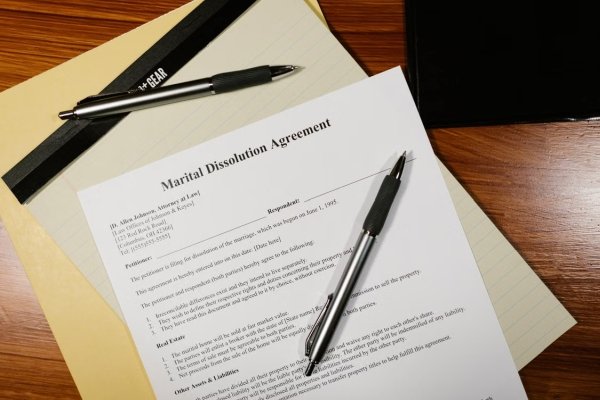
Image: Pexels/RDNE Stock project
Divorce can change much more than a relationship. Property, savings, wills, beneficiary designations, support obligations, and future inheritances can all become part of the financial cleanup. The rules are particularly important when significant assets are involved because assumptions about who owns what do not always match the law.
The numbers give the issue some scale. According to the 2021 Census, about 695,630 people in Ontario were divorced and not living common-law, while another 333,775 were separated and not living common-law. Changes to succession law that took effect in 2022 also altered how certain separated spouses are treated when someone dies, making current legal advice especially important.
People often assume that anything inherited during marriage automatically remains theirs after the relationship ends. There is some basis for that idea, but the rules contain important exceptions.
Under family property law, property inherited from a third party during marriage can generally be excluded from net family property if it still exists at the valuation date. Property that can be traced back to an inheritance may also qualify for exclusion.
The family home is different. If inherited money is used to acquire or improve a matrimonial home, or the inherited property itself becomes that home, the normal exclusion may not apply.
Documentation therefore matters almost as much as the source of the money.
Divorce generally changes a former spouse's position under a will, but it does not necessarily erase every possible financial obligation between two people.
For anyone trying to understand inheritance rights after divorce in Ontario, Nussbaum Law explains how divorce, separation, support obligations, joint ownership, beneficiary designations, and estate claims can interact. The firm provides family-law and estate-litigation services and notes that unresolved support or other legal obligations may continue to affect an estate even after a marriage has ended.
This is why the answer to “Can my former spouse still receive anything?” may depend on much more than whether a divorce order exists.
Everyday conversation tends to treat separation and divorce as interchangeable. Legally, they are distinct.
Separation generally involves spouses living apart following the breakdown of their relationship. Divorce formally terminates the marriage.
That distinction can become particularly important when one spouse dies before all financial and estate matters have been resolved. Property division, support obligations, wills, and estate entitlements may interact differently depending on the couple's legal status and existing agreements.
Someone who has moved out and started a separate life should not assume every legal connection has disappeared with the moving boxes.
Inherited assets receive certain protections during property division, but a matrimonial home operates under different rules.
Government guidance explains that even when a family home was inherited or received as a gift, it does not receive the same excluded-property treatment that might apply to other inherited assets. Its value can therefore become relevant to the equalization calculation.
That distinction can catch people by surprise.
Suppose someone inherits money and leaves it in a separate investment account. Compare that with using the inheritance to pay down the mortgage on the family home. Those choices can produce very different consequences.
Before transferring substantial inherited funds into jointly used property, getting individual legal advice can be worthwhile.
A major relationship change is a sensible time to review estate documents.
Under succession legislation, when a marriage ends through divorce, gifts to a former spouse in an existing will are generally treated as revoked unless the will indicates a contrary intention. The same principle applies to certain appointments, such as naming that former spouse as executor.
That does not mean an old will should simply be forgotten.
The remaining provisions may no longer distribute the estate the way you want. Executors, alternate beneficiaries, trusts, guardianship arrangements, and other instructions could all deserve reconsideration.
A current will is usually easier for everyone to understand than an old document that has to be interpreted through later legal changes.
Your will is only one part of estate planning.
Life insurance, pensions, registered accounts, jointly owned assets, and other financial arrangements may have their own beneficiary or survivorship provisions. That means changing a will without reviewing everything else can leave inconsistencies behind.
The Government of Canada's information on getting separated or divorced recommends reviewing finances carefully after a relationship breakdown, including joint accounts, credit arrangements, insurance, investments, and retirement planning.
Create a complete inventory rather than trying to remember accounts individually. Administrative details are easy to overlook when a separation already involves housing, finances, family arrangements, and legal paperwork.
If you want to claim that an asset should be excluded from property division, you may need to establish where it came from and what happened to it afterward.
Keep estate documents, bank statements, investment records, transfer confirmations, and other paperwork showing the original inheritance and its subsequent movement.
Tracing becomes more difficult when inherited funds are repeatedly transferred between accounts or mixed with other money.
Government guidance on dividing property after a relationship ends specifically identifies inherited property other than the family home as an example of property that may be excluded. It also explains how assets and debts are considered when calculating family property.
Good records cannot guarantee a particular legal outcome, but missing records rarely make a complicated financial dispute easier.
Inheritance questions should not be handled in isolation.
Look at property division, support arrangements, jointly owned assets, insurance, beneficiary designations, wills, registered accounts, and any obligations established through an agreement or court order.
Timing matters too. Moving inherited funds, changing ownership, or making large financial decisions before understanding their legal consequences can create problems that are difficult to reverse.
The goal is not to assume every former spouse will make a claim or that every inheritance will become disputed. It is simply to know where the potential complications are before making decisions involving significant assets.
Divorce already creates enough paperwork. Your estate plan does not need to become the sequel.
 The National Crowdfunding & Fintech Association (NCFA Canada) is a financial innovation ecosystem that provides education, market intelligence, industry stewardship, networking and funding opportunities and services to thousands of community members and works closely with industry, government, partners and affiliates to create a vibrant and innovative fintech and funding industry in Canada. Decentralized and distributed, NCFA is engaged with global stakeholders and helps incubate projects and investment in fintech, alternative finance, crowdfunding, peer-to-peer finance, payments, digital assets and tokens, artificial intelligence, blockchain, cryptocurrency, regtech, and insurtech sectors. Join Canada's Fintech & Funding Community today FREE! Or become a contributing member and get perks. For more information, please visit: www.ncfacanada.org
 |  |  |
|---|---|---|
 |  |  |



August 26th, 2025

January 4th, 2024

June 1st, 2021

September 9th, 2020

July 9th, 2018

January 3rd, 2018

September 25th, 2017

June 20th, 2017

May 10th, 2017

December 14th, 2016

Leave a Reply