





Karsten Wenzlaff, Advisor
August 26th, 2025
Karsten Wenzlaff is a Crowdfunding and Fintech Expert from Germany. He is Secretary-General of Digit[...]


May 21, 2025
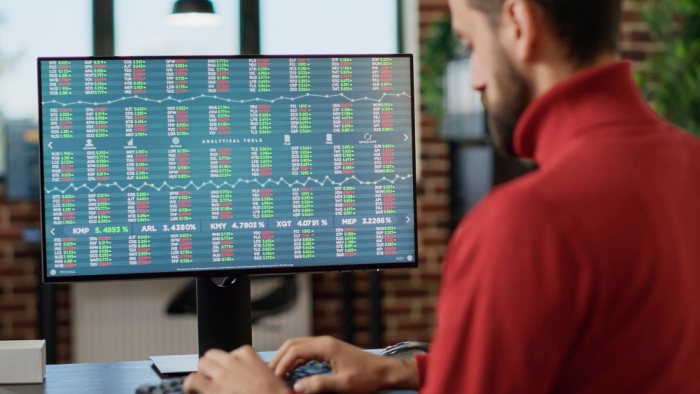
Image: Freepik/DC Studio
Synthetic indices are a new phenomenon in the world of online trading that has drawn interest from both novice and experienced traders. These digital assets provide a distinctive and dynamic trading experience by simulating actual market conditions. However, as their popularity increases, so does the number of questions. The most important one is "Are synthetic indices manipulated?" How much real power do brokers have over the results, if any at all? In a market unrelated to tangible things, it's a legitimate worry. This article delves into how you can ascertain whether synthetic indices are as fair as conventional trading instruments or just a new kind of risk wrapped in tech-savvy terminology.
Here are facts about synthetic indices:
The fact that synthetic indexes are not based on actual assets is one of the primary ways they differ from conventional financial instruments. These algorithms replicate the movement and volatility of actual markets, but they are not directly related to economic indicators, company performance, or geopolitical events. Some traders doubt the validity of their price behavior because they are simulated. Given that the market movements are artificial, you may well wonder, "Are synthetic indices manipulated?"
The foundation of synthetic indexes is the idea of controlled volatility. The degree to which the price is anticipated to change during a specified period is determined by the predefined volatility level of each index, such as Volatility 10, 25, 50, or 75. On the positive side, controlled volatility lets you create exact strategies since it offers a level of predictability that real-world assets do not. Conversely, this leads to the question of whether synthetic indices are manipulated, and it is a valid one.
Regulation and broker dependency are important considerations when asking, "Are synthetic indices manipulated?" As a result of this arrangement, traders rely significantly on the broker's transparency and reliability. Concerns regarding market manipulation can be reduced if the broker conducts business fairly and uses certified algorithms that have undergone third-party audits. The answer to the question of "Is synthetic indices gambling?" primarily depends on the broker's policies. You can check over here to explore synthetic indices.
Synthetic indices have the unquestionable advantage of being accessible around the clock, in contrast to traditional markets that have set operating hours. Traders with erratic schedules or those in different time zones still have easy access. Whatever time works best for you, you can trade on the weekend, at midnight, or during your lunch break. This feature, nevertheless, also heightens worries about possible manipulation. Every tick in these indexes is produced within the broker's ecosystem because they are not dependent on outside variables or actual market hours. This brings up the question of whether synthetic indices are manipulated.
Slippage and liquidity are ongoing issues in traditional markets. Because the market is mimicked, liquidity and slippage are not as big problems with synthetic indexes. The algorithm is followed to execute each order, guaranteeing a steady and reliable trading experience.
However, the lack of friction in the actual world occasionally prompts doubters to ask themselves, "Are synthetic indices manipulated?" This is especially the case when results seem unduly controlled or smooth. Understanding that synthetic indices are distinct, not better or worse.
Are artificial indices, then, manipulated? There is more to the answer than a simple yes or no. To answer the question, "Are synthetic indices manipulated?" it's critical to realize that trading in any way carries some level of risk. However, with the right broker, discipline, and understanding, trading on synthetic indices doesn't have to be a gamble. As with any other market, whether genuine or simulated, synthetic indices present a distinct combination of opportunity and risk.
 The National Crowdfunding & Fintech Association (NCFA Canada) is a financial innovation ecosystem that provides education, market intelligence, industry stewardship, networking and funding opportunities and services to thousands of community members and works closely with industry, government, partners and affiliates to create a vibrant and innovative fintech and funding industry in Canada. Decentralized and distributed, NCFA is engaged with global stakeholders and helps incubate projects and investment in fintech, alternative finance, crowdfunding, peer-to-peer finance, payments, digital assets and tokens, artificial intelligence, blockchain, cryptocurrency, regtech, and insurtech sectors. Join Canada's Fintech & Funding Community today FREE! Or become a contributing member and get perks. For more information, please visit: www.ncfacanada.org
 |  |  |
|---|---|---|
 |  |  |



August 26th, 2025

January 4th, 2024

June 1st, 2021

September 9th, 2020

July 9th, 2018

January 3rd, 2018

September 25th, 2017

June 20th, 2017

May 10th, 2017

December 14th, 2016

Leave a Reply