





Karsten Wenzlaff, Advisor
August 26th, 2025
Karsten Wenzlaff is a Crowdfunding and Fintech Expert from Germany. He is Secretary-General of Digit[...]


April 17, 2026
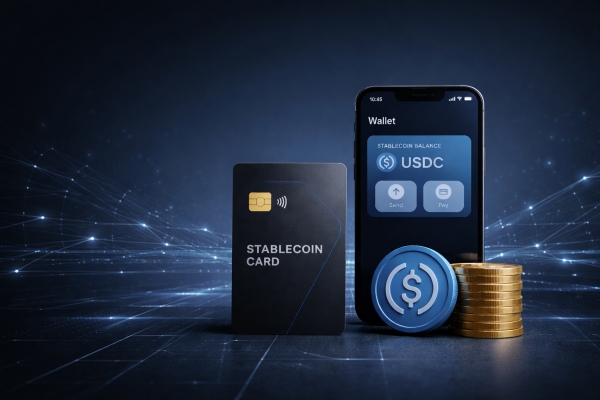
Digital payments have become part of everyday life, shaping how people send money, pay for services, and manage their spending. What once felt like an alternative is now standard across many markets. Cryptocurrencies have played a significant role in that shift, especially for international transfers. They move funds faster, reduce fees, and avoid some of the delays tied to traditional banking systems.
This trend is visible across different industries. Even on entertainment platforms in Canada, such as MyEmpire Casino, crypto transactions have found their place, offering users a quicker and more flexible way to handle deposits and withdrawals.
Besides crypto payments, stablecoins are also attracting more attention. They offer the same speed and efficiency as other digital assets, while keeping their value tied to traditional currencies.
That makes them more predictable, especially for larger or more frequent transactions. A recent example comes from Kulipa, a Paris-based company that raised 6.2 million dollars to expand its stablecoin card issuing system. Moves like this raise an important question: Is there something here that Canada could take note of?
Stablecoins are already moving large volumes of money every day, yet their role in everyday payments still feels limited. The issue is not demand. It comes down to how difficult it is to connect blockchain-based balances with the systems people actually use, like debit and credit cards.
Right now, many solutions feel fragmented. Users often need to move funds between platforms, hold extra balances in traditional accounts, or deal with different rules depending on where they live. This slows things down and adds unnecessary friction. As regulations become clearer, fintech companies are looking for simpler ways to bridge that gap without tying up large amounts of capital.
Kulipa is working directly in that space. Its system is built from the ground up around stablecoins, allowing companies in areas like payroll and digital banking to issue cards linked to blockchain funds. By keeping settlements on-chain where possible, it reduces the need for pre-funded accounts sitting idle in banks.
The approach is fairly straightforward. Kulipa gives partners two ways to launch. One option focuses on speed, using a pre-funded setup to get things running quickly. The other connects more deeply with digital wallets, allowing transactions to be verified and settled directly on the blockchain.
This reduces the capital required to be tied up in traditional systems. It also removes several operational hurdles. Fraud protection, for example, is handled within the platform, which takes pressure off the companies using it.
From the user’s side, the experience feels familiar. Cards can be used for everyday purchases or ATM withdrawals at locations where major networks are accepted. The difference is happening in the background, where stablecoins are being used without requiring extra steps like manual conversions or account transfers.
Since launching in early 2025, Kulipa has expanded quickly. The number of issued cards has already passed six figures, and transaction volumes have been growing steadily month by month. This kind of traction suggests that the model is solving a real problem rather than testing a niche idea.
The company has also built partnerships across different markets. Flutterwave, known for its work in African payments, is one example. Other partners, such as Ready, Solflare, and nSave, demonstrate that the system works across different use cases, from banking alternatives to crypto-native platforms.
What stands out is how these partners describe the product. The focus is on turning digital balances into usable tools for daily life without adding layers of complexity. That feedback points to practical value rather than theoretical potential.
Kulipa’s leadership brings experience from both traditional finance and large tech platforms. The CEO has worked on global payment rollouts at Mastercard, while the technical side includes experience from companies like Google and WhatsApp. On the compliance front, the team has a background in both crypto platforms and established banking systems.
This mix matters. Building payment infrastructure requires both technical depth and an understanding of regulation, and Kulipa seems to be working across both areas.
Investors have also backed that direction. The recent funding round brought in support from firms focused on financial innovation and blockchain infrastructure. With over $9 million raised, the company now has room to expand its system and reach new markets.
Canada is moving toward clearer rules for stablecoins, though the process is still ongoing. Recent policy steps suggest a more defined framework is coming, with oversight likely to increase in the next few years. Until then, companies are operating in a space that is still developing.
The core challenge remains the same: connecting digital assets to everyday spending in a simple, cost-effective way. This is especially relevant for businesses dealing with cross-border payments or digital wallets.
Kulipa’s model offers one possible direction. Instead of building everything internally, popular companies in Canada, such as MyEmpire Casino or Coinsquare, could consider partnerships or ready-made systems to reduce both costs and complexity. This would allow them to move faster while staying within expected regulatory boundaries.
 The National Crowdfunding & Fintech Association (NCFA Canada) is a financial innovation ecosystem that provides education, market intelligence, industry stewardship, networking and funding opportunities and services to thousands of community members and works closely with industry, government, partners and affiliates to create a vibrant and innovative fintech and funding industry in Canada. Decentralized and distributed, NCFA is engaged with global stakeholders and helps incubate projects and investment in fintech, alternative finance, crowdfunding, peer-to-peer finance, payments, digital assets and tokens, artificial intelligence, blockchain, cryptocurrency, regtech, and insurtech sectors. Join Canada's Fintech & Funding Community today FREE! Or become a contributing member and get perks. For more information, please visit: www.ncfacanada.org
 |  |  |
|---|---|---|
 |  |  |



August 26th, 2025

January 4th, 2024

June 1st, 2021

September 9th, 2020

July 9th, 2018

January 3rd, 2018

September 25th, 2017

June 20th, 2017

May 10th, 2017

December 14th, 2016

Leave a Reply