As Squamish, on B.C.'s busy west coast, cements its reputation as the Outdoor Capital of Canada, it opens up a challenge, what do you do if you can't or don't want to do extreme sports?
SQUAMISH, BC, October 31, 2018 /24-7PressRelease/ -- Squamish sits between two of the biggest tourist destinations in Canada – Vancouver, B.C. and Whistler, B.C. and is quickly becoming a destination itself. The Squamish tourism market has been growing at an amazing rate, even faster than B.C.'s tourism market as a whole. In 2017, there was a total of 5,713,926 overnight international visitor arrivals to the province, including 3,691,074 visitors from the US, 1,277,878 from Asia Pacific. The government has been putting more and more resources into attracting tourists to this amazing part of the world and the investment is paying off – in B.C., the tourism gross domestic product grew more rapidly in 2016 than all other industries combined.
Many of the activities in and around Squamish are designed specifically for the extreme sports enthusiast and very able outdoors people, even the hiking is difficult. The Sea to Sky Gondola (constructed in 2014) is one of the only attractions in the Squamish area that caters to visitors of all abilities. Additional attractions and activities that all levels and abilities can enjoy are needed in this area, to address the surge in visits by local and international tourists. Robin Sherry, founder and project lead of Squamish Canyon has met with the different levels of government from the city to roads to parks and first responders and they are all struggling to keep up with the rate of tourism growth in the region. There is still a need for investment and support by the government to the Parks, but there is also a need for private industry to play its role.
As the area has grown through tourism the community has grown too and having alternative activities for both tourists and the community that are safe, all weather and all ages has become paramount.
Working closely with the logging community and industry in the area, Squamish Canyon is preserving 26 acres of forest and creating low impact activities including interpretive forest and canyon walks, playground and entertainment area. Five years in the planning, Sherry is working with local businesses and contractors with international and local experience to have Squamish Canyon ready to open in Summer, 2019.
Robin Sherry commented, "I've lived in Squamish for over ten years and seen the huge growth in tourism but also the growth in the town. I am very involved in the outdoor community, but I also want everyone to be able to participate in this stunning location. Participation means a number of things; to be able to walk safely through temperate rainforest and understand the history ,culture and ecology, to bring local businesses in as suppliers, to create meaningful jobs that enable people to live in Squamish and to open up the investment to the community, so people can benefit from revenues made by Squamish Canyon."
Squamish Canyon launched their equity crowdfunding campaign on Canada's largest investment crowdfunding platform, FrontFundr on Tuesday, October 30th. Canadians can invest from $250 on the platform. Prior to launch, nearly $300,000 has already been reserved by investors.
Key Data
- Approximately 7.6 million people drive the Sea to Sky Highway per annum; 60 – 70% of those are estimated to be visitors to the area.
- Squamish Canyon is located 65 km from Whistler BC, which sees approximately 2.7 million visitors annually.
- Squamish Canyon is nestled in the Coastal Mountains at the end of the Howe Sound surrounded by fjords and waterfalls in beautiful British Columbia, Canada. The canyon is a few minutes off the spectacular Sea to Sky Highway, close to the world famous Stawamus Chief (340,000 visitors annually), Shannon Falls Provincial Park (475,000 visitors annually) and the Sea to Sky Gondola (400,000 visitors annually).
- The Sea to Sky Gondola sees approximately 400,000 visitors annually and far exceeded its highest visitor projections in the first year of operations. An estimated 80% of gondola visitors were specifically coming to the area to ride the gondola and not just passing through on the way to Whistler (Kirby Brown, General Manager, Sea to Sky Gondola).
Squamish Canyon will be located 62 km from Capilano Suspension Bridge, North Vancouver, BC – over 800,000 visitors annually
- The focus for Tourism Squamish is currently on attracting multi-generational tourists from the Lower Mainland (Lesley Weeks, Executive Director of Tourism Squamish)
For more information or to arrange an interview contact Victoria Bennett victoria@bmwconsults.com (403) 589 7992
Full details of the offering can be found in the Offering Memorandum. This document is for information purposes only. Please consult your finance professional before making an investment.
Squamish Canyon is a proposed destination addressing the Sea to Sky Corridor's critical lack of engaging, safe, and fun experiences for visitors of all ages. British Columbia's Highway 99 from Horseshoe Bay to Lillooet (known as the Sea to Sky Highway) links Metro Vancouver with Whistler and Squamish, BC. It is one of the busiest tourist highways in Canada, with day parks along the route seeing up to 900,000 visitors per year. And for those without advanced abilities, it's a destination they cannot fully experience.
Mamquam Adventures Inc, a local company with world-class partners, is changing that, designing a year-round, all-weather experience; one that can be enjoyed by the local 'big kids', parents with toddlers, grandma and grandpa, and almost anyone in between on the Vancouver - Squamish - Whistler highway.
At Squamish Canyon, you will be immersed in the natural beauty of the place named "Mother of Wind", walking over waterfalls, along the edge of canyon walls, and through a majestic rainforest on boardwalks, bridges, and suspended walkways, an experience only a whitewater kayaker or climber could previously enjoy. Along the journey, visitors will learn about local ecosystems, glacial water systems, outdoor safety, the history of the land and the First Nations of the area, as well as safety and conservation.
Mamquam Adventures Inc. values environmental and social sustainability, public transparency, and accountability. The company intends to balance growth and purpose in creating Squamish Canyon. The project brings together industry and tourism, diversifying the economy of the area, and creating a place for the local community and visitors to revel in the natural, rustic beauty of Canada's outdoor recreation capital.
The National Crowdfunding & Fintech Association (NCFA Canada) is a financial innovation ecosystem that provides education, market intelligence, industry stewardship, networking and funding opportunities and services to thousands of community members and works closely with industry, government, partners and affiliates to create a vibrant and innovative fintech and funding industry in Canada. Decentralized and distributed, NCFA is engaged with global stakeholders and helps incubate projects and investment in fintech, alternative finance, crowdfunding, peer-to-peer finance, payments, digital assets and tokens, blockchain, cryptocurrency, regtech, and insurtech sectors. Join Canada's Fintech & Funding Community today FREE! Or become a contributing member and get perks. For more information, please visit: www.ncfacanada.org
Nov 12, 2026 Buying a Canadian money services business starts with identifying what the buyer will acquire: a legal entity, a registration history, contracts, records and possibly an active operation. The value of that package depends on whether it supports the services the new owner intends to provide. A FINTRAC registration entry is an important starting point. It does not establish the company’s financial condition, the quality of its compliance programme or the availability of banking relationships after an acquisition. A payment business may also need a separate assessment under the Retail Payment Activities Act, or RPAA. For investors evaluating a Canadian MSB company for sale, due diligence should connect registration status, actual activities, transaction structure and financial evidence before the parties agree a completion timetable. Verify the Canadian MSB registration and legal entity Begin with the target’s exact legal name, incorporation details, registration number and current status. Match the entity in the corporate documents to the entity in FINTRAC’s Money Services Business Registry. FINTRAC explicitly states that registration does not mean it endorses or licenses a business. It also states that it does not issue licences or certificates of registration. A sales presentation using the phrase “FINTRAC licence” should ...
November 12, 2026 | NCFA Fintech Market Insight | Digital Assets Blockchain And Tokenization, Capital Markets Infrastructure And Funding, Wealthtech Investing And Trading Strategy still runs a software business, but Bitcoin now dominates its assets and capital raising. MSCI no longer treats that balance as an index eligible operating company. November 11, 2026, MSCI confirmed Strategy’s removal from the MSCI USA and MSCI World indexes after the November 30 close under its new methodology for non operating companies. MSCI is one of the world’s largest index providers, and its benchmarks are followed by funds investing across global equity markets. Japan’s Metaplanet is also being removed from an MSCI index. MSCI has decided that Strategy no longer qualifies for its equity indexes because Bitcoin now dominates its assets and much of its capital raising. Strategy still sells software and reports operating revenue, but MSCI is drawing a line between a business that holds investment assets and one where those assets have become the main financial story. Why Is MSCI Removing Strategy From Its Indexes? MSCI first looked at a rule aimed specifically at digital asset treasury companies. It later dropped that proposal and change it's methodology to cover companies whose finances ...
Nov 12, 2026 Crypto market cap is calculated by multiplying an asset's reference price by its circulating supply. A token priced at $2 with 50 million units circulating has a market cap of $100 million. The calculation estimates the value of that supply at the reference price; it does not total the money investors deposited. To understand a change in the ranking, examine both inputs and the provider's definitions. A larger number can result from price changes, supply changes, or revised reporting. Establish what the two inputs represent The arithmetic is simple, but neither input is self-explanatory. “Price” may be a reference assembled from selected trading pairs and venues, rather than the last transaction on the exchange you use. A provider may exclude observations or convert quote currencies. Two services can publish different estimates because their source selection and methods differ. Circulating supply is an estimate of units treated as available in the market under a provider's rules. It may differ from the number minted, the total recorded by a contract, or the maximum permitted under a protocol's current design. Locked balances, treasury allocations, burns, and scheduled releases require interpretation. A transparent methodology matters because identical arithmetic can still use ...
November 11, 2026 | NCFA Fintech Market Insight | Artificial Intelligence And Data, Capital Markets Infrastructure And Funding, Risk Compliance And Regtech Financial firms are putting AI agents into production well before giving them broad financial authority. That creates time to set identity, permissions and transaction controls before autonomous execution becomes common. On November 11, 2026, Bank of England Financial Policy Committee external member Jonathan Hall used his final FPC speech to examine what happens when AI agents get more authority inside financial firms. A Bank of England and FCA survey of 196 firms found that 80% already deploy AI agents and another 14% plan to within 12 months. Only 2% reported agents with broad autonomy, and none of those were in trading and payments. Finance is adopting agents quickly, but firms are still keeping people and hard limits around the decisions that can change money, positions or customer outcomes. AI Agents Are In Finance But They Are Not Trading Alone The 2026 Bank of England and FCA survey separates four levels of authority: Decision support lets an agent recommend an action while a person decides and executes it. Constrained execution lets the agent act inside preset rules. Conditional autonomy ...
November 10, 2026 | NCFA Fintech Market Insight | Capital Markets Infrastructure And Funding, Entrepreneurs Startups Small Businesses, Equity Crowdfunding And Alternative Funding A small group of large rounds is carrying Canadian venture totals while deal count and growth stage financing remain well below recent norms. On November 10, 2026, the Canadian Venture Capital and Private Equity Association published its Q3 2026 venture capital report. Canadian companies raised $4.3 billion across 397 deals through September, only 1% less capital than a year earlier. But 23 rounds of $50 million or more represented just 6% of disclosed deals and absorbed 58% of all venture capital invested. Deal count has also fallen every year since 2021. The national total is holding up far better than the number of companies getting financed. Six Big Rounds Carried 59% Of Q3 Venture Capital Q3 produced $1.35 billion across 129 deals. Capital was 1% higher than Q2, but deal count fell 15%. Six rounds above $50 million accounted for $793 million, or 59% of the quarter’s capital. That's a decent quarter for the companies that closed those rounds, but a weak quarter for everyone else. Mega rounds above $50 million totalled $2.5 billion across 23 transactions ...
November 11, 2026 | NCFA Story Intelligence | Competition And Market Structure, Wealthtech Investing And Trading, Regulation And Policy Canada is cutting bank fees and switching barriers after years of weak competition, high concentration and poor productivity. On November 7, 2026, the federal government proposed something Canadian investors have complained about for years. Banks would no longer be allowed to charge most investment account transfer fees, which typically cost about $150 per account. Ottawa also wants clearer transfer information and tighter timelines for moving investments to another financial institution. The fee matters because leaving can already be slow and frustrating. Receiving firms often reimburse the outgoing charge to win the account. That means a fee collected by the institution losing the customer can become part of the acquisition cost for the institution trying to win that customer. Canada's six largest banks hold roughly 93% of banking assets. The Competition Bureau was warning about barriers facing fintech competitors in 2017. Ottawa began reviewing open banking in 2018. A federal advisory committee later recommended an operating system by January 2023 and warned that government should not delay. January 2023 came and went. Real Time Rail also slipped years beyond its first expected ...
November 10, 2026 | NCFA Fintech Market Insight | Digital Assets Blockchain And Tokenization, Capital Markets Infrastructure And Funding, Regulation And Policy Funds, Collateral And Settlement Lead Canada’s Near Term Tokenization Opportunity On November 10, 2026, the Canadian Securities Administrators published its Project Tokenization Phase 1 findings, setting out where Canadian market participants see the strongest commercial opportunities for tokenization and what regulators plan to test next. The report draws on 233 organizations, 21 bilateral meetings and 80 survey responses, along with workshops attended by 281 people in Calgary and 491 in Toronto. Participants put investment funds, private assets, collateral, treasury and settlement infrastructure ahead of public stocks as the strongest near term opportunities. The report also cuts through one of tokenization’s biggest sales pitches. Blockchain can change how an asset is recorded, transferred or settled, but it doesn't automatically create liquidity, investor demand, broader eligibility or stronger ownership rights. Those outcomes still depend on the product, market, legal structure and infrastructure around it. The CSA now plans to take specific projects into Phase 2 through a 120 day public call for proposals. Firms may be able to use existing regulatory processes, tailored regulatory treatment or bounded testing in a ...
Nov 11, 2026 A positive work environment is key for any team that wants to succeed. Team morale is crucial for productivity, motivation, and job satisfaction. Engaging in activities that lift spirits and strengthen connections can lead to great results. Creating a positive team environment requires creativity, engagement, and some fun. Each activity can strengthen connections, boost motivation, and improve workplace dynamics. When teams focus on strategies to boost morale, they work toward shared success. These activities can lead to lasting memories and help build a stronger team culture. Here are some fun strategies to help improve your team's morale and make the workplace livelier. Fun at the Arcade Visiting an arcade spot is a great way to enjoy time together and build teamwork. Imagine your team facing challenges with various games. Whether it's racing or playing team games, the arcade encourages friendly competition and bonding. These fun experiences can help reduce stress and improve relationships among coworkers. Arcades offer many options to suit diverse interests and skill levels. The lively atmosphere invites everyone to relax and take a break from their daily tasks. Shared laughter and enjoyment can lead to better communication and teamwork when you return to the ...
November 10, 2026 | Market Activity | Fundraising, Investing, Trading, Leadership, Competition, Human Capital, Health A Brokerage Race Beyond $0 Commissions On November 10, 2026, Webull Canada added Nasdaq Basic Canada, giving clients free real time Level 1 quote and trade data across Canadian listed equities. The feed provides best bid, best offer and last sale information for stocks listed on the TSX, TSX Venture, CSE and Cboe Canada. Nasdaq says its consolidated feed can reduce Level 1 market data costs by more than 60% compared with traditional Canadian data packages. Webull isn't first to give Canadian investors free real time information. The more interesting story is how quickly another paid feature is becoming part of the basic brokerage account. Wealthsimple helped normalize $0 trading in 2019, Questrade followed in 2025 and Webull dropped its own commissions in April 2026. With the headline trading fee largely gone, brokers now need other reasons for investors to move money and keep it on the platform. Who Led Canada’s Race To $0 Trading And Free Market Data Wealthsimple Trade launched nationally on March 13, 2019 with $0 commissions on Canadian and U.S. stocks and ETFs. Questrade removed commissions on listed stocks and ETFs ...
November 10, 2026 | Market Activity | Artificial Intelligence And Data, Capital Markets Infrastructure And Funding A Toronto Fintech Riskfuel Analytics Brings AI Pricing Into BBVA’s Global Markets Workflow On November 10, 2026, BBVA deployed Riskfuel Analytics' neural pricing technology inside the pre-trade structuring workflow for autocallable products on its ePricer platform. Riskfuel is a Toronto fintech founded in 2019 that builds AI models for derivatives pricing. BBVA is a global bank with a large corporate and investment banking business. The deployment puts Canadian built AI directly into the calculations used to design complex structured products at a major global bank. Riskfuel's model is trained on BBVA's own pricing engine and uses more than 4,000 market and product inputs. The company says the surrogate was tested against more than 100,000 trades and can evaluate thousands of candidate structures in under a minute. BBVA had already added AI generated investment ideas to ePricer in September. Riskfuel goes further into the workflow by speeding up the numerical pricing work while BBVA's own model remains the reference. How Riskfuel Speeds Up BBVA's Autocallable Pricing Autocallables can depend on volatility, interest rates, dividends, maturity, coupon levels and several barrier conditions. Autocallables are structured investments ...
In many ways, OurCrowd epitomizes the aspirations of what investment crowdfunding has the potential to deliver for both issuers and investors. By providing access to quality deals to smaller (accredited) investors, OurCrowd has opened up an asset class previously closed off to all but the very fortunate. On OurCrowd, you can find yourself investing alongside some of the biggest names in venture capital – at the exact same terms – an important distinction. It is also important to note that OurCrowd has skin in the game for each offering it lists on the platform – thus interests are aligned: OurCrowd wants the company to succeed and it also very much wants to see a return on its own investment. These qualities make OurCrowd a compelling option for investors that are willing to shoulder an element of portfolio risk that can also drive some outsized returns.
OurCrowd is based in Israel – where many of its investments are made – but its vision is to empower investors globally and fund companies regardless of geographic borders. This is what you want to see in the digitized, internet fueled Fintech age.
CI recently caught up with Jon Medved, the ubiquitous founder and CEO of OurCrowd, for an update on platform progress as they execute on their mission to democratize access to opportunity.
Earlier this year, you indicated OurCrowd would top USD $1 billion of investment at some point this year. Is this still on track?
Jon Medved: Yes, our growth in both active new investors and average investment sizes are scaling according to plan through the first half and we believe we will have an even stronger second half result.
Recently OurCrowd was recognized as the top VC in Israel, do you think you can replicate this accomplishment in other countries over time?
Jon Medved: Our focus is on becoming not only the “most active VC investor” but becoming one of the “most successful VC investors.”
When we started, I don’t think many believed that our model could scale this effectively, yet here we are.
Since this asset class has a long growth curve of 7-10 years or beyond to bear the greatest fruits, we know we need to be persistent but patient.
We now have 20 different portfolio companies whose value is $100 million or more, so many of our investments are starting to mature and we are encouraged by their progress. The next phase will clearly be to replicate our level of activity in Israel to other regions of the world. While we are already sourcing about 30% of our deals outside of Israel, we would like to grow this percentage. The key to doing this will be to open up more offices (we already have 11 worldwide offices), sign more global strategic partners, and to engage more active investors who will help us source and diligence quality deal flow in their regions and their areas of expertise.
This month, OurCrowd announced its second investment in unicorn Klook which was your first China investment. How is deal flow for China based firms?
Jon Medved: Our growing network in Asia is a credit to the strong partnerships we have enjoyed in the region. As with everything in our industry, the winning formula always starts with the right people. Not only the people within our organization and across our strategic alliances, but the people we choose to invest in.
In Asia, more than anywhere, access to deals comes from a position of trust. As we grow our investment community in Asia, we hope to find more deals like Klook. Asia has so much promise and upside and spectacular entrepreneurs—but the key will be to deliver added value to these companies and provide them with important access to the rest of our global network.
OurCrowd has a growing portfolio of sector funds for investors. How are these progressing? Will you always offer single firm investments?
Jon Medved: Absolutely we will continue to offer single firm investments; this has been and will continue to be the bedrock of our investment platform.
Our unique ability to deliver deal-by-deal discretion and the “freedom of choice” continues to be a really exciting core of our business. This is especially true as we offer companies at different stages (from Series A to Series E), in different sectors, and with the ability to invest in multiple rounds (we have some companies where we have already participated in 5 rounds of funding!)
The fact that someone can access great globally recognized venture capital funds with a minimum investment of only $50,000 is a game changer.
However, that said, we are also excited by the growing fund opportunities that we are providing on the platform. We now offer 13 different funds, which fulfill a real need for our investors who want managed portfolios and diversification. The fact that someone can access great globally recognized venture capital funds with a minimum investment of only $50,000 is a game changer. While maintaining our single company investments we also plan to also expand our fund model to many other sectors and strategies, because there is a real synergy between our funds and the single companies on our platform.
What about institutional growth. Last time we spoke much of the platform growth was being fueled by institutional money. Is this continuing? What type of institutional interest are you seeing?
Jon Medved: We have indeed signed several agreements recently with institutional investors who have become our largest and most active investors and partners to date.
What is really exciting about this institutional growth is that it has not come at the expense of our 25,000 accredited investor base. We continue to grow this accredited investor base, and we are proud that we continue to offer deal access to both the individual accredited investor and the huge institution on the same terms. This is a fulfillment of our goal to democratize access to quality venture capital. We are seeing growing institutional interest in our individual company investments especially as many of our deals start to raise $10 million and up on our platform, where there is room for institutions to take a real swing and get the size they want.
Also, the institutions like the fact that they can build their own personalized fund of funds on our platform where they can get a basket of funds without paying the additional fees and carry normally associated with fund of funds.
The National Crowdfunding & Fintech Association (NCFA Canada) is a financial innovation ecosystem that provides education, market intelligence, industry stewardship, networking and funding opportunities and services to thousands of community members and works closely with industry, government, partners and affiliates to create a vibrant and innovative fintech and funding industry in Canada. Decentralized and distributed, NCFA is engaged with global stakeholders and helps incubate projects and investment in fintech, alternative finance, crowdfunding, peer-to-peer finance, payments, digital assets and tokens, blockchain, cryptocurrency, regtech, and insurtech sectors. Join Canada's Fintech & Funding Community today FREE! Or become a contributing member and get perks. For more information, please visit: www.ncfacanada.org
Nov 12, 2026 Buying a Canadian money services business starts with identifying what the buyer will acquire: a legal entity, a registration history, contracts, records and possibly an active operation. The value of that package depends on whether it supports the services the new owner intends to provide. A FINTRAC registration entry is an important starting point. It does not establish the company’s financial condition, the quality of its compliance programme or the availability of banking relationships after an acquisition. A payment business may also need a separate assessment under the Retail Payment Activities Act, or RPAA. For investors evaluating a Canadian MSB company for sale, due diligence should connect registration status, actual activities, transaction structure and financial evidence before the parties agree a completion timetable. Verify the Canadian MSB registration and legal entity Begin with the target’s exact legal name, incorporation details, registration number and current status. Match the entity in the corporate documents to the entity in FINTRAC’s Money Services Business Registry. FINTRAC explicitly states that registration does not mean it endorses or licenses a business. It also states that it does not issue licences or certificates of registration. A sales presentation using the phrase “FINTRAC licence” should ...
November 12, 2026 | NCFA Fintech Market Insight | Digital Assets Blockchain And Tokenization, Capital Markets Infrastructure And Funding, Wealthtech Investing And Trading Strategy still runs a software business, but Bitcoin now dominates its assets and capital raising. MSCI no longer treats that balance as an index eligible operating company. November 11, 2026, MSCI confirmed Strategy’s removal from the MSCI USA and MSCI World indexes after the November 30 close under its new methodology for non operating companies. MSCI is one of the world’s largest index providers, and its benchmarks are followed by funds investing across global equity markets. Japan’s Metaplanet is also being removed from an MSCI index. MSCI has decided that Strategy no longer qualifies for its equity indexes because Bitcoin now dominates its assets and much of its capital raising. Strategy still sells software and reports operating revenue, but MSCI is drawing a line between a business that holds investment assets and one where those assets have become the main financial story. Why Is MSCI Removing Strategy From Its Indexes? MSCI first looked at a rule aimed specifically at digital asset treasury companies. It later dropped that proposal and change it's methodology to cover companies whose finances ...
Nov 12, 2026 Crypto market cap is calculated by multiplying an asset's reference price by its circulating supply. A token priced at $2 with 50 million units circulating has a market cap of $100 million. The calculation estimates the value of that supply at the reference price; it does not total the money investors deposited. To understand a change in the ranking, examine both inputs and the provider's definitions. A larger number can result from price changes, supply changes, or revised reporting. Establish what the two inputs represent The arithmetic is simple, but neither input is self-explanatory. “Price” may be a reference assembled from selected trading pairs and venues, rather than the last transaction on the exchange you use. A provider may exclude observations or convert quote currencies. Two services can publish different estimates because their source selection and methods differ. Circulating supply is an estimate of units treated as available in the market under a provider's rules. It may differ from the number minted, the total recorded by a contract, or the maximum permitted under a protocol's current design. Locked balances, treasury allocations, burns, and scheduled releases require interpretation. A transparent methodology matters because identical arithmetic can still use ...
November 11, 2026 | NCFA Fintech Market Insight | Artificial Intelligence And Data, Capital Markets Infrastructure And Funding, Risk Compliance And Regtech Financial firms are putting AI agents into production well before giving them broad financial authority. That creates time to set identity, permissions and transaction controls before autonomous execution becomes common. On November 11, 2026, Bank of England Financial Policy Committee external member Jonathan Hall used his final FPC speech to examine what happens when AI agents get more authority inside financial firms. A Bank of England and FCA survey of 196 firms found that 80% already deploy AI agents and another 14% plan to within 12 months. Only 2% reported agents with broad autonomy, and none of those were in trading and payments. Finance is adopting agents quickly, but firms are still keeping people and hard limits around the decisions that can change money, positions or customer outcomes. AI Agents Are In Finance But They Are Not Trading Alone The 2026 Bank of England and FCA survey separates four levels of authority: Decision support lets an agent recommend an action while a person decides and executes it. Constrained execution lets the agent act inside preset rules. Conditional autonomy ...
November 10, 2026 | NCFA Fintech Market Insight | Capital Markets Infrastructure And Funding, Entrepreneurs Startups Small Businesses, Equity Crowdfunding And Alternative Funding A small group of large rounds is carrying Canadian venture totals while deal count and growth stage financing remain well below recent norms. On November 10, 2026, the Canadian Venture Capital and Private Equity Association published its Q3 2026 venture capital report. Canadian companies raised $4.3 billion across 397 deals through September, only 1% less capital than a year earlier. But 23 rounds of $50 million or more represented just 6% of disclosed deals and absorbed 58% of all venture capital invested. Deal count has also fallen every year since 2021. The national total is holding up far better than the number of companies getting financed. Six Big Rounds Carried 59% Of Q3 Venture Capital Q3 produced $1.35 billion across 129 deals. Capital was 1% higher than Q2, but deal count fell 15%. Six rounds above $50 million accounted for $793 million, or 59% of the quarter’s capital. That's a decent quarter for the companies that closed those rounds, but a weak quarter for everyone else. Mega rounds above $50 million totalled $2.5 billion across 23 transactions ...
November 11, 2026 | NCFA Story Intelligence | Competition And Market Structure, Wealthtech Investing And Trading, Regulation And Policy Canada is cutting bank fees and switching barriers after years of weak competition, high concentration and poor productivity. On November 7, 2026, the federal government proposed something Canadian investors have complained about for years. Banks would no longer be allowed to charge most investment account transfer fees, which typically cost about $150 per account. Ottawa also wants clearer transfer information and tighter timelines for moving investments to another financial institution. The fee matters because leaving can already be slow and frustrating. Receiving firms often reimburse the outgoing charge to win the account. That means a fee collected by the institution losing the customer can become part of the acquisition cost for the institution trying to win that customer. Canada's six largest banks hold roughly 93% of banking assets. The Competition Bureau was warning about barriers facing fintech competitors in 2017. Ottawa began reviewing open banking in 2018. A federal advisory committee later recommended an operating system by January 2023 and warned that government should not delay. January 2023 came and went. Real Time Rail also slipped years beyond its first expected ...
November 10, 2026 | NCFA Fintech Market Insight | Digital Assets Blockchain And Tokenization, Capital Markets Infrastructure And Funding, Regulation And Policy Funds, Collateral And Settlement Lead Canada’s Near Term Tokenization Opportunity On November 10, 2026, the Canadian Securities Administrators published its Project Tokenization Phase 1 findings, setting out where Canadian market participants see the strongest commercial opportunities for tokenization and what regulators plan to test next. The report draws on 233 organizations, 21 bilateral meetings and 80 survey responses, along with workshops attended by 281 people in Calgary and 491 in Toronto. Participants put investment funds, private assets, collateral, treasury and settlement infrastructure ahead of public stocks as the strongest near term opportunities. The report also cuts through one of tokenization’s biggest sales pitches. Blockchain can change how an asset is recorded, transferred or settled, but it doesn't automatically create liquidity, investor demand, broader eligibility or stronger ownership rights. Those outcomes still depend on the product, market, legal structure and infrastructure around it. The CSA now plans to take specific projects into Phase 2 through a 120 day public call for proposals. Firms may be able to use existing regulatory processes, tailored regulatory treatment or bounded testing in a ...
Nov 11, 2026 A positive work environment is key for any team that wants to succeed. Team morale is crucial for productivity, motivation, and job satisfaction. Engaging in activities that lift spirits and strengthen connections can lead to great results. Creating a positive team environment requires creativity, engagement, and some fun. Each activity can strengthen connections, boost motivation, and improve workplace dynamics. When teams focus on strategies to boost morale, they work toward shared success. These activities can lead to lasting memories and help build a stronger team culture. Here are some fun strategies to help improve your team's morale and make the workplace livelier. Fun at the Arcade Visiting an arcade spot is a great way to enjoy time together and build teamwork. Imagine your team facing challenges with various games. Whether it's racing or playing team games, the arcade encourages friendly competition and bonding. These fun experiences can help reduce stress and improve relationships among coworkers. Arcades offer many options to suit diverse interests and skill levels. The lively atmosphere invites everyone to relax and take a break from their daily tasks. Shared laughter and enjoyment can lead to better communication and teamwork when you return to the ...
November 10, 2026 | Market Activity | Fundraising, Investing, Trading, Leadership, Competition, Human Capital, Health A Brokerage Race Beyond $0 Commissions On November 10, 2026, Webull Canada added Nasdaq Basic Canada, giving clients free real time Level 1 quote and trade data across Canadian listed equities. The feed provides best bid, best offer and last sale information for stocks listed on the TSX, TSX Venture, CSE and Cboe Canada. Nasdaq says its consolidated feed can reduce Level 1 market data costs by more than 60% compared with traditional Canadian data packages. Webull isn't first to give Canadian investors free real time information. The more interesting story is how quickly another paid feature is becoming part of the basic brokerage account. Wealthsimple helped normalize $0 trading in 2019, Questrade followed in 2025 and Webull dropped its own commissions in April 2026. With the headline trading fee largely gone, brokers now need other reasons for investors to move money and keep it on the platform. Who Led Canada’s Race To $0 Trading And Free Market Data Wealthsimple Trade launched nationally on March 13, 2019 with $0 commissions on Canadian and U.S. stocks and ETFs. Questrade removed commissions on listed stocks and ETFs ...
November 10, 2026 | Market Activity | Artificial Intelligence And Data, Capital Markets Infrastructure And Funding A Toronto Fintech Riskfuel Analytics Brings AI Pricing Into BBVA’s Global Markets Workflow On November 10, 2026, BBVA deployed Riskfuel Analytics' neural pricing technology inside the pre-trade structuring workflow for autocallable products on its ePricer platform. Riskfuel is a Toronto fintech founded in 2019 that builds AI models for derivatives pricing. BBVA is a global bank with a large corporate and investment banking business. The deployment puts Canadian built AI directly into the calculations used to design complex structured products at a major global bank. Riskfuel's model is trained on BBVA's own pricing engine and uses more than 4,000 market and product inputs. The company says the surrogate was tested against more than 100,000 trades and can evaluate thousands of candidate structures in under a minute. BBVA had already added AI generated investment ideas to ePricer in September. Riskfuel goes further into the workflow by speeding up the numerical pricing work while BBVA's own model remains the reference. How Riskfuel Speeds Up BBVA's Autocallable Pricing Autocallables can depend on volatility, interest rates, dividends, maturity, coupon levels and several barrier conditions. Autocallables are structured investments ...
Businesses wishing to raise money from retail investors will no longer have to convert to an unlisted public company structure, after an amendment to 2017's equity crowdfunding legislation passed federal Parliament.
The legislation, which takes effect in 28 days from Wednesday, allows proprietary companies or unlisted public companies with annual turnover or gross assets of up to $25 million to advertise their business plans on ASIC-licensed crowdfunding portals, and raise up to $5 million a year to carry them out. Investors can put up to $10,000 a year each into an unlimited number of ideas.
Australian private companies are typically limited to a maximum of 50 non-employee shareholders. However, under these reforms, investors acquiring shares through a crowdfunding portal are excluded from this cap, allowing private companies to raise funds from potentially hundreds or thousands of investors.
Proprietary companies with crowdfunded shareholders will have to prepare annual financial and directors' reports in accordance with accounting standards.
Only large proprietary companies, defined as those with any two of either $25 million turnover or above, $12.5 million of gross assets or more, or 50 employees or more, have previously had to prepare such reports.
Those private companies accessing equity crowdfunding will also become subject to related party transaction rules and takeover rules, and will have to include details about the offer and the shareholders as part of their company register.
Some compliance relief has been provided to the unlisted public companies already eligible to use equity crowdfunding.
Now, all companies raising money via the crowd will only have to have their financial statements audited when they have raised $3 million or more, up from $1 million previously.
The cost and compliance of converting to an unlisted public company had previously deterred most businesses from considering equity crowdfunding, said Jonny Wilkinson, co-founder of one of the ASIC-licensed portals, Equitise.
"Having a formalised structure and process for smaller proprietary companies to raise funds from the crowd - their customers, friends and family - will be a huge boost to small businesses and the economy, driving both growth and employment," he said.
"In turn, it also gives everyday investors the opportunity to invest in these companies and potentially make a return."
The performance of equity crowdfunding has been mixed in its most established market, the UK, where it has been legal since 2011 . A 2016 study by licensed platform Seedrs of the 250 companies that had used it to raise money found they had produced an overall 14.4 per cent internal rate of return, but 41 per cent of the deals had lost money or collapsed altogether.
The quality of companies seeking funding on equity crowdfunding platforms was questioned by 2018 research from Belgium's Ghent University and France's SKEMA School of Business, which compared data from 277 firms that sought financing on UK-based Crowdcube with two sets of similar firms that didn't list on crowdfunding platforms.
The National Crowdfunding & Fintech Association of Canada (NCFA Canada) is a cross-Canada non-profit actively engaged with fintech, alternative finance, blockchain, cryptocurrency, crowdfunding and online investing stakeholders globally. NCFA Canada provides education, research, industry stewardship, services, and networking opportunities to thousands of members and subscribers and works closely with industry, government, academia, community and eco-system partners and affiliates to create a strong and vibrant crowdfunding and fintech industry. Join Canada's Fintech & Funding Community today FREE! Or become a contributing member and get perks. For more information, please visit: www.ncfacanada.org
Nov 12, 2026 Buying a Canadian money services business starts with identifying what the buyer will acquire: a legal entity, a registration history, contracts, records and possibly an active operation. The value of that package depends on whether it supports the services the new owner intends to provide. A FINTRAC registration entry is an important starting point. It does not establish the company’s financial condition, the quality of its compliance programme or the availability of banking relationships after an acquisition. A payment business may also need a separate assessment under the Retail Payment Activities Act, or RPAA. For investors evaluating a Canadian MSB company for sale, due diligence should connect registration status, actual activities, transaction structure and financial evidence before the parties agree a completion timetable. Verify the Canadian MSB registration and legal entity Begin with the target’s exact legal name, incorporation details, registration number and current status. Match the entity in the corporate documents to the entity in FINTRAC’s Money Services Business Registry. FINTRAC explicitly states that registration does not mean it endorses or licenses a business. It also states that it does not issue licences or certificates of registration. A sales presentation using the phrase “FINTRAC licence” should ...
November 12, 2026 | NCFA Fintech Market Insight | Digital Assets Blockchain And Tokenization, Capital Markets Infrastructure And Funding, Wealthtech Investing And Trading Strategy still runs a software business, but Bitcoin now dominates its assets and capital raising. MSCI no longer treats that balance as an index eligible operating company. November 11, 2026, MSCI confirmed Strategy’s removal from the MSCI USA and MSCI World indexes after the November 30 close under its new methodology for non operating companies. MSCI is one of the world’s largest index providers, and its benchmarks are followed by funds investing across global equity markets. Japan’s Metaplanet is also being removed from an MSCI index. MSCI has decided that Strategy no longer qualifies for its equity indexes because Bitcoin now dominates its assets and much of its capital raising. Strategy still sells software and reports operating revenue, but MSCI is drawing a line between a business that holds investment assets and one where those assets have become the main financial story. Why Is MSCI Removing Strategy From Its Indexes? MSCI first looked at a rule aimed specifically at digital asset treasury companies. It later dropped that proposal and change it's methodology to cover companies whose finances ...
Nov 12, 2026 Crypto market cap is calculated by multiplying an asset's reference price by its circulating supply. A token priced at $2 with 50 million units circulating has a market cap of $100 million. The calculation estimates the value of that supply at the reference price; it does not total the money investors deposited. To understand a change in the ranking, examine both inputs and the provider's definitions. A larger number can result from price changes, supply changes, or revised reporting. Establish what the two inputs represent The arithmetic is simple, but neither input is self-explanatory. “Price” may be a reference assembled from selected trading pairs and venues, rather than the last transaction on the exchange you use. A provider may exclude observations or convert quote currencies. Two services can publish different estimates because their source selection and methods differ. Circulating supply is an estimate of units treated as available in the market under a provider's rules. It may differ from the number minted, the total recorded by a contract, or the maximum permitted under a protocol's current design. Locked balances, treasury allocations, burns, and scheduled releases require interpretation. A transparent methodology matters because identical arithmetic can still use ...
November 11, 2026 | NCFA Fintech Market Insight | Artificial Intelligence And Data, Capital Markets Infrastructure And Funding, Risk Compliance And Regtech Financial firms are putting AI agents into production well before giving them broad financial authority. That creates time to set identity, permissions and transaction controls before autonomous execution becomes common. On November 11, 2026, Bank of England Financial Policy Committee external member Jonathan Hall used his final FPC speech to examine what happens when AI agents get more authority inside financial firms. A Bank of England and FCA survey of 196 firms found that 80% already deploy AI agents and another 14% plan to within 12 months. Only 2% reported agents with broad autonomy, and none of those were in trading and payments. Finance is adopting agents quickly, but firms are still keeping people and hard limits around the decisions that can change money, positions or customer outcomes. AI Agents Are In Finance But They Are Not Trading Alone The 2026 Bank of England and FCA survey separates four levels of authority: Decision support lets an agent recommend an action while a person decides and executes it. Constrained execution lets the agent act inside preset rules. Conditional autonomy ...
November 10, 2026 | NCFA Fintech Market Insight | Capital Markets Infrastructure And Funding, Entrepreneurs Startups Small Businesses, Equity Crowdfunding And Alternative Funding A small group of large rounds is carrying Canadian venture totals while deal count and growth stage financing remain well below recent norms. On November 10, 2026, the Canadian Venture Capital and Private Equity Association published its Q3 2026 venture capital report. Canadian companies raised $4.3 billion across 397 deals through September, only 1% less capital than a year earlier. But 23 rounds of $50 million or more represented just 6% of disclosed deals and absorbed 58% of all venture capital invested. Deal count has also fallen every year since 2021. The national total is holding up far better than the number of companies getting financed. Six Big Rounds Carried 59% Of Q3 Venture Capital Q3 produced $1.35 billion across 129 deals. Capital was 1% higher than Q2, but deal count fell 15%. Six rounds above $50 million accounted for $793 million, or 59% of the quarter’s capital. That's a decent quarter for the companies that closed those rounds, but a weak quarter for everyone else. Mega rounds above $50 million totalled $2.5 billion across 23 transactions ...
November 11, 2026 | NCFA Story Intelligence | Competition And Market Structure, Wealthtech Investing And Trading, Regulation And Policy Canada is cutting bank fees and switching barriers after years of weak competition, high concentration and poor productivity. On November 7, 2026, the federal government proposed something Canadian investors have complained about for years. Banks would no longer be allowed to charge most investment account transfer fees, which typically cost about $150 per account. Ottawa also wants clearer transfer information and tighter timelines for moving investments to another financial institution. The fee matters because leaving can already be slow and frustrating. Receiving firms often reimburse the outgoing charge to win the account. That means a fee collected by the institution losing the customer can become part of the acquisition cost for the institution trying to win that customer. Canada's six largest banks hold roughly 93% of banking assets. The Competition Bureau was warning about barriers facing fintech competitors in 2017. Ottawa began reviewing open banking in 2018. A federal advisory committee later recommended an operating system by January 2023 and warned that government should not delay. January 2023 came and went. Real Time Rail also slipped years beyond its first expected ...
November 10, 2026 | NCFA Fintech Market Insight | Digital Assets Blockchain And Tokenization, Capital Markets Infrastructure And Funding, Regulation And Policy Funds, Collateral And Settlement Lead Canada’s Near Term Tokenization Opportunity On November 10, 2026, the Canadian Securities Administrators published its Project Tokenization Phase 1 findings, setting out where Canadian market participants see the strongest commercial opportunities for tokenization and what regulators plan to test next. The report draws on 233 organizations, 21 bilateral meetings and 80 survey responses, along with workshops attended by 281 people in Calgary and 491 in Toronto. Participants put investment funds, private assets, collateral, treasury and settlement infrastructure ahead of public stocks as the strongest near term opportunities. The report also cuts through one of tokenization’s biggest sales pitches. Blockchain can change how an asset is recorded, transferred or settled, but it doesn't automatically create liquidity, investor demand, broader eligibility or stronger ownership rights. Those outcomes still depend on the product, market, legal structure and infrastructure around it. The CSA now plans to take specific projects into Phase 2 through a 120 day public call for proposals. Firms may be able to use existing regulatory processes, tailored regulatory treatment or bounded testing in a ...
Nov 11, 2026 A positive work environment is key for any team that wants to succeed. Team morale is crucial for productivity, motivation, and job satisfaction. Engaging in activities that lift spirits and strengthen connections can lead to great results. Creating a positive team environment requires creativity, engagement, and some fun. Each activity can strengthen connections, boost motivation, and improve workplace dynamics. When teams focus on strategies to boost morale, they work toward shared success. These activities can lead to lasting memories and help build a stronger team culture. Here are some fun strategies to help improve your team's morale and make the workplace livelier. Fun at the Arcade Visiting an arcade spot is a great way to enjoy time together and build teamwork. Imagine your team facing challenges with various games. Whether it's racing or playing team games, the arcade encourages friendly competition and bonding. These fun experiences can help reduce stress and improve relationships among coworkers. Arcades offer many options to suit diverse interests and skill levels. The lively atmosphere invites everyone to relax and take a break from their daily tasks. Shared laughter and enjoyment can lead to better communication and teamwork when you return to the ...
November 10, 2026 | Market Activity | Fundraising, Investing, Trading, Leadership, Competition, Human Capital, Health A Brokerage Race Beyond $0 Commissions On November 10, 2026, Webull Canada added Nasdaq Basic Canada, giving clients free real time Level 1 quote and trade data across Canadian listed equities. The feed provides best bid, best offer and last sale information for stocks listed on the TSX, TSX Venture, CSE and Cboe Canada. Nasdaq says its consolidated feed can reduce Level 1 market data costs by more than 60% compared with traditional Canadian data packages. Webull isn't first to give Canadian investors free real time information. The more interesting story is how quickly another paid feature is becoming part of the basic brokerage account. Wealthsimple helped normalize $0 trading in 2019, Questrade followed in 2025 and Webull dropped its own commissions in April 2026. With the headline trading fee largely gone, brokers now need other reasons for investors to move money and keep it on the platform. Who Led Canada’s Race To $0 Trading And Free Market Data Wealthsimple Trade launched nationally on March 13, 2019 with $0 commissions on Canadian and U.S. stocks and ETFs. Questrade removed commissions on listed stocks and ETFs ...
November 10, 2026 | Market Activity | Artificial Intelligence And Data, Capital Markets Infrastructure And Funding A Toronto Fintech Riskfuel Analytics Brings AI Pricing Into BBVA’s Global Markets Workflow On November 10, 2026, BBVA deployed Riskfuel Analytics' neural pricing technology inside the pre-trade structuring workflow for autocallable products on its ePricer platform. Riskfuel is a Toronto fintech founded in 2019 that builds AI models for derivatives pricing. BBVA is a global bank with a large corporate and investment banking business. The deployment puts Canadian built AI directly into the calculations used to design complex structured products at a major global bank. Riskfuel's model is trained on BBVA's own pricing engine and uses more than 4,000 market and product inputs. The company says the surrogate was tested against more than 100,000 trades and can evaluate thousands of candidate structures in under a minute. BBVA had already added AI generated investment ideas to ePricer in September. Riskfuel goes further into the workflow by speeding up the numerical pricing work while BBVA's own model remains the reference. How Riskfuel Speeds Up BBVA's Autocallable Pricing Autocallables can depend on volatility, interest rates, dividends, maturity, coupon levels and several barrier conditions. Autocallables are structured investments ...
A recent draft of legislation by the European Parliament pertaining to European Crowdfunding Service Providers (ECSP) indicates an interest in rolling in initial coin offerings (ICOs) along with more traditional securities. While still just a draft, the document shows a clear interest in empowering online investment platforms to list ICOs with a proposed amendment stating;
“In order to allow for a competitive Union framework, crowdfunding service providers should be permitted to raise capital through their platforms using certain cryptocurrencies. Initial Coin Offerings (ICOs) offer new and innovative ways of funding but can also generate substantial market fraud and cyber security risks to investors. Therefore, crowdfunding service providers that wish to offer an ICO through their platform, should comply with specific additional requirements under this Regulation.”
The proposed regulation is viewed as an opportunity to regulate ICOs. The EP draft states that issuers can prove their legitimacy by complying with the proposed regulations. While accepting the fact the proposed rules may fall short, the draft calls it a “much needed step towards imposing standards and protections in place for what is an excellent funding stream for startups.”
On Tuesday this week, Members of European Parliament (MEPs) held a meeting to discuss ICOs as part of a subset of crowdfunding. According to Hogan Lovells, a law firm that is assisting in the draft legislation, the proposal is a “step in the right direction” that should legitimize and clarify rules for ICOs. The draft legislation was entered by UK MEP Ashley Fox. In discussing ICOs, at least one MEP sees merit in creating a third category beyond securities and commodities (find new definitions).
John Salmon, Hogan Lovells Technology Partner, stated;
“Having the certainty, but also having that legitimisation, I very much welcome having a European-wide proposal. I think it would be incredibly helpful to see that: it gives people the certainty to know … but we need to be clear whether this is a utility token or a transferable security, or how the regulatory regime comes within that. But I think it makes perfect sense because an ICO is another form of crowdfunding. It is different, but it is a form of crowdfunding.”
The National Crowdfunding & Fintech Association of Canada (NCFA Canada) is a cross-Canada non-profit actively engaged with fintech, alternative finance, blockchain, cryptocurrency, crowdfunding and online investing stakeholders globally. NCFA Canada provides education, research, industry stewardship, services, and networking opportunities to thousands of members and subscribers and works closely with industry, government, academia, community and eco-system partners and affiliates to create a strong and vibrant crowdfunding and fintech industry. Join Canada's Fintech & Funding Community today FREE! Or become a contributing member and get perks. For more information, please visit: ncfacanada.org
Nov 12, 2026 Buying a Canadian money services business starts with identifying what the buyer will acquire: a legal entity, a registration history, contracts, records and possibly an active operation. The value of that package depends on whether it supports the services the new owner intends to provide. A FINTRAC registration entry is an important starting point. It does not establish the company’s financial condition, the quality of its compliance programme or the availability of banking relationships after an acquisition. A payment business may also need a separate assessment under the Retail Payment Activities Act, or RPAA. For investors evaluating a Canadian MSB company for sale, due diligence should connect registration status, actual activities, transaction structure and financial evidence before the parties agree a completion timetable. Verify the Canadian MSB registration and legal entity Begin with the target’s exact legal name, incorporation details, registration number and current status. Match the entity in the corporate documents to the entity in FINTRAC’s Money Services Business Registry. FINTRAC explicitly states that registration does not mean it endorses or licenses a business. It also states that it does not issue licences or certificates of registration. A sales presentation using the phrase “FINTRAC licence” should ...
November 12, 2026 | NCFA Fintech Market Insight | Digital Assets Blockchain And Tokenization, Capital Markets Infrastructure And Funding, Wealthtech Investing And Trading Strategy still runs a software business, but Bitcoin now dominates its assets and capital raising. MSCI no longer treats that balance as an index eligible operating company. November 11, 2026, MSCI confirmed Strategy’s removal from the MSCI USA and MSCI World indexes after the November 30 close under its new methodology for non operating companies. MSCI is one of the world’s largest index providers, and its benchmarks are followed by funds investing across global equity markets. Japan’s Metaplanet is also being removed from an MSCI index. MSCI has decided that Strategy no longer qualifies for its equity indexes because Bitcoin now dominates its assets and much of its capital raising. Strategy still sells software and reports operating revenue, but MSCI is drawing a line between a business that holds investment assets and one where those assets have become the main financial story. Why Is MSCI Removing Strategy From Its Indexes? MSCI first looked at a rule aimed specifically at digital asset treasury companies. It later dropped that proposal and change it's methodology to cover companies whose finances ...
Nov 12, 2026 Crypto market cap is calculated by multiplying an asset's reference price by its circulating supply. A token priced at $2 with 50 million units circulating has a market cap of $100 million. The calculation estimates the value of that supply at the reference price; it does not total the money investors deposited. To understand a change in the ranking, examine both inputs and the provider's definitions. A larger number can result from price changes, supply changes, or revised reporting. Establish what the two inputs represent The arithmetic is simple, but neither input is self-explanatory. “Price” may be a reference assembled from selected trading pairs and venues, rather than the last transaction on the exchange you use. A provider may exclude observations or convert quote currencies. Two services can publish different estimates because their source selection and methods differ. Circulating supply is an estimate of units treated as available in the market under a provider's rules. It may differ from the number minted, the total recorded by a contract, or the maximum permitted under a protocol's current design. Locked balances, treasury allocations, burns, and scheduled releases require interpretation. A transparent methodology matters because identical arithmetic can still use ...
November 11, 2026 | NCFA Fintech Market Insight | Artificial Intelligence And Data, Capital Markets Infrastructure And Funding, Risk Compliance And Regtech Financial firms are putting AI agents into production well before giving them broad financial authority. That creates time to set identity, permissions and transaction controls before autonomous execution becomes common. On November 11, 2026, Bank of England Financial Policy Committee external member Jonathan Hall used his final FPC speech to examine what happens when AI agents get more authority inside financial firms. A Bank of England and FCA survey of 196 firms found that 80% already deploy AI agents and another 14% plan to within 12 months. Only 2% reported agents with broad autonomy, and none of those were in trading and payments. Finance is adopting agents quickly, but firms are still keeping people and hard limits around the decisions that can change money, positions or customer outcomes. AI Agents Are In Finance But They Are Not Trading Alone The 2026 Bank of England and FCA survey separates four levels of authority: Decision support lets an agent recommend an action while a person decides and executes it. Constrained execution lets the agent act inside preset rules. Conditional autonomy ...
November 10, 2026 | NCFA Fintech Market Insight | Capital Markets Infrastructure And Funding, Entrepreneurs Startups Small Businesses, Equity Crowdfunding And Alternative Funding A small group of large rounds is carrying Canadian venture totals while deal count and growth stage financing remain well below recent norms. On November 10, 2026, the Canadian Venture Capital and Private Equity Association published its Q3 2026 venture capital report. Canadian companies raised $4.3 billion across 397 deals through September, only 1% less capital than a year earlier. But 23 rounds of $50 million or more represented just 6% of disclosed deals and absorbed 58% of all venture capital invested. Deal count has also fallen every year since 2021. The national total is holding up far better than the number of companies getting financed. Six Big Rounds Carried 59% Of Q3 Venture Capital Q3 produced $1.35 billion across 129 deals. Capital was 1% higher than Q2, but deal count fell 15%. Six rounds above $50 million accounted for $793 million, or 59% of the quarter’s capital. That's a decent quarter for the companies that closed those rounds, but a weak quarter for everyone else. Mega rounds above $50 million totalled $2.5 billion across 23 transactions ...
November 11, 2026 | NCFA Story Intelligence | Competition And Market Structure, Wealthtech Investing And Trading, Regulation And Policy Canada is cutting bank fees and switching barriers after years of weak competition, high concentration and poor productivity. On November 7, 2026, the federal government proposed something Canadian investors have complained about for years. Banks would no longer be allowed to charge most investment account transfer fees, which typically cost about $150 per account. Ottawa also wants clearer transfer information and tighter timelines for moving investments to another financial institution. The fee matters because leaving can already be slow and frustrating. Receiving firms often reimburse the outgoing charge to win the account. That means a fee collected by the institution losing the customer can become part of the acquisition cost for the institution trying to win that customer. Canada's six largest banks hold roughly 93% of banking assets. The Competition Bureau was warning about barriers facing fintech competitors in 2017. Ottawa began reviewing open banking in 2018. A federal advisory committee later recommended an operating system by January 2023 and warned that government should not delay. January 2023 came and went. Real Time Rail also slipped years beyond its first expected ...
November 10, 2026 | NCFA Fintech Market Insight | Digital Assets Blockchain And Tokenization, Capital Markets Infrastructure And Funding, Regulation And Policy Funds, Collateral And Settlement Lead Canada’s Near Term Tokenization Opportunity On November 10, 2026, the Canadian Securities Administrators published its Project Tokenization Phase 1 findings, setting out where Canadian market participants see the strongest commercial opportunities for tokenization and what regulators plan to test next. The report draws on 233 organizations, 21 bilateral meetings and 80 survey responses, along with workshops attended by 281 people in Calgary and 491 in Toronto. Participants put investment funds, private assets, collateral, treasury and settlement infrastructure ahead of public stocks as the strongest near term opportunities. The report also cuts through one of tokenization’s biggest sales pitches. Blockchain can change how an asset is recorded, transferred or settled, but it doesn't automatically create liquidity, investor demand, broader eligibility or stronger ownership rights. Those outcomes still depend on the product, market, legal structure and infrastructure around it. The CSA now plans to take specific projects into Phase 2 through a 120 day public call for proposals. Firms may be able to use existing regulatory processes, tailored regulatory treatment or bounded testing in a ...
Nov 11, 2026 A positive work environment is key for any team that wants to succeed. Team morale is crucial for productivity, motivation, and job satisfaction. Engaging in activities that lift spirits and strengthen connections can lead to great results. Creating a positive team environment requires creativity, engagement, and some fun. Each activity can strengthen connections, boost motivation, and improve workplace dynamics. When teams focus on strategies to boost morale, they work toward shared success. These activities can lead to lasting memories and help build a stronger team culture. Here are some fun strategies to help improve your team's morale and make the workplace livelier. Fun at the Arcade Visiting an arcade spot is a great way to enjoy time together and build teamwork. Imagine your team facing challenges with various games. Whether it's racing or playing team games, the arcade encourages friendly competition and bonding. These fun experiences can help reduce stress and improve relationships among coworkers. Arcades offer many options to suit diverse interests and skill levels. The lively atmosphere invites everyone to relax and take a break from their daily tasks. Shared laughter and enjoyment can lead to better communication and teamwork when you return to the ...
November 10, 2026 | Market Activity | Fundraising, Investing, Trading, Leadership, Competition, Human Capital, Health A Brokerage Race Beyond $0 Commissions On November 10, 2026, Webull Canada added Nasdaq Basic Canada, giving clients free real time Level 1 quote and trade data across Canadian listed equities. The feed provides best bid, best offer and last sale information for stocks listed on the TSX, TSX Venture, CSE and Cboe Canada. Nasdaq says its consolidated feed can reduce Level 1 market data costs by more than 60% compared with traditional Canadian data packages. Webull isn't first to give Canadian investors free real time information. The more interesting story is how quickly another paid feature is becoming part of the basic brokerage account. Wealthsimple helped normalize $0 trading in 2019, Questrade followed in 2025 and Webull dropped its own commissions in April 2026. With the headline trading fee largely gone, brokers now need other reasons for investors to move money and keep it on the platform. Who Led Canada’s Race To $0 Trading And Free Market Data Wealthsimple Trade launched nationally on March 13, 2019 with $0 commissions on Canadian and U.S. stocks and ETFs. Questrade removed commissions on listed stocks and ETFs ...
November 10, 2026 | Market Activity | Artificial Intelligence And Data, Capital Markets Infrastructure And Funding A Toronto Fintech Riskfuel Analytics Brings AI Pricing Into BBVA’s Global Markets Workflow On November 10, 2026, BBVA deployed Riskfuel Analytics' neural pricing technology inside the pre-trade structuring workflow for autocallable products on its ePricer platform. Riskfuel is a Toronto fintech founded in 2019 that builds AI models for derivatives pricing. BBVA is a global bank with a large corporate and investment banking business. The deployment puts Canadian built AI directly into the calculations used to design complex structured products at a major global bank. Riskfuel's model is trained on BBVA's own pricing engine and uses more than 4,000 market and product inputs. The company says the surrogate was tested against more than 100,000 trades and can evaluate thousands of candidate structures in under a minute. BBVA had already added AI generated investment ideas to ePricer in September. Riskfuel goes further into the workflow by speeding up the numerical pricing work while BBVA's own model remains the reference. How Riskfuel Speeds Up BBVA's Autocallable Pricing Autocallables can depend on volatility, interest rates, dividends, maturity, coupon levels and several barrier conditions. Autocallables are structured investments ...
In a letter forwarded to Securities and Exchange Commission (SEC) Chairman Jay Clayton, a group of Fintech leaders demanded the Commission to increase Regulation Crowdfunding (Reg CF) from the current $1.07 million max amount to $20 million – a substantial increase to current rules. The demand to increase Reg CF, an iteration of securities crowdfunding that was created by the JOBS Act of 2012, comes at a time when there is pressure for the US to maintain is position as a leader in investment crowdfunding the space. As pointed out by the signatories, both Germany and the UK have increased their crowdfunding threshold to €8 million (USD $9.4 million). The European Commission may move to make this a pan-European threshold with some EU insiders pushing for a higher amount.
The letter was sent under the letterhead of Crowdfund Capital Advisors (CCA), co-founded by Sherwood “Woodie” Neiss and Jason Best. The two founders were vital to the passage of the JOBS Act when President Obama signed the bill into law.
Neiss told Crowdfund Insider;
“Each of the parts of the JOBS Act served a niche well except for those companies that liked the idea of crowdfunding from Main Street investors without the costs of a Title IV (Regulation A+ offering). By increasing the maximum an issuer can raise to $20 million under Regulation Crowdfunding, we can now fill this void and allow a broader spectrum of small issuers into the marketplace. With 2 years of history and data under our belt, we can see that the system is working, capital is flowing, jobs are being created and money is being pumped into our economy. Rather than ask for another de minimus increase in the cap, let’s raise it to an amount that will really allow the industry to take off but in the same systematic and transparent way that benefits issuers, investors, and regulators.”
Neiss, in an email to Chair Clayton, said “the United States should not be left behind, but should make the bold move to increase the cap to $20 million.”
The SEC has the ability to act and such a move would most likely have the support of much of Congress and most likely the Executive branch. The question is whether, or not, Chair Clayton will be willing to take such a bold move that will clearly support small business and capital formation – a policy area Clayton has consistently said is one of his top leadership priorities.
The letter to Chair Clayton was signed by the following crowdfunding industry leaders:
Sherwood Neiss – CCA
Doug Ellenoff – Ellenoff, Grossman & Schole
Youngro Lee – CEO of NextSeed
Tyler Gray – COO of Microventures
James Dowd – Managing Director North Capital
Kendrick Nguyen, CEO of Republic
Ryan Feit – CEO of SeedInvest
Karen Kerrigan – Small Business and Entrepreneurship Council (SBE Council)
Ron Miller – co-founder of StartEngine
Nick Tommarello – CEO of Wefunder
Since the launch of Regulation Crowdfunding:
Over 1,000 companies have filed with the SEC to raise money on online platforms that are registered with FINRA to facilitate capital formation.
Over $137M has been committed to these issuers. 95% ($130.4M) of that capital was funded and invested into 715 companies (68.5% success rate).
These 715 companies are supporting 4,172 jobs and producing over $249M in revenue.
Issuers have filed in almost every state in the Union.
Issuers have been funded in 80 industries (according to Morningstar’s Global Equity Classification Structure).
The cap should be adjusted because:
There has been zero fraud, competent issuers have been able to raise serious capital from investors that believe in their products or services, and retail investors (for the first time in recent history) have a transparent, systematic way to back companies they believe in.
Successfully funded companies are supporting and creating valuable jobs and providing substantial economic activity in a broad range of locally important industries all around the United States.
The initial cap of US$1M was meant to be adjusted. Only once since the launch of Regulation Crowdfunding has this been adjusted and at the time only by $70,000. Such de minimus adjustments do not fully allow meritorious issuers to fully benefit from this new form of online finance nor expand the opportunity for issuers seeking to raise in excess of $1M.
The current $1M level is now far below what startups and SMEs need for seed stage capital. May 2018 data indicates that the median sized funding round for Angel or Seed stage companies in the US is $2M. This means that even for the smallest funding round the current limits do not allow an issuer to raise their entire round via Regulation Crowdfunding. This dramatically increases costs and time spent on raising capital by US businesses. This reduces the number of American innovators and job creators in the United States.
While the “funding gap” that Regulation Crowdfunding was meant to address is filling the void. The funding “opportunity” really comes from those small/medium firms that are seeking to raise up to $20M. Raising funds under $20M has become increasingly challenging as Venture Capital/Private Equity has moved upstream over the past decade. Raising the cap will allow issuers that wish to utilize this form of online finance the ability to raise in excess of $1M and tap their local investors without having to deal with the costly, time consuming process of either filing a full prospectus with the SEC or spending hundreds of thousands of dollars on a private offering.
Many companies forego Regulation Crowdfunding in favor of Reg D, 506(c), because of the low Reg CF limit. This has the effect of reduced disclosure to investors, since Form D provides less information even than Form C. In addition, ordinary investors are cut out of some of the most attractive deals that have already attracted institutional funding, which seems unfair and counter to one of the goals of Reg CF.
Both the United Kingdom and Germany have adjusted their caps to 8M EUR (US$9.4M). The United States should not be a follower but a leader
The National Crowdfunding & Fintech Association of Canada (NCFA Canada) is a cross-Canada non-profit actively engaged with cryptocurrency, blockchain, crowdfunding, alternative finance, fintech, P2P, ICO, STO, and online investing stakeholders globally. NCFA Canada provides education, research, industry stewardship, services, and networking opportunities to thousands of members and subscribers and works closely with industry, government, academia, community and eco-system partners and affiliates to create a strong and vibrant crowdfunding and fintech industry. Join Canada's Fintech & Funding Community today FREE! Or become a contributing member and get perks. For more information, please visit: ncfacanada.org
Nov 12, 2026 Buying a Canadian money services business starts with identifying what the buyer will acquire: a legal entity, a registration history, contracts, records and possibly an active operation. The value of that package depends on whether it supports the services the new owner intends to provide. A FINTRAC registration entry is an important starting point. It does not establish the company’s financial condition, the quality of its compliance programme or the availability of banking relationships after an acquisition. A payment business may also need a separate assessment under the Retail Payment Activities Act, or RPAA. For investors evaluating a Canadian MSB company for sale, due diligence should connect registration status, actual activities, transaction structure and financial evidence before the parties agree a completion timetable. Verify the Canadian MSB registration and legal entity Begin with the target’s exact legal name, incorporation details, registration number and current status. Match the entity in the corporate documents to the entity in FINTRAC’s Money Services Business Registry. FINTRAC explicitly states that registration does not mean it endorses or licenses a business. It also states that it does not issue licences or certificates of registration. A sales presentation using the phrase “FINTRAC licence” should ...
November 12, 2026 | NCFA Fintech Market Insight | Digital Assets Blockchain And Tokenization, Capital Markets Infrastructure And Funding, Wealthtech Investing And Trading Strategy still runs a software business, but Bitcoin now dominates its assets and capital raising. MSCI no longer treats that balance as an index eligible operating company. November 11, 2026, MSCI confirmed Strategy’s removal from the MSCI USA and MSCI World indexes after the November 30 close under its new methodology for non operating companies. MSCI is one of the world’s largest index providers, and its benchmarks are followed by funds investing across global equity markets. Japan’s Metaplanet is also being removed from an MSCI index. MSCI has decided that Strategy no longer qualifies for its equity indexes because Bitcoin now dominates its assets and much of its capital raising. Strategy still sells software and reports operating revenue, but MSCI is drawing a line between a business that holds investment assets and one where those assets have become the main financial story. Why Is MSCI Removing Strategy From Its Indexes? MSCI first looked at a rule aimed specifically at digital asset treasury companies. It later dropped that proposal and change it's methodology to cover companies whose finances ...
Nov 12, 2026 Crypto market cap is calculated by multiplying an asset's reference price by its circulating supply. A token priced at $2 with 50 million units circulating has a market cap of $100 million. The calculation estimates the value of that supply at the reference price; it does not total the money investors deposited. To understand a change in the ranking, examine both inputs and the provider's definitions. A larger number can result from price changes, supply changes, or revised reporting. Establish what the two inputs represent The arithmetic is simple, but neither input is self-explanatory. “Price” may be a reference assembled from selected trading pairs and venues, rather than the last transaction on the exchange you use. A provider may exclude observations or convert quote currencies. Two services can publish different estimates because their source selection and methods differ. Circulating supply is an estimate of units treated as available in the market under a provider's rules. It may differ from the number minted, the total recorded by a contract, or the maximum permitted under a protocol's current design. Locked balances, treasury allocations, burns, and scheduled releases require interpretation. A transparent methodology matters because identical arithmetic can still use ...
November 11, 2026 | NCFA Fintech Market Insight | Artificial Intelligence And Data, Capital Markets Infrastructure And Funding, Risk Compliance And Regtech Financial firms are putting AI agents into production well before giving them broad financial authority. That creates time to set identity, permissions and transaction controls before autonomous execution becomes common. On November 11, 2026, Bank of England Financial Policy Committee external member Jonathan Hall used his final FPC speech to examine what happens when AI agents get more authority inside financial firms. A Bank of England and FCA survey of 196 firms found that 80% already deploy AI agents and another 14% plan to within 12 months. Only 2% reported agents with broad autonomy, and none of those were in trading and payments. Finance is adopting agents quickly, but firms are still keeping people and hard limits around the decisions that can change money, positions or customer outcomes. AI Agents Are In Finance But They Are Not Trading Alone The 2026 Bank of England and FCA survey separates four levels of authority: Decision support lets an agent recommend an action while a person decides and executes it. Constrained execution lets the agent act inside preset rules. Conditional autonomy ...
November 10, 2026 | NCFA Fintech Market Insight | Capital Markets Infrastructure And Funding, Entrepreneurs Startups Small Businesses, Equity Crowdfunding And Alternative Funding A small group of large rounds is carrying Canadian venture totals while deal count and growth stage financing remain well below recent norms. On November 10, 2026, the Canadian Venture Capital and Private Equity Association published its Q3 2026 venture capital report. Canadian companies raised $4.3 billion across 397 deals through September, only 1% less capital than a year earlier. But 23 rounds of $50 million or more represented just 6% of disclosed deals and absorbed 58% of all venture capital invested. Deal count has also fallen every year since 2021. The national total is holding up far better than the number of companies getting financed. Six Big Rounds Carried 59% Of Q3 Venture Capital Q3 produced $1.35 billion across 129 deals. Capital was 1% higher than Q2, but deal count fell 15%. Six rounds above $50 million accounted for $793 million, or 59% of the quarter’s capital. That's a decent quarter for the companies that closed those rounds, but a weak quarter for everyone else. Mega rounds above $50 million totalled $2.5 billion across 23 transactions ...
November 11, 2026 | NCFA Story Intelligence | Competition And Market Structure, Wealthtech Investing And Trading, Regulation And Policy Canada is cutting bank fees and switching barriers after years of weak competition, high concentration and poor productivity. On November 7, 2026, the federal government proposed something Canadian investors have complained about for years. Banks would no longer be allowed to charge most investment account transfer fees, which typically cost about $150 per account. Ottawa also wants clearer transfer information and tighter timelines for moving investments to another financial institution. The fee matters because leaving can already be slow and frustrating. Receiving firms often reimburse the outgoing charge to win the account. That means a fee collected by the institution losing the customer can become part of the acquisition cost for the institution trying to win that customer. Canada's six largest banks hold roughly 93% of banking assets. The Competition Bureau was warning about barriers facing fintech competitors in 2017. Ottawa began reviewing open banking in 2018. A federal advisory committee later recommended an operating system by January 2023 and warned that government should not delay. January 2023 came and went. Real Time Rail also slipped years beyond its first expected ...
November 10, 2026 | NCFA Fintech Market Insight | Digital Assets Blockchain And Tokenization, Capital Markets Infrastructure And Funding, Regulation And Policy Funds, Collateral And Settlement Lead Canada’s Near Term Tokenization Opportunity On November 10, 2026, the Canadian Securities Administrators published its Project Tokenization Phase 1 findings, setting out where Canadian market participants see the strongest commercial opportunities for tokenization and what regulators plan to test next. The report draws on 233 organizations, 21 bilateral meetings and 80 survey responses, along with workshops attended by 281 people in Calgary and 491 in Toronto. Participants put investment funds, private assets, collateral, treasury and settlement infrastructure ahead of public stocks as the strongest near term opportunities. The report also cuts through one of tokenization’s biggest sales pitches. Blockchain can change how an asset is recorded, transferred or settled, but it doesn't automatically create liquidity, investor demand, broader eligibility or stronger ownership rights. Those outcomes still depend on the product, market, legal structure and infrastructure around it. The CSA now plans to take specific projects into Phase 2 through a 120 day public call for proposals. Firms may be able to use existing regulatory processes, tailored regulatory treatment or bounded testing in a ...
Nov 11, 2026 A positive work environment is key for any team that wants to succeed. Team morale is crucial for productivity, motivation, and job satisfaction. Engaging in activities that lift spirits and strengthen connections can lead to great results. Creating a positive team environment requires creativity, engagement, and some fun. Each activity can strengthen connections, boost motivation, and improve workplace dynamics. When teams focus on strategies to boost morale, they work toward shared success. These activities can lead to lasting memories and help build a stronger team culture. Here are some fun strategies to help improve your team's morale and make the workplace livelier. Fun at the Arcade Visiting an arcade spot is a great way to enjoy time together and build teamwork. Imagine your team facing challenges with various games. Whether it's racing or playing team games, the arcade encourages friendly competition and bonding. These fun experiences can help reduce stress and improve relationships among coworkers. Arcades offer many options to suit diverse interests and skill levels. The lively atmosphere invites everyone to relax and take a break from their daily tasks. Shared laughter and enjoyment can lead to better communication and teamwork when you return to the ...
November 10, 2026 | Market Activity | Fundraising, Investing, Trading, Leadership, Competition, Human Capital, Health A Brokerage Race Beyond $0 Commissions On November 10, 2026, Webull Canada added Nasdaq Basic Canada, giving clients free real time Level 1 quote and trade data across Canadian listed equities. The feed provides best bid, best offer and last sale information for stocks listed on the TSX, TSX Venture, CSE and Cboe Canada. Nasdaq says its consolidated feed can reduce Level 1 market data costs by more than 60% compared with traditional Canadian data packages. Webull isn't first to give Canadian investors free real time information. The more interesting story is how quickly another paid feature is becoming part of the basic brokerage account. Wealthsimple helped normalize $0 trading in 2019, Questrade followed in 2025 and Webull dropped its own commissions in April 2026. With the headline trading fee largely gone, brokers now need other reasons for investors to move money and keep it on the platform. Who Led Canada’s Race To $0 Trading And Free Market Data Wealthsimple Trade launched nationally on March 13, 2019 with $0 commissions on Canadian and U.S. stocks and ETFs. Questrade removed commissions on listed stocks and ETFs ...
November 10, 2026 | Market Activity | Artificial Intelligence And Data, Capital Markets Infrastructure And Funding A Toronto Fintech Riskfuel Analytics Brings AI Pricing Into BBVA’s Global Markets Workflow On November 10, 2026, BBVA deployed Riskfuel Analytics' neural pricing technology inside the pre-trade structuring workflow for autocallable products on its ePricer platform. Riskfuel is a Toronto fintech founded in 2019 that builds AI models for derivatives pricing. BBVA is a global bank with a large corporate and investment banking business. The deployment puts Canadian built AI directly into the calculations used to design complex structured products at a major global bank. Riskfuel's model is trained on BBVA's own pricing engine and uses more than 4,000 market and product inputs. The company says the surrogate was tested against more than 100,000 trades and can evaluate thousands of candidate structures in under a minute. BBVA had already added AI generated investment ideas to ePricer in September. Riskfuel goes further into the workflow by speeding up the numerical pricing work while BBVA's own model remains the reference. How Riskfuel Speeds Up BBVA's Autocallable Pricing Autocallables can depend on volatility, interest rates, dividends, maturity, coupon levels and several barrier conditions. Autocallables are structured investments ...
It might be the definitive sign that cryptocurrencies have arrived on Wall Street.
CFA Institute, whose grueling three-level program has helped train more than 150,000 financial professionals, is adding topics on cryptocurrencies and blockchain to its Level I and II curriculums for the first time next year. Material for the 2019 exams will be released in August, giving candidates their first opportunity to start logging a recommended 300 hours of study time.
CFA added the topics, part of a new reading called Fintech in Investment Management, after industry participants showed surging interest in surveys and focus groups. The worlds of finance and crypto have become increasingly intertwined after last year’s Bitcoin boom, with regulated futures now trading in Chicago, blue-chip firms like Goldman Sachs Group Inc. dabbling in digital assets, and scores of Wall Streeters joining crypto-related startups.
While digital coins have tumbled in 2018 and the real-world impact of blockchain ventures has thus far been limited, some observers say the technology could ultimately transform swathes of the global financial system.
“We saw the field advancing more quickly than other fields and we also saw it as more durable,” said Stephen Horan, managing director for general education and curriculum at CFA Institute in Charlottesville, Virginia. “This is not a passing fad.”
The CFA material on crypto and blockchain will appear alongside other fintech subjects including artificial intelligence, machine learning, big data and automated trading. More crypto topics, such as the intersection of virtual currencies and economics, may eventually be added to the curriculum, Horan said.
“It will be beneficial for us, since there’s been a huge expansion and adoption of crypto in our investment universe,” said Kayden Lee, 27, a financial economics student at Columbia University who took the CFA Level I exam in June and is interning as a fund analyst in Singapore during his summer break.
“But more importantly the focus is on fintech and blockchain,” Lee said. “How it works to improve, unravel or even disrupt certain sectors.”
The new topics will also make an appearance in the CFA readings on professional ethics, an area that some say is lacking in the crypto world. Many virtual currency projects operate in a legal gray zone, while digital-asset trading venues and initial coin offerings are rife with examples of fraud, market manipulation, money laundering and theft.
The National Crowdfunding & Fintech Association of Canada (NCFA Canada) is a cross-Canada non-profit actively engaged with cryptocurrency, blockchain, crowdfunding, alternative finance, fintech, P2P, ICO, STO, and online investing stakeholders globally. NCFA Canada provides education, research, industry stewardship, services, and networking opportunities to thousands of members and subscribers and works closely with industry, government, academia, community and eco-system partners and affiliates to create a strong and vibrant crowdfunding and fintech industry. Join Canada's Fintech & Funding Community today FREE! Or become a contributing member and get perks. For more information, please visit: ncfacanada.org
Nov 12, 2026 Buying a Canadian money services business starts with identifying what the buyer will acquire: a legal entity, a registration history, contracts, records and possibly an active operation. The value of that package depends on whether it supports the services the new owner intends to provide. A FINTRAC registration entry is an important starting point. It does not establish the company’s financial condition, the quality of its compliance programme or the availability of banking relationships after an acquisition. A payment business may also need a separate assessment under the Retail Payment Activities Act, or RPAA. For investors evaluating a Canadian MSB company for sale, due diligence should connect registration status, actual activities, transaction structure and financial evidence before the parties agree a completion timetable. Verify the Canadian MSB registration and legal entity Begin with the target’s exact legal name, incorporation details, registration number and current status. Match the entity in the corporate documents to the entity in FINTRAC’s Money Services Business Registry. FINTRAC explicitly states that registration does not mean it endorses or licenses a business. It also states that it does not issue licences or certificates of registration. A sales presentation using the phrase “FINTRAC licence” should ...
November 12, 2026 | NCFA Fintech Market Insight | Digital Assets Blockchain And Tokenization, Capital Markets Infrastructure And Funding, Wealthtech Investing And Trading Strategy still runs a software business, but Bitcoin now dominates its assets and capital raising. MSCI no longer treats that balance as an index eligible operating company. November 11, 2026, MSCI confirmed Strategy’s removal from the MSCI USA and MSCI World indexes after the November 30 close under its new methodology for non operating companies. MSCI is one of the world’s largest index providers, and its benchmarks are followed by funds investing across global equity markets. Japan’s Metaplanet is also being removed from an MSCI index. MSCI has decided that Strategy no longer qualifies for its equity indexes because Bitcoin now dominates its assets and much of its capital raising. Strategy still sells software and reports operating revenue, but MSCI is drawing a line between a business that holds investment assets and one where those assets have become the main financial story. Why Is MSCI Removing Strategy From Its Indexes? MSCI first looked at a rule aimed specifically at digital asset treasury companies. It later dropped that proposal and change it's methodology to cover companies whose finances ...
Nov 12, 2026 Crypto market cap is calculated by multiplying an asset's reference price by its circulating supply. A token priced at $2 with 50 million units circulating has a market cap of $100 million. The calculation estimates the value of that supply at the reference price; it does not total the money investors deposited. To understand a change in the ranking, examine both inputs and the provider's definitions. A larger number can result from price changes, supply changes, or revised reporting. Establish what the two inputs represent The arithmetic is simple, but neither input is self-explanatory. “Price” may be a reference assembled from selected trading pairs and venues, rather than the last transaction on the exchange you use. A provider may exclude observations or convert quote currencies. Two services can publish different estimates because their source selection and methods differ. Circulating supply is an estimate of units treated as available in the market under a provider's rules. It may differ from the number minted, the total recorded by a contract, or the maximum permitted under a protocol's current design. Locked balances, treasury allocations, burns, and scheduled releases require interpretation. A transparent methodology matters because identical arithmetic can still use ...
November 11, 2026 | NCFA Fintech Market Insight | Artificial Intelligence And Data, Capital Markets Infrastructure And Funding, Risk Compliance And Regtech Financial firms are putting AI agents into production well before giving them broad financial authority. That creates time to set identity, permissions and transaction controls before autonomous execution becomes common. On November 11, 2026, Bank of England Financial Policy Committee external member Jonathan Hall used his final FPC speech to examine what happens when AI agents get more authority inside financial firms. A Bank of England and FCA survey of 196 firms found that 80% already deploy AI agents and another 14% plan to within 12 months. Only 2% reported agents with broad autonomy, and none of those were in trading and payments. Finance is adopting agents quickly, but firms are still keeping people and hard limits around the decisions that can change money, positions or customer outcomes. AI Agents Are In Finance But They Are Not Trading Alone The 2026 Bank of England and FCA survey separates four levels of authority: Decision support lets an agent recommend an action while a person decides and executes it. Constrained execution lets the agent act inside preset rules. Conditional autonomy ...
November 10, 2026 | NCFA Fintech Market Insight | Capital Markets Infrastructure And Funding, Entrepreneurs Startups Small Businesses, Equity Crowdfunding And Alternative Funding A small group of large rounds is carrying Canadian venture totals while deal count and growth stage financing remain well below recent norms. On November 10, 2026, the Canadian Venture Capital and Private Equity Association published its Q3 2026 venture capital report. Canadian companies raised $4.3 billion across 397 deals through September, only 1% less capital than a year earlier. But 23 rounds of $50 million or more represented just 6% of disclosed deals and absorbed 58% of all venture capital invested. Deal count has also fallen every year since 2021. The national total is holding up far better than the number of companies getting financed. Six Big Rounds Carried 59% Of Q3 Venture Capital Q3 produced $1.35 billion across 129 deals. Capital was 1% higher than Q2, but deal count fell 15%. Six rounds above $50 million accounted for $793 million, or 59% of the quarter’s capital. That's a decent quarter for the companies that closed those rounds, but a weak quarter for everyone else. Mega rounds above $50 million totalled $2.5 billion across 23 transactions ...
November 11, 2026 | NCFA Story Intelligence | Competition And Market Structure, Wealthtech Investing And Trading, Regulation And Policy Canada is cutting bank fees and switching barriers after years of weak competition, high concentration and poor productivity. On November 7, 2026, the federal government proposed something Canadian investors have complained about for years. Banks would no longer be allowed to charge most investment account transfer fees, which typically cost about $150 per account. Ottawa also wants clearer transfer information and tighter timelines for moving investments to another financial institution. The fee matters because leaving can already be slow and frustrating. Receiving firms often reimburse the outgoing charge to win the account. That means a fee collected by the institution losing the customer can become part of the acquisition cost for the institution trying to win that customer. Canada's six largest banks hold roughly 93% of banking assets. The Competition Bureau was warning about barriers facing fintech competitors in 2017. Ottawa began reviewing open banking in 2018. A federal advisory committee later recommended an operating system by January 2023 and warned that government should not delay. January 2023 came and went. Real Time Rail also slipped years beyond its first expected ...
November 10, 2026 | NCFA Fintech Market Insight | Digital Assets Blockchain And Tokenization, Capital Markets Infrastructure And Funding, Regulation And Policy Funds, Collateral And Settlement Lead Canada’s Near Term Tokenization Opportunity On November 10, 2026, the Canadian Securities Administrators published its Project Tokenization Phase 1 findings, setting out where Canadian market participants see the strongest commercial opportunities for tokenization and what regulators plan to test next. The report draws on 233 organizations, 21 bilateral meetings and 80 survey responses, along with workshops attended by 281 people in Calgary and 491 in Toronto. Participants put investment funds, private assets, collateral, treasury and settlement infrastructure ahead of public stocks as the strongest near term opportunities. The report also cuts through one of tokenization’s biggest sales pitches. Blockchain can change how an asset is recorded, transferred or settled, but it doesn't automatically create liquidity, investor demand, broader eligibility or stronger ownership rights. Those outcomes still depend on the product, market, legal structure and infrastructure around it. The CSA now plans to take specific projects into Phase 2 through a 120 day public call for proposals. Firms may be able to use existing regulatory processes, tailored regulatory treatment or bounded testing in a ...
Nov 11, 2026 A positive work environment is key for any team that wants to succeed. Team morale is crucial for productivity, motivation, and job satisfaction. Engaging in activities that lift spirits and strengthen connections can lead to great results. Creating a positive team environment requires creativity, engagement, and some fun. Each activity can strengthen connections, boost motivation, and improve workplace dynamics. When teams focus on strategies to boost morale, they work toward shared success. These activities can lead to lasting memories and help build a stronger team culture. Here are some fun strategies to help improve your team's morale and make the workplace livelier. Fun at the Arcade Visiting an arcade spot is a great way to enjoy time together and build teamwork. Imagine your team facing challenges with various games. Whether it's racing or playing team games, the arcade encourages friendly competition and bonding. These fun experiences can help reduce stress and improve relationships among coworkers. Arcades offer many options to suit diverse interests and skill levels. The lively atmosphere invites everyone to relax and take a break from their daily tasks. Shared laughter and enjoyment can lead to better communication and teamwork when you return to the ...
November 10, 2026 | Market Activity | Fundraising, Investing, Trading, Leadership, Competition, Human Capital, Health A Brokerage Race Beyond $0 Commissions On November 10, 2026, Webull Canada added Nasdaq Basic Canada, giving clients free real time Level 1 quote and trade data across Canadian listed equities. The feed provides best bid, best offer and last sale information for stocks listed on the TSX, TSX Venture, CSE and Cboe Canada. Nasdaq says its consolidated feed can reduce Level 1 market data costs by more than 60% compared with traditional Canadian data packages. Webull isn't first to give Canadian investors free real time information. The more interesting story is how quickly another paid feature is becoming part of the basic brokerage account. Wealthsimple helped normalize $0 trading in 2019, Questrade followed in 2025 and Webull dropped its own commissions in April 2026. With the headline trading fee largely gone, brokers now need other reasons for investors to move money and keep it on the platform. Who Led Canada’s Race To $0 Trading And Free Market Data Wealthsimple Trade launched nationally on March 13, 2019 with $0 commissions on Canadian and U.S. stocks and ETFs. Questrade removed commissions on listed stocks and ETFs ...
November 10, 2026 | Market Activity | Artificial Intelligence And Data, Capital Markets Infrastructure And Funding A Toronto Fintech Riskfuel Analytics Brings AI Pricing Into BBVA’s Global Markets Workflow On November 10, 2026, BBVA deployed Riskfuel Analytics' neural pricing technology inside the pre-trade structuring workflow for autocallable products on its ePricer platform. Riskfuel is a Toronto fintech founded in 2019 that builds AI models for derivatives pricing. BBVA is a global bank with a large corporate and investment banking business. The deployment puts Canadian built AI directly into the calculations used to design complex structured products at a major global bank. Riskfuel's model is trained on BBVA's own pricing engine and uses more than 4,000 market and product inputs. The company says the surrogate was tested against more than 100,000 trades and can evaluate thousands of candidate structures in under a minute. BBVA had already added AI generated investment ideas to ePricer in September. Riskfuel goes further into the workflow by speeding up the numerical pricing work while BBVA's own model remains the reference. How Riskfuel Speeds Up BBVA's Autocallable Pricing Autocallables can depend on volatility, interest rates, dividends, maturity, coupon levels and several barrier conditions. Autocallables are structured investments ...
In the UK, there is no limit on how much a crowdfunding platform may raise online. But a rule requiring a full blown prospectus at €5 million has, in effect, created a significant speed bump for investment crowdfunding platforms – one that has rarely been breached due to the cost of creating and complying with a prospectus requirement.
The change announced today, should have an important impact on UK crowdfunding platforms as it will help make the online capital formation industry far more viable as issuers seek larger funding amounts raised via the issuance of securities online. In the early days of UK crowdfunding most issuers raised smaller seed round amounts. Today, issuers span a far wider range of funding requirements from seed stage to scale up. Frequently, these offerings are done in partnership with professional investors such as VCs or experienced angels.
The industry leadership organization, the UK Crowdfunding Association (UKCFA), welcomed the UK government’s decision to change the rule – a change that becomes actionable almost immediately – on July 21st.
Investment crowdfunding platforms, both debt and equity, have been increasing the scale and scope of investment offers with many platforms already consistently raising the maximum €5 million for SME’s and infrastructure projects in the UK. The extension is said to enable a new age of crowdfunding for larger businesses and tackle more significant infrastructure projects in a diverse sector of industry.
A spokesperson for the UKCFA shared a statement with CI:
“Our members are already working now on investment offers which could take advantage of this opportunity for larger, more efficient capital raising through investment based crowdfunding without compromising on levels of due diligence. The economics of the previous threshold no longer added up, creating a distortion in the market which has now been addressed. This means that a new sector of ‘scale up’ businesses will be able to benefit from the option of choosing crowdfunding as a route to funding their growth and success. It also helps maintain the UK’s competitive position as a great place to start and scale a business.”
Nov 12, 2026 Buying a Canadian money services business starts with identifying what the buyer will acquire: a legal entity, a registration history, contracts, records and possibly an active operation. The value of that package depends on whether it supports the services the new owner intends to provide. A FINTRAC registration entry is an important starting point. It does not establish the company’s financial condition, the quality of its compliance programme or the availability of banking relationships after an acquisition. A payment business may also need a separate assessment under the Retail Payment Activities Act, or RPAA. For investors evaluating a Canadian MSB company for sale, due diligence should connect registration status, actual activities, transaction structure and financial evidence before the parties agree a completion timetable. Verify the Canadian MSB registration and legal entity Begin with the target’s exact legal name, incorporation details, registration number and current status. Match the entity in the corporate documents to the entity in FINTRAC’s Money Services Business Registry. FINTRAC explicitly states that registration does not mean it endorses or licenses a business. It also states that it does not issue licences or certificates of registration. A sales presentation using the phrase “FINTRAC licence” should ...
November 12, 2026 | NCFA Fintech Market Insight | Digital Assets Blockchain And Tokenization, Capital Markets Infrastructure And Funding, Wealthtech Investing And Trading Strategy still runs a software business, but Bitcoin now dominates its assets and capital raising. MSCI no longer treats that balance as an index eligible operating company. November 11, 2026, MSCI confirmed Strategy’s removal from the MSCI USA and MSCI World indexes after the November 30 close under its new methodology for non operating companies. MSCI is one of the world’s largest index providers, and its benchmarks are followed by funds investing across global equity markets. Japan’s Metaplanet is also being removed from an MSCI index. MSCI has decided that Strategy no longer qualifies for its equity indexes because Bitcoin now dominates its assets and much of its capital raising. Strategy still sells software and reports operating revenue, but MSCI is drawing a line between a business that holds investment assets and one where those assets have become the main financial story. Why Is MSCI Removing Strategy From Its Indexes? MSCI first looked at a rule aimed specifically at digital asset treasury companies. It later dropped that proposal and change it's methodology to cover companies whose finances ...
Nov 12, 2026 Crypto market cap is calculated by multiplying an asset's reference price by its circulating supply. A token priced at $2 with 50 million units circulating has a market cap of $100 million. The calculation estimates the value of that supply at the reference price; it does not total the money investors deposited. To understand a change in the ranking, examine both inputs and the provider's definitions. A larger number can result from price changes, supply changes, or revised reporting. Establish what the two inputs represent The arithmetic is simple, but neither input is self-explanatory. “Price” may be a reference assembled from selected trading pairs and venues, rather than the last transaction on the exchange you use. A provider may exclude observations or convert quote currencies. Two services can publish different estimates because their source selection and methods differ. Circulating supply is an estimate of units treated as available in the market under a provider's rules. It may differ from the number minted, the total recorded by a contract, or the maximum permitted under a protocol's current design. Locked balances, treasury allocations, burns, and scheduled releases require interpretation. A transparent methodology matters because identical arithmetic can still use ...
November 11, 2026 | NCFA Fintech Market Insight | Artificial Intelligence And Data, Capital Markets Infrastructure And Funding, Risk Compliance And Regtech Financial firms are putting AI agents into production well before giving them broad financial authority. That creates time to set identity, permissions and transaction controls before autonomous execution becomes common. On November 11, 2026, Bank of England Financial Policy Committee external member Jonathan Hall used his final FPC speech to examine what happens when AI agents get more authority inside financial firms. A Bank of England and FCA survey of 196 firms found that 80% already deploy AI agents and another 14% plan to within 12 months. Only 2% reported agents with broad autonomy, and none of those were in trading and payments. Finance is adopting agents quickly, but firms are still keeping people and hard limits around the decisions that can change money, positions or customer outcomes. AI Agents Are In Finance But They Are Not Trading Alone The 2026 Bank of England and FCA survey separates four levels of authority: Decision support lets an agent recommend an action while a person decides and executes it. Constrained execution lets the agent act inside preset rules. Conditional autonomy ...
November 10, 2026 | NCFA Fintech Market Insight | Capital Markets Infrastructure And Funding, Entrepreneurs Startups Small Businesses, Equity Crowdfunding And Alternative Funding A small group of large rounds is carrying Canadian venture totals while deal count and growth stage financing remain well below recent norms. On November 10, 2026, the Canadian Venture Capital and Private Equity Association published its Q3 2026 venture capital report. Canadian companies raised $4.3 billion across 397 deals through September, only 1% less capital than a year earlier. But 23 rounds of $50 million or more represented just 6% of disclosed deals and absorbed 58% of all venture capital invested. Deal count has also fallen every year since 2021. The national total is holding up far better than the number of companies getting financed. Six Big Rounds Carried 59% Of Q3 Venture Capital Q3 produced $1.35 billion across 129 deals. Capital was 1% higher than Q2, but deal count fell 15%. Six rounds above $50 million accounted for $793 million, or 59% of the quarter’s capital. That's a decent quarter for the companies that closed those rounds, but a weak quarter for everyone else. Mega rounds above $50 million totalled $2.5 billion across 23 transactions ...
November 11, 2026 | NCFA Story Intelligence | Competition And Market Structure, Wealthtech Investing And Trading, Regulation And Policy Canada is cutting bank fees and switching barriers after years of weak competition, high concentration and poor productivity. On November 7, 2026, the federal government proposed something Canadian investors have complained about for years. Banks would no longer be allowed to charge most investment account transfer fees, which typically cost about $150 per account. Ottawa also wants clearer transfer information and tighter timelines for moving investments to another financial institution. The fee matters because leaving can already be slow and frustrating. Receiving firms often reimburse the outgoing charge to win the account. That means a fee collected by the institution losing the customer can become part of the acquisition cost for the institution trying to win that customer. Canada's six largest banks hold roughly 93% of banking assets. The Competition Bureau was warning about barriers facing fintech competitors in 2017. Ottawa began reviewing open banking in 2018. A federal advisory committee later recommended an operating system by January 2023 and warned that government should not delay. January 2023 came and went. Real Time Rail also slipped years beyond its first expected ...
November 10, 2026 | NCFA Fintech Market Insight | Digital Assets Blockchain And Tokenization, Capital Markets Infrastructure And Funding, Regulation And Policy Funds, Collateral And Settlement Lead Canada’s Near Term Tokenization Opportunity On November 10, 2026, the Canadian Securities Administrators published its Project Tokenization Phase 1 findings, setting out where Canadian market participants see the strongest commercial opportunities for tokenization and what regulators plan to test next. The report draws on 233 organizations, 21 bilateral meetings and 80 survey responses, along with workshops attended by 281 people in Calgary and 491 in Toronto. Participants put investment funds, private assets, collateral, treasury and settlement infrastructure ahead of public stocks as the strongest near term opportunities. The report also cuts through one of tokenization’s biggest sales pitches. Blockchain can change how an asset is recorded, transferred or settled, but it doesn't automatically create liquidity, investor demand, broader eligibility or stronger ownership rights. Those outcomes still depend on the product, market, legal structure and infrastructure around it. The CSA now plans to take specific projects into Phase 2 through a 120 day public call for proposals. Firms may be able to use existing regulatory processes, tailored regulatory treatment or bounded testing in a ...
Nov 11, 2026 A positive work environment is key for any team that wants to succeed. Team morale is crucial for productivity, motivation, and job satisfaction. Engaging in activities that lift spirits and strengthen connections can lead to great results. Creating a positive team environment requires creativity, engagement, and some fun. Each activity can strengthen connections, boost motivation, and improve workplace dynamics. When teams focus on strategies to boost morale, they work toward shared success. These activities can lead to lasting memories and help build a stronger team culture. Here are some fun strategies to help improve your team's morale and make the workplace livelier. Fun at the Arcade Visiting an arcade spot is a great way to enjoy time together and build teamwork. Imagine your team facing challenges with various games. Whether it's racing or playing team games, the arcade encourages friendly competition and bonding. These fun experiences can help reduce stress and improve relationships among coworkers. Arcades offer many options to suit diverse interests and skill levels. The lively atmosphere invites everyone to relax and take a break from their daily tasks. Shared laughter and enjoyment can lead to better communication and teamwork when you return to the ...
November 10, 2026 | Market Activity | Fundraising, Investing, Trading, Leadership, Competition, Human Capital, Health A Brokerage Race Beyond $0 Commissions On November 10, 2026, Webull Canada added Nasdaq Basic Canada, giving clients free real time Level 1 quote and trade data across Canadian listed equities. The feed provides best bid, best offer and last sale information for stocks listed on the TSX, TSX Venture, CSE and Cboe Canada. Nasdaq says its consolidated feed can reduce Level 1 market data costs by more than 60% compared with traditional Canadian data packages. Webull isn't first to give Canadian investors free real time information. The more interesting story is how quickly another paid feature is becoming part of the basic brokerage account. Wealthsimple helped normalize $0 trading in 2019, Questrade followed in 2025 and Webull dropped its own commissions in April 2026. With the headline trading fee largely gone, brokers now need other reasons for investors to move money and keep it on the platform. Who Led Canada’s Race To $0 Trading And Free Market Data Wealthsimple Trade launched nationally on March 13, 2019 with $0 commissions on Canadian and U.S. stocks and ETFs. Questrade removed commissions on listed stocks and ETFs ...
November 10, 2026 | Market Activity | Artificial Intelligence And Data, Capital Markets Infrastructure And Funding A Toronto Fintech Riskfuel Analytics Brings AI Pricing Into BBVA’s Global Markets Workflow On November 10, 2026, BBVA deployed Riskfuel Analytics' neural pricing technology inside the pre-trade structuring workflow for autocallable products on its ePricer platform. Riskfuel is a Toronto fintech founded in 2019 that builds AI models for derivatives pricing. BBVA is a global bank with a large corporate and investment banking business. The deployment puts Canadian built AI directly into the calculations used to design complex structured products at a major global bank. Riskfuel's model is trained on BBVA's own pricing engine and uses more than 4,000 market and product inputs. The company says the surrogate was tested against more than 100,000 trades and can evaluate thousands of candidate structures in under a minute. BBVA had already added AI generated investment ideas to ePricer in September. Riskfuel goes further into the workflow by speeding up the numerical pricing work while BBVA's own model remains the reference. How Riskfuel Speeds Up BBVA's Autocallable Pricing Autocallables can depend on volatility, interest rates, dividends, maturity, coupon levels and several barrier conditions. Autocallables are structured investments ...
The National Crowdfunding & Fintech Association of Canada (NCFA Canada) is a cross-Canada non-profit actively engaged with cryptocurrency, blockchain, crowdfunding, alternative finance, fintech, P2P, ICO, STO, and online investing stakeholders globally. NCFA Canada provides education, research, industry stewardship, services, and networking opportunities to thousands of members and subscribers and works closely with industry, government, academia, community and eco-system partners and affiliates to create a strong and vibrant crowdfunding and fintech industry. Join Canada's Fintech & Funding Community today FREE! Or become a contributing member and get perks. For more information, please visit: ncfacanada.org


 As Squamish, on B.C.'s busy west coast, cements its reputation as the Outdoor Capital of Canada, it opens up a challenge, what do you do if you can't or don't want to do extreme sports?
 The National Crowdfunding & Fintech Association (NCFA Canada) is a financial innovation ecosystem that provides education, market intelligence, industry stewardship, networking and funding opportunities and services to thousands of community members and works closely with industry, government, partners and affiliates to create a vibrant and innovative fintech and funding industry in Canada. Decentralized and distributed, NCFA is engaged with global stakeholders and helps incubate projects and investment in fintech, alternative finance, crowdfunding, peer-to-peer finance, payments, digital assets and tokens, blockchain, cryptocurrency, regtech, and insurtech sectors.













 In many ways, OurCrowd epitomizes the aspirations of what investment crowdfunding has the potential to deliver for both issuers and investors. By providing access to quality deals to smaller (accredited) investors, OurCrowd has opened up an asset class previously closed off to all but the very fortunate. On OurCrowd, you can find yourself investing alongside some of the biggest names in venture capital – at the exact same terms – an important distinction. It is also important to note that OurCrowd has skin in the game for each offering it lists on the platform – thus interests are aligned: OurCrowd wants the company to succeed and it also very much wants to see a return on its own investment. These qualities make OurCrowd a compelling option for investors that are willing to shoulder an element of portfolio risk that can also drive some outsized returns.

 Businesses wishing to raise money from retail investors will no longer have to convert to an unlisted public company structure, after an amendment to 2017's equity crowdfunding legislation passed federal Parliament.
 A recent
 In a letter forwarded to Securities and Exchange Commission (SEC) Chairman Jay Clayton, a group of Fintech leaders demanded the Commission to increase Regulation Crowdfunding (Reg CF) from the current $1.07 million max amount to $20 million – a substantial increase to current rules. The demand to increase Reg CF, an iteration of securities crowdfunding that was created by the JOBS Act of 2012, comes at a time when there is pressure for the US to maintain is position as a leader in investment crowdfunding the space. As pointed out by the signatories, both Germany and the UK have increased their crowdfunding threshold to €8 million (USD $9.4 million). The European Commission may move to make this a pan-European threshold with some EU insiders pushing for a higher amount.
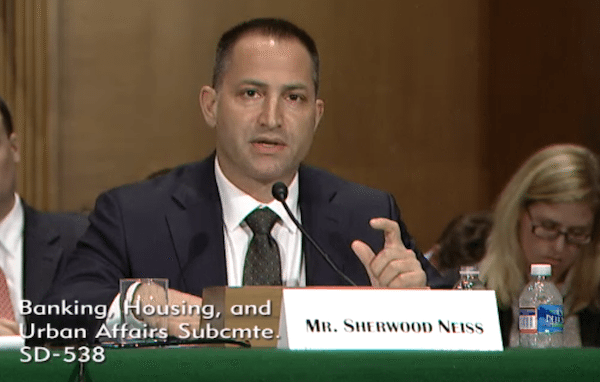

 It might be the definitive sign that cryptocurrencies have arrived on Wall Street.
 In a significant policy move by the UK government, the threshold for investment crowdfunding has been upped to €8 million thus matching the recent change by