





Karsten Wenzlaff, Advisor
August 26th, 2025
Karsten Wenzlaff is a Crowdfunding and Fintech Expert from Germany. He is Secretary-General of Digit[...]


Jun 11, 2026
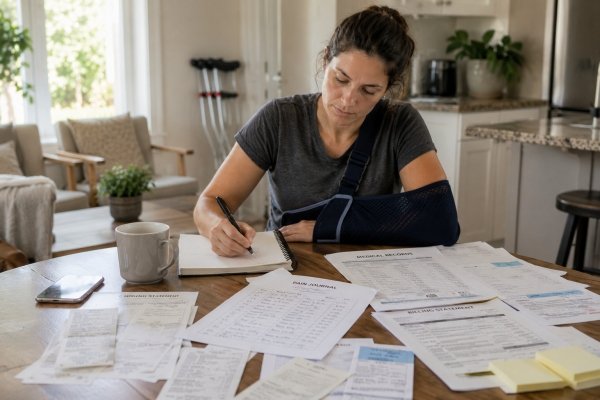
Pain and suffering is one of the most significant parts of a slip and fall claim. Unlike medical bills, pain and suffering have no receipts. What it's worth depends on how serious your injury is and how it has changed your life. Salamati Law Personal Injury Lawyer knows how to put real numbers behind what you've been through. A strong courtroom record means more than experience. It means better outcomes when pain and suffering are at stake. Knowing that connection helps you go into your claim with a clearer picture of what to expect.
The first thing courts and insurance adjusters look at is how bad the injury actually was. A minor bruise and a spinal fracture will never produce the same damages award. The worse the injury, the bigger the impact on your daily life and the stronger your case. Medical records, imaging, and doctor testimony prove the severity. An attorney who knows how pain and suffering are valued can make a real difference in what you walk away with.
The longer you live with pain and limitations, the more weight your case carries. An injury healing in two weeks carries far less weight than one lasting two years. If your injury is chronic or permanent, California law recognizes that as one of the most serious losses you can suffer. Keeping a treatment journal and staying consistent with your care shows exactly how long you've been suffering. Details about how the injury affects your sleep, your work, and your relationships carry real weight. A clear record from the day of the injury forward makes your claim significantly stronger.
When an injury stops you from doing things you used to do, that loss counts in your case. Courts recognize that losing mobility, missing work, or struggling to care for your kids is real damage. Medical experts can explain exactly how your injury limits what you can physically do. Your own words and your family's accounts put a human face on those limitations. The more specific and concrete those details are, the harder it is for anyone to dispute what you're owed.
A serious fall doesn't just hurt your body. Many people are left dealing with anxiety, depression, and trauma long after the physical wounds heal. California law recognizes those conditions as real losses you can be compensated for. But you need documented treatment from a mental health professional to back them up. Insurers will push back hard on psychological claims without formal clinical records to support them. Connecting the fall, the injury, and the mental health impact clearly and thoroughly can add significant value to your case.
California has no fixed formula to calculate pain and suffering in personal injury cases. Ultimately, courts and juries decide what your pain and suffering is worth based on what you can show them. The two most common methods for calculating pain and suffering in negotiations are the multiplier method and the per diem method. Multiplier calculations apply a set number to economic damages to estimate intangible harm. Per diem calculations assign a daily value to suffering and multiply it by duration. An experienced attorney can advise which approach best fits the facts of your case.
Severity drives everything. It determines your demand, shapes negotiations, and influences what a jury decides. Document all of it. The physical damage, what you can't do anymore, and the psychological weight of it. California law gives injured people a real path to meaningful compensation when the evidence supports it. A good attorney finds the parts of your suffering you didn't think to document and makes them count. This happened because someone else was careless. You shouldn't be the one absorbing the cost of that. Taking your claim seriously from day one is what gives you the best chance at a fair result.
 The National Crowdfunding & Fintech Association (NCFA Canada) is a financial innovation ecosystem that provides education, market intelligence, industry stewardship, networking and funding opportunities and services to thousands of community members and works closely with industry, government, partners and affiliates to create a vibrant and innovative fintech and funding industry in Canada. Decentralized and distributed, NCFA is engaged with global stakeholders and helps incubate projects and investment in fintech, alternative finance, crowdfunding, peer-to-peer finance, payments, digital assets and tokens, artificial intelligence, blockchain, cryptocurrency, regtech, and insurtech sectors. Join Canada's Fintech & Funding Community today FREE! Or become a contributing member and get perks. For more information, please visit: www.ncfacanada.org
 |  |  |
|---|---|---|
 |  |  |


August 26th, 2025

January 4th, 2024

June 1st, 2021

September 9th, 2020

July 9th, 2018

January 3rd, 2018

September 25th, 2017

June 20th, 2017

May 10th, 2017

December 14th, 2016

Leave a Reply