




Karsten Wenzlaff, Advisor
August 26th, 2025
Karsten Wenzlaff is a Crowdfunding and Fintech Expert from Germany. He is Secretary-General of Digit[...]


About NCFA Canada | Craig Asano | November 13, 2026
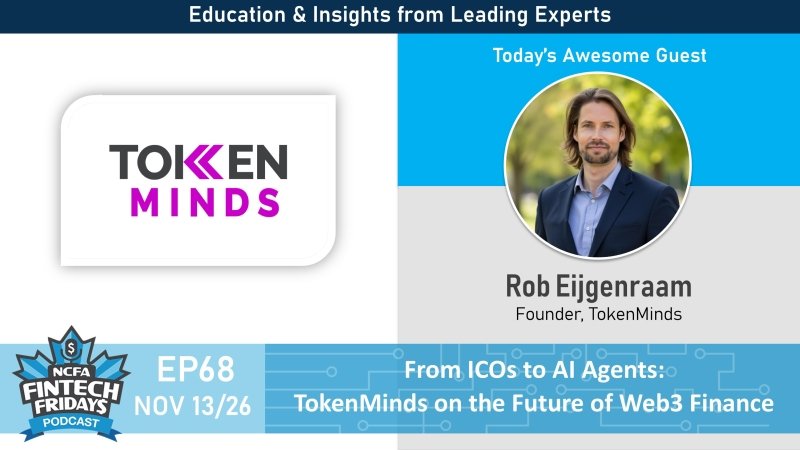
Rob Eijgenraam is the Founder of TokenMinds and Creator of TMX, a suite of blockchain and AI technology products. Based in Singapore, Rob helps established businesses outside the crypto industry develop token launches, fundraising strategies and Web3 products, with each project designed around a clear return on investment. An experienced entrepreneur with a background spanning Europe and Asia, Rob founded TokenMinds in 2017 during the early ICO boom. Over nearly a decade, he has navigated major crypto market cycles while expanding the company's capabilities in tokenization, blockchain development and AI-powered financial applications. Rob combines deep entrepreneurial experience with hands-on blockchain and AI execution. Working closely with CEOs, business owners and their advisors, he focuses on finding practical solutions that fit each company's commercial objectives and growth opportunities.
TokenMinds is an award-winning blockchain and AI firm that helps established businesses raise growth capital through token launches without giving up equity. Founded in 2017, TokenMinds has worked with more than 200 companies worldwide, supporting end-to-end solutions for token fundraising through innovative Web3 and AI strategies. Its services span tokenomics, fundraising strategy, investor outreach, blockchain development, token launches and post-launch support. Beyond consulting, TokenMinds has developed TMX, a suite of blockchain and AI technology products supporting token sales, vesting, staking and emerging financial applications. The company focuses on practical implementation and measurable commercial results, helping businesses explore new financing opportunities and build blockchain-based products. TokenMinds has been voted the #1 blockchain firm by HackerNoon, MSN and Finbold.
What if businesses could raise millions without giving up equity? Could token sales eventually compete with traditional stock offerings? And what happens when AI agents start managing wallets, trading assets and even launching their own cryptocurrencies?
In Season 4, Episode 68 of Fintech Fridays, NCFA Founder and CEO Craig Asano sits down with Rob Eijgenraam, Founder of TokenMinds, to explore what's happening at the intersection of tokenized fundraising, blockchain, artificial intelligence and capital markets. Drawing on nearly a decade of experience through crypto booms, market crashes and regulatory uncertainty, Rob shares how TokenMinds helps businesses assess token fundraising opportunities, attract investors and build token economies that have a purpose beyond speculation.
The conversation gets practical, examining a hypothetical $5 million token raise, the costs and risks involved, what investors actually want, and why some businesses should stick with conventional financing. Rob also challenges assumptions about real-world asset tokenization and explains why putting an asset on a blockchain doesn't automatically create investor demand.
Looking ahead, they explore tokenized stocks, secondary market liquidity, stablecoin payments, AI-powered financial services and autonomous crypto agents. Rob also discusses TokenMinds' work integrating AI and crypto payments with a major bank and shares his prediction for how token fundraising could evolve over the next five years.
Could tokens become a mainstream alternative to traditional capital raising? Tune in for a candid conversation about the opportunities, limitations and innovations that could define the next chapter of Web3 finance. Enjoy!
Duration: 1 hr 8 mins
Intro: Welcome to fintech Friday's a weekly podcast brought to you by the National Crowdfunding and Fintech Association of Canada and partners. Covering all things fintech, blockchain, AI and alternative finance.
[00:00:30] Craig Asano: Hello, everyone. Craig Asano here, the founder and CEO of NCFA Canada, welcoming you to season four, episode 68 of Fintech Fridays, a weekly podcast brought to you by NCFA and our partners, featuring leading conversations with the top voices across fintech, funding, and financial innovation. We talk about founder journeys, new ventures, projects emerging trends, and really what they're seeing in the markets right now. Today, we have a fantastic guest with us, joining us all the way from Singapore, so it should be very exciting, is Rob Eijgenraam, who's the founder of TokenMinds, a Singapore-based blockchain and AI company helping businesses explore new ways to raise capital, tokenize assets, and build Web3 financial products. Since founding TokenMinds in 2017, Rob has worked through nearly a decade of major changes in the blockchain industry, from the early ICO boom and crypto market downturns to today's growing interest in tokenized capital markets, real-world assets, and decentralized finance.
[00:01:34] Craig Asano: Along the way, TokenMinds has worked with more than 200 companies worldwide, helping them navigate token launches, fundraising strategies, and blockchain technology. Rob is also the creator of TMX. Not to be mistaken for the Canadian TMX Exchange Group, it's really TokenMinds' suite of blockchain and AI technology products. So because Rob is based in Singapore, he's bringing today an international entrepreneurial perspective with hands-on experience, and really, he's living at the intersection of capital formation, tokenization, Web3, and AI, which is driving all kinds of financial innovation. So we're super excited to have you here, Rob. Thanks for joining us.
[00:02:16] Rob Eijgenraam: Yeah. Thank you for having me, Craig. Appreciate it.
[00:02:19] Craig Asano: So I think we're just gonna kick the episode off here with an intro question. So Rob, you've spent a decade building blockchain and Web3 which we've all seen incredibly, you know, remarkable highs and lows. What still excites you the most about working, you know, in blockchain, in Web3 today?
[00:02:41] Rob Eijgenraam: Yeah. There's been a lot of highs and lows. It's a very dynamic market. I think what makes us, you know, kind of like get up in the morning is that the industry in general keeps developing. The technology keeps developing. Even though the market swings up and down we are still building every day to improve the technology to make it go forward.
[00:03:06] Craig Asano: Before actually, one question that I think our listeners would appreciate, because you're based in Singapore you know, can... What are you doing in Singapore? 'Cause you're not originally Singaporean, so.
[00:03:21] Rob Eijgenraam: Yeah, I mean, I moved here in 2013 initially. After I was working in Europe they sent me out to work in Singapore, and I was just amazed by the up-and-coming markets here, and obviously Singapore being in the middle of Southeast Asia as a hub. The community here, just the general environment, and I felt this is the right... When I came around to start my own business, I felt like this is the place to do it.
[00:03:53] Craig Asano: Well, it's a perfect sort of answer for the next question, 'cause it's really we wanna dig into a little bit about how that entrepreneurial journey looked like. Like, how did you... What led you to blockchain back in 2017 and the launching of TokenMinds?
[00:04:12] Rob Eijgenraam: Yeah. So initially I actually started a business within affiliate marketing back in 2013, 2014. And that was quite a global internet business, and what we noticed was when we are paying freelancers or, you know, staff around the world they were starting to request Bitcoin payments. So I was kind of forced into adopting it and, you know, sending those transactions, and I think one of the reasons was for some countries where, you know, we would send the funds to, there was just a lot of paperwork that the freelancer needs to do, so they just preferred, you know, there's the instant settlement of Bitcoin, and they could just use it as cash, basically. And that got me interested, and then after, you know, the initial kind of the industry started becoming a little bit more mature back in 2014, that was kind of when Ethereum got launched.
[00:05:17] Rob Eijgenraam: After that, there were some projects coming up around this smart contract idea. Some other applications started to be developed on those blockchains as well. So that's where basically the ICO boom came from back in 2017. So around that time, I felt like, you know what? Let's explore this a little bit, because there started to be a little bit of a community. Different conferences started to pop up around the world, and at the time, you know I didn't have kids yet or anything, so I could just go there, travel, you know, take a flight and check it out and yeah, just to learn, just to understand the industry that's coming up. And while I was going there, and it was back then, it was really, it was quite small. It was kind of like a cozy community of people that are using this technology.
[00:06:12] Rob Eijgenraam: So, you know, after those conferences, you hang out with those people you start talking, and basically one thing led to another. They... I had a lot of people just saying, like, "Okay, I wanna do something within, you know, blockchain, crypto, but I don't have really the expertise. I lack resources, I lack support." So that's how TokenMinds got started, you know, offering them basically the resources and know-how to, you know, do... start a business within the crypto industry.
[00:06:45] Craig Asano: Interesting. It's very similar to NCFA in some way the educational focus and launch. You mentioned the ICO, you know, boom, and you were there with TokenMinds. It was launched. Take us back to what those early ICO days were like. Maybe you have a memorable moment or a story. I think most would know about the ICO days, but maybe not through your eyes, because you really did live it there interacting with the communities and working with the companies. What was the ICO boom like, boom and bust like?
[00:07:23] Rob Eijgenraam: Well, I think the bust came a little bit more gradual, slowly. well, there are obviously big busts in crypto history as well, around FTX. We can get into that as well, but that was later down the road. Yeah, I think the... I would say, you know, it was a very... It was... Obviously there was hype. I do remember, you know, 2018, you know, after a while, indeed it's true, there was some craziness you know, in terms of like, you know, people just, you know, basically trying to hype projects and things like that. It didn't really start out like that. It... Basically, it really started out more, you know, tech-focused you know, just starting to use, adopt this opportunity to do new things that were not possible before, like tokenize things and, you know, offering certain benefits through utility tokens.
[00:08:19] Rob Eijgenraam: But yeah, that's... I do remember after a while, I basically, you know, kept going to all these conference around the world back then, and it was definitely that there was some... Yeah, you could tell things started to adopt. I think more and more people started to watch the YouTube shows around it, especially around speculating tokens. They were very popular back then. And it was just all, you know, up, up, up. You know, people were just, like, extremely bullish on this that was going to change the world, you know, with kind of this yeah, this mindset of this is gonna replace everything the financial industry. And obviously that turned out differently, but slowly... I think slowly people obviously started to realize, hey, you know, a lot of those projects, I think it came initially from the investor side, because people that are... were buying those tokens, those early ICOs, they were really...
[00:09:17] Rob Eijgenraam: it was extremely speculative because you're investing in a startup and in a new technology, right? You don't know if this is actually the perfect match for this type of opportunity. It's just extremely speculative. And after a while, I think those ICO investors also started realizing, you know what, you know, they really need to be a bit more careful, bit more educated about, you know, how to invest our money. So slowly I think things started to yeah, become more, let's say, normal in a way.
[00:09:50] Craig Asano: But with all those booms and busts or the market cycle and speculative buyers and, like, token creation sort of pathways at the time, which were very early days, you know, there were a lot of lessons. I mean, I... Through our research here for the podcast, I clocked that you had, you know, written about some of the losses linked to Celsius and BlockFi. You know, not to call them out, but really if you can talk a little bit about, you know, very briefly what happened and then what those experiences taught the industry, and you, about resilience. What did it do for the industry? 'Cause clearly it's evolved significantly from there.
[00:10:35] Rob Eijgenraam: Yeah. Yeah, no, for sure. I think, you know, like, one thing obviously that people started realizing more that these things are very highly connected. So if one domino starts falling, then I think even in example that I just mentioned about the early days of the ICO you know, kind of hype, it was similar. It wasn't just a huge burst like the FTX story because, like, you know, obviously investors started to withdraw a little bit. That meant that also private investors, there was a lot of firms, there was a lot of VCs, you know, crypto VCs started happening Back then to get in on the early private rounds to get a discount, and then that also didn't help because obviously they had an incentive also to liquidate their investment, which hurt the retail investor, and then eventually the retail investor then dropped out and everything slowly you know, went down.
[00:11:36] Rob Eijgenraam: So but yeah, FTX, indeed, that's... There was a couple of events. Actually, FTX wasn't the first event of the domino. There were a couple of other things happening before that. One memorable one was actually a protocol which was basically an algorithmic stablecoin called UST on Anchor Protocol that was run by Do Kwon from Korea, and that turned out to be just... It basically lost its peg within a few days and, you know, that was an eye-opener: hey, wait a minute, there's this guy from Ivy League school, and he just promoted this algorithmic that didn't work, that was just totally not solid at all. So, that was the first thing. And then indeed some of those lending platforms that you already mentioned.
[00:12:33] Rob Eijgenraam: In fact, I think Celsius was even happening before FTX happened. So yeah, they started, they just paused withdrawals because, you know, things were going sideways there. I think there's a lot of other stories around that as well, around the Celsius token itself and how they were used. But I mean, this was also a time, a highly competitive time for those platforms. Everybody wanted to offer the highest yield, and they took shortcuts that were just backfiring, and that's what kind of basically made it collapse. And then the final... The, one of... Yeah, the big one was obviously FTX that collapsed, and that also took BlockFi after a few weeks as well. So, that was basically the end of that market for a little while.
[00:13:27] Craig Asano: Well, I mean, having worked with 200 companies, all the different challenges that you're touching upon, that sort of self-imploded but the market's changed significantly here. Maybe you could talk a little bit about how it's evolved since then, and particularly, you know, a little bit about the regulation and how the tech and how adoption has evolved since 2017 to, you know, pretty much up, up till today.
[00:13:55] Rob Eijgenraam: Yeah. A lot has happened. So I think this is a nice, this is a nice bridge because, you know, the FTX thing basically kind of collapsed the entire industry, to be honest. Like, not just for investors, but even for just normal B2B, you know, blockchain industry-wise, what we're basically doing. Demand also dropped because basically there was a worldwide collapse on the blockchain industry. So for a while, not much happened. There were some things in terms of like meme coins launches. There were a little, you know, there was there's some interest after a while, and then obviously the GENIUS Act came along, which really boosted stablecoins. So that basically also meant that bigger companies started to have digital assets also on their treasury. Meanwhile, we also had some ETF launching around crypto, so you know.
[00:14:52] Rob Eijgenraam: Yeah, things started to you know, become more and more mainstream. I think where we at with just the regulatory part there has been definitely good progress. I think it's basically, in a nutshell, it's basically moving in a good direction, the direction that just makes sense. There... We can talk about this a little bit later because I do think there are basically, you know, two types of use cases for crypto and they have their own regulatory kind of challenges their developments. But yeah, in a nutshell, I think we are progressing in the right way and just being, you know, in terms of the whole blockchain industry becoming more mature especially over the last couple of years.
[00:15:42] Craig Asano: Oh, yeah, absolutely. And there's not a day that goes by that there's not another large major institution moving, you know, beyond their pilots that they have tested over the past several years and into the market, so it's exciting. So, you know, you also, in addition to TokenMinds, you have this TMX brand, which is sort of the suite of all the tech products that you're building through TokenMinds. Is that correct? What, like, what kind of products are you focused on building, or what have you built? And, you know, how are businesses interacting with those products and tools?
[00:16:22] Rob Eijgenraam: Yeah. So a couple of them are very much focused on, you know, the utility tokens, that is TokenMinds' focus. So on vesting, of course, token sale we have our own token sale platform. We have a staking platform that our clients can use. And then we also utilize AI. So we combine blockchain and AI on those different products. So for example, product that we're working on right now is really optimizing the entire workflow to be agent compatible. So we see more and more of our clients adopting AI as well on their side, and what we're trying to do is make our process on the token launches also compatible with, you know, those agentic AI systems.
[00:17:10] Craig Asano: Yeah, AI, and who knows what the future models will evolve to now that AI is being injected to a lot of the workflows, so it's a very exciting time. Wanna get into actual you The practicality of how token fundraising really works. So, you know, so we can sort of talk about the framework and, you know, and listeners here can get a better grasp of how it works and, you know, how it might be able to help them raise some capital. So, you know, we'll just start with this example. Suppose that there was a profitable business that is looking to raise $5 million dollars to expand and grow their company, but they don't wanna issue any more shares. So maybe walk us through with that scenario, you know, what a realistic token raise might look like. You know, what do investors buy? What sort of rights do they get?
[00:18:05] Craig Asano: And where might their returns come from?
[00:18:08] Rob Eijgenraam: Yeah. Absolutely. Yeah, so there's a couple of things in there. In terms of, like, how it works, the practicality of this, it's I think the first step is basically, you know, the qualification step. So and that really goes back to the investor appeal, right? Because basically, especially we're talking here about utility tokens, not security tokens. So we're basically you're doing a, token sale for the global crypto investor audience. That means you need to make it make sure it's appealing to those type of audience. And they are basically, obviously it's a speculative type of investor profile that we're targeting here. So in order to qualify for these type of investors, you need to be in a appealing industry, in an industry that is basically a high growth industry or projected to be a high growth industry that might be interesting for investors to be part of.
[00:19:11] Rob Eijgenraam: You need to be a proven business, so proven management team, proven business that's, you know, running, that has a solid track record. And thirdly, you need to have a tokenomics model that ensures the buying pressure for the crypto investors. So those three things you need to basically call it. The third one, that's really where TokenMinds helps. Obviously on our side, we will tell, you know, you as the client, "Okay, this can be your tokenomics model," or, you know, "This is how we can do it for in your case." But yeah, the first two requirements are basically from the client side to be,
[00:19:50] Craig Asano: to be met there. is there a, an advantage for, you know, in that example, a company raising $5 million to prefer the route of, you know, raising capital through tokenized markets? Compare and contrast that with, say, just traditional bank financing or, you know, there if that company has a different model, like a revenue-based financing, you know, or conventional equity or even investment crowdfunding. How is it different, the tokenization, and what are the advantages to some of these alternative, you know, options to raising capital?
[00:20:27] Rob Eijgenraam: Yeah. And they're all alternatives indeed, so they don't necessarily substitute each other. But yeah, I would say it's a new type of fundraising and I think the most comparable way would be basically, you know, stock, like shares in a way. But it's not literally shares because it's not directly connected to, at the moment at least, we can get into this into in terms of the regulatory roadmap around this. But at the moment, it's not directly, but it is indirectly connected to actually the company's growth and the industry's growth. That's how the tokenomics work for those businesses. So we can get into some examples there because that's quite essential to understand, like, okay, how are we offering the benefits for investors?
[00:21:23] Rob Eijgenraam: What's the difference between, you know, issuing shares and stocks and things like that? But I think if you really wanna, in a way, extremely simplify it, you can almost see it as a public listing, a public stock. So you're selling to retail investors without actually doing a public a public raise, you know, public stock listing campaign. So that's basically a very simplified version of thinking about this.
[00:21:54] Craig Asano: So is it's almost like a if you remember crowdfunding days, it's similar to, say, rewards-based crowdfunding, would you equate it to? And on that, since you mentioned token economics, so how much capital can be raised through a utility token raise as an example in your experience from working with the 200 companies?
[00:22:17] Rob Eijgenraam: Yeah. So the last one, that highly depends on the market, right? If you're in a bull market, it's highly different than right now. We're right now not in a bull market. So, you know And then there's also the regulatory part of it. So if you're staying below the 5 million, that's Basically within the, and the regulatory area that you can target the most investors, I would say, because it's a worldwide campaign, so a lot of them, they those things don't apply. But in the United States, for example, there's the 5 million rule that's coming soon, early next year, that's announced by the SEC. Yeah, so that was part of your question. Where else did you wanna take this to, this question?
[00:23:04] Craig Asano: Well, you know, we're just talking about the token economics. So one side is the money that they're gonna raise, and the incentives and the structure. The other is maybe the cost. Maybe touch upon some of the costs so, you know, listeners can get an under handle of what they'd have to budget for if they opted to go this route.
[00:23:24] Rob Eijgenraam: Yeah. Yeah, absolutely. Yeah, so the way we structure the cost, I think if you look at, let's say, you know, a $5 million campaign you are gonna spend into the six digits because you're gonna, you know, have to get KOLs involved. You're gonna have to have exchange fees or rather exchange platform fees, listing fees launch pad fees, things like that. So but, you know, what we really focus on is basically the ROI, right? So in general, our historic ROI is over 20 x for our clients in our, the way we do our playbook, so that's basically what our clients care about on their return on investment. So in general...
[00:24:20] Rob Eijgenraam: But you can, what a lot of our clients do, they do it step by step. They're not gonna, a lot of them don't invest six figures just right from the start without having any security on how much they're gonna raise.
[00:24:31] Craig Asano: Mm.
[00:24:31] Rob Eijgenraam: They're gonna first have us do a due diligence report, where we do an actual survey with real crypto investors over a thousand that will tell them based on, you know, the tokenomics that we are proposing and their business, et cetera, how much they would be willing to invest in this token sale if this token sale would be live. So that's just a couple of thousand, and they already have this information. And then there's different packages. Again, it depends how much you want to raise. So the less you're you need to raise, the lower the budget obviously because, you know, you don't need to have, you know, any special promotions or anything like that. But that's maybe kind of a rough ballpark kind of estimate on the numbers.
[00:25:17] Craig Asano: Yeah. It's definitely interesting and reminds me a lot about crowdfunding, you know. I can say that, especially the utility token raises. One thing on my list of questions here is just around the protections for investors. So for example, if the company sort of underperforms what was promised, I guess I will say. So what sort of protections are there? Are there any sort of enforcement mechanisms? You know, how does it work there?
[00:25:49] Rob Eijgenraam: Yeah. So when we're talking about the token launch or the initial sale most launch pads these days, they offer a refund policy for the investors. And the way it works is that, you know, if the token after the initial sale is listed on the exchange for less than what the investor paid for the token, they will get an automatic refund on their investment. And that also links back to kind of the other kind of protection, if you wanna call it in that way, especially compared to crowdfunding and things like that. That is the liquidity, because every token sale in its roadmap always will have a listing attached to it. So that's a liquidity enablement. So that means that, you know, the investor at any point in time can liquidate their investment, and this is now, we're now in a stage in the crypto industry that, you know, even things like, you know, the spread and just the general liquidity depth, they have been pretty much resolved by things like automated market making, liquidity pools and things like that, decentralized exchanges.
[00:27:03] Rob Eijgenraam: Because by default they will get listed with a certain amount of liquidity already included, and in combination with the investor protection that I just mentioned. So that's already a pretty big difference compared to the crowdfunding days.
[00:27:17] Craig Asano: And who's providing that initial liquidity along with the listing?
[00:27:21] Rob Eijgenraam: So it depends where are you gonna list. If you're gonna list it on a decentralized exchange, it could be a liquidity provider. So a liquidity provider actually gets paid a cut for on different trades. So if it's a good project, which TokenMinds obviously supports good projects, they're willing to jump in, provide the liquidity. If it's a traditional exchange, you're talking about market makers. So then would then the issuing company would utilize the market making that can also be provided by us. So depends on the route, basically.
[00:28:02] Craig Asano: How about Are there... There's clearly some type of, depending on the size of the token raise best practices or, you know, the difference between why projects, based on your experience working with the 200 companies, why some projects really do struggle and why some are sort of ticking those best practices. And sort of if you can talk to maybe you could use an example maybe not a client example, where you know, you just to demonstrate, like, this company had a lot of red flags and it might not have Best suited or optionally go for the best practices, you know, what has been tried and true'd. If you sort of look like this as a company, it significantly increases your chances of having a successful token raise.
[00:28:49] Rob Eijgenraam: Yeah. That's... I mean, we, like we've, in these 10 years indeed, we've also learned a lot since the beginning years. And I think, you know, the playbook we're using right now which helps a lot with that is what I just mentioned, that, you know, we work with companies in appealing high growth industries that have an established track record and then a, and a good tokenomics model. And then what we do when we launch the project it's not just a simple token, it has an actual product attached to it where the token is can be utilized within the actual business. So there is an actual product side as well to the token. And then that whole picture together, that makes it And then obviously, you know, the using the right KOLs, using the right launch pads and the right exchanges, that's part of our expertise as well.
[00:29:46] Rob Eijgenraam: Those things together, that will actually enable you. And then combined with the steps, right, that I just mentioned as well, in terms of like not pre-investing six figures before you have any security on the raise, those things all together that we basically put together as a playbook over the last decade, that's the way you can yeah, you can ensure that you have a positive ROI
[00:30:14] Craig Asano: on this. and I guess the flip side, if they don't fit some of that, those boxes, then they can still progress and try and maybe get their money back if they don't raise at least their listing fees, as you touched upon earlier you know, the refund approach. But I think it's a good segue into, you know, it's, like I'll call it a decision game. So, you know, I will talk about very briefly a couple examples about the company and what they're raising and, you know, you can answer if it's suitable for tokenization or you would honestly recommend that company. You know, maybe conventional financing is a better route. Or if it's not suitable for tokenization, just explain why. So you ready for that?
[00:31:03] Rob Eijgenraam: Sure.
[00:31:03] Craig Asano: So first one is you know, really around equipment finance. So a profitable manufacturer needs equipment but wants to avoid dilution, you know, with their shares. So would an asset-backed token make sense in this case? And this is sort of dipping into your knowledge. Not necessarily all of these will be utility token fundraisers. You know, so in this case, would that manufacturer who's looking to buy more equipment but they wanna avoid dilution, it... So this is an asset-backed token raise. does that make sense? Would you tokenize it? Would you recommend that or would you say it's traditional finance?
[00:31:45] Rob Eijgenraam: Yeah. So I would say it's traditional finance, and the reason why is because even if you tokenize it, you're, you hit the nail on the head. It's, it would be considered an RWA. It would be considered an, in this case, asset-backed token, which yes, like in terms of you're applying blockchain technology to the tokenization, but you're not actually targeting crypto investors. You can try to target them, but they wouldn't care about, you know, a 5, 6% yield on a traditional investment. Like traditional kind of institutional investors do care about that, so you should target them, but then they don't care about the tokenization aspect. So I would say this is the traditional route for this one.
[00:32:30] Craig Asano: You almost have to, what is the expression? You look like a duck, you walk like a duck, it's probably a duck
[00:32:36] Rob Eijgenraam: Yeah.
[00:32:37] Craig Asano: in terms of raising, you know, kinda look like the company that's successful at tokenized raising. So the next one is around revenue financing. So like a tech software company, you know, a SaaS model it's pretty predictable. Let's say they're growing, but they want more capital. They wanna grow faster. Would you tokenize the future revenue from that SaaS business, or would you recommend conventional financing?
[00:33:03] Rob Eijgenraam: So, you know, this one is a little bit of, I would say, a hybrid. So in essence, I would say it can be tokenized with a utility token because a SaaS has a platform that you can integrate, you know, token, tokenomics into. You know, you can have token holders having certain benefits or certain tiers or loyalty rewards or discounts or access on their platforms for certain products, certain launches, drops or things like that. So from that perspective, yes, you could tokenize it with a utility token and you could do a raise. I don't think necessarily you could do a big raise because I would say depending on what kind of products they're in This is not something that is kind of projected to be extremely high growth, unless it's maybe the next Amazon type of company. Sure.
[00:34:02] Rob Eijgenraam: So it could be, it could be a yes in this case.
[00:34:05] Craig Asano: How about a private... So this is the next one, so that was a good answer. The like a private investment fund, and they're always looking for new investors. they're all... You know, private, the fund exists, the structure's there. Would you tokenize it, or is it even it's not... Is it possible with a utility token and... Or would you choose or recommend another approach, or just completely hold off, and why?
[00:34:32] Rob Eijgenraam: Yeah, this is a very interesting one which actually we can get into. I think long term, yes, but the, you know, the regulatory environment needs to be kind of updated, and I think they're updating in that direction. But at the moment, that wouldn't be possible with a utility token, so.
[00:34:52] Craig Asano: Yeah. No, that's fair. In terms of red flags, I'll use that word again. what is the clearest sign that, you know, when you're talking with a company that they shouldn't launch a token? You know, some direct advice to companies that may be considering it, but are there red flags? There's nothing wrong with their company, but it's just not a good fit perhaps, or, you know, maybe it is a legit red flag. What are your thoughts there?
[00:35:19] Rob Eijgenraam: Yeah, well, we talked about indeed about the different types of you know, fundraising and financing, and I think every type of Fundamentally, what it comes down to is which type of investor you're targeting, and if you're launching a utility token, you're targeting the crypto investor space. So I mean, in the end of the day, you need to have a proposition that's appealing for that type of investor, which is highly speculative investor that is looking for big potential gains, so big high growth. So if your company doesn't, they need if you need financing but you're not, you know, in having that type of proposition towards investors, then the crypto investor side would be will be difficult.
[00:36:07] Craig Asano: Okay. Okay, good answers. So let's move on to we're gonna talk a little... You know, let's widen out here. Let's talk a little bit about the, some of the trends that are happening in tokenization and capital markets. I think it was last week there's been some big news that came out of the SEC that they're experimenting with tokenized stock trading. But there's a lot of companies that are pushing back, and so I'm sure it's a story that you're aware of, and, you know, want to get your opinion on really what you think is at stake, and is this gonna change public markets? How big is this news? And it's just a pilot. I think it's five years, but it seems to be quite significant.
[00:36:50] Rob Eijgenraam: Yeah. Yeah, I think it's significant for sure. Because again, you know, this... Again, it links back to the investor audience, right? So what happens is that the crypto space it's been happening for a while, and kind of the public listed kind of speculative stocks, that most of those stocks are, you know, speculative. They're not, like, dividend-yielding stocks, you know at least not right now. They are, they're moving close together because you're targeting the same type of investor. So it's those crypto company exchanges, they wanna have a way to offer, you know, stocks to their investors because there is a demand for it, and the other way around as well, which has always already been happening with Robinhood and others, that they're offering crypto obviously. So in that sense, it's just that is basically the way things are progressing.
[00:37:48] Rob Eijgenraam: There are some... You mentioned some companies are, you know, kind of... I'm not sure if they actively pushing back. I think what I heard is that they just didn't give an approval, or they just, like, were silent, so they couldn't get listed, but it's like a, kind of a process. I think every company is interested in liquidity, and this just offers them more liquidity for their stocks.
[00:38:12] Craig Asano: So, you know, over the years we've seen a lot of institutions get heavily involved with crypto. I think we touched upon it before. They're moving, you know, well past pilots and they're implementing. And so as banks and major asset managers basically get involved with tokenization, is it changing the outlook or the opportunity for the original Web3 entrepreneurs? You know, what is the impact? What's going on?
[00:38:40] Rob Eijgenraam: Yeah, this is an extremely... I mean, I cannot like, predict the future obviously, but I mean, the... at least from, you know indeed the last couple of years there has been quote-unquote, "a lot of adoption" on the institutional side on the blockchain industry, which is kind of in a way logical because it offers, you know, instant settlement 24/7 liquidity no middleman et cetera. So I think it was already expected you know, that would happen, so that's just a logical involvement of the implementation of technology. But indeed, like you're saying, that doesn't really impact all those, you know, startups that wanted to do different things with technology. And I think there is gonna be indeed, like, a divergence.
[00:39:36] Rob Eijgenraam: That's why TokenMinds is focused on the utility token side, because I think that is the way where there's a lot of growth happening. You know, there is gonna be less... People are gonna be more open towards, especially on, you know, the regulatory side towards these type of, you know, tokenization routes. And I actually believe that, you know, maybe five years from We're gonna see that just like stocks, just like public stocks, we're gonna have ways for companies and, you know, mid, low-cap, mid-caps, even startups to do token raises that are even more competitive to public stock raises. That is gonna be closer and closer together. So that's in a separate route. You have the implementation of this technology on the institutional side, and then the fundraising side with the utility tokens.
[00:40:32] Craig Asano: Oh, okay. Interesting. Well, we see tokenization expanding across real estate, private credit, investment funds, and RWAs, which are real world assets. You know, what do you, what do you find most exciting in tokenization? Where do you think the market is heading?
[00:40:50] Rob Eijgenraam: Yeah, I mean, so again, yeah, in... It's a little bit repetitive, this answer. But it... and in the end of the day, it really, it... the technology is less important compared to who you're trying to actually reach as an investor base. So yeah, you can, you know, literally you can tokenize everything from a technology perspective, but it doesn't change the fact on who is gonna buy those tokens. So, you know, all the assets like, you know, real estate and traditional, you know, firms and treasuries and things like that, like in, just like we're just talking about on, in terms of like the back end technology perspective, things are gonna be more efficient. You're gonna have 24/7 trading, et cetera. You're gonna have lower cost because of cutting out middlemen, yes. But it doesn't change who, again, who's gonna buy those tokens.
[00:41:46] Rob Eijgenraam: It just makes things more efficient for the market. And the existing market is just in the... for those type of assets, it's a traditional you know, investors and firms and institutions. And now, yeah, there are some exceptions. You mentioned real estate because that's also a retail market for real estate. And, you know, but I think, yeah, I still think on the tokenization side, that is still really on for institutions. That is interesting. There were... I remember there were a lot of projects that are like, "Okay, we can put real estate into small pieces, and we can sell them." All right. Okay. Which real retail investor is gonna... Then you're still targeting retail investors looking for five, six, seven percent yield, which is not usually the retail side or not the speculative retail side.
[00:42:42] Rob Eijgenraam: They're buying stocks and crypto. Plus, you know, if you're... that's very hard to reverse, right? Like, how are you then gonna sell the entire house if you have hundreds or thousands of different owners on the blockchain? So I'm not, like, super bullish on those type of things. I think it's gonna help. It's gonna just progress the market, make things cheaper, faster, more efficient, but it's not gonna fundamentally change the industry in a way.
[00:43:09] Craig Asano: As you were speaking, I was thinking about tokenizing tiny homes because the asset value is much smaller, and then a rental pool could be tokenized where, you know, they're participating in a slice again of future revenue. I don't think it's a utility model, but it's just another use case. There's unlimited amounts of use cases, but you got me thinking. All right, well, moving on here, we've got another question. In our research, we've read some of your articles and you talked about asset mobility and financial utility, and you're talking about how can we make tokenized assets more useful right across, you know, financial markets. So, you know, not just the financing and the capital raising or, you know, trading or collateral. What are what are your thoughts around asset mobility and financial utility? You know, what has to happen to make it even more useful?
[00:44:07] Rob Eijgenraam: Yeah. I think, I mean, there, you know, as you can imagine on the finance side, the banking side, you know, those legacy systems, they are not, they're not efficient in a way. A lot of things are even still done on Excel spreadsheets. So there's just... but the adoption is not extremely fast. Even if you look, for example, at stablecoin adoption among institutions, it's just slow because typically those type of the companies, they don't move unless they really have to. They're highly risk-averse. So unless someone like a regulator or there's some other event that pushes them they cannot get around, then they will adopt those things and they will upgrade. But there is, of course, a huge upside on different things. One example is you know, international financing of trade, for example. If you can do that through stablecoins and the blockchain and escrow smart contracts, you can imagine things will be good for financing of you know, invoices and you know, inventory and things like that.
[00:45:17] Rob Eijgenraam: So there's just a lot of room to grow there from a technology perspective.
[00:45:22] Craig Asano: Yeah, absolutely. What about cross border capital raising? I guess with the utility model it's again with those crypto investors, the retail crypto investors that you're tapping into. But are there additional regulatory challenges in a cross border model? And, you know, it's a good sort of dovetail into which countries are getting tokenization rules right, and, you know, which countries are leading the charge and maybe what other countries can learn from them, what are they doing right? And this is relative to, you know, enabling cross-border, more cross-border fundraising.
[00:46:04] Rob Eijgenraam: Yeah. Yeah, no, I totally get it. And you're 100% correct. It's, the crypto investor market a global market. That's what makes it unique in a way and having a lot of potential. It's basically crosses borders by default. But yeah, in terms of, you know, really looking at different countries and the regulatory advancement, that the thing about that is that, you know, on the crypto investor market there are obviously a lot of small countries that have, you know, their, you know, regulations. It doesn't really matter too much because the thing is, they don't have a huge population that can make a huge impact on, you know, the global investment market for crypto. So in all reality, what matters is the, you know, the regulations in countries like the United States and in China and partially in Europe as a whole, but Europe also has its own individual regulation per country.
[00:47:10] Rob Eijgenraam: And in fact, the US and the SEC now, and for a long time in the last 10 years that we've been in this, they were highly, highly against token raises. That was basically, you know, they used something like Howey's law, which is a very, very backdated thing on to test if it meets the security regulations and then, you know, it was just a mess. But in the recent years, they have changed their perspective. And in fact, like just mentioned, they're now even making it into official regulations for investors that you don't even need an approval or, you know a license to do anything in the token launch space in certain within the 5 million. So yeah, that's moving the right direction. So but yeah, the global investment is made up of so many different countries.
[00:48:11] Rob Eijgenraam: Most countries, they literally they don't have Howey's law, but by default, the tokenomics that at least that we're implementing, they're very close to, let's say, an Ether or an Ethereum and things like that are just out there for decades and, or not decades, but at least one more than a decade that are proven and that are not, you know, kind of nobody, you know, they basically follow the existing regulations that are already in place. So no new regulation is needed for those.
[00:48:46] Craig Asano: Okay. Let's talk a little bit about the liquidity post-launch. You know, I get the token raise. We have a company that checks all the boxes. It's a good fit. They're going global. They're tapping into crypto investor liquidity around the world. What is how active is the secondary market and, you know, after the tokens are sold and how... what is your perspective on or what have you learned about you know, maintaining making liquidity sustainable for a company after the raise, essentially?
[00:49:24] Rob Eijgenraam: Yeah. So a lot of it with the decentralized exchanges for example, that's now pretty much automated, right, through the liquidity providers, liquidity pools. So in from the... But I think what you're also aiming for in your question is just your, the price stability, right? In terms of making sure the token value yeah, goes up. And I think obviously this is related to the how the company performance or the industry performance sell, because the token is attached to that and the token model is integrated with that. It also has but this is what we help as well with kind of the post-launch marketing, make sure you keep communicating. Usually we set up a community for the token on Discord or on Telegram where, you know, we can keep them informed about what's happening.
[00:50:20] Rob Eijgenraam: That's also the transparency, the communication on the company performance is very important. So it's just like investor relations 101 basically. But in the end of the day, obviously the fundamentally you need a good you know, a token model that enables buying pressure. That's of course, very important to kind of weather the storms as well when it comes to different markets and things like that.
[00:50:43] Craig Asano: So there are liquidity there's liquidity and there's buyers for the tokens that are out there that they can exchange. Let's say an investor, a retail investor just wants to get their cash back. They can do it for a fee at a price, and it becomes a lot easier than trying to find that buyer yourself as an example, and you're trying to sell your token. That becomes a hard thing. You're, you know, they have an expression that securities are sold, they're not bought really, 'cause somebody's selling it to you. is that the... I guess it's the same. Well, I think is there any other advice that you would provide, A company that has any concerns or anything that they need to know around liquidity, 'cause I think it's a very interesting topic, but, you know,
[00:51:35] Rob Eijgenraam: Yeah
[00:51:36] Craig Asano: I, do have a couple questions here, but I thought I'd just open that question to you because, you know, based on your experience, any thoughts about liquidity or managing liquidity, you know, through tokenization for those companies that you think would be beneficial for them to know.
[00:51:53] Rob Eijgenraam: Yeah. No, yeah, I think first of all, indeed it is a very interesting part because that's basically the... one of the main things that distinguish the days from, you know, those other forms of fundraising, like crowd sales and things like that there is this basically 24/7 liquidity for the global market. And now, especially with, you know, agentic AI, it is basically one prompt away or one voice message to do trades and things like that, completely automated. So I mean, this is a huge benefit, and that's also one of the strengths of this technology, that you can do this all on the blockchain. So it's definitely an upgrade on the financial system from that perspective. You don't need to have a broker account or, you know, you don't... not dependent on a market maker even, and things like that. But yeah, I would say, you know, in terms of tips for businesses that are for basically post-launch, it's basically back to what I just mentioned, your investor relations is very important, being transparent, communicative with them.
[00:53:00] Rob Eijgenraam: And then you need a good fundamental tokenomics model as well to basically you know, weather any storms there.
[00:53:06] Craig Asano: Okay. Well, let's move on to sort of the future innovation topic. You know, you mentioned about AI and, you know, how we could just trade by, you know, through voice and there's a trade right there, tap into that huge liquidity pool. But what are you seeing, Rob, that is most interesting at the intersection of AI and blockchain when they come together in terms of financial services? What, where do you see that going? And, you know, what do you think is the most exciting developments?
[00:53:40] Rob Eijgenraam: Yeah, I think that's also one thing that we're also working on with TMX, is that you... more and more things, not just for these token raises, but for the broader market as well, are gonna be agentic AI compatible. Meaning that you're gonna have, especially from a crypto investors, having bots set up that are just looking for, you know, investor opportunities or investment opportunities that meet their requirements, or even recommendations from the AI agents. So you wanna be compatible with those automated systems. I think that's gonna be a big
[00:54:16] Craig Asano: one in the next few years. So this, these are the autonomous bots that have been running amuck all over the internet, is what it seems. But they have tremendous amount of potential to execute per rules almost anything that, you know, regulators or platforms or, you know, companies will allow them. So the future is certainly exciting. But, you know, I know through your TMX products, you know, it was interesting at the start of the podcast you talked about you had a s-... you know, staking and a few other areas that you've already developed that technology and I thought I had read somewhere that you were exploring, you know, AI and stablecoin payments. Is that on the TMX product roadmap or the TokenMinds product roadmap? Maybe it's a good segue into that question.
[00:55:11] Craig Asano: What are the products that you find the most interesting that you're building today at TMX? If you can unveil a bit of future for us here.
[00:55:23] Rob Eijgenraam: Yeah, I mean, so the... when it comes to the stablecoins, that's really on kind of institutional integration. And yes, we have actually quite recently, we integrated within a big bank, a agentic system with crypto payment integrated as well. Because you know, from a bank perspective, they want... they don't wanna be left out. They want users of their bank using their systems to connect to agentic AI and using you know, their stablecoin and their platform because they earn fees on that. But yeah, when it comes to the bigger picture, yeah, like there are a couple of things that are interesting. I think what we just discussed is interesting. And then another thing that, again, we'll see if it will come back, I think that's one of your later question about what will maybe come back in the crypto space that has been you know, not there for a little while, which is the completely autonomous agents.
[00:56:26] Rob Eijgenraam: Because the bot agents that we're talking about are really more, like, kind of user-controlled bots that are just doing the work for, let's say, crypto investing in this case. But around one two years ago right now already almost there were actually crypto agents that were fully autonomous, that didn't necessarily have an owner, but they had a, their own crypto wallet, and they were selling their own meme coin to make money for themselves. They were paying influencers and things like that to boost their own token. They were posting obviously on the social media to get followers and interest in the token, and literally there was no... Nobody had the keys to those wallets except for the agent itself. It was totally autonomous. And then, you know, people were investing in the tokens that were owned or pumped by those bots, and then eventually it died in a way after the crypto market went down.
[00:57:24] Rob Eijgenraam: But I'm thinking they might have a comeback again. I don't know which form, but that's a very interesting one.
[00:57:29] Craig Asano: That's mind-blowing. Did... So is someone as an investor, can they identify or how do they identify, okay, this token raise is run completely by an autonomous bot versus, okay, this is a managed campaign in partnership with TokenMinds and, you know, it has strategy, it has the token economics, versus just a, an autonomous bot? how does a buyer know?
[00:57:54] Rob Eijgenraam: It's a big difference. Usually the autonomous bot it will be there's just a complete transparent that this is an autonomous bot, that there's, like, no doubt. There were... Like, literally it will... It's just made completely clear, like, you're not investing in a company or this is a bot. It's like you can see that on the social media profiles. it will it will introduce itself as an, its own entity. It doesn't, you know, try to say it's, like, a company or anything like that. So yeah, for the investor it's quite clear. I mean, if a company that comes through us with a token on the market, that actually one of the main benefits that we're trying to push and show that this is a real company run by experienced executives with a track record. So we're... That is, like, up forefront for investors, like, what they're investing in.
[00:58:51] Craig Asano: Yeah. It's crazy days that we're experiencing and I just think about how much, how far industry has come in the last decade. It's quite phenomenal. Long way to go, but I mean, we're whittling through these questions here. We're coming down. We're talking about the future of Web3 and DeFi. I mean, you've been in the game a long time but where do you see industry in five years from now and maybe what technology or what changes you think are gonna have the biggest impact on, you know, companies and investors in Web3 and DeFi?
[00:59:29] Rob Eijgenraam: Yeah. I think I mentioned it's a little bit I think... Well, one thing that's happening already that DeFi and things like that are gonna be agentic compatible, which are pretty much already are but there's more adoption there because there's more adoption by, you know, the masses on AI. And then the other thing is that I think my prediction for token raises, token utility tokens, is that it's gonna be very more and more competitive and more comparable to public stock listings in a way that the regulation's gonna be advanced, that, you know, it's gonna be more open to more types of businesses where you're actually able to do things like dividend distribution and other things that stocks can do that tokens cannot do right now, at least not the utility tokens, that are just making that even more closer and more competitive to those types.
[01:00:28] Rob Eijgenraam: So that basically means that it's gonna grow as an alternative way of financing for companies around the world. That's what I'm that's what I think. How,
[01:00:40] Craig Asano: how far away do you think we are from when all of this will just be normal? People won't be talking about it. They'll just consider, you know, raising a capital, you know, through tokenization or tokenized finance. Is that gonna happen in five years, or it's gonna take a lot longer? Or maybe sooner now that... Well, I don't think that agentic bots being injected in those workflows will, you know, make regulators solve their own challenges quicker, but do you think it'll get there in five years?
[01:01:14] Rob Eijgenraam: Five years maybe, but not that much faster, because, you know, this really depends on regulations as well. And indeed, and you know, the technology is always way faster than the regulatory changes. So you're totally right. Things are more and more important. There's probably a push because you're right, things are becoming more efficient and, you know, AI is taking over things like investing and portfolio management, which is way more efficient if you connect it to the DeFi system. So I mean, there's gonna be more voices coming up and new generation coming, "Hey, you know, why are we not, you know, changing, updating our regulatory environment for this?" But obviously those things are taking years, and not months to do that.
[01:02:00] Craig Asano: But once one country figures it out, it seems there'll be a domino effect 'cause all countries wanna be efficient, all countries want more liquidity all countries want more investors to invest, like foreign direct investment in Canada, in Singapore, in wherever. So it... Let's hope it's a matter of time, but it's a fascinating discussion. So we're at that point of the podcast. We're gonna get into rapid fire questions. So this is where I'm gonna ask a quick, like a short question. I'm just expecting you know, a quick reply or a short reply. You ready for that?
[01:02:38] Rob Eijgenraam: Sure. Let's do it.
[01:02:39] Craig Asano: Okay. So first one: What is the biggest myth about tokenization?
[01:02:43] Rob Eijgenraam: The biggest myth, I think that you can no matter You can raise a lot of money without, you know, having a specific playbook.
[01:02:55] Craig Asano: True. Next question. One asset class you think is over-hyped?
[01:03:00] Rob Eijgenraam: Real estate in some markets is over-hyped. Well,
[01:03:03] Craig Asano: Canada is one of the It was one of the highest overvalued markets globally. So it's come down quite a bit, so close to home, close to home, as we knock on the wall right here. Next question. What's one Web3 idea you think deserves a second chance?
[01:03:24] Rob Eijgenraam: The autonomous agents.
[01:03:27] Craig Asano: The autonomous agents. Okay. And do you think that autonomous agents, that came out of Web3?
[01:03:32] Rob Eijgenraam: Yeah, it did. It did come out of... Well, I mean, let's say the tokenized autonomous
[01:03:38] Craig Asano: agents did. Right.
[01:03:39] Rob Eijgenraam: The ones that basically yeah, were creating their own token and, you know, doing their own yeah, promotion and trades and having people investing in them. Yeah, those were coming out of crypto.
[01:03:54] Craig Asano: Those are a hotbed of innovation, for sure. Next question. One founder lesson you would tell yourself way back in 2017, which is when you launched TokenMinds. Founder lesson.
[01:04:06] Rob Eijgenraam: Focus. Figure out who you want to serve and focus on that ICP alone. Don't get distracted too much by different types of clients and different types of requests. Just focus on what is the customer segment you wanna serve, you feel best about, and just keep your focus on that.
[01:04:29] Craig Asano: Excellent advice. Specialization. Last rapid fire question. Something on your bucket list outside of work that you'd like to do in the next few years.
[01:04:41] Rob Eijgenraam: Probably take my family on RV trip.
[01:04:44] Craig Asano: An RV trip? Nice.
[01:04:46] Rob Eijgenraam: although I just literally did that, but another one, basically.
[01:04:49] Craig Asano: And where would you go? Which country?
[01:04:52] Rob Eijgenraam: Well we went, we just went to the West Coast of the US, and I would like to do it also in the East Coast, basically.
[01:05:02] Craig Asano: You'd like to zigzag the US a real Jack Kerouac type. Well, that's it for rapid fire questions. So, you know, I think we're getting to that point, we're gonna be wrapping up the podcast. But wanted to say, like how can listeners get in touch with TokenMinds or you, Rob, if they wanna follow up or have some questions about tokenization, raising capital through tokens? What, how do they get in contact with you?
[01:05:32] Rob Eijgenraam: Yeah. I'm on LinkedIn, I'm on X, so just look for Rob Eijgenraam. Make sure it's spelled with E-I-J-G-E-N-R-A-A-M. And obviously also through our company tokenminds.co.
[01:05:47] Craig Asano: Absolutely. Well, I had a great time chatting with you, Rob. Do you have anything to say to the audience before we finally sign off here?
[01:05:58] Rob Eijgenraam: Well thank you so much. I really enjoyed this Craig. Honestly, I think it's amazing and yeah, hopefully we can do this again sometime.
[01:06:06] Craig Asano: You're welcome back anytime. I say we get back together in a few years, maybe a couple years. We'll take stock on those autonomous bots and we'll also check in, see how far regulators around the world have tried to figure it out. But absolutely the innovation in crypto just continues forward and, you know, your resilience to maintain through all the ups and downs in the cycles all, you... it sounds like you've learnt a lot. You're building some incredible technology. I wasn't even aware of the banking integration through autonomous stablecoin payments through... And I did quite a lot of research for this, so that's excellent. I hope you know, your company continues to grow and, you know, wish you all the success in the future. So, you know, thanks again for coming out and, you know, with that just want to thank you again for sharing your time.
[01:07:06] Craig Asano: It was great to sit down with you today.
[01:07:07] Rob Eijgenraam: Thank you. Appreciate it, Craig. Thank you for having me.
Outro : You've been listening to Fintech Fridays brought to you by NCFA and partners. Tune in weekly for the latest fintech Friday podcast by subscribing to this channel. The National crowdfunding and Fintech Association of Canada is a non-profit actively engaged with social and investment fintech sectors around the globe and provide education research industry stewardship services and networking opportunities to thousands of members and subscribers. For more information please visit ncfacanada.org.
 The National Crowdfunding & Fintech Association (NCFA Canada) is a financial innovation ecosystem that provides education, market intelligence, industry stewardship, networking and funding opportunities and services to thousands of community members and works closely with industry, government, partners and affiliates to create a vibrant and innovative fintech and funding industry in Canada. Decentralized and distributed, NCFA is engaged with global stakeholders and helps incubate projects and investment in fintech, alternative finance, crowdfunding, peer-to-peer finance, payments, digital assets and tokens, blockchain, cryptocurrency, regtech, and insurtech sectors. Join Canada's Fintech & Funding Community today FREE! Or become a contributing member and get perks. For more information, please visit: www.ncfacanada.org
 |  |  |
|---|---|---|
 |  |  |


August 26th, 2025

January 4th, 2024

June 1st, 2021

September 9th, 2020

July 9th, 2018

January 3rd, 2018

September 25th, 2017

June 20th, 2017

May 10th, 2017

December 14th, 2016
Leave a Reply