




Karsten Wenzlaff, Advisor
August 26th, 2025
Karsten Wenzlaff is a Crowdfunding and Fintech Expert from Germany. He is Secretary-General of Digit[...]


Medium | Tristram Waye for Bitvo | Jan 11, 2023
 So the start of the year is also a good time to take a look at how you’re thinking about the current environment. Then deciding whether some adjustments might be required.
 The National Crowdfunding & Fintech Association (NCFA Canada) is a financial innovation ecosystem that provides education, market intelligence, industry stewardship, networking and funding opportunities and services to thousands of community members and works closely with industry, government, partners and affiliates to create a vibrant and innovative fintech and funding industry in Canada. Decentralized and distributed, NCFA is engaged with global stakeholders and helps incubate projects and investment in fintech, alternative finance, crowdfunding, peer-to-peer finance, payments, digital assets and tokens, blockchain, cryptocurrency, regtech, and insurtech sectors. Join Canada's Fintech & Funding Community today FREE! Or become a contributing member and get perks. For more information, please visit: www.ncfacanada.org
 |  |  |
|---|---|---|
 |  |  |
Jan 17, 2023
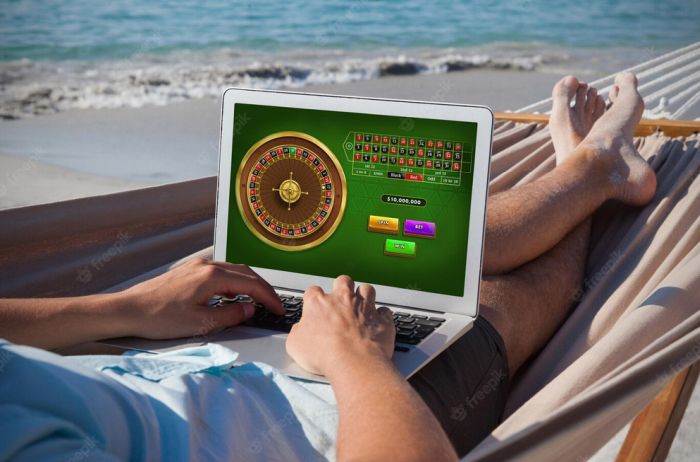
Image: Freepik/Creativeart
More countries and states around the world pass laws legalizing gambling, whether sports wagers or online casino games like blackjack, slots and baccarat. With an expanding market as more games are adapted to the digital world and more betting lines are available to wager on comes an increased need for online safety: the global online gambling industry market share was $81.03 billion in 2022, even with the Russo-Ukrainian War and continued recovery from the COVID-19 pandemic suppressing economies around the world. Experts expect the market share to grow an additional 9.3 percent in 2023.
Developments in Financial Technology, or Fintech, are transforming the way that betting platforms like Bet365 Casino Ontario Online are able to conduct their business: the gambling industry adapting to the internet opens a new world of possibilities for bettors and casinos alike.
Fintech refers to “new tech that seeks to improve and automate the delivery and use of financial services…by utilizing specialized software and algorithms.”
While it began as a buzzword for the software used by banks turning to the digital world, Fintech is considered part of the Technology, Media and Telecommunications (TMT) sector that continues to grow and evolve, with new developments like Artificial Intelligence taking up an increasing stake in the public’s interest.
A wide variety of technologies fall under the Fintech label, from apps to keep track of a budget and mobile banking to cryptocurrency, cloud storage and the blockchain.
Online betting provides a streamlined and secure process for users to cash out on their wagers: safer than carrying cash out of a casino, faster than depositing a check.
Even when interacting with trusted brands, however, submitting Personally Identifiable Information (PII) like credit card numbers, Social Insurance Numbers, home addresses and more to online portals can be a nerve-wracking experience.
Bet365 Casino Ontario Online harnesses the power of Fintech to take a weight off their customer’s minds. One example is their Secure Sockets Layer (SSL) web certificate, a protocol that encrypts online data submissions throughout a transaction, ensuring that one’s data is safe and secure through every step of the way.
Another example of Fintech is the Know Your Customer verification program that Bet365 uses to confirm a bettor’s identity, which helps to prevent money laundering, fraud, use of the platform by underage users and identity theft.
With a world of information at one’s fingertips, processing speed is key in the digital age. Fintech makes it possible for users to pocket their winnings almost as soon as the wagers process. Despite the uptick in efficiency, increased speed doesn’t always come with increased costs for consumers as Fintech moves toward consumer-oriented platforms.
FinSMEs Newsletter reports that “Fintech platforms typically charge lower fees than traditional banking methods, meaning that more of the winnings end up in the gamer’s pocket;” hidden fees at the end of a transaction are the enemy of anyone who has ever bought anything online, but Fintech cuts down on that phenomenon.
Although a bank deposit may take a few days to transfer through to the betting platform itself, virtual credit systems are another example of Fintech that makes it possible to start betting immediately. Platforms are able to verify transactions and provide in-app currency while deposits clear, reducing the wait time for users.
Other applications of Fintech in the online and sports wagering industries include in-app currencies like tokens and free or second-chance bets. While these assets are limited to the platforms that provide them—you have to place and win a free bet before you can cash out on the dollar value—they provide a fun, risk-free promotion for users to take advantage of.
App-specific fund balances mean that users can also make one-time purchases to load up on credits, making it so that they can play the games they love without having to stress over entering payment information each time they make a wager.
The National Crowdfunding & Fintech Association (NCFA Canada) is a financial innovation ecosystem that provides education, market intelligence, industry stewardship, networking and funding opportunities and services to thousands of community members and works closely with industry, government, partners and affiliates to create a vibrant and innovative fintech and funding industry in Canada. Decentralized and distributed, NCFA is engaged with global stakeholders and helps incubate projects and investment in fintech, alternative finance, crowdfunding, peer-to-peer finance, payments, digital assets and tokens, blockchain, cryptocurrency, regtech, and insurtech sectors. Join Canada's Fintech & Funding Community today FREE! Or become a contributing member and get perks. For more information, please visit: www.ncfacanada.org
| | |
|---|---|---|
| | |
Jan 16, 2023

Image: Unsplash/Andrey Metelev
Online gaming has come a long way since its inception, and with the advent of new technologies like Augmented Reality (AR), Virtual Reality (VR), and Blockchain, it's on the cusp of a revolutionary change. These technologies have the potential to change the way we play, interact and transact in the online gaming space.
We will explore the intersection of these technologies, discussing the opportunities and challenges that lie ahead. Our thesis statement is that these are set to revolutionize the online gaming industry and will create a new breed of immersive and secure gaming experiences for players.
AR/VR is being used in the online gaming and online poker industry to create more immersive and engaging experiences for players. In online gaming, AR/VR technology is being used to create virtual worlds and environments where players can interact with each other and the game in a more realistic way.
Virtual Reality is revolutionizing the online poker experience by allowing players to sit at virtual tables and interact with other players in real-time. Looking for the best VR poker platforms? Look no further, Top10pokersites.net provides expert reviews for the top virtual reality poker sites. In online poker, examples of popular platforms include VR Poker and Poker VR.
When it comes to the general online gaming industry, there are a variety of popular examples of games and platforms that utilize them. Some of the most well-known examples include Minecraft VR, a virtual reality version of the classic sandbox game, Beat Saber, an action-packed VR rhythm game, and Robo Recall, a fast-paced VR shooter game. These examples showcase the potential of AR/VR in the online gaming industry and the level of immersion it can provide to players.
The potential benefits of online gaming and online poker also include increased immersion and engagement for players, as well as the ability to create more realistic and social experiences. However, there are also limitations to the technology, such as the high cost of hardware and the limited player base. As technology continues to evolve and becomes more accessible, the online gaming and online poker industry are expected to see more widespread adoption of AR/VR tech.
Blockchain technology is being used in the online gaming industry to create decentralized and transparent gaming experiences. By using blockchain, game developers can create games that are decentralized and run on a peer-to-peer network, which eliminates the need for a central authority. This allows for more transparency and fairness in the game. Some popular examples of blockchain-based games and platforms include Cryptovoxels, Axie Infinity, and The Sandbox.
The potential benefits of blockchain in online gaming include increased transparency, security, and fairness in the game. It also allows players to have full control of their virtual assets and in-game currency, which can be traded or sold on the open market.
Additionally, blockchain technology allows for the creation of non-fungible tokens (NFTs), which can be used to represent unique in-game assets. However, there are also limitations to the technology, such as the lack of scalability, and the need for players to have a basic understanding of blockchain. Nevertheless, as the technology continues to evolve and becomes more accessible, the online gaming industry is expected to see more widespread adoption of blockchain technology.
By combining the two, game developers can create virtual worlds that are decentralized and transparent, allowing players to have full control over their virtual assets. The use of blockchain technology in AR/VR games can improve the overall security and fairness of the game. Some examples of games and platforms that utilize both include Decentraland, Somnium Space, and The Sandbox.
The potential benefits of combining AR/VR and blockchain include increased immersion, security, and transparency. Players will be able to experience virtual worlds that are more realistic and social, while also having full control over their virtual assets. However, there are also limitations to the technology such as the high cost of hardware, the limited player base, and the need for players to have a basic understanding of blockchain technology.
The intersection of AR/VR, blockchain, and online gaming presents a wide range of opportunities for growth and innovation. For example, the use of blockchain technology can create new revenue streams for game developers and publishers through the sale of virtual assets and in-game currency. Additionally, AR/VR technology can open up new markets for online gaming, such as education and training, and can create new opportunities for advertising and sponsorships.
Some challenges and limitations may arise with the intersection of these technologies. For example, the high cost of hardware and the limited player base may limit the adoption of AR/VR technology in online gaming. Additionally, the lack of scalability and the need for a basic understanding of blockchain technology may limit the adoption of blockchain in online gaming. Therefore, game developers and publishers need to consider these challenges and limitations when developing and implementing AR/VR and blockchain technology in online gaming.
In conclusion, the intersection of AR/VR, blockchain, and online gaming is set to revolutionize the way we play, interact and transact in the online gaming space. As we have seen in this blog post, AR/VR technology is being used to create more immersive and engaging experiences for players, while blockchain technology is being used to create decentralized and transparent gaming experiences.
The National Crowdfunding & Fintech Association (NCFA Canada) is a financial innovation ecosystem that provides education, market intelligence, industry stewardship, networking and funding opportunities and services to thousands of community members and works closely with industry, government, partners and affiliates to create a vibrant and innovative fintech and funding industry in Canada. Decentralized and distributed, NCFA is engaged with global stakeholders and helps incubate projects and investment in fintech, alternative finance, crowdfunding, peer-to-peer finance, payments, digital assets and tokens, blockchain, cryptocurrency, regtech, and insurtech sectors. Join Canada's Fintech & Funding Community today FREE! Or become a contributing member and get perks. For more information, please visit: www.ncfacanada.org
| | |
|---|---|---|
| | |
Guest Post | Jan 10, 2023

Image: Pexels/David McBee
The popularity and usage of cryptocurrencies have increased significantly in the past few years. In today’s time, many merchants accept crypto payments—you can buy goods with crypto, trade them, pay for services, and much more.
In fact, since crypto is expected to recover in 2023, cryptocurrencies might be the best option for anyone looking to avoid using credit cards. In addition to being a safer option, cryptocurrencies have several advantages over credit card transfers, especially if you are looking to play at an online casino.
Security is one of the main concerns for anyone looking to play at an online casino. While most online casinos are reputable, licensed, and trustworthy, not many people are willing to leave their personal data and credit card information with a gambling establishment.
Because of that, Ethereum gambling has flourished in recent years, mainly because of Ethereum’s price, safety, and transaction speed.
Of course, if you need a tad more convincing, here’s what makes cryptocurrency payments safer than credit or debit cards.
Cryptocurrencies use a decentralized system known as the blockchain to record and process transactions. The transactions that occur on the blockchain do not require centralized financial institutions to process the transaction, making every cryptocurrency transaction peer-to-peer.
On the other hand, your everyday credit card transactions include four participants:
Since cryptocurrency transfers do not use third-party to verify the transaction, your data, such as your credit card number, CCV, and even your personal information, is not stored in data centers or centralized hubs, which are often susceptible to hacking, making crypto payments a safer option.
Apart from eliminating the need for a third party and reducing data exposure, cryptocurrency transactions are also considered much safer because of how the blockchain is structured.
Namely, blockchain is a distributed ledger of information. All the information available on the blockchain is stored in blocks of data, which are interconnected, and spread across numerous nodes.
To prevent tampering with the data, each block is digitally signed with a hash, which is based on the contents of the record and all the other blocks on the blockchain and also serves to verify the legitimacy of every node.
For someone to change the information stored on a specific block, they would need to hack the majority of block nodes. While this is possible with the so-called 51% attack, such an attack is extremely difficult to achieve, and hackers have little incentive to even try it.
In addition, as more nodes appear on the blockchain, attacks like the 51% attack become even more difficult to carry out, which is why blockchain is considered virtually unhackable.
Simply put, by using cryptocurrency to play in an online casino, or anywhere else, for that matter, you eliminate the risk of having your credit card information stored in a data center and potentially stolen.
At the same time, since no personal information is used in crypto transactions, you also avoid risking identity theft, making crypto payments a far safer option for playing in online casinos.

Image: Pexels/Andrea Piacquadio
In addition to being a safer option, crypto is much more convenient than fiat for gambling online—it is faster, offers more privacy, and lower fees.
By making a deposit using a credit card, you may be susceptible to incurring late fees, interest charges, and even foreign transaction fees.
While online casinos usually do not charge a deposit or a withdrawal fee, most credit card issuers treat gambling-related transactions as a form of cash advance or cash equivalent and charge a cash advance fee, which is anywhere between 3% and 5% per transaction.
On the other hand, crypto casinos that do charge a fee usually charge a flat fee to cover the transaction costs, which is often negligible.
As we mentioned earlier, your everyday credit or debit card transaction involves up to four participants, one of which is a financial institution. These institutions are centralized and have to conform to various laws and regulations.
Because of that, an online gambling transaction involving a credit card or bank transfer can take up to a few days to complete in some cases, especially if the transfer is international and involves several centralized institutions.
Furthermore, it gets even worse when you are withdrawing funds from the casino and you have to go through various KYC before you can withdraw the money from your account.
In contrast, cryptocurrency transactions take only a few minutes to complete. The speed depends mostly on the network traffic and the coin you use, which is why most players use coins like Ethereum or Bitcoin for online gambling.
Of course, if you are not a fan of cryptocurrencies and still want to avoid using a credit or a debit card, we have some good news for you—many reputable online casinos offer a wide variety of payments methods, such as e-wallets and prepaid cards and vouchers.
E-wallets are electronic wallets that allow you to store funds, which you can connect to a casino to make deposits rather than using your credit card. Of course, you would still have to use your credit card info to add funds to your e-wallet, which is a separate issue. However, if e-wallets sound like something you would prefer more, the most popular e-wallets you can find in online casinos are Skrill, Neteller, ecoPayz, and Yandex.
Additionally, you can purchase prepaid cards like Paysafecard, AstroPay, and Boleto and simply use the provided code to add funds to your account without going through all the fuss of creating multiple accounts.
Online casinos often accept various payment methods, so there is always a way to avoid using credit cards and leaving sensitive information at online casinos.
However, out of all the methods, playing with cryptocurrency is by far the most secure option.
At the same time, playing at a crypto casino also comes with a few advantages, making cryptocurrencies an ideal form of payment when playing at online casinos.
The National Crowdfunding & Fintech Association (NCFA Canada) is a financial innovation ecosystem that provides education, market intelligence, industry stewardship, networking and funding opportunities and services to thousands of community members and works closely with industry, government, partners and affiliates to create a vibrant and innovative fintech and funding industry in Canada. Decentralized and distributed, NCFA is engaged with global stakeholders and helps incubate projects and investment in fintech, alternative finance, crowdfunding, peer-to-peer finance, payments, digital assets and tokens, blockchain, cryptocurrency, regtech, and insurtech sectors. Join Canada's Fintech & Funding Community today FREE! Or become a contributing member and get perks. For more information, please visit: www.ncfacanada.org
| | |
|---|---|---|
| | |
Reuters | Manya Saini and Niket Nishant | Jan 10, 2023

Image: Unsplash/Clay Banks
Coinbase Chief Executive Brian Armstrong:
We also saw the fallout from unscrupulous actors in the industry, and there could still be further contagion. We will be shutting down several projects where we have a lower probability of success.
Decrypt | Mat Di Salvo | Jan 10, 2023
The National Crowdfunding & Fintech Association (NCFA Canada) is a financial innovation ecosystem that provides education, market intelligence, industry stewardship, networking and funding opportunities and services to thousands of community members and works closely with industry, government, partners and affiliates to create a vibrant and innovative fintech and funding industry in Canada. Decentralized and distributed, NCFA is engaged with global stakeholders and helps incubate projects and investment in fintech, alternative finance, crowdfunding, peer-to-peer finance, payments, digital assets and tokens, blockchain, cryptocurrency, regtech, and insurtech sectors. Join Canada's Fintech & Funding Community today FREE! Or become a contributing member and get perks. For more information, please visit: www.ncfacanada.org
| | |
|---|---|---|
| | |
FT Partners | Jan 9, 2023
 FT Partners is pleased to present you with the latest installment of our "CEO Monthly Blockchain & Cryptocurrencies Market Update & Analysis." The report can be downloaded here.
FinTech Financings
* Revolut Raises $1.25 billion in Financing at a $33 billion Valuation (FT Partners Advised)
* Bolt Raises $355 million in Financing at an $11 billion Valuation (FT Partners Advised)
* Upgrade Raises $280 million in Financing at a $6 billion Valuation (FT Partners Advised)
* Nium Raises $200 million in Financing (FT Partners Advised)
* CloudWalk Raises $150 million in Series C Financing (FT Partners Advised)
* Abra Raises $55 million in Series C Financing (FT Partners Advised)
* Amber Group Raises $300 million in Series C Financing
* TRM Labs Raises $70 million in Series B Financing
* Sardine Raises $52 million in Series B Financing
IPOs
* Robinhood Completes its IPO Raising $2.1 billion
* Coinbase Completes its Direct Public Offering
The National Crowdfunding & Fintech Association (NCFA Canada) is a financial innovation ecosystem that provides education, market intelligence, industry stewardship, networking and funding opportunities and services to thousands of community members and works closely with industry, government, partners and affiliates to create a vibrant and innovative fintech and funding industry in Canada. Decentralized and distributed, NCFA is engaged with global stakeholders and helps incubate projects and investment in fintech, alternative finance, crowdfunding, peer-to-peer finance, payments, digital assets and tokens, blockchain, cryptocurrency, regtech, and insurtech sectors. Join Canada's Fintech & Funding Community today FREE! Or become a contributing member and get perks. For more information, please visit: www.ncfacanada.org
| | |
|---|---|---|
| | |
Jan 9, 2023

Image: Unsplash/Krissia Cruz
Online gambling is one of the most successful industries in the world. Its net worth is more than $50 billion, and it is only growing. Therefore, it is only natural that so many countries have successfully legalized online gambling and continue relaxing the laws regarding online casinos. We can only upload them as legalization ensures better control over the illegal market and minimizes the dangers that we can find online. However, we are here today to talk about the Canadian legal landscape regarding online casinos. We will discuss the overall history of legalization, the differences between major provinces, and what you should know as a player before you start enjoying all the benefits of Canadian gambling.
Before we start, we wanted to highlight that we are not lawyers. Please, don’t consider this article as legal advice. We would always recommend you get answers from attorneys if you are not sure about the laws of the specific country. That said, we are well aware of Canadian history regarding casinos. Initially, gambling was illegal for several centuries. Only back in 1969 the criminal code was changed to allow different variations of lotteries. However, they were mostly concerned with fundraisers for worthwhile causes. In 1976, the government officially allowed sports lotteries. They were in no way, shape, or form connected with fundraisers. Only in 1985 the federal government finally took control over different gambling activities. Here we can include lotteries, slot machines, horse racing wagering, and any other gambling types. With this in mind, Canada was one of the first countries to successfully legalize online gambling.
Another important thing you should understand about Canadian gambling is that the Canadian government fully controls it. Every single platform not licensed by the Canadian government can be considered illegal. People can get fined up to C$5000 if they play on an illegal platform. So make sure your chosen casino is licensed to provide its services for Canadian players. Luckily for you, as mentioned by Wagering Advisors, there are at least 100 licensed gambling and casino platforms in Canada with generous offers that will keep you entertained. All of them have different advantages and offers. Nevertheless, the most important part is that they are licensed. It is pretty easy to explain if you were wondering why this is important, apart from legal reasons and fines. Licensed platforms are regulated and monitored.
This means that all mathematical models will remain the same. Game developers and casino owners will not be able to change mathematical models, and everything will be completely random. This ensures that all casinos comply with the rules and regulations of fair gambling. If you see that RTP is 96%, a casino has no right to change math if you start winning.

Image: Unsplash/Greg Rosenke
Just like the United States, Canada is divided into different regions, and they are called provinces. 10 different provinces include:
All of them have different governing bodies and rules regarding many aspects, including gambling. So we decided to review a couple of major provinces and how different they are regarding gambling laws.
Ontario has the highest population compared to all other Canadian provinces. Therefore, it is no wonder that more than 80% of all adults have tried gambling at least once. This province has at least 25 land-based casinos, meaning that most people have constant access to slot machines, poker or even popular eSports. It is also quite obvious that they can always play online since online gambling is legal and regulated by the government. Thus, if you are 19 years or older, finding a way to gamble will not be an issue.
For example, you can start with slot machines available at land-based casinos. Moreover, you can also find them on horse tracks and other legal locations. As for other forms of gambling, practically everything is available. You can try blackjack, poker, bingo, lotteries, live dealer games and sports betting, and practically any other title.
Quebec was one of the first provinces that successfully legalized gambling. It is also a mostly French-speaking community, so be aware that many websites will use French as their primary language. That said, gambling is still not as popular in Quebec as in Ontario. There are only nine land-based casinos available in this particular province. Nevertheless, more than 70% of adults have tried gambling in this particular province. As for the rules, they are pretty much identical to Ontario. The only major difference is the actual history behind them since Quebec was much quicker to legalize the majority of available games. This particular province has also started with horse racing. It continues with bingo, fundraisers, lotteries, and more traditional gambling games like poker, blackjack, American roulette, and online slot machines. However, the game selection is not as impressive. If you want to try horse racing, there is only one available track. This also means that most gambling operations are done online through licensed casinos that the government completely controls. With that being said, you will be able to find any game, starting with the lottery and ending with even the most bizarre online options.
This is yet another major problem that we wanted to discuss. British Columbia is densely populated and shares borders with the United States of America. So it is no wonder this particular province has been offering gambling opportunities for several centuries. The province started by legalizing the lottery. This means that if you are 19 years old or older, you can already start playing the lottery. You have exactly one year to cash the prize in case your ticket is the winning one. When it comes to horse racing, there is also one track, but you can have much more fun playing at 15 different locations that feature gambling activities and slot machines. Not all of them are necessarily casinos, but the game selection remains the same. There is also a hard rock casino with more than 1000 slot machines and hundreds of other variations. This casino features a high-limit room that will be perfect for professionals. Besides that, every single game you can imagine is completely legal if it is licensed to provide its services. You can try anything from baccarat to lotteries.
Even though this is the smallest province in Canada, it consists of one major island and more than 200 smaller ones. Just like we see in other provinces, gambling is completely legal. You also have to realize that this province has one of the lowest gambling rates if we compare it with other regions. However, it is hardly a surprise since the density of the population is also one of the lowest ones on the map. Nevertheless, we still decided to include this province to showcase that you can play even in the most remote locations in Canada and still have fun.
Interestingly enough, there are two race tracks in several locations where you can enjoy casinos. It is funny how this particular province has more race tracks than Quebec or British Columbia. With that being said, if you suddenly find yourself on one of the islands, we recommend you enjoy online gambling. It will be the best option, and you will be able to enjoy the lottery, blackjack, poker, slot machines, and practically anything else.
We will wrap this list up with Alberta. This particular province has a high population density. We would say that when it comes to sports, it is one of the most notable provinces in Canada. However, it is also one of the most questionable ones regarding the laws as well as regulations. More than half of the available gamblers have experienced issues with gambling addiction. This means that this particular province has to evaluate its rules regarding online and real-life casinos.
Still, you can do practically anything, starting with sports betting, and ending with the traditional lottery and online casino games. There are more horse tracks here than practically in any other part of Canada. As we have said before, Alberta has a long history with sports wagering.
In short, if you decide to travel to Canada, you can gamble online and offline practically in any city. If you are 19 years or older, land-based casinos, and horse tracks will quickly open their doors for you. After all, this country has a long history of sports and gambling. However, we still recommend you do a quick research and make sure that the casino platform you have chosen is licensed. The government regulates all online and offline casinos. We still recommend you to be mindful, control your budget, and always gamble responsibly.
The National Crowdfunding & Fintech Association (NCFA Canada) is a financial innovation ecosystem that provides education, market intelligence, industry stewardship, networking and funding opportunities and services to thousands of community members and works closely with industry, government, partners and affiliates to create a vibrant and innovative fintech and funding industry in Canada. Decentralized and distributed, NCFA is engaged with global stakeholders and helps incubate projects and investment in fintech, alternative finance, crowdfunding, peer-to-peer finance, payments, digital assets and tokens, blockchain, cryptocurrency, regtech, and insurtech sectors. Join Canada's Fintech & Funding Community today FREE! Or become a contributing member and get perks. For more information, please visit: www.ncfacanada.org
| | |
|---|---|---|
| | |


August 26th, 2025

January 4th, 2024

June 1st, 2021

September 9th, 2020

July 9th, 2018

January 3rd, 2018

September 25th, 2017

June 20th, 2017

May 10th, 2017

December 14th, 2016