



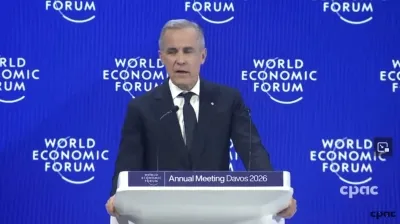

Karsten Wenzlaff, Advisor
August 26th, 2025
Karsten Wenzlaff is a Crowdfunding and Fintech Expert from Germany. He is Secretary-General of Digit[...]


Last Updated: July 28, 2026
Status: Emerging
Organizations: Credit Union Digital Asset Task Force, St. Cloud Financial Credit Union, Amanda Wick, World Council of Credit Unions, National Digital Banking Working Group, Central 1, Large Credit Union Coalition, Payments Canada, Stablecore, Curql, TruStage, CrossState Credit Union Association, Metallicus, Q2, Jack Henry, Coinbax, NCUA
Amanda Wick’s announcement of a new Credit Union Digital Asset Task Force raises a timely question for Canadian credit unions and digital assets.
The U.S. initiative is led by Chase Larson, Executive Vice President and Chief Lending Officer at St. Cloud Financial Credit Union. It is designed to help credit union boards and executives understand stablecoins, tokenization, crypto assets, regulation, infrastructure and risk.
Starting with education and coordination makes sense. Credit union leaders need a practical way to compare the member value, operating costs and regulatory responsibilities before deciding whether a digital asset service belongs in their strategy.
Other developments show how quickly the discussion is advancing. Credit unions are joining early access programs, testing infrastructure through association cohorts, assessing platform integrations and considering stablecoin and tokenized deposit services.
The World Council of Credit Unions has also placed digital money on the cooperative finance agenda. Its July 2026 stablecoin paper examines potential effects on deposits, payments, member relationships and the future role of credit unions.
Canada already has groups that coordinate technology procurement, common architecture, digital identity and payments modernization. The practical question is whether those collaborative models should now be used to study digital assets together.
Strategic Takeaway
Canadian credit unions already have collaboration models that could support shared digital asset research, vendor assessment and controlled testing. What they still need is an agreed member or operating problem to solve and a regulatory route that works across federal and provincial responsibilities. Shared diligence is the most practical place to begin.
Canada’s strongest foundation isn’t a blockchain pilot. It is the way credit unions already collaborate on expensive technology, procurement, architecture and national infrastructure.
Some of those capabilities could transfer directly to digital asset work. Others are closely related. Together, they show that institutions can share complex diligence while retaining control over contracts, governance and implementation.
The National Digital Banking Working Group coordinated vendor review, procurement, migration planning and implementation after Central 1 announced its digital banking transition. Its public membership page listed 59 institutions, while 37 selected Intellect Design Arena’s eMACH.ai platform.
This was more than a discussion forum. Participating institutions pooled expertise and bargaining power, then made their own implementation decisions. A digital asset initiative could follow the same model without requiring every credit union to adopt the same product.
The Large Credit Union Coalition offers another example. Its work has included artificial intelligence, digital identity, common architecture, collective purchasing and payments modernization.
Digital identity, architecture and collective purchasing could support the evaluation of wallet providers, custodians, transaction monitoring systems and settlement networks. The same structure could help institutions compare risks, costs and member use cases.
Payments coordination is already familiar. Central 1 and the other Group Clearer centrals created the Payments Modernization Advisory Group with 12 credit unions to represent sector requirements during national infrastructure development.
That experience is relevant because stablecoins and tokenized deposits would need to interact with clearing, settlement, liquidity, fraud controls and account infrastructure. Many of those questions also also relevant to Canada’s Real Time Rail development.
The opening of Payments Canada membership creates another connection. Credit unions, payment service providers, fintechs, foreign exchange firms and digital asset companies are gaining a wider role in national payment infrastructure. NCFA’s analysis of Canada’s financial infrastructure shows how access, licensing and participation are evolving.
Consumer data access is important too. Canada’s open banking framework is creating new expectations around consent, identity, liability and financial service integration. Digital asset products offered through regulated institutions would need to fit within that same trust environment.
The size of the sector makes this more than a technology discussion. The Canadian community finance market baseline identified 306 credit unions holding approximately $764 billion of the $771.3 billion in total assets included in the dataset.
The SVX report doesn’t examine stablecoins or digital assets. Its relevance is the amount of member and community capital already managed through cooperative institutions. Changes to deposits, payments and settlement infrastructure could therefore have material consequences for credit unions.
Canada isn’t starting with an empty page. Credit unions already know how to organize expertise, negotiate together, coordinate architecture and represent shared interests.
The next step is deciding whether digital assets deserve a place within that existing collaborative work.
No common single operating model has emerged. Credit unions and their service organizations are taking different approaches based on regulation, member needs, internal capability and available partners.
Some initiatives begin with education and advocacy. Others involve early access, sandbox testing, planned products, core integrations or regulatory development. These examples offer reference points for Canada rather than a ready made plan.
Click each to expand
Emerging Coordination
Amanda Wick announced a Credit Union Digital Asset Task Force led by Chase Larson, Executive Vice President and Chief Lending Officer at St. Cloud Financial Credit Union.
The initiative brings digital assets into a sector level credit union discussion. It also provides a useful model for Canada, where an existing group could coordinate education, research and early use case assessment.
Global Strategic Framework
The World Council of Credit Unions released the first paper in a planned series examining how new forms of digital money could affect the global credit union system.
WOCCU isn’t calling on every credit union to issue a stablecoin. It is asking whether cooperative institutions have the authority, flexibility and readiness to participate as payment and deposit infrastructure changes.
Early Access
Stablecore, Circuit and Curql launched an early access program involving RBFCU, Stanford Federal Credit Union, La Capitol Federal Credit Union and other institutions representing about US$25 billion in combined assets.
This initiative has progressed beyond general education. Named credit unions are evaluating defined services through an organized early access program.
Planned Product
TruStage announced plans for TruStage Stablecoin, or TSDA, as a fully reserved U.S. dollar stablecoin for community based financial institutions.
TSDA combines a named product, a large credit union network and a defined payment use case. It represents one of the more developed cooperative stablecoin strategies.
Sandbox And Pilot Preparation
CrossState Credit Union Association and Metallicus launched Innovation Program 2.0 with an initial cohort of 50 credit unions in Pennsylvania and New Jersey.
This may be one of the most relevant models for Canada. Institutions can learn and test together without requiring every participant to become an issuer or infrastructure operator.
Available Infrastructure
Q2 partnered with Stablecore to connect stablecoins, tokenized deposits and digital asset accounts with infrastructure already used by banks and credit unions.
This approach brings digital asset capabilities into existing banking technology rather than asking institutions to build a separate platform.
Integration Access
Coinbax joined the Jack Henry Fintech Integration Network to connect stablecoin payment infrastructure with Jack Henry core and digital banking platforms.
The model shows how a credit union could access digital asset infrastructure through technology relationships it already understands.
Proposed Regulatory Framework
The National Credit Union Administration has proposed rules for payment stablecoin issuers affiliated with federally insured credit unions.
The proposals give U.S. credit unions a clearer view of how ownership, issuance and supervision could work.
Canada doesn’t yet have a comparable credit union framework connecting federal stablecoin requirements with provincial regulation, deposit protection and cooperative ownership. NCFA’s stablecoin regulatory guide tracks the federal framework and the decisions still ahead.
The evidence identifies several ways credit union associations, centrals and collaborative groups could investigate digital assets while controlling cost and risk.
Each option addresses a different problem. Research and testing can be shared, while boards retain responsibility for product approval, compliance, member communication and operations.
Shared research and regulatory analysis could reduce repeated legal, policy and vendor work. A group could map federal and provincial requirements, compare stablecoins with tokenized deposits and examine deposit protection, custody, reserves and redemptions. That work would remain useful even if no product followed.
Coordinated policy engagement could help regulators understand how cooperative ownership, provincial supervision and deposit protection differ from commercial bank and nonbank issuer models. Credit unions may need to take part in regulatory design before deciding whether to offer a service.
Controlled testing could let institutions examine technology, controls and use cases before making production commitments. Shared sandbox work could cover wallet verification, settlement, transaction monitoring, reconciliation, vendor performance and incident recovery.
Cross border business payments may offer one of the clearest commercial tests. Credit unions could retain the member relationship and Canadian dollar account while using regulated digital settlement infrastructure behind the scenes. Foreign exchange, sanctions, wallet ownership, liquidity and redemption would still require strong controls.
Tokenized deposits may fit the credit union model better than a separate stablecoin. A tokenized deposit could remain a claim on a regulated institution rather than becoming a separate private currency. Canada would still need clarity on ownership, settlement finality, interoperability and provincial deposit insurance.
Shared custody and wallet infrastructure could give smaller institutions access to security and compliance capabilities they couldn’t justify independently. The trade off is concentration risk. One vendor failure could affect several institutions, making asset segregation, recovery and liability allocation critical.
Identity and compliance tools may offer a lower risk starting point. Common wallet verification, member authentication, sanctions screening and transaction monitoring could support future payment or custody services without creating immediate issuance or balance sheet exposure.
Business settlement and treasury pilots could test supplier payments, commercial settlement, liquidity management or transfers between institutions. These controlled business uses may have clearer operating value than retail crypto trading.
Shared stablecoin infrastructure would require the greatest level of coordination. Participants would need to agree on reserves, redemption, governance, technology, liquidity, fees, branding and loss allocation. The international examples show how the model could work, but Canada doesn’t need to begin there.
Waiting is also a valid decision. A joint review may find that member demand is weak, costs are too high, regulations remain incomplete or existing payment systems solve the same problem with less risk.
Each option should pass five tests:
Deposit protection remains one of the largest questions. Members need to know whether a tokenized deposit would receive the same provincial protection as funds in an ordinary account. Institutions also need clarity on reserve ownership, liquidity and redemptions during stress.
Custody raises a different set of issues. Who controls the keys? Are assets legally separated if a vendor fails? Who carries the loss when funds go to the wrong wallet? How does a member recover access after fraud, death or lost credentials?
AML controls wouldn’t end at onboarding. Institutions would need to verify wallet ownership, monitor transactions, screen counterparties and decide how to handle transfers involving self hosted wallets.
Shared governance may prove harder than the technology. Participants would need rules for choosing vendors and networks, changing operating standards, setting fees and allocating losses when an institution or service provider fails.
Current evidence doesn’t support rushing into a shared Canadian credit union digital asset product. It does support sharing the work required to understand whether one could solve a real problem.
Canadian credit unions already collaborate on technology, architecture, procurement and payments infrastructure. They also manage approximately $764 billion within the country’s community finance baseline. That gives the sector both the capability and the economic reason to pay attention.
Internationally, cooperative institutions are progressing through education, advocacy, early access, sandbox testing, platform integration, planned stablecoins and regulatory development. None offers a complete Canadian template.
The conversation has already begun internationally. Canada’s next decision is whether credit unions build on the collaboration they already have, identify the use cases that could create real member value and help define the market before others define it for them.
Do you agree the evidence supports this answer?


Click Agree or Disagree. Your vote is recorded anonymously and aggregate results are tracked.
No shared Canadian credit union stablecoin has been publicly announced. The more immediate opportunity is coordinated research into member demand, regulation, infrastructure and risk.
A tokenized deposit is a digital representation of a deposit held with a regulated financial institution. Unlike a separate stablecoin, it may remain a direct claim on the institution, although legal treatment, settlement and deposit protection must be clearly defined.
Shared work could lower the cost of legal analysis, vendor assessment, cybersecurity review, compliance design and controlled testing. Each credit union could still decide independently whether to offer a product.
They could affect deposit and payment relationships if members begin holding or transferring more value through external digital money platforms. The outcome would depend on adoption, regulation, product design and whether credit unions participate directly.
An existing credit union association, central or working group could coordinate education, regulatory analysis, use case ranking and limited testing before institutions commit to a shared product or infrastructure provider.

The National Crowdfunding & Fintech Association (NCFA Canada) is a financial innovation ecosystem providing education, market intelligence, industry stewardship, networking and funding opportunities to thousands of members. NCFA works with industry, government, partners and affiliates to support a competitive and innovative fintech and funding sector in Canada. Join Canada’s Fintech and Funding Community or learn more at NCFA Canada.
 |  |  |
|---|---|---|
 |  |  |



August 26th, 2025

January 4th, 2024

June 1st, 2021

September 9th, 2020

July 9th, 2018

January 3rd, 2018

September 25th, 2017

June 20th, 2017

May 10th, 2017

December 14th, 2016

Leave a Reply