




Karsten Wenzlaff, Advisor
August 26th, 2025
Karsten Wenzlaff is a Crowdfunding and Fintech Expert from Germany. He is Secretary-General of Digit[...]


July 10, 2026
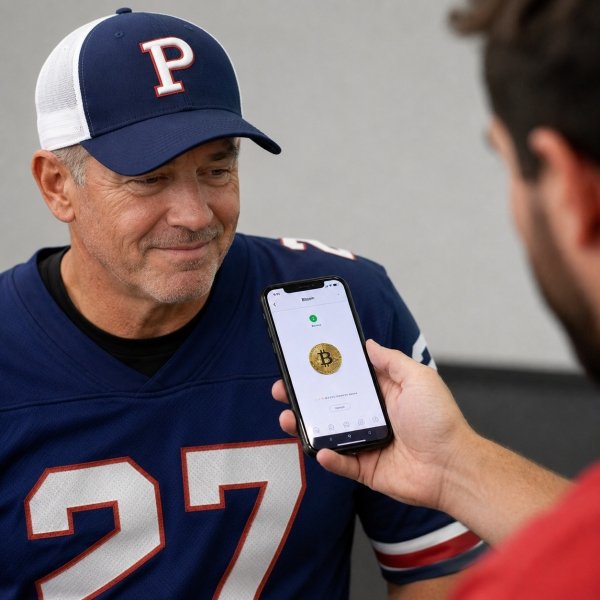
AI Image: Cryptocurrencies give us a chance to get closer to the action
The way that digital finance and mainstream entertainment have come together has given us a variety of new ways to enjoy our favorite activities. Sports fans are among the people who can most appreciate these changes, so let’s take a look at how cryptocurrencies are enhancing the way they interact with their chosen teams and sports.
The arrival of online sportsbooks was one of the most notable events for sports in recent times. Being able to find the latest, updated odds from events around the planet was a massive step forward. It means that we can now just as easily bet on the NHL, the NBA, or a table tennis tournament from the other side of the world. Many sportsbooks also provide casino games, ensuring they offer fans a well-rounded platform with lots of options.
Of course, finding a fast and safe way of moving funds in and out of these platforms was the next big challenge. Since it’s a fast-moving industry, fans need to be able to make deposits swiftly and securely, while they also want the security of being able to make rapid withdrawals with complete safety. Traditional fiat methods have been used to good effect, but the growing use of cryptocurrencies allows fans to take advantage of a highly secure and almost instant transfer process.
Looking at this online casino in Canada, we can see that Bitcoin (BTC), Ethereum (ETH), and Tether (USDT) are among the tokens accepted. These are some of the biggest cryptocurrencies in the market, meaning that they offer deep liquidity. Transfer times vary across networks, although most are completed almost instantly. Fees also vary, with most offering an extremely cost-effective approach.
The transfer process is simple once you understand the basics. Fans need to buy their chosen token first, which is usually done through an exchange. The next step is to send the cryptocurrencies to a self-custody wallet, and from there to the sportsbook’s wallet.
Given the added privacy with digital assets, this could also be viewed as a way to ensure that there is a buffer between the user’s main bank account and their gambling account. Some folks like to have a layer of separation, and cryptocurrencies make this significantly easier.
Fan tokens have emerged as one of the most interesting uses of cryptocurrencies. Soccer teams like Manchester City and PSG are among the top options for anyone looking for fan tokens. With fan tokens recently getting the green light in the US, Chiliz has an agreement with the NFL and NBA that lets them offer digital perks without minting any specific team tokens.
The right to vote on fan matters is one of the key aspects of fan tokens, since the holders of these tokens are offered the chance to vote on issues such as team outfits and fan chants. Arguably the first example came from Italy in 2019, when fans of Juventus voted for Song 2 by Blur as the team’s goal celebration music. Barcelona and PSG token holders have also successfully voted on their teams’ music choices in recent years.
In North America, the Professional Fighter League has used fan tokens to help choose the entrance anthems for fighters and also to set the questions to be asked at official press conferences. In the NASCAR world, Roush Fenway Racing (now RFK Racing) launched the first fan token and gave holders the opportunity to vote on various themes and designs.
The UFC went a step further by giving its token holders the chance to attend weigh-ins as VIP guests. This token also has a mechanism where the user’s number of tokens is applied to work out their exact voting power.
Digital assets can also be used to carry out real-world matchday transactions. The first example of Bitcoin being used by a major sports franchise came from the Sacramento Kings in 2014, when they teamed up with the BitPay payment processor. As well as entrance tickets, fans were able to use BTC to pay for official team merchandise at the store.
The NFL has also moved in the same direction. The Tennessee Titans provide a good example, as this franchise accepts BTC for season tickets and corporate sponsorship payments. We can also see the example of the Houston Texans, who accept BTC for the booking of luxury suites at games. In the wider sports world, FIFA naming Kraken their Official Crypto Exchange Supporter of the FIFA World Cup 2026 is a clear sign of how deeply embedded crypto has become in sports.
Whether you want to place a bet, buy a ticket, or help make fan decisions, cryptocurrencies have been playing an increasingly large role in the way you enjoy your favorite sports. By choosing the right tokens and determining how to use them, you can get more out of your sports-based entertainment.
 The National Crowdfunding & Fintech Association (NCFA Canada) is a financial innovation ecosystem that provides education, market intelligence, industry stewardship, networking and funding opportunities and services to thousands of community members and works closely with industry, government, partners and affiliates to create a vibrant and innovative fintech and funding industry in Canada. Decentralized and distributed, NCFA is engaged with global stakeholders and helps incubate projects and investment in fintech, alternative finance, crowdfunding, peer-to-peer finance, payments, digital assets and tokens, artificial intelligence, blockchain, cryptocurrency, regtech, and insurtech sectors. Join Canada's Fintech & Funding Community today FREE! Or become a contributing member and get perks. For more information, please visit: www.ncfacanada.org
 |  |  |
|---|---|---|
 |  |  |
July 9, 2026

Source: Bazoom
The Canadian online gambling sector is largely dominated by foreign brands - but domestic operators, and local companies supplying back-end tech or other services to the big names, are also booming. With the market now worth $9.5 billion a year in revenues, picks and shovels are proving a profitable investment.
This piece will look two key domestic brands in Canada's online gambling space, as well as why they're currently not on the level of international competition. And then analyze the potential state of the market going forward, including a new launch in Alberta.
Canada's online gambling system is currently fragmented. The most populous province of Ontario has it's own regulated and licensed market, with Alberta soon set to follow that model. The other states are served by a mix of provincial-backed operators and offshore operators across the globe.
One of the biggest international operators serving markets across North America is Stake. A look at something like the Stake promo code page at Sportsbook Review tells you there's a lot of interest in this one operator's offers and the comparison sites that break them down for players. If you want to compare the offers, you can find more information here, which also shows how competitive the market is, with customers expecting detailed analysis before making a choice.
Despite being a popular market, the prior state of regulations has limited the capacity for Canadian gambling brands directly serving Canadian players. Before Ontario opened its market in 2022 such an operation would have been illegal in many provinces. But in 2026, this has changed. There are now several large Canadian-based gambling companies that directly supply Canadians and keep revenues and taxes in the local economy.
Examples include theScore Bet, Betty and Bet99 among others. Although these brands can't compete with international giants that dominate the market, they are nevertheless making respectable revenues. TheScore Bet is probably the biggest and most established operator. However, although still based in Toronto it is now a subsidiary of American giant Penn Entertainment.
As well as B2C online gambling, Canadian companies are also big in the B2B gambling space. Bragg Group, based in Toronto, provides back-end gaming services for many international gambling brands including those now licensed in Ontario, while Geocomply, based in Vancouver, is a global provider of geolocation technology used to ringfence online gambling in certain jurisdictions worldwide.
Canada's homegrown gambling operations have done well from the Ontario market. However, with big competition from established US brands and offshore operators elsewhere, expanding the locally-licensed market to Alberta will be seen as a massive opportunity.
All three of the Canadian-based betting platforms mentioned above have applied for a license in Alberta, to launch when the market opens.
With the total custom expected to hit an estimated $400 million operators (before the 22% revenue sharing agreement with province) in just the opening half year. That means even if local operators take a smaller slice of the pie than giants like DraftKings and FanDuel, the revenue potential is still significant.
Provincially owned betting platform PlayAlberta may also remain a significant player. Although it failed to attract enough attention away from the offshore market for the government to be entirely happy with it, the site still has its players. However, rumours are now the government is going to get tax money from private operators it no longer sees the expense of running it as worthwhile and so rumors are it could be for sale to private operators.
Then there are the back-end tech suppliers poised to profit, whoever wins the market share race in Alberta. Among Bragg Gaming's clients are many local and international operators - including both DraftKings and FanDuel.
While the Canadian gambling market is booming, and possibly set to see even further growth when Alberta's market opens, things have not always been straightforward for operators or public opinion.
Politicians and the public are more aware than ever of responsible gambling, and compliance costs for Canadian-based gambling operators are high. They also face advertising restrictions that international offshore operators do not nationally, although regulators in Ontario have been looking to curb both kinds of gambling advertising.
Customer acquisition costs are also high, especially when operators compete on a new market. Alberta will offer another chance for smaller Canadian gambling brands to start on a new playing field against the big operators. However the financial clout of FanDuel, for example, often allows them to offer bigger bonuses. Because they can more easily swallow the cost of a player getting lucky of the bonus and winning big.
Nevertheless, in a competitive market that is new for Albertan customers, a locally-based option may prove well placed. Only time will tell. Certainly many companies are betting on Alberta, with more than 45 operators registered for launch ahead of the July 13 opening day. With Ontario's market posting huge revenues and tax dollars since 2022, few would bet against a similarly successful launch.
The National Crowdfunding & Fintech Association (NCFA Canada) is a financial innovation ecosystem that provides education, market intelligence, industry stewardship, networking and funding opportunities and services to thousands of community members and works closely with industry, government, partners and affiliates to create a vibrant and innovative fintech and funding industry in Canada. Decentralized and distributed, NCFA is engaged with global stakeholders and helps incubate projects and investment in fintech, alternative finance, crowdfunding, peer-to-peer finance, payments, digital assets and tokens, artificial intelligence, blockchain, cryptocurrency, regtech, and insurtech sectors. Join Canada's Fintech & Funding Community today FREE! Or become a contributing member and get perks. For more information, please visit: www.ncfacanada.org
| | |
|---|---|---|
| | |
July 8, 2026
PHBingo has earned a lasting place in Filipino entertainment because it succeeds at something many games struggle to achieve: it is easy to understand from the moment a player sees it.
Long before online gaming platforms existed, bingo cards were already appearing at community gatherings, fundraising events, town celebrations, and local peryas.
The format was simple enough for newcomers to follow while remaining engaging enough to keep participants invested until the final number was called.
What has changed over the years is not the game itself but the environment surrounding it.
Number generation, card monitoring, and winner verification happen through automated processes, creating a more streamlined experience without altering the mechanics that define bingo.
This shift has made the game more accessible than ever. Players no longer need to wait for a scheduled community event or gather enough people to fill a venue.
Sessions can take place online, allowing participation from virtually anywhere with an internet connection.
GameZone embraces this accessibility while introducing players to a much broader entertainment ecosystem. While many users arrive looking specifically for PHBingo, they often discover a collection of games inspired by familiar Filipino experiences.
The platform serves as a bridge between traditional recreational activities and modern digital systems, preserving recognizable concepts while making them easier to access.
In that sense, bingo functions as more than a standalone game. It acts as an entry point into a wider world of Filipino-inspired entertainment that continues to evolve alongside technology.
The connection between bingo and peryagames is easy to understand once their shared qualities become apparent. Both rely on straightforward participation, visible outcomes, and rules that can be learned quickly through observation.
These characteristics helped make them popular in traditional carnival settings and continue to support their relevance in digital environments today.
GameZone extends this spirit through several peryagame-inspired titles that retain the accessibility associated with local fairs and fiestas.
Among the most recognizable is Color Game, a digital adaptation of a classic carnival attraction.
Players select colors before the outcome is determined through a dice-based process. The concept requires little explanation, making it approachable even for first-time participants.
Another example is Pinoy Drop Ball, which revolves around a visible ball-drop mechanic. Players watch the ball move through a structured course before arriving at a final position that determines the result.
Because every stage of the process can be followed visually, the game remains easy to understand while maintaining anticipation throughout each round.
What makes these titles noteworthy is their ability to preserve familiar entertainment concepts while benefiting from the convenience of digital infrastructure.
The games remain approachable, but the surrounding systems offer improved organization and efficiency compared to traditional physical setups.
For players who begin with PHBingo, these games often feel like a natural next step. They maintain the straightforward participation that many users appreciate while introducing different formats and presentations.
By bringing these experiences together under one platform, GameZone creates an environment where traditional Filipino gaming culture can continue thriving in a format suited for modern audiences.
One of the more interesting aspects of GameZone's catalog is its willingness to experiment with presentation styles while maintaining consistent operational standards.
Beyond traditional bingo and carnival-inspired titles, the platform includes several branded experiences that introduce recognizable personalities and alternative gameplay formats.
A notable example can be found in PacMan's Bingo Boom and PacMan's Color Game.
Unlike conventional game sessions, these titles feature livestream-style presentations with real hosts guiding players throughout the experience. The hosts contribute energy and interaction, creating a format that feels more dynamic and communal.
Despite the live presentation, the platform maintains a clear separation between entertainment and outcome determination.
Results continue to depend on certified randomization systems and established verification procedures rather than host involvement.
GameZone also highlights one of the country's most celebrated sports figures through Manny Punch and Pacquiao Fortune. Manny Punch introduces gameplay conditions that allow users to navigate different levels of risk and reward.
Pacquiao Fortune, meanwhile, adopts reel-based mechanics that provide an alternative style of play compared to traditional bingo formats.
Together, these games demonstrate how online gaming libraries can expand without losing structure. Each title offers something distinct, yet all remain connected through the same operational framework.
For players exploring beyond PHBingo, these additions reveal how diverse the platform has become.
The variety is not simply about offering more games but about presenting different experiences while maintaining consistency, oversight, and verified gameplay systems.
The value of a gaming platform extends beyond the games themselves. While engaging titles attract players initially, long-term participation often depends on the systems that support the overall experience.
GameZone places significant emphasis on organization and operational reliability. Before participating, users complete registration and verification procedures designed to help maintain account security and platform integrity. These requirements create a more structured environment while supporting responsible platform management.
Financial transactions are also supported through widely recognized payment channels. Players can make deposits and withdrawals using services such as GCash, Maya, and QRPH-supported options, allowing convenient access to account funding and payouts.
Equally important are the systems responsible for gameplay administration. Automated card tracking, verified results, and certified randomization processes help maintain consistency across the platform's various titles.
Whether a player joins PHBingo, Color Game, Pinoy Drop Ball, Manny Punch, or Pacquiao Fortune, the same commitment to operational standards remains in place.
New players can easily learn the games, while returning users benefit from structured systems designed to support a reliable experience.
PHBingo may be what introduces many players to the platform, but it rarely tells the whole story.
Once users begin exploring, they encounter a collection of games inspired by Filipino traditions, modern presentation styles, and regulated digital operations.
Together, these elements create an environment where familiar entertainment concepts continue finding new audiences online.
Q: What is a peryagame?
A: A peryagame is a carnival-style game commonly associated with Filipino fiestas, fairs, and community celebrations.
Q: How does GameZone operate Bingo?
A: GameZone presents bingo through livestream sessions with real hosts while maintaining automated verification systems.
Q: Who is Manny Pacquiao?
A: Manny Pacquiao is a world-renowned Filipino boxing champion and former welterweight titleholder.
Q: How do I make a GameZone account?
A: You need a valid government-issued ID and an active mobile phone number.
Q: How do I deposit and withdraw earnings from my wins?
A: Through trusted online payment services such as GCash, Maya, GrabPay, and QRPH-supported channels.
The National Crowdfunding & Fintech Association (NCFA Canada) is a financial innovation ecosystem that provides education, market intelligence, industry stewardship, networking and funding opportunities and services to thousands of community members and works closely with industry, government, partners and affiliates to create a vibrant and innovative fintech and funding industry in Canada. Decentralized and distributed, NCFA is engaged with global stakeholders and helps incubate projects and investment in fintech, alternative finance, crowdfunding, peer-to-peer finance, payments, digital assets and tokens, artificial intelligence, blockchain, cryptocurrency, regtech, and insurtech sectors. Join Canada's Fintech & Funding Community today FREE! Or become a contributing member and get perks. For more information, please visit: www.ncfacanada.org
| | |
|---|---|---|
| | |
July 8, 2026
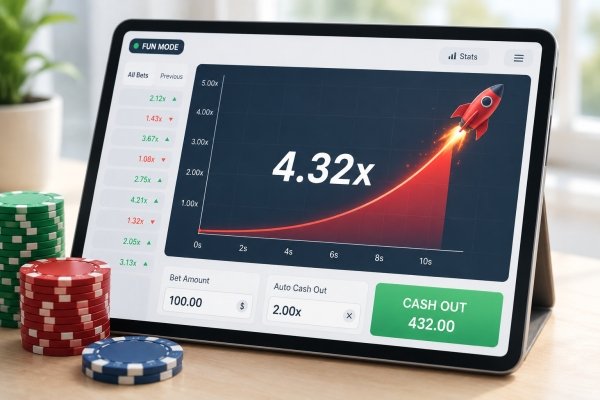
Adopt a consistent staking strategy. Establish a clear plan regarding how much to wager on each round. For instance, consider starting with a small portion of your balance and gradually adjusting your bet size based on your winnings or losses. This method helps in preserving funds while allowing for potential growth.
Optimize your timing for adjustments. It’s critical to recognize patterns in previous outcomes, not for predictions but to inform your next move. For example, if you notice a series of low multipliers, increasing your bet size slightly on the next roll might yield better returns. Monitor rounds closely for any potential trends that can guide your decisions.
Manage your emotions effectively. Maintaining composure during both winning and losing streaks is essential. Establish a fixed profit goal and a loss limit to avoid risky behavior. By sticking to predetermined limits, you ensure that your approach remains disciplined, preventing impulsive decisions that could lead to significant losses.
Engage in community discussions focused on techniques and experiences. Connecting with fellow participants can provide valuable insights and enhance your understanding of various tactics. Sharing knowledge can help refine your own methods and highlight effective practices that might not be immediately obvious.
To excel in the environment of this platform, mastering the mechanics is crucial. The primary aspect of play revolves around multiplying your bet amount before a specific point is reached. Pay close attention to the multiplier that increases throughout the round, which affects potential winnings. Observing previous rounds can provide insights on patterns, helping to devise a betting strategy that minimizes risks in crash games.
Each round presents a varying multiplier, influenced by complex algorithms. The multipliers can exponentially rise; hence, understanding the peak points from past statistics can guide decisions. Players often choose to cash out at a particular multiplier based on calculated risk tolerance. Regularly tracking the averages can result in informed choices regarding when to retrieve funds or increase stakes.
Another significant element is the volatility factor. Some sessions may exhibit moderate increases while others may be erratic. Analyzing this variability aids in setting expectations and adjusting gameplay accordingly. Balancing risk and reward within your limit is imperative; setting boundaries protects you from substantial losses during streaks of unpredictability.
Establishing a clear bankroll management strategy is advisable. Adequate planning involves determining the total available funds and dividing them into sessions, ensuring sustainable play. This approach minimizes the risk of depleting your resources quickly and allows players to engage consistently over time, creating more opportunities for favorable outcomes.
Lastly, players should consider the psychological aspect of gameplay. Remaining calm and making rational decisions amidst rising multipliers is fundamental. Emotional choices can lead to impulsive betting behavior, which often culminates in losses. Adopting a disciplined mindset aids in maintaining focus and sticking to your predefined strategies for a more successful experience.
Set a clear budget before participating. Determine the maximum amount you are willing to risk for a session and stick to it. This clearly defined limit will help you avoid impulsive decisions that could lead to excessive losses.
Consider adopting a staking plan that aligns with your risk tolerance. For instance, the flat betting approach, where you bet the same amount each round, can provide stability. Alternatively, a percentage-based method allows you to adjust your bets according to your bankroll fluctuations, ensuring a more flexible strategy.
Monitor your performance closely. Keep track of wins and losses to analyze trends in your betting patterns. This data can provide insights into your decision-making process, helping you make adjustments to your approach for better results.
Set specific time limits for your gaming sessions. Limiting the duration can protect you from losing track of your bankroll. Regular breaks can also refresh your mind, enabling clearer decision-making during gameplay.
Refrain from chasing losses. If you experience a downturn, avoid the temptation to increase your bets in hopes of recovering quickly. Such behavior often leads to more significant losses and can derail your budget.
Finally, know when to withdraw. If you've reached a notable profit, consider cashing out a portion of your winnings. This tactic can help secure gains and prevent the entirety of your bankroll from being at risk in subsequent rounds.
Monitor history closely to identify patterns. Data from active sessions reveals fluctuations in multipliers; consistent peaks often indicate optimal cash-out moments. Tracking these trends assists in determining the best times for withdrawal, significantly enhancing profit potential.
Utilize a mathematical approach by calculating average multipliers over several periods. A table outlining these averages can help clarify key cash-out points. For example:
| Time Interval | Average Multiplier |
| Last 30 Minutes | 1.75 |
| Last 1 Hour | 1.85 |
| Last 3 Hours | 2.00 |
| Last 6 Hours | 1.90 |
Consider the volatility index; a higher index suggests that you should adjust cash-out timing to avoid risky scenarios. Aim for consistent multipliers over a period of time to secure better returns. Early cash-outs during unstable spikes can minimize losses.
Evaluate player statistics. Observing withdrawals of other users can inform individual strategies. A rise in communal cash-outs often precedes downturns, thereby indicating a better time for personal withdrawals.
Incorporate psychological factors into decision-making. Emotional responses to rapid changes can lead to poor choices; maintaining a rational approach is key. Establish preset limits for cashing out to adhere strictly to your strategy during gameplay.
Finally, consider external influences such as player activity during peak hours. Busy periods often lead to increased volatility and risk, while quieter times may present safer opportunities for cashing out. Balancing these elements leads to more calculated financial choices.
The National Crowdfunding & Fintech Association (NCFA Canada) is a financial innovation ecosystem that provides education, market intelligence, industry stewardship, networking and funding opportunities and services to thousands of community members and works closely with industry, government, partners and affiliates to create a vibrant and innovative fintech and funding industry in Canada. Decentralized and distributed, NCFA is engaged with global stakeholders and helps incubate projects and investment in fintech, alternative finance, crowdfunding, peer-to-peer finance, payments, digital assets and tokens, artificial intelligence, blockchain, cryptocurrency, regtech, and insurtech sectors. Join Canada's Fintech & Funding Community today FREE! Or become a contributing member and get perks. For more information, please visit: www.ncfacanada.org
| | |
|---|---|---|
| | |
July 7, 2026 | NCFA Feature | Digital Assets Blockchain And Tokenization, Capital Markets And Market Infrastructure, Wealthtech And Investing, Risk Compliance And Regtech, Fintech And Innovation

Tokenized funds are past the easy headline.
The first question was whether fund shares could be represented onchain. That answer is already visible across tokenized treasuries, money market funds, private credit, institutional credit, and fund wrappers.
The harder question is whether regulated fund shares can work across chains, collateral markets, stablecoin reserves, DeFi venues, and treasury workflows without breaking the fund rules that make them investable in the first place.
A June 2026 LayerZero and Centrifuge report frames that next milestone around composability. The report argues that issuance is largely done and the next phase is whether tokenized funds can preserve NAV discipline, settlement rules, compliance controls, fund accounting, and transfer restrictions while reaching more onchain markets.
That is the real tokenized fund story. It's not about the token, but the operating model.
Stablecoins are built around continuous pricing. A dollar backed token is supposed to hold close to one dollar, and market participants can usually observe pricing in real time.
Fund shares work differently.
A tokenized treasury fund, private credit fund, institutional credit product, or equity index fund depends on net asset value. NAV may be calculated daily, weekly, monthly, or on another cycle. Investors subscribe and redeem through fund processes. Redemptions can be queued. Pricing can be batch based. Transferability can depend on investor status, jurisdiction, holding periods, and fund documents.
That difference may sound technical, but it changes everything.
A tokenized fund share cannot be treated like a freely transferable stablecoin if the fund still has to respect pricing cycles, investor eligibility, compliance limits, and accounting rules. A transfer across chains isn't just a simple token movement from A to B. It's also a fund record, a compliance event, and a possible accounting update among other future requirements.
The report’s strongest section is its discussion of NAV and pricing across chains.
If a fund share exists on several chains, every venue needs the same fund state. NAV updates have to reach each chain. Subscription and redemption requests need to flow into one fund process. Assets in transit between chains must not distort the fund’s accounting.
The report warns that a tokenized fund can technically travel across chains and still be mispriced if the operating controls are weak. It also points to stale price risk, where investors could receive different economics depending on which chain has the current NAV and which one still has old pricing.
That's why tokenized fund composability is harder than basic bridging.
A fund issuer isnt only asking whether the token can appear on Ethereum, Base, Arbitrum, Solana, or another network. The issuer has to ask whether pricing, compliance, settlement, and fund records stay synchronized when investors use different chains.
That is the kind of detail most tokenization commentary skips.
Regulated fund shares come with rules.
LayerZero and Centrifuge propose a hub and spoke model. One hub chain holds the authoritative fund state. Spoke chains handle local distribution. The hub handles functions such as accounting, pricing, share class management, investment processing, redemption processing, and policy enforcement.
That design is useful because it describes a problem the market has to solve, even if another provider uses a different architecture.
If compliance updates have to be manually replicated across every chain, the operating burden grows quickly. If a fund manager can update rules once and have NAV, transfer restrictions, allowlists, and accounting propagate from one source of truth, multi chain fund distribution becomes easier to manage.
RWA.xyz lists tokenized U.S. government debt at about $14.86 billion. The LayerZero and Centrifuge report cites broader RWA assets above $30 billion, with U.S. Treasuries around $15 billion and private credit near $6 billion.
Franklin Templeton’s OnChain U.S. Government Money Fund provides another reference point. Franklin says the fund invests at least 99.5% of assets in U.S. government securities, cash, and fully collateralized repurchase agreements. The fund listed $813.5 million in total net assets as of May 31, 2026.
WisdomTree is also testing fund liquidity in a new way. WisdomTree said SEC exemptive relief lets it support 24/7 trading and instant settlement for tokenized money market fund shares against USDC.
These are examples of a wider trend. Tokenization is finding scale in collateral and cash, where fund shares, money market products, and tokenized treasuries can support treasury management, collateral mobility, and settlement use cases rather than simply sit in a wallet.
Tokenized funds are no longer only about representing assets onchain. They are testing liquidity, settlement, collateral, treasury, and distribution models that conventional fund systems were not designed to support.
The LayerZero and Centrifuge report identifies stablecoin reserve strategies as one of the clearest use cases for tokenized funds.
Stablecoin issuers need reserve assets that are liquid, low risk, auditable, and productive enough to support yield strategies where permitted. Tokenized treasury and institutional credit funds can exist closer to the onchain systems where stablecoins already circulate.
While it doesn't mean every stablecoin reserve should become a DeFi strategy, it means tokenized funds are becoming more relevant where cash, collateral, settlement, and yield meet.
BlackRock’s stablecoin reserve push shows the same market pull from another direction. Institutional asset managers want tokenized cash products to serve digital dollar users who need regulated yield and liquidity rather than idle balances.
This is where fund composability becomes a business issue. A tokenized fund that can’t support reserve operations, collateral use, redemption timing, and compliance controls will struggle to serve the markets now asking for it.
Open DeFi composability clashes with regulated fund controls.
A fund cannot simply let any wallet hold, transfer, pledge, wrap, or trade its shares if those shares remain subject to securities rules, investor restrictions, transfer limits, or fund documents.
The report describes two ways to manage the tension.
The first is permissioned market structures. The fund share stays inside a controlled environment, while approved participants build lending, repo, collateral, or liquidity functions around it.
The second is deRWA style wrapping. A compliant fund share can sit inside a controlled wrapper, while another token gives DeFi users exposure to the economic position. That structure can separate compliant origination from wider DeFi distribution, but it also creates new questions about risk, transparency, liquidity, and investor understanding.
If wrappers make regulated fund exposure more usable, they may expand distribution. If wrappers hide too much complexity, they may create new conduct and disclosure problems. The market needs clarity on what investors hold, who controls redemption, how NAV is calculated, and what happens when liquidity disappears.
IOSCO’s 2025 tokenization report provides useful balance. It says tokenization may improve settlement, collateral mobility, transparency, and operational efficiency, but it also identifies risks tied to market integrity, investor protection, settlement assets, token representation, DLT dependency, and links with crypto markets.
Tokenized funds aren't automatically safer because they are onchain. They may reduce some frictions while introducing others. Smart contracts can improve automation, but fund administration still needs legal accuracy, investor records, custody, valuation controls, reporting, redemption rules, and oversight.
IOSCO also notes that adoption remains limited and that efficiency gains are uneven. That is a good reality check of the hype. Tokenized funds may be entering a more serious phase, but they still need credible settlement assets, interoperability, and operating controls before they can scale across mainstream capital markets.
The practical question for regulators is not whether tokenization is good or bad. The question is which parts of the fund process can become programmable without weakening investor protection or market integrity.
Canada’s tokenization discussion often starts with issuance, digital securities, and investor access.
But there's a deeper question for Canadian capital markets to answer. Can fund operations keep up?
That includes transfer agency, dealer controls, exempt market distribution, custody, compliance records, NAV operations, stablecoin settlement, investor reporting, tax records, and secondary liquidity. If those pieces remain fragmented, tokenized funds may exist onchain without becoming more useful to issuers or investors.
This also fits existing NCFA question work around tokenized RWAs and market infrastructure. The next advancement is whether regulated fund shares can become usable across venues while preserving the rules that make them credible.
It also fits NCFA’s Financial Innovation Map, including tokenized funds, transfer agents, compliant distribution, fund administration, tokenized collateral, stablecoin reserves, and capital markets technology.
The next phase of tokenized funds will be less glamorous than issuance.
It will involve NAV propagation, compliance messages, investor record synchronization, redemption queues, settlement timing, chain specific distribution, custody controls, and fund accounting.
That is where real opportunity is currently.
Tokenized funds will scale if the fund machinery underneath them can support pricing, settlement, compliance, and investor protection across the places where demand is forming.
If tokenized funds now need NAV, compliance, settlement, and investor records to work across chains, will the biggest opportunity belong to issuers or to the companies building the fund plumbing underneath them?
The National Crowdfunding & Fintech Association (NCFA Canada) is a financial innovation ecosystem that provides education, market intelligence, industry stewardship, networking and funding opportunities and services to thousands of community members and works closely with industry, government, partners and affiliates to create a vibrant and innovative fintech and funding industry in Canada. Decentralized and distributed, NCFA is engaged with global stakeholders and helps incubate projects and investment in fintech, alternative finance, crowdfunding, peer to peer finance, payments, digital assets and tokens, artificial intelligence, blockchain, cryptocurrency, regtech, and insurtech sectors. Join Canada's Fintech & Funding Community today FREE! Or become a contributing member and get perks. For more information, please visit: www.ncfacanada.org
| | |
|---|---|---|
| | |
July 6, 2026

Image by Karina Kensington
Payments infrastructure tends to stay invisible until someone follows the money through it. For readers who track fintech from a Canadian vantage point, the more interesting story in US online gaming right now is not the marketing noise around free coins. It is the settlement plumbing underneath those offers, and how much of it now runs on the same stablecoin and crypto rails that fintech builders argue about every week. A promotion that looks like a giveaway is, on the back end, a payments product with a specific cost structure.
That structure is worth understanding before assuming the free part is where the value sits. US sweepstakes operators advertise no-deposit signup rewards heavily, and consumer-facing guides such as PlayUSA keep a running rundown of no deposit sweepstakes options across US-facing brands, which is a useful reference for seeing how the promotions are packaged and what the terms actually say. Read a few of those listings closely and a pattern shows up: the free coin at the front is the cheap part, and the real engineering sits in the rails that move value when a player buys an optional coin package or cashes out a prize.
This piece treats the no-deposit sweepstakes offer as a payments object rather than a gambling one. We will take the model apart layer by layer, from the two-currency design at the surface down to the settlement rails at the base, and look at where stablecoins and crypto payment networks have become load-bearing. The goal is accuracy, not promotion, because the questions this raises for payment processors and fintech vendors are turning into real regulatory exposure quickly.
A no-deposit sweepstakes offer is free coins credited to a new account after signup and identity checks, with no payment required to claim them. It is the front door to a free-to-play model, and it is genuinely free at that door. No crypto, card, or bank transfer is needed to receive the bonus itself, which is exactly why it works as an acquisition tool.
This model is not a real-money online casino. Real-money iGaming is licensed and legal in only a small group of US states, and it takes wagers denominated in dollars that pay out in dollars. Sweepstakes brands run on a different legal footing. They lean on promotional sweepstakes law, which requires a free method of entry and no purchase necessary to win, and that is what lets them operate across a much wider set of states than licensed casinos can reach.

Image by Karina Kensington
For a fintech audience, the key point is that the no-deposit coin is a customer acquisition cost, not a prize. The operator gives away something with no cash value to bring a verified user into the funnel. What happens after that first session, when a share of those users decide to buy more play or attempt to redeem winnings, is where actual money movement begins and where the payment rails start to matter.
Almost every US sweepstakes brand runs a dual-currency system. The first currency is usually called Gold Coins, which have no monetary value and exist only for entertainment play. You cannot redeem Gold Coins for anything. The second currency, often labeled Sweeps Coins, is the one that carries redeemable value, and it is the currency a no-deposit bonus quietly hands you a small amount of.
The design is deliberate. Because Gold Coins are what players nominally buy in the paid packages, the operator can say purchases are for entertainment currency. The Sweeps Coins arrive as a free promotional bonus attached to those purchases, or through no-deposit rewards, daily login credits, and mail-in requests. That separation is the legal hinge the whole model swings on, and it is also the reason payment flows split into two distinct directions.
Sweeps Coins generally redeem at roughly one coin to one dollar, though rates and thresholds vary by brand, and most operators require that a Sweeps Coin be played through at least once before it can be redeemed. A player cannot take the no-deposit bonus and cash it straight out. That playthrough condition, plus identity verification, is what stands between the free coin and the redemption rail, and it shapes how and when crypto settlement actually gets used.
Here is the honest version of the headline claim. Crypto rails do not power the free bonus itself, because nothing is paid to claim it. They power the two paid edges of the model: the optional purchase of coin packages, and the redemption of prizes. Those two edges are where value crosses between the operator and the outside financial system, and they are increasingly settled with cryptocurrency rather than only cards and bank transfers.
On the purchase side, a growing number of sweepstakes and crypto-adjacent social brands accept stablecoins and other tokens for optional coin packages. On the redemption side, several offer payouts in cryptocurrency alongside bank transfers and gift cards. For a US operator, both edges are attractive because card processing for anything gambling-adjacent is expensive, prone to declines, and often blocked outright by issuers who flag the merchant category.

Image by Karina Kensington
Crypto payment rails route around several of those problems at once. They do not depend on a card network approving the merchant, they clear without a chargeback mechanism, and they settle in near real time. When the goal is to move a redeemed prize to a player within minutes instead of days, or to accept an optional purchase without a declined transaction, the appeal is practical rather than ideological.
Bitcoin was the first crypto option most gambling-adjacent sites accepted, but stablecoins are what turned crypto into a serious settlement layer for this model. A prize denominated in dollars loses its meaning if it is paid in an asset that can drop ten percent before it reaches a wallet. Dollar-pegged stablecoins such as USDT and USDC remove that volatility, so a redemption stays close to its dollar value between the operator and the player.
The volumes involved are large enough that fintech observers stopped treating them as a curiosity. Chainalysis data covering mid-2024 to mid-2025 put USDT transfer volume at hundreds of billions of dollars per month, with total stablecoin activity peaking above a trillion in some months. Not all of that is payments, and a recent breakdown of stablecoin payment volumes on this site is a useful corrective, since a large share of on-chain movement is trading and liquidity flow rather than genuine commerce. Prize payouts are a thin slice of that total, but they are a slice that behaves like a payment.
Layer-2 networks and payment channels have pushed the economics further. Operators using networks like Polygon or Lightning have reported cutting per-transaction fees by most of what a card or older on-chain transfer would cost. For a business paying out many small redemptions, a fee that drops from a dollar or more to a fraction of a cent changes what is worth paying out at all, and it makes small, frequent prize redemptions viable in a way card rails never allowed.
It helps to see the whole thing as a stack, because the no-deposit offer only touches the top of it while the crypto rails sit near the bottom. The table below maps each layer to its function, the rail that typically carries it, and where the financial and compliance exposure lands.
| Layer | What it does | Typical rail | Where the exposure sits |
| Acquisition | Free no-deposit coins bring in a verified user | None, no money moves | Marketing and identity checks |
| Optional purchase | Player buys Gold Coin packages for more play | Card, bank transfer, or stablecoin | Card declines, processor risk |
| In-game credit | Coins move inside the operator ledger | Internal database, off-chain | Operator solvency, terms |
| Redemption | Sweeps Coins convert to a prize | Bank payout, gift card, or crypto | Fraud, playthrough abuse |
| Settlement | Value clears to the player wallet | Stablecoin on layer-1 or layer-2 | Peg risk, wallet errors |
| Compliance | Identity, source of funds, sanctions | KYC and AML tooling | Regulatory liability |
Reading the stack from top to bottom shows why the free coin is not the point. The acquisition layer moves no money, so it carries almost no cost per user beyond verification. Everything expensive and everything regulated lives below it, in the purchase, redemption, and settlement layers, which is precisely where stablecoin rails have taken hold. A fintech reader looking for the risk should look at the bottom three rows, not the giveaway at the top.
Speed at the redemption layer feeds back into acquisition in a way that is easy to miss. When a player believes a prize will actually arrive, and arrive quickly, the free coin at the front becomes more persuasive. A no-deposit offer is only as convincing as the payout experience behind it, and slow or failed redemptions are the fastest way to lose the trust that the free coin was meant to build.
This is where crypto settlement does quiet work. A redemption that clears in minutes, at a fee measured in cents, lets an operator honor small prizes without eating a card processor markup on every payout. That in turn lets marketing promise fast redemption without the finance team objecting, and the promise of fast redemption makes the no-deposit funnel convert better. The rails at the base of the stack become a marketing feature at the top.
Retention runs on the same logic. A player who receives a fast, correct payout once is far more likely to come back, refer a friend, and eventually buy an optional package, so the redemption layer is not just a cost center but the main driver of lifetime value. Operators that settle prizes on stablecoin rails can advertise redemption speed as a differentiator, and in a market crowded with near-identical no-deposit offers, the reliability of the payout is often what separates a brand players trust from one they abandon after a single cashout attempt.
There is a harder edge to this too. Faster, cheaper, harder-to-reverse rails also make abuse cheaper to attempt, since a bonus farmed across many fake accounts can be swept out through the same fast redemption path. Operators answer with playthrough requirements, stricter identity verification, and payout thresholds, which is why the free coin never redeems instantly. The friction that annoys legitimate players is the same friction holding the fraud math together.
For a Canadian fintech and crowdfunding audience, the interesting exposure is not the gambling question but the money-movement question. The moment a US sweepstakes brand accepts stablecoins and pays out crypto, it starts to look like a business that handles value transfer, and value transfer is regulated territory on both sides of the border. Payment processors and vendors sitting between the operator and the chain inherit part of that exposure.

Image by Karina Kensington
The questions worth asking mirror the ones fintech regulators already ask of any crypto-touching payment firm. Who performs know-your-customer checks on the player, and are they strong enough to satisfy anti-money-laundering rules on the redemption side? How is source of funds handled when a purchase arrives as a stablecoin from an unhosted wallet? What sanctions screening runs before a crypto payout leaves the operator? In Canada, a firm doing this kind of value transfer would be pushed toward money-services-business registration and FINTRAC reporting, and US operators face a parallel set of obligations.
None of this is hypothetical for the vendors. Geolocation providers, payment processors, and affiliates are increasingly named as parties who share liability when a model runs afoul of state law, which changes the risk calculation for any fintech firm considering the sweepstakes sector as a client. The payment rail is not a neutral pipe. It is a regulated activity wearing a promotional coat.
Two policy currents are now running straight at this model, one from gaming law and one from payments law. On the gaming side, California passed Assembly Bill 831, signed in October 2025 and effective January 1, 2026, which bans dual-currency online sweepstakes games in the state. It reportedly passed both chambers without a dissenting vote, and it extends liability beyond operators to the vendors and partners who support them, including payment processors, geolocation providers, and media affiliates, with penalties described as misdemeanor-level and reaching into the tens of thousands of dollars per violation.
That vendor liability is the part fintech firms should read twice. A payment processor that clears stablecoin redemptions for a banned dual-currency product in California is no longer a bystander under this framing. The law treats the rail operator as a knowing participant, which is a meaningful shift for anyone who assumed payment infrastructure sat outside gambling enforcement.
California is also unlikely to be the last state to move. Several legislatures have weighed similar restrictions on dual-currency sweepstakes, and a handful already limit or block the model, so a vendor building rails for these operators is underwriting a product whose legal footprint may shrink state by state. That is a different risk profile from a stable, licensed payments client, and it deserves to be priced as such.
On the payments side, the federal GENIUS Act, enacted in 2025, set out a tiered framework for payment stablecoins in the United States. That regime governs exactly the dollar-pegged assets sweepstakes operators use for settlement, and as issuers come under clearer supervision, the rails those operators depend on inherit new compliance expectations around reserves, redemption rights, and disclosures. The two currents together mean the model is being squeezed from the gaming side and formalized from the payments side at the same time.
It is tempting to describe all of this as crypto revolutionizing an industry, and that framing would be wrong in both directions. Stablecoins have not created the no-deposit sweepstakes model, which existed for years on card and bank rails, and they are not the reason the offers are generous. What they have done is lower the cost and raise the speed of the two paid edges, which quietly improves the unit economics of the whole funnel and lets the free coin at the front stay generous.
The measured view lines up with what payments researchers already found about these rails in general. One Bank of Canada staff paper on stablecoins as a means of payment concluded that they can increase transaction speed and support innovation, while offering weaker consumer fraud protection and posing higher payment-system risk, and that they currently serve niche use cases rather than replacing mainstream payment methods. A sweepstakes prize payout is exactly that kind of niche use case: a place where speed and low cost matter enough to accept the trade-offs.
For fintech readers, the takeaway is not to chase the sweepstakes boom or to dismiss it. It is to recognize that a promotional product most people file under entertainment has become a live demonstration of stablecoin settlement at consumer scale, complete with the fraud, compliance, and regulatory tensions that the payments industry has been debating in the abstract. The free coin is a distraction. The rails underneath it are the story, and they are being written into law in real time.
Do you need cryptocurrency to claim a no-deposit sweepstakes offer?
No. A no-deposit offer is free coins credited after signup and identity verification, with no payment of any kind required. Crypto only becomes relevant later, if a player chooses to buy an optional coin package or redeem a prize, and even then most brands still offer card, bank, and gift-card options alongside crypto.
How are Gold Coins different from Sweeps Coins?
Gold Coins have no cash value and exist only for entertainment play, so they cannot be redeemed for anything. Sweeps Coins carry redeemable value at roughly one coin to one dollar and can be exchanged for prizes after being played through at least once. A no-deposit bonus typically includes a small amount of both.
Why do sweepstakes operators prefer stablecoins over Bitcoin for payouts?
A prize is denominated in dollars, so paying it in a volatile asset risks the value moving before it reaches the player. Dollar-pegged stablecoins such as USDT and USDC hold their value between the operator and the wallet, which keeps a payout close to its stated amount. They also settle quickly and at low cost on layer-2 networks.
Does the California AB 831 ban affect payment processors?
Yes, according to reporting on the law. AB 831 bans dual-currency online sweepstakes in California from January 1, 2026, and extends liability to vendors that support them, a category that includes payment processors, geolocation providers, and media affiliates. That makes the payment rail a named party rather than a neutral intermediary.
Are sweepstakes casinos the same as legal online casinos?
No. Real-money online casinos are licensed and legal in only a small number of US states and take wagers in dollars. Sweepstakes brands run a free-to-play model under promotional sweepstakes law, which is what lets them operate more widely, though several states now restrict or ban the dual-currency version outright.
The National Crowdfunding & Fintech Association (NCFA Canada) is a financial innovation ecosystem that provides education, market intelligence, industry stewardship, networking and funding opportunities and services to thousands of community members and works closely with industry, government, partners and affiliates to create a vibrant and innovative fintech and funding industry in Canada. Decentralized and distributed, NCFA is engaged with global stakeholders and helps incubate projects and investment in fintech, alternative finance, crowdfunding, peer-to-peer finance, payments, digital assets and tokens, artificial intelligence, blockchain, cryptocurrency, regtech, and insurtech sectors. Join Canada's Fintech & Funding Community today FREE! Or become a contributing member and get perks. For more information, please visit: www.ncfacanada.org
| | |
|---|---|---|
| | |
July 3, 2026 | NCFA Fintech Market Activity | Capital Markets And Market Infrastructure, Capital Formation, Digital Securities, Private Markets, Fintech And Innovation

On July 2, 2026, a Vancouver private investment platform listed on the TSX Venture Exchange Parvis signed a binding agreement to acquire Atlas One Digital Securities, a registered exempt market dealer operating across Canada.
The deal hasn’t closed. Completion still requires customary closing conditions, regulatory approvals, and TSX Venture Exchange approval.
Atlas One was founded in Vancouver in 2020 and received EMD registration through the CSA Regulatory Sandbox in January 2021. It has helped more than 40 issuers raise over $115 million across real estate, private equity, and alternative assets.
This acquisition isn't mainly about Parvis getting a dealer licence, since it already has exempt market dealer capability through Parvis Investment Services. The stronger motivation is scale. Atlas One adds issuer relationships, investor reach, operating history, and another Canadian private markets team.
Parvis CEO David Michaud said Atlas One brings “a strong issuer network and a national investor base.” Atlas One CEO George Nast pointed to “greater product breadth, stronger compliance capabilities, and scale.”
This transaction is about combining two regulated private market operators so the business can serve more issuers and investors with fewer disconnected handoffs.
Private investment platforms can launch websites, investor portals, and digital onboarding, but private placement distribution remains the hard part.
A raise can still involve separate issuer outreach, dealer relationships, KYC, suitability checks, subscription documents, payment handling, investor updates, and reporting. Dealers need enough volume to justify diligence, supervision, and compliance work. Smaller issuers can struggle when the economics don’t work for intermediaries.
Technology can help, but only when it works with regulation rather than around it. EMD selling group rules show how dealer coordination, settlement, and distribution mechanics can affect exempt market fundraising.
The Parvis and Atlas One agreement belongs in that conversation. The challenge is whether regulated private market distribution can become easier to run at scale.
The Atlas One agreement follows Parvis’s planned U.S. expansion.
In May 2026, Parvis signed a binding letter of intent to acquire FavorPoint Capital, a FINRA registered broker dealer. Parvis said that deal was intended to help Canadian issuers access U.S. private capital markets.
Together, the Atlas One and FavorPoint deals suggest Parvis is trying to build regulated private market distribution across Canada and the U.S.
That strategy depends on more than adding companies. It requires issuer supply, investor reach, dealer permissions, compliance processes, reporting, and enough operating scale to make private raises easier to run.
While the transaction still needs approvals. Parvis also has to integrate people, issuer relationships, investor records, compliance processes, and technology. It's important work because private market platforms can’t scale on marketing alone. They need clean operations behind the investor experience.
Watch for:
The proposed deal fits areas mapped in NCFA’s Financial Innovation Map, such as capital formation, private market access, digital securities, exempt market distribution, alternative assets, and investor onboarding.
Parvis and Atlas One won’t fix Canada’s private capital market on their own. If approved however, it could show whether a Canadian platform can combine issuer access, regulated distribution, onboarding, reporting, and investor reach without adding more complexity for investors.
If Canadian private market platforms combine issuer networks, investor access, regulated distribution, and reporting in one place, will more companies raise capital outside traditional venture and public markets?
The National Crowdfunding & Fintech Association (NCFA Canada) is a financial innovation ecosystem that provides education, market intelligence, industry stewardship, networking and funding opportunities and services to thousands of community members and works closely with industry, government, partners and affiliates to create a vibrant and innovative fintech and funding industry in Canada. Decentralized and distributed, NCFA is engaged with global stakeholders and helps incubate projects and investment in fintech, alternative finance, crowdfunding, peer to peer finance, payments, digital assets and tokens, artificial intelligence, blockchain, cryptocurrency, regtech, and insurtech sectors. Join Canada's Fintech & Funding Community today FREE! Or become a contributing member and get perks. For more information, please visit: [www.ncfacanada.org](http://www.ncfacanada.org)
| | |
|---|---|---|
| | |


August 26th, 2025

January 4th, 2024

June 1st, 2021

September 9th, 2020

July 9th, 2018

January 3rd, 2018

September 25th, 2017

June 20th, 2017

May 10th, 2017

December 14th, 2016