




Karsten Wenzlaff, Advisor
August 26th, 2025
Karsten Wenzlaff is a Crowdfunding and Fintech Expert from Germany. He is Secretary-General of Digit[...]


Regulation | Sep 10, 2025

Image: Freepik/Rawpixel.com
On August 25 2025, Gráinne Moss Chief Executive of New Zealand’s Ministry for Regulation shared a note on the agency’s progress in making regulation work better for everyone. The Ministry has a clear mandate to improve regulation across the system, reduce duplication, and build public trust. Its initiatives provide practical lessons that could benefit Canadian regulators as they work to modernize their own frameworks.
Moss emphasized the Ministry’s role as a central agency taking a system wide view of regulation. The goal is to identify duplication, spot ineffective rules, and develop solutions with other agencies, businesses, and communities. Canada could explore a similar coordinating function to align efforts across federal and provincial regulators, particularly in complex areas such as housing, infrastructure, and environmental policy.
One of the Ministry’s flagship achievements is RegRoom, an online learning and collaboration hub. It includes easy to use guides and training on how regulators do their work, how to use evidence in decisions, how investigations are carried out, and how the courts are involved. By building a common foundation across agencies, RegRoom reduces duplication and strengthens everyday regulatory practice.
A Canadian version could help standardize professional training for regulators and encourage stronger collaboration across jurisdictions.
The Ministry also developed a Regulatory Review Framework and the Regulatory Quality Assessment Tool. These solutions are used to assess whether rules are clear, fair, proportionate, and future proof. The framework helps distinguish between systemic flaws and operational issues, ensuring reviews lead to meaningful improvements. Canada could integrate a similar tool into its regulatory impact assessment process to strengthen consistency and accountability.
A major innovation is the Red Tape Tipline, a portal which allows people to report regulatory issues that cause unnecessary cost or confusion. In April to June 2025, 130 tips were submitted. Every submission is reviewed, and some have already led to changes like making building permits easier for small projects and bringing scaffolding rules up to date. This shows how citizen input can lead directly to real world change. Canada could adopt a national feedback hub to capture and respond to similar issues in its own system.
To maintain trust, the Ministry publishes quarterly reports on the issues raised, actions taken, and outcomes. Regular, transparent reporting like this, especially on the outcomes, would help Canadian regulators show accountability and demonstrate how feedback drives real improvements.
Canada’s economy is weighed down by complex rules and barriers between provinces that make it harder for businesses to grow. Reducing these burdens is key to improving productivity and competitiveness. New Zealand’s approach shows how innovative tools, public feedback portals, and stronger review frameworks can cut duplication and make regulation more efficient.
For sectors like fintech and financial services, modernizing regulation is essential.
"Clearer rules and less red tape would support access to capital, cross border growth, and faster adoption of new technologies. By modernizing its regulatory approach, Canada can lower costs for businesses, improve trade across provinces, and create a system that supports both innovation and trust."
 The National Crowdfunding & Fintech Association (NCFA Canada) is a financial innovation ecosystem that provides education, market intelligence, industry stewardship, networking and funding opportunities and services to thousands of community members and works closely with industry, government, partners and affiliates to create aa vibrant and innovative fintech and funding industry in Canada. Decentralized and distributed, NCFA is engaged with global stakeholders and helps incubate projects and investment in fintech, alternative finance, crowdfunding, peer-to-peer finance, payments, digital assets and tokens, artificial intelligence, blockchain, cryptocurrency, regtech, and insurtech sectors. Join Canada's Fintech & Funding Community today FREE! Or become a contributing member and get perks. For more information, please visit: www.ncfacanada.org
 |  |  |
|---|---|---|
 |  |  |
Crypto | Sep 9, 2025
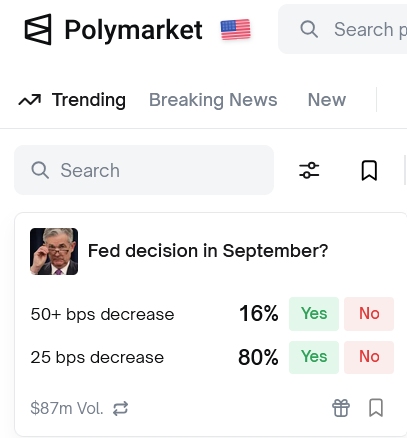
Image from Polymarket website
Polymarket has regained the ability to operate in the United States after acquiring a CFTC regulated and licensed derivatives exchange QCEX for $112 million in July 2025. Soon after the acquisition the Commodity Futures Trading Commission issued a no action letter that relaxed certain reporting and recordkeeping rules tied to event contracts, clearing the way for Polymarket to relaunch in the U.S. after being blocked since 2022 and paying a $1.4 million fine for operating without registration as part of a settlement with the CFTC.
Chief Executive Shayne Coplan highlighted the speed of the approval, writing on X that the green light from the CFTC had been 'accomplished in record timing.'
Polymarket has been given the green light to go live in the USA by the @CFTC.
Credit to the Commission and Staff for their impressive work. This process has been accomplished in record timing.
Stay tuned https://t.co/NVziTixpqO
— Shayne Coplan 🦅 (@shayne_coplan) September 3, 2025
The relaunch it seems was in a politically charged setting. Days before the approval, Donald Trump Jr. disclosed that he had invested through 1789 Capital and accepted an advisory role. The timing of Trump Jr.’s advisory role at Polymarket has raised questions about the influence of politics in a market that depends on regulatory relief.
Not all regulators support the path taken. Outgoing Commissioner Kristin Johnson argued that retail traders face significant risks and that the agency should move beyond case by case exemptions. In her view, the CFTC should create formal rules on which event contracts are permissible instead of leaving gaps in oversight.
Polymarket’s value comes from what people trade. Its most recent markets show how diverse those bets can be.
Traders currently assign about a 7% chance that Donald Trump will leave office before the end of 2025.
At the start of 2025, Polymarket listed more than 65% odds of a U.S. recession. By mid summer, that figure had fallen to 20% after a pause in new tariffs lowered fears. Economists note that these contracts reflect sentiment rather than guaranteed outcomes.
Social and sports betting examples are also trendy, such as the Taylor Swift and Travis Kelce engagement market. A trader turned $12,000 into $50,000 after betting on the couple’s announcement. Another user invested just over $2,000 the day before and made about $3,100 in profit. The odds jumped from 24% to 41% within a single day. No different in how the odds shift around in an in play betting app.
Unexpected outcomes can produce even larger returns or losses. During the papal conclave in May, Cardinal Robert Prevost was trading at only 1%. A bettor who backed him turned $1,059 into more than $63,000 after he became Pope Leo XIV. Total volume on papal betting markets reached about $40 million across Polymarket and Kalshi, another prediction marketplace.
Polymarket’s journey from fine to license shows how quickly a fintech can move from penalty to legitimacy once regulators are engaged, and the importance of building on licensed infrastructure. The markets themselves are worth monitoring, as they mirror real time sentiment. While not perfect market predictors, they are increasingly visible and sometimes a useful barometer for policymakers, investors, and punters alike.
The National Crowdfunding & Fintech Association (NCFA Canada) is a financial innovation ecosystem that provides education, market intelligence, industry stewardship, networking and funding opportunities and services to thousands of community members and works closely with industry, government, partners and affiliates to create aa vibrant and innovative fintech and funding industry in Canada. Decentralized and distributed, NCFA is engaged with global stakeholders and helps incubate projects and investment in fintech, alternative finance, crowdfunding, peer-to-peer finance, payments, digital assets and tokens, artificial intelligence, blockchain, cryptocurrency, regtech, and insurtech sectors. Join Canada's Fintech & Funding Community today FREE! Or become a contributing member and get perks. For more information, please visit: www.ncfacanada.org
| | |
|---|---|---|
| | |
Tokenization | Sep 9, 2025

AI generated
On September 8, 2025, Nasdaq announced in a Newsroom Q&A with Chuck Mack that it filed with the U.S. Securities and Exchange Commission (SEC) to allow every listed stock and exchange-traded fund on its markets to settle in tokenized form. The news is significant and was also confirmed by Reuters and if approved would be the first time a U.S. national exchange was keen to integrate blockchain settlement into the regulated equity system. If approved, the change would affect securities representing $61.6 trillion in U.S. market capitalization as of Q2 2025.
Under the 19b-4 filing to the SEC, Nasdaq proposes that each stock and ETF maintain the same CUSIP (unique 9 digit alphanumeric identifier assigned to financial instruments in the States and Canada, such as stocks, bonds, ETFs) whether traded in traditional or tokenized form. At order entry, brokers could flag trades for tokenized settlement. Execution would take place on the same order book, under the same rules, with identical rights and benefits. After execution, the Depository Trust Company (DTC) would convert the security into a blockchain token and record ownership.
Chuck Mack, Nasdaq’s Senior Vice President of North American Markets, explained the approach and stressed that from an investor’s perspective, nothing changes in how trades are placed or executed. Only the method of settlement shifts to a tokenized form:
“Our goal is to integrate digital assets into Nasdaq’s current infrastructure and systems, which will advance financial innovation while maintaining stability, fairness, and investor protection. If investors and market participants express demand for a particular approach, and we can implement it in a way that preserves market integrity, then we want to give them that choice.”
Nasdaq has indicated the first token-settled trades could occur by Q3 2026, provided that DTC’s new systems are ready. This would embed blockchain settlement directly into the most liquid equity market in the world, where average daily trading volume reached 18.4 billion shares in Q2 2025.
The filing follows the U.S. move to T+1 settlement in May 2024. Tokenization builds on that progress by layering blockchain into existing systems rather than replacing them. SEC Commissioner Hester Peirce has made clear that tokenized securities must still comply with securities laws. One way to look at tokenization is that it's not a regulatory shortcut but rather a modernization of existing infrastucture.
For the U.S., the importance lies in scale and precedent. With more than 5,400 listed companies, Nasdaq’s proposal would normalize blockchain-based settlement within the core market system. Tokenization could deliver operational savings, stronger audit trails, and new forms of fractional participation, all without fragmenting liquidity.
For Canada, Nasdaq's interest echoes the Ontario Securities Commission’s exploration of tokenized long term funds, aimed at improving investor access to complex assets. If Nasdaq’s model is approved, Canadian fintechs could explore cross-border tokenized products, while regulators will need to address custody, wallet security, and investor protections to keep pace with these developments.
Next steps is for the SEC to open the filing for public comment. If approved, tokenized settlement could begin by late 2026. For NCFAs community, this is a watershed moment as tokenization moves from pilot projects and into mainstream market regulation. The implications are significant and real with efficiency gains, lower costs, competitive pressure on other exchanges, and new opportunities for cross-border fintech innovation.
For Canada's fintech and digital asset ecosystem, aligning with these changes will be critical to remain competitive in the next phase of global capital markets.
The National Crowdfunding & Fintech Association (NCFA Canada) is a financial innovation ecosystem that provides education, market intelligence, industry stewardship, networking and funding opportunities and services to thousands of community members and works closely with industry, government, partners and affiliates to create aa vibrant and innovative fintech and funding industry in Canada. Decentralized and distributed, NCFA is engaged with global stakeholders and helps incubate projects and investment in fintech, alternative finance, crowdfunding, peer-to-peer finance, payments, digital assets and tokens, artificial intelligence, blockchain, cryptocurrency, regtech, and insurtech sectors. Join Canada's Fintech & Funding Community today FREE! Or become a contributing member and get perks. For more information, please visit: www.ncfacanada.org
| | |
|---|---|---|
| | |
European Fintech | Sep 8, 2025

Image: Navigating the Future of Finance magazine (Point Zero Forum)
The 2025 Point Zero Forum (Jun 24-26) in Zurich drew 1,350 participants from 66 countries, including over 20% from public sector institutions. Across 121 sessions spanning 95 hours, 329 speakers explored the future of finance and technology. These numbers matter because the forum is where central banks, regulators, and institutions compare notes on what is implementable now, not just what's aspirational.
For Canadian fintechs, the conversations in Zurich are a warning and an opportunity. Europe is moving quickly to reset its financial infrastructure. Canada risks lagging unless it adapts. Read the post 2025 Point Zero Forum magazine, "A Critical Call for Policy Action in Europe and Beyond" (24 page PDF)
Offline payments and infrastructure security were considered a matter of national sovereignty, not just technology. Danmarks Nationalbank warned: “Without power, many offline payments methods aren’t viable,” linking payments directly to energy security.
The world’s largest stablecoin Tether confirmed it will leave Europe because of reserve and regulatory requirements. This shows that Europe is treating payments, AI, and data as part of its sovereignty strategy.
Canada has its own domestic payment systems operated by Payments Canada, but Canada still doesn't have live operating real-time retail payment rails. In cloud services, Canadian banks and fintechs are still dependent on American providers like AWS, Microsoft, and Google.
Central banks are now focused on tokenized settlement. The Swiss National Bank said: “Price stability is our main focus also in challenging times,” while the European Central Bank stressed that central bank money must remain “available and useful” in tokenized markets.
The Bank of England suggested that oversight of stablecoins may evolve as the “singleness of money” assumption is tested.
The Bank of Canada paused it's digital dollar research initiative. Europe and the U.K. are moving faster. Canadian fintechs should design tokenized solutions that can connect to global settlement networks, not just domestic payment systems.
The Basel framework assigns a 1,250% risk weight to exposures on public blockchains compared to standard weights for permissioned systems. That number explains why institutions are cautious about public chains even as liquidity scale requires them.
Solana’s Lily Liu argued that “the 5.5bn people on the internet” can only be reached through open infrastructure, while regulators noted that immutability makes reversals and sanctions enforcement difficult. The likely outcome is a dual architecture with permissioned networks for issuance and compliance, and public networks for liquidity and settlement.
Canadian institutions face the same Basel capital rules as peers in other markets. Without clear guidance on the use of public versus permissioned networks, Canadian fintechs may find it harder to connect to global liquidity pools.
68% of EU businesses say they struggle to understand their obligations under the EU AI Act, holding back investment. Global wealth manager, Julius Baer’s COO estimated that customer focused AI tools could generate revenue within 6 to 12 months.
At the forum, agentic AI systems were demoed handling insurance claims with observability features allowing human review. The key issue is still accountability with policymakers worrying about loss of control as AI systems become more autonomous.
Canada has not finalized its AI regulation but offers a voluntary AI code of conduct, giving fintechs some near term flexibility. But any deployment that scales internationally will need to comply with EU and U.S. standards. The strategic opportunity is to pilot auditable AI now while preparing for global regulatory alignment.
S&P projects global private equity will grow from $15 trillion in 2025 to $18 trillion by 2027. Citi and SIX Digital Exchange announced tokenized access to late-stage pre-IPO equities on SDX, launching in Q3 2025.
Tokenization will improve collateral usability and ownership visibility, but not resolve fundamental illiquidity or opaque valuations.
Canada has a growing private capital market but no regulated digital exchange on the scale of SIX. Canadian fintechs could position themselves as infrastructure providers for tokenized funds and secondary liquidity, complementing global platforms instead of competing directly.
At the forum, speakers pointed out that some carbon credits were issued for projects expected to reduce emissions over 30 years, even though the land rights lasted only 10 years. That kind of mismatch reduces trust in the market.
Bringing carbon credits into mainstream finance could help spread risk and attract more investment. But for the market to work, credits must be backed by strong certification, insurance to cover project failures, and common standards that everyone follows.
Canada has compliance carbon pricing systems, but its voluntary carbon credit market is smaller and less standardized compared to Europe and Asia. Canadian fintechs could carve out a leadership role by building platforms that prioritize data integrity and risk coverage.
Canada must decide whether to keep pace with progressing markets in Europe and Asia or risk being shut out of global settlement networks. If Europe can move from pilots to architecture, Canadian fintechs must not stand still.
The National Crowdfunding & Fintech Association (NCFA Canada) is a financial innovation ecosystem that provides education, market intelligence, industry stewardship, networking and funding opportunities and services to thousands of community members and works closely with industry, government, partners and affiliates to create a vibrant and innovative fintech and funding industry in Canada. Decentralized and distributed, NCFA is engaged with global stakeholders and helps incubate projects and investment in fintech, alternative finance, crowdfunding, peer-to-peer finance, payments, digital assets and tokens, artificial intelligence, blockchain, cryptocurrency, regtech, and insurtech sectors. Join Canada's Fintech & Funding Community today FREE! Or become a contributing member and get perks. For more information, please visit: www.ncfacanada.org
| | |
|---|---|---|
| | |
Sep 6, 2025

Image: Freepik
An IT program can change the direction of someone’s life in just a few short years.
After enrolling in technology courses, I’ve seen friends who once worked retail jobs land careers in software engineering.
What makes these programs stand out is not only the technical skills they teach but the confidence they give to problem-solvers who want to innovate.
In a rapidly digital world, employers don’t just want degrees.
They want proof that a person can apply knowledge — whether it’s writing code, protecting a network, or analyzing large sets of data.
IT program opportunities bridge that gap by combining classroom instruction with practical experience.
This real-world connection makes graduates valuable from day one.
When I first stepped into a networking lab, the hum of servers and blinking router lights made me realize IT wasn’t about theory — it was about solving real problems.
That moment taught me that learning to troubleshoot under pressure was more valuable than memorizing definitions.
Programs that focus on hands-on labs give students a head start.
It’s one thing to read about cybersecurity breaches in a textbook.
It’s another to run a simulated attack-defense drill where you defend against intrusions in real time.
Technology schools now offer different tracks depending on career goals.
For example:
Each path allows students to dive deep rather than skim the surface, which is why graduates often transition smoothly into specialized roles.
A close colleague of mine once worked as a graphic designer.
She always felt drawn to data but didn’t know where to start.
After joining a technology program, she completed projects in machine learning that landed her a role at a mid-sized consulting firm.
Her first assignment involved optimizing data pipelines for a healthcare client.
That’s when she told me, “I realized my creativity wasn’t gone — I was just applying it to numbers instead of colors.”
This is the power of structured education: it allows hidden strengths to surface.
One of the most exciting developments in recent years is the inclusion of AI consulting programs within technology schools.
These programs don’t just teach students how to code.
They teach them how to advise businesses on integrating AI responsibly.
Students learn to:
By combining technical training with consulting skills, these graduates position themselves at the intersection of technology and strategy.
Employers consistently highlight three traits they see in graduates of strong programs:
When I hired interns for a data analytics project, the ones who had completed structured IT coursework needed less onboarding.
They understood version control, SQL databases, and cloud dashboards — skills that typically take months to learn on the job.
Despite all the talk about algorithms and cloud servers, IT education is deeply human.
I remember working late nights on group projects where frustration turned into breakthroughs.
Those experiences mirrored real-world teamwork, where communication mattered just as much as code.
Students not only graduate with technical expertise but also with collaboration skills, project management habits, and the ability to explain tech concepts to non-technical people.
That last skill often separates a good technologist from a great one.
As more schools integrate artificial intelligence and consulting practices, the future of tech education looks promising.
Virtual labs, remote internships, and AI-powered learning platforms will expand access.
Students from different backgrounds will be able to break into tech without relocating to major cities.
Industry partnerships will also grow stronger.
Imagine learning cloud computing directly from engineers at Amazon or data science through real healthcare datasets.
This trend ensures that graduates aren’t just keeping pace with industry — they’re helping set the pace.
An IT program is more than a collection of courses.
It’s a launchpad for careers in AI, cybersecurity, software, and cloud infrastructure.
It empowers students to move from theory to practice, from interest to expertise.
I’ve seen firsthand how these programs turn curiosity into careers.
And with AI consulting becoming a critical skill set, technology schools offering specialized training will continue to shape the next generation of innovators.
The National Crowdfunding & Fintech Association (NCFA Canada) is a financial innovation ecosystem that provides education, market intelligence, industry stewardship, networking and funding opportunities and services to thousands of community members and works closely with industry, government, partners and affiliates to create a vibrant and innovative fintech and funding industry in Canada. Decentralized and distributed, NCFA is engaged with global stakeholders and helps incubate projects and investment in fintech, alternative finance, crowdfunding, peer-to-peer finance, payments, digital assets and tokens, artificial intelligence, blockchain, cryptocurrency, regtech, and insurtech sectors. Join Canada's Fintech & Funding Community today FREE! Or become a contributing member and get perks. For more information, please visit: www.ncfacanada.org
| | |
|---|---|---|
| | |
AI Jobs | Sep 5, 2025

Image: Freepik/Rawpixel.com
On September 4, 2025, Fidji Simo, CEO of Applications at OpenAI announced in a post called, "'Expanding economic opportunity with AI", that it is building an employment platform for AI jobs, designed to connect workers with companies more effectively than traditional hiring tools. It will use AI to match qualified candidates to employers, putting OpenAI in direct competition with Microsoft’s LinkedIn who are the dominant player in online professional networking.
To build trust between workers and employers, OpenAI is expanding its Academy to offer AI fluency certifications. These certifications will range from basic workplace AI use to advanced skills such as prompt engineering.
Training will take place within ChatGPT’s Study mode, which acts like an interactive tutor by asking questions, giving hints, and offering feedback. This training approach is designed to move beyond traditional 'click through' training methods towards real skill-building.
OpenAI’s Academy has already attracted more than two million users and has committed to certifying 10 million Americans by 2030. Launch partners include Walmart, John Deere, Boston Consulting Group, Accenture, Indeed, and several regional organizations such as the Bay Area Council and the Delaware governor’s office.
John Furner, U.S. CEO Walmart explained the company’s involvement:
“By bringing AI training directly to our associates, we’re putting the most powerful technology of our time in their hands—giving them the skills to rewrite the playbook and shape the future of retail.”
The combination of certification and hiring makes OpenAI’s model different from LinkedIn. Employers can recruit with more confidence, knowing that candidates have been assessed for AI fluency. For workers, certifications can translate into higher earning power; a recent Lightcast analysis shows that job postings requiring AI skills offer 28% higher salaries, about $18,000 more annually, compared to those that don’t.
The initiative also fits into wide scale efforts in the U.S. to expand AI literacy. OpenAI is working with the White House Task Force on Artificial Intelligence Education, part of a policy push to prepare workers for the AI economy.
The initiative also aligns with recent U.S. policy. In April 2025, the White House established the Task Force on Artificial Intelligence Education through an executive order, and also see Melania Trump's briefing on September 4 for more context.
OpenAI’s strategy combines upskilling and hiring into one ecosystem, changing how companies can screen and recruit talent. For Canada, the development raises important questions. Will Canadian workers have access to comparable certification programs? Should governments and fintechs create partnerships to ensure the workforce remains competitive? With the U.S. moving quickly to integrate AI literacy at scale, Canada will need to act decisively to avoid falling behind.
The National Crowdfunding & Fintech Association (NCFA Canada) is a financial innovation ecosystem that provides education, market intelligence, industry stewardship, networking and funding opportunities and services to thousands of community members and works closely with industry, government, partners and affiliates to create a vibrant and innovative fintech and funding industry in Canada. Decentralized and distributed, NCFA is engaged with global stakeholders and helps incubate projects and investment in fintech, alternative finance, crowdfunding, peer-to-peer finance, payments, digital assets and tokens, artificial intelligence, blockchain, cryptocurrency, regtech, and insurtech sectors. Join Canada's Fintech & Funding Community today FREE! Or become a contributing member and get perks. For more information, please visit: www.ncfacanada.org
| | |
|---|---|---|
| | |
Sep 5, 2025

Occupied bathroom lights solve a problem that almost everyone has experienced.
You walk down a hall in an office building, airport, or restaurant, unsure if the restroom is free.
Do you push the door and risk an awkward encounter? Or do you wait, hoping someone comes out soon?
This moment of hesitation might seem small, but it becomes a real efficiency issue in high-traffic environments.
An occupancy indicator light instantly shows whether a restroom is free or in use.
Red means “wait.” Green means “go.”
It’s simple, clear, and universal—no words needed.
That’s why these systems are increasingly being installed in workplaces, hospitals, airports, and smart buildings.
occupied bathroom lights not only remove social awkwardness but also improve restroom flow and accessibility.
For facilities managers, that translates to happier visitors and smoother operations.
When you step back, these lights aren’t just about comfort.
They are a real-world example of IoT in action—bridging everyday human needs with smart building technology.
An occupancy light can be linked to a building management system, allowing data collection on restroom usage.
For example:
The first time I noticed the difference was at a busy co-working space.
Instead of awkwardly trying every restroom door, I simply glanced at the overhead light.
Red meant occupied, and I kept walking until I found green.
That small detail saved me time and removed the frustration I didn’t even realize I had.
It was a reminder that good design is invisible when it works well.
For IoT startups, these lights represent a low-barrier entry point into smart infrastructure.
Unlike complex AI or high-cost building systems, bathroom occupancy indicators are:
In other words, the market potential is massive.
Today’s restroom indicators are evolving far beyond a simple red-green signal.
Some systems now connect to mobile apps, showing restroom availability on a digital map.
Others integrate with cleaning schedules, triggering alerts when a restroom has been used a set number of times.
This evolution aligns with broader smart building trends, where efficiency, hygiene, and user experience converge.
Hotels and airports were among the first to experiment with restroom indicators.
In one major international airport, managers reported fewer lines and faster turnaround for travelers once occupancy lights were installed.
The change wasn’t just functional—it also shaped perceptions of cleanliness and order.
Travelers felt the facilities were better managed, even though the number of restrooms hadn’t changed.
As cities move toward smart infrastructure, restroom occupancy signals could integrate with urban apps that already track parking, transit, and crowd flow.
Imagine checking an app that shows not just where the nearest restroom is, but whether it’s free.
For parents with kids, travelers on tight schedules, or workers on short breaks, that’s game-changing.
What startups often overlook is the data potential of these systems.
By analyzing restroom usage patterns, facilities can:
This kind of insight is valuable for architects, city planners, and even environmental policymakers.
Of course, any system tracking restroom usage must prioritize privacy.
The best models use anonymous sensors that never identify individuals.
They simply measure occupancy—nothing more.
This balance of functionality and respect is key to long-term adoption.
Startups often chase the flashiest tech trends: AI, blockchain, robotics.
Meanwhile, practical solutions like restroom occupancy indicators quietly transform daily life.
The beauty of this niche is its low competition and high demand.
It’s not glamorous, but it’s sticky. Once installed, facilities rarely go back.
A facilities manager I spoke with shared how their office staff used to complain constantly about restroom availability.
After installing occupancy lights, the complaints disappeared overnight.
It wasn’t just about comfort—it actually improved workplace satisfaction scores.
Employees felt management had listened to their frustrations and solved them.
Occupied bathroom lights might look like a small detail, but they carry outsized potential.
For IoT startups, they represent a gateway to broader smart building systems.
For users, they eliminate stress and uncertainty in a universal daily experience.
And for cities, they open doors to efficiency, data-driven planning, and improved accessibility.
Sometimes the smartest innovations aren’t the ones shouting for attention.
They’re the quiet signals above a restroom door, guiding us toward convenience without us even noticing.
The National Crowdfunding & Fintech Association (NCFA Canada) is a financial innovation ecosystem that provides education, market intelligence, industry stewardship, networking and funding opportunities and services to thousands of community members and works closely with industry, government, partners and affiliates to create a vibrant and innovative fintech and funding industry in Canada. Decentralized and distributed, NCFA is engaged with global stakeholders and helps incubate projects and investment in fintech, alternative finance, crowdfunding, peer-to-peer finance, payments, digital assets and tokens, artificial intelligence, blockchain, cryptocurrency, regtech, and insurtech sectors. Join Canada's Fintech & Funding Community today FREE! Or become a contributing member and get perks. For more information, please visit: www.ncfacanada.org
| | |
|---|---|---|
| | |


August 26th, 2025

January 4th, 2024

June 1st, 2021

September 9th, 2020

July 9th, 2018

January 3rd, 2018

September 25th, 2017

June 20th, 2017

May 10th, 2017

December 14th, 2016