




Karsten Wenzlaff, Advisor
August 26th, 2025
Karsten Wenzlaff is a Crowdfunding and Fintech Expert from Germany. He is Secretary-General of Digit[...]


Mar 17, 2026 | NCFA Market Insight | AI And Operating Model Reset
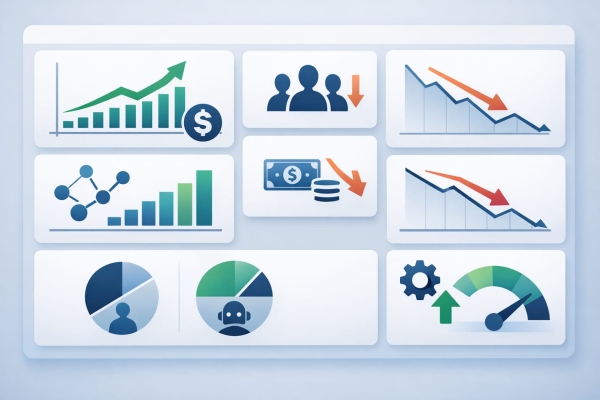
On Mar 16 2026, reports that Meta may cut 20% or more of its workforce alongside plans for up to $135 billion in AI related capital spending point to an emerging pattern in how large technology firms operate in the era of AI. Companies are increasing AI investment while reducing headcount and restructuring teams to improve efficiency. Multiple large firms now follow the same pattern.
The sequence is becoming consistent across large technology and fintech firms, and the playbook is as follows.
Increase AI and infrastructure spend.
Reduce or flatten headcount.
Reassign work to automation.
Improve margins and operating leverage.
Rinse and repeat as necessary
Markets reward this because cost discipline becomes visible.
Meta is not alone.
While expanding AI infrastructure, Amazon has cut several hundred roles across AWS and other units.
Google cut hundreds of roles across Assistant, hardware, and engineering teams as it reallocates resources toward AI priorities.
Microsoft cut about 3% of its workforce while continuing to increase AI investment across cloud and enterprise products.
Dominoes? AI spending rises while workforce structures tighten around a new cost model.
And last month, fintech showed the same logic.
Block cut more than 4000 roles in an AI led cost reset while repositioning around automation and efficiency. Investors now expect fintech firms to translate AI into margin improvement, not just new features.
Payments, lending, and financial operations are structured workflows, which makes them easier to redesign around automation.
Fewer headlines at scale but the playbook is apparent.
Shopify requires teams to justify hiring against AI capability. Teams must show AI cannot do the work before adding people.
The new operating model mirrors fewer hires, higher output per employee, and clearer cost control.
The immediate impact of AI is not revenue growth. It is cost structure.
AI increases capital spending while reducing labour intensity, which alters operating leverage across digital businesses.
In fintech, this shows up as:
* automated fraud detection replacing manual review
* automated underwriting reducing analyst workload
* AI support systems replacing large service teams
The cost per decision falls. That is the first advantage.
This pattern will likely not stop at just large tech firms.
Public fintech and payments companies are now under similar pressure to show that AI improves efficiency.
Firms with large cost bases and heavy reliance on manual processes are the most exposed. That includes payments platforms, neobanks, and global processors where margins depend on operational scale.
Companies such as PayPal, Adyen, and other listed payment firms face imminent change. Investors will look for evidence that AI reduces cost per transaction, improves fraud outcomes, and increases operating leverage.
The question is no longer whether these firms use AI. It is whether AI measurably improves their cost structure.
Meta contemplating mass job cuts at scale further highlight a clear cost reset that's defining how digital businesses operate. Amazon, Google, and Microsoft reinforce the pattern. Block shows how it applies in fintech. Shopify demonstrates how it's taking up mental space and decisioning in Canada.
 The National Crowdfunding & Fintech Association (NCFA Canada) is a financial innovation ecosystem that provides education, market intelligence, industry stewardship, networking and funding opportunities and services to thousands of community members and works closely with industry, government, partners and affiliates to create a vibrant and innovative fintech and funding industry in Canada. Decentralized and distributed, NCFA is engaged with global stakeholders and helps incubate projects and investment in fintech, alternative finance, crowdfunding, peer-to-peer finance, payments, digital assets and tokens, artificial intelligence, blockchain, cryptocurrency, regtech, and insurtech sectors. Join Canada's Fintech & Funding Community today FREE! Or become a contributing member and get perks. For more information, please visit: www.ncfacanada.org
 |  |  |
|---|---|---|
 |  |  |
March 17, 2026

You’re eager to become a certified coach, but you might find yourself hesitating due to concerns about cost, time commitment, or necessity.
You’re not alone in these doubts. Many coaches question what the International Coaching Federation (ICF) certification actually means and how it can benefit them. To help you make an informed decision, we’ll set the record straight by demystifying common myths about ICF certification and sharing the truth.
Many believe this. While anyone can call themselves a coach, an ICF credential, whether you take ICF coaching in Switzerland or elsewhere, makes it easy to build credibility with potential coaching clients.
The ICF established these standards for a reason. Credentialed coaches have:
An ICF credential tells clients, peers, and organizations that you’re serious in the coaching field.
Life coaching often comes to mind when you hear the word “coaching.” However, the ICF coaching campus goes beyond that. ICF credential holders work across these specialties:
The ICF welcomes anyone from all walks of life, like therapists, HR professionals, and stay-at-home moms, to make successful transitions into professional coaching. ICF sees coaching as an indispensable tool for self-discovery, self-reflection, and personal and professional growth.
Some think coaches must have all the answers and tell clients what to do. This is simply false.
Professional coaching means helping clients find their own solutions, not telling them what to do. Certified coaches use active listening, powerful questioning, and deep empathy to guide clients through their development.
The ICF defines coaching as teaming up with clients in a thought-provoking and creative process. Your role as a coach is to see your clients as naturally creative, whole, and resourceful, and support the entire process. This makes coaching different from consulting, therapy, and training. Understanding the difference is important if you want to enter the coaching profession.
Some coaches hesitate because they believe certification is too complicated. In reality, the process is structured and manageable.
This is how the coaching journey looks:
This journey builds your confidence and competence brick by brick.
Skeptics may argue that a coaching credential is only good on paper. However, the documented benefits of having a coaching certification can be hard to ignore.
The coaching field experiences massive growth, with a 54% surge in certified coaches since 2019. The ICF said the industry has been growing globally, with ICF members working in over 140 countries.
The European Mentoring and Coaching Council also recognizes that ICF-established standards are benchmarks for professional growth in the coaching industry. This results in higher rates, more contracts, stronger trust from coaching clients, and great personal and professional fulfillment.
If you want to become a coach, Coach Campus makes certification achievable. You'll learn from programs focused on real-world results.
Coach Campus supports you at every step in your coaching journey. You'll gain foundational skills and advanced development. Whether you aim to build a thriving coaching career or be a recognized leader, Coach Campus will help you reach your goals.
These myths about ICF certification will persist if you don't open yourself up to becoming a successful coach. Working your way up to becoming an ICF-certified coach begins with one decision you need to make to turn your life around.
The National Crowdfunding & Fintech Association (NCFA Canada) is a financial innovation ecosystem that provides education, market intelligence, industry stewardship, networking and funding opportunities and services to thousands of community members and works closely with industry, government, partners and affiliates to create a vibrant and innovative fintech and funding industry in Canada. Decentralized and distributed, NCFA is engaged with global stakeholders and helps incubate projects and investment in fintech, alternative finance, crowdfunding, peer-to-peer finance, payments, digital assets and tokens, artificial intelligence, blockchain, cryptocurrency, regtech, and insurtech sectors. Join Canada's Fintech & Funding Community today FREE! Or become a contributing member and get perks. For more information, please visit: www.ncfacanada.org
| | |
|---|---|---|
| | |
Mar 17, 2026 | NCFA Fintech Market Activity | AI Infrastructure And Capital Markets

On Mar 16 2026, Nvidia CEO Jensen Huang delivered an opening keynote at GTC (GPU Technology Conference in San Jose, California) raising the company’s data center revenue outlook to $1 trillion for 2025 through 2027, up from a prior $500 billion estimate. The revision reflects accelerating demand for AI infrastructure as the industry moves from model training into continuous inference at scale.
This is not just a bigger number. It also points to where value will accumulate in AI and essentially who will pay for it.
The industry is moving past model training into continuous inference, so everything picks up from here. Growth isn't in experimentation alone, it's in scaling production.
Inference is not a one time cost. It runs every time a model answers a question, scores a transaction, flags fraud, or generates a recommendation. It scales with usage, not development.
Nvidia’s roadmap, including Blackwell and next generation systems, targets that reality.
For fintech, it directly relies on AI for its operating model.
AI driven underwriting, fraud detection, support agents, and personalization are no longer batch processes. They run live, at scale, on every user interaction.
That means:
* compute becomes a recurring cost tied to usage
* margins depend on inference efficiency, not just acquisition
* product design starts to include cost per decision, not just conversion
These operational costs represent a structural shift. It's not a one and done feature upgrade.
A $1 trillion infrastructure market doesn't stay fragmented.
It concentrates.
Compute, models, and distribution stack together. The firms that control inference capacity influence pricing, latency, and access.
Fintech doesn't compete with Nvidia directly. But it builds on top of the stack Nvidia helps define.
That creates a dependency layer many firms have not priced in yet.
The new forecast raises expectations across the market.
Capital now asks harder questions:
* where does AI revenue actually show up
* who captures margin versus who absorbs cost
* which use cases justify continuous compute spend
This pressure is already visible across public tech names. Strong AI narratives no longer carry valuations on their own. Unit economics are key yet again.
This flows straight into checkout, risk, and customer experience.
Payments firms, neobanks, and platforms are all moving toward:
* real time fraud scoring
* dynamic pricing and routing
* AI driven support and engagement
Those features increase conversion and reduce risk. But they also increase compute intensity per transaction.
That creates a new tradeoff: better decisions versus higher cost per interaction.
Firms that optimize that balance get it right for now. Others compress margins without realizing it.
AI is a capability And cost layer.
Fintechs and financial institutions should consider to:
* design products with inference cost in mind from day one
* choose infrastructure partners strategically, not just technically
* focus on high value decisions where AI materially improves outcomes
The risk of course is adding AI features that increase cost faster than revenue.
If AI infrastructure becomes a $1 trillion market, fintech’s advantage won't come from using AI first. It will come from using it efficiently.
The National Crowdfunding & Fintech Association (NCFA Canada) is a financial innovation ecosystem that provides education, market intelligence, industry stewardship, networking and funding opportunities and services to thousands of community members and works closely with industry, government, partners and affiliates to create a vibrant and innovative fintech and funding industry in Canada. Decentralized and distributed, NCFA is engaged with global stakeholders and helps incubate projects and investment in fintech, alternative finance, crowdfunding, peer-to-peer finance, payments, digital assets and tokens, artificial intelligence, blockchain, cryptocurrency, regtech, and insurtech sectors. Join Canada's Fintech & Funding Community today FREE! Or become a contributing member and get perks. For more information, please visit: www.ncfacanada.org
| | |
|---|---|---|
| | |
March 17, 2026

Image: Freepik
Thinking about changing careers? It's completely normal to panic a little. Nobody wants to feel like they're throwing away years of hard work just to start over at the bottom of the ladder. But here's the thing: pivoting to a new industry rarely means you're actually starting from scratch. You aren't erasing your past. You're just taking the skills you already have and pointing them in a completely new direction.
A lot of what makes someone good at their job doesn't depend on the specific industry. Things like managing chaotic projects, conflict resolution, and just communicating clearly are universally valuable. You just have to know how to frame them on your resume.
Take criminal justice, for example. If you've spent years analyzing dense police reports, you already have the exact research skills needed for legal support. If you're looking into how to become a paralegal, that past experience isn't irrelevant. In fact, it is actually a massive advantage over someone fresh out of school. Hiring managers love these kinds of transferable skills because they are notoriously hard to teach.
People often stress that their undergraduate major has absolutely nothing to do with their new career path. Don't sweat it too much. Getting a degree proves you know how to learn, hit deadlines, and handle complex information.
Plus, if you decide to go back to school for a specialized certificate in your new field, you can usually transfer a bunch of those old credits. It saves you a ton of time and money, turning that old degree into a solid foundation instead of a sunk cost.
You can't learn everything from a job description. If you really want to know what a new field is like, you have to talk to the people actually doing the work. Reach out to professionals for a quick coffee chat or an informational interview. It's low pressure, and you'd be surprised how often these casual conversations uncover unadvertised jobs or hidden pathways into a company.
Show up to local networking events or industry conferences, too. You don't have to be an expert yet; just showing genuine curiosity goes a long way with potential mentors. Joining a professional association is another easy win. It gets you access to niche job boards and puts you right in the middle of the community you're trying to join.
Jumping into a new profession is definitely a big deal, but it doesn't have to mean hitting the reset button on your life. Think of it more like a strategic pivot. Sure, the transition might feel a bit uncomfortable at first, but staying stuck in a career you've outgrown is much worse. Lean into the skills you've already built, squeeze every ounce of value out of your past education, and start talking to people in your new field. You've already got momentum. Now you just need to steer it. Trust in the experience you've gathered along the way and take that first step.
The National Crowdfunding & Fintech Association (NCFA Canada) is a financial innovation ecosystem that provides education, market intelligence, industry stewardship, networking and funding opportunities and services to thousands of community members and works closely with industry, government, partners and affiliates to create a vibrant and innovative fintech and funding industry in Canada. Decentralized and distributed, NCFA is engaged with global stakeholders and helps incubate projects and investment in fintech, alternative finance, crowdfunding, peer-to-peer finance, payments, digital assets and tokens, artificial intelligence, blockchain, cryptocurrency, regtech, and insurtech sectors. Join Canada's Fintech & Funding Community today FREE! Or become a contributing member and get perks. For more information, please visit: www.ncfacanada.org
| | |
|---|---|---|
| | |
Mar 16, 2026 | NCFA Fintech Market Activity | Payments And Market Structure

On Feb 17 2026, a federal securities class action was filed in California against PayPal for allegedly misleading investors about its 2027 targets and the growth outlook for Branded Checkout. The class action was filed following PayPal’s fourth quarter and full year 2025 results published on Feb 3, when the company withdrew its 2027 targets and pointed to weaker than expected Branded Checkout performance.
At PayPal Investor Day 2025, management laid out a plan to accelerate branded total payment volume growth to between 8% and 10% by 2027. When that target was pulled less than a year later, the market reaction was severe. Reuters reported that PayPal stock fell 19% on Feb 3 after weaker 2026 profit guidance, disappointing holiday quarter results, resulted in PayPal appointing a new CEO.
The complaint argues that investors were given an overly optimistic picture of Branded Checkout growth and the path to PayPal’s 2027 financial targets. When management withdrew those targets, the issue changed from execution pressure to credibility pressure. While investors can absorb a difficult quarter, they respond more sharply when a company promotes a long range growth plan and then walks it back before the plan has time to play out.
This is why the lawsuit matters beyond the legal claim itself. A class action can take years. The more immediate issue is whether investors now discount management guidance more heavily than before. Once that happens, the company has to rebuild trust through results, not presentations.
PayPal is trying to defend a core commerce business in one of the most competitive parts of fintech. Stripe, Apple Pay, Adyen, and other platforms keep pushing deeper into merchant checkout and payment orchestration. See NCFA's prior coverage on Stripe's scale and PayPal pressure.
That is why adjacent product moves around stablecoins, merchant tools, and infrastructure aren't the main story right now. Investors are still anchored to checkout adoption, merchant retention, branded payment volume, and margin quality. If the core checkout engine weakens, new initiatives don't offset that on their own.
The next phase is about proof. PayPal needs to show that Branded Checkout can return to steadier growth and that management guidance once again lines up with operating reality. Until then, both legal and market pressures are likely to continue.
When a payments company faces both a securities class action and a sharp stock repricing, what matters more to investors in the end: the lawsuit or whether the core commerce engine still works?
The National Crowdfunding & Fintech Association (NCFA Canada) is a financial innovation ecosystem that provides education, market intelligence, industry stewardship, networking and funding opportunities and services to thousands of community members and works closely with industry, government, partners and affiliates to create a vibrant and innovative fintech and funding industry in Canada. Decentralized and distributed, NCFA is engaged with global stakeholders and helps incubate projects and investment in fintech, alternative finance, crowdfunding, peer-to-peer finance, payments, digital assets and tokens, artificial intelligence, blockchain, cryptocurrency, regtech, and insurtech sectors. Join Canada's Fintech & Funding Community today FREE! Or become a contributing member and get perks. For more information, please visit: www.ncfacanada.org
| | |
|---|---|---|
| | |
Mar 16, 2026 | NCFA Market Activity | Cross Border Payments Infrastructure

On Mar 13 2026, global payments platform Airwallex announced a $1.135B over five years across the United Kingdom and EMEA to expand product development, engineering capacity and regional operations.
The company reported 116% year over year revenue growth and a 226% increase in transaction volume across EMEA (Europe, Middle East, and Africa). The expansion includes plans to hire about 100 senior engineers in London, the first time Airwallex will base engineering teams in the United Kingdom.
Airwallex provides infrastructure for international businesses including multicurrency accounts, cross border payments, foreign exchange, card issuing, and expense management.
In its 2025 year end mission update, the company said its platform processes more than $266B in annual transaction volume. The firm also reported that 95% of transactions run through local payment rails across 127 countries, with about 94% settling the same day.
The investment adds engineering capacity and infrastructure in one of the world’s largest markets for cross border business payments. Global businesses increasingly rely on platforms that provide local accounts, foreign exchange, international payouts and card services through a single financial infrastructure provider.
Large platforms are responding by building regional engineering teams, expanding local rail coverage and increasing settlement speed. Airwallex’s reported transaction scale and investment size show how quickly infrastructure providers are scaling to serve cross border digital businesses.
Competition global payments platforms combine local payment rail access, multicurrency financial services and software integration in one system capable of handling large international transaction volumes.
Platforms processing hundreds of billions in transaction volume are investing heavily in local payment rail access and engineering capacity as competition intensifies in cross border payments infrastructure.
The National Crowdfunding & Fintech Association (NCFA Canada) is a financial innovation ecosystem that provides education, market intelligence, industry stewardship, networking and funding opportunities and services to thousands of community members and works closely with industry, government, partners and affiliates to create a vibrant and innovative fintech and funding industry in Canada. Decentralized and distributed, NCFA is engaged with global stakeholders and helps incubate projects and investment in fintech, alternative finance, crowdfunding, peer-to-peer finance, payments, digital assets and tokens, artificial intelligence, blockchain, cryptocurrency, regtech, and insurtech sectors. Join Canada's Fintech & Funding Community today FREE! Or become a contributing member and get perks. For more information, please visit: www.ncfacanada.org
| | |
|---|---|---|
| | |
March 16, 2026

Over the past decade, alternative finance has transformed the way businesses access capital. Crowdfunding platforms, private lending networks, and merchant cash advance (MCA) providers have created new opportunities for startups and small businesses that may not qualify for traditional bank loans. These financing models emphasize speed, flexibility, and accessibility key advantages that have fueled their rapid growth.
However, the expansion of alternative finance has also introduced new challenges for lenders and investors. One of the most significant risks involves borrower defaults and the complexities associated with recovering outstanding balances. As lending ecosystems evolve, lenders are increasingly recognizing that strong legal recovery strategies are essential for maintaining financial stability and protecting capital investments.
Understanding how recovery planning fits into the broader alternative finance landscape helps lenders respond effectively when repayment issues arise.
Alternative finance has become an important component of the modern financial system. Businesses that need immediate capital often turn to crowdfunding platforms, private lenders, and revenue-based financing models instead of traditional banks. These financing solutions provide faster approval processes and more flexible qualification criteria.
For entrepreneurs and small business owners, these options can be vital for:
Lenders also benefit from
As participation in alternative finance continues to increase, lenders must carefully balance growth with risk management. While underwriting standards and financial due diligence remain important, repayment enforcement and recovery strategies are becoming equally critical for protecting investments.
Every form of alternative finance carries its own set of repayment risks. While many borrowers successfully meet their obligations, economic fluctuations and operational challenges can cause some businesses to fall behind on payments.
Examples include:
These challenges demonstrate why lenders must plan not only for loan origination but also for potential recovery scenarios.
Many lenders focus primarily on borrower screening and credit evaluation when issuing funds. While these steps are essential, they represent only one part of a comprehensive risk management strategy.
Without a clear recovery framework, lenders may face significant obstacles if a borrower stops making payments. Delays in responding to default situations can lead to reduced recovery opportunities, particularly when borrowers begin restructuring operations or transferring assets.
Effective recovery planning allows lenders to respond quickly when warning signs appear. Early intervention may involve renegotiating repayment terms, investigating the borrower’s financial condition, or pursuing structured settlements.
By establishing defined recovery procedures, lenders improve their ability to protect capital while minimizing disruptions to their broader lending portfolios.
When repayment disputes escalate beyond internal collection efforts, legal frameworks play an important role in resolving outstanding obligations. Lenders often rely on legal guidance to evaluate contractual rights, enforce agreements, and pursue appropriate recovery actions.
Attorneys experienced in commercial debt recovery assist lenders by analyzing loan agreements, identifying enforceable provisions, and determining the most effective strategy for resolving disputes. This may include negotiating settlements, investigating debtor financial activity, or initiating litigation when voluntary repayment is no longer possible.
Legal oversight also helps ensure that recovery efforts remain compliant with applicable regulations and contractual requirements. In a rapidly evolving financial environment, maintaining compliance is essential for both lenders and platforms operating within the alternative finance ecosystem.
Not every default situation requires immediate litigation. In many cases, borrowers experiencing temporary financial setbacks may still be willing to cooperate in resolving outstanding obligations.
Negotiation often provides an opportunity for lenders and borrowers to reach mutually beneficial arrangements. Structured repayment plans or settlement agreements can allow borrowers to address their obligations while giving lenders a realistic path toward recovering funds.
However, lenders must also recognize situations where negotiations are unlikely to succeed. When borrowers stop communicating, dispute contractual terms without justification, or begin transferring assets, stronger enforcement measures may become necessary.
A balanced recovery strategy allows lenders to explore cooperative solutions while remaining prepared to escalate matters when required.
As alternative finance continues to evolve, lenders are increasingly adopting more structured approaches to managing repayment risk. Effective recovery frameworks often begin with clearly defined contractual terms that outline repayment obligations and enforcement options.
Monitoring borrower performance is another important component of risk management. Early detection of financial distress can help lenders intervene before repayment problems become severe.
In addition, maintaining access to experienced legal professionals allows lenders to evaluate recovery options quickly when disputes arise. Proactive legal consultation can help identify risks, preserve evidence, and guide lenders through complex enforcement scenarios.
By integrating legal recovery planning into their operational strategies, alternative finance companies can strengthen their ability to manage defaults and maintain financial stability.
Alternative finance has expanded access to capital for businesses across a wide range of industries. Crowdfunding, private lending, and merchant cash advance financing have created new opportunities for entrepreneurs while offering lenders innovative ways to deploy capital.
Yet with these opportunities comes increased exposure to repayment risk. As the industry grows, lenders must adopt comprehensive strategies that address not only underwriting but also recovery and enforcement.
Legal recovery strategies have become an essential component of responsible lending practices in alternative finance. By combining strong contractual frameworks, proactive monitoring, and strategic legal guidance, lenders can better protect their investments and navigate the challenges that arise when borrowers fail to meet their obligations.
The National Crowdfunding & Fintech Association (NCFA Canada) is a financial innovation ecosystem that provides education, market intelligence, industry stewardship, networking and funding opportunities and services to thousands of community members and works closely with industry, government, partners and affiliates to create a vibrant and innovative fintech and funding industry in Canada. Decentralized and distributed, NCFA is engaged with global stakeholders and helps incubate projects and investment in fintech, alternative finance, crowdfunding, peer-to-peer finance, payments, digital assets and tokens, artificial intelligence, blockchain, cryptocurrency, regtech, and insurtech sectors. Join Canada's Fintech & Funding Community today FREE! Or become a contributing member and get perks. For more information, please visit: www.ncfacanada.org
| | |
|---|---|---|
| | |


August 26th, 2025

January 4th, 2024

June 1st, 2021

September 9th, 2020

July 9th, 2018

January 3rd, 2018

September 25th, 2017

June 20th, 2017

May 10th, 2017

December 14th, 2016