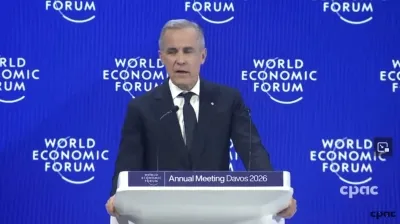
NEW YORK, Feb. 04, 2020 (GLOBE NEWSWIRE) -- via NetworkWire – NetworkNewsWire(“NNW”), a multifaceted financial news and publishing company and part of the InvestorBrandNetwork (“IBN”), is pleased to announce its continued collaboration with the National Crowdfunding & Fintech Association (“NCFA”) and Toronto Finance International (“TFI”). NNW will serve as the official newswire partner for FFCON20: RISE, FFCON’s sixth annual Fintech & Funding Conference and Expo, held March 23–24, in Toronto. Co-hosted by NCFA and TFI, this premier event is designed to bring people together to focus on challenging and growing the Canadian fintech industry and bringing markets to life.
“We are pleased to be the official newswire of FFCON20: RISE and to be working with NCFA again,” said Jonathan Keim, communications director for NNW. “As with all our sponsored events, we will be utilizing InvestorBrandNetwork’s powerful suite of resources to bring greater awareness to the FFCON conference as well as the participants.”
As an official dissemination partner, NNW will distribute FFCON20 news and announcements. NNW will also release additional syndicated articles created by professional writers and communication experts. Information on the event will be further distributed through IBN, which has 1+ million social media followers collectively across 40+ brands.
FFCON20: RISE is expected to attract more than 750 attendees, participants and sponsors from leading fintech startups and scaleups, investors, industry leaders and key stakeholders. The two-day conference and expo is designed to provide invaluable opportunities for those in attendance to develop leads, discover new market channels, and forge partnerships around innovation, technology and financing outcomes.
A financial innovation ecosystem, the National Crowdfunding & Fintech Association (NCFA) provides education, market intelligence, industry stewardship, networking and funding opportunities and services to the fintech community. The group is a network of entrepreneurs, investors and participants in the emerging fintech economy, with a growing membership that includes consultants, marketing and media specialists, investors, lawyers, accountants and social enterprise groups that support and encourage innovative capital markets and financial services.
In the past, NCFA and NNW worked together to heighten the visibility of VanFUNDING, a leading fintech and capital conference that explores the explosive growth happening relative to blockchain, AI, fintech and funding innovations, global market developments and alternative investing opportunities.
“We are thrilled to have NetworkNewsWire as an FFCON20: RISE media sponsor and active participant in the marketing efforts,” said Craig Asano, NCFA Founder and CEO. “This conference is a high-exposure opportunity for participants who wish to get involved as event partners while connecting with leading experts and investors interested in helping fintech businesses achieve success in funding and scaling efforts. NNW has the expertise, tools and global partnerships in place to share that message and bring added awareness to this must-attend event.”
Additional details about the FFCON20: RISE, slated for March 23–24 in Toronto, can be found at https://fintechandfunding.com.
About NetworkNewsWire
NetworkNewsWire (“NNW”) is a financial news and content distribution company, one of 40+ brands within our InvestorBrandNetwork (“IBN”), that provides: (1) access to a network of wire services via NetworkWire to reach all target markets, industries and demographics in the most effective manner possible; (2) article and editorial syndication to 5,000+ news outlets; (3) enhanced press release services to ensure maximum impact; (4) social media distribution via IBN to 1+ million followers; and (5) a full array of corporate communications solutions. As a multifaceted organization with an extensive team of contributing journalists and writers, NNW is uniquely positioned to best serve private and public companies that desire to reach a wide audience comprising investors, consumers, journalists and the general public. By cutting through the overload of information in today’s market, NNW brings its clients unparalleled visibility, recognition and brand awareness. NNW is where news, content and information converge.
The National Crowdfunding & Fintech Association (NCFA Canada) is a financial innovation ecosystem that provides education, market intelligence, industry stewardship, networking and funding opportunities and services to thousands of community members and works closely with industry, government, partners and affiliates to create a vibrant and innovative fintech and funding industry in Canada. Decentralized and distributed, NCFA is engaged with global stakeholders and helps incubate projects and investment in fintech, alternative finance, crowdfunding, peer-to-peer finance, payments, digital assets and tokens, blockchain, cryptocurrency, regtech, and insurtech sectors. Join Canada's Fintech & Funding Community today FREE! Or become a contributing member and get perks. For more information, please visit: www.ncfacanada.org
Last week, the Alberta Securities Commission (ASC) adopted a “Blanket Order” for “Startup Crowdfunding Registration and Prospectus Exemptions.” In effect, the ASC was seeking to improve access to capital for smaller firms – a good thing- but the move also highlights the disparity between the provinces and a greater need for national harmonization of online capital formation rules. Financial services in Canada are all regulated at the provincial level thus there exists a degree of disparity regarding rules.
While a smaller country by population, Canada has consistently ranked high in entrepreneurship and innovation. According to a recent KPMG report, the Canadian Fintech ecosystem is thriving but, like any other country, more can be done.
Crowdfund Insider reached out to Denise Weeres, Director, New Economy at the ASC and Craig Asano, Executive Director and founder of the National Crowdfunding and Fintech Association of Canada (NCFA). The NCFA has long led the charge advocating on behalf of Canada’s emerging Fintech market and various securities crowdfunding platforms.
The New Economy Division of the ASC works closely with staff to coordinate efforts to facilitate capital-raising by new economy companies entering the capital market. The Division also strives to anticipate and act on issues and opportunities relating to emerging financial technologies (Fintech).
Our discussion with the two innovation proponents is shared below.
The ASC update to rules is in advance of national harmonization. Why update now?
Denise Weeres: It takes a while to get a national instrument in place. We wanted to allow Alberta businesses and investors to be able to participate in this regime now.
What is the status of harmonization?
Denise Weeres: All of the CSA [Canadian Securities Administrators] jurisdictions are working cooperatively on the national instrument – we are looking at harmonizing and exploring targeted amendments to improve upon the existing regime.
The maximum raise amount appears to be low in contrast to some other jurisdictions. Are there any expectations for this amount to be raised?
Denise Weeres: The maximum raise is consistent with the other participating CSA jurisdictions start-up crowdfunding regimes.
Start-up crowdfunding is intended for the very early-stage businesses. It requires a very simple offering document – and significantly doesn’t require financial statements.
A funding portal that is not registered as a dealer can be used too. The limits reflect the fact that investors likely won’t get all the information they would typically (both at the time of the offering and thereafter) and they may be using a funding portal that isn’t registered and wouldn’t get the protections associated with a registered dealer.
But start-up crowdfunding is not the only way to crowdfund in Canada. It’s just one of a number of options available.
For example, businesses can crowdfund through a registered dealer funding portal under the offering memorandum [OM] exemption where there is no limit at all on the maximum raise and much higher amounts for the amount that individual investors can invest;
$10K for anyone,
$30K for an “eligible investor” e.g., someone who had had and expects to have $75K net income or has $400K net assets
up to $100K for an eligible investor who also gets advice from a dealer that the investment is suitable for them and
no limit for accredited investors.
Under the offering memorandum exemption, the offering document has more detailed disclosure – more similar to the offering document used for U.S. crowdfunding – and like other jurisdictions, it involves a funding portal that is registered as a dealer.
In #Canada, businesses can crowdfund through a registered dealer funding portal under the offering memorandum (OM) exemption where there is no limit on the max raise & much higher amounts for the investors
Craig, how is the Canadian ecosystem evolving, in your opinion?
Craig Asano: The Fintech ecosystem in Canada is growing, albeit not fast enough! ‘slow and steady’ compared to high competition, fast iterations and market depth of UK/US markets but Canadian tech is starting to attract the interest of US funds and international Fintech brands are taking notice too of which many are planning to include Canada in their rollout plans (ie Revolut).
New Fintech startups are launching all the time in a growing number of private and public incubators, accelerators, innovation hubs and grassroot event ecosystems that include a wide range of AI/data, Regtech (KYC, compliance automation), peer to peer debt/equity platforms, digital asset, crypto, DLT, NEO/challenger bank, Insurtech, personal finance, wealth management and alternative investing models.
Although the ecosystem is evolving the average consumer is conservative with lower Fintech awareness and adoption rates (similar to the US) than comparators in Europe and Asia. Incumbents are strong and many Fintechs have partnered with institutions to tap capital resources, customers, data and global expansion infrastructure. Canadian markets are smaller than the US and while it’s easy to launch it’s challenging to achieve sustainable business with significant compliance costs to operate across the country while acquiring customers not yet fully accustom to switching financial products. There have been many successful fintech startups that are scaling from Lending Loop to Wealthsimple to Borrowell and FrontFundr who are all providing consumer-centric, simple to access, low cost, and tech-enabled financial products and services for new economy.
Open Banking is a juggernaut of an opportunity for data-driven Fintechs and consumers looking for choice, lower fees and innovative products but conversations are at a standstill until after the upcoming election. The Ministry of Finance in Ottawa and appointed open banking advisory committee are no doubt watching the implementation challenges of PSD2 in Europe along with the progress being achieved in countries like Australia who are advancing national innovation initiatives like Open Banking ahead of Canada (and the US for what it’s worth). Will these delays put Canada behind the eight-ball, or will we be able to catch-up quickly (leapfrog) and marry our robust tech sector with a historically strong banking system and begin to replace outdated infrastructure?
Specific to crowdfunding regulation in Canada, there’s still a long way to go to remain globally competitive in terms of caps, operating costs and the appropriate amount of regulation for the risk while making it feasible for licensed dealers and funding portals to have a sustainable practice. The lack of harmonization and overly complex set of rules initially caused quite a backlash to the reputation of industry.
At present, there are far too few crowdfunding platforms and we need more operators to increase market volumes and reignite transactional interest among service providers, funding specialists, securities lawyers, and both retail and accredited investors. Peer to peer lending is now proven and helping hundreds of companies’ access growth-orientated loans but needs its own set of proportionate regulation to level up further. I look forward to next year to full harmonization which the CSA staff mentions will be out next year (ideally with the changes NCFA has been advocated for on behalf of industry for years).
Open Banking is a juggernaut of an opportunity for data-driven #Fintechs and consumers looking for choice, lower fees and innovative products
How has NCFA’s collaboration with provincial regulators helped to move things along?
Craig Asano: We’ve developed a mutually beneficial relationship with regulators from the start which has been informative for both parties. NCFA bridges the gap between stakeholder wants and needs and helps regulators better understand emerging innovations that are essential for Canada to remain competitive and current with the times. The association polls its wide network of industry practitioners and aggregates feedback to regulators through comment letters, committee participation and bespoke submissions and calls.
We work with other agencies and encourage regulators to recognize a competitive perspective in their difficult role of regulating fair and efficient capital markets while protecting investors. NCFA also gathers a significant amount of global market intel and research on how other jurisdictions are performing and shares with market participants and regulators alike in effort to bridge gaps and help stakeholders understand varied perspectives. Regulators are regularly invited to NCFAs annual conferences where they participate to provide updates on emerging regulatory initiatives, challenges and concerns while providing education and resources for industry, companies and investors.
NCFA is appreciative of the challenge facing regulators and positions itself as an educational resource and network for the various provincial commissions to rely on at anytime. While we advocate for specific asks on behalf of industry, we do so in ‘Canadian style’ which is a collaborative effort.
NCFA bridges the gap between stakeholder wants and needs and helps regulators better understand emerging innovations that are essential for Canada to remain competitive and current with the times #Fintech
What are your expectations for 2020?
Craig Asano: I expect to see more growth and investor appetite while regulators continue to reduce the burden which is overly burdensome now. This means small wins for the industry but doubtful for large scale national initiatives like Open Banking to reach implementation by 2020.
The National Crowdfunding & Fintech Association (NCFA Canada) is a financial innovation ecosystem that provides education, market intelligence, industry stewardship, networking and funding opportunities and services to thousands of community members and works closely with industry, government, partners and affiliates to create a vibrant and innovative fintech and funding industry in Canada. Decentralized and distributed, NCFA is engaged with global stakeholders and helps incubate projects and investment in fintech, alternative finance, crowdfunding, peer-to-peer finance, payments, digital assets and tokens, blockchain, cryptocurrency, regtech, and insurtech sectors. Join Canada's Fintech & Funding Community today FREE! Or become a contributing member and get perks. For more information, please visit: www.ncfacanada.org
Canadian startup Paycase Global Corp. is suing TMX Group, for breach of contract after the operator of the Toronto Stock Exchange terminated their deal to create cryptocurrency-related products and services.
Paycase is claiming loss of revenue, loss of opportunity and loss of reputation and is demanding $500 million for damages and that TMX resumes its performance, according to a lawsuit filed Monday in Canada’s Superior Court of Justice.
A spokesperson for TMX Group said its subsidiary, Shorcan Digital Currency Network, had been working with Paycase “to try to find a viable and mutually-agreeable business solution. We are very disappointed that Paycase has chosen to go this route. TMX disputes the claims made and we plan to defend ourselves vigorously.”
The damages sought are likely among the largest in any crypto-related lawsuit to date; previous cases have demanded as much as $100 million.
Paycase and TMX, both based in Toronto, entered into 10-year contracts for collaboration and revenue sharing on an over-the-counter (OTC) cryptocurrency brokerage desk and creation and administration of data feeds and crypto indexes and the sharing of crypto-index revenue.
According to the complaint, Paycase entered into these contracts on March 21, 2018, with TMX’s subsidiary Shorcan DCN, with the intention to launch a TMX OTC desk and data feed in the second quarter of that year. TMX would receive a cryptocurrency data aggregation platform and a global network of industry participants and leaders, and Paycase benefited from TMX’s stature and clientele, according to the suit.
At the time, Paycase chief executive Joseph Weinberg said Shorcan would be “the first-ever public crypto brokerage desk by an exchange.”
On Aug. 31, 2018, TMX added an amendment to the contract to extend by two weeks a deadline to put together a Statement of Work outlining services, consent, service levels, specifications and delivery timelines for the products. Paycase alleges that it never received this statement.
‘Board issues’
Peter Conroy, president and CEO of Shorcan DCN, encouraged Paycase to buy Shorcan DCN from TMX to bypass “board approval” issues affecting the progress of the products, the suit alleges. In the middle of November, Paycase delivered an offer to purchase Shorcan DCN to Luc Fortin, the director of Shorcan DCN and Global Head of Trading with TMX Group. Paycase claims that TMX announced in or around Sept. 25 that Conroy would be moving to another TMX company but still listed him publicly as president of Shorcan DCN.
Paycase claims that Fortin controlled the business and operations of Shorcan DCN and began to dismantle those operations, including dismissing the two employees hired by Shorcan DCN dedicated to the design, implementation and ongoing operation of the TMX OTC Desk in early December.
On Dec. 6 – the same day as the dismissals – TMX sent Paycase a “Mutual Termination Agreement,” but Paycase claims no event occurred to justify the termination and that there was no termination for convenience in the contract.
Paycase rejected the termination offer and requested a meeting with TMX executives which happened in February 2019. During that time, Shorcan DCN has stopped performing its part of the contract, which Paycase says includes an obligation of continuing performance.
The National Crowdfunding & Fintech Association (NCFA Canada) is a financial innovation ecosystem that provides education, market intelligence, industry stewardship, networking and funding opportunities and services to thousands of community members and works closely with industry, government, partners and affiliates to create a vibrant and innovative fintech and funding industry in Canada. Decentralized and distributed, NCFA is engaged with global stakeholders and helps incubate projects and investment in fintech, alternative finance, crowdfunding, peer-to-peer finance, payments, digital assets and tokens, blockchain, cryptocurrency, regtech, and insurtech sectors. Join Canada's Fintech & Funding Community today FREE! Or become a contributing member and get perks. For more information, please visit: www.ncfacanada.org
NCFA Canada on behalf of our partner's Lending Loop | Sep 11, 2019
HAVE YOU EVER SEEN A CHESHIRE CAT SMILE?
Well they deserve it.
Back in October 2015, NCFA made this introductory video with Cato Pastoll, CEO and Co-Founder of Lending Loop, about a peer to peer lending marketplace for small businesses model that was new to Canada but was achieving significant growth internationally.
The question and opportunity was back then: why not here in Canada?
A question that many of us ask ourselves, ask the community and point fingers at strict regulations and high operating costs. Well fast forward several years and growth obstacles later, and the Lending Loop story continues to impress with their latest milestone of lending over $50 million to deserving small businesses to help them grow and expand operations while providing retail and accredited investors direct access to a wide range of lending and investment options, a robust community and the chance to strengthen Canadian small business - here here!
The early vision...
Brandon Vlaar, Co-founder and CTO of Lending Loop sharing their good news!
CONGRATS to the entire Lending Loop Team for achieving this latest milestone. We've 'got your back' and look forward to future growth and digital finance success - the best is yet to come! Craig Asano, CEO, NCFA
The National Crowdfunding & Fintech Association (NCFA Canada) is a financial innovation ecosystem that provides education, market intelligence, industry stewardship, networking and funding opportunities and services to thousands of community members and works closely with industry, government, partners and affiliates to create a vibrant and innovative fintech and funding industry in Canada. Decentralized and distributed, NCFA is engaged with global stakeholders and helps incubate projects and investment in fintech, alternative finance, crowdfunding, peer-to-peer finance, payments, digital assets and tokens, blockchain, cryptocurrency, regtech, and insurtech sectors. Join Canada's Fintech & Funding Community today FREE! Or become a contributing member and get perks. For more information, please visit: www.ncfacanada.org
Ryan Aceman, special to BNN Bloomberg | March 15, 2019
#FFCON19 is set to showcase the importance of being fearless to succeed in Fintech
12 cutting-edge companies will compete in a ground-breaking pitch competition
Key emerging trends from tech and investment realms will be highlighted
Where finance and technology meet, lies one of the most fascinating sectors of the modern world. From its inception, the financial technology (Fintech) space has been built on inventive thinking and unconventional concepts. This crucial intersection has the power to transform global banking, investing, and many other sectors that people and businesses interact with on a daily basis.
"The Canadian Fintech industry is leading the way in revolutionizing financial services and events such as FFCON19 to help create a strong ecosystem that cultivates innovation and growth. Excited to be a part of it!"
From April 3rd–4th in Toronto, Ontario, FFCON2019: Fearless will aim to embody this innovative essence, hosting a variety of influential thought leaders, industry experts, and 750 attendees. The event will function as a comprehensive and daring expo showcasing innovators and disrupters that are having significant impacts within Fintech. Attendees will learn vital content delivered from fearless experts and will explore more about the economic progress, regulations, and insights from the industry.
“This year’s annual conference will feature risk takers that are challenging orthodoxy, and overcoming obstacles to commercialize fintech innovations that unlock value and impact people’s lives”
Further, the NCFA will launch its inaugural Global Fintech Education program at the conference, created for entrepreneurs to explore the foundational aspects of Fintech and learn about the current state of the industry. The program will also cover the key drivers of Fintech success, as well as explore the building blocks and framework of this sector.
“Transforming the financial industry requires going against convention with fresh insights, innovative thinking, and robust frameworks.”
With more than $39 billion invested in the global Fintech realm in 2018 alone, this event is not to be missed. The expenditure in this industry signals the significant potential for Fintech to become a
multi-trillion-dollar market in the near future.
Get your tickets for FFCON 2019 Fearless before they’re gone here: fintechandfunding.com
5th ANNUAL 2019 FINTECH & FINANCING CONFERENCE HOSTED BY NCFA AND PARTNERS
FEARLESS
Day(s)
:
Hour(s)
:
Minute(s)
:
Second(s)
APR 3-4 TORONTO
FINTECH 360. BLOCKCHAIN. AI CONFIDENTIAL. FUNDING INNOVATION. ALTERNATIVE FINANCE. GLOBAL EDUCATION. INDUSTRY WORKSHOPS. PITCHING. PRIME NETWORKING. AWARDS
Crowdfunding has been legal in Canada for some time now but in Canada, securities are managed and regulated at the provincial level thus creating a bit of a regulatory mishmash which proves difficult and costly to firms. Issuers must be certain to manage any provincial nuance when raising capital online.
Insult to injury, the specific crowdfunding exemption recognized by various provinces has been used to raise about CDN $2 million in total. In Ontario, the most populous province, there have been zero raises. Zippo. Nada. A complete flop of rulemaking.
The failure of the rules is palpable with long-lasting impact. Innovative, yet risky, young firms struggle for access to capital compelling some firms to look elsewhere or other countries for funding. There is the OM exemption (offering memorandum) which is somewhat similar to Reg A+ in the US; this is the most frequently used funding vehicle. But it is obvious that more needs to be done.
While regulators have been attentive and listened politely to industry leaders they have proven to be rather tone deaf when it comes to getting things done. Perhaps it is the fear of the unknown, or a blind mission of investor protection, that has compelled the regulators to stymie innovation in the country.
“Compared to Canada’s global competitors, equity and debt crowdfunding is being stifled by a combination of regulatory burden (not just in the capital markets sector) and lack of coordinated government support (financial and otherwise). Our 2000 members tell us that many start-ups are leaving Ontario and Canada and seeking capital elsewhere, while many fail even to get off the ground.”
The NCFA rationally requested harmonized regulations along with common sense improvements – such as higher funding caps to make the ecosystem more viable.
Around the same time, the largest equity crowdfunding platform in Canada, FrontFundr, blasted officials explaining the fix is quite simple and a single phone call away:
“Canadian companies raising capital through investment crowdfunding are forced to jump through the hoops of different (often conflicting) provincial regulations. In Ontario, our most populous province, the situation is particularly bad: the province has no viable crowdfunding rule that actually works.”
But the parochial regulatory perspectives, and policy inertia, that has been clearly evident in Canada may be about to change.
In a Staff Notice published earlier today, the Canadian Securities Administrators or CSA (an association of all provincial regulators) announced their intent to improve harmonization while reviewing current rules:
“Staff (we) of the Canadian Securities Administrators are developing a national instrument with the same key features as the start-up crowdfunding exemption orders, with targeted amendments to improve harmonization and the effectiveness of crowdfunding as a capital raising tool for start-ups and early-stage businesses. Subject to obtaining the necessary approvals, we will publish for comment a proposed national instrument that will replace the start-up crowdfunding exemption orders. We anticipate that the proposed national instrument will not be implemented by May 13, 2020.”
Of course, the devil will be in the details, and it remains to be seen if the Canadian regulators will review the most robust crowdfunding ecosystem that exists in the UK to gain some guidance.
The National Crowdfunding & Fintech Association (NCFA Canada) is a financial innovation ecosystem that provides education, market intelligence, industry stewardship, networking and funding opportunities and services to thousands of community members and works closely with industry, government, partners and affiliates to create a vibrant and innovative fintech and funding industry in Canada. Decentralized and distributed, NCFA is engaged with global stakeholders and helps incubate projects and investment in fintech, alternative finance, crowdfunding, peer-to-peer finance, payments, digital assets and tokens, blockchain, cryptocurrency, regtech, and insurtech sectors. Join Canada's Fintech & Funding Community today FREE! Or become a contributing member and get perks. For more information, please visit: www.ncfacanada.org
September 15, 2026 | NCFA Market Activity | Lending Consumer Credit And BNPL, Embedded Finance, Artificial Intelligence And Data Zown Connects Rent Rewards, AI Search and Home Finance On September 15, 2026, Toronto-based Canadian proptech Zown updated its homebuying app with Rent Rewards alongside AI property search, affordability estimates, mortgage pre-approval and transaction services. Zown advertises up to 8% back on rent, giving it a reason to start working with consumers years before many will be ready to buy a home. The 8% combines two potential rewards. Zown Money says Zown currently provides up to 4% cashback directly on rent, while an eligible credit card can add up to another 4% depending on the card's terms. At C$2,500 in monthly rent, Zown's 4% portion would equal C$100 a month or C$1,200 a year. If a renter also earned the full additional 4% through their card, the total could reach C$200 a month or C$2,400 a year before any card or payment-related costs. The Canadian iPhone app, developed by Zown Realty Inc., also lets users upload a lease and proof of rent, search properties through an AI assistant called Zoro, view estimated affordability, request showings with licensed agents, seek mortgage pre-approval, ...
September 15, 2026 | NCFA Market Activity | Digital Banking And BaaS, Cross Border Payments And FX, Competition And Market Structure Wise Adds Everyday Canadian Payments Without Becoming a Bank On September 14, 2026, UK-based global payments company Wise launched a Chequing Account in Canada with no monthly fee, Interac e-Transfer support, Canadian account details, pre-authorized debits, debit-card access and multi-currency features. The launch takes Wise further into everyday Canadian financial activity while keeping the cross-border tools that built its original customer base. The account is available to personal and business customers in Canada. Customers can hold more than 40 currencies, receive money using account details available across 22 currencies and send money to more than 70 countries. Wise converts currencies at the mid-market rate and charges a separate conversion fee that currently starts from 0.19%, depending on the currency and transaction. Interac Makes Wise More Useful Day to Day Canadian customers can send up to C$25,000 to a supported Interac email address and receive up to C$25,000 per day through Interac Autodeposit. Wise doesn't charge its own fee to receive Autodeposit payments, and the September launch removed the Wise fee for sending CAD to an Interac alias and adding ...
September 15, 2026 | NCFA Insight | Capital Markets And Market Infrastructure, Competition And Market Structure, Public Sector Policy And Industrial Strategy Nearly $500B In Commitments And A Proposed 6.4% Investment Tax Rate Today, on September 15, 2026, Canada's first Canada Investment Summit 2026 commitments reached nearly $500 billion across Canadian pension funds, insurers, banks, investment funds and a major AI infrastructure project. The September 14–15 summit in Toronto also brought together investors from nearly 30 countries managing more than $100 trillion in assets. The $500 billion isn't one pool of foreign equity. It combines institutional investment, bank financing and capital mobilization, investment funds and corporate infrastructure spending. A large share comes from Canadian institutions putting more capital to work at home while Ottawa tries to attract additional global investment. Canadian Institutions Supply Much Of The Capital Canadian pension funds, insurers and other institutional investors committed nearly $100 billion CPP Investments and Brookfield Asset Management launched the $50 billion Maple Fund for Canadian critical infrastructure and strategic industries PSP Investments plans another $25 billion of Canadian investment Ontario Teachers' Pension Plan committed an additional $10 billion by the end of 2027 Sun Life Financial committed $5 billion over five years ...
Sep 15, 2026 Market volatility remains a persistent factor in wealth management, driving investors to seek strategies that balance capital stability with strategic diversification. While physical property has traditionally served as a tangible asset class, direct ownership often carries operational friction and localized concentration risk. Real estate funds present a structured alternative, pooling capital to access larger-scale assets under professional administration. However, evaluating these vehicles requires a realistic understanding of their risk profiles, liquidity terms, fee structures, and underlying statutory frameworks. Structural Trade-offs: Scale, Risk, and Liquidity Managed real estate portfolios offer distinct operational benefits while introducing clear structural constraints: Institutional Execution: Funds leverage pooled capital to negotiate institutional pricing, access commercial or multi-unit residential developments, and spread risk across multiple properties within the fund's mandate. Inflation Pass-Through and Fee Drag: Real estate often mitigates inflation through index-linked commercial leases or periodic residential rent adjustments. However, net investor returns are directly impacted by fund fee structures—typically including a 1–2% annual management fee and potential performance hurdles—which must be weighed against the ongoing maintenance and transaction costs of direct ownership. Operational Relief: Professional managers oversee tenant administration, maintenance, and legal compliance, removing the daily burdens associated with direct landlord responsibilities. Realistic ...
September 14, 2026 | NCFA Insight | Cross Border Payments And FX, Payments Infrastructure And Money Movement, Digital Assets Blockchain And Tokenization, Competition And Market Structure New Delhi Declaration Advances Payment Interoperability On September 12, 2026, BRICS leaders met in New Delhi for the 18th BRICS Summit and backed further work connecting national payment and financial messaging systems. The New Delhi Declaration confirms that the BRICS Payment Task Force has been studying cross border interoperability and the use of local currencies for trade settlement and investment. BRICS hasn't yet created a common payment network or digital currency. However, payment interoperability has moved into an official technical workstream rather than remaining a series of proposals from individual members. The progression has been fairly quick. India proposed stronger payment and central bank digital currency connectivity in January. In August, Reserve Bank of India Governor Sanjay Malhotra confirmed that members were discussing links between fast payment systems and central bank digital currencies. The September declaration gives the Payment Task Force a formal basis to continue that work across the bloc. The commercial backdrop has also changed significantly since we last covered the 2023 BRICS summit. The group has expanded, supply chains have been ...
September 14, 2026 | NCFA Insight | Competition And Market Structure, Regulation And Policy, Capital Markets Infrastructure And Funding Routledge Speech Puts Growth and Competition Higher on OSFI Agenda On September 11, 2026, Superintendent Peter Routledge delivered a speech at the Economic Club of Canada, explaining how the Office of the Superintendent of Financial Institutions (OSFI) is refining its risk appetite. Financial resilience remains central, but OSFI is giving more weight to economic growth and competition when it decides whether a regulatory requirement is proportionate to the risk. For financial technology firms, smaller banks, federal credit unions and prospective entrants, the commercial question is whether those decisions make Canada's regulated financial market easier to enter and compete in. Some fintechs may eventually seek a federal bank, trust or loan company structure. Others need regulated partners that can support new lending, payments or financial products without the economics forcing every partnership toward Canada's largest institutions. OSFI is already changing parts of that equation. New entrants have a more structured approval process, selected capital requirements are being recalibrated and unnecessary supervisory material is being removed. The value to the market will depend on what happens to entry costs, operating economics and the ...
September 14, 2026 | NCFA Market Activity | Capital Markets Infrastructure And Funding, Digital Assets Blockchain And Tokenization, Artificial Intelligence And Data Institutional Investors Back Tokenized Market Data On September 14, 2026, Paris-baesed digital asset firm Kaiko raised US$110 million in a Series B extension led by S&P Global. RBC joined BNP Paribas, Nasdaq Ventures, Bpifrance, Broadridge, Coinbase Ventures, DRW Venture Capital, Canton Foundation, Stellar and Susquehanna Private Equity Investments. Existing shareholders Anthemis, Point Nine and Revaia also participated. Kaiko plans to invest the capital in its market data business and services for onchain capital markets. Its coverage spans more than 150 exchanges and protocols, with data used for pricing, trading, valuation, risk, surveillance and benchmarks. S&P Global, RBC, Nasdaq, BNP Paribas and Broadridge bring something beyond capital. They operate businesses that depend on reliable prices, benchmarks, market data and institutional distribution. Their investment gives Kaiko deeper relationships with firms that could also become customers, partners or distribution channels as tokenized securities and digital assets enter more institutional products. S&P Backs Kaiko After Launching 4,000+ Indices S&P Global was already working with Kaiko before leading the round. On September 1, S&P Dow Jones Indices and Kaiko launched the S&P Kaiko ...
Sep 14, 2026 Industrial machinery is essential in the manufacturing, construction, processing, agriculture, energy production, and other industries. Unexpected machine failures can have more than repair costs. Production can be halted, deadlines can be missed, workers can face safety hazards, and businesses can suffer financial losses. By knowing the common causes of machinery failure, operators and maintenance staff can identify problems early and take preventive action. Industrial machinery failure can have many causes. Why Industrial Machinery Fails By determining the root cause, businesses can avoid the same issue, minimize downtime, and extend the useful life of valuable industrial equipment. Here are 10 of the most common reasons for industrial machinery failure. Poor maintenance One of the biggest causes of equipment failure is poor maintenance. A machine has many moving parts and interdependent components that must be inspected, cleaned, adjusted, and serviced regularly. Small issues can turn into big ones if they aren't addressed during routine maintenance. A preventive maintenance schedule can help to detect worn components and other issues before they lead to unexpected failures. Inadequate lubrication Moving parts need proper lubrication to minimize friction and heat. Insufficient lubrication, improper lubricants, or not lubricating parts as recommended can cause faster ...
Sep 5, 2026 | Last Updated Sep 14, 2026 | NCFA Fintech Whisperer | Payments Infrastructure And Money Movement, Digital Assets Blockchain And Tokenization, Digital Identity And Trust, Cybersecurity Fraud And Financial Crime, Digital Banking And BaaS, Capital Markets Infrastructure And Funding, Artificial Intelligence And Data, Cross Border Payments And FX, Wealthtech Investing And Trading, Embedded Finance, Insurance And Insurtech, Lending Consumer Credit And BNPL, Open Banking Open Finance And Data Sharing, Risk Compliance And Regtech, Treasury Liquidity And Cash Management, Regulation And Policy, Data Privacy And Governance This live weekly NCFA intelligence page tracks financial technology developments that significantly affect how fintechs build, sell, raise capital, and operate under scrutiny. Coverage prioritizes Canada and includes global events that directly influence competitive conditions, market access, and execution realities across fintech sectors. This page will be updated throughout the week with market movers in a live format and then each week we'll close the prior week's contents in prep for the upcoming week, and continue on a rolling basis. (Missed prior week's Fintech Whisperer? (December 6-12, 2025, December 13-19, 2025, January 1-9, 2026, January 10-16, 2026, January 17-23, 2026, January 24-30, 2026, January 31-February 6, 2026, February 7-13, 2026, February 14-20, 2026, ...
September 11, 2026 | NCFA Regulatory Insight | Artificial Intelligence And Data, Regulation And Policy, Risk Compliance And Regtech AI Literacy, Transparency and Agent Governance On September 9, 2026, the Government of Canada launched a National AI Literacy Initiative with the Alberta Machine Intelligence Institute. The $13 million partnership is expected to reach up to 1 million post secondary students and more than 50,000 K to 12 educators, alongside free learning for workers and other Canadians. The program sits under Canada's AI for All strategy and focuses on helping people understand AI, use it responsibly and recognize risks such as bias, misinformation and privacy loss. Ottawa is working on the governance side at the same time. Its AI transparency consultation remains open until September 23 and asks whether Canada needs stronger ways to identify AI generated content, tell people when they are interacting with AI, explain system capabilities, track serious incidents and record what AI agents actually do. The consultation paper says 19.2% of Canadian companies used AI to produce goods or deliver services in the second quarter of 2026, up from 12.2% a year earlier and three times the 2024 level. The federal government has already been working through ...
NEW YORK, Nov. 15, 2018 (GLOBE NEWSWIRE) -- via NetworkWire -- NetworkNewsWire (“NNW”), a multifaceted financial news and publishing company, today announces its participation in the upcoming VanFUNDING 2018: CONVERGE (#VF2018) conference, taking place Nov. 29-30, 2018, at the JW Marriott Parq Vancouver in Vancouver, B.C. NetworkNewsWire is the official social media sponsor of this leading fintech and capital conference, which will explore the explosive growth currently happening relative to blockchain, AI, fintech and funding innovations, global market developments and alternative investing opportunities.
“Our team is proud to be chosen as the official social media sponsor of VanFUNDING 2018,” said Jonathan Keim, communications director for NetworkNewsWire. “We look forward to lending our expertise in promoting the conference to our 1.6+ million followers via dozens of investor-focused brands, helping greatly expand the reach of VanFUNDING 2018 and its sponsors and exhibitors.”
As part of its sponsorship, NNW is featuring VanFUNDING 2018 on its website and the website of its sister brand CryptoCurrencyWire. NNW is also providing a summary profile for each conference partner and disseminating these profiles through its many social channels and robust editorial syndication network with 5000+ outlets to help expand the reach of the event’s sponsors beyond the conference halls.
“NetworkNewsWire is a leading news and publishing entity within the financial world, and we are excited to be including its team of experts among our sponsors at this year’s event,” said Craig Asano, founder and CEO of the National Crowdfunding & Fintech Association of Canada (NCFA), the organizational body presenting VanFUNDING 2018. “Their impressive syndication network, robust following and vast expertise make them a valuable partner to help promote this year’s immersive conference.”
The theme of the expanded, fourth annual VanFUNDING conference is “CONVERGE,” which centers on immersion and building bridges to connect today’s most disruptive emerging technologies, capital market innovations and key stakeholders that are powering new global markets, new decentralized models, new forms of computer intelligence, new IP, new infrastructure and new alternative investment opportunities that encapsulate the vision of a Web 3.0. The conference is a not-to-be-missed event for any fintech innovator, investment professional, company actively raising capital and key decision maker/stakeholder in technology and digital finance. The world’s premier fintech leaders, investors and emerging innovators will be in attendance, as will policymakers and representatives from government regulatory bodies with an eye on the future of finance.
NetworkNewsWire (NNW) is a financial news and content distribution company that provides (1) access to a network of wire services via NetworkWire to reach all target markets, industries and demographics in the most effective manner possible, (2) article and editorial syndication to 5,000+ news outlets (3), enhanced press release services to ensure maximum impact, (4) social media distribution via the Investor Brand Network (IBN) to nearly 2 million followers, (5) a full array of corporate communications solutions, and (6) a total news coverage solution with NNW Prime. As a multifaceted organization with an extensive team of contributing journalists and writers, NNW is uniquely positioned to best serve private and public companies that desire to reach a wide audience of investors, consumers, journalists and the general public. By cutting through the overload of information in today’s market, NNW brings its clients unparalleled visibility, recognition and brand awareness. NNW is where news, content and information converge. For more information, please visit https://www.NetworkNewsWire.com.
Please see full terms of use and disclaimers on the NetworkNewsWire website applicable to all content provided by NNW, wherever published or re-published: http://NNW.fm/Disclaimer.
About VanFUNDING 2018
VanFUNDING 2018 is a not-to-be missed BLOCKCHAIN, FINTECH & FUNDING INNOVATION and ALT INVESTING conference that features high growth emerging technologies, regulations, game changing projects, the latest trends, deal flow, and investment opportunities. VF2018 brings markets to life with authentic dialogues and engaging stories that educate, inspire and resonate with innovative start-ups, scale-ups, investors, service providers, thought leaders, policy makers and financial institutions who are leading the next generation of finance. Connect with leading experts and learn how to build, buy or sell in Canada’s innovation finance markets. For more information, please visit: http://vanfunding.com.
About theNational Crowdfunding & Fintech Association(NCFA)
The National Crowdfunding & Fintech Association (NCFA) is a financial innovation ecosystem that provides education, market intelligence, industry stewardship, networking and funding opportunities and services to thousands of community members and works closely with industry, government, partners and affiliates to create a vibrant and innovative fintech and funding industry in Canada. Decentralized and distributed, NCFA is engaged with global stakeholders and helps incubate projects and investment in fintech, alternative finance, crowdfunding, peer-to-peer finance, payments, digital assets and tokens, blockchain, cryptocurrency, regtech, and insurtech sectors. Join Canada’s Fintech & Funding Community today FREE! Or become a contributing member and get perks. For more information, please visit: www.ncfacanada.org.
The National Crowdfunding & Fintech Association (NCFA Canada) is a financial innovation ecosystem that provides education, market intelligence, industry stewardship, networking and funding opportunities and services to thousands of community members and works closely with industry, government, partners and affiliates to create a vibrant and innovative fintech and funding industry in Canada. Decentralized and distributed, NCFA is engaged with global stakeholders and helps incubate projects and investment in fintech, alternative finance, crowdfunding, peer-to-peer finance, payments, digital assets and tokens, blockchain, cryptocurrency, regtech, and insurtech sectors. Join Canada's Fintech & Funding Community today FREE! Or become a contributing member and get perks. For more information, please visit: www.ncfacanada.org
September 15, 2026 | NCFA Market Activity | Lending Consumer Credit And BNPL, Embedded Finance, Artificial Intelligence And Data Zown Connects Rent Rewards, AI Search and Home Finance On September 15, 2026, Toronto-based Canadian proptech Zown updated its homebuying app with Rent Rewards alongside AI property search, affordability estimates, mortgage pre-approval and transaction services. Zown advertises up to 8% back on rent, giving it a reason to start working with consumers years before many will be ready to buy a home. The 8% combines two potential rewards. Zown Money says Zown currently provides up to 4% cashback directly on rent, while an eligible credit card can add up to another 4% depending on the card's terms. At C$2,500 in monthly rent, Zown's 4% portion would equal C$100 a month or C$1,200 a year. If a renter also earned the full additional 4% through their card, the total could reach C$200 a month or C$2,400 a year before any card or payment-related costs. The Canadian iPhone app, developed by Zown Realty Inc., also lets users upload a lease and proof of rent, search properties through an AI assistant called Zoro, view estimated affordability, request showings with licensed agents, seek mortgage pre-approval, ...
September 15, 2026 | NCFA Market Activity | Digital Banking And BaaS, Cross Border Payments And FX, Competition And Market Structure Wise Adds Everyday Canadian Payments Without Becoming a Bank On September 14, 2026, UK-based global payments company Wise launched a Chequing Account in Canada with no monthly fee, Interac e-Transfer support, Canadian account details, pre-authorized debits, debit-card access and multi-currency features. The launch takes Wise further into everyday Canadian financial activity while keeping the cross-border tools that built its original customer base. The account is available to personal and business customers in Canada. Customers can hold more than 40 currencies, receive money using account details available across 22 currencies and send money to more than 70 countries. Wise converts currencies at the mid-market rate and charges a separate conversion fee that currently starts from 0.19%, depending on the currency and transaction. Interac Makes Wise More Useful Day to Day Canadian customers can send up to C$25,000 to a supported Interac email address and receive up to C$25,000 per day through Interac Autodeposit. Wise doesn't charge its own fee to receive Autodeposit payments, and the September launch removed the Wise fee for sending CAD to an Interac alias and adding ...
September 15, 2026 | NCFA Insight | Capital Markets And Market Infrastructure, Competition And Market Structure, Public Sector Policy And Industrial Strategy Nearly $500B In Commitments And A Proposed 6.4% Investment Tax Rate Today, on September 15, 2026, Canada's first Canada Investment Summit 2026 commitments reached nearly $500 billion across Canadian pension funds, insurers, banks, investment funds and a major AI infrastructure project. The September 14–15 summit in Toronto also brought together investors from nearly 30 countries managing more than $100 trillion in assets. The $500 billion isn't one pool of foreign equity. It combines institutional investment, bank financing and capital mobilization, investment funds and corporate infrastructure spending. A large share comes from Canadian institutions putting more capital to work at home while Ottawa tries to attract additional global investment. Canadian Institutions Supply Much Of The Capital Canadian pension funds, insurers and other institutional investors committed nearly $100 billion CPP Investments and Brookfield Asset Management launched the $50 billion Maple Fund for Canadian critical infrastructure and strategic industries PSP Investments plans another $25 billion of Canadian investment Ontario Teachers' Pension Plan committed an additional $10 billion by the end of 2027 Sun Life Financial committed $5 billion over five years ...
Sep 15, 2026 Market volatility remains a persistent factor in wealth management, driving investors to seek strategies that balance capital stability with strategic diversification. While physical property has traditionally served as a tangible asset class, direct ownership often carries operational friction and localized concentration risk. Real estate funds present a structured alternative, pooling capital to access larger-scale assets under professional administration. However, evaluating these vehicles requires a realistic understanding of their risk profiles, liquidity terms, fee structures, and underlying statutory frameworks. Structural Trade-offs: Scale, Risk, and Liquidity Managed real estate portfolios offer distinct operational benefits while introducing clear structural constraints: Institutional Execution: Funds leverage pooled capital to negotiate institutional pricing, access commercial or multi-unit residential developments, and spread risk across multiple properties within the fund's mandate. Inflation Pass-Through and Fee Drag: Real estate often mitigates inflation through index-linked commercial leases or periodic residential rent adjustments. However, net investor returns are directly impacted by fund fee structures—typically including a 1–2% annual management fee and potential performance hurdles—which must be weighed against the ongoing maintenance and transaction costs of direct ownership. Operational Relief: Professional managers oversee tenant administration, maintenance, and legal compliance, removing the daily burdens associated with direct landlord responsibilities. Realistic ...
September 14, 2026 | NCFA Insight | Cross Border Payments And FX, Payments Infrastructure And Money Movement, Digital Assets Blockchain And Tokenization, Competition And Market Structure New Delhi Declaration Advances Payment Interoperability On September 12, 2026, BRICS leaders met in New Delhi for the 18th BRICS Summit and backed further work connecting national payment and financial messaging systems. The New Delhi Declaration confirms that the BRICS Payment Task Force has been studying cross border interoperability and the use of local currencies for trade settlement and investment. BRICS hasn't yet created a common payment network or digital currency. However, payment interoperability has moved into an official technical workstream rather than remaining a series of proposals from individual members. The progression has been fairly quick. India proposed stronger payment and central bank digital currency connectivity in January. In August, Reserve Bank of India Governor Sanjay Malhotra confirmed that members were discussing links between fast payment systems and central bank digital currencies. The September declaration gives the Payment Task Force a formal basis to continue that work across the bloc. The commercial backdrop has also changed significantly since we last covered the 2023 BRICS summit. The group has expanded, supply chains have been ...
September 14, 2026 | NCFA Insight | Competition And Market Structure, Regulation And Policy, Capital Markets Infrastructure And Funding Routledge Speech Puts Growth and Competition Higher on OSFI Agenda On September 11, 2026, Superintendent Peter Routledge delivered a speech at the Economic Club of Canada, explaining how the Office of the Superintendent of Financial Institutions (OSFI) is refining its risk appetite. Financial resilience remains central, but OSFI is giving more weight to economic growth and competition when it decides whether a regulatory requirement is proportionate to the risk. For financial technology firms, smaller banks, federal credit unions and prospective entrants, the commercial question is whether those decisions make Canada's regulated financial market easier to enter and compete in. Some fintechs may eventually seek a federal bank, trust or loan company structure. Others need regulated partners that can support new lending, payments or financial products without the economics forcing every partnership toward Canada's largest institutions. OSFI is already changing parts of that equation. New entrants have a more structured approval process, selected capital requirements are being recalibrated and unnecessary supervisory material is being removed. The value to the market will depend on what happens to entry costs, operating economics and the ...
September 14, 2026 | NCFA Market Activity | Capital Markets Infrastructure And Funding, Digital Assets Blockchain And Tokenization, Artificial Intelligence And Data Institutional Investors Back Tokenized Market Data On September 14, 2026, Paris-baesed digital asset firm Kaiko raised US$110 million in a Series B extension led by S&P Global. RBC joined BNP Paribas, Nasdaq Ventures, Bpifrance, Broadridge, Coinbase Ventures, DRW Venture Capital, Canton Foundation, Stellar and Susquehanna Private Equity Investments. Existing shareholders Anthemis, Point Nine and Revaia also participated. Kaiko plans to invest the capital in its market data business and services for onchain capital markets. Its coverage spans more than 150 exchanges and protocols, with data used for pricing, trading, valuation, risk, surveillance and benchmarks. S&P Global, RBC, Nasdaq, BNP Paribas and Broadridge bring something beyond capital. They operate businesses that depend on reliable prices, benchmarks, market data and institutional distribution. Their investment gives Kaiko deeper relationships with firms that could also become customers, partners or distribution channels as tokenized securities and digital assets enter more institutional products. S&P Backs Kaiko After Launching 4,000+ Indices S&P Global was already working with Kaiko before leading the round. On September 1, S&P Dow Jones Indices and Kaiko launched the S&P Kaiko ...
Sep 14, 2026 Industrial machinery is essential in the manufacturing, construction, processing, agriculture, energy production, and other industries. Unexpected machine failures can have more than repair costs. Production can be halted, deadlines can be missed, workers can face safety hazards, and businesses can suffer financial losses. By knowing the common causes of machinery failure, operators and maintenance staff can identify problems early and take preventive action. Industrial machinery failure can have many causes. Why Industrial Machinery Fails By determining the root cause, businesses can avoid the same issue, minimize downtime, and extend the useful life of valuable industrial equipment. Here are 10 of the most common reasons for industrial machinery failure. Poor maintenance One of the biggest causes of equipment failure is poor maintenance. A machine has many moving parts and interdependent components that must be inspected, cleaned, adjusted, and serviced regularly. Small issues can turn into big ones if they aren't addressed during routine maintenance. A preventive maintenance schedule can help to detect worn components and other issues before they lead to unexpected failures. Inadequate lubrication Moving parts need proper lubrication to minimize friction and heat. Insufficient lubrication, improper lubricants, or not lubricating parts as recommended can cause faster ...
Sep 5, 2026 | Last Updated Sep 14, 2026 | NCFA Fintech Whisperer | Payments Infrastructure And Money Movement, Digital Assets Blockchain And Tokenization, Digital Identity And Trust, Cybersecurity Fraud And Financial Crime, Digital Banking And BaaS, Capital Markets Infrastructure And Funding, Artificial Intelligence And Data, Cross Border Payments And FX, Wealthtech Investing And Trading, Embedded Finance, Insurance And Insurtech, Lending Consumer Credit And BNPL, Open Banking Open Finance And Data Sharing, Risk Compliance And Regtech, Treasury Liquidity And Cash Management, Regulation And Policy, Data Privacy And Governance This live weekly NCFA intelligence page tracks financial technology developments that significantly affect how fintechs build, sell, raise capital, and operate under scrutiny. Coverage prioritizes Canada and includes global events that directly influence competitive conditions, market access, and execution realities across fintech sectors. This page will be updated throughout the week with market movers in a live format and then each week we'll close the prior week's contents in prep for the upcoming week, and continue on a rolling basis. (Missed prior week's Fintech Whisperer? (December 6-12, 2025, December 13-19, 2025, January 1-9, 2026, January 10-16, 2026, January 17-23, 2026, January 24-30, 2026, January 31-February 6, 2026, February 7-13, 2026, February 14-20, 2026, ...
September 11, 2026 | NCFA Regulatory Insight | Artificial Intelligence And Data, Regulation And Policy, Risk Compliance And Regtech AI Literacy, Transparency and Agent Governance On September 9, 2026, the Government of Canada launched a National AI Literacy Initiative with the Alberta Machine Intelligence Institute. The $13 million partnership is expected to reach up to 1 million post secondary students and more than 50,000 K to 12 educators, alongside free learning for workers and other Canadians. The program sits under Canada's AI for All strategy and focuses on helping people understand AI, use it responsibly and recognize risks such as bias, misinformation and privacy loss. Ottawa is working on the governance side at the same time. Its AI transparency consultation remains open until September 23 and asks whether Canada needs stronger ways to identify AI generated content, tell people when they are interacting with AI, explain system capabilities, track serious incidents and record what AI agents actually do. The consultation paper says 19.2% of Canadian companies used AI to produce goods or deliver services in the second quarter of 2026, up from 12.2% a year earlier and three times the 2024 level. The federal government has already been working through ...


 The National Crowdfunding & Fintech Association (NCFA Canada) is a financial innovation ecosystem that provides education, market intelligence, industry stewardship, networking and funding opportunities and services to thousands of community members and works closely with industry, government, partners and affiliates to create a vibrant and innovative fintech and funding industry in Canada. Decentralized and distributed, NCFA is engaged with global stakeholders and helps incubate projects and investment in fintech, alternative finance, crowdfunding, peer-to-peer finance, payments, digital assets and tokens, blockchain, cryptocurrency, regtech, and insurtech sectors.

 Last week, the
  The National Crowdfunding & Fintech Association (NCFA Canada) is a financial innovation ecosystem that provides education, market intelligence, industry stewardship, networking and funding opportunities and services to thousands of community members and works closely with industry, government, partners and affiliates to create a vibrant and innovative fintech and funding industry in Canada. Decentralized and distributed, NCFA is engaged with global stakeholders and helps incubate projects and investment in fintech, alternative finance, crowdfunding, peer-to-peer finance, payments, digital assets and tokens, blockchain, cryptocurrency, regtech, and insurtech sectors.
  Canadian startup Paycase Global Corp. is suing TMX Group, for breach of contract after the operator of the Toronto Stock Exchange terminated their deal to create cryptocurrency-related products and services.

 Crowdfunding has been legal in Canada for some time now but in Canada, securities are managed and regulated at the provincial level thus creating a bit of a regulatory mishmash which proves difficult and costly to firms. Issuers must be certain to manage any provincial nuance when raising capital online.









 NEW YORK, Nov. 15, 2018 (GLOBE NEWSWIRE) -- via NetworkWire --