




Karsten Wenzlaff, Advisor
August 26th, 2025
Karsten Wenzlaff is a Crowdfunding and Fintech Expert from Germany. He is Secretary-General of Digit[...]


NCFA Canada | May 24, 2019

HOST: Manseeb Khan, Fintech Friday's show host
GUEST: FREDERICK T. PYE, President & CEO, 3iQ Corp (Linkedin)
About this episode: On this week's episode of NCFA's Fintech Friday Podcast, our host sits down with Frederick T. Pye from 3iQ. The chat about bitcoin trusts, ETF's and rallying behind bitcoin. Enjoy!

Intro: Welcome fintech Friday's a weekly podcast brought to you by the National Crowdfunding and Fintech Association of Canada and partners.Covering all things fintech block chain be AI and alternative finance.
Manseeb Khan: Thank you so much for sitting down today.
Frederick T. Pye: Great. Thanks for having me Manseeb.
Manseeb Khan: Yeah for sure. So, Fred for I guess the five or six audience members that may not know essentially who you are and the amazing work that you do at three IQ. Could you just give us a real quick rundown?
Frederick T. Pye: Yeah well first of all I think I'm probably one of the oldest guys in crypto so that's why most people would know me from that and I guess my claim to fame was I was part of a team back in the late 80s that took Fidelity Investments from 80 million to 7.5 billion and really put them on the map in Canada with a lot of people don't know is before that I was actually the first one to list gold silver and platinum certificates on the Montreal Stock Exchange for a way to give investment advisors to buy gold and silver and platinum for their client portfolios. And it was really funny because back in the early 80s when we're trying to do that the Securities Commission as the regulator said well hang on a second gold is speculative it's volatile. It's used for illegal purposes. And you know why it’s would not in the public interest to have gold listed on an exchange. And funny enough flash forward 30 some odd years later I'm trying to do the same by listing Bitcoin ether in somebody other digital assets on the exchanges.
Manseeb Khan: Right. That's. It's funny how times have changed. Right now, it's gold and silver are probably the most secure investment that you probably are getting to. Exactly. For a lot of the audience members that may not know 3iQ actually works with the Ontario security regulation. Fred could you just talk about your dealings with that you guys also work with not only the Ontario securities commission, but you guys are also partnered up with the Canadian securities exchange. Could you just talk about just the relationship between that, how that happened and pretty much what can the audience expect when it comes to a timeline with both partnerships?|
Frederick T. Pye: Yeah well, I would say that we've been we have been working with the Ontario Securities Commission for a few years now to get this fund to the market and it's kind of come to a head and I'll explain that in just a bit. But to give 3iQ or a bit of a background we actually started in 2012. I was working with Landry investment management we were running a global multi asset portfolio. And when you're running these global multi asset portfolios you've noticed that everything just was becoming completely correlated. So as a hedge fund manager I was always looking for perfect non correlated asset class and sure enough I fell down the rabbit hole and stumbled on it on bitcoin at the beginning of 2015 and it was shortly after then that Chris Bronski and Adam White wrote a white paper saying ringing the bell on a new asset class. And Chris I knew from Arc invest quite well and I read this white paper and I said hey now we can create a product out of it. So, we were going to just do acquire a fund that was already listed on the Toronto Stock Exchange and de facto do an RTO and end up with a Bitcoin Fund on the Toronto Stock Exchange in 2016 circa three-hundred-and-fifty-dollar price of Bitcoin. We went to those securities regulators in November of 2016 and said you know we can go in the backdoor or we can go in the front door and we'll go in the front door if you want to be first then if you love the asset class and you should move ahead and the guy by the name of John Mountain said absolutely we want to be first. We can do this we can get through all the hurdles that we have to do. So, we filed in in April of 2017 the first Bitcoin Fund to be listed on a major exchange like the Toronto Stock Exchange. All of a sudden we went back and forth two or three times just getting the custodian right getting the insurance right getting the clearing right getting all of the pieces right and then all of a sudden it hit a brick wall the fund got to hit a brick wall because Ontario created something called the launch pad. The launch pad if you read their website it says they're there to facilitate and reduce the regulatory burden to get crypto funds to the market around exactly the opposite happened. And we got thrown into regulatory hell from April 2016. We then launched a hedge fund called a Global crypto Asset Fund which is an exempt market fund. They asked us to pull back. We said Well it's an exempt market and it's not under the regulatory purview of the OSC. They said no but we as money managers are. So, Canada went the route to try and regulate money managers instead of regulating the funds which is what they should have done. And unfortunately, when you take a look at the Price Waterhouse study that comes out there's 250 asset managers running 10 billion dollars in the United States of crypto assets. In Canada you have to know you know it's absolutely silly. There were three. There were four. ROSS SMITH From Calgary a close shop. And the third one. First block capital with their bitcoin trust. We just recently purchased the bitcoin trust from first block capital, and we bought their ETF from them and First Block made an investment in 3iQ. So, we're just kind of teaming up together. But having said that after two and a half years we finally got a firm rejection and we have applied to go to a public hearing on June 3rd. So, we encourage all your listeners to look that up and come and join us at the Ontario Securities Commission and see our center to get the first bitcoin fund listed in Canada.
Manseeb Khan: Yeah. No, I think many of the audience members would be very excited to join you. And it was June 3rd. You said right. `
Frederick T. Pye: June 3rd Yeah.
Manseeb Khan: Yeah. Okay cool. We'll definitely. Well we circle back when the date comes closer just to give everybody a little bit more of a rally call. So, I want to touch a little bit. So, I'm going to put a pin in the First Block and just essentially what a bitcoin trust is. Could you guys talk a little bit more of your current initiatives right now that you have now with the dealings of the Ontario Securities Commission with First Block. So, I guess could you talk a little bit of what the current initiatives at 3iQ are.
Frederick T. Pye: So, when one First Block launched the bitcoin trust it isn't again exempt market when we say exempt market it means it's for accredited investors and that's an absolutely ridiculous component because the people that understand bitcoin are 35 or 40 years and under. And you know they don't necessarily make two hundred and fifty thousand a year for the last three years. They don't necessarily have amassed five million dollars in assets. So, you know a completely misses the audience on crypto funds. However, it's the only option we have at this time. Clients are investors such as yourself can open up an account. It's a discretionary account at 3iQ and our company is portfolio managers can buy a free RSP or your TFSA. But because First Block had the bitcoin trust we didn't launch an exempt market Bitcoin trust because we're going for a public Bitcoin Fund. Yeah. So right now, in the exempt market in meaning in the accredited investor market we have the bitcoin trust. And we also have something called the 3iQ global crypto asset fund. The Global crypto asset is 50 percent Bitcoin, 35 percent ether and 10 percent lite coin. And this fund obviously is absolutely on fire. Now I think its up 100 percent year to date. So, we're hoping that the whole crypto market settles down for a bit because 100 percent good for a 12-month return. I don't need any more this year.
Manseeb Khan: Yeah you exceeded your targets and then some.
Frederick T. Pye: So, we've exceeded our targets at 100 percent this year. But you know it gives us a bit more of a broader post. It's very low for me. I'll turn it over on how Canadians can actually purchase that and just get that off our website it says. Click on the button buy here as accredited investor or they send us a note we'll walk them through the whole process. So that's really the two products we have. We do have an ETF which is the distributed ledger technology adopter’s ETF. They weren't allowed to use block chain in their ETF. So, they use distributed ledger technology adopters. This is more of a US large cap. So, this is this will hold the people such as IBM, Apple and the rest of Amazon the people that have blockchain initiative announced public block chain initiative that fund also does very very well. So, you know we're encouraged about that can be bought under the symbol f b c n on the Toronto Stock Exchange or sorry on the neo exchange from your advisors. Mm hmm.
Manseeb Khan: Awesome. So, you guys are coming out with a stable coin with Mavennet. Could you talk about the I guess how the partnership started. Why you guys considered creating a stable coin and what can we expect from the stable coin partners?
Frederick T. Pye: Well the stable coin is called QCAD and everything 3iQ. Well we'll produce we'll have a Q on the front of it right for the for the just audio listeners. He's actually wearing the QCAD shirt . He just stood up and showed up. Yeah. So.
Frederick T. Pye: About six months ago I noticed Tether and a few of the other stable coins started to proliferate and I started pontificating and I said you know what. The forex markets about a five trillion dollar a day trading market the single largest business and trading market in the world. But you know there's a couple of thousand crypto traders. How do we get the tens of thousands of forex traders to trade crypto and all of a sudden people needed the US dollar stable coin? So, when they were on exchanges when Bitcoin starts to fall, they were somewhere they could hide, you know they could put their accounts into a stable coin, and they could hide and wait for the next rally. Yeah. And I was looking at this and I said Well if you've now got a digital US dollar meaning a digital US stable coin if you have now a digital Canadian Dollar or digital Hong Kong dollar or a digital Japanese Yen all of a sudden the forex traders know how to trade Canadian dollars and US dollars or Japanese Yen or Hong Kong dollars trading them digitally will be very, very easy. And the distance from trading Fiat forex into digital forex or paper forex and to digital forex is not that big a jump. And therefore, once these thousands of people are trading digital forex all of a sudden, the jump from QCAD to QBTC is not very big. They can now start trading Bitcoin or any of the other digital assets right. Kesam Frank and myself wrote a white paper that's on Medium that actually shows that if you take a look at the pyramid of this unstable crypto platform on top of a very stable on top of a very stable forex base it's missing two triangles to stabilize the pyramid to take care of the rest of crypto to the moon. So, though we think that the movement you know stable coins are three and a half billion today I expect them to be 30 billion in the next three years North of 300 billion in the next five years as well. We want to play in that space. So, we're under full development right now Mavennet out of Toronto is easily one of the best blockchain developers that we've had a chance to interview and talk with. And. having said that they're also part of the Eon network and are well versed on Aon is a or an interoperable platform for all block chains to make block chains talk together so it doesn't matter where people place their stable coin at some point in time that they'll be all. Portable between different block teams.
Manseeb Khan: Right. That's really exciting we're actually Mavennet is actually going to be on the show in the next coming up episodes so definitely stay tuned for that. I guess I'll throw it now to you. I mean now that we have not now that we can now, we talked about the Ontario security commission you guys initially starting your partnership with the Canadian securities exchange. Is there anything else that you'd like to at least I guess share with the audience is there's something that we should kind of keep in mind when it comes to crypto investment funds.
Frederick T. Pye: Well you know Canada has a bunch of big challenges in Canada right now. You know you hear that the Ontario government says oh the door is wide open for fintech you know you're pushing on an open door. you know where you want to encourage fintech to Toronto. And if your regulators can't even approve a closed end bitcoin fund it's really tough for us to take them seriously that they're trying to encourage if the Ontario Securities Commission is waiting for the S.E.C. to approve an ETF in the United States they will have lost another opportunity to be a leader and to attract business to Toronto. Yeah, the S.E.C. says it's not about bitcoin it has to do with more the mechanics of how an ETF works a closed end fund with our partners. Gemini and Coinbase and Xapo and Silver Gate Banks and you know we have by far we believe the safest opportunity for Canadian investors to invest in Bitcoin. And when we take a look at something like Quadriga CSX you know where they can trace 26 million of the two hundred some odd million that disappeared how they can say with a straight face that Canada doesn't need a regulated fund is beyond me. Yes, Canada needs a regulated fund. Their job is to protect investors and understand. Now it doesn't matter in the price of bitcoin goes up or down as long as the structure is safe. And isn't going to get hacked and isn't going to get stolen and isn't going to you know be perpetrated by fraud or anything along those lines. And that's why we have these regulated managers and these rules, and you know if you can put gold in a closed end fund you certainly can put Bitcoin in the closed end fund.
Manseeb Khan: I absolutely agree with you And it goes by the circles back to what we talked about a little bit before of This is one of the many things that's going to help kind of close the gap of having all those amazing day traders kind of switch over and also switch to crypto and then that's just going to help with the mainstream adoption that we've been pretty much foaming at the mouth for years now.
Frederick T. Pye: Well if you take a look at all the great development being done out of Toronto or Montreal or for that matter and Vancouver, I wouldn't want to leave them out and Calgary. Yeah you know there's you know there's great exchanges, there great wallet systems, there are great custody platforms these people are developing. They're developing an infrastructure which is an OTC trading desk. But where's the billion dollar an asset manager behind everything that's the customer. We haven't got one. Right now, we want to be the customer. We want to be running institutional money here in Canada. And you know those top 10 hedge funds in the US have gone through Canada to all our institutions they do roadshows and take all the money south of the border. It's absolutely absurd that we can't manage that money here in Canada. Yeah. You know if we had institutional support through an asset manager or Canadian custody solutions you know we'd be running three or four billion dollars of crypto in Canada and have assets to be able to move through the ecosystem in Canada. So, it all starts off in a very simple. you know a very simple place. You just start off with one fund it goes into two funds it goes into three managers all of a sudden will have an AGF and Templeton or Mackenzie or any of these great companies you know managing crypto. But let somebody like us our chairman is Howard Atkinson who was you know former head of Horizon ETF you know he was really one of the pioneers of ETF's in Canada. And you know him, and I work very closely with these regulators to say look you allowed us to list gold you allowed us to do ETF is actually created the first long short mutual fund in Canada back in 2000. 2000. You know it's people like us and try to do something and move they move the line they you know we're now going past our third year almost our fourth year and four and half million dollars to try and make this thing work. And so, it's an absolute killer for our small cap companies or for startup companies to try and do this. There is no reduction a regulatory burden by any stretch of the imagination.
Manseeb Khan: I mean unfortunately this has been a pretty big theme of the podcast. Canada has been very traditionally conservative and Canada is just kind of waiting like you said they're just waiting for our brethren in the States just saying what are they going to do? what are the regulations kind of doing and not really giving an actual shot because there's such amazing talent here in Canada. I like you fired off quite a few names and quite a few amazing companies that are doing great work here the fact that they if we kind of keep them if we keep going the way that we're going now they're not going to feel secure in their own country to create a company. They're just going to go off to god knows where they can go to Malta and just kind of create the whole thing, they just start scratch from that right. So, it's starting to get pretty concerning when it comes in the shoes of these companies.
Frederick T. Pye: Yeah, we would have more success if we had set up even in New York Obviously there's bitcoin products available over the counter in the United States with GBTC, so Canadians are already buying it in their brokerage accounts. You know there's a bunch of RTO's from Ether capital to the others that that are all out there but you know the reality is people want something that's come in the front door that's regulated that is plain and simple English you know what you're buying when you when you buy it and you know that the there is a trusted party behind it and it doesn't matter whether you're a you know a to the moon Bitcoin Bull it is completely an uncorrelated asset class the movement you know with the trade problems in the United States right now with China I believe it's definitely the Chinese that are you know if you're a 30 year old in China you're moving your R and B into bitcoin because you're down 10 percent and you're you know you don't want to hold the US dollars so you're definitely buying Bitcoin and what does that do. Puts 50 percent premium on Bitcoin right off the bat.
Manseeb Khan: So yeah exactly you did touch a little on the fact that you guys are right now you guys can only operate with accredited investors the entire pull when it comes to crypto is the. Anybody and everybody you can invest into it and hopefully when it comes later down the line that and that principle still stays the same. That pretty much accredited investors and just regular investors are on the same playing field. How do you see that happening? How do you how do you see that coming into fruition.
Frederick T. Pye: Well you know there's a lot of things that have to happen a closed end Bitcoin Fund is a proxy. Or like we would own let's say we do a 10 million dollar offering there's 10 million dollars a Bitcoin we buy it and then we list that pool on the Toronto Stock Exchange so we can now buy that pool as a security. So from your discount brokerage account you can buy it in your RSP and your TFSA and it will reflect Bitcoin one for one and basically you know if bitcoin trading at seven thousand dollars the price of our fund is going to be seventy dollars so it will be a one for one out of one hundred. So, people will know what they're buying. They're buying it for thirty-two hundred dollars with their money at ten thousand So yeah. It'll be quite clear for them what they're paying for their Bitcoin. We hope to do the same with ether or any of the top 10 assets. But one thing I didn't mention is Vaneck of New York a 50-billion-dollar asset management. They own a set of series of indexes called the MVIs index is MVIS Gabor Gurbacs runs a bunch of that operation. Vaneck owns 10 percent of 3iQ. They're so convinced that we're going to win here that they've put their money behind us to help us support us and help us fight this this battle. But certainly, the minute that ETF and indexes are crypto indexes are allowed we can go to the Investor Index and we can create a dozen indexes so top 10 top 5 top 10, top 10 out of 100 , top 10 small cap top 10 large cap. We can create and again also active portfolios so we can create a whole series of products. We just have to get that first product done and then the doors will open. You know it's just sad to see that Bitcoin's had to go from three thousand three hundred to an eight thousand. The general public gets access to it. And the reality is when see are our clients are going to be stockbrokers as financial advisors. It's the advisor that understands tech. It's the advisor that understands the Internet. You know it's I watch Kevin O'Leary on the TV yesterday. He clearly has no concept of what Bitcoin is or their future or are doing and you know what. We can let those people be you know have their opinions and we're happy to let them short us all the time as much as they want on it because we'll take all their money. But definitely you know there is a growing part of the population that wants easy access through a registered or licensed investment account and that's really what we're trying to do for everyone.
Manseeb Khan: Yeah like you said when you have the first product up and out of the door then it's about to be floodgates right. Yeah right. Awesome. So, Fred with that I mean is there any last-minute tidbits you want to give us before we wrap this up.
Frederick T. Pye: No I think as I said to keep if you can do two things and tell your investment advisors you'd like to buy our funds or get them on the platforms because we now have to work with all the brokerage firms and the banks to allow our funds on their platforms but certainly keep an eye out for 3iQ work with the OSC. And when we win then you'll see us on TV you'll see us in all the newspapers. But right now, it's funny the journalists in Canada don't follow it like they do in the United States every time. Hester Peirce or one of the people in the US say something it's covered by all the press. You know we've kind of been under the radar but it's about to go very public and kudos to you for being one of the first to bring us on.
Manseeb Khan: Yeah. No, I'm super excited to have you on and I'm excited to keep having you guys on and just pretty much rallying behind bitcoin with you guys.
Frederick T. Pye: Good. Well happy to be here.
Manseeb Khan: Yeah for sure. Fred thank you so much for sitting down with me today. And we'll be the best way for audience members to connect with you and or some of the amazing team you have behind 3iQ.
Frederick T. Pye: You will definitely go to the 3IQ.CA. We actually run a weekly blog which is the five coolest things that happen in crypto in Canada. Nice you send us a link we'll have this show. There's so linked on our Sunday or Monday blog that comes out and this will clearly be one of the coolest things that happen in crypto this week.
Manseeb Khan: So awesome. I'm super excited to make it on your blog. So.
Frederick T. Pye: Yeah go to 3iq.ca and surf around and take a look at what we're doing.
Manseeb Khan: Awesome.
Outro : you've been listening to fintech Fridays brought to you by NCFA and partners. Tune in weekly for the latest fintech Friday podcast by subscribing to this channel. The National crowdfunding and FinTech Association of Canada is a non-profit actively engaged with social and investment fintech sectors around the globe and provide education research industry stewardship services and networking opportunities to thousands of members and subscribers. For more information please visit and see if a Canada dot org. Oh yea.
 The National Crowdfunding & Fintech Association (NCFA Canada) is a financial innovation ecosystem that provides education, market intelligence, industry stewardship, networking and funding opportunities and services to thousands of community members and works closely with industry, government, partners and affiliates to create a vibrant and innovative fintech and funding industry in Canada. Decentralized and distributed, NCFA is engaged with global stakeholders and helps incubate projects and investment in fintech, alternative finance, crowdfunding, peer-to-peer finance, payments, digital assets and tokens, blockchain, cryptocurrency, regtech, and insurtech sectors. Join Canada's Fintech & Funding Community today FREE! Or become a contributing member and get perks. For more information, please visit: www.ncfacanada.org
 |  |  |
|---|---|---|
 |  |  |









NCFA Canada | May 14, 2019

About this episode: On this episode of the Fintech Friday's Podcast, our host Manseeb Khan sits down with Jason Saltzman partner at Gowlings WLG law firm. They chat about how to make your ICO compliant, Blockchain in law and how to create a business structure. Enjoy!
HOST: Manseeb Khan, Fintech Friday's show host
GUEST: JASON SALTZMAN, Partner, Gowling WLG (Canada) LLP (Linkedin)
BIO: Jason Saltzman is a partner in Gowling WLG (Canada) LLP’s Toronto office practising in corporate finance and securities law, with an emphasis on securities offerings, mergers and acquisitions, private equity and venture capital transactions and regulatory compliance matters. Jason assists issuers, investment dealers, investment portals and institutional and private investors on complex equity and debt financing transactions, ranging from start-up investments, venture capital and private equity investments, to larger public offerings and project finance. Jason has taken numerous companies public on the TSX, TSX Venture Exchange and Canadian Securities Exchange by IPO, reverse takeover, capital pool transactions and direct listings. He also advises securities dealers, advisers, investment fund managers and other market participants in connection with their registration and compliance issues. Jason served two terms on the Ontario Securities Commission’s Small and Medium Enterprises Committee and has been very active in building an alternative finance practice by focusing on fin-tech, crowdfinance and other disruptive models such as online investment platforms, peer-to-peer lending and robo-advising. He has become known as a thought leader in this innovative area.

Intro: Welcome fintech Friday's a weekly podcast brought to you by the National Crowdfunding and Fintech Association of Canada and partners.Covering all things fintech block chain be AI and alternative finance.
Jason Saltzman: Thanks so much happy to be here Manseeb . Great to be on this amazing podcast that I listen to all the time.
Manseeb Khan: Awesome I mean I love to hear that. So, Jason just for I guess the five or six people that may not know essentially who you are and what Gowlings does could just give us a quick rundown?
Jason Saltzman: Yeah. So, my name is Jason Saltzman I'm a partner at the law firm Gowlings WLG Gowlings is a law firm that's global. We have about 14 hundred lawyers around the world where in every major business center in Canada. We're also throughout Europe London Germany a number of other offices in Europe as well as we're in the Middle East and in Asia. Yeah. And my practices on the corporate finance and security side. So, I basically help all kinds of companies raise money access capital from all the early stage entrepreneurs all the way through different investment rounds up through going public transactions and of course in new asset classes such as alternative finance with anything from robo-advising, peer to peer lending and crypto currencies.
Manseeb Khan: We're seeing a lot in the space of pretty much crypto companies going just having crazy evaluations doing amazing things in the space. And I guess my question to you, my main question to you is as a law firm What are you guys kind of looking for to take on a robo-advisory company. A peer to peer company or crypto company. I guess like what is their list of qualifications that to kind of fill out. Like what. I guess like what is your quick little checkmark or checklist of things that you are looking for. If I personally but I guess as a law firm for these companies to have?
Jason Saltzman: Yes. So I mean we're open to working with all kinds of clients at everything from large blue chip companies and we act from any of them here in Canada and globally but we know that a lot of these big companies they started somewhere and they've started from the entrepreneur and they've grown. So, it is not uncommon for us to work with good quality startup companies and entrepreneurs and those that have amazing ideas that we see the growth potential in, and we want to be with them from the ground floor and work with them and whatnot. So, we're open to all kinds of inquiries from entrepreneurs that think they have neat ideas. We're particularly invested in the fintech space which is everything from financial technologies to blockchain technology to alternative finance as I mentioned and entrepreneurs that have these amazing ideas, we want to hear about them and figure out how we can work together.
Manseeb Khan: So, there are a lot of amazing fintech companies here. I guess how I get. Yeah, I guess specifically when it comes to since you are working with so many amazing companies you may you may not have to give specific names, but I guess what excites you about the space. I mean as a law firm as somebody kind of standing a little bit more outside going a little bit but also very much in the details. What are you very much excited about in the space?
Jason Saltzman: Yeah, I mean I love working with innovative companies with great ideas that solve big problems that are disruptive. You know I've been a lawyer for on Bay Street for twenty-two years working with all kinds of traditional industries everything from mining and natural resources and you know early stage technologies as well. But in a different era and life science. But when fintech and alternative finance and blockchain came around it was like wow this is like just a greenfield of so many new disruptive ideas. And it's a great opportunity for a law firm to say OK like you know we're just on the cusp of this new industry and you know law firms you know they have this image of being old and staunch and especially on Bay Street. But you know as we see the world evolve and new technologies go from small companies to very big players and you know we want to be part of it. And you know we found that just by immersing ourselves and myself personally in these ideas going back now four or five years myself personally particularly on known crowdfunding and alternative finance and crowd finance and whatnot that you can vary by it by working with these companies you have more experience than your competitors. You're immediately going up the chain in terms of knowledge and you know I started working with some great organizations like the NCFA and whatnot where I've gone to events, I speak, I write, I participate on the advisory board and I've met so many wonderful people through my involvement with the organization both companies and investors. There's you know those in the ecosystem who support or want to be part of the industry and it just I just keep coming back for more because it is so interesting and exciting.
Manseeb Khan: Yeah no I get it like every day is something very exciting especially like comparing it to traditional Bay Street where everything is a little bit more slower. Today everything's a new adventure and that's probably it's just fun. It's very amazing. So, with I mean I'll hit on blockchain as a legal firm right. I mean there's definitely a lot of blockchain innovation right now. You're seeing a huge I guess we'll call it overhaul in the insurance space. Blockchain definitely has a role in the legal system definitely does it plays a role in government. Play the role in law. What does blockchain in law look like to?
Jason Saltzman: Yeah. No, it's that's a great question and as far as how what we're seeing as a law firm we took an early adoption in this industry and back in I'd say 2017. We set up a blockchain group and my partner Usman Sheikh has become a leader in blockchain law, and I worked very closely with him in my practice in the corporate finance and security space. You know we saw in early 2018 and since the emergence of ICOs and initial coin offerings and whatnot and we you know sensed that there would be securities law and regulatory issues. So, our group mobilized to see how we can support the entrepreneurs who wanted to use you know non-dilutive financings like an ICO to access capital and help grow their business. So we worked with many interesting entrepreneurs who had great ideas and tried to navigate the you know the securities law system and you know we took many companies through the Ontario Securities Commission through their launch pad program and through those in the other provinces and tried to advise them on the best way to approach their model in a way that is compliant and whatnot. So, you know we saw a lot of opportunities on the security side but also you know apart from securities I mean our firm does everything from intellectual property whether it's patents or trademarks. And we've also been dealing closely with companies that may not have sold the tokens in a compliant way and helping them now through the through the process on the other end. We've been helping a lot there but. And also, just general technology law when you're you know setting up web sites and making sure you have your terms of use. And when you have a white paper making sure that that's compliant and makes sense and you know a law firm can be a friend and making sure that you know that that that works out well. So, we've become a big believer in blockchain. Our group has grown to about one hundred professionals worldwide and our global platform who have some aspect of blockchain their practice and we stay on top of developments in the industry to ensure that you know we speak, we write and participate at events but also you know we're trying to figure out the best where it's going to go and how blockchain can actually be integrated into the practice of law. And you mentioned insurance and other industries. And so, we're always we're understanding, and the technology and we want to be where it's going.
Manseeb Khan: Yeah. No I mean as you it's kind of a relief to hear that and not only do you guys make sure that everybody is kind of covered before their ICO's are not complaint but after as well it's kind of like hey whoa woops we just lost X amount of money like these 15 things weren't compliant. Okay cool. You guys can actually help that's a sigh of relief. For a few audience members.
Jason Saltzman: Yeah. And we can advise you know those who want to get in the business of that as they need to do it in a compliant way whether it's you know some in some companies they want to register as dealers and make sure they're doing it right. Yeah get whatever relief they need from the regulators and whatnot. Yeah. You know we can help.
Manseeb Khan: I agree with you I mean like compliance is really it's a really funny thing especially in this space because since this space is so brand new it's kind of like hey you know we can kind of do whatever we want, well not really though. There are still some terms this does some like rules that you still have to kind of follow. You can't just it's not an open playing field right.
Jason Saltzman: Yeah that's right. we've seen that evolve like a year ago when ICOs are first coming on scene everyone would say well I can do this because somebody else did it but would say no and we were always like the party poopers. Yeah say no. Guys you got to be careful here. And so now we've seen it evolve. to.
Manseeb Khan: No I absolutely agree with you I mean it's very important like you did mentioned on the top the episode that like you guys work with these companies well you guys aren't here to hinder their innovation, you're not here to hinder their technology, you're not here to hinder anything whatsoever. You're just making sure you guys aren't navigating through the right waters make sure like OK there's a storm coming. Your kind of carefully veer left a little bit because you know we want to stay away from that. Right. Exactly. Yeah. And that's very important I mean I don't think like you mentioned. I think I think people and companies are slowly understanding that now. Right. That you guys can work alongside of them that this change is not a radical cut from the old world it's that it's more of a hybrid. Yes, you can work together to kind of create something amazing.
Jason Saltzman: Correct and because we have gained a lot of experience with the challenges that the entrepreneurs have faced with the current regulatory regime and we're able to take our stories that we hear from our clients and together with other industry participants like the NCFA and others be you know be part of a community we can have an open dialogue with the regulators and who very much want to hear from all of us. Absolutely. And they've said many times they want to work and listen to what people have to say and see you know maybe they can do something that's better. So, you know I think we're still in the early innings of where this is going to go from the regulatory point of view. But I think there is definitely a movement toward something that makes more sense yes for the industry.
Manseeb Khan: It's actually it's kind of funny because you think that the regulators are not as open to have a conversation with many of the entrepreneurs. With many of the law firms, with many of the people that are in the space but they're they sure do a lot of events. They come, they speak if you have any questions, I feel free to come by and by all means we'll sit down with you. They'll understand your problem why where you're coming from and then we'll try to work with you and then talk about OK well this is kind of the red tape is or this is why we can't kind of do this. Yeah. Because yeah, we don't know X Y and Z which it’s is hilarious since that was pretty funny. So, I'm going to shift gears a little bit we did very early on in the show we talked about smart contract was probably the very early topic we ever talked about. Since I am speaking to another lawman what would it. What is your take on smart contracts and or what would what do you need to see to for Gowlings to kind of take on a more of a smart contract initiative?
Jason Saltzman: Yeah, I mean we're certainly open to it. We see that that's where the world is going there's going to be more and more smart contracts coming so you know we'd like to try to understand the technologies that are being proposed that would be formed the basis of that smart contracting question. So, we can assess as to you know the validity and the enforceability and how we will execute and where the pitfalls or risks may be with that contract. But we you know we're all over it and we are interested in learning about them and seeing how they'll be adopted in a more mainstream practice. Yeah for sure. Yeah. I mean you know traditionally law firms are like big steamships. They're hard to navigate and you've got to go through lots of bureaucracy. You know I think fortunately we have dedicated teams in this area who and the firm has invested in the area and is a believer in the area that we can move quicker when it comes to these new opportunities. But you know but like anything else we need to understand it but we have good news is we have like such a significant technology and intellectual property group with all kinds of engineers and computer scientists and people who are much smarter than me on technical technology then you know they can they certainly bring a lot of value to these kinds of companies.
Manseeb Khan: Yeah. No I mean I think it is incredible that you guys have actually decided to put actual manpower behind it because it's not just all talk it's kind of like now we actually have a team around it that are everyday there on top of it they're learning they're understanding it so they can come back to us is like hey this is how we're going to navigate this is the game plan for x y and z so you can kind of hit the ground sprinting which is it's pretty awesome.
Jason Saltzman: Yeah. And that's what's exciting about it. Actually, we like the team is just you know you know men and women are absolutely wonderful professionals who you know who really enjoy working with entrepreneurs in the innovation area.
Manseeb Khan: So, you do and at many of the events that you've been to the events that you sponsor, the entrepreneurs you have onboard that you've been talking to. I guess we'll be your best advice to them on how to set up a proper business structure when it comes to setting up partnerships because these are brand new founders right these are these are people that have an idea and they want to build something but they don't know how to build it so that they people like you. What's your best advice to these people?
Jason Saltzman: And that's a great question. Like in many cases you know we come across entrepreneurs who have a great idea and then I'll say OK. Like what. You have a business structure yet and they say no and we say OK well that's great because you know we always want to know who are clients going to be is going to be the individuals are going to be a company that already exists and who's involved and you know we have very strict know your clients procedures under the law society before we take any went on. So, it's always good to know who we're dealing with. And in cases where it's just an individual. The first thing we generally advise the individual when we take them on is OK. Do you want to set up as a partnership or are you doing this alone? Or you're doing want to do this to a corporate vehicle? And there are many different reasons why you would choose one thing over another sometimes it's tax driven sometimes it's jurisdictional be driven and whatnot but you know the simplest form is we generally advise setting up a either you know on Ontario or a federal company put a little you know get a name for the company so you have an account of your identity and whatnot and that company gives the entrepreneurs you know some advantages in terms of you know mostly a lot of entrepreneurs set up through a company so they have personal. So, they don't have personal liability and exactly how they can sort of have you know limited liability through their company and then the company can go ahead and do things and whatnot. Generally, when there is more than one founder or entrepreneur involved in a business then when the company is incorporated, they both become shareholders or could be more than two. But however, many there are some shareholders and then we assist in putting together like a shareholders agreement which basically governs how the shareholders operate amongst themselves and you know basically no one person can sell his or her shares unless the other one has the first opportunity to buy them. And because you need to know who your partners are you can just go ahead and set up a company and then sell your shares and not exactly leaving the others with partners that they didn't desire.
Manseeb Khan: And or not know right. Just like Wait who's Greg.
Jason Saltzman: That's right. Yeah. So, we assist with every aspect of from the incorporation to the organization of the company to setting up the shareholder agreement. But then also you know what's the next step for that company it is raising equity before you do like an ICL or something like that. So it may be you go to some friends and family investors and we assist with the documentation and ensuring that the business when it's selling the equity is complying with securities law has a prospectus exemption and that kind of thing and then you know we'll help with the various rounds and if there is an opportunity to do an ICO then will advise about that as well. And you know as I said how to do it in a compliant way and as the company grows there's different opportunities whether it's a merger and acquisition buying another company, or you know maybe it goes public. And we saw some blockchain technology companies go public. In fact, our firm acted for the first one and quite a few years ago and sometimes we see these structures like in a reverse takeover where they know they don't just go public by an IPO, but they get acquired by a public shell company and a share deal. So, we certainly can advise and all of that stuff too right.
Manseeb Khan: So ideally you want to make sure you from the jump gets set up so you can if you're going to be going to go public get built. So, you can become public.
Manseeb Khan: Yeah absolutely right. Because there's a lot of work that goes into becoming public whether it's and the habits form early right. Yeah like you know entrepreneurs and I work with many of them and you know usually things happen so fast in an entrepreneurial world which is great. But sometimes that's the corporate records and financial statements and things like that lag a bit. So, there's always you know everybody sort of has to you know get their act together quickly to be in a position to go public. But certainly it's never too early to develop those good habits and have records in place and that's everything from you know if you're taken on employees, have in your employment contracts having your IP protected having you know at any if there's any dispute settling all of those in advance and whatnot because if you get if you wait too late to the end of the go public process and things come out of the woodwork and that's going to get in the way of your plans.
Manseeb Khan: So, you did talk about how. OK so now we have a business structure right. We know not we know how we want to get a built. Now the next step is say raising money right. We can take it a traditional way where we can talk to VCs. We can go to the hedge fund guys. We can go to some of your old friends a Bay Street 100 percent but say if take it we want to be on this new wave, we want to raise money through peer to peer through crowdfunding. We'll be your best advice to companies if they're are considering taking that route. So, they are 100 percent compliant?
Jason Saltzman: Yeah that's a great question and I'm sure it's one that's on the top of every entrepreneur's mind is where's the money going to come from. And you know there are only so many you know friends and family members that are you know that you're that you want to take money from.
Manseeb Khan: Mom is only going to give you so much money.
Jason Saltzman: That's right. So. So let's talk about crowdfunding first. Crowdfunding is actually very exciting. I mean it's something that really burst on the scene probably about five years ago or so and you know there are there are some great crowdfunding platforms and portals that that are available that help companies raise money in different ways using you know in a compliant way in Canada using existing exemptions. Some of these platforms are you know I've known for quite a long time there are different exemptions that they use whether it's the accredited investor exemption, where they seek money on their platform from credit accredited investors only which is you know it's a more limited market in the sense that there are only so many accredited investors who are in the world or in Canada who are willing to invest. But you know the benefit of going to those types of investors on a platform is that it's quicker and easier and there's fewer information that you need to provide and less information that you to provide. On the theory that an accredited investor has enough money that he or she can afford to lose it and can take care of him or herself. But you know there are some other exemptions that the platforms use. There's the offering memorandum exemption the offer memorandum exemption unfortunately varies by province because in Canada we don't have a national securities regulator as I'm sure many of your listeners know. So, we're fragmented and have to deal with it on a you know by complying with the patchwork of the different provincial regulations. The good news is there is some harmonization but we're not quite there yet. We're moving in that direction but the offer memorandum exemption like in British Columbia you can give a British Columbia an investor on a platform just an offering memorandum and a risk acknowledgement form and they can invest whereas in Alberta and Ontario and some of the other provinces you give them an offering memorandum and a risk acknowledgement form. But there are limits imposed on the investment based on the net worth of that investor of course. Basically, anybody can invest up to ten thousand dollars in those provinces but then there's a concept of an eligible investor which you don't quite meet the high standard of accreditation that at the credit investor would. But you meet sort of a lower test and then you. But then you can only invest up to 30 thousand dollars or maybe 100 if you get a letter from your broker or whatnot and then the offering memorandum itself. There's some work that goes in in drafting it it's basically got to contain you know full information about your business it can't contain a misrepresentation but one of the big challenges for a small company that wants to use that exemption is that you also have to have audited financial statements put in that offering memorandum which for a small company paying an auditing firm is not a good use of your resources. Not at all no. Yeah. So. So that's sort of a challenge with the current use of that exemption. There's also a crowdfunding exemption that the regulators had come up with specifically dedicated to use on these crowdfunding platforms. It hasn't really been popular because there were you know pretty tough restrictions on the ability to advertise the investment. So, no one has really been using that, but the good news is this is an example of the regulators listening to the industry and they've come back with some new proposals that the industry is now considering and maybe we'll move into something a little bit easier there. So but there are some as I mentioned there are some great platforms that are sort of using all of these exemptions and they've set it up to assist in the drafting of your offering memorandum and assistant navigating the different exemptions and the different provinces and they're registered as dealers to enable to operate. I'd recommend looking into some of these platforms and seeing if that. Would be an option for your company because they exist and some of them are doing quite well. As far as robo and ICOs and what not. I mean robo advising is not a way to raise money but it's a way to. It's a way to get involved and invest your money in it. Certainly, there are some great sites out there that too. It's certainly marketed a lot and whatnot and they have all the registrations they need, and they seem very interesting and whatnot and then on the ICO side I mean ICOs. What's interesting about that for a company is as I mentioned earlier it's non-dilutive. You're not selling equity in your company you're selling a token. Token might have some kind of functionality could be used on the platform. Could you know value could go into that token which could later be sold on an exchange and what not. But there are challenges because there aren't any recognized exchanges right now. So, I think we're past the point of debating whether to token itself as a security or not. I think the regulators have become quite clear that a lot of people think that the regulation isn't clear. But I would tell you it is that the regulators take the position that that in most cases these tokens are securities under established common law tests and therefore you need to sort of comply with the same exemptions that I mentioned earlier. Yeah or do a public offering under a prospectus but where no one's quite taken that leap as of yet in a successful way. But the idea would be that if you navigate the exemptions then you can do it and there are some token companies that have received that do use exemptions and have seen have received relief and they're operating in a compliant way. But then what do you do with your tokens How do you trade them on an exchange that's not recognized yet. So, I think we're early days and, in the industry, still I think there'll be a time when all that gets flushed out . Yeah. When there will be exchanges that rate whether it's existing exchanges that have added crypto to their business or new crypto exchanges that have gone through the regulatory process I think we are going to get there because there's no stopping the desire on the part of the industry to move in that direction.
Manseeb Khan: No, I absolutely agree with you. So, before we wrap this up. My last question to you would be aside from all the amazing as we talked about write robo advising, smart contracts, blockchain in a law. Bay street. What are you most excited about in the space?
Jason Saltzman: Yeah, I mean I personally just love the ideas and working with the people and the entrepreneurs and you know let's face it. You know I'm getting a little bit older and it's fun to me you know some real bright entrepreneurs that have amazing ideas that you know open up a new world and you know for us it's you know for me personally it's working with people and learning new things. So, to be in an industry where it's all about innovation and new things and you know moving from the old ways of doing things and things that are disruptive, I mean that's to me that's exciting.
Manseeb Khan: That's I mean that's awesome. So, Jason thank you so much for sitting down with me today. And super excited to have you back on.
Jason Saltzman: Pleasure this was this was great. And yeah. Again, thanks again for the opportunity. Cheers.
Outro : you've been listening to fintech Fridays brought to you by NCFA and partners. Tune in weekly for the latest fintech Friday podcast by subscribing to this channel. The National crowdfunding and FinTech Association of Canada is a non-profit actively engaged with social and investment fintech sectors around the globe and provide education research industry stewardship services and networking opportunities to thousands of members and subscribers. For more information please visit and see if a Canada dot org. Oh yea.
The National Crowdfunding & Fintech Association (NCFA Canada) is a financial innovation ecosystem that provides education, market intelligence, industry stewardship, networking and funding opportunities and services to thousands of community members and works closely with industry, government, partners and affiliates to create a vibrant and innovative fintech and funding industry in Canada. Decentralized and distributed, NCFA is engaged with global stakeholders and helps incubate projects and investment in fintech, alternative finance, crowdfunding, peer-to-peer finance, payments, digital assets and tokens, blockchain, cryptocurrency, regtech, and insurtech sectors. Join Canada's Fintech & Funding Community today FREE! Or become a contributing member and get perks. For more information, please visit: www.ncfacanada.org
| | |
|---|---|---|
| | |
NCFA Canada | April 12, 2019

About this episode: On this episode of the Fintech Fridays Podcast, our Host Manseeb Khan sat down with Andrei Poliakov the CEO of Coinberry. They chatted about the future of Coinberry, the power of blockchain and his favorite failure. Enjoy!
HOST: Manseeb Khan, Fintech Friday's show host
GUEST: ANDREI POLIAKOV, CEO and Co-Founder, Coinberry (Linkedin)
BIO: Andrei is a seasoned entrepreneur having previously launched and managed various start-ups with a strong focus on implementation and early-stage strategy development. Having finished the University of Toronto with a bachelor in Electrical Engineering, Andrei worked in Business Consulting before completing his IMBA at York University, Schulich School of Business. Andrei brings to Coinberry +10 years of algorithm design, management and strategy development experience in various corporate settings with leading multinationals around the world.

Intro: Welcome fintech Friday's a weekly podcast brought to you by the National Crowdfunding and Fintech Association of Canada and partners.Covering all things fintech block chain be AI and alternative finance.
Manseeb Khan : So, for the five or six people that may not have been privy to your ads like I have in the past, could you just give us a little bit more of essentially what Coinberry is and a little bit of your background because you have a really interesting background?
Andrei Poliakov: Sure. Yeah, absolutely. So Coinberry is a Fintrac registered cryptocurrency trading platform based out of Toronto. And basically, our whole philosophy and our goal is to break down the barriers of entry that exist for people when they would like to participate in the cryptocurrency space if they want to buy or sell cryptocurrency in a safe, secure manner. So that's what we're about here in Coinberry. Company was founded in 2017 and throughout the last year and a half that we've been in operations, we've put out some what I think are amazing, amazing technology. You know the platform is available on the Web. It's available on Android and Apple. And you're able to very easily and seamlessly trade Bitcoin, Ethereum and Litecoin , the three main crypto currencies basically instantaneously. I mean, from the point of actually, you know, signing up to being able to purchase the coin. You can do this as well, such as just under five minutes, which is amazing because you can buy it with a credit card when you e-transfer if you want to do large amounts and send a wire. Yeah, that's what we try to do. We're trying to make it very easy, very secure for Canadians to participate in the cryptocurrency space, which we think is the future of finance.
Manseeb Khan : I'm going to touch back on the fact when you said secure just to dig a little bit more into your background. I mean, if you go into your LinkedIn and you go through some of the past companies you work on, you pretty much went from working at L’Oréal to Volvo to now crypto which is a very, very interesting career path. I mean, could you tell us a little bit of how you got into crypto? Why you crypto? I mean, was it a buddy of yours?
Andrei Poliakov: There's always that buddy is in there.
Manseeb Khan : Yeah. I'm like I'm like, yeah. Because it's a very common story. Or you could even have a completely different one. Who knows? Right. Like I'm just curious though, like how the heck did you go from there to now here?
Andrei Poliakov: Yeah. How do I get from the corporate world? OK, so my background is I have finished electrical engineer at UofT and then I worked in the field of business systems and algorithm design for a couple of years. So I mean, my LinkedIn isn't like fully detailed for what I did prior to Coinberry, but that's what I did for a couple years after I finished UofT, and then I went to actually back to school, and I got my MBA at York University because I always wanted to combine my technical knowledge and my love of business in one. And so, I figured getting an MBA would be a good way to Segway into that. So, once I graduated from Schulich, I actually ended up moving to Montreal. I was newly married and wanted to move out of Toronto. So, live there for a number of years. Seven years in total. I ended up working in the corporate world there for a bit like you mentioned a couple of companies that I joined. I always had projects that I was involved with on the side. I mean, I had an entrepreneurial streak since I was like 12 years old, you know, selling like apples and oranges from my grandma's orchard on the street kind of thing and then like opening a lemonade stand. So, I always I was always loved, you know, entrepreneurial projects. So, I always had projects on the side. I was involved with at one point in time. I was actually at a startup that actually ended up doing relatively well. We were exporting Hawaii juice from Canada into Eastern Europe and then, you know, start up some work out and some don't. So yeah that followed after a little while and I was looking for a project to get involved with because again, I mean, the corporate world offers a lot of opportunity, and a lot stability, but it also lacks a lot of this. Like really, you know, the passion that drives startups, the endless nights that people love, you know, that totally not existent in the corporate world. So, I was looking for a project to join and a friend of mine, one of the co-founders at Coinberry whom I've known for decades, introduced me to Bitcoin. And actually, funny anecdote, the way that happened is early 2017. We were, so like I said, me and him have been friends for a very long time. We were all down in Florida for a bachelor party and we have friends that came in from different parts of the world. We had friends from the US that were there, Canadians that flew down, friends from Europe. It all came down for the trip. And then the trip you all had to settle our internal tabs like we usually have when a bunch of friends travel and there was a problem that arose, and that people had to concurrences. You know, some people had access to their European bank accounts and some people had access to their Canadian bank accounts. But there was no way to actually settle within this group of friends that were, you know, in one location at this point in time. And so, Evan, my friend, he suggested that we all actually purchase Bitcoin and settle internally that way, which I don't remember if we ended up doing that that night or not. But the fact that this new technology can be used and that there is a use case, but it is just a very simple one. But it’s kind of made me think and start looking at the technology, cryptocurrencies, and blockchain more and much more depth. So fast forward about four or five months later I was on a call with Evan and we were discussing that, you know, there's an opportunity here for us to really start a viable business. And there was a big problem that existed in this space. And it did exist in that you have a lot of people that are, you know, opening companies in cryptocurrency that are not doing it right. They're not doing in a sort of strategic , matter prone to success. It's a lot of fly by nights. See what happened to Quadriga. People that are just basically fraudsters There was a lack in the space of a simple system, That's trusted, you know, trustworthy, that has actual professionals behind it, people with experience and not just randomly, you know, some kid just decide to sell crypto on the side, which I mean, I have no problem with people doing that, too. If that's your thing. But for me personally, we saw an opportunity to create a business that actually lends itself to the masses that we believe will another inevitably look to participate in the current cryptocurrency space. And so that's how the sort of Coinberry came around, you know, with that sort of philosophy and history.
Manseeb Khan : I'm just like mentally picturing you guys just scrambling, trying to, like, settle up with how much is that ?
Andrei Poliakov: But you know what I mean? I mean, I'm sure you've been on road trips as well. It's it doesn't hit you until you face that problem. And like I said previously, I was in the sort of international trade space and I realized that the pains that exist. When you look at international trade and settling international debt and paying for international shipments, using the current rails that exist using SWIFT system, I mean, it is so painful, it's so slow and it's so expensive that I'm honestly amazed that even right now still you don't see a huge demand for. Let me rephrase that. A much bigger demand for settling debt internationally and in international trade using crypto currencies because I mean there is serious opportunities.
Manseeb Khan : I think I mean, you bring up a good point. I think there will be because I think more and more people are starting to realize how slow the whole SWIFT system is, and the process is like how. I mean, some might even say outdated because like all of cryptocurrency and I mean especially blockchain, what it really is doing is shedding a light in just the inefficiencies and like the lag and just in all these systems that we now trust and all the systems that we have currently in place. All it really is like, hey, look, these are the vulnerabilities. This is how slow it is. This is how inefficient it is with our stuff or with what we hope to do with our stuff. It is only going to speed up the process. Right. So, I mean, in the future, like, heck, it might not even like paying up international debt through the currency. Like I've been amazing. add on to have. Right. Especially if you might in the future go back into international shipping and what may have you. It's interesting conversation for sure.
Andrei Poliakov: Yeah. No, I don't think I'll be going anywhere. Yeah. I think this is just so much fun and we're doing so much. I mean we've achieved so much over the last year and a half. I mean, it's incredible. And I'm very fortunate to work with a team that's super dedicated and like we're all aligned here. And I'm just I'm excited. You know, some of the stuff we have coming out not only in the short-term future, but long term as well. It's just that the sky is yours is your limit.
Manseeb Khan : Yeah, I absolutely agree with you. So, I mean, did you briefly touched on security and Quadriga, I mean, could you just I mean, for the audience, give us a little rundown of what does this mean for the very small Canadian cryptocurrency market? And what does this mean for Canadians that either are thinking of investing or have invested in crypto currencies?
Andrei Poliakov: So, I think overall, what happened with Quadriga and you know, the bankruptcy proceedings that are currently ongoing. The loss of keys in general overall is, of course, a very sad occurrence. And nobody is going to deny that, you know, some people lost their life savings. I was reading a story online recently about a developer who lost half a million dollars in Quadriga, which is very unfortunate. So, I think not to minimize the impact of what happened with Quadriga, but I do think that overall in the long term, what happened is it's going to lead to some positive change. First and foremost, I think we're going to see some regulation which is going to weed out, you know, basically a fly by night operations, that exist in this space and it's kind of ironic when we talk about regulation and cryptocurrency in one sentence because, you know, the initial sort, of initial background story of the true believers in crypto currency. Of course, Anti, you know, any sort of involvement of any third parties with anything as to do with currency. But I think when you start applying or you start looking at how things actually unfold in the real world. I personally believe that some degree of regulation, of oversight is required because you do have situations where people are taken advantage of and this exists in every industry. This is not only encrypted currencies. I mean, if you look at you look at, you know, the currency used most in the world for money laundering is not bitcoin. By far, it's the U.S. dollar. Right. So, if this exists in any space, in any industry. But that being said, just because that's the case, does it mean that we should not look at. Taking care of consumers, especially unsophisticated consumers in Canada. Now, what do I think is going to happen? I do think it's going to take some time for people to feel comfortable again and to be able to actually trust. The platforms that do exist, if you look at all the conversations that are taking place on Reddit and there's a ton of conversation that is taking place on Reddit, people are looking, people are discussing, and trust the platforms that that they can join. And I mean, for us and Coinberry, what happened with Quadriga is, I don't want to say it's a good thing, but there are a lot of people looking for new platforms that they would like to use. And Coinberry being one of, you know, one of the few trusted platforms in Canada. Of course, we're seeing an influx of users, and surge in volume. So, is it unfortunate what happened? Absolutely. Was it avoidable? I believe so. Are we going to get over it? Of course. I think in the long term and even in the medium term, we're going to get over it. I mean, look what happened to MtGox. It was a hit to the industry, but by no means was it a fatal blow. Right. So, people going to live and learn and move on.
Manseeb Khan : Yeah, no, I agree with you. I mean, like harping on the whole MtGox I mean like at the time is like it was the most devastating thing that had ever happened. But now in hindsight, it's okay, cause like the market is just it's volatile because we're still figuring things out. It's fine. It's just like a.
Andrei Poliakov: If you compare them out of money or the amount of crypto lost during the whole MtGox thing and now with Quadriga. I mean, Quadriga wasn't even comparable.
Manseeb Khan : That's very true. But I meant like in a sense of like when it way when you take the comparison among MtGox of like, oh, look, no one's ever going to invest in this thing again. Like it's dead. That kind of like mentality.
Andrei Poliakov: And that's where we know when I got involved in Coinberry, I mean, like I left the big cushy corporate job. And when I when I came on board, my idea, and the philosophy which we had from day one was to build a business that's fully compliant and on board with, you know, with supportive banking and to go about it actually building a viable business with long term potential for success and building value. And that's proven to be the absolute right decision because even though, of course, it hasn't slowed us down and, you know, compared to some other players that have cut corners. Absolutely. There's no doubt about it. What wasn't the right decision in the long term? Totally because, look, this is what happens when you cut corners. You have Quadriga happen.
Manseeb Khan : I mean, I absolutely agree with you. I mean, like we mentioned before. Is this all I mean, is this what cryptos all about? Is this what the whole thing's about? Crypto from its birth has been very anti-establishment, very anti. No, no, no government regulations, no banks like decentralize everything. We can do this on our own. But the fact that you guys are actually going to regulation's you guys actually go into the right channels and working with the current systems that are in place now. I mean, that speaks volumes into anybody that's trying to get into crypto that's either, you know, trying to be an investor or are aspiring to do something that you guys are doing.
Andrei Poliakov: It's the only way to build a viable business and a business that can grow outside of Canada, because, I mean, the Canadian market is great. And, you know, we're very proud to be based out of Toronto and to be a Canadian company. But there's a there's a big world out there that, as you know, is facing the same problems that Canada is facing. And we were able to solve this problem here. So, you know, we're very excited to see if we can solve this problem outside of Canada and in the US and Europe and Asia and Latin America. Because, again, I mean, if you look at the actual product we built, which again, is absolutely amazing in a year and a half, what you achieve if you put your mind to it and you pretty much work 24/7 because the product is world class right now. And I'm really proud of it. And I hope that we get really good positive feedback from users that are using it. So, you know, it really makes the whole team here proud and everybody happy, right?
Manseeb Khan : I mean, the fact that you guys went so fast in a year, what has I guess what has been your biggest challenge and subsequent to that question? What has been your favorite failure building Coinberry?
Andrei Poliakov: So, I think the biggest challenge is unfortunately out of our control more or less. And that's the general market sentiment. You know, with Bitcoin flying up to almost twenty-five thousand Canadian dollars last December 2017 wasn't a healthy thing for anybody. It wasn't healthy for the industry, it wasn't healthy for the investors. And, you know, the fall that happened afterwards hasn't really helped the industry as a whole. I personally would have preferred it if we if we saw a more healthy, gradual rise in Bitcoin prices versus what we actually saw. But it is what it is and the whole industry is living through the current bear market. And of course, it doesn't make things easier. It's a lot easier when it's top of mind for everybody and everybody is talking about and wants to get into it. But again, we have a great product, so we're personally like as a company, we're growing month over month, which is amazing in this market. But could we be going faster? Yeah, I think if we if we had the product we have now back, you know, mid 2017, we would be on top of the world right now. So, you know, the general market conditions I think is the biggest challenge for us. And one of our failures. So, I think something that we discuss quiet, quite a bit here between Evan and myself, who is the other co-founder of the company, is. We went to market. I think a bit too early at the beginning with a product that wasn't as complete as it is now. And I think if I had a magic wand, I would go back and just hold on a little bit of an ongoing market until we had a product which was more complete, because what we have now is just as I said, it's world class. And everybody I mean, you know, you live, you learn. And we were very excited to go to market with whatever we had at the time. And, you know, there was some pitfalls, some mistakes made some feedback from users that we had to take into account and to which kind of brought us to where we are now. But knowing what we know now, I would go back and just hold off a little bit. A couple months more, maybe half a year or more and go to market with it with a more deep product then then what we actually did back like a year ago.
Manseeb Khan : So aside from the I mean, what's kind of going in the cryptos space? I mean, what else are you excited about? What else do you have your eye on in 2019 that you're very excited about? I mean, somebody has to give it to give you an idea. I mean, somebody answers. We've been like, what's going on in insurance right now? It's very exciting what's going on in medicine right now. It's very exciting, especially the like the blockchain integration and insurance and medicine. What are you excited about in the space?
Andrei Poliakov: Yeah. So, I mean, what we have right now is we have a bunch of projects we're working with companies even outside crypto, which I'm super excited about, because it shows, first of all, the fact that the industry is maturing is becoming more accepted by other fintech’s in the space, you know? With other financial companies in general, and that to me is super exciting because, you know, in an itself like trading crypto is fun and it's a great way to make money for people that know how to do it. Right. But it's one of its one of many, many, many applications of blockchain in the world, but even specifically within finance. So that, you know, to me that's really exciting is to see that, you know, sort of blockchain and to certain extent even crypto applied to other to solve problems that exist in, you know, in banking, that exist in finance above and beyond, simply trading and speculating on the price of bitcoin today versus tomorrow kind of thing. So that to me, super excited. And you guys are going to see some really amazing project that we're going to be coming out with Coinberry I can't say what it is yet, but in April, it's just going to be that, you know, we have partnerships that are first in Canada and it'll definitely make the news what comes out. I'm super excited about that.
Manseeb Khan : But, you know, that's what's amazing about the space is that literally you can look the world is your oyster. You can go and knock on any door and say, hey, you know, we have this amazing product with this amazing technology that we built. And and I mean, specifically Coinberry. But then there's also the bigger application of blockchain. And, you know, people listen, and people are excited and interested. And regardless of what's being said and news, regardless of the price of, you know, coin at a point in time. I don't think there's any individual right now who doesn't appreciate the potential of what can you know, what what can be achieved with blockchain. So, it's a lot of opportunities that exist in space right now.
Manseeb Khan : I absolutely agree with you, the fact that like. Set aside from what a lot of a lot of media outlets are saying about the price and like all negative news around it. I mean, if you actually, like, sit down and actually, you know, go into like one of the you like into your medium page. I mean, you guys have I your own like a little blog talking about like security options, like just like if you just to sit down actually really look into the actual applications of blockchain and Crypto and everything like the world really is your oyster and it just opens up so many more opportunities and then some. Like so many more options that like we haven't even like fathom yet, because that's how massive of an impact this is bringing on.
Andrei Poliakov: And if you think about it like I mean, you and I are a little bit younger. Right. So. So, you know, there was, you know, like take our parents live in a world with no Internet, right. And I mean, I don't know how old you are, but I mean, I remember when I was a kid. Yeah, I know. But, you know, when I turned like 10ish, I think eight, maybe ten. Eleven. That's it. That was the Internet has been around since I was 10 . There as kids now that I've worn that crypto, who has been around the whole life, like they don't know a life where or, you know, a world where there was no blockchain, where there was no bitcoin. So, imagine the solutions that they are going to come up with when they grow up. They're going to blow, you know, out of the water, whatever we come up with. And that's what's super exciting. And I think people forget that. It's like there's been a there's been a change in, you know, and in to a certain degree in technology. And the generation that, you know, they're growing up right now, they're going to take us to, you know, to the stratosphere, which is the most exciting.
Manseeb Khan : Yeah. No, I'm definitely excited to see just the applications of what they kind of come up with because like you mentioned, like they're actually growing up in this way. Like I'm only 23. Like, I remember being my little brother age, like outside having fun, like fooling around. Now, these guys are like learning and watching all these videos. If such a massive access to information, we're like, yeah, no, they could literally do anything and everything and they can because they have the tools to do things like, yeah. Well you kid now like coding, you know, Ethereum smart contracts. Yeah, I know for sure. For what.
Andrei Poliakov: You know this kid another ten years is going to be I don't know what he's going to be doing, but it's going to what we're doing now is going to pale in comparison to you know.
Manseeb Khan : Yeah, he could be getting contracted out of like one of these law firms.
Andrei Poliakov: Yeah. No, I think it's like the industry super tiding in and, you know, the short-term price volatility. I mean, first of all, Coinberry is in the business of buying and selling cryptocurrency. So, for us, pricing makes no difference whatsoever whether bitcoins twenty-five thousand or twenty dollars doesn't matter. We provide a service to people and as long as people are looking to transact in bitcoin like Ethereum, we're in business. So, pricing itself even for the business model, we have as irrelevant. But to me personally, price is also relevant because it's such a short-term aspect of the growth of a new industry. That doesn't matter. You know, it does not matter. What matters is the services, the tools, the technologies. They're going to be built using blockchain. And that's what really is going to change. It will revolutionize society as a whole.
Manseeb Khan : Eventually. Yeah, no. I mean, I absolutely agree with you. I think they'll be a good, good place to wrap. So, we'll be the best way for the audience. Anybody want to buy a trade crypto? Best way to contact you guys at Coinberry or you personally would be through Snapchat, email. Like fire signal. I mean, carrier pigeon. Yeah. Raven?
Andrei Poliakov: Yeah. No, the carrier pigeon usually works. No, I mean anybody in Toronto is welcome to visit our office. You know, we're located between 320 Davenport. So, you know, feel free to stop by if I'd like to reach out to us on social media. You know, we're on Twitter, Instagram, LinkedIn. We are everywhere, anywhere. And when it comes to social media, we're available online as well. W w w dot Coinberry dot com, c o i n b e r r y dot com. And also, you can download our apps on the on the Appstore or on the play store or just look for Coinberry.
Manseeb Khan : Awesome. Andrei Thank you so much for sitting out with me today.
Outro : you've been listening to fintech Fridays brought to you by NCFA and partners. Tune in weekly for the latest fintech Friday podcast by subscribing to this channel. The National crowdfunding and FinTech Association of Canada is a non-profit actively engaged with social and investment fintech sectors around the globe and provide education research industry stewardship services and networking opportunities to thousands of members and subscribers. For more information please visit and see if a Canada dot org. Oh yea.
The National Crowdfunding & Fintech Association (NCFA Canada) is a financial innovation ecosystem that provides education, market intelligence, industry stewardship, networking and funding opportunities and services to thousands of community members and works closely with industry, government, partners and affiliates to create a vibrant and innovative fintech and funding industry in Canada. Decentralized and distributed, NCFA is engaged with global stakeholders and helps incubate projects and investment in fintech, alternative finance, crowdfunding, peer-to-peer finance, payments, digital assets and tokens, blockchain, cryptocurrency, regtech, and insurtech sectors. Join Canada's Fintech & Funding Community today FREE! Or become a contributing member and get perks. For more information, please visit: www.ncfacanada.org
| | |
|---|---|---|
| | |
NCFA Canada | Mar 22, 2019

About this episode: On this Episode of the Fintech Friday's Podcast, our host Manseeb Khan sits down with Richard Carleton the CEO of the Canadian Securities Exchange. They chat about the future of Canadian Securities, STO's and Icelandic mining being the next big thing. Enjoy! (Transcript)
GUEST: RICHARD CARLETON, CEO, Canadian Securities Exchange (Linkedin)
BIO: Richard Carleton was appointed CEO of the Canadian Securities Exchange in July 2011. During his tenure, Richard and the CSE team led a re-capitalization of the exchange in 2012-2013 and established relationships with key influencers in the Canadian securities industry and beyond. These efforts positioned the exchange to take a leading role in the provision of public capital to entrepreneurial companies; from 2014 on, the CSE set a series of records for new listings, capital raised by issuers and trading turnover. An early advocate for the cannabis industry, the CSE is now the global exchange leader in the listing of issuers in the space. Recognized by the Financial Post Magazine as one of Canada’s “25 Cannabis Industry Power Players”, and a recipient of the American Trade Association’s “Captain of Industry” Award in November 2018, Richard is a frequent speaker on early stage company finance issues around the world.

Intro: Welcome fintech Friday's a weekly podcast brought to you by the National Crowdfunding and Fintech Association of Canada and partners.Covering all things fintech block chain be AI and alternative finance.
Manseeb Khan: Richard, thank you so much for sitting down with me today. I'm super excited to jump right in.
Richard Carleton: My pleasure. Even if it's not fantastastical. But, you know, it's obviously a pretty high bar to hit. So, I'll do my best.
Manseeb Khan: I'm pretty sure you could definitely hit that bar. So, Richard, just for the audience. Could you give us a real quick rundown of a little bit of your background in the Canadian Securities Exchange and a little bit more about you, because you do have a really extensive career when it comes to Canadian securities. I mean, you have a 30 plus year career run and could just give us a little bit more of like the highlight reel.
Richard Carleton: I was going to say that. Yeah, that that was sort of a polite way of saying that I'm you know, I'm an old guy. But to that, thank you for that. I guess the quick thumbnail sketch of the Canadian Securities Exchange first is that we will shortly be celebrating our 15th anniversary as an exchange in Canada. We are obviously one of a small handful of exchange facilities that we have in Canada, including the Toronto Stock Exchange, the TSX Venture Exchange, NEO, and Nasdaq Canada. And that's pretty much it. And the exchange was originally conceived as a way to provide a lower cost of capital for early stage or growth stage or venture companies or whatever you want to call them, to basically secure growth capital from the public markets, potentially as an alternative to venture capital, private equity, angel financing and so on. But to do so in a way that, you know, provided a better, I guess, less friction in raising that needed growth capital for early stage businesses. And, you know, it's obviously been a long history to get where we are within a few weeks. I think we'll be listing our 500th company, which is an amazing milestone for a startup organization to meet. And we have, I think certainly over the last three, four years each year set a record for the amount of capital that's been raised by companies listed on the exchange. Last year, for example, it was more than five billion dollars that was that was raised on the Canadian Securities Exchange by listed companies. Well, the headline is basically driven by the cannabis industry, particularly the cannabis industry in United States. Most recently, we've also been very well done, very well with the mining industry, oil, and gas exploration, as well as the fintech space. We have a lot of fintech companies that have joined the exchange over the last two, three years. Again, seeking growth capital, looking to get name recognition in the marketplace and work with companies in a variety of capacities to supply technology or advise them on how to become more efficient in their own operations. So, by implementing different aspects of whether it's a block chain or some other fintech related products. So that's basically where the exchange positions itself. You know, myself, I'm you know, I guess I'm a recovering lawyer is how we describe it. I was in private practice briefly in Toronto before joining the legal Department of the Toronto Stock Exchange. As I was going to say in the end during the last century and worked legal capacity for the exchange for a while. And then I jumped over onto the business management side of the organization to run market data index. I was heavily involved in the creation of the first ETF that listed in Canada and I ran the ETF program at the Toronto Stock Exchange. I also ran the index program and worked with Standard and Poor's to create the new composite index and 60 indexes as they were back in 98 or ninety-nine of their bets. Following my career with the Toronto Stock Exchange, I worked in Toronto and New York City as a consultant with a variety of organizations. Generally speaking, you know, in a business development role and joined the Canadian Securities Exchange actually there advisory committee when they were being set up in about 2000 to join the organization on a full time basis in 2006 to launch something called Pure Trading, which was the first continuous auction market facility to trade TSX and venture listed stocks. There are now many, many venues that that are doing the same thing, became CEO of the organization back in 2011. So that's pretty much, I guess, a quick rundown of an old guy on Bay Street.
Richard Carleton: I mean, again, like I mentioned before, like you do have a really incredibly extensive background. I mean, I'm pretty sure not many people would know that you actually had you have a really big hand to play when it comes to towards the entire like Payment Rail, like the entire rail line, you help set it up and actually make it what it is today and make and creating it what it's going to become in the future with the new. Well, actually, this is this is not this is not announced yet . But could you talk a little bit more of the Canadian Securities Exchange blockchain enabled clearing and settlement facility. You did help set up the original one, what is it going to look like now with block chain enablement ?
Richard Carleton: Yes. So, we looked we made an announcement in February 2018 that we are looking to launch a clearing and settlement facility that was based on block chain. Now, you know, the plumbing itself is kind of interesting, but actually it's really not the most important aspect of it. Really, what we're looking to do is to provide a regulated framework really within the context of the existing securities industry infrastructure, if want to call it that, for people to list tokenized securities and have them trade in a conventional exchange. Right. So, they would trade these tokens using their existing brokerage accounts, whether it's a full-service broker or discount broker, what have you. But most importantly, that the in effect, all of the deeply unsexy back office stuff would be handled on a, you know, by a new clearing and settlement agency that would use block chain to provide what we call near real time or real time clearing and settlement to dramatically reduce the friction and costs associated with what's called in the industry entitlements management. So that's essentially how dividends and another benefits flow from the issuer to the, you know, the ultimate shareholder. And it also gives, of course, to the companies themselves, the issuers. So, some important advantages in terms of proxy voting and shareholder communications and the ability to conduct very targeted investor relations, because the visibility into who they're, you know, who the real shareholders are is just so much better than it is with the legacy or existing infrastructure. So, which, of course, we currently use. So, I guess it is. Now, we've had some criticism from folks on the blockchain industry that we're not being aggressive enough to disinterment the brokers and transfer agents and some of the other folks that are involved in the current securities processing field. But, you know, from our perspective, we can attack the biggest sources of cost and risk and inefficiency by actually working within the system as opposed to having to create a whole separate infrastructure to provide a safe and regulated trading environment for these token securities.
Manseeb Khan: Awesome. I mean, yeah. Know it's definitely going to help clean up. I guess for lack of a better word, like a cleanup, a lot of the inefficiencies that are currently that some people are currently facing with the payment rails. And I mean when it comes to, like you said, some that some people in the blockchain are saying you guys aren't aggressive or not aggressive enough. This is only just the beginning. Right. I mean, it's still very ambiguous when it comes to what we are kind of looking for in the blockchain space like this is we're very, very early on. So., I don't know to them. I guess no, that's right.
Richard Carleton: Yeah, I mean, I wouldn't say that my crystal ball is perfect by any stretch of the imagination. And you're right. I mean, we're unleashing something. And it's you know, it would be fascinating to see, you know, where it ultimately winds up. But again, you know, doing this is entirely consistent with the, you know, the mission that I talked about at the outset. And that is, you know, we are looking to reduce the cost of capitals for early stage companies. And if you think about it, I mean, again, perfect example. When we made our announcement, you know, we had a lot of companies come up with some very interesting and novel securities that they would put in into a smart contract that would then list on the exchange. But within a few days, we actually had, you know, some very traditional industries like mining, for example. And, you know, one of the ways that the most common forms of mining finance for a company that finds a commercial grade deposit and for the sake of argument, they need 500 million dollars to put that, you know, to put a mine into production. Typically, what they will do to finance that is not actually issue more shares to the public or do a secondary offering, for example, to raise that money. Instead, what they'll do is negotiate a royalty agreement with a private equity fund that are that are set up. And there's a lot of these funds that are set up to provide this kind of financing. But because the mining company really has the, you know, the lower hand here, you know, they really are dealing with a small group of thousand-pound gorillas in this space. The terms and conditions on that royalty are very, very hard for the heap. You know, the junior company to swallow, but they have no choice. If they can take that royalty instrument. So basically, a contract to pay a certain percentage of the of the revenues that are generated by the mine or, you know, actually in species. So, in some cases, you know, they'll give you a gold, for example, in return for the financing. You'll be able to market that deal to the public through that by using a smart contract, a tokenized security, if you will, at a considerably more advantageous price than you'll be able to do with the thousand-pound private equity gorilla. And as I say, within days of making the announcement, we had a number of folks from the mining industry say this is fantastic. This will really cut our cost of capital. It will make our financing activities significantly more easier. And look at it from the investor perspective. These are very high-quality securities that generate a regular stream of income that they're not available to the typical retail investor these days. So instead of having a few rich guys that run a private equity fund benefit from this sort of investment opportunity, we're able to actually, you know, take it to a much, much broader retail investing audience. So, we think we think that this is just a phenomenal thing for the company to do, potentially.
Manseeb Khan: Yeah, I absolutely agree with you. I mean, nobody would have really thought of like, hey, the fact that you guys are rolling, rolling this out, mining companies is definitely not the first thing that comes to mind. That's. That's definitely news for me. Like for fintech companies. Sure. That makes sense. Cannabis companies? Absolutely. But for mining companies, That's. Wow, that's a very interesting beast to be interested in the whole blockchain innovation stuff that you guys are doing.
Richard Carleton: Yeah, you know, you're right. As I say, it actually caught me by surprise because I figured it would be a, as you say, folks that were coming from the blockchain at the crypto world, who would be the end of this year. But interestingly enough, it's. It may, in fact, be all facets of the junior capital space in Canada.
Manseeb Khan: Yeah. No, I agree. I think it's if anything, this is like a really happy surprise. This is just going to help. Especially coming from more of the fintech angle and the crypto angle. It's just going to give more market validation of like, hey, you know, like we have old school mining companies that are actually willing to back us up and they see they can actually the potential. And it's so it's just going to help further along the agenda. Right. So, I guess with I mean, like up until last year and this year, I mean, STOs have been a huge hype around the industry right. How we're going to have the security tokens, they're going to come in there, can help stabilize a lot of the inefficiencies that is going on the market. So, I guess what can we expect from the Canadian Securities Exchange? What does this like? What does a security token mean to them? And what can we kind of expect coming or just moving for right now, that we have this new blockchain thing we can see that we're going to expect an STO right?
Richard Carleton: Well, so I tell people who. Now I get phone calls probably still three to five times a week with somebody who wants to get launch, you some kind of tokenized security. We can list a tokenized security tomorrow. It's a security where the Canadian Securities Exchange, we list securities, we trade securities. But until we have this clearing and settlement facility up and running, it will have to clear and settle using the legacy infrastructure in Canada, which has operated actually by our competitors at the TMX Group through the Canadian Depository for Securities. That means T plus two clearing and settlement. It means that the dealers have to post capital against a trade failure during that three-day period before the trade ultimately settles. That means the old fashioned and very inefficient means of managing entitlements. So, the company pays the transfer agent, who pays CDS, who pays the dealer who ultimately pays the holder of the security. And through that chain, there's often broken telephone and payments and other benefits go astray. There's also, of course, no visibility for the issuer in terms of who their shareholders are ultimately, because the securities are all held in what you call street names. So, you know which investment dealer holds the stock, but you don't know who the actual holder is, for example, unless, of course, they're willing to tell you. So, as I say, we could, you know, give people a head starts and get security tokens into the marketplace and trading at this point. But we're not really addressing the or providing the benefits that the security tokens will ultimately do to say everybody on the chain, whether it's the issuer, the market participants like the dealers and us and of course, the investors, you know, we're just not there yet until we provide this clearing and settlement facility. So, where we are in that project is, we are in the final stages of doing our internal quality assurance testing. The system is actually integral to our trading system. So, it's not a separate bolt on that's coming from a third-party vendor. I mean, it is coming from a third-party vendor. But as I say, this is part and parcel of our world technology stack. It will be an essentially a private iteration of an Ethereum protocol-based network. It will live behind what I'm calling the securities industry firewall. So that's the existing network that we have in place to manage orders and trade instructions and so on. It's of course, we use, you know, essentially state of the art, hardware and software and encryption technologies to provide as good a level of security as we possibly can. We'll be and again, for the more technically adept folks listening, which of course doesn't include me yet, we because it's behind the firewall and the access to the each of the wallets is permission by us and the information is encrypted. We're turning the hashing to zero so that we won't have the kind of scaling issues that currently plague, I guess some of the folks that are using public iterations of blockchain technology. So, we're confident that we would be able to handle a very significant number of transactions per second, for example, without compromising the performance of the system. And the basically, again, as I said, the dealers will then have the wallets themselves, which they'll be able to factionalize down to the individual beneficial account level. So, we will shortly be putting this system into our external test environment, working with a select group of investment dealers and service providers in Canada to basically identify what additional work and integration that they need to do going into the project. We know there are two big gaps that have to be addressed. The first one is that, you know, the digital representations of the tokens will get to the wallet. Then the dealer will have to figure out how to update the client's systems. Sorry that the client account system and the dealer, of course, is also going to have to get cash into the system to backup orders so that if we're going to have a real time clearing and settlement capability, the cash has to be provided at the time that the order goes into the goes into the system. So, having the dealers figure out how to get their own cash systems, which are currently batch based, some of them are written in assembler and those are the newer ones. There's probably some cobalt kicking around in there. So, these systems date back to the late 70s, early 80s for many of the large banks. They'll have to fit, as I say, figure out how to take their legacy cash management systems and think about them in more of a or adapting them to a in effect, a real time payments world. I thought, you know, having worked on a lot of projects with the Bay Street firms over the years that we were, you know, really going to get kicked in the shins over this thing, that there would be a lot of reluctance to support this work. I'm happy to say that I was 100 percent wrong. The dealers are extraordinarily interested in pursuing this project. They see the That's, you know, not just for themselves, but, you know, for the rest of the pieces of the puzzle. You know, we've had very enthusiastic support from a number of leading members of the dealer community to work on the project so that the feedback is I say to date has been just phenomenal. And as I said, we're going to we're going to get a lot of support from the dealer community to see this project through to completion. Probably over the course of the next year.
Manseeb Khan: Right. I mean, that's exciting news. I mean, the fact that you didn't get the fact that they expected a pushback and getting kicked in the shines that you didn't. That's not know itself. That's very exciting.
Richard Carleton: I was very happy about that.
Manseeb Khan: I mean, hey, I would be too honest. Like I would 100 percent like a guy like the mining thing of like what? You OK? Sure. Yeah. No, for sure. This is you know, you could totally use this too no problem. It's crazy. So, you did. You did touch on a little bit. What does this kind of mean in the burden reduction sense? I mean burden reduction has been a topic that we've had on the show a couple times. I guess now with this new technology that you guys are rolling out, what could this mean for burden reduction for companies?
Richard Carleton: Well, as they say from the company perspective. You know, this enables them to basically roll out new and interesting securities. Which, you know, have the opportunity or possibility of cutting the cost of capital for the for the issuers. It also gives them the opportunity to think about or look at, you know, new ways of proxy voting and shareholder communication, because if you're able to basically have that direct channel to the individual beneficial shareholder, why not use it? Instead of printing off three inches of paper, the management circular, the proxy forms, the glossy brochure, and all of that stuff that you get. I mean, that's extraordinarily wasteful. And, you know, really how many people actually go through that information in any great detail. And as I say, I think that, you know, the exciting thing is that it does take a lot of deals. So, a lot of business structures that get done in the private equity setting. I mean, again, this this gets away from, you know, sort of the traditional type securities. But, you know, the everybody knows about, you know, Michael Jackson's having purchased the, you know, the Beatles back catalogue. And then collecting all of the royalties associated with, you know, advertising and. And, you know, radio play. And all of that stuff. You know, other ways that you monetize that, you know, that catalog. And you know that really only feasible using present technology as a private equity deal, because, you know, there's only one holder of that security. Basically, it was it was Michael Jackson. Right. Whereas, you know, if you have smart contracts and you use that to securitize the back catalog of an artist, let's say, you know, the smart contract can actually take care of a lot of the heavy lifting in terms of managing that. You know, the royalty payments through to the beneficial shareholders. So, it gives artists, for example, you know, again, an opportunity to reach a broader potential investment audience that in all likelihood, more attractive terms than the private equity guys will shake you down for. And it gives them know pretty new and novel investment opportunity for retail investors. As I say, you know, it's not the rich folks that typically play in the private equity space, but an opportunity for all retail investors to participate in that new and interesting investment opportunities. And then, of course, when you get really down the road a bit and, you know, we've got these entitlements processes set up better, you know, if the artist, for example, like if you hold a token that, you know, is a security and somebody is back catalog, you know, you can use that. The blockchain, of course, to send them know concert ticket offers. You dropped a video or, you know, new track or whatever. You can send it to people, and they can listen to it for a couple of days before, you know, like the Mission Impossible thing at all. You know, kind of blows up to ether bits or something. So, you know, it's really is. Yeah. But I mean, these are the sorts of things that, you know, we will provide the infrastructure and we'll sit back and let smart people figure out, you know, cool things to do with it. You know, that that's actually the most fun of. All right. Is to you know, we will create the canvas and we can let the you know, the artists paint it that that's really what we're trying to do here right now.
Manseeb Khan: That's. I mean, you guys people at over at the Canadian Securities Exchange , they have some smart people to look at that confused. He's just he's just joking, so on offence to anybody that's listening.
Richard Carleton: Yeah. Don't get me wrong, guy. But I know artists.
Manseeb Khan: I'm just kind of like, got to cover my ass. And like. Well, everyone's smart. You were good.
Manseeb Khan: So aside from the amazing, you know, upcoming technology that you guys are working on, what else can listeners be excited about coming out of the Canadian Security Exchange you guys? I mean, you guys have been a huge focus on the cannabis industry last year and this year, I mean is there anything else that we could be expecting?
Richard Carleton: Well, you know, I always tell people when they say, oh, you guys are focused on the cannabis space. We're not focused on any space. What we are is a reflection of what transactions are getting financed in the industry. Right. So last year, a lot of cannabis deals went public and they went public on the Canadian Securities Exchange. That's great, right? Yeah. Next year. Who knows what it might be, but? But I could sit here and say, you know. Yeah. Well, we'll focus on I don't know. Mining in Iceland. You know what? We'll go to Iceland. We'll do lots of roadshows and we'll pitch, you know, Icelandic Miners or whatever. It doesn't matter what we do. It's all about what investors are prepared to put their money behind. And as I say, we've obviously had a great run with the cannabis space last couple of years. And as I said, I don't want to downplay the mining and the fintech industries as well. You know, they've contributed a lot of companies to the up to the Canadian Securities Exchange over the last couple of years. So, you know, we've certainly we've seen certainly some shifts in the cannabis space, even, you know, people are looking more at the United States as a as an investment opportunity as opposed to companies that are focused solely in Canada, for example. Again, I think for me on the fintech space, we've definitely seen a shift away from companies that we're focused on supporting or having some angle in the cryptos space versus, you know, coming up with real applications for real businesses. You know, whether it's blockchain or other efficiencies that can be brought to the payment system or other health-tech and insurance tech and all of those sorts of things. But again, you know, we can we can say whatever we want. It actually doesn't matter because it's really all about what the you know, what the investing public are supporting and trading.
Manseeb Khan: Of course, I love it. I love it. I mean, you know, I'm super excited to kind of see what this year big industry is going to be like. You said last year, cannabis. This year it could be Icelandic mining for God knows.
Richard Carleton: You know, I have nothing against Icelandic miners, by the way. But yeah, I was simply using that as an extreme example.
Manseeb Khan: I mean, I don't know. I don't know. They've been doing some incredible work there in Iceland. So, I don't know. I'm just so good. So, Richard, to wrap it up, we'll read the best way for listeners to either contact you or the Canadian Securities Exchange. Would it be through Snapchat, email, like. carrier pigeon, smoke signaling how we would contact you guys?
Richard Carleton: Well, we're very active on social media and it should follow us on, you know, your choice of Facebook, LinkedIn, Instagram. And what's the one I'm missing? Twitter. Yeah, yeah, yeah. Twitter. I'm a I'm a Facebook refusenik, though, so. But, you know, I will then and I'm also not a registered user of Twitter, although, you know, we do have the company account periodically, although I'll sneak in that way. Mm hmm. But that's a good way. We also have a on our Web site, which is, you know, W W W the CSC dot com is our Web site. We have a section which is devoted to the blockchain project. Hasn't been updated for a bit, but we'll be putting some new information up there and we will be keeping people up to date in terms of the progress that we make. Which will be, we hope, quite a lot over the next three, four months. Then we're going to go quiet for a little bit. When I deal with the regulators and convince them that we know what we're doing and that we've anticipated all of the questions and issues that they have with the operation of the system. And, you know, my coordinates are, you know, for better or for worse, are on the Web site and people can, you know, hit on me that way or, you know, by LinkedIn or various other social media.
Manseeb Khan: Yeah, lots of maybe in the future you might even though you might even be on Twitter. Who knows? We'll see.
Richard Carleton: No, no, that's not happening. I'm definitely not. I don't know. Maybe, but definitely, definitely not. Facebook.
Manseeb Khan: Richard, thank you so much for sitting down with today. And I mean, we're super excited, we're pretty much sitting on the edge of our seats, seeing what you guys are going to be doing over at the Canadian Securities Exchange
Richard Carleton: Me, too. OK. Thank you very much. it's a pleasure to speak with you. Thank you.
Manseeb Khan: Yeah. No worries.
Outro : you've been listening to fintech Fridays brought to you by NCFA and partners. Tune in weekly for the latest fintech Friday podcast by subscribing to this channel. The National crowdfunding and FinTech Association of Canada is a non-profit actively engaged with social and investment fintech sectors around the globe and provide education research industry stewardship services and networking opportunities to thousands of members and subscribers. For more information please visit and see if a Canada dot org. Oh yea.
The National Crowdfunding & Fintech Association (NCFA Canada) is a financial innovation ecosystem that provides education, market intelligence, industry stewardship, networking and funding opportunities and services to thousands of community members and works closely with industry, government, partners and affiliates to create a vibrant and innovative fintech and funding industry in Canada. Decentralized and distributed, NCFA is engaged with global stakeholders and helps incubate projects and investment in fintech, alternative finance, crowdfunding, peer-to-peer finance, payments, digital assets and tokens, blockchain, cryptocurrency, regtech, and insurtech sectors. Join Canada's Fintech & Funding Community today FREE! Or become a contributing member and get perks. For more information, please visit: www.ncfacanada.org
| | |
|---|---|---|
| | |
NCFA Canada | Mar 8, 2019

About this episode: On this episode of the Fintech Friday's Podcast, our host Manseeb Khan sits down with Muhammad Rashid the CEO of Moregidge. They chatted about how to find a broker that will work for you, how they are revolutionizing the mortgage space and their plans for the future. - Enjoy!
HOST: Manseeb Khan, Fintech Friday's show host
GUEST: MUHAMMAD RASHID, Co-Founder and CEO, Moregidge (Linkedin)
BIO: Muhammad started his career at Flipp, a Toronto-based startup helping retailers digitize traditional circulars and re-imagine the weekly shopping experience. He built and scaled the operations team from 10 people to over 300 across 4 countries. He was also instrumental in developing user retention and retailer ROI strategies through content acquisition and promoting added utility within the mobile app. From there, Muhammad joined Sampler, working alongside manufacturers to distribute targeted, measurable samples directly to consumers. He lead the strategy and expansion of their logistics network into international countries including the UK, France, Italy and Germany. Muhammad is now the Co-Founder and CEO of Moregidge, focusing on reinventing the home-buying experience.

Intro: Welcome fintech Friday's a weekly podcast brought to you by the National Crowdfunding and Fintech Association of Canada and partners.Covering all things fintech block chain be AI and alternative finance.
Manseeb Khan: Muhammad thanks so much for sitting down with me today man.
Muhammad Rashid: Absolutely. Thanks for having me.
Manseeb Khan: For sure for sure. So, could you just for the five or six people that may not know essentially who you are and what your business is. Could you give us a little bit of a rundown of a little bit of your background Mohammed and what Mortgidge is?
Muhammad Rashid: Sure. Yeah. So, all sort of in my background though kind of lay the foundation and do some context on what it is we're building but I came from the tech space I worked from for a bunch of different startups. A lot of them are Canadian success stories like flip my co-founders for companies like Coinsquare, Sampler etc. And a lot of our experience was in building consumer facing technology. I also happen to be a mortgage agent as my side hustle you know kind of a common theme that everybody's got their own side also going. But being mortgage agent actually turned out to be pretty lucrative for me and that's where when I saw an uptick in my own volume, I sort of saw an opportunity to build a solution that helps empower primarily me as a broker to steal my business. They organized and helped work with my customers which when. They turn into the venture I do that we've got in front of us, so mortgage is essentially a digital mortgage platform designed for brokers specifically and we're helping them essentially connect and collaborate with their application. So, you know digitizing the entire end to end process everything from you know receiving a digital application collecting the documents submitting it to a lender and actually closing it and moving into that home. All that can be done on our platform from it. So that's what we're all about.
Manseeb Khan: Yeah that's awesome. I love the whole side hustle story. I mean you know I think everybody would go and everyone has one and like that's the amazing thing about like businesses I'm just like you know some of the past companies that I've interviewed of like you know a lot of their businesses now that are successful like now that I like to touch on what you guys are doing like you guys just closed out a pre-seed round. A lot of businesses start as a side house and then it slowly transitions into an actual hustle.
Muhammad Rashid: Yeah. Yeah, it's super exciting for us. I. The only reason I actually ever got into the mortgage like you know do mortgages as a side hustle. My parents for lack of a better word got screwed over you know with a mortgage broker way back when. And there's always going to be bad apples in an industry. But that was kind of the motivating factor for me to actually get my license and it turns out you know three hundred dollars three months and of course in your license to sell mortgages in Canada. And so that's scary but also good at the same time making the fact that you know I was licensed in three months to be able to do mortgages for anybody in Canada. So I was really through that experience that we got to where we are but yeah I was you know I attribute a lot of what we've been able to accomplish and achieve in the short succession to the careers I've had in the startup tech community and so you know I owe a lot of what we've been able to build to Flip to Coinsquare to Sampler because it was a lot of those experiences that serve as guiding principles for how we're shaping forming our platform and our company today.
Manseeb Khan: So yeah good. No that's incredible. So, I mean to harp on a little bit more on the mortgage space. Yeah essentially. Could you just give us a little bit more of what's your philosophy when it comes to mortgages? What are you guys trying to hopefully like revolutionizing the space and essentially why should listeners really care about the work you guys are kind of doing a Moregidge.
Muhammad Rashid: Yeah. If you think about it, you know anybody who ever is seeking out a mortgage or planning on purchasing a home their first inkling is you know I've got to go to a bank obtain a preapproval or apply for a mortgage. And that was kind of the primary medium or channel that people were going through. Now a lot of people realize that the brokers are simply an option in obtaining a mortgage. If you think about it, you know brokers are typically considered or they were considered taboo you know decades ago you really only went to a broker because you know you were getting declined everywhere else. You fast forward a few years people start to realize hey you know what brokers actually have optionality. They've got access to multiple lenders instead of just one. And it's by stroke of luck that the B20, the stress test and the new regulations coming into play making it that much more difficult for some of the lenders to you know the big five Canadian banks to approve mortgages which means more and more people are actually flocking to the broker channel to actually seek out approvals and increase the likelihood or chances of approval and so it's you know that's where we kind of see the shift happening between you know staying loyal to your lender or to your bank and actually people moving over towards the broker channel to actually obtain a mortgage. But there's actually this sort of underlying shift happening in the industry as a whole and so you know kind of put the size of it into perspective the mortgage industry is about 400-billion-dollar market. And I love throwing that number because a lot of people don't understand the magnitude of how important this is. And so, it's also one of the last sorts of industries that's seen little to no innovation in the last little while. And so, you've got a consumer who's shifting towards you know migrating towards digital experiences you know asking for more intuitive applications to help facilitate any other transactions. But you've got an industry that's slowly you know it's surrounded by red tape, regulations you know the lack of open banking in Canada are making things difficult to move in the right direction. And so you've got this industry that's kind of stagnated as a whole and so we saw an enormous opportunity to help leverage the data that's available and market an intuitive experience and essentially empowering the people who are trusted adviser in the space to help foster that migration of consumers not only moving away from banks over to brokers but also for people who are migrating towards wanting a digital experience to facilitate their mortgage the next time they're looking for a transaction.
Manseeb Khan: The fact that Canada's open banking rules and regulations like it is it is very strenuous is very it's very locked down. But you know it's I've said this a couple times on the show but like Canada is traditionally very conservative. And the fact that like Canada is now slowly starting to kind of open up its doors and start considering you know smaller fintech like you. And now it sucks but hopefully like in the later on a future like open banking would be more accessible. And it just going to make it that much more easier for Canadians to kind of not really know what they think mortgages don't have to go to a bank right. They can kind of go to guys like you. They can go to another mortgage broker or they can become one of their own. You know like mortgage their house if they want to spend three hundred dollars and three and three months of their time. But yeah no I mean like I think open banking is definitely a great conversation.
Muhammad Rashid: The have that like the whole industry sort of evolving wanting to move towards open banking that's kind of a byproduct of the way Canadian consumers behave. And so like I said we really early on took a look at the U.S. market try to understand what it looks like and we pivoted to focus on broker specifically because of the two things that we noticed in that survey and so the first one was the fact that you know consumers prefer to use more technology not solely technology on their next transaction. And so having a broker guide you through that process provides you with feedback really understand what it is you need and sort of develop or build a product or solution from any of the lenders they work with that's tailored to what you're looking for but the second part of it is the fact that you know there's an increasing trend of people moving towards brokers and so it's not only for the fact that brokers have an increased chance of approval but it's the fact that they've got optionality. They've got a different array of products that might better suit what I'm looking for. They can also offer me a TD product lower than what TD is offering it to me at. And they simply do that by buying down their commission. So, a lot of people who sort of hesitated to using a broker because they felt like they were shady or was there sort of last resort are now actually going to brokers first because they realize that they're actually the optimal choice and in having a conversation with whether they're seeking out their next mortgage.
Manseeb Khan: It definitely dresses like people's overall laziness of I mean I'm saying laziness, laziness and in a good way right. I like the fact that like think about it like OK I want to buy a house and I mean I'm recording out a Yspace Markham I'm so OK I'll buy if only buy a house and Markham I'm I got to go to a bank and I've got to sit down with got a book and a meeting with a mortgage broker that that's going to take who knows how long? Cool then has to go through my entire background make sure I have good credit. It feels like a daunting task right. Because like hey it should really be easier. Like if I want to buy a home let me just buy a home. I want to spend four weeks five weeks. God knows how long to like just to get in the process of getting a home. Finding somebody finding, a right broker that you know or finding a right bank that's going to really help me out. Right. Exactly.
Muhammad Rashid: And then you've got caught up in the fact that mortgage products themselves are complex and the fact that know there's prepayment privileges there might be higher penalties associate with specific product. And so you know put aside the fact that it's complex but if you've now got to research the different lenders their different offerings and some of these banks are actually only available to brokers think of the brokers as your Expedia you're going to search mortgage transaction through them and they're going to go out and farm out all the deals for you and find out what the best product that suits your needs is and so yeah when you when you get to the point that people are looking for convenience you know a broker is the first step in that process for somebody doing all the research and all the effort for you. And then we see ourselves as the medium or the channel to help take that to the next level in terms of digitizing the end to end process. And so, we layer on top of the brokers but that's how we see ourselves seamlessly working together with them.
Manseeb Khan: Yeah for sure and like you know I mean to speak on about the general consumers. I mean consumers are getting a lot more smarter right. Like we have so much access. I mean we have the Internet. We have a lot of access of information to understand like you in like an hour you can probably have a really good I like brass tacks of like a mortgage option be best for you according to your past credit history.
Muhammad Rashid: Yeah no I wholeheartedly agree. I think gone are the days where it takes you know eight weeks for you to get an answer on whether you're going to be approved and you're sitting their nail biting whether you're going to get approved or not. And so, you know access to data making things a lot easier. The turnaround times for underwriting timelines etc. You know getting down to instantaneously giving a responsive consumer whether they're approved. Yet the convenience factor is definitely a plus. But just having a response immediately and then having to of course correct to find another solution in quick succession is what's key here.
Manseeb Khan: Yeah. And it's kind of incredible like you know we have companies like you in the space that are educating not only like businesses and people in this space but you're educating people in general and like making them understand hey it's like this doesn't what to look for in a mortgage broker. These are the 10 tips to kind of you know like the education role that a lot of the businesses that are playing in the mortgage space like you said like you could do how much billion is in the mortgage space again. Four hundred. Yes. So.
Muhammad Rashid: So, the mortgage industry as a whole in Canada is about 400 billion. OK. The broker channel specifically represents 50 percent of that so 200 billion goes to brokers.
Muhammad Rashid: Which is which is which is just insane. Yeah. Exactly. Which is insane. That's a that's a stat that I'm sure not many people know. This create an incredible opportunity for everybody to like hey like this space is a lot of growth. Like you mentioned on the top of an episode of like you know like it's very like they haven't like the mortgage space hasn't really updated since. God knows how long. Right. And the fact that like there is like it should be like a tech implementation to make to make this entire mortgage process that much more easier and much more fluid and much more simpler for like the everyday consumer.
Muhammad Rashid: Exactly. Exactly. I think it's just the general lack of motivation in wanting to improve you know potentially one of the most profitable products for lending institution. But now you. But again, you know to your point you've got a much more informed consumer you've got the ability for them to shop these rates around you've got brokers who have access to banks that don't even face consumers. Yeah. And so be able to access those lenders who might offer me a better deal just because they don't have the brick and mortar is that some of these big five makes up about less of an overhead to offer me a better rate and so you know just like just like you've got fintech we're now heading into the lending space you've got more these different lending institutions popping up again through the broker channel that are giving consumers better access to you know rates better mortgage products but overall just a better consumer experience in obtaining a mortgage.
Manseeb Khan: No, I absolutely think so. I mean you guys did close a half a million-dollar pre-seed around what is I guess like what's the future look like for Moregidge. I mean is there something that us like we the listeners can kind of get excited about is there something that you know that you're really just you know dying to let the world know about?
Yeah. So yeah first of foremost is super exciting for us to close that round, we've got some investors that are pretty well entrenched in the Canadian tech community. So, you've got Goodnews ventures you've got MLA48 Fund you Hustle fund out there in Silicon Valley and all of them have been super instrumental in helping us get to where we are right now. What the future holds for us in terms of that fundraising round number one you've got an immediate opportunity to double down on our product and build a much better product for the brokers we're actually using it. And so, there's still some refinement that needs to happen there based on the feedback we get from them. But the bigger opportunity that exists in front of us is if you think about it from a consumer perspective when I go to purchase a home. Who am I talking to what I'm going through that transaction? I'm going to start with a broker. I'm going to talk to a realtor I might have to speak to an appraiser but I'm also going to speak to a solicitor and a lawyer that actually pulls on the transaction and so you've got all these different parties involved in the same transaction who are essentially collaborating offline anyways because they're sharing information between themselves. And so, where we see the bigger opportunity is to actually bring all these players in this in this transaction into an online ecosystem where they can you know easily collaborate with each other. But the net benefit is actually to the customer themselves and so the net friction for them is a lot less because I don't have to provide my ID or my documentation to four different parties. It's essential if they're collaborating on the same platform that flow of communication is a lot easier the flow of documentation and data is not much easier. Obviously assuming we've got to consent but the net benefits actually to the consumer and so you know we started with mortgage brokers because that was our domain expertise. We've got a waiting list of a couples hundred realtors ready to join our platform because the brokers themselves are bringing the Realtors on to help collaborate with them even more than what they're doing right now and so that's kind of the grander vision is building that end to end home buying journey. We focus on mortgages right now but there's obviously a much bigger opportunity in front of us.
Manseeb Khan: Right. And I guess how different the system would look to realtors would it be would it be comparable or.
Muhammad Rashid: Yeah. So, the good thing is that there's actually quite a bit of overlap in the way that mortgage brokers and realtors operate. And so, they essentially manage their book of business the same way. There’re a few specific features that they ideally be looking for so you know obviously the realtors are handling MLS agreements purchase and sale agreements a different set of contracts than a mortgage broker would do. But that's the primary Delta in how we shape the platform we've gotten really good feedback on them using our platform we're getting acquainted with it. There’re just a few minor tweaks to get us in the position where the real estate can actually use it as part of their day to day business. So, we're pretty close to unlocking that towards the second half of this year. But right now, we're primarily focused on brokers.
Manseeb Khan: That's awesome. That's awesome. So, I guess that when it comes to looking for a mortgage broker or when it comes to finding a mortgage broker what are like are tips looking for mortgage broker that we can rely on for Moregidge?
Muhammad Rashid: Yeah well, I'll give you my perspective. You know we've come across a bunch of different mortgage brokers. I think the ones that stand out are the ones who genuinely care about the relationship and are not on to actually push product. And so, you're going to see this shift happening in the industry as well where people are actually moving away from just the transactional model to more of a customer service-oriented model in that. They're really there to educate you like we're out in the industry educating people on using brokers, but the brokers need to educate consumers on what mortgage products are available at market. And so, education is a big part of it. But a bunch of different brokers that are actually now using different outlets like Facebook, Instagram, Twitter to educate the consumer base that's out there. So, education is a big part of make sure that your broker is informed, and knowledgeable reference points is a big back so don't hesitate to ask the broker for you know any of the previous clients they've worked with. Ask them for a one on one conversation understand their experience understand what they've gone through. Anybody who hesitates to introduce you to any of their previous clients that should be a red flag. But if they if they truly you know stand by their experience and share their expertise and a wealth of knowledge, they'd be happy to introduce you to anybody else and I think the last component is you know how willing they are to adapt and that's kind of the hardest one to gauge. But this isn't a plug for technology in any way but one of the biggest things we noticed is the people who are adopter technology are the people who are adapting with the industry as well and so they're the ones who want to understand how to make their consumers lives easier but they also want to educate themselves on the tools and the systems that are available to run their business a lot tighter to get access to better data and to be able to streamline the entire process and so you know look for four indicators you know somebody just using the bare minimum tools that are available on the market or they're actually taking it you know making the effort and taking the steps to make my life easier. So, my submission of documents is easier. Do they have an online digital application? Are they still making you fill out papers, so a bunch of those different indicators are good? A good way to assess whether a broker is the right fit for you. But a lot of it's really you know Brooke there's always going to be high trust relationships. We're try to use those three different key components to help evaluate whether the book is a good fit for you.
Manseeb Khan: Yeah, I like the if they don't let you have access to so in the past people that they helped out. Yeah there is something wrong with that, I'd question definitely. Yeah, I know for sure. I would be like wait hold up what are we doing here? I'm just trying to build a future. What are you doing? Yeah, I love it. I love it I love it So it's I mean it's a new year. What are you excited about in the space aside from the amazing work that you guys are doing over at Moregidge?
Muhammad Rashid: Yeah, I think in general just the direction that the industry is heading in I think you know we briefly touched on open banking but just as a whole you know you've got the different, you've got the consumer who's evolving towards a digital experience and they're wanting it. You've got brokers who are slowly adapting to leveraging technology. But you have the lenders themselves saying you know this is an opportunity for us to double down on building tech to streamline and process. So gone are the days where people said you know four to eight weeks for a mortgage transaction is the standard. There's no way of improving it. Everyone is actually challenging the status quo and saying you know there has to be a better way to do this. And so just that that general mentality in the industry is definitely positive even across the financial services industry. But beyond that you know one of the most exciting things for us is actually the Toronto tech community and so you know I just kind of a little shout out. But the fact that you know we came from tech startups like Flip, Coinsquare, Sampler we were part of some of these amazing cultures and helping grow these companies to the behemoths is that they are now but ever since we left that space and actually ventured out on our own you know the community has continued to be supportive of a lot of people I've helped you know reached out to us saying Hey do you want to chat over coffee will help you navigate you know sales and business development we'll help you navigate product management where obviously you know experience in those different functions but having the community offer a lending hand is really been a huge motivating factor for us and continue to develop what we're doing right now. And so that's one of the biggest things I'm thankful for. But it's also the thing that gets me excited to continue to build the company in Toronto. Yeah.
Manseeb Khan: No, I mean shout out to the Toronto tech community. These guys you know they're amazing for sure. I mean like the mind of. I mean the amount podcast leads and I get from that company then I sat down with like you talk to these guys get to do great stuff. It's definitely incredible. Yeah. I mean is there anything specifically open banking that you're excited about aside from mortgages? I know we definitely briefly touched about it like open banking is such a huge concept. I mean is it like five or six things that you might be like really excited about?
Muhammad Rashid: Yeah. Yeah. I've never done a few but really just the concept of open banking and the fact that there's much more free flowing information and access to data. I think that’s one of the key parts of open banking in that it's going to help further enable competition. And so, you know I kind of draw parallels to other industries where you know who doesn't get pissed off at their cell phone bill and say no there has to be a better contract available or I'm spending too much money on it. And so, the same applies to the financial services industry where you've kind of got the big five banks that have kind of dominated the industry for the loss of a while and so I actually see it in a positive light that there's motivation and an opportunity for these lending institutions to further refine their product offering and competition is healthy right. Helps you stay on your toes, it helps you know make sure that you're delivering the best solution to your customers and so open bank is actually going to be an opportunity to unlock that that healthy competition in the Canadian market especially because just giving again companies like us access to data obviously handling it in the right way but using that information to further promote better solutions better product better service for these customers is what's going to get everybody as a community driving towards better service and their customers. And so yeah, I actually see it in a positive light. I know a lot of people have varying opinions on it and I'm obviously biased because open banking helps our company, but I just think it's the general right direction for the entire industry in the entire financial services sector to be moving towards just help for the mountain foster that community in that healthy competition.
Manseeb Khan: Yeah and like open banking what it really does it really helps level the playing field. Right. Because like you mentioned like when you think of mortgages you think I'm going on bank the fact that you can go to an actual broker and to make that much of a less headache. That's amazing. Exactly you and taking that taking that concept and expanding it and putting it to other aspects of when it comes to banking like hey like if I want to find like a new insurance plan, I can do that. If I want to find a new savings plan, I can do it Like who has the best like if I want to get an investing. It just it really helps open up so many doors for consumers and for smaller fintech’s which is incredible because it just it just really levels out the playing field.
Muhammad Rashid: Yeah. I couldn't agree more. Your kind of heading towards this direction where all these different products and services are going to eventually start speaking to each other and so we're talking about optimizing that customer experience. Yeah, you're right. I'm going to start with my mortgage but hey, but I can also layer on home insurance. I can also package auto insurance and get a better discount, but you have all these different products in the system speaking to each other. It's only going to benefit the end consumer who's actually seeking out all these things. So yeah that's a step in the right direction.
Manseeb Khan: Yeah. And then it's going to slowly move towards of consumers kind of like doing everything just online not like an online supplement that should be. That's a very interesting conversation right there.
Muhammad Rashid: Exactly. Yeah. That's a topic in itself yeah.
Manseeb Khan: So, with that I just throw it on to you is there anything else you want to touch up on before we wrap this up?
Muhammad Rashid: Yeah. No, I think I think the biggest takeaway from this is just the education piece on the difference between a bank and a broker right. Well one of the things I'd like to quash is the negative perception of the negative connotation around the broker. And so like I said you know the common perception that a lot of even my former colleagues and a lot of people I speak to you know you only use a broker because everywhere else was declining or you know there's something wrong with your credit or something wrong with your income and that's why the reason you're using a broker. So I think the biggest takeaway for anybody listening to this is the fact that brokers again they offer you optionally they offer you an array of products that aren't available to the general public typically through some of the big lending institutions and so I actually encourage people to have conversations with brokers just to sort of feel out their options and see what's in front of them and compare that to what some of the bigger institutions are offering you. I think it'll be pretty clear that they'll see the benefit right away and again no don't talk to any broker take my advice and sort of you know do your research on the different brokers again. So, it's obviously a high trust relationship and this is somebody who is going to be helping you navigate one of the biggest transactions of your life. And so again do your due diligence just like you would with any other any other product or service you're looking to acquire or purchase. But yeah, I think that's the biggest takeaway is be open to working with a broker and I think definitely explore that channel if somebody is in the midst of purchasing a home or looking to refinance as well.
Manseeb Khan: Yeah awesome I love that. So, everyone either become your own broker or find or find one that loves you. Exactly. Exactly. I love it. I love it. So, Muhammad to wrap this up we'll be the best way for our listeners and to anybody that's looking to you know find a mortgage brokers what we'll be the best way to either contact you or Moregidge would have been through like email, Snapchat, smoke signal, raven?
Muhammad Rashid: No, we're across all social channels so we're on Twitter, we're on Facebook , We're on Instagram. We're pretty quick to respond that's actually a metric we track our typical response time is within 10 minutes. So, feel free to reach out to us either through our social channels or on our website. Moregidge dot com. I'd be happy to just have a conversation with anybody who is either a broker themselves or a consumer who's actually looking to engage with a mortgage broker we're happy to help anybody navigate those conversations.
Manseeb Khan: Awesome Muhammad thank you so much for sitting down with me today and I am so pleased to have you back on.
Muhammad Rashid: I appreciate it. Thanks so much.
Manseeb Khan: Yeah, no problem.
Outro : you've been listening to fintech Fridays brought to you by NCFA and partners. Tune in weekly for the latest fintech Friday podcast by subscribing to this channel. The National crowdfunding and FinTech Association of Canada is a non-profit actively engaged with social and investment fintech sectors around the globe and provide education research industry stewardship services and networking opportunities to thousands of members and subscribers. For more information please visit and see if a Canada dot org. Oh yea.
The National Crowdfunding & Fintech Association (NCFA Canada) is a financial innovation ecosystem that provides education, market intelligence, industry stewardship, networking and funding opportunities and services to thousands of community members and works closely with industry, government, partners and affiliates to create a vibrant and innovative fintech and funding industry in Canada. Decentralized and distributed, NCFA is engaged with global stakeholders and helps incubate projects and investment in fintech, alternative finance, crowdfunding, peer-to-peer finance, payments, digital assets and tokens, blockchain, cryptocurrency, regtech, and insurtech sectors. Join Canada's Fintech & Funding Community today FREE! Or become a contributing member and get perks. For more information, please visit: www.ncfacanada.org
| | |
|---|---|---|
| | |
NCFA Canada | Feb 25, 2019

About this episode: On this episode of the Fintech Friday Podcast, our host Manseeb Khan sits down with Peter-Paul Van Hoeken the CEO of Frontfundr. They chat about crowd raising, drinking your own whiskey and the future of Canadian crowdfunding. Enjoy! (Transcript)
Host: Manseeb Khan, NCFA, Fintech Fridays show host
Guest: PETER-PAUL VAN HOEKEN, Founder and CEO, FrontFundr (LinkedIn)
BIO: Peter-Paul has over 15 years of experience in finance, investment management, and business consultancy. He's held multiple senior management positions with global banks including ABN AMRO Bank and Royal Bank of Scotland in the areas of corporate strategy, commercial and investment banking.
Upon relocating with his family to Canada in 2010, Peter-Paul worked as a consultant for several early stage companies and experienced the challenges that they face in attracting capital. He realized that venture financing was not leveraging technology and in 2013, Peter-Paul founded FrontFundr to address this challenge and take on the opportunity to create the New Capital Market, online and accessible to everyone. Peter-Paul also serves as a Director on the National Board of the Private Capital Markets Association of Canada (PCMA). He is an Advisor of the National Crowdfunding & Fintech Association Canada (NCFA) and Founder Member of the Institute for Blockchain Innovation (IBI). Peter-Paul holds a Master of Science in business economics and finance from Erasmus University Rotterdam, in the Netherlands.
TWITTER: @frontfundr, @petervanhoeken

Intro: Welcome fintech Friday's a weekly podcast brought to you by the National Crowdfunding and Fintech Association of Canada and partners.Covering all things fintech block chain be AI and alternative finance.
Manseeb Khan: I have the absolute pleasure of sitting out with Peter Paul. Peter Paul. Thank you so much for it. Oh, it's said I mean I've been super excited to have you on the show. For those who don't know you Paul is actually the CEO and Founder of FrontFundr. Peter Paul thank you so much for the now.
Peter-Paul Van Hoeken: Hi Manseeb it's a pleasure to be on your show.
Manseeb Khan: So, for the five or six people that may not know essentially who you are and what FrontFundr is could you just give us a quick rundown of a little bit of your background and a little bit of what FrontFundr.
Peter-Paul Van Hoeken: Sure. Yeah so, my name is Peter-Paul Van Hoeken and you can find our CEO of FrontFundr. My background is basically in finance. I worked for about eight nine years in banking in Europe relocated to Canada in 2010 and also moved on, moved away from the banking industry more down the entrepreneurial path and started working with small companies help them get ready to raise capital and connected with the prospective investors and so that that time was actually that wasn't an experience a time where I experience how challenging it is for small companies to raise capital and also how we're not using electronic means like the internet and digital technology to facilitate that whole process of connecting early stage companies with investors. So that's where the whole idea about FrontFundr essentially came from. And it was by doing already happening in other geographies like the U.K. Australia is essentially to bring investing in funding and an investment in young companies to bring it online and connect startups with the wider investor community essentially the public and that's called these days often investment, crowdfunding or equity crowdfunding and that is what friends are doing. We're currently Canada's leading online investment crowdfunding platform.
Manseeb Khan: I love your guys approach. I love the other Canadian companies I mean we definitely had some of the other crowdfunding and opening up the borders and just allowing everybody to kind of be able to invest in companies that shows in and of itself it just makes it that much more, the fact that guys are making that much easier and much more accessible and just really simplifying the whole investment process and kind of making it that much more welcoming for everybody. That was also pretty incredible.
Peter-Paul Van Hoeken: Thanks yeah, it's been an interesting journey because the challenge of course crowdfunding is one thing in penetration of crowdfunding It started with Kickstarter and Indie go and those and fund raiser in Canada is the traditional form. But when it involves Investments and Securities of course it becomes a totally different ball game because then you're dealing with you know securities regulation as well and so to bring those pieces together to you know the regulatory side of it and the technology side and then to basically launch that the platform has been definitely been in an interesting journey so far but as you say it's very exciting too for us to enable companies to raise capital from essentially from the public right? and to reach out to perhaps their existing customers and anyone that really is excited about what these companies are doing. And I'd like to be part of it now they can actually invest in these companies that for as little as you know a couple of hundred dollars you become a co-owner in a company. So yeah, it's an it's a very exciting phenomenon and it's on the rise worldwide but so. But now also in Canada.
Manseeb Khan: Yeah. No, I mean I absolutely agree with you. I mean now that startups are on a pedestal. I mean like if you still LinkedIn that long enough you definitely find like five or six companies that you find of interest and the fact that like now you can take it one step further and kind of go like oh hey you know like that company. I'll make up a company like the company that like the bird of Toronto or whatever. Right. Oh, like you love them, and like the CEO has an interesting story. You know hey with FrontFundr you can actually invest like a couple hundred dollars like you said in that company actually support their journey and actually support the vision that's pretty incredible. I'm going to put a pin into you mentioned regulations. I'll put a pin into that for a little bit later. You had an interesting journey. I mean I want to dig into that a little bit more. Could you just give us a little bit more detail of what your journey looked like the trials and tribulations because this isn't your first time at the rodeo and you guys are right now you guys are going through a massive raise. So, could you just talk a little bit more of the journey and everything leading up to the raise and currently what's kind of going on with the raise.
Peter-Paul Van Hoeken: Sure yeah. And it's a very excited to share and share that with the listeners is that we you know we are indeed. And we just launched our own race. I mean you know at the end of the day we are in an early stage company too. And we also need capital to grow. So. So why wouldn't we drink our own whiskey and use our own platform to raise capital. And that's exactly what we're doing. And we've done it indeed before twice already. So essentially listing FrontFundr on Frontfundr so listing ourselves on our own platform and opening it up for the public to invest. And we just launched our third campaign last Thursday on Valentine's Day along the lines of FrontFundr the heart of Canadian business and opening it up for everyone to participate in our company in our you know in our online platform. And for a minimum investment of five hundred dollars. So, we're. Yeah. We're really using our own solution and obviously fully believe in it. And it's exciting. It's also great to be actually on the client side a client's company side of our platform right. So really use our own solution to raise capital for own capital form our company. So, we are very excited about that. And we just launched it last Thursday as mentioned and we will close by the end of March. We will close this raise.
Manseeb Khan: I love that you guys a drink your old whiskey. I'm going to put that into the little description. I love that so much. It's interesting switch going from the actually running the platform to actually being on the platform that I mean kind of funny. It's very interesting yes. Yeah. It is interesting. Like you don't really. It's a very unconventional approach does not many it makes sense like it that makes sense. Hey like if you are a crowdfunding platform you guys are going to raise want to open up the opportunity for everybody that's been following your journey. Because now like startups actually have fans behind them which is really interesting. Right.
Peter-Paul Van Hoeken: Well yes absolutely. It is an interesting experience and it's kind of it's in a way almost a no brainer. And yes of course you're using your own platform right but it's it is indeed an intense experience to be sort of on the client side if you like and use our own platform also. It's a great experience because we've had done it twice before is that the you know as you just mentioned companies raising on our platform you're really going. You're going out there to potentially anyone who wants and invite them to participate in your company, but you need to work on that. Right. So, we always tell our client companies hey you know listing on FrontFundr is nuts. So that's the end all be all. Yeah exactly. You know you've got to support it as a company by you know sharing exciting new stories about your company about progress or milestones or any updates that to show that your company is doing well and growing and the things that people can get excited about. So, you want to share it with your potential investors and that's how you attract investors and then come to the platform. We've got a significant user pays no investor base but it's still always as we like to say. Kind of you know working in partnership with companies on our platform to make a successful raise right.
Manseeb Khan: No, I absolutely agree with you through. I mean I'm just thinking of putting your company just on FrontFundr and just like really crossing your fingers and just like saying your prayers and hopefully you're going to hit that target. It's really silly. You definitely have to put in the work into making the company of what you wear.
Peter-Paul Van Hoeken: Yeah. We often say we say look you're not outsourcing your funding to us. Yeah exactly. Yeah totally. Yeah that's it that's it's a great way to put it you know outsourcing your funding so to switch gears. You briefly mentioned regulations, and could you just turn you over to me. All right. My favorite topic. Yeah, I know I figure I figured you'd be the you should be the right person. To talk about it , when people think regulations, they think Peter-Paul FrontFundr. That's the guy the guy you ought to talk. I mean we definitely had a couple episodes back we talked about the regulatory burden that's currently going in on Canada and you do have you do play a significant role when it comes to the regulation side of Canadian fintech business. Could you just I mean like give us a little bit of you know like again for the people that may not know the work that your kind of doing could you just give us a little bit understanding of the work that your kind of doing when it comes to regulation and express your love for regulation.
Peter-Paul Van Hoeken: Sure. Love and hate. I guess yeah. No, it's. Well you see the fact that we're operating. First of all, we are as FrontFundr and other platforms that are the take on funds from form investors are you know are our investment in any investment business right. And the Securities Industry and that's regulated. And that in itself the fact that the industry is regulated is fine and is actually needed. And then we've seen that in the past with a little note that this is a very challenging industry. It can be sort of tempting and then so there are rules in place to regulate that. And you know I understand that I support it and certainly for us we are basically have we with FrontFundr or we you know we operate a platform where we enable anyone really to invest in particular particularly early or earlier stage companies right. So, and so that's and because we are inviting the public to not invest in these companies’ early stage or for defense companies but all private companies. It is very important that these investors that may have never invested before and ever since companies understand what they're doing and understand the risks of investing in early stage companies right. So, and that and regulation supports that and make sure that investors are informed about the potential returns and risks before they make an investment decision. So, the rules and it's been with FrontFundr we've been kind of pioneering this in Canada with several other market participants as well is to explore this new way of enabling companies to raise from the wider investor community. And typically, it was restricted to you know to Angel investors, VC’s, and other accredited investors so investors whether certain amount of wealth and that is only around 3 percent of the total population. So, 97 percent of the population has traditionally been looked out for from investing in private companies. Right. Well there is a huge group of course in that audience that 97 percent that do have the may not be accredited but they do have investable assets and they say that they are interested in investing in early stage companies today that they are excited about and think may do very well and they want to get a piece of the action so that. And so, because it's a whole new group of providing regulation is key now the regulation got, I haven't read it in kind of our review security regulations is a provincial matter. So we have provincial securities regulators in Canada and they have introduced rules to support investment crowdfunding in the last few years in Canada but there are some challenges with those rules and for start because we are dealing with multiple securities regulators have multiple rules have been introduced so we've we don't have an harmonized investment crowdfunding rules in Canada and that is challenging because there are differences in the rules to be implemented. They're kind of fragmentized which means that you know in B.C. different rules or different limits or you know ways for companies to raise capital through events crowd from a play I suppose to other provinces. And so those differences are clearly a challenge for both for companies that are looking to raise capital from the right investor community across Canada as well as for investors because investors in one jurisdiction may be able to invest in an early stage company but not in another jurisdiction. And so that said that that does cause challenges and therefore you know clearly we're not we're shoring up, tapping the full potential yet of what investment crowdfunding has to offer and put that in perspective Manseeb even with the fact that in other geography like in the U.K. and now also south the board in the US where they do have a federal investment crowdfunding rules it has already become basically mainstream financing. And so, and so even in Canada we run the risk of falling behind because there are rules that are in place are not being harmonized and therefore making make it difficult for market participants to use when.
Manseeb Khan: It seems like a no brainer. I like it this is like another no brainer thing of like hey if we're going to bring companies like FrontFundr or if we are a crowdfunding platform where everyone can because of an investor they should be able to get the same kind of protection know the same kind of rules like have some kind of regulation or regulatory body that kind of monitors it and not make it just like province specific right because like the fact that like I mean again it's probably cause it's very early. I mean you know like Canada has been. I've mentioned this more times than I can count but Canada has been always traditionally very conservative in the past. So, they're always willing to kind of like hold back on certain things when it comes to like well certainly when it comes like the regulatory body. So, I mean the fact that you said like the U.K. and the United States having already like rules and regulations they would have the ball rolling. It makes sense. I mean I think Canada is with amazing guys like you and like with Craig from who runs the NCFA here it's you guys are only going to get the ball rolling a lot faster and you guys are going to help bring awareness and it's just a matter of time before we have an overarching regulatory body that kind of covers like all of Canada and like any Canadian or any Canadian investor can kind of just like invest and if see a really amazing company in B.C. like you mentioned they can invest in that or if they see an amazing company in like Iqaluit that they really love they can invest in that as well.
Peter-Paul Van Hoeken: Right yeah. It is it is a matter of time. Absolutely. You know I think what is important and it's rather soon and later we've had these rules, these new investment rules in place now for over two years so there are clearly you know lessons learned in an experience with how these rules work and what doesn't work. So, you know we have enough informational and experience to move forward with indeed you know harmonizing the rules. And again I think you know defects we're not necessarily you personally I'm not even asking for necessarily one national regulator which will definitely take much more time but it is more about harmonizing rules particularly this stage of investment crowdfunding because those rules are particularly targeted to our purpose is to is to enable you know startups early stage companies that need financing to grow and thrive. You know the whole point is to provide those companies better access to capital. So, you know root of the fragmented rules currently exist make that difficult and therefore they raise the threshold for these companies to raise capital right. And at the least they're raising the cost of raising capital for these companies. And again, given the you know the huge potential that we've seen pretty materialize in other in other countries. Is that for these companies to tap this pool of capital. Very significant pool of capital is obviously is important and a huge potentially huge help to these companies to raise capital.
Manseeb Khan: Yeah, I mean it. And it really opens up like it opens a whole world of opportunity right for these early stage companies knowing that they don't really have to go the traditional route when it comes to investing right. I mean that's kind of why you're seeing a lot of companies now in like pretty much all 2018 you're seeing a lot of companies create their own ICO right because they don't want to go the traditional route of finding angel investors, finding VC's to help fund the company they're like hey we'll just create a coin and we'll just have like our users, our customers and our future customers raise money through that. Right and it just. Yeah. Like the fact that like a lot of early stage companies are kind of locked out of this huge potential market base of money that could really help them. It's kind of silly but like it’s going to be only a matter of time where more companies going to have access to that and just crowdfunding is going to be that much more incredible.
Peter-Paul Van Hoeken: Totally. So, the effort you know you referred early on to initiatives and also with the uncertainly and NCFA taking lead in in promoting you know with burden reduction of regulation and that that that's that will be that will be important and it will definitely help to expedite this process of getting to you know harmonized investment crowdfunding rules.
Manseeb Khan: Yes. And they're just going to get with the I mean harping back on the burden reduction. It's I mean once we once we get that all squared away it's going to give a lot more. It's going to give that much more breathing room. Right. I'll admit that's just one less thing that crowdfunding companies just did just to really worry about now they can actually focus a little bit more on like you test out your product drink your own whiskey and make it as incredible for investors to come in make it as seamless and just make the best product for the market.
Manseeb Khan: So yeah. So, it's an opportunity for some investment crowdfunding enables companies not only to attract the funding they need to grow but it's also an opportunity for these companies to create awareness around their company and engage with the wider investor provider community by offering an opportunity to invest in their company. So, it's a kind of a combined funding and marketing exercise as well. So essentially by inviting the community to invest in your company you are able to share in the upside, but you also create a whole community of brand champions that literally have an invested interest because they invested in the company to you know to talk about your company and to share in their in their networks right. So, the companies that that do very well on our platform are companies that understand that and recognize the value of going out there to community not only to capital need but also to create awareness around throughout our company.
Manseeb Khan: Yeah no I absolutely agree with you. I mean the best of the best kind of brand champions to have would be investors right because they know your product. they know you in and out. They know your story in and out. And the fact that they can kind of show that to their network and just like it just starts spreading out more and more awareness. I mean that's the best kind of PR. More or less than you can really ask for.
Peter-Paul Van Hoeken: Absolutely. Yeah.
Manseeb Khan: So, I mean aside from the raise is there anything that's really top of mind for you that you're really excited about in 2019.
Peter-Paul Van Hoeken: Well I am you know given a view of where we are today and the successes with the investment crowd from what we've seen in across the globe basically it's exciting to see that this in some in some countries it's already case right where it already has become mainstream financing. So, the fact that we've unlocked huge pool of capital for early stage companies. To tap is very exciting. And again, we've got some work to do here in Canada certainly on there on the regulatory side to make to remove unnecessary barriers to and that enables us to also accelerate growth investment crowdfunding in Canada. And so. So, we've come a long way and there is there is more work to be done. But I'm I see 2019 as I in a year where investment professionals from Canada. Can really sort of push through and become you know head towards becoming a mainstream source of financing as well.
Manseeb Khan: Yeah. No, I mean I'm very excited for crowdfunding to really just be that big be another channel for companies to really grow and to really grow and prosper. I don't know if you can answer this question but so with like after the raise what we can essentially expect from Frontfundr. I mean when people think a raise there's usually a purpose behind it so like say Frontfundr or hits the target and what can investors from Frontfundr can expect afterwards.
Peter-Paul Van Hoeken: Great. Yeah. Oh, great question. Absolutely. We're obviously raising capital because we want to grow it takes the company to the next level. And so, for us that means that we basically know we've proven the concept in Canada. We've closed over 30 successful raises on our platform and we are now really, we already operating from coast to coast but really now at a stage where we are going to take it to the next level build out the platform nationally and also expand in the let's say the private market. So, we started with smaller capital raises also to prove the concept and demonstrate that it is it is possible to raise funds from the public basically. And now we're going to expand in terms of you know taking on companies that are still private companies that are in later stage companies that are looking for growth and expansion capital. And so, we're diversifying into a lot of different stages of development of companies and those companies you know they're there first and then still need money to take it take it to the next to the next level and expand. So, we're bringing on those companies and it also enables us on the investor side of our platform to offer our investor clients you know more opportunities for diversification so they can invest in earlier stage companies that are really in the early days of proven concept to later stage companies typically already generating revenues that will be have a different risk profile. So, it enables investors to create a portfolio if you like in companies in different stages of development so that's on the on the road map. And now that we've proven our concept also going to take front runners and makes leverage terminals getting the word out there. So, promoting fund from there and marketing around our brand we kind of stepped it up. We're going to step up our activities to support companies successfully closing raises so we're going to build out of these companies with them with their campaign. And so that's now those are some key elements of what's what you can definitely expect in the next the next 12 months for us. And I mean ultimately, we are we want to build out our positioning in Canada and we want to make that platform better as well. So, part of the use process also going into further developing our technology platform and essentially making it easier for companies to build their campaigns on our platform and for investors to make the entire investment process as you know as smooth as possible. So those are some key elements of what we're looking to do with the proceeds of this round.
Manseeb Khan: I mean I'm excited to be able to invest in like later stage companies that I think that seems very super enticing that in and of itself I'd like not only can invest in companies very early on but you can actually invest in companies in later on stages to have a little bit more proven track record like that. I'm excited for the for the future of a Frontfundr. So, with that I'm just gonna I'm just gonna wrap it up. Ok. So, what would be the best way for the audience to either reach you Peter Paul or Frontfundr would it be through email, Twitter, Snapchat, like smoke signal, Raven, carrier pigeon what would be the best way for the audience and potential future investors to reach out to you guys.
Peter-Paul Van Hoeken: Yeah absolutely. So. Well the best way to get in touch with us and learn more about what we're doing is to go to our Web site Frontfundr dot com and all the information is there you can explore you know learn how it works. You can explore investment opportunities obviously also learn about our own capital raise right now. So, I would say that's the best way to get in touch with us. We always also active on Twitter Facebook Linked In and so it's very easy to find us. But I would say visit our Web site and an explore sign up so we can keep in keeping in touch with you and keep you I'll keep you posted on the on what's happening at Frontfundr. And yeah that's the that's the best way frontfundr dotcom.
Manseeb Khan: Thank you so much for staying with me today and I'm super excited to have you back on when you guys close around and start taking on more later stage companies.
Thank you. Thanks, Manseeb thanks very much.
Outro : you've been listening to fintech Fridays brought to you by NCFA and partners. Tune in weekly for the latest fintech Friday podcast by subscribing to this channel. The National crowdfunding and FinTech Association of Canada is a non-profit actively engaged with social and investment fintech sectors around the globe and provide education research industry stewardship services and networking opportunities to thousands of members and subscribers. For more information please visit and see if a Canada dot org. Oh yea.
The National Crowdfunding & Fintech Association (NCFA Canada) is a financial innovation ecosystem that provides education, market intelligence, industry stewardship, networking and funding opportunities and services to thousands of community members and works closely with industry, government, partners and affiliates to create a vibrant and innovative fintech and funding industry in Canada. Decentralized and distributed, NCFA is engaged with global stakeholders and helps incubate projects and investment in fintech, alternative finance, crowdfunding, peer-to-peer finance, payments, digital assets and tokens, blockchain, cryptocurrency, regtech, and insurtech sectors. Join Canada's Fintech & Funding Community today FREE! Or become a contributing member and get perks. For more information, please visit: www.ncfacanada.org
| | |
|---|---|---|
| | |
NCFA Canada | Feb 15, 2019

About this episode: On this episode of the Fintech Friday's Podcast our host, Manseeb Khan sits down with Kate Guimbellot and Jason Sosnowski from the TravelCoin Foundation. They chat about bringing Free Wi-Fi to the world, blockchain in medicine and how their ICO is different from the rest. Enjoy!
Host: Manseeb Khan, NCFA, Fintech Fridays show host
Guests:
BIOGRAPHIES:
Kate Guimbellot has enjoyed 20+ years as a successful top executive by blending her business acumen, vision and passion to build inspired teams and deliver exceptional results. Having served as an Executive Administrator, Vice President and Chief Operations Officer in a variety of industries, she possesses the skills to inspire continued growth in fundraising, stakeholder engagement and brand awareness. As an organizer, speaker and lifelong philanthropist, Kate believes that our purpose in life is to leave behind a deposit, not a withdrawal. Building TravelCoin Foundation since the Spring of 2017 has led to the phenomenal success of TravelCoin, a revolutionary ICO offering that goes public at the end of 2019. The success of TCF has led to Kate being asked to join the Chamber of Digital Commerce Token Alliance, seen her featured on the international podcast Creating Wealth with Jason Hartman, been included in multiple industry articles, and served as a guest speaker at events around the world.
Jason Sosnowski is a full-stack developer with experience across a range of technologies. He leverages his deep knowledge of leading-edge technologies to bring robust, scalable, lasting solutions to complex and evolving business solutions. His expertise includes blockchain (Bitcore, Ethreum, Hyperledger), serverless (AWS Lambda, Google Cloud Functions), machine learning (TensorFlow), artificial intelligence (TensorFlow), and cloud services like AWS, Azure, Alibaba Cloud and Google Cloud Platform. Jason’s solutions are grounded in best practices for security and compliance and he works with a variety of languages that include Javascript, Python, Ruby and Node on the server side as well as React, Vue, and WordPress for front end.

Intro: Welcome fintech Friday's a weekly podcast brought to you by the National Crowdfunding and Fintech Association of Canada and partners.Covering all things fintech block chain be AI and alternative finance.
Manseeb Khan : Jason and Kate thank you so much for joining me today.
Kate Guimbellot: Absolutely. Thanks for having us
Jason Sosnowski: Our pleasure.
Manseeb Khan : Awesome. So, I'm going to make this a free ball question so for the fans could just give us a rundown of essentially who you guys are and what the travel coin foundation is?
Kate Guimbellot: Yeah absolutely. So, you know the Travel Coin Foundation, we're a not for profit we're based out of London, England but because we're a global foundation our team members are all over the place. Jason is in Toronto where I know you are. I'm actually in Kansas in the U.S. So, we travel the world and this whole foundation came out of the belief system knowledge system that. You know why we are here. Why is any one of us here. And for us it's about leaving a deposit not taking a withdrawal so that when we pass, we will have left something behind we will have made a difference and we do that because we believe that travel is the one of the biggest things that can solve the division that we see in the world. If you travel at all in particular if you travel out of your own country. You very quickly realize how much more alike we are than different. And so, with that mindset the question was Well what keeps people from traveling. You know some of those things that you get fluctuating exchange rates, or you land in an airport and there's no Wi-Fi or you have loyalty points at the Radisson, fifty thousand points at Radisson but it doesn't help you a bit if you're trying to put something on Delta or. You know. All of those sorts of things and that's really what the foundation was born out of is a desire to help solve the issues that travelers face so that we can allow travel to be an easier experience to get people out of their comfort zones and around the world. And it comes from Jason and I are partnered with Lisa who is our chief operations officer and all three of us have spent decades on our own both personally and professionally traveling the world. So, all three of us love it. Jason's been to I've been to every all but six countries that I can ever find. Jason how many of you been to?
Jason Sosnowski: I am now one hundred and thirty-one.
Kate Guimbellot: Yeah. So that's really what it comes out of.
Manseeb Khan : Wow. I've only been to L.A. That's it. I don't travel much.
Kate Guimbellot: We're going we're going to open the world to you. So yeah really what it's about is when we travel around even now, I go to a country that I haven't been to in a decade or I go somewhere that I've never been before. And you know people who don't travel think Oh my God I don't know what I would do I don't speak the language I don't understand the culture. It doesn't matter. You get there and you realize that everyone just wants to be happy. They want to have a good job they want to have fun with their friends their family. They want to raise their children and they want to leave the world better. And that's what that's what the foundation's focuses is to help make that happen.
Manseeb Khan : I love the idea that you guys are kind of like I'll stick with the Radisson and Delta example. I mean you're having all these like airlines and like hotels like team up and like have their own little groups of like be it benefits like hey look if you travel us you get this this and this the fact that you guys are kind of like combining everything and kind of like hey like this is what might give us a bit more of a conjoined experience was it the point of traveling is to like have more or less like a sense of purpose. See the world and understand the world a little better get a little bit more worldly get a little bit more culture and see like how you started off the show hey you know we're all the exact same. You know like if it's like for like me and Jason here in Toronto you're in Kansas with the exact same people were very similar, similar experiences, similar pains what may have you and the fact that just bringing that together and making that much more accessible for everybody that's in and of itself is pretty freaking incredible.
Kate Guimbellot: Yeah, we're very one we're very proud of what we're doing we're very excited about it and it has taken a level of bravery I've got to be honest from the beginning. We've had a lot of naysayers and we've been around over a year but that first six months was pretty painful. Wouldn't you say Jason?
Jason Sosnowski: it was challenging for sure.
Kate Guimbellot: Yeah because you have to stand in your own truth you know and when you say to someone Look our foundation is going to raise funds and we're going to help bring Wi-Fi free Wi-Fi to the entire globe because we believe that Wi-Fi is a right not a luxury. And people kind of go Oh yeah right. OK. So, like no we are doing it. I mean we're having conversations right now with a company in Africa that gets Wi-Fi to place in Africa that have been up till now unreachable. And we're also working with some of the biggest names out there who are working on the satellite systems that will do that that will canvas the earth with Wi-Fi signal. So, we've had big dreams that we know we're going to continue to focus on and things like that loyalty point system you know in the US and Canada. I know the average is 21 to 23 loyalty point programs people belong to any one individual. And we just feel that there has to be a way to give people an exchange area where they can go in and put in those fifty thousand Radisson points to be able to turn them into Delta points. So big things are that we plan on solving that can that list continues to grow. And it's just really nice to kind of get to this point and be able to say you know look we're achieving what we set out to do because that first six months we didn't have a lot of people standing beside us in belief right.
Manseeb Khan : So I mean before I jump in to a little bit because you guys do have a ICO I think Jason might be a little bit better to go and a little bit of nitty gritty to that would mean you talked on the phone like you mentioned how like you haven't done podcasts like six months and how much you've grown I like how you guys the route you guys took is so much more unconventional than the rest. Could you just like talk on that a little bit more and just give the audience and me because like I'm obviously very intrigued of like how you've too much deviated from everybody else and kind of like built allow building this amazing company.
Kate Guimbellot: Yeah absolutely. I'll give you the highlight and then yeah Jason is just absolutely brilliant when most brilliant minds I've ever known. And he can he can tell you kind of the revolutionary tech side of it but in essence you know ICO is I know you're surely aware of is you know raised the most amount of money and the least amount of time. Right that's the whole point. And so those ICOs tend to come in and go out within hours or days or weeks that no more than a couple months. But from the very beginning we decided that we were going to utilize that ICO and bring it to real people not a handful of millionaires or you know. A. Slightly larger group of people who do this all the time. We want a global community of real people like you and me who can put in up to five hundred dollars, a five-hundred-dollar cap on becoming a subscriber that you can get up to five hundred dollars invested, and it's become part of that ICO. And so, we know we need a time and what we did is we built our ICO out over a 26-trench schedule and each tranche which happens about every four weeks or when that tranche runs out a coin, we release the next tranche of coin and we are bringing. It up from a deeply discounted value that started at a penny. And at the end of twenty-six tranches when it goes public it will have reached a dollar. So. This has not been about getting as much money in the door as we can. This is about enlisting people in our belief of what we want to achieve and doing it globally. And we would love to reach up to a million global community people around the world by the end of that 26 tranche and that global community is. Is the success of travel coin. It's why we sit here now. In tranche 19 headed to tranche 20. So just six months away from the end of this ICO process and we have. Tens of thousands of people around the world who each hold a travel coin because they see the vision, they want to be a part of it. And it's been built so beautifully. So that's what I was referring to in the very beginning people just kind of shook their heads and said that's not how you do it. That's not how it works. And we were like Yeah, we know but. You know one of the issues in the world with digital currency and the countries that are pushing back against it is this fear of people losing everything they own. You know in a pump and dump or something like that and we wanted to do this with complete integrity and transparency and safety. No one's going to lose their hats at five hundred dollars per person. So that's really been the revolutionary approach and it's been really great after a year being able to say to people see it's working, and Jason saw you chime in because you built the system. I mean you're the brains behind it.
Jason Sosnowski: Yeah absolutely. When we started people were calling us crazy. They were saying how can you do this this is what an ICO is about. You know this isn't how it's supposed to happen, and we just like to reiterate what you said there Kate we just decided we're going to do things differently and be open and show everyone how they can be a part of it and that's that was the other point that you made. Kate that was really important to us where it's not about a few millionaires or a few whales getting in and doing a pump and dump or something like that and snapping up all of the assets or funding a specific project because they were big investors or something like that. It was about actually bringing others into the tank as well as into the community that we were building so and making it accessible. We've done that both by the ICO and through our corporate or corporate partners as well.
Kate Guimbellot: And that's been a big part of it. You know we very early on we connected with a company who became our first and is still our biggest and most supportive corporate sponsor someone who saw what we wanted to do. They were starting off themselves. There is a company called my travel biz. They're a global company. They're dedicated to travel. They are opening up the world through a travel product that they have, and they support us. They acquire travel coin and it gets awarded to their reps around the world and so that has helped to build that community as well. What it's done is one we've been able to take market share and get a name recognition literally around the world. So, we have subscribers in over 50 countries in the last year, but it's allowed us to go from that proof of concept and for a long time I talked about as being in proof of life you know as we existed through those first 12 months but now, we're able to talk about proof of success. So even before travel coin goes public the success and the adoption of it have allowed two really huge things for us and one it was a surprise. I'll get to that in a second, but the first thing is we've been able to develop out a merchant program because so imagine if you had been one of those people a year ago who got travel coin. Well great but now it's just sitting there you can't do anything with it. And that takes a lot of patience to wait twenty-six months before you can actually utilize something that you've invested in. And so, Jason built really a revolutionary secondary market where within our close community they were able to buy and sell trade basically their coin. So that was massive. So, it gave them a use if they wanted to trade some they could. The other thing that we that we've done though is we've built out a merchant program. So, I mentioned our corporate sponsor. We now have in excess of 30 companies that want to be involved in travel coin. And so as a merchant they subscribe which means they just sign up they get their electronic wallet and they're now selling their wares and their services in countries all over the world where if you're a travel coin holder you can go in and through our electronic wallet which Jason beautifully built he and his team you can not only get a discount on their product but they will accept a certain percentage of your payment in travel point. So, it's still a close community. It's not a public coin but that whole approach has been crazy. And that's something that is really only doable because of the way in which Jason built the system. And then secondary to that what it's allowed us to do is we've actually just recently launched our first public coin that did not go through an ICO process. It's called Travel coin plus and it's an open exchange right now. That was really that, I'm so jazzed about that I'm not going to steal Jason's thunder because he's got to tell you what makes this so different, but we could not have done travel coin plus had we not taken this slow and steady wins the race approach to travel coin. So, Jason you share what travel point plus looks like. That's I'm very proud of that.
Jason Sosnowski: You know everything you said is spot on travel coin plus is sort of the it's a different asset from travel coin and travel and plus is a publicly available sort of a traditional cryptocurrency where it's in the open market it's not through a. ICO it's available to anybody who wants to acquire it we're on 2 exchanges at the moment and we're working with a number of others to be on the additional exchanges. But travel coin plus is a sort of a hybrid between a public and a private digital asset in that travel coin. We've launched a private block chain that solves a lot of the problems that are faced by traditional public walk chains, but we provide public access to it. And that's really a step in a really different direction because a purist maybe in the cryptocurrency space would say well that's not really a crypto currency because it's controlled in a secure environment and it's not fully decentralized in the traditional, the way we might traditionally think about it from a technical perspective where it's fully decentralized but the way that we govern travel coin Foundation. First off, we only trade if we have travel point plus which we do we only trade our travel point plus in a very transparent manner. So, we have an announcement. And if we're going to be selling travel coin plus. But we have a what is called a proof of authority network as opposed to a proof of work network. And if you've ever done a cryptocurrency transaction when there is a lot of transactions on the network say last year when I don't if you've ever heard of crypto kitties.
Manseeb Khan : I know Crypto kitties very well.
Jason Sosnowski: Crypto kitties it virtually ground the ethereal network to a halt and that really exposed a massive issue with it's not just the Ethereum network but with all cryptocurrency with a lot of crypto currencies whereby especially powerful work ones where if that work happens and there's a lot of transactions and there's not a fast mechanism to verify those transactions. Then the cost goes up and you know at one point you know transactions were costing fifty dollars on bitcoin at one point. And the sort of antithesis of the value of crypto currency if you think about it where I can move tens of thousands of dollars or you know virtually unlimited amount to value cross-border. Person to person anywhere in the world. Normally I can do it for pennies but all of a sudden bitcoin was costing 55 60 65 70 dollars to run a transaction. And that was that sort of defeats the purpose. So, travel coin plus we saw all of these issues’ transactions are slow. The number of transactions that can be processed per second and the cost of transaction and we launch the travel coin plus network it's a fully. Ethereum compatible network it actually runs on pure vanilla Ethereum. And the beauty of it is that it's proof of authority not proof of work. So, we have 10 sealer nodes and only those nodes can approve transactions and travel coin Foundation. We have those kinds of nodes and they're operating all over the world. And so far, I think we're almost out a million blocks actually that we that we've mined. Wow. Actually, sorry let me rephrase that it's not it's not mined its minted because we don't actually mine. Sorry it's seven hundred and seventeen thousand nine hundred and eighty-eight blocks right now but we don't mine blocks in a proof of authority network we mint them. So, we actually just produce those blocks and the sealer nodes that have authority they can verify a transaction and it's a random amongst those ten each time. So, it's super cool.
Kate Guimbellot: And it's green which is very important to us. The green technology side of it being a foundation in particular the idea of utilizing the amount of power it takes to power nodes when people are mining them. It's one of the reasons one of the other main reasons we went the way that we did with cloud minting.
Manseeb Khan : Cloud minting could you talk a little bit more about that because like this is this is a very interesting concept because you guys are going from minting for mining or you guys are sort of like proof its authority. I think like this is something like a concept that I think many people may want to look into it if not adapt so can you talk a little bit more on Cloud Minting.
Kate Guimbellot: Yeah, I mean I'll give you sort of the marketing angle because I get the opportunity to travel around the world and tell people who don't understand any of its kind of what it is and then Jason can give you the teeth to it. But in essence you know for those you who haven't experienced it you know if you want to mind bitcoin for instance you've got to have the nodes you've got to. It takes an enormous amount of energy, I think. What is it in the US Jason's like six thousand dollars to mine one Bitcoin I think and in other countries it's up to twenty-seven thousand dollars’ worth of energy consumption to do that work in addition to the equipment and the fans because of the heat and all of that? So, we the people who come to us to become mentors don't have any about it's all through the cloud, so they don't have to have the equipment. They simply buy into it and then the coin every 10 seconds a percentage of coin is minted for them. Jason you want to fill in the blanks with the cool tech stuff?
Jason Sosnowski: That's about it. We've got our sealer nodes and we've got lots of other nodes and those sealer nodes they funnel transactions that are sealer nodes seal them. The beauty of the system is that you don't need specialized equipment you don't need. You don't need a server farm, a room full of servers and specialized computers that asic miners that are `running 24/7 competing for the authority to produce a transaction. You're on our network and your producing transactions those sealers will seal those transactions for you, and they'll be added to our permanent block chain. The idea that you don't need all of that stuff also makes it more accessible to everyone around the world. You know a normal person without a huge amount of technical knowledge can join our network and benefits of having a cryptocurrency and participate in using that new technology.
Kate Guimbellot: The important thing for us is you know see a need fill the need and then find partners. I've always said I want I don't want to be the smartest person in the room right. I want to have smart people around me all the time because they pull out the best and all of us. We feel the same way with our company. So even with that let's take travel coin plus. Right. Because I talked about travel coin. We have a merchant program and all of that travel coin plus we wanted to not only have to have it as a digital currency that goes out there goes on the open markets. But we wanted to give people a purpose for it. Like let me give you something that could really change your life. With this travel coin plus. So, we've actually partnered with a company called Crowd share club. And so, if you if you become a mentor of travel coin plus you get your node. You can take those travel coins and you can put them towards property ownership real estate which as you know is the number one best investment that you can make. But no one has the money to go to. Well for instance they have a project in Dubai. You can't go to Dubai and spend five hundred thousand dollars on this property you're selling. I mean I know I certainly can't. But what crowd share club is done, and they have now partnered with us to achieve. Are there crowd funding real estate projects? So now if you are someone who has travel coin plus we can give you a real-world application right now that will benefit you over the coming years over the coming decades and help build your portfolio where you can own a percentage of this. Amazing. It's called the world's Dubai. I don't know if you know about it, but they've reclaimed sea. You know they put land out there. They've made all these islands and they're getting ready to get things open for 2020. When they're celebrating their big celebration in Dubai. So, and there are other properties that they offer around the world. So that's you know our point is not just to give somebody a resource like a digital currency or whatever. We want actionable items. We want to help shift people's lives. Ordinary people who would have never been able to do that. Some guy who's working his tail off in Pakistan could never dream to be able to be a part owner in a in a hotel room in a suite in Dubai. But that's what as the foundation. That's what we want to do. And that's why the companies with whom we've connected ourselves as sponsors and as partners are all also revolutionary. I mean my travel biz and crowds share club and you can go onto our Web site and see all these opportunities and that's what we're going to continue to do is not just provide someone anyone can give you a digital currency. God knows there's plenty of them out there. we are doing this to allow people to change their lives in ways that they could never have conceived.
Manseeb Khan : Crowd sharing in the real estate space that's a topic that we've definitely covered on the show. I mean just the fact that people can be part owners or partial owners of property investments. I mean look we have like R2 investments a couple episodes back we're like they're helping people get in getting to commercial real estate which is even tougher right. Like owning a house is great but I try owning an office building or an entire plaza. Oh, and let and you're my age. Like I'm just a kid out of college I could never build a lot of wealth right.
Kate Guimbellot: Well I mean like just this property in Dubai for instance because everything that crowd share putting out there are really good solid. They already have yields right there we have rental yield numbers so they're able to say this is an established property not buying a slack of land that you're going to build on the one in Dubai is a guaranteed average 8 percent return for a guaranteed 12 years and it's unheard of. I only Dubai could do that. But that's exactly to your point. Someone your age right now could for a pretty low amount become a part owner in a project like that and then just go let it sit just let it work for you over the next 10 to 20 years. It's an amazing opportunity.
Manseeb Khan : Yeah. Let us know for sure. I mean I'm just going to switch gears here so if you go on the actual travel coin Web site there is a timeline of all the amazing projects that you've completed and a list of future projects that you have to look forward to. So, I mean you guys on some pretty big ones ahead of you, so I guess what some of the challenges are when it comes to you know like opening up free Wi-Fi and you know like opening up real estate opportunities for everyone.
Kate Guimbellot: Well you know I always like to say that you know how you eat an elephant right. One bite at a time. So yeah, we have some big elephants on there. I mean that loyalty point swap system I talked about that's massive. That's and that's not something we're going to achieve in the next year but it's something we just keep chipping away at. the Dow you know to have a voting opportunity for all of our subscribers is very important to us. Jason's made amazing strides on that with his team because we want travel coin holders to have a voice about where we go in the future and what we focus on next. So, what we're doing. You know we slow and steady wins the race we are funding already funding for free Wi-Fi. We have built out that secondary market. The Dow is almost done. We've taken the smallest baby steps in that loyalty point system. We've also introduced something called future travel program with that core partner. I mentioned my travel biz where we're going to begin to identify things like the Hyperloop. You know there are several countries in the world that are looking at how we change travel in the future and make it easier for people. We're going to continue to look for those sorts of programs that we can fund. So, it's yes there are things we're building ourselves internally. Like that loyalty points system and the Dow and things like that but our focus for the long term are our five-year 10-year 20-year plan which we've Already drafted out even before we began includes really finding those people that we can support right. We're not going to create a satellite system to bring free Wi-Fi to the world, but we can find the best of the best out there who are doing it and we can become a strategic partner for them and help achieve that thus feeding back into our main goal of making travel easier. So yeah we have a lot on that timeline and we have a lot that we have put on that timeline because I think I said so someone recently if I told you a year ago that one of the dreams of the foundation is to find companies that are going to revolutionize auto travel with flying cars people would have thought I was nuts. They will still think you're nuts. They do. But today it's a little less nut because I get a lot of articles about a lot of companies. Yeah but that's how far forward we're focused. You know we are going to help change travel we're going to open the world up to itself.
Manseeb Khan : I love that. So, I'm going to throw a question out to you guys. So aside from the incredible work that you guys are doing at the travel coin foundation what are you guys most excited about being in the cryptocurrency space or being in other areas.
Kate Guimbellot: Well I'm sure Jason's going to have some really cool stuff. I'll just say quickly the one of the things I look at week to week I love tapping into where block chain is being embraced where you see new digital currency being embraced. I'm really excited about the growth potential in my team for that and as evidenced by this week I got really jazzed because JP Morgan is the first US based bank that is actually going to launch a cryptocurrency to deal with a need within their system. I think that as we see legislation start to move especially in the U.S. and China where there so anti it, I'm getting really excited about the strides that the block chain and crypto are making in 2019 and just overall for the world. I think that's amazing the fact that Dubai is such a great example of block chain and how they're incorporating it into every aspect of their government I'm really jazzed about it. I think 2020 we're going to have a look back and see 2019 as a real pivotal time in both those industries. Jason how about you?
Jason Sosnowski: I agree 100 percent I think with You know as if it's been a really interesting few years in a crypto space with you know whether it's that situation that you mentioned with JP Morgan and Jim Diamond introducing their own crypto currency this is going to really shake up this space in terms of decentralized crypto currencies and what was interesting is even though they announced it the entire market there was almost no change in the entire market. And that says a lot about where crypto is today I think versus a year ago and where watching technology and cryptocurrency technology is going to be in another year or two years or five years because if a big bank know when the largest banks in the world JP Morgan can say hey we're launching our own crypto currency and the unregulated market who is known for being very skittish and reacting to everything literally doesn't react at all to it. I think that shows the strength and stability of that and then also shows that the world is now realizing hey this technology is here to change and that's transformative. And we're going to actually embrace it as opposed to fighting against it. I think that you know all the projects that we're working on as well. Next year we're going to see lots of other things and like you said there's so many things that aren't on that list that we have going on. It's a super exciting time.
Kate Guimbellot: Yeah. You said you said a lot of your listeners are or all of your listeners are in the space some are younger folks who are just coming into it. Others are already in and looking for the next new thing is that. Did I say that right?
Manseeb Khan : Yes, you did.
Kate Guimbellot: So, I love this one Jason. Jason what do your geek out about Most right now in what's happening in the industry what's the what's the next new thing that that you're hearing about.
Jason Sosnowski: You know I really think that at the mainstream adoption there's this there's so many benefits of mainstream adoption whether it's you know whether it's actually making the actual business use case for it or the broader effects that it has on or the potential it has on products whether the strength it has for data and how we can have privacy and we can share our data in a secure way. You know one of the things that that I hear a lot about lately is block chain in say the medical space where here in Canada actually there's a number of projects going on in the healthcare space where you know records are being stored in a secure way on secure block change and you can share that data using your private token with only the people you want to. So even the nurse at that doctor's office that you're at can't see your file only that you're treating physician and they have to authorize access because they have that key shared with them. So, there's lots of you know this is the next step evolution. You know we have a we started this with bitcoin about 10 years ago just over 10 years ago now and it started it was really inefficient and we're seeing lots of benefit. We're seeing lots of efficiencies being made and now we're seeing mainstream adoption. This is like you can because it's the advancement of technology. You know this is what I love, I love pushing the boundaries and making it better and making it easier for people to use.
Kate Guimbellot: Yeah absolutely. You know that's actually one of the first times I've understood every single thing you've said when you talk about the stuff you're about. I have to say like whoa Jason I understand what that is. What do you mean?
Manseeb Khan : Oh yeah, I tried I tried to explain to a girl at a bar with security tokens or I was like oh the looks I got from my friends Oh man. The probably listening to this right now in the future belonged there. OK just give me that look like come on.
Jason Sosnowski: But what's really interesting about that is explaining a security token relatively easy compared to explaining maybe a utility token and then explaining the divide between the two of them.
Manseeb Khan : Oh yeah. And essentially how and like security token Okay. And then like a stable token it just oh my god you can just rabbit hole for hours the person you talk to kind of go look like you lost me three minutes like encrypt the what now. What computer do I need? What. I don't know what you’re talking about! So, I'll wrap this up so we'll be the best way for the audience that girl at the bar to contact you guys would it be through email would we through Snapchat, smoke signal. I mean what would be the best way?
Kate Guimbellot: You know the best thing really is to hop online and go to travel point Board and check us out there's a way to contact us there. We're a big presence in social media in particular on Facebook and you can find all of our contact information there as well. So yeah you just hop on and see what we’re doing and see if it aligns. The great thing is people can become subscribers without investing a thing you don't have to invest in travel coin. You can just sign up and stay in tune with what's going on over it travel coin foundation when we're doing something that really sparks a fire and you then join us, join us on this journey because it's for ordinary what I call ordinary extraordinary human beings we want we want to build this global community. And that's what we're doing. So yeah. Travelcoin.org
Outro : you've been listening to fintech Fridays brought to you by NCFA and partners. Tune in weekly for the latest fintech Friday podcast by subscribing to this channel. The National crowdfunding and FinTech Association of Canada is a non-profit actively engaged with social and investment fintech sectors around the globe and provide education research industry stewardship services and networking opportunities to thousands of members and subscribers. For more information please visit and see if a Canada dot org. Oh yea.
The National Crowdfunding & Fintech Association (NCFA Canada) is a financial innovation ecosystem that provides education, market intelligence, industry stewardship, networking and funding opportunities and services to thousands of community members and works closely with industry, government, partners and affiliates to create a vibrant and innovative fintech and funding industry in Canada. Decentralized and distributed, NCFA is engaged with global stakeholders and helps incubate projects and investment in fintech, alternative finance, crowdfunding, peer-to-peer finance, payments, digital assets and tokens, blockchain, cryptocurrency, regtech, and insurtech sectors. Join Canada's Fintech & Funding Community today FREE! Or become a contributing member and get perks. For more information, please visit: www.ncfacanada.org
| | |
|---|---|---|
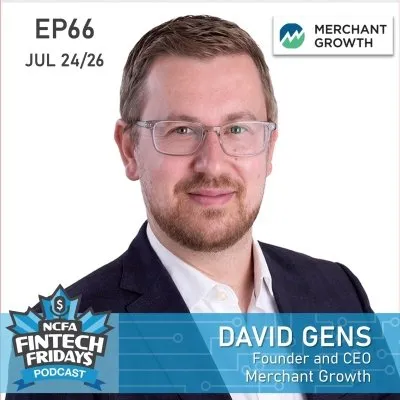

August 26th, 2025

January 4th, 2024

June 1st, 2021

September 9th, 2020

July 9th, 2018

January 3rd, 2018

September 25th, 2017

June 20th, 2017

May 10th, 2017

December 14th, 2016
