





Karsten Wenzlaff, Advisor
August 26th, 2025
Karsten Wenzlaff is a Crowdfunding and Fintech Expert from Germany. He is Secretary-General of Digit[...]


July 2, 2026 | NCFA Fintech Market Activity | Digital Assets Blockchain And Tokenization, Wealthtech And Investing, Digital Identity And Trust, Risk Compliance And Regtech, Fintech And Innovation
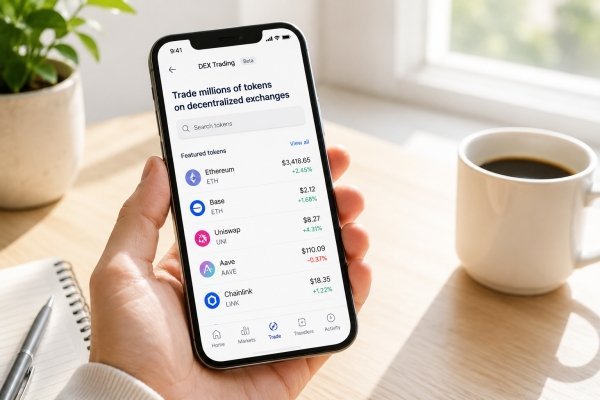
On July 2, 2026, Wealthsimple launched DEX trading in beta, giving eligible clients a way to trade on-chain tokens directly inside the Wealthsimple app.
The beta gives clients access to millions of tokens, starting with Ethereum-based assets. Base and Solana support are planned. The service charges a flat 0.85% trading fee and currently includes $0 network fees, which Wealthsimple Web3 Inc. covers during the early release.
This isn't the same product as Wealthsimple's centralized crypto account. When a client makes a first DEX trade, the app creates a separate self-custody wallet. The app holds DEX assets separately from centralized crypto holdings. They aren't insured, and don't have the same regulatory oversight as Wealthsimple's listed crypto offering.
A normal DEX user has to manage a wallet, fund it, connect it to a decentralized exchange, check token contracts, manage network fees, understand slippage, approve transactions, and protect private keys. As a result, there are a lot of steps that add complexity.
The beta removes much of that setup from the user experience. Its help guide says clients can search for DEX-labelled assets in the Discover tab, create a DEX wallet during the first trade, and buy or sell eligible DEX tokens directly in the app.
Behind the scenes, the app converts the funding asset into USDC. It then withdraws the funds to the self-custody wallet and routes the order through a third-party DEX aggregator before executing the trade.
Centralized crypto assets go through the platform's listing process, and the platform holds them on behalf of clients. DEX assets haven't gone through that centralized listing process.
Wealthsimple says a third-party vendor flags malicious tokens, and the app automatically filters them, and asset pages can display risk flags such as new asset history, top holder concentration, low holder count, low liquidity, sketchy token permissions, and artificial trading patterns.
Those flags are useful, but they aren't a safety guarantee. The help guide tells users to research tokens before trading and notes that blockchain transactions can't be reversed. If a client buys a scam or fraudulent token, the transaction can't be undone.
While the product lowers the operational barrier to on-chain markets, users still face risks that don't exist in the same way inside a curated centralized exchange custodial account.
Clients hold WS DEX assets in a self-custody wallet. They aren't covered by insurance, don't have government-backed loss protection, and aren't held by Wealthsimple on the client's behalf.
The support team can't recover the wallet or reverse transactions if something goes wrong. The user authorizes trades, and the wallet sits outside Wealthsimple's centralized crypto infrastructure.
There are also product limits during early release.
At the end of the day, there are limits to what the beta product is at this point. Embedded self-custody trading inside a controlled retail app, not a full open-wallet DeFi experience.
Wealthsimple's IPO Access launch gave eligible retail investors a way to request shares in selected Canadian and U.S. IPOs before public trading. Wealthsimple's 2025 product event added zero fee options, real gold, and private market portfolios. Wealthsimple's Fey acquisition added AI research and trading tools to the roadmap.
DEX trading adds another access layer. Clients can use one app for listed securities, crypto, IPO access, options, gold, private market portfolios, and now on-chain token trading.
Most clients won't need millions of tokens. The acid test is whether the app can make on-chain trading simple enough to try without making the risks feel smaller than they are.
One path is regulated centralized crypto access, where platforms list a smaller set of assets, hold assets through custodial arrangements, follow dealer rules, and provide clearer investor protections. Canadian crypto regulation has pushed platforms toward stronger custody, registration, and operating controls.
The other path is on-chain access, where users reach a broader token universe but also take on more responsibility for token risk, wallet access, tax tracking, execution, and irreversible transactions.
The beta sits between those paths. It keeps the user inside a mainstream Canadian app, but the assets trade through decentralized markets and sit in a self-custody wallet. That's different from both a traditional crypto exchange and a fully independent DeFi wallet.
Wallet usability becomes a core feature. Token risk intelligence becomes part of the trading interface. Slippage controls, routing quality, transaction monitoring, tax tooling, scam detection, and user education become operating requirements rather than extras.
Those areas connect directly to NCFA's Financial Innovation Map, including self-custody wallets, retail digital asset access, token risk analytics, on-chain finance, digital identity and trust, and compliance technology.
The opportunity isn't only trading more tokens. It's building the trust, data, user experience, and risk tools that let mainstream investors interact with on-chain markets without pretending those markets are safe by default.
If mainstream investing apps make self-custody DEX trading feel simple, will the next phase of retail crypto adoption depend more on token access or risk intelligence?
 The National Crowdfunding & Fintech Association (NCFA Canada) is a financial innovation ecosystem that provides education, market intelligence, industry stewardship, networking and funding opportunities and services to thousands of community members and works closely with industry, government, partners and affiliates to create a vibrant and innovative fintech and funding industry in Canada. Decentralized and distributed, NCFA is engaged with global stakeholders and helps incubate projects and investment in fintech, alternative finance, crowdfunding, peer-to-peer finance, payments, digital assets and tokens, artificial intelligence, blockchain, cryptocurrency, regtech, and insurtech sectors. Join Canada's Fintech & Funding Community today FREE! Or become a contributing member and get perks. For more information, please visit: [www.ncfacanada.org](http://www.ncfacanada.org)
 |  |  |
|---|---|---|
 |  |  |



August 26th, 2025

January 4th, 2024

June 1st, 2021

September 9th, 2020

July 9th, 2018

January 3rd, 2018

September 25th, 2017

June 20th, 2017

May 10th, 2017

December 14th, 2016

Leave a Reply