



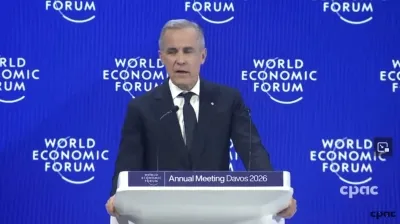

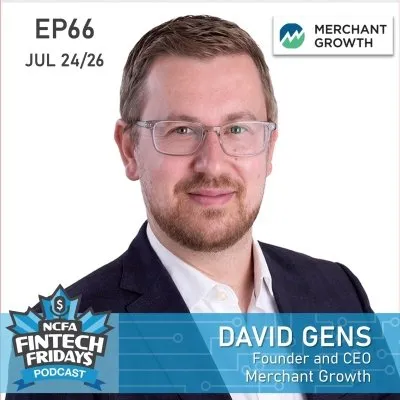
Karsten Wenzlaff, Advisor
August 26th, 2025
Karsten Wenzlaff is a Crowdfunding and Fintech Expert from Germany. He is Secretary-General of Digit[...]


NCFA Canada | Aug 9, 2019

HOST: Manseeb Khan, Fintech Friday's show host
GUEST: VIT ARNAUTOV, Chief Product Officer of Turnkey Lender, (Linkedin)
BIO: Vit is a skilled business executive with more than 10 years of experience in managing and delivering innovative fintech solutions. Since its foundation, Vit has been a part of the TurnKey Lender, a company creating intelligent AI-driven solutions for alternative lenders. Over the years he’s become its Chief Product Officer which gives him an incredibly deep insight into fintech in general and lending industry in particular. His areas of expertise include FinTech, digital lending, AI, and big data. Vit is happy to share his expertise with striving entrepreneurs and anyone else it can be helpful for.
About this episode: On this episode of NCFA's Fintech Fridays Podcast, our host Manseeb Khan sits down with Vit Arnautov from Turnkey Lender. They chat about how AI will help the lending space, underbanked countries and why cloud lending is a trillion dollar industry. Enjoy!

Intro: Welcome fintech Friday's a weekly podcast brought to you by the National Crowdfunding and Fintech Association of Canada and partners.Covering all things fintech block chain be AI and alternative finance.
Manseeb Khan : Hi, everybody Manseeb Khan here and thank you for tuning in to another fantastical episode of the FinTech Friday podcast. This week I'm super excited to have Vit from Turkey lender. Vit Thank you so much for sitting down with me today.
Vit Arnautov: Hello. Happy to be here. Thanks for having me.
Manseeb Khan : Yeah, for sure. So, could you. For the I guess five or six audience members may not know who you are and what your company does. Could you just give us a rundown of a little bit of your background and what turnkey lender is?
Vit Arnautov: Okay, sure. So, I am a chief product officer, at Turnkey Lender. I mean, this business for about 10 years now, I've been in this company since the very beginning. So, this gives me a good understanding of all the processes in fintech and digital lending. Turnkey lender is the provider of intelligent lending automation. We were the first company to offer great software for the businesses of any kind. And we're focusing on digitalization processes automation and a loan decision making. But we're pretty much covering all the long lifecycle from the origination of the collection and through, of course, the decision. So, we have a line of products. The books version that can be delivered within a day. And with all the required functionalities to start lending and the enterprise solution for more sophisticated clients, this is a tool that allows you to build business processes, solve any complexity without coding. So, you can put it as a kind of Lego construct, a way you can build and automate your processes with blocks. We're Singapore based company we have offices in the U.S., in Ukraine, Indonesia, Malaysia.
Manseeb Khan : That's incredible. I like the Lego analogy you use. I think that's going to make it a lot easier for the audience members , especially to really understand the really amazing work that you guys are doing. So, could you just talk a little bit more of the approval process, right, and how kind of differs from the other alternative lenders?
Vit Arnautov: Yes, sure. So, the decision making, and approval process is still the biggest challenge for the lenders. We understand that this is also the main brisk source in their business. So, we provide several layers of the decision-making process using both traditional and alternative approaches. So, it goes like this first you have the fraud prevention to where you analyze information from internal and external sources like terrorists and other fraud lists. Then you have alternative scoring with more information from client’s house to fill in the application for how fast he's typing, how the application details. If there were copy paste that if there are too many replacements of attachments and understanding if this is a bot filling the application of these real plan. Now that we analyze also the mobile data, which is like mobile usage, number of contacts and so on, because for the entire statistics, about 80 percent of applications can come in from mobile platforms. Right? After that, we have the bank account statements, analysis, and after that goes the internal scorecard, which is the decision engine that we provide out of the box. It's powered by artificial intelligence. It learns about the borrowers and during the lifecycle of the loans. Right. And adjust in time by having more accurate and precise decisions later on. We don't have enough data to analyze. So, with more like advanced package, you can also have the champion challenge scorecards where, for example, if you want to have 10 or 15 percent of more riskier applicants and this is how you apply this on. And also, we provide, of course, the scoring reports for us or our class to analyze and track the performance and to fine tune in future the score.
Manseeb Khan : That's incredible, I'm glad that you have multiple like contingency plans when it comes time, actually like vetting and approving the process. Right. Like even under you, even though the process, I mean, as you know, has turned 200 does claim that it is. It is very fast. It is incredible that like even though it is fast, you still have multiple layers of channels you have to kind of go through.
Vit Arnautov: Yeah. Yeah. Absolutely. And this is like it has all those layers. And actually, can combine several of those. So, we also have like artificial intelligence with image forgery detector, for example, to analyze it attachments that are being in placed this is like an additional module that can be included. And all of this is combined all together. Or you can just use partially to use one block or use another one cause for different markets. It's different. And for different auditors, it's also different. Right. And so, you just can choose which of those you want to use.
Manseeb Khan : So, you do have the option to pick and choose the blocks that are appropriate for you and your business and your auditors. Could you talk about like the biggest technological challenges that alternative lenders face and how does Turnkey lenders solve them?
Vit Arnautov: Sure. So, from my point of view, the biggest ones are, first of all, of course, the regulations that we're having from our governments. There are literally a lot of them right now. And it's getting even worse because governments very strict in those regulations. And we, of course, understand that someone a good purpose. But so, we need to comply with that. And so, in case of Turnkey Lender, it's for example, we have signed an agreement with Thompson Reuters to streamline those military compliance for the clients in different countries because each country has their own compliance. And also, you want to buy a solution that is flexible enough to fit the regulations that are not there yet, but yet to come the fall of the governments. So, the second thing is you the need of one day fund transfer for the organizations and for borrowers. So, solution for that is in turnkey lender. That is fast decision making where you can provide a decision within seconds and you can transfer funds with some kind of automation of payment provider, comparing it to taking days or even weeks. In the past. So, this is a huge change right now. I say that is the growing competition among lenders due to a significant lowering of the entry barrier to the market. And this is also we provide the faster decision making which allows your business to grow faster and provide better decision and lowering risk, of course. And it's the intuitive user interface for the borrowers scores. Each of those question or another step in the application process and know your customer process. It lowers your sales funnel.
Manseeb Khan : Right that makes total sense. How do you see the role of A.I. in digital lending now and in the near future? Because you have mentioned a couple times, you know. How what differentiates you guys from other lenders? And what kind of makes you guys a little bit more pulling ahead is the fact that you guys actually use AI the most the fullest advantage currently to make sure your loaning process, your vetting process and security. And just to make sure the whole like you can optimize every single block to the fullest potential.
Vit Arnautov: Yes, absolutely. So, the first usage of the A.I. is obviously for chat bots that we can see this support that automates their first level and second level usually. And like using bots to kind of answer the questions faster. But what's the biggest application for me, as I see, is the risk evaluation and of course, the decision and process. So, the AI usage helps us to provide more accurate analysis in predicting the expected future behavior for a client and therefore to provide more precise decision making. So, the learning curve for the AI is exponential and in the nearest couple of years we are going to get a huge leap in this.
Manseeb Khan : Because you can totally mitigate a lot more risk. Right being able to map out certain behaviors of who you're lending out to, you get to know, you know, aside from who they are, from the financial statements and from the history and aside from all the documents that they already require having an additional layer of A.I. to learn their behavior patterns and to send it to kind of trend to see what they're going to do in the next five years. I believe that's very important for sure.
Vit Arnautov: Yes, absolutely. If I may add. So please, you've got the operational costs because you don't need to have like 20, 30 people in the office for decision making. You can automate it at all and provide the system within seconds. So, this also eliminates today human error and it helps you to cut costs. Right.
Manseeb Khan : Yeah, for sure. Absolutely. And like you can even start again adding more. And actually, this opens up the door to add more blocks in the future of having even more criteria as of getting approved for loans or what it or the case may be. You guys do something really interesting called Cloud lending. Could you explain a little bit more of what cloud lending is and why it's going to become a trillion-dollar year over year industry?
Vit Arnautov: Yeah, sure. So, cloud lending is really exploding and so we host all our solutions in the cloud, of course. And for each like if it’s a retailer or even a dentist wanted to stand their business and to go online. Or is it a fintech startups. A lot of new players coming into the market. And of course, they have our own challenges and many businesses struggle with the entry barrier. But with a bot platform that we provide, it can be deployed within a day. So, it's ready to use and compare it to the like millions of dollars that banks were investing in R&D to have the same functionality in the past. So, the way we see it is launching now a web platform. A cloud platform for lending is as easy as a WordPress site, which was a really heavy 10 years ago. And now it's a matter of hours. And so, we're even hosting it for you. So, you don't need to pay for hosting separately on your domain name. So, we have a goal in one place. You just buy a subscription and you go with your lending platform.
Manseeb Khan : That's incredible. That makes it a lot more easier to use. I like the WordPress analogy. How do you how do you see technology changing in the lending space in the next five years?
Vit Arnautov: Yeah. First of all, the one that we just discussed, the way AI use each, of course. Now, the second thing I would mention is the whole lifecycle of the loan automation. And it's not only the A.I. usage, but all these flaws that are being now automated with lending solutions. So, it's also eliminating the human error and speeding up the process. It's all about processes. Automation is all things like servicing and collection, reporting, underwriting, and even notifications are all automated now. And you don't need once again 20 people to manage the software and be one engineer who's sitting in the office and fine tuning the software. And it works just as it is. No additional features required. Everything's in place already. Now, the one more thing worth mentioning is an expansion to under banked or unbanked regions and new demographics. Cause as far as I remember, it is two and a half billion people who cannot get access to banks right now in the world. Right. So, it's half of the entire population of the planet. And in really developed countries, the customer acquisition cost is already high. And it continues to grow. This why is many financial institutions having branches of them of their software to go with under banked regions and demographics. This is what's going to change in the near years, of course, because, for example, we're providing an international version of our solution that also you can just choose the country you're operating with and change it automatically change the unique identifier system, for example, and the date format, the currency, the language and stage, and it's ready to go and you can work with it. So, in an example within Asia, they have a lot of rural banks and fintech’s trying to reach out offline lenders outside of the big cities and provide loans to them. So, we can see that interest industry is growing faster.
Manseeb Khan : Yeah. I mean, you did bring up a good point of the fact that there are two billion people that are getting under serviced. And I think the future of that is very bright. I think there's a ton of opportunity there for helping, you know, very under underdeveloped countries. And just like infrastructure in and of itself and being able to service these kinds of people and help them develop, help them, you know, like foster new growing economies. That in and of itself is very exciting because like so many like so many new innovations and just ideas and just like so amazing things are to come out of that. And that to me is. That's can be very, very exciting.
Vit Arnautov: Yes, absolutely. I totally agree with you. And hopefully Elon Musk will cover the earth with the Internet connection very soon and all those people will be able to reach the Internet with loans to be able to grow their businesses. Because right now they just cannot access their banks, right? Yeah. Yeah. In the next few years, they will be able to get loans or their business and start to get in profit.
Manseeb Khan : Right? For sure. And this and this now start to become like an actual player. Right. In whatever space they may be in. Right. That's very, very exciting.
Vit Arnautov: Yeah, absolutely right. Yeah.
Manseeb Khan : So, I guess, how does alternative lending impact industries, I guess, such as telecom and like medicine then?
Vit Arnautov: Ok, let's start with medicine first, right? Cause medical is they say that 21st century is going to be a century of medicine and biotech and the industry's going to be bigger every year. I believe that in 10 or 15 years you will be able to replace your arm with a bionic we are if you want. But the costs for these such kind of surgeries are really high. And so that's where the lending comes in. And you have to get sometimes the service is very fast and you get money and not get a loan from this organization. And so, the second one is telecom and the previous logic goes there. When a user doesn't have money on their balance, they should be instantly offered with the with a credit line to continue communicating so they could repay it later on. And the second use case for telecoms is that they should be able to get a new tablet or new phone right from the office of the telecom. So, they are starting to finance their retails. And you don't have to go to bank anymore. You can get it right in place. So that's why I think it's going to be big in next couple of years.
Manseeb Khan : Mm hmm. The medicine that I never thought of it in the medicine field of like, hey, you know, you want a new bionic arm. Awesome well there is costs for that. I was like, oh, that now. I mean, it's a lot more sense, especially now with the new I guess now like we have robotics and medicine and like, you know, we can actually like sooner or later we able to replace any single body part we can.
Vit Arnautov: Absolutely agree with you Looking forward into this into that future.
Manseeb Khan : Yeah. One hundred percent. So, my I can't wait for that too. Um, are there any other spaces that turnkey lender or are looking into?
Vit Arnautov: Yes, sure. So, we think that retail will be big also. For example, the in-house retail, if you're producing anything you can just provide also services like lending services for that and you will be able to get to competitors with that. You just provide an installment program. Increase in your sales. And then it's very simple, but it's very effective because the sales rises.
Manseeb Khan : Yeah, for sure. because now you have one advantage compared to competitors of, hey, you know what? Sure. We sell. I don't know. Artisanal couches, whatever, whatever, whatever. I don't know whatever you might be selling if you know how to feel, if you do have the full amount. That's OK. We actually offer financing terms, and these are the actual financing terms. So, yeah, no, I agree.
Vit Arnautov: And the business gets their interest and the customer gets the reality. And then there are more clients and there is no downside in this in this approach for sure.
Manseeb Khan : Absolutely. So aside from, I guess, a telecom retail. Are there any other industries that you think alternative lending is going to impact next? And why?
Vit Arnautov: Actually, I think lending will be huge in years future That's to what you mentioned. Like 1 trillion dollars. And it can be anything. It can be e-commerce. It can be a medicine, retail, anything. It can be just installment loans, consumer loans, just anything. And the under banked regions, so that you are discussing. Right. So how about what the population will be getting loans?
Manseeb Khan : So, a little insight into the trends of the lending industry. I mean, such as P2P lending and house financing, which we talked about, debt financing, you know, factoring, invoicing. Could you discuss the areas a little bit more in detail and how do you see them developing more in recent years?
Vit Arnautov: Yeah, sure. So once again, the other bank regions, for example, are not just crowd lending and like crowd funding, it can be peer to peer for businesses in Africa, for example. They want to extend their business. They, for example, produce some great goods, but they don't have this capital to yet grow in. So, with the peer to peer, they can access funds from UK and US for from developed countries. Right. And they're just getting those money to expand their business. And this is very efficient loans with low risks, actually, because they have collateral on their businesses. I'm pretty sure that they will be able to give it back the loan within like short terms for business. It's two years, three years. And this is very effective. And for those lenders, for those businesses in Africa, that they just cannot get funding without it. So, this is the only source and the fastest source of funds that they can access. So, the effort to bear is great also.
Manseeb Khan : Right. And this kind of goes in the conversation of like open banking right now. You're going to have let's stick with the Africa example. Right. I'll let you have a business in Africa. They need money to actually start the business up or pay off whatever they need to pay off. And, you know, they could they can actually start getting more competitive rates. You know, hey, let's look at the banks and UK and let's look at the banks and like Germany or like the bank or the banks like Sri Lanka. Let's see. Look what all the rates are. What do we get? And it's kind of creating a more of a of a really creative, not creative, creative, and competitive marketplace for businesses to kind of have a lot more options and not be as and not have such a high bar of entry.
Vit Arnautov: Yeah, Exactly. And also, worth mentioning that for developed countries, the percentage for loans will get 3 percent. Right. And for Africa, the usual percentage might be like 12 percent or 14 percent. And it's OK for them because they just don't have access to money. So, for developed countries, they have the high interest for not developed or developing countries. It's to get money faster. So, the economy of the world is growing because of that, because money is distribution from one region to another. And are like the money is in the place in Africa producing goods and selling goods. So, the economy rises all over the world because of it.
Manseeb Khan : Right. No, absolutely not. You know, it's really helping fuel the flame of having of more of a globalized economy. Right. Exactly. Yeah. So Vit is there. Before we wrap up, is there anything else you want to add on? I guess a couple of things that you definitely want to keep. You want to make sure the audience kind of keeps in mind.
Vit Arnautov: If you're starting a business, just consider having a platform that is really user friendly and to its flexible enough to fit your business needs and flexible enough to fit your future business needs. So, there are platforms right now that allow you to start business with one day and start operations. So, yeah, it's good. It's great. It's like good for your business.
Manseeb Khan : Awesome. Yeah. So, make sure you make sure everyone or all the entrepreneurs that we have in the audience, make sure that you stay flexible as much as you can. So. Exactly. Yeah, that's awesome. So Vit Thank you so much for sitting down with me today.
Vit Arnautov: Thank you very much for having me Manseeb. Once again. Yeah.
Manseeb Khan : For sure. So, I guess we'll I guess we'll be the best way for audience members to either reach out to you personally and or to Turnkey Lender or if they have any more questions about anything.
Vit Arnautov: Absolutely. You have my contacts. If anything, you can contact me directly or with from our site on Turnkey Lender dot com where we'll be happy to help you. And we'll be happy to answer all of your questions.
Manseeb Khan : Ok. Awesome. Thank you very much. Yeah, for sure.
Outro : you've been listening to fintech Fridays brought to you by NCFA and partners. Tune in weekly for the latest fintech Friday podcast by subscribing to this channel. The National crowdfunding and FinTech Association of Canada is a non-profit actively engaged with social and investment fintech sectors around the globe and provide education research industry stewardship services and networking opportunities to thousands of members and subscribers. For more information please visit and see if a Canada dot org. Oh yea.
 The National Crowdfunding & Fintech Association (NCFA Canada) is a financial innovation ecosystem that provides education, market intelligence, industry stewardship, networking and funding opportunities and services to thousands of community members and works closely with industry, government, partners and affiliates to create a vibrant and innovative fintech and funding industry in Canada. Decentralized and distributed, NCFA is engaged with global stakeholders and helps incubate projects and investment in fintech, alternative finance, crowdfunding, peer-to-peer finance, payments, digital assets and tokens, blockchain, cryptocurrency, regtech, and insurtech sectors. Join Canada's Fintech & Funding Community today FREE! Or become a contributing member and get perks. For more information, please visit: www.ncfacanada.org
 |  |  |
|---|---|---|
 |  |  |










Forbes | Kyle Torpey | Aug 4, 2019
 The Bitcoin price has been on a tremendous run in 2019, roughly tripling its price in U.S. dollars since the start of the year. That said, Morgan Creek Digital co-founder Anthony Pompliano thinks the party is just getting started.
Pompliano has predicted that the Bitcoin price will reach $100,000 by the end of 2021, and he was recently asked to explain his point of view during an interview with CNN’s Julia Chatterley.
In the past, Pompliano has described the trend towards loose monetary policy combined with Bitcoin’s upcoming halving event as the “perfect storm” for the rise of the digital asset. Pompliano explained this theory during his CNN interview.
“Whenever we get to a recessive period or kind of slowing growth, central banks have kind of two tools: They can cut interest rates, which they did yesterday, and they can print money (quantitative easing). And so, when they do both of those things, it usually takes anywhere between 6 to 18 months to feel the effect of those tools, and what it’s going to do is it’s going to coincide with the Bitcoin halving,” said Pompliano.
A halving event in Bitcoin is when the amount of Bitcoin that are generated by miners every ten minutes is cut in half. Bitcoin’s monetary policy was “set in stone” when the network went live back in 2009, and the scheduled issuance of new Bitcoin is halved roughly every four years.
Originally, 50 Bitcoin were created every ten minutes. Next year, the number of new Bitcoin created in each new block will drop from 12.5 to 6.25.
While gold has historically been viewed as a safe haven asset in times of monetary easing, Pompliano covered a couple of the benefits of Bitcoin over gold during his CNN interview.
“The difference is, between Bitcoin and gold, with Bitcoin, we know exactly how many is getting created, so 1,800 Bitcoin are going to be created today. The second thing is we know the total supply available, which is 21 million. So, it’s not: Hey I wonder how much is in the ground. We know exactly how much it is, and we can actually go and audit or verify the software code of the system,” said Pompliano.
It should be noted that, back in 2017, Pompliano also predicted a $100,000 Bitcoin price by 2019. However, he’s not exactly alone with his latest forecast for 2021.
Pantera CEO Dan Morehead has said there’s a “good shot” the Bitcoin price will hit $42,000 by the end of 2019, and the data used as the basis for his prediction is even more bullish than Pompliano’s $100,000 price point.
 The National Crowdfunding & Fintech Association (NCFA Canada) is a financial innovation ecosystem that provides education, market intelligence, industry stewardship, networking and funding opportunities and services to thousands of community members and works closely with industry, government, partners and affiliates to create a vibrant and innovative fintech and funding industry in Canada. Decentralized and distributed, NCFA is engaged with global stakeholders and helps incubate projects and investment in fintech, alternative finance, crowdfunding, peer-to-peer finance, payments, digital assets and tokens, blockchain, cryptocurrency, regtech, and insurtech sectors. Join Canada's Fintech & Funding Community today FREE! Or become a contributing member and get perks. For more information, please visit: www.ncfacanada.org
| | |
|---|---|---|
| | |
Information Venture Partners | Rob Antoniades | August 1, 2019
 Intro: NCFA Fintech Confidential spoke with some of Canada’s experienced fintech investors, on their background, how Canada has evolved, what we should be doing, advice to fintech founders and what keeps them awake at night. This is part 4 of a 4 part series.
I have operated VC groups or offices for several banks including CIBC, BMO and then RBC. My finance experience prior to running these VC operations, was heavily influenced by my time in equity capital markets and included equity research, sales and trading, investment and merchant banking. These experiences have helped me tremendously as a Fintech investor. I have lived some of the challenges that we are trying to solve. I co-founded (with David Unsworth) Information Venture Partners to fill a void in the market to fund companies developing technologies relevant for financial services.
The Canadian Fintech ecosystem has changed tremendously over the past 5 years, for the better. We are still transitioning as an industry, from very early stage, mostly first-time entrepreneurs 5 years ago or prior, to a more mature ecosystem with companies now generating 8 figures of revenue, some repeat entrepreneurs, and yet still a vibrant start-up ecosystem.
The easiest way to build the ecosystem is to concentrate our efforts, of the industry (broadly defined), to supporting domestic Fintechs. For example, our financial institutions spend billions on information technology and if concentrated on Canadian companies, would accelerate the development of the Canadian Fintech community. Clearly, there would be no expectation that these institutions support disruptive and disintermediating Fintechs.
Canadian Fintech companies need to understand that they can start in Canada, and if they have traction here, this momentum can be leveraged with FIs globally. Our financial system and institutions are highly regarded globally. We can leverage that advantage.
However, in the absence of such a beachhead, there are thousands of customer opportunities around the world. If your solution addresses a common pain point, you can just as easily build a company with lead customers from virtually any part of the world. The entrepreneurs need to have that global mindset.
Insomnia, joint pains and the recurring thought that we, as a nation, have not developed a unified strategy to develop our nation as a leading fintech hub, in the global context.
We as cities or regions, have generally not rallied around local champions, and we as a nation have not developed a coherent strategy. Can it be done without a strategy? Absolutely, but it would be exponentially more powerful, quicker, and likely successful, if we had the financial and moral support of the ecosystem including all levels of government, industry, capital providers, advisors and entrepreneurs.
This strategy would build on local strengths, be minimally competitive between the centres, and not too difficult to execute if we had a champion, with capital and a willingness to make a few mistakes in order to accelerate the advancement of the cause.
There has never been a better time to be a Fintech entrepreneur in Canada, at least not in the 20+ years that I have been involved in the sector.
 Robert Antoniades, General Partner and Co-Founder, Information Venture Partners
Robert Antoniades co-founded Information Venture Partners in 2014 with Dave Unsworth to work with startups in the field he knows best: financial services. Robert is interested in finding the disruptive ideas and entrepreneurs that believe new or better information is foundational to businesses. He believes that financial institutions need technology to service their customers, reduce cost and compete. Some of his main areas of interest include SaaS, next generation analytics including artificial intelligence and machine learning, capital markets, banking, wealth management and insurance technology.
The National Crowdfunding & Fintech Association (NCFA Canada) is a financial innovation ecosystem that provides education, market intelligence, industry stewardship, networking and funding opportunities and services to thousands of community members and works closely with industry, government, partners and affiliates to create a vibrant and innovative fintech and funding industry in Canada. Decentralized and distributed, NCFA is engaged with global stakeholders and helps incubate projects and investment in fintech, alternative finance, crowdfunding, peer-to-peer finance, payments, digital assets and tokens, blockchain, cryptocurrency, regtech, and insurtech sectors. Join Canada's Fintech & Funding Community today FREE! Or become a contributing member and get perks. For more information, please visit: www.ncfacanada.org
| | |
|---|---|---|
| | |
Impression Ventures | Christian Lassonde | July 16, 2019
 Intro: NCFA Fintech Confidential spoke with some of Canada’s experienced fintech investors, on their background, how Canada has evolved, what we should be doing, advice to fintech founders and what keeps them awake at night. This is part 3 of a 4 part series.
I'm graduated from Western in the mid-90s with two degrees. Comp-Eng and Comp-Sci. I immediately started my own business, excited by the endless possibilities the internet could bring to gaming. I had no idea what I was doing - needless to say, that company didn't work out. But the lessons I learned being a first-time entrepreneur have stayed with me to this day. From there I moved to the Valley, worked for some all-star companies; Electronic Arts, LucasArts, Linden Lab, got an MBA and founded two more businesses, Millions of Us & Virtual Greats. After a decade in the San Francisco area, I moved back to Toronto. After a fourth startup (didn't work out) - I got very interested in the intersection of finance and technology, two businesses sectors Canadian's excel at, but there was essentially no capital going into early stage fintech. Thus, Impression Ventures was born, my fifth startup.
The fintech sector largely started with a bang in 2014 and has been on a tear ever since. While the numbers of startups we are seeing on a yearly basis has been mostly steady, we are seeing both the quality go up dramatically as well as the breadth of locations. A few years ago, it was the GTA only - now we are seeing fintech companies all over Canada disrupting all sectors of fintech.
Number 1, without a doubt, prioritize and fast track open banking through government and the regulatory machine. The UK is enjoying a multi-year head start on a live open banking implementation but it's not too late to catch up. We absolutely need to get this launched before the US does. Second, we need to think of fintech beyond just commercial banking. There are so many other opportunities in interbank technology, capital markets and insurance to name a few. Again - if we lead by example in these areas, we could easily become a massive technology exporter globally.
Go for it! Actually, I really don't see this as a problem. In 2014 the majority of fintech we saw were Canada only focused. That narrative has completely flipped - very few startups today are focused on the Canadian market solely.
Exits. The one downside of fintech investing is that the natural acquirers for fintechs are banks and insurance companies - but they are for the most part risk-averse corporations. I suspect the acquisitions will be when the companies are late stage. They will pay a premium vs buying the startups early, but it may mean long holdings period. What allows me to get to sleep is we don't worry too much about this; we focus on building great businesses that can weather the test of time.
Impression is focused on early-stage fintechs investing solely. We lead deals writing cheques of 1 to 2 million into 2-6 million dollar rounds. We get involved given our entrepreneurial backgrounds, so expect us to be very hands on. If that sounds like something that excites you reach out to us!
 Christian Lassonde, Founder & Managing Partner, Impression Ventures
Lassonde is a tech founder and CEO, having built and sold Virtual Greats, a luxury online IP rights broker, and Millions of Us, a digital agency. He has also taught high-growth technology entrepreneurship at The Next 36 to over 30 companies. Those companies have gone on to build successful products and raise millions of dollars in follow-on financing.
The National Crowdfunding & Fintech Association (NCFA Canada) is a financial innovation ecosystem that provides education, market intelligence, industry stewardship, networking and funding opportunities and services to thousands of community members and works closely with industry, government, partners and affiliates to create a vibrant and innovative fintech and funding industry in Canada. Decentralized and distributed, NCFA is engaged with global stakeholders and helps incubate projects and investment in fintech, alternative finance, crowdfunding, peer-to-peer finance, payments, digital assets and tokens, blockchain, cryptocurrency, regtech, and insurtech sectors. Join Canada's Fintech & Funding Community today FREE! Or become a contributing member and get perks. For more information, please visit: www.ncfacanada.org
| | |
|---|---|---|
| | |
Welcome to the second issue Fintech Confidential, your essential guide to the global fintech and funding landscape. Brought to you by the National Crowdfunding & Fintech Association of Canada (NCFA) and our partners, each issue dives into the latest trends, innovations, and insights in the fintech world. From insider views to regulatory developments, we keep you informed and inspired. Enjoy the read and share the knowledge.
The National Crowdfunding & Fintech Association (NCFA Canada) is a financial innovation ecosystem that provides education, market intelligence, industry stewardship, networking and funding opportunities and services to thousands of community members and works closely with industry, government, partners and affiliates to create a vibrant and innovative fintech and funding industry in Canada. Decentralized and distributed, NCFA is engaged with global stakeholders and helps incubate projects and investment in fintech, alternative finance, crowdfunding, peer-to-peer finance, payments, digital assets and tokens, blockchain, cryptocurrency, regtech, and insurtech sectors. Join Canada's Fintech & Funding Community today FREE! Or become a contributing member and get perks. For more information, please visit: www.ncfacanada.org
| | |
|---|---|---|
| | |
NCFA Canada | July 6, 2019

HOST: Manseeb Khan, Fintech Friday's show host
GUEST: BRENDAN HOLT DUNN, Founder Holt Accelerator, (Linkedin)
About this episode:
On this week's episode of NCFA's Fintech Friday's Podcast, our host Manseeb Khan sits down with Brendan Dunn the Managing partner of the Holt Accelerator program. They talk about why are accelerators are important, how the can find the right companies and what their Fintech Show is. Enjoy!

Intro: Welcome fintech Friday's a weekly podcast brought to you by the National Crowdfunding and Fintech Association of Canada and partners.Covering all things fintech block chain be AI and alternative finance.
Manseeb Khan: Brendan thanks so much for sitting down today.
Brendan Dunn: Thank you for having me. Appreciate it and excited to talk.
Manseeb Khan: Yeah for sure. So, Brendan for I guess the five or six people that may not know what the Holt accelerator is. Could you tell us a little bit more about what it is and a little bit more of your background?
Brendan Dunn: Sure. Maybe the easiest way to start is my background and kind of segway into how we started the Holt accelerator. So originally, we are a fifth-generation family office. That's our core business called The Holden family office where that came from is from my great great grandfather Sir Herbert Holt came over from Ireland to Canada was extremely successful control over 300 businesses around the world for non-Canadians most notably longest serving president chairman of the Royal Bank of Canada for around thirty five years C.P. rail and Montreal light heat power which is one of the largest energy producers in North and South America that was nationalized and still exists today as Quebec hydro. Since then we're a single family office for four generations and now we're multifamily office which means we manage our family's assets alongside those of our friends and other friends high net worth individuals other families or charitable institutions or foundations we don't manage any institutional money but our background has always been in finance. And then as we got more clients in the multifamily office we were investing as our family always had in venture capital private equity. We had to take into consideration we had other clients to look after and when we started to do more V.C. specifically we realized that anything outside of finance related investments were better off being a CO investor not being really a lead acting and more of a passive approach and relying on our partners who are experts in the field be it real estate or wherever to source better deals and bring us on. But on the finance side that's where we believe we really have an expertise. We have a knowledge base and our network is all around finance giving our banking history. So, we felt that we wanted to be more active in the fintech space when we're doing our investments. And we felt that given that the best way to do that is have our own accelerator. So that's where Holt fintech accelerator came from obviously named at Holt in honor and my great great grandfather and only focused on fintech investments. So, we're super laser focused on what we're doing. We're not diverging into real estate or anything else and we can't pretend to be experts. So it's fintech only and it's there for us and for all of our partners or our clients and our investors and our network to source the best top 10 roughly quality fintech ideas every year from around the world to bring them to Montreal to encircle them in our in our ecosystem and embrace them in our network and help them grow.
Manseeb Khan: How important are accelerators such as yourself in the fintech space right. Because you know startups are really hot right now. I mean there's just tons of accelerators there's tons of incubators and there's tons of other programs for financial tech companies or just any startup company to really get into. So, I guess my question to you is why are accelerators such as yourself important for fintech companies?
Brendan Dunn: Yeah well, I am thinking a first has be on quality the accelerator itself. Obviously, you know if it's a sub performing company or partner, you're working within the quality of you're going to get out of it isn't that great. But let's put aside and say any good accelerator in any industry is very beneficial for startups so that's a general approach now if we talk about fintech specifically or for or Holt fintech. I think it's very important in the sense that all these startups want. They want what they need. They need access to a network be it investors or strategic partners or financial institutions to work with. They need capital and they need guidance on how to structure an operating professional manner and get their due diligence in everything or their corporate governance in order. That's what an accelerator does if it's doing its job. We have over 200 advisors from a you know 30 to 50 of the top 50 VC funds around the world. Most of the most about all the banks in Canada some from the states and we're growing our banking partnerships globally and access to capital and then we have legal teams, financing teams and accounting teams and that also down and helped them structure themselves and that's what we do we accelerate their growth so they come and work with us in a three month very intense program. At the beginning we figure out what their top three needs are during that program. So, each company might have a different need and we tailor the program for them. So, some might need their first institutional client they've got their product ready they've got the marketing anything else is great they just need network we'll focus on making the proper introductions to C-level executives at banks or financial institutions or VC funds to them. Others might need help structuring or getting the product finalized so we'll tailor the program to them. But we're building is a customized program where the goal is at the end of program, they're ready for the race. They've got our restructured they've got their valuations are financials everything prepared where they can be successful. And we've opened them up to our network to allow them to access where they need to get, they’re either the first client or to grow revenue.
Manseeb Khan: That's incredible yeah. You mentioned something really important customized programs right. I mean having accelerator having a incubate or having a program to help start companies grow is very important to be as flexible as you possibly can because in the startup world everything changes on a day to day to day basis if not an hourly basis right. Things change things get moved around so like creating more flexible program creating a program that is right for every single company that does come in. I think it's very crucial, so we have had Commercial Passport on the show in the past. Yes, actually a part of the Holt accelerator. So I guess could you just let us know what do you guys look for in a company before you take them on and what your bar of entry is right because you talked about you guys you have an intensive program, customized program. Could you just give us I guess a walkthrough of how to get into Holt and take it from there?
Brendan Dunn: One hundred percent Bryce is a Rockstar he's one of our we have a lot of great teams I think all of them are great in the first call so we're quite lucky. I think that also comes down to our screening process. And you know Bryce is a testament to that. He's doing very well, and congratulations is his success to date as it relates in general to how you get in the accelerator. Obviously everyone first goes to our Web site and they fill out an application during the application window which is now closed for this year and our first year if a referencing Bryce for example I think we had four hundred and five applications during a two month application window from around the world. I forget all the stats, but I think from over 50 companies’ sorry companies 50 countries from there it whittles down between who's actually fully completed the entire application. So, I say out of the 400 I assume 250 to 300 those are fully complete the ones that weren't completed. Obviously, we don't throw out, but we say they can't move the next step. Then we let them base on you know we know, or we are in constant communication with our VC funds and our financial tensions and they give us lists of the challenges the problems are looking to solve. So we take that list because those are our partners and those are the ones most likely if it's a V.C. fund to be writing a check at the end of the program or a financial institution to be there partnering or doing a PMC with them or entering some type of relationship with them. So, it's important for us to see what challenges or what the market is looking for in terms of fintech’s for that year. So we take that and we take the top three hundred and we'll narrow that down to 100 not saying the other 200 aren't good it just means you're not a fit currently for what our partners are looking for or what the demand is in the marketplace currently of that top 100. That's when we go into what we call it. It's the face to face conversations. Obviously not everyone's looking in Montreal or Toronto. So we do that all through video chats on those video just 30 minutes and it's always someone from Holt myself or Jan Arp or our team and an adviser mostly V.C. funds at that point because they're very good at getting the due diligence and asking the correct questions about vetting a startup. But there's always an adviser on the call which shows the commitment that our advisors are bringing in providing support. So, we use their feedback. We have 30-minute calls with those top hundred teams. We take the feedback from whoever's on the call. There's two or three people on the call. And we add up the scores and then obviously we have a ranking of the top hundred people the top hundred companies and then we'll top 30 roughly 30 to 40 times or whatever are invited to a formal what we call selection day event in Montreal where they have to hopefully attend in person on our first year we unfortunately had a couple of people that due to visa requirements had to participate remotely. But the goal is to have all the top 30 and 40 teams in-person in Montreal for it to do that. What happens there is a speed dating. So they will have a booth they can set it up and obviously get everything ready and every 15 minutes there's meeting a team of three to five advisors we group the advisers together maybe it's like four people from one bank or four people from different funds we also to make sure it's a good team of people they don't all have to be related but it's speed dating for about five or six hours each day. And in the first day will be 15 teams in the second they will be the next 15 teams. So that's very powerful just for the startups alone and get access to I think last year we had 300 attendees at that event. So very powerful, very valuable for the startups just to attend that event. And then from there once again all the advisors and all the participants and attendees of those speed dating speed dating event in Montreal they score every team based on a system that we prepared. And then we ranked the top 30 teams and get feedback and if we know it Hey every single bank is rated this company in the top five that obviously we're going to pick those. So, we take the ratings and the feedback from all of our participants and advisors which are the V.C. funds and the banks and financial institutions and or angel investors and we use that and we put it all together and hopefully we have a consensus of the top 10. And then the goal is from there to pick the top 10 and invite them formally to invite them to participate in that year's cohort that was last year. This year we had over five hundred and thirty applications even more fully completed. So, it's showing that our brand and our reputation is growing globally and shocking we've actually I think we have extremely strong forward this year which is hard to compete to beat last year's cohort which I think was amazing for our first year. So, we're getting we're constantly getting strong teams around the world. Obviously since we haven't picked the top teams, I can't give a breakdown of where they're going to be based but it's definitely a global reach. So, it's very exciting and I think a very valuable process for startups to go through and hopefully they can be in the top 10.
Manseeb Khan: Yeah. That's incredible. I mean I guess from the start of the show people may have had the I guess idea in their head like oh you know Holt accelerator is a very small accelerator they're just you know they're on their way to growing you know they're on the route to be something big but like the fact that you guys are growing from 300 to 500 already going globally and under what five years that's in and of itself is a pretty incredible. So, you guys do have if people actually check out the Holt accelerator website you guys have a pretty great breakdown of all the companies that did get accepted in your cohort which happens to be a very diverse group of people. How do you how you see yourself expanding into maybe other aspects of I guess technology and I guess hopefully you can answer as well the programs do you see roll out in the future. I mean do you guys see yourself maybe even having a very AI focused kind of an accelerator or maybe something else. How do you guys kind of see have hold accelerator growing in the next I guess 5 to 10 years.
Brendan Dunn: That's a great question. And we actually have a full shareholding After selection days which are next week in Montreal to discuss that. I think first off on the growth we're still going to always remain laser focused. It's only going to be fintech. We're not going to pretend to become real estate experts and create a real estate accelerator that's on our vision here. We don't want generalists. We don't want to dilute our brand or get greedy and try to do something stupid and pretend to be something we're not. So, anything we do in the future it's always going to be fintech related. That's our expertise that's our background that's our network and that's our reputation. So, it's always going to fintech as it relates to maybe something specific. AI in fintech you can argue that any fintech company needs some type of AI. So, whether they've incorporated or not the most of them could or will benefit from AI. So, you know we're able to partner with one of the top companies in Canada Stradigiai as well as universities and schools in Montreal as well the nonprofits which as we all know is one of those very Montreal is one the world leader in AI. So, if we see a fintech company that needs or guidance or help in their A.I. we have the network and the partners be able to assist them in that. But to have an A.I. focused fintech not really possible something fintech most in techs already will need AI if we could have a A.I. focused company accelerator wouldn't really be fintech focused so I think we'd stay away from that. Because again we won't be laser focused on fintech as relates to our growth. What we have seen is not everyone can make the trip or the journey to Canada for the accelerator. So how do you grow and still work with these great startups from around the world. I think our vision is to create hubs in different jurisdictions around the world the same strategy the same vision. It's just having more specific local partners. So obviously in Canada we have strong relationships with the Canadian banks. Does your key demographic. If you're going to be doing business in Canada. So, if we were looking to do something in Australia we would then partner with the Australian banks and they get a network of Australian venture capital funds or Australian angel investors or Asia Apex Pacific Partners. Same thing for Europe and Latin America. So, I think our growth is to create hubs of the whole fintech accelerator. Different jurisdictions so that we can basically let's say Latin America we can get all the Latin American teams to go to the Latin American fintech accelerator and have relationships with the financial institutions the V.C. funds and the angel investors that are very well-connected and do business in Latin America. Which can be different partners and in Canada. Because if you're a Latin American company which that made it in the Canadian fintech accelerator. Hopefully we can definitely if we bring you we know we can add value but it might not be in the Canadian banks might not be the partners that you're looking for really you want to be strong in your local market which would be back in Latin America. Same for Europe or Australia or other areas around the world. So, I think our growth model is to create specific hubs and different jurisdictions to allow more localized partners in those areas to work with the local fintech’s really create localized ecosystems. So, these companies can then you know basically grow and dominate their local market and then work with our other hubs around the world to expand throughout our network. So basically, creating a global ecosystem with local hubs and then piggybacking from that into other jurisdictions with trusted friends and partners through the accelerator.
Manseeb Khan: Yeah, no doubt mixed that that seems to make a lot of sense. I mean Fintech is globally it's a very it's becoming a very powerful industry. You're having like some of the places you've mentioned like Latin America specifically there's a lot of really amazing fintech companies coming out of Latin America do some really incredible work which is going to help with tons and tons of people. So, what is the most exciting aspect of fintech for you and what are you most excited about when it comes to fintech. I mean you guys have a lot of amazing companies you might be biased on some maybe not but yeah to what are you most excited about when it comes to fintech because of your very deep-rooted family history.
Brendan Dunn: It's a very good question and try and figure out how to answer that. I think fintech in general excites me simply because it's constantly evolving how the world does business. Everyone touches financial institutions as a client as a partner etc. right. So fintech and you know any of our fintech’s that we were honored to work with last year and the ones that we will be working with this year and the future cohorts every one of them is solving a problem to make these a business better whether it's from the KYC AML problem like Bryce was from credit's credit scoring like Curu other ways or just all fintech do is they have these they see these problems in their personal lives or however they come up with their ideas. That they've had in the financial industry and they create a solution through their startup. So, I'm just excited about fintech in general simply because they're they are trying to make everyone's lives around the world better and easier. You know all this touch finance. Sometimes we have we have headaches, we have problems, we don't wait like waiting in line to the banks et cetera et cetera wires get loss, clearance takes too long to get approved. Invest in the fund takes a month nowadays. So, everyone we're looking at is taking a problem in the financial industry and solving that. So, in general everyone should be supportive of fintech startups because they make people's lives around the world easier.
Manseeb Khan: Yeah. No. I couldn't agree more. FinTech’s really make a lot of lives easier. I mean that's kind of the reason why since I kind of started in the first place Could you let the audience know what the not sure if you can share this what the FinTech show is, I tried googling this. I tried; I didn't find anything on this. What is the FinTech show. Could you let us know?
Brendan Dunn: I just going back to last question is thing you know exciting is the fact that all these giant banks they are amazing they're very good at what they do, and we need them right. But any business that that's big it can't move quickly right. So, the point of fintech or any startup in any industry bespoke some Fintech is to is to solve the problems that the banks can't right. They are small they are nimble they can move quickly they can come up with ideas and they can test them out. And if it works then they have the partners will can adopt it and take it to a global scale to their client base. So definitely very excited about fintech because they can work with their partner. They can solve the current problems that people have in the world and then we can bring them to the partners basically take that out to the masses. As it relates to the with the show itself. That is Jan Arp the managing partners baby. So, whatever you mostly every accelerator does around the world at the end of the three-month program is that they have what's called maybe Demo Day. That's when all the teams have finished the three-month program and you put on a basically a pitch, a pitch show, a pitch contest in the sense where you invite as many people as you can. All your advisors, V.C. funds, potential investors and all the teams you'll get on stage and a present. Who they are? So, it's their final chance at the end to present their companies. You know we've been polishing them and their pitch for the last three months and they open up the round. So, I'm Brendan Dunn I started this company this right do you know it's about a five- or 10-minute presentation and raising this amount of money at this valuation. This one uses the money. That's the standard right. But what we've done is what Jan has done give him full credit is make it more fun. Most those things are dry just blah blah blah, and everyone falls asleep Jan has taken it to the next level. We've gotten great feedback from last year and he's even going to up the ante this year. He's turned it into a show a full actual entertaining enjoyable show just like not going to a movie but it's like going to a live play. The teams still have the chance to put across and pitch what they're doing but the audience is engaged in their interactive and they're not falling asleep so they you know from last year which their first year. Nothing but amazing feedback and chopping on what we've accomplished in that show. And hats off to Jan the end of the day. It's as simple as it is a demo day where the teams are pitching but it's more entertaining enjoyable atmosphere with a little bit of entertainment around there potentially maybe some cirque du soleil people there this year so it's just making it more audience friendly and allowing people to enjoy the moment and focus more and have some cocktails some food. It's a great it's a great evening where people are actually excited to go you know other normally people go. I have to go to a demo day because I'm an adviser this can be quite boring. People have said when is your Fintech Show? I'm excited to go. Last year was amazing let's do this again. Hats off to what you've done. So that's what it is and congratulations Jan to coming up with that vision. And you know he kind of keeps it closely guarded so I'm excited to see what he does this year to.
Manseeb Khan: I'm excited with the Cirque du Soleil people you sold me on that I'm like that's all I expect and I'm like I'm expecting like a magician maybe some standup. I don't know some like crazy really.
Brendan Dunn: We tried it we tried to make it fun and it did it but at the end of the day the teams this is important part each team still has their time to present themselves. It's just that the audience is more awake and having fun and therefore able to focus on what people are saying.
Manseeb Khan: Now think of somebody pitching their company or juggling knives. OK. So, Brendan Could you lastly but not leastly could you let us know the best way for the audience to either reach out to you personally. And or Holt accelerator.
Brendan Dunn: Yeah. Generally, the holds accelerator. The info it holds accelerator.ai my personal e-mail is Brendan@holtaccelerator.ai. I am happy to talk to anybody. If people want to apply. I think it's on the website holtaccelerator.ai/apply. The applications close closed for this year but people can already start submitting for next year. You know it's always somewhat open for people to apply and then we close it a couple months before we start selection days for next year. But we have a database of thousands of startups around the world now we're tracking them or monitoring them and we're going to be creating an ecosystem where everyone even if you don't make the accelerator can still participate in our network. So very excited for the future and looking forward to meeting this year's cohort.
Manseeb Khan: Hey you and me both. Brendan Thank you so much for sitting down with me today and I am super excited to have you back on.
Brendan Dunn: It's a pleasure. Thank you so much and always available.
Manseeb Khan: Awesome.
Brendan Dunn: Take care
Outro : you've been listening to fintech Fridays brought to you by NCFA and partners. Tune in weekly for the latest fintech Friday podcast by subscribing to this channel. The National crowdfunding and FinTech Association of Canada is a non-profit actively engaged with social and investment fintech sectors around the globe and provide education research industry stewardship services and networking opportunities to thousands of members and subscribers. For more information please visit and see if a Canada dot org. Oh yea.
The National Crowdfunding & Fintech Association (NCFA Canada) is a financial innovation ecosystem that provides education, market intelligence, industry stewardship, networking and funding opportunities and services to thousands of community members and works closely with industry, government, partners and affiliates to create a vibrant and innovative fintech and funding industry in Canada. Decentralized and distributed, NCFA is engaged with global stakeholders and helps incubate projects and investment in fintech, alternative finance, crowdfunding, peer-to-peer finance, payments, digital assets and tokens, blockchain, cryptocurrency, regtech, and insurtech sectors. Join Canada's Fintech & Funding Community today FREE! Or become a contributing member and get perks. For more information, please visit: www.ncfacanada.org
| | |
|---|---|---|
| | |
Roar Ventures | Peggy Van De Plassche | June 28, 2019
 Intro: NCFA Fintech Confidential spoke with some of Canada’s experienced fintech investors, on their background, how Canada has evolved, what we should be doing, advice to fintech founders and what keeps them awake at night. This is part 2 of a 4 part series.
Peggy: I studied in Finance in France, graduating in 2001. Not the best year to join the VC world 🙂 I worked in finance for a credit union, then joined a PE-back firm, managing amongst other things their value creation program, which I absolutely loved! Then I moved to Montreal and shortly after joined CGI, this is where I learnt my software. It was a new group aiming at allocating capital among the different LPs that have been acquired through multiple acquisitions. We had solutions mainly in the US and Canada with the biggest sectors being Financial services and Government. It was awesome! I really loved the organization, my boss, my colleagues, the role, simply amazing.
I moved to Toronto & joined BMO. Also, great learning opportunities, my boss, Joanna Rotenberg, was a fantastic role model. I was also allocating capital to tech projects. My goal was always to go to VC/PE and I was building my skill set and network. We were hearing more about Fintech in the US & in the UK and I thought that it was where I wanted to go and be early on the trend that I saw as disruptive. I joined a wealthy software entrepreneur to start Fintech companies for him and also invest in the space. It was a wild ride, definitely invaluable learnings and a great way to reposition my career.
Being early in Canada on the trend I advised large organizations with their digital banking strategies. I ended up joining CIBC as VP, Innovation. Great opportunity to cement my network and understand the challenges and opportunities large FIs have. After CIBC, I advised Portag3 VC for ~1 year and decided to launch Roar VC following the announcement of the VCCI. I applied, interviewed ... and was not selected for funding! The whole process went from February to November, during this time I lined up investors but when the allocation didn’t come through the dominos fell on the wrong side and was back at the drawing board. It was a great opportunity to rethink my thesis, especially in fintech, as many funds had launched in one year in Canada.
I took some time to reassess my best options and decided to pivot...like any entrepreneur would do when getting a curve ball. I am now working with a business partner who is also a dear friend, focusing on later stage opportunities through an independent sponsor model and I am still doing angel investments in the early stage Fintech space and get involved with the companies I invested in.
Peggy: Overall our Fintech entrepreneurs are getting more savvy:
Peggy: To strengthen the ecosystem we need to have more Fintechs scaling, creating growth along the way and successful employees who will themselves start Fintech companies. Meaning, we need more sales! Sales and marketing are usually where we are falling short versus US companies both in terms of expertise and in terms of use of proceeds. Focusing more on GTM and growing the top line is primordial to have Canadian champions. US allocates a way higher use of proceeds to sales and marketing both in percentage and value. Oftentimes that S&M expertise is not available in Canada and should be brought from the US.
Peggy: Focus on your sales and GTM strategy early. CEO’s should not delegate the sales process prior to $1m ARR. Sell in the US very early on, have a multi-layer sales strategy: small deals, medium deals and large deals to manage sales cycle and cash flow. Get these clients logos as soon as you can on your pitch deck :-)…In 3 words: sell, sell, sell!
Peggy: My cat! Ethics in Fintech, with the progress of AI I am worried that we will exclude a part of the population by pricing them out of the market. Lending and insurance are areas where things can degenerate very quickly. FMP, expansion of financial exclusion versus financial inclusion is real, especially as there is no global or even national framework. Dying from a thousand cuts...
Peggy: Think Global!! Canada is amazing...and the world is a big place where we have what it takes to thrive.
We need these Canadian champions!!
 Peggy Van De Plassche, Founding Partner, Roar VC (LinkedIn)
Peggy Van De Plassche is an experienced technology, operations, strategy and finance executive with expertise in new venture development, business management and restructuring, investment management, strategic planning and financial analysis. A finance professional by trade, Peggy started working in technology 15 years ago, before fintech was a word. She is a founding partner at Roar VC, which invests in Canadian Data AI startups catering to the financial services industry. Prior to launching Roar VC, she was senior advisor at Portag3 Ventures as well as VP Innovation at CIBC. Peggy has also worked at CGI and BMO, founded 113 Ventures, invested in tech companies, and consulted for large organizations and startups.
The National Crowdfunding & Fintech Association (NCFA Canada) is a financial innovation ecosystem that provides education, market intelligence, industry stewardship, networking and funding opportunities and services to thousands of community members and works closely with industry, government, partners and affiliates to create a vibrant and innovative fintech and funding industry in Canada. Decentralized and distributed, NCFA is engaged with global stakeholders and helps incubate projects and investment in fintech, alternative finance, crowdfunding, peer-to-peer finance, payments, digital assets and tokens, blockchain, cryptocurrency, regtech, and insurtech sectors. Join Canada's Fintech & Funding Community today FREE! Or become a contributing member and get perks. For more information, please visit: www.ncfacanada.org
| | |
|---|---|---|
| | |


August 26th, 2025

January 4th, 2024

June 1st, 2021

September 9th, 2020

July 9th, 2018

January 3rd, 2018

September 25th, 2017

June 20th, 2017

May 10th, 2017

December 14th, 2016
