




Karsten Wenzlaff, Advisor
August 26th, 2025
Karsten Wenzlaff is a Crowdfunding and Fintech Expert from Germany. He is Secretary-General of Digit[...]


Financing | Sep 12, 2025

Image: Freepik
More Fintech IPO activity is back on the radar as the market window reopens after a quiet stretch. NCFA has already highlighted IPO ambitions from companies like Circle, eToro, Klarna, and Gemini in our post on 10 Fintech and Crypto IPOs 2025 Boom or Bubble. This week offers two new developments as Figure (FIGR) completed its Nasdaq debut yesterday, and Lendbuzz (LBZZ) files for IPO for artificial intelligence in finance.
On September 11, Figure Technology Solutions IPO raised US$787.5 million by selling 31.5 million shares at US$25 each. The stock opened at US$44 and closed at US$31.11, a 24% gain over the offering price.
Pricing came in above the increased range of US$20–22 with strong investor demand. FIGR is currently trading at US$7.34B
Founded in 2018, Figure built its model on the Provenance blockchain to originate and manage loans. It started with home equity lines of credit (HELOCs) and has expanded into personal loans, student refinancing, and digital asset markets. Their ambition is to transform how financial products are issued and traded by using blockchain settlement infrastructure.
For investors, the Figure debut shows that blockchain-enabled lending platforms can attract significant public market support. The strong first day debut performance, pricing above the raised range, and a revenue model that combines lending with fee-based infrastructure indicates that markets are open and positive on scalaling blockchain finance.
Comparable Canadian firms might include Ledn, Nesto, Mogo, Pine or Perch. Global peers include SoFi, UpStart, or Rocket Mortgage.
On September 12, Lendbuzz filed for a US IPO with a filing that showed 38% revenue growth to US$172.9 million in the first half of 2025 compared with US$125.4 million the year before. Net income rose to US$11.1 million from US$5.6 million, showing a fintech with scale and profitability. Comparable Canadian players include Canada Drives or Clutch.
The company has originated more than US$4B in loans and is backed by Goldman Sachs and MUFG. It has strengthened its funding base through securitizations, including a US$266M transaction in July 2025 and more than US$2.1B of completed asset-backed transactions to date.
Lendbuzz's filing scope shows how artificial intelligence can unlock new credit markets. By underwriting auto loans for borrowers with little or no credit history, the company is targeting underserved but financially active consumers. It will be interesting to track how its AI models manage risk as loan volumes grow over time.
These IPOs show how blockchain lending and AI powered finance niches like auto are moving into public markets with credible scale. Canadian fintechs need to keep in mind that global markets are rewarding fintechs that address inefficiencies in credit and capital markets, useful benchmarks for innovators preparing for their own future public listings.
 The National Crowdfunding & Fintech Association (NCFA Canada) is a financial innovation ecosystem that provides education, market intelligence, industry stewardship, networking and funding opportunities and services to thousands of community members and works closely with industry, government, partners and affiliates to create aa vibrant and innovative fintech and funding industry in Canada. Decentralized and distributed, NCFA is engaged with global stakeholders and helps incubate projects and investment in fintech, alternative finance, crowdfunding, peer-to-peer finance, payments, digital assets and tokens, artificial intelligence, blockchain, cryptocurrency, regtech, and insurtech sectors. Join Canada's Fintech & Funding Community today FREE! Or become a contributing member and get perks. For more information, please visit: www.ncfacanada.org
 |  |  |
|---|---|---|
 |  |  |
Report | Sep 11, 2025

Image: Startups and Scaleups in UK Tech Sectors (Bennett School of Public Policy, Cambridge University)
On September 8 2025, the Bennett Institute for Public Policy (part of Cambridge University) published their latest research called, "Start-ups and scale-ups in UK technology sectors" (37 page PDF).
Fintech stands out as the country’s strongest UK tech sector, attracting the most venture capital investment. While the UK can now go toe to toe with the US in venture funding intensity relative to GDP, the scale of available capital, the reliance on foreign investors, and the dominance of acquisitions as an exit route continue to impact the growth pathways for UK start-ups.
Fintech remains the UK’s top sector for venture funding, showing the strength of financial innovation in London and across the country. Other sectors are growing quickly but fintech continues to set the pace.
The UK start-up ecosystem is attracting more foreign capital, especially from US investors. This fuels growth but raises questions about longer term independence and resilience.
London continues to dominate investment but other regions, particularly those linked to world-class universities are growing their presence.
Acquisitions are still the most common path for UK start-ups to generate investor returns. IPOs are still part of the picture but account for a much smaller share than in the US.
The UK now matches the US in terms of VC intensity relative to GDP, but it still lags far behind in total dollars raised. This gap matters most for later-stage fintech rounds.
London UK and other emerging hubs offer a vibrant, capital rich and globally attractive place to build but its reliance on foreign capital and the dominance of acquisitions as an exit route are challenges. Similar to Canada, the UK must building deeper domestic pools of later stage capital, strengthen listing markets, and support regional ecosystems to encourage more fintech start-ups to scale and stay anchored in the UK economy.
The National Crowdfunding & Fintech Association (NCFA Canada) is a financial innovation ecosystem that provides education, market intelligence, industry stewardship, networking and funding opportunities and services to thousands of community members and works closely with industry, government, partners and affiliates to create aa vibrant and innovative fintech and funding industry in Canada. Decentralized and distributed, NCFA is engaged with global stakeholders and helps incubate projects and investment in fintech, alternative finance, crowdfunding, peer-to-peer finance, payments, digital assets and tokens, artificial intelligence, blockchain, cryptocurrency, regtech, and insurtech sectors. Join Canada's Fintech & Funding Community today FREE! Or become a contributing member and get perks. For more information, please visit: www.ncfacanada.org
| | |
|---|---|---|
| | |
Initial Public Offering | Sep 11, 2025

Image from Klarna IPO pricing announcement
Klarna’s debut on the New York Stock Exchange showed that investor interest in buy now pay later remains strong. The Swedish payments company priced its IPO at $40 per share, above the expected $35 to $37 range. Shares opened at $52 before closing at $46.40, a gain of about 16% on Klarna's debut, a market value of around $17.5 billion and raised proceeds of $1.37 billion, according to Reuters IPO coverage.
In 2021, Klarna was valued at $45.6 billion when SoftBank invested heavily, only to fall to $6.7 billion in a 2022 down round. The company’s new valuation is proof of a rebound and investor interest in fintech's open IPO window, although still well below its pandemic-era peak.
Klarna joins other fintechs who have jumped through the IPO window recently, such as Circle and Bullish. Klarna's registration statement filed with the SEC detailed its current scale at 111 million active consumers, 790,000 merchants, and operating in 26 countries.
Significantly, Klarna disclosed that 99% of consumer loans extended in 2024 were repaid on time, much better than the U.S. credit card delinquency rate of 3.05% for the same period. These repayment figures were key in reassuring investors about the resilience of the buy now pay later (BNPL) model.
Buy now pay later continues to expand. U.S. online purchases using BNPL services reached $82.4 billion in 2024, up 9.9% from the previous year. By August 2025, volumes had already hit $56.3 billion.
Klarna, Affirm, and Afterpay dominate the market, but the model has faced criticism that it encourages overspending and exposes providers to consumer defaults. Klarna’s repayment performance, documented in SEC filings, is now one of its key competitive advantages as it enters the scrutiny of public markets.
For fintech, Klarna’s IPO demonstrates that investors in the current climate are willing to fund growth companies with credible metrics, helping restore momentum after a period of political and market uncertainty earlier this year.
Sebastian Siemiatkowski CEO Klarna framed the IPO as a chance to build stronger ties with U.S. consumers. With a merchant base that includes major retailers, Klarna is positioning itself as a mainstream payments company rather than just a niche credit provider. Investors will be tracking closely, future quarterly financials, credit quality data, and U.S. adoption rates.
Klarna’s valuation may remain far below its 2021 peak, but the company’s NYSE IPO confirms that public market investors see value in the buy now pay later model at global scale, and are willing to back its growth.
The National Crowdfunding & Fintech Association (NCFA Canada) is a financial innovation ecosystem that provides education, market intelligence, industry stewardship, networking and funding opportunities and services to thousands of community members and works closely with industry, government, partners and affiliates to create aa vibrant and innovative fintech and funding industry in Canada. Decentralized and distributed, NCFA is engaged with global stakeholders and helps incubate projects and investment in fintech, alternative finance, crowdfunding, peer-to-peer finance, payments, digital assets and tokens, artificial intelligence, blockchain, cryptocurrency, regtech, and insurtech sectors. Join Canada's Fintech & Funding Community today FREE! Or become a contributing member and get perks. For more information, please visit: www.ncfacanada.org
| | |
|---|---|---|
| | |
Artificial Intelligence | Sep 10, 2025

Image: Freepik AI
On September 9, 2025, according to a report in The Information and as summarized by Retuers, Microsoft plans to integrate Anthropic’s Claude Sonnet 4 into Word, Excel, Outlook, and PowerPoint. It's the first time Microsoft is diversifying away from exclusive reliance on OpenAI by bringing in a new third-party AI provider into Office 365.
The decision was based on performance. Internal testing found that Claude Sonnet 4 produced stronger results in PowerPoint presentations and advanced Excel automation. For Microsoft, having access to a pool of different AI models ensures that each Office application can produce the best possible output for a specific task.
The expansion of Claude into Microsoft 365 happened just after Anthropic closed a $13 billion Series F funding round at a growing valuation of $183 billion. The capital was led by Iconiq Capital, joined by Fidelity, Lightspeed, and major institutional investors. Anthropic stated the money will support enterprise adoption, expand international reach, and strengthen AI safety research. Its annual revenue run rate has surged from $1 billion at the beginning of 2025 to more than $5 billion by August, showing the speed of its growth.
Anthropic is also managing legal pressure. The company announced a $1.5 billion settlement with authors over pirated books used in AI training, but a federal judge declined to approve the current terms and placed the agreement on hold. The case is being closely followed to learn how critical transparent data sourcing is to the credible growth of AI development and the risk of training models on unlicensed material.
On Aug 28 Anthropic announced a new consumer data retention policy that starting September 28, users of Claude Free, Pro, and Max will need to actively opt out if they do not want their conversations stored and used for training (it puts the onus on users, not the other way around). The controversial policy allows data to be held for up to five years if users don't action, which is a big extension compared to the prior 30 day limit. While enterprise and API users are not affected, the change has ignited debate over whether informed consent is clear enough for everyday consumers.
Anthropic has further updated its terms of service to block Chinese controlled firms and other entities from unsupported regions. The restriction applies to companies that are more than 50% owned by groups based in China, Russia, Iran, or North Korea, even if subsidiaries are registered elsewhere.
The policy reflects growing national security concerns and aligns Anthropic with U.S. regulatory priorities. While the change reduces revenue opportunities, the decision strengthens its positioning as a trusted AI provider in government and enterprise markets.
The Microsoft Anthropic partnership shows how AI is diversifying into all parts of the economy, everywhere and all at once. From productivity tools to infrastructure, funding to governance, competitive companies are moving towards multi model strategies and cross platform adoption. To remain competitive, Canada must improve access to growth stage financing, strengthen partnerships between fintechs and established industries, and create regulatory clarity for AI integration. Competitiveness will not be achieved through incremental independent steps but by aligning with the global strategies that are already setting the pace of change.
The National Crowdfunding & Fintech Association (NCFA Canada) is a financial innovation ecosystem that provides education, market intelligence, industry stewardship, networking and funding opportunities and services to thousands of community members and works closely with industry, government, partners and affiliates to create aa vibrant and innovative fintech and funding industry in Canada. Decentralized and distributed, NCFA is engaged with global stakeholders and helps incubate projects and investment in fintech, alternative finance, crowdfunding, peer-to-peer finance, payments, digital assets and tokens, artificial intelligence, blockchain, cryptocurrency, regtech, and insurtech sectors. Join Canada's Fintech & Funding Community today FREE! Or become a contributing member and get perks. For more information, please visit: www.ncfacanada.org
| | |
|---|---|---|
| | |
Regulation | Sep 10, 2025

Image: Freepik/Rawpixel.com
On August 25 2025, Gráinne Moss Chief Executive of New Zealand’s Ministry for Regulation shared a note on the agency’s progress in making regulation work better for everyone. The Ministry has a clear mandate to improve regulation across the system, reduce duplication, and build public trust. Its initiatives provide practical lessons that could benefit Canadian regulators as they work to modernize their own frameworks.
Moss emphasized the Ministry’s role as a central agency taking a system wide view of regulation. The goal is to identify duplication, spot ineffective rules, and develop solutions with other agencies, businesses, and communities. Canada could explore a similar coordinating function to align efforts across federal and provincial regulators, particularly in complex areas such as housing, infrastructure, and environmental policy.
One of the Ministry’s flagship achievements is RegRoom, an online learning and collaboration hub. It includes easy to use guides and training on how regulators do their work, how to use evidence in decisions, how investigations are carried out, and how the courts are involved. By building a common foundation across agencies, RegRoom reduces duplication and strengthens everyday regulatory practice.
A Canadian version could help standardize professional training for regulators and encourage stronger collaboration across jurisdictions.
The Ministry also developed a Regulatory Review Framework and the Regulatory Quality Assessment Tool. These solutions are used to assess whether rules are clear, fair, proportionate, and future proof. The framework helps distinguish between systemic flaws and operational issues, ensuring reviews lead to meaningful improvements. Canada could integrate a similar tool into its regulatory impact assessment process to strengthen consistency and accountability.
A major innovation is the Red Tape Tipline, a portal which allows people to report regulatory issues that cause unnecessary cost or confusion. In April to June 2025, 130 tips were submitted. Every submission is reviewed, and some have already led to changes like making building permits easier for small projects and bringing scaffolding rules up to date. This shows how citizen input can lead directly to real world change. Canada could adopt a national feedback hub to capture and respond to similar issues in its own system.
To maintain trust, the Ministry publishes quarterly reports on the issues raised, actions taken, and outcomes. Regular, transparent reporting like this, especially on the outcomes, would help Canadian regulators show accountability and demonstrate how feedback drives real improvements.
Canada’s economy is weighed down by complex rules and barriers between provinces that make it harder for businesses to grow. Reducing these burdens is key to improving productivity and competitiveness. New Zealand’s approach shows how innovative tools, public feedback portals, and stronger review frameworks can cut duplication and make regulation more efficient.
For sectors like fintech and financial services, modernizing regulation is essential.
"Clearer rules and less red tape would support access to capital, cross border growth, and faster adoption of new technologies. By modernizing its regulatory approach, Canada can lower costs for businesses, improve trade across provinces, and create a system that supports both innovation and trust."
The National Crowdfunding & Fintech Association (NCFA Canada) is a financial innovation ecosystem that provides education, market intelligence, industry stewardship, networking and funding opportunities and services to thousands of community members and works closely with industry, government, partners and affiliates to create aa vibrant and innovative fintech and funding industry in Canada. Decentralized and distributed, NCFA is engaged with global stakeholders and helps incubate projects and investment in fintech, alternative finance, crowdfunding, peer-to-peer finance, payments, digital assets and tokens, artificial intelligence, blockchain, cryptocurrency, regtech, and insurtech sectors. Join Canada's Fintech & Funding Community today FREE! Or become a contributing member and get perks. For more information, please visit: www.ncfacanada.org
| | |
|---|---|---|
| | |
Sep 10, 2025

Image courtesy of Trio Doors
Flush doors are a perfect example of how simplicity can create sophistication. With their smooth surfaces and clean lines, flush doors have become one of the most popular choices for modern homes, offices, and commercial spaces. They offer a balance of style, durability, and affordability, making them ideal for a wide range of projects. For those in Canada looking to invest in high-quality models, the door store Triodoors.ca provides an impressive selection tailored to contemporary tastes.
What makes flush doors so attractive is their versatility. They can seamlessly integrate into minimalist interiors while also complementing classic spaces. Their simple construction allows them to be finished with veneer, laminate, or paint, giving homeowners and designers endless customization options.
Some of the main advantages include:
Because of these benefits, flush doors are not just functional barriers but design elements that add harmony to any interior.
Although they all share a flat surface, flush doors differ in construction and purpose. Solid core flush doors are built for durability, offering better sound insulation and resistance to wear, which makes them suitable for high-traffic areas. Hollow core flush doors, on the other hand, are lightweight and economical, often chosen for secondary rooms or storage areas.
There are also specialized versions, such as fire-rated flush doors, designed to increase safety in commercial buildings, and veneered flush doors, which mimic the natural beauty of wood grains. This range of options ensures that every homeowner or business owner can find a door that fits both budget and aesthetic vision.
Design trends today also emphasize customization. Flush doors can be painted in bold colors or finished with textured laminates to stand out as a design feature. Alternatively, when installed with hidden frames and concealed hinges, they can virtually disappear into the wall, creating a seamless flow in the interior.
Choosing the right supplier is as important as selecting the right style. At Triodoors.ca, customers have access to a wide variety of flush doors, ranging from basic models to premium designs with advanced finishes. The store emphasizes quality, ensuring that every door not only looks good but also lasts for years.
When shopping at Triodoors.ca, you benefit from:
This makes the store a trusted destination for both residential and commercial projects.
Flush doors are more than just an entryway—they are a statement of modern living. Their minimalist elegance, wide choice of finishes, and adaptability make them an excellent investment for any property. Whether you are remodeling your home or equipping an office, flush doors provide the right balance of form and function. Visit the door store Triodoors.ca today and explore the latest models that combine beauty and durability. Make the smart choice and buy flush doors that will transform your space with timeless style.
The National Crowdfunding & Fintech Association (NCFA Canada) is a financial innovation ecosystem that provides education, market intelligence, industry stewardship, networking and funding opportunities and services to thousands of community members and works closely with industry, government, partners and affiliates to create aa vibrant and innovative fintech and funding industry in Canada. Decentralized and distributed, NCFA is engaged with global stakeholders and helps incubate projects and investment in fintech, alternative finance, crowdfunding, peer-to-peer finance, payments, digital assets and tokens, artificial intelligence, blockchain, cryptocurrency, regtech, and insurtech sectors. Join Canada's Fintech & Funding Community today FREE! Or become a contributing member and get perks. For more information, please visit: www.ncfacanada.org
| | |
|---|---|---|
| | |
Crypto | Sep 9, 2025
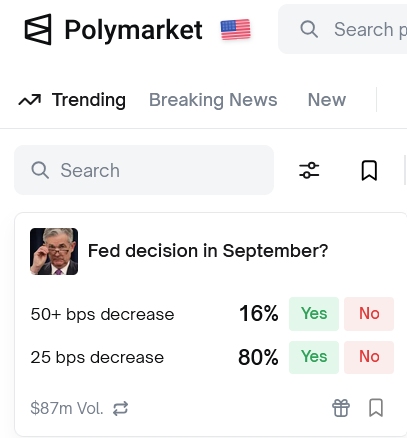
Image from Polymarket website
Polymarket has regained the ability to operate in the United States after acquiring a CFTC regulated and licensed derivatives exchange QCEX for $112 million in July 2025. Soon after the acquisition the Commodity Futures Trading Commission issued a no action letter that relaxed certain reporting and recordkeeping rules tied to event contracts, clearing the way for Polymarket to relaunch in the U.S. after being blocked since 2022 and paying a $1.4 million fine for operating without registration as part of a settlement with the CFTC.
Chief Executive Shayne Coplan highlighted the speed of the approval, writing on X that the green light from the CFTC had been 'accomplished in record timing.'
Polymarket has been given the green light to go live in the USA by the @CFTC.
Credit to the Commission and Staff for their impressive work. This process has been accomplished in record timing.
Stay tuned https://t.co/NVziTixpqO
— Shayne Coplan 🦅 (@shayne_coplan) September 3, 2025
The relaunch it seems was in a politically charged setting. Days before the approval, Donald Trump Jr. disclosed that he had invested through 1789 Capital and accepted an advisory role. The timing of Trump Jr.’s advisory role at Polymarket has raised questions about the influence of politics in a market that depends on regulatory relief.
Not all regulators support the path taken. Outgoing Commissioner Kristin Johnson argued that retail traders face significant risks and that the agency should move beyond case by case exemptions. In her view, the CFTC should create formal rules on which event contracts are permissible instead of leaving gaps in oversight.
Polymarket’s value comes from what people trade. Its most recent markets show how diverse those bets can be.
Traders currently assign about a 7% chance that Donald Trump will leave office before the end of 2025.
At the start of 2025, Polymarket listed more than 65% odds of a U.S. recession. By mid summer, that figure had fallen to 20% after a pause in new tariffs lowered fears. Economists note that these contracts reflect sentiment rather than guaranteed outcomes.
Social and sports betting examples are also trendy, such as the Taylor Swift and Travis Kelce engagement market. A trader turned $12,000 into $50,000 after betting on the couple’s announcement. Another user invested just over $2,000 the day before and made about $3,100 in profit. The odds jumped from 24% to 41% within a single day. No different in how the odds shift around in an in play betting app.
Unexpected outcomes can produce even larger returns or losses. During the papal conclave in May, Cardinal Robert Prevost was trading at only 1%. A bettor who backed him turned $1,059 into more than $63,000 after he became Pope Leo XIV. Total volume on papal betting markets reached about $40 million across Polymarket and Kalshi, another prediction marketplace.
Polymarket’s journey from fine to license shows how quickly a fintech can move from penalty to legitimacy once regulators are engaged, and the importance of building on licensed infrastructure. The markets themselves are worth monitoring, as they mirror real time sentiment. While not perfect market predictors, they are increasingly visible and sometimes a useful barometer for policymakers, investors, and punters alike.
The National Crowdfunding & Fintech Association (NCFA Canada) is a financial innovation ecosystem that provides education, market intelligence, industry stewardship, networking and funding opportunities and services to thousands of community members and works closely with industry, government, partners and affiliates to create aa vibrant and innovative fintech and funding industry in Canada. Decentralized and distributed, NCFA is engaged with global stakeholders and helps incubate projects and investment in fintech, alternative finance, crowdfunding, peer-to-peer finance, payments, digital assets and tokens, artificial intelligence, blockchain, cryptocurrency, regtech, and insurtech sectors. Join Canada's Fintech & Funding Community today FREE! Or become a contributing member and get perks. For more information, please visit: www.ncfacanada.org
| | |
|---|---|---|
| | |


August 26th, 2025

January 4th, 2024

June 1st, 2021

September 9th, 2020

July 9th, 2018

January 3rd, 2018

September 25th, 2017

June 20th, 2017

May 10th, 2017

December 14th, 2016