




Karsten Wenzlaff, Advisor
August 26th, 2025
Karsten Wenzlaff is a Crowdfunding and Fintech Expert from Germany. He is Secretary-General of Digit[...]


Data Breach | Sep 9, 2025

Image: Freepik/Rawpixel.com
On September 5 2025, Wealthsimple (WS) confirmed that a data security breach occurred on August 30. The company emphasized that it “acted quickly and in a few hours the issue was contained. Our security team, with the help of external experts, immediately began a thorough investigation.”
The breach exposed sensitive personal data including contact details, government IDs submitted at signup, financial account numbers, IP addresses, Social Insurance Numbers, and dates of birth.
All accounts remain secure, and “no funds were accessed or stolen. No passwords were compromised… All accounts remain fully secure.” Less than 1% of clients were impacted out of WS's client base of about three million.
The breach resulted from a compromised component in a third party software package described by the company as “written by a trusted third party”. Wealthsimple confirmed the incident was not linked to any Salesforce breaches circulating in the media.
They said, “We learned that a specific software package had been compromised.” No attackers have been publicly identified, and the specific vendor has not been disclosed.
Wealthsimple detected the compromise on August 30 and contained it within hours. By 10:30 AM EST on September 5 the company had emailed all affected clients and published its public update in the Help Centre at 14:43 ET. The statement included: “If you did not receive an email from us about this, your data was not impacted.”
Wealthsimple is offering every impacted client two years of free credit monitoring, dark web monitoring, identity theft protection, and insurance. Regulators and law enforcement were notified in alignment with standard protocols.
According to the PR statement that Wealthsimple provided NCFA Canada with:
"We apologize for this incident, which happened as a result of a third-party vulnerability. We informed impacted clients as quickly as possible and set up complimentary credit and dark web monitoring, as well as identity theft protections. Significantly less than 1% of our clients were affected. We’re continually strengthening our security infrastructure and have already made improvements to prevent this type of issue from happening again."
Wealthsimple confirmed that improved protections have been implemented to better protect against similar threats.
While technical details weren't disclosed, the breach confirms that even the most advanced fintech platforms are only as resilient as their weakest external link (AKA supply chain risk).
Fintech firms must treat vendor risk management with the same rigor applied to their in house systems, including rigorous assessments of third party dependencies, continuous monitoring of software integrity, well rehearsed incident response plans, and transparent communication with clients and regulators.
For policymakers and regulators, the incident raises important questions about oversight. How can industry standards for supply chain risk be established and enforced before breaches occur?
Trust is the most vital currency. Companies of all sizes must ensure that every link from internal databases to external software is secure to protect clients and preserve consumer and business confidence.
 The National Crowdfunding & Fintech Association (NCFA Canada) is a financial innovation ecosystem that provides education, market intelligence, industry stewardship, networking and funding opportunities and services to thousands of community members and works closely with industry, government, partners and affiliates to create aa vibrant and innovative fintech and funding industry in Canada. Decentralized and distributed, NCFA is engaged with global stakeholders and helps incubate projects and investment in fintech, alternative finance, crowdfunding, peer-to-peer finance, payments, digital assets and tokens, artificial intelligence, blockchain, cryptocurrency, regtech, and insurtech sectors. Join Canada's Fintech & Funding Community today FREE! Or become a contributing member and get perks. For more information, please visit: www.ncfacanada.org
 |  |  |
|---|---|---|
 |  |  |
Tokenization | Sep 9, 2025

AI generated
On September 8, 2025, Nasdaq announced in a Newsroom Q&A with Chuck Mack that it filed with the U.S. Securities and Exchange Commission (SEC) to allow every listed stock and exchange-traded fund on its markets to settle in tokenized form. The news is significant and was also confirmed by Reuters and if approved would be the first time a U.S. national exchange was keen to integrate blockchain settlement into the regulated equity system. If approved, the change would affect securities representing $61.6 trillion in U.S. market capitalization as of Q2 2025.
Under the 19b-4 filing to the SEC, Nasdaq proposes that each stock and ETF maintain the same CUSIP (unique 9 digit alphanumeric identifier assigned to financial instruments in the States and Canada, such as stocks, bonds, ETFs) whether traded in traditional or tokenized form. At order entry, brokers could flag trades for tokenized settlement. Execution would take place on the same order book, under the same rules, with identical rights and benefits. After execution, the Depository Trust Company (DTC) would convert the security into a blockchain token and record ownership.
Chuck Mack, Nasdaq’s Senior Vice President of North American Markets, explained the approach and stressed that from an investor’s perspective, nothing changes in how trades are placed or executed. Only the method of settlement shifts to a tokenized form:
“Our goal is to integrate digital assets into Nasdaq’s current infrastructure and systems, which will advance financial innovation while maintaining stability, fairness, and investor protection. If investors and market participants express demand for a particular approach, and we can implement it in a way that preserves market integrity, then we want to give them that choice.”
Nasdaq has indicated the first token-settled trades could occur by Q3 2026, provided that DTC’s new systems are ready. This would embed blockchain settlement directly into the most liquid equity market in the world, where average daily trading volume reached 18.4 billion shares in Q2 2025.
The filing follows the U.S. move to T+1 settlement in May 2024. Tokenization builds on that progress by layering blockchain into existing systems rather than replacing them. SEC Commissioner Hester Peirce has made clear that tokenized securities must still comply with securities laws. One way to look at tokenization is that it's not a regulatory shortcut but rather a modernization of existing infrastucture.
For the U.S., the importance lies in scale and precedent. With more than 5,400 listed companies, Nasdaq’s proposal would normalize blockchain-based settlement within the core market system. Tokenization could deliver operational savings, stronger audit trails, and new forms of fractional participation, all without fragmenting liquidity.
For Canada, Nasdaq's interest echoes the Ontario Securities Commission’s exploration of tokenized long term funds, aimed at improving investor access to complex assets. If Nasdaq’s model is approved, Canadian fintechs could explore cross-border tokenized products, while regulators will need to address custody, wallet security, and investor protections to keep pace with these developments.
Next steps is for the SEC to open the filing for public comment. If approved, tokenized settlement could begin by late 2026. For NCFAs community, this is a watershed moment as tokenization moves from pilot projects and into mainstream market regulation. The implications are significant and real with efficiency gains, lower costs, competitive pressure on other exchanges, and new opportunities for cross-border fintech innovation.
For Canada's fintech and digital asset ecosystem, aligning with these changes will be critical to remain competitive in the next phase of global capital markets.
The National Crowdfunding & Fintech Association (NCFA Canada) is a financial innovation ecosystem that provides education, market intelligence, industry stewardship, networking and funding opportunities and services to thousands of community members and works closely with industry, government, partners and affiliates to create aa vibrant and innovative fintech and funding industry in Canada. Decentralized and distributed, NCFA is engaged with global stakeholders and helps incubate projects and investment in fintech, alternative finance, crowdfunding, peer-to-peer finance, payments, digital assets and tokens, artificial intelligence, blockchain, cryptocurrency, regtech, and insurtech sectors. Join Canada's Fintech & Funding Community today FREE! Or become a contributing member and get perks. For more information, please visit: www.ncfacanada.org
| | |
|---|---|---|
| | |
Sep 9, 2025

Image: Freepik/Rawpixel.com
In recent years, online casinos have expanded far beyond local markets. With internet access available almost everywhere, players from different countries now have the opportunity to enjoy casino games without leaving their homes. This global growth has created a demand for platforms that not only provide entertainment but also operate with integrity.
A reputable casino must balance three factors: security, fairness, and convenience. For international players, these qualities are even more important because cross-border payments, diverse regulations, and different cultural expectations come into play. Choosing the right platform is therefore essential for a safe and enjoyable experience.
The online gaming industry is highly competitive. Hundreds of sites offer flashy designs and bold promises, but not all of them can be trusted. Reputation separates serious operators from unregulated platforms.
A good reputation signals:
Without these qualities, a casino risks losing player trust. For users, this trust is the foundation of any long-term relationship with a gaming platform.
What exactly should international players expect from a reliable casino? Several core features define the best operators in the market.
Together, these factors ensure that players feel safe and respected, regardless of their country of residence.
One of the biggest challenges for global users is handling payments across borders. A reputable casino makes this process smooth and transparent. Licensed operators usually support a wide range of payment methods, including:
Speed is another crucial factor. Reputable casinos process withdrawals quickly, avoiding unnecessary delays. Equally important is transparency—players should always know about fees, processing times, and any limits before making a deposit.
Platforms such as CasinoBello show how premium entertainment can be combined with secure transactions, offering international players both peace of mind and the chance for exciting wins.
Licensing is the backbone of any trustworthy online casino. Regulatory bodies check that platforms follow strict standards in fairness, security, and responsible gambling. International players should always confirm that a casino holds a valid license before registering.
Licenses guarantee that:
Without a license, players risk dealing with unreliable operators that may not pay winnings or could misuse personal information.
In the second part of this discussion, it is vital to highlight what makes a reputable online casino for international players stand out. Many users travel frequently or live in regions where regulations differ. For them, consistency is key.
Such platforms offer:
By addressing these needs, reputable casinos create an inclusive environment where players from all backgrounds feel welcome and secure.
The game library is another factor that defines a platform’s quality. International players expect a wide variety that covers both traditional and modern options.
Common categories include:
Because reputable casinos partner with top developers, these games run smoothly, have strong visuals, and maintain fairness through certified RNGs.
For international users, making the right choice requires careful evaluation. A step-by-step approach helps avoid mistakes.
By following these steps, players can find casinos that combine fun with reliability.
For international players, mobility is essential. Many travel frequently or prefer playing on the go. Reputable casinos optimise their sites and apps for smartphones and tablets. This includes responsive layouts, touch-friendly controls, and smooth streaming for live games.
The ability to access quality gaming anytime and anywhere adds to the convenience and appeal of online casinos for global audiences.
A strong reputation is not only built on entertainment but also on responsibility. Reputable casinos integrate tools that help players maintain control. These may include:
At the same time, customer support teams must be available 24/7. For international players, support across different time zones and languages is critical.
As technology advances, international casinos are likely to become even more sophisticated. Virtual reality, artificial intelligence, and blockchain are already being explored. These innovations will enhance transparency, interactivity, and fairness.
For players worldwide, this means even more engaging experiences while maintaining high levels of trust.
The growth of online casinos has given international players more options than ever before. But choice alone is not enough. Players need platforms that are safe, fair, and responsible.
A reputable online casino for international players offers exactly this. It combines security with entertainment, delivers trustworthy payments, and provides a diverse selection of games. By focusing on licensing, reputation, and user protection, these casinos ensure that players across the globe can enjoy premium gaming with confidence.
The National Crowdfunding & Fintech Association (NCFA Canada) is a financial innovation ecosystem that provides education, market intelligence, industry stewardship, networking and funding opportunities and services to thousands of community members and works closely with industry, government, partners and affiliates to create aa vibrant and innovative fintech and funding industry in Canada. Decentralized and distributed, NCFA is engaged with global stakeholders and helps incubate projects and investment in fintech, alternative finance, crowdfunding, peer-to-peer finance, payments, digital assets and tokens, artificial intelligence, blockchain, cryptocurrency, regtech, and insurtech sectors. Join Canada's Fintech & Funding Community today FREE! Or become a contributing member and get perks. For more information, please visit: www.ncfacanada.org
| | |
|---|---|---|
| | |
European Fintech | Sep 8, 2025
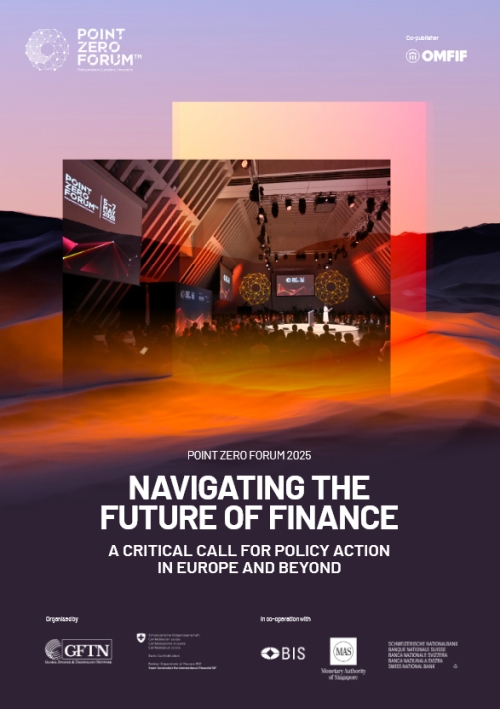
Image: Navigating the Future of Finance magazine (Point Zero Forum)
The 2025 Point Zero Forum (Jun 24-26) in Zurich drew 1,350 participants from 66 countries, including over 20% from public sector institutions. Across 121 sessions spanning 95 hours, 329 speakers explored the future of finance and technology. These numbers matter because the forum is where central banks, regulators, and institutions compare notes on what is implementable now, not just what's aspirational.
For Canadian fintechs, the conversations in Zurich are a warning and an opportunity. Europe is moving quickly to reset its financial infrastructure. Canada risks lagging unless it adapts. Read the post 2025 Point Zero Forum magazine, "A Critical Call for Policy Action in Europe and Beyond" (24 page PDF)
Offline payments and infrastructure security were considered a matter of national sovereignty, not just technology. Danmarks Nationalbank warned: “Without power, many offline payments methods aren’t viable,” linking payments directly to energy security.
The world’s largest stablecoin Tether confirmed it will leave Europe because of reserve and regulatory requirements. This shows that Europe is treating payments, AI, and data as part of its sovereignty strategy.
Canada has its own domestic payment systems operated by Payments Canada, but Canada still doesn't have live operating real-time retail payment rails. In cloud services, Canadian banks and fintechs are still dependent on American providers like AWS, Microsoft, and Google.
Central banks are now focused on tokenized settlement. The Swiss National Bank said: “Price stability is our main focus also in challenging times,” while the European Central Bank stressed that central bank money must remain “available and useful” in tokenized markets.
The Bank of England suggested that oversight of stablecoins may evolve as the “singleness of money” assumption is tested.
The Bank of Canada paused it's digital dollar research initiative. Europe and the U.K. are moving faster. Canadian fintechs should design tokenized solutions that can connect to global settlement networks, not just domestic payment systems.
The Basel framework assigns a 1,250% risk weight to exposures on public blockchains compared to standard weights for permissioned systems. That number explains why institutions are cautious about public chains even as liquidity scale requires them.
Solana’s Lily Liu argued that “the 5.5bn people on the internet” can only be reached through open infrastructure, while regulators noted that immutability makes reversals and sanctions enforcement difficult. The likely outcome is a dual architecture with permissioned networks for issuance and compliance, and public networks for liquidity and settlement.
Canadian institutions face the same Basel capital rules as peers in other markets. Without clear guidance on the use of public versus permissioned networks, Canadian fintechs may find it harder to connect to global liquidity pools.
68% of EU businesses say they struggle to understand their obligations under the EU AI Act, holding back investment. Global wealth manager, Julius Baer’s COO estimated that customer focused AI tools could generate revenue within 6 to 12 months.
At the forum, agentic AI systems were demoed handling insurance claims with observability features allowing human review. The key issue is still accountability with policymakers worrying about loss of control as AI systems become more autonomous.
Canada has not finalized its AI regulation but offers a voluntary AI code of conduct, giving fintechs some near term flexibility. But any deployment that scales internationally will need to comply with EU and U.S. standards. The strategic opportunity is to pilot auditable AI now while preparing for global regulatory alignment.
S&P projects global private equity will grow from $15 trillion in 2025 to $18 trillion by 2027. Citi and SIX Digital Exchange announced tokenized access to late-stage pre-IPO equities on SDX, launching in Q3 2025.
Tokenization will improve collateral usability and ownership visibility, but not resolve fundamental illiquidity or opaque valuations.
Canada has a growing private capital market but no regulated digital exchange on the scale of SIX. Canadian fintechs could position themselves as infrastructure providers for tokenized funds and secondary liquidity, complementing global platforms instead of competing directly.
At the forum, speakers pointed out that some carbon credits were issued for projects expected to reduce emissions over 30 years, even though the land rights lasted only 10 years. That kind of mismatch reduces trust in the market.
Bringing carbon credits into mainstream finance could help spread risk and attract more investment. But for the market to work, credits must be backed by strong certification, insurance to cover project failures, and common standards that everyone follows.
Canada has compliance carbon pricing systems, but its voluntary carbon credit market is smaller and less standardized compared to Europe and Asia. Canadian fintechs could carve out a leadership role by building platforms that prioritize data integrity and risk coverage.
Canada must decide whether to keep pace with progressing markets in Europe and Asia or risk being shut out of global settlement networks. If Europe can move from pilots to architecture, Canadian fintechs must not stand still.
The National Crowdfunding & Fintech Association (NCFA Canada) is a financial innovation ecosystem that provides education, market intelligence, industry stewardship, networking and funding opportunities and services to thousands of community members and works closely with industry, government, partners and affiliates to create a vibrant and innovative fintech and funding industry in Canada. Decentralized and distributed, NCFA is engaged with global stakeholders and helps incubate projects and investment in fintech, alternative finance, crowdfunding, peer-to-peer finance, payments, digital assets and tokens, artificial intelligence, blockchain, cryptocurrency, regtech, and insurtech sectors. Join Canada's Fintech & Funding Community today FREE! Or become a contributing member and get perks. For more information, please visit: www.ncfacanada.org
| | |
|---|---|---|
| | |
Sep 6, 2025

Photo by Mariia Shalabaieva on Unsplash
Canada’s financial system is globally respected for its stability, but innovation can no longer remain on the sidelines. With open banking frameworks advancing and regulators sharpening their stance on digital assets, questions of accessibility and transparency are more pressing than ever. Canadians are increasingly engaging with digital assets, not just as speculative investments but as essential tools for financial participation in a modern economy.
At the center of this shift sits the crypto wallet. More than a technological accessory, wallets are now a cornerstone of digital finance—granting individuals the ability to manage, transfer, and safeguard assets while bridging the divide between traditional banking and decentralized networks.
A crypto wallet is not merely a digital storage unit—it is a direct gateway to blockchain ecosystems. Unlike conventional bank accounts, which rely on third parties, wallets allow users to control their assets directly. There are two primary models: custodial, where a provider manages the private keys, and non-custodial, where individuals hold full responsibility.
For Canadian investors, this choice is critical. Custodial solutions can simplify access, but they also carry counterparty risks if a provider fails. By contrast, non-custodial tools such as crypto wallet platforms place full control into the user’s hands, aligning with the ethos of financial sovereignty. This distinction underscores why wallets are more than conveniences—they are instruments of independence.
Canada was among the first jurisdictions to approve crypto ETFs, signaling openness to innovation. Yet today’s regulatory direction is more cautious. Authorities are pressing for tighter oversight on platforms, disclosures, and compliance standards. For wallets, this regulatory momentum could lead to higher requirements for transparency, consumer protections, and cyber resilience.
The broader integration of wallets into payment infrastructure has already begun. With certain crypto firms gaining access to Canada’s payment rails, the stage is set for wallets to become interoperable with fiat systems. In practice, Canadians could soon experience frictionless transfers between digital assets and traditional currency.
Security remains the defining benchmark for wallets. Cyberattacks, phishing attempts, and compromised keys are persistent risks. Regulators are expected to demand greater consumer protections, prompting providers to adopt advanced safeguards, including multi-factor authentication, hardware-based cold storage, and clear user disclosures. For Canadians, the environment may become safer, but responsibility will remain personal: users must still learn how to manage and protect their own access credentials.
Beyond regulation, consumer behavior is reshaping the market. Millennials and Gen Z are particularly comfortable with digital finance, and many view cryptocurrency as integral to both their financial strategy and personal identity. For these demographics, wallets are not just repositories of value—they are access points to decentralized finance, digital collectibles, and new forms of online interaction.
Knowledge gaps, however, continue to slow adoption. Many Canadians still lack clarity on how wallets function, how private keys should be safeguarded, or the differences between custodial and non-custodial services. Education will therefore be essential. Financial literacy programs, regulatory guidance, and industry-led initiatives can help new participants enter the market with the awareness necessary to protect themselves while taking advantage of new opportunities.
Canada’s transition toward open banking presents an opportunity to align wallets with mainstream financial infrastructure. If wallets can integrate seamlessly with bank APIs, Canadians could one day manage both digital assets and traditional finances within unified platforms. Such interoperability could transform wallets from alternative tools into standard components of financial life.
Financial institutions are also moving into this space. Banks and fintechs are exploring wallets not only for crypto but for tokenized securities, carbon credits, and digital identity management. On the retail side, adoption is accelerating, with wallets increasingly used for remittances, cross-border commerce, and even philanthropic donations. These diverse applications highlight the wallet’s evolution from niche technology into core infrastructure.
Around the world, governments are racing to define their digital finance frameworks. The United States, the European Union, and key Asian markets are setting clearer policies that balance innovation with accountability. Canada must decide whether to keep pace or risk losing ground in global competitiveness.
For consumers and institutions alike, wallets represent far more than a trend. They are the building blocks of digital economies, enabling direct engagement with decentralized networks and laying the foundation for new models of commerce. In Canada’s financial future, wallets will not sit on the margins—they will be central to how value moves, how identity is verified, and how trust is maintained.
The National Crowdfunding & Fintech Association (NCFA Canada) is a financial innovation ecosystem that provides education, market intelligence, industry stewardship, networking and funding opportunities and services to thousands of community members and works closely with industry, government, partners and affiliates to create a vibrant and innovative fintech and funding industry in Canada. Decentralized and distributed, NCFA is engaged with global stakeholders and helps incubate projects and investment in fintech, alternative finance, crowdfunding, peer-to-peer finance, payments, digital assets and tokens, artificial intelligence, blockchain, cryptocurrency, regtech, and insurtech sectors. Join Canada's Fintech & Funding Community today FREE! Or become a contributing member and get perks. For more information, please visit: www.ncfacanada.org
| | |
|---|---|---|
| | |
AI Jobs | Sep 5, 2025

Image: Freepik/Rawpixel.com
On September 4, 2025, Fidji Simo, CEO of Applications at OpenAI announced in a post called, "'Expanding economic opportunity with AI", that it is building an employment platform for AI jobs, designed to connect workers with companies more effectively than traditional hiring tools. It will use AI to match qualified candidates to employers, putting OpenAI in direct competition with Microsoft’s LinkedIn who are the dominant player in online professional networking.
To build trust between workers and employers, OpenAI is expanding its Academy to offer AI fluency certifications. These certifications will range from basic workplace AI use to advanced skills such as prompt engineering.
Training will take place within ChatGPT’s Study mode, which acts like an interactive tutor by asking questions, giving hints, and offering feedback. This training approach is designed to move beyond traditional 'click through' training methods towards real skill-building.
OpenAI’s Academy has already attracted more than two million users and has committed to certifying 10 million Americans by 2030. Launch partners include Walmart, John Deere, Boston Consulting Group, Accenture, Indeed, and several regional organizations such as the Bay Area Council and the Delaware governor’s office.
John Furner, U.S. CEO Walmart explained the company’s involvement:
“By bringing AI training directly to our associates, we’re putting the most powerful technology of our time in their hands—giving them the skills to rewrite the playbook and shape the future of retail.”
The combination of certification and hiring makes OpenAI’s model different from LinkedIn. Employers can recruit with more confidence, knowing that candidates have been assessed for AI fluency. For workers, certifications can translate into higher earning power; a recent Lightcast analysis shows that job postings requiring AI skills offer 28% higher salaries, about $18,000 more annually, compared to those that don’t.
The initiative also fits into wide scale efforts in the U.S. to expand AI literacy. OpenAI is working with the White House Task Force on Artificial Intelligence Education, part of a policy push to prepare workers for the AI economy.
The initiative also aligns with recent U.S. policy. In April 2025, the White House established the Task Force on Artificial Intelligence Education through an executive order, and also see Melania Trump's briefing on September 4 for more context.
OpenAI’s strategy combines upskilling and hiring into one ecosystem, changing how companies can screen and recruit talent. For Canada, the development raises important questions. Will Canadian workers have access to comparable certification programs? Should governments and fintechs create partnerships to ensure the workforce remains competitive? With the U.S. moving quickly to integrate AI literacy at scale, Canada will need to act decisively to avoid falling behind.
The National Crowdfunding & Fintech Association (NCFA Canada) is a financial innovation ecosystem that provides education, market intelligence, industry stewardship, networking and funding opportunities and services to thousands of community members and works closely with industry, government, partners and affiliates to create a vibrant and innovative fintech and funding industry in Canada. Decentralized and distributed, NCFA is engaged with global stakeholders and helps incubate projects and investment in fintech, alternative finance, crowdfunding, peer-to-peer finance, payments, digital assets and tokens, artificial intelligence, blockchain, cryptocurrency, regtech, and insurtech sectors. Join Canada's Fintech & Funding Community today FREE! Or become a contributing member and get perks. For more information, please visit: www.ncfacanada.org
| | |
|---|---|---|
| | |
Sep 5, 2025

Occupied bathroom lights solve a problem that almost everyone has experienced.
You walk down a hall in an office building, airport, or restaurant, unsure if the restroom is free.
Do you push the door and risk an awkward encounter? Or do you wait, hoping someone comes out soon?
This moment of hesitation might seem small, but it becomes a real efficiency issue in high-traffic environments.
An occupancy indicator light instantly shows whether a restroom is free or in use.
Red means “wait.” Green means “go.”
It’s simple, clear, and universal—no words needed.
That’s why these systems are increasingly being installed in workplaces, hospitals, airports, and smart buildings.
occupied bathroom lights not only remove social awkwardness but also improve restroom flow and accessibility.
For facilities managers, that translates to happier visitors and smoother operations.
When you step back, these lights aren’t just about comfort.
They are a real-world example of IoT in action—bridging everyday human needs with smart building technology.
An occupancy light can be linked to a building management system, allowing data collection on restroom usage.
For example:
The first time I noticed the difference was at a busy co-working space.
Instead of awkwardly trying every restroom door, I simply glanced at the overhead light.
Red meant occupied, and I kept walking until I found green.
That small detail saved me time and removed the frustration I didn’t even realize I had.
It was a reminder that good design is invisible when it works well.
For IoT startups, these lights represent a low-barrier entry point into smart infrastructure.
Unlike complex AI or high-cost building systems, bathroom occupancy indicators are:
In other words, the market potential is massive.
Today’s restroom indicators are evolving far beyond a simple red-green signal.
Some systems now connect to mobile apps, showing restroom availability on a digital map.
Others integrate with cleaning schedules, triggering alerts when a restroom has been used a set number of times.
This evolution aligns with broader smart building trends, where efficiency, hygiene, and user experience converge.
Hotels and airports were among the first to experiment with restroom indicators.
In one major international airport, managers reported fewer lines and faster turnaround for travelers once occupancy lights were installed.
The change wasn’t just functional—it also shaped perceptions of cleanliness and order.
Travelers felt the facilities were better managed, even though the number of restrooms hadn’t changed.
As cities move toward smart infrastructure, restroom occupancy signals could integrate with urban apps that already track parking, transit, and crowd flow.
Imagine checking an app that shows not just where the nearest restroom is, but whether it’s free.
For parents with kids, travelers on tight schedules, or workers on short breaks, that’s game-changing.
What startups often overlook is the data potential of these systems.
By analyzing restroom usage patterns, facilities can:
This kind of insight is valuable for architects, city planners, and even environmental policymakers.
Of course, any system tracking restroom usage must prioritize privacy.
The best models use anonymous sensors that never identify individuals.
They simply measure occupancy—nothing more.
This balance of functionality and respect is key to long-term adoption.
Startups often chase the flashiest tech trends: AI, blockchain, robotics.
Meanwhile, practical solutions like restroom occupancy indicators quietly transform daily life.
The beauty of this niche is its low competition and high demand.
It’s not glamorous, but it’s sticky. Once installed, facilities rarely go back.
A facilities manager I spoke with shared how their office staff used to complain constantly about restroom availability.
After installing occupancy lights, the complaints disappeared overnight.
It wasn’t just about comfort—it actually improved workplace satisfaction scores.
Employees felt management had listened to their frustrations and solved them.
Occupied bathroom lights might look like a small detail, but they carry outsized potential.
For IoT startups, they represent a gateway to broader smart building systems.
For users, they eliminate stress and uncertainty in a universal daily experience.
And for cities, they open doors to efficiency, data-driven planning, and improved accessibility.
Sometimes the smartest innovations aren’t the ones shouting for attention.
They’re the quiet signals above a restroom door, guiding us toward convenience without us even noticing.
The National Crowdfunding & Fintech Association (NCFA Canada) is a financial innovation ecosystem that provides education, market intelligence, industry stewardship, networking and funding opportunities and services to thousands of community members and works closely with industry, government, partners and affiliates to create a vibrant and innovative fintech and funding industry in Canada. Decentralized and distributed, NCFA is engaged with global stakeholders and helps incubate projects and investment in fintech, alternative finance, crowdfunding, peer-to-peer finance, payments, digital assets and tokens, artificial intelligence, blockchain, cryptocurrency, regtech, and insurtech sectors. Join Canada's Fintech & Funding Community today FREE! Or become a contributing member and get perks. For more information, please visit: www.ncfacanada.org
| | |
|---|---|---|
| | |


August 26th, 2025

January 4th, 2024

June 1st, 2021

September 9th, 2020

July 9th, 2018

January 3rd, 2018

September 25th, 2017

June 20th, 2017

May 10th, 2017

December 14th, 2016