




Karsten Wenzlaff, Advisor
August 26th, 2025
Karsten Wenzlaff is a Crowdfunding and Fintech Expert from Germany. He is Secretary-General of Digit[...]


Initial Public Offering | Sep 11, 2025

Image from Klarna IPO pricing announcement
Klarna’s debut on the New York Stock Exchange showed that investor interest in buy now pay later remains strong. The Swedish payments company priced its IPO at $40 per share, above the expected $35 to $37 range. Shares opened at $52 before closing at $46.40, a gain of about 16% on Klarna's debut, a market value of around $17.5 billion and raised proceeds of $1.37 billion, according to Reuters IPO coverage.
In 2021, Klarna was valued at $45.6 billion when SoftBank invested heavily, only to fall to $6.7 billion in a 2022 down round. The company’s new valuation is proof of a rebound and investor interest in fintech's open IPO window, although still well below its pandemic-era peak.
Klarna joins other fintechs who have jumped through the IPO window recently, such as Circle and Bullish. Klarna's registration statement filed with the SEC detailed its current scale at 111 million active consumers, 790,000 merchants, and operating in 26 countries.
Significantly, Klarna disclosed that 99% of consumer loans extended in 2024 were repaid on time, much better than the U.S. credit card delinquency rate of 3.05% for the same period. These repayment figures were key in reassuring investors about the resilience of the buy now pay later (BNPL) model.
Buy now pay later continues to expand. U.S. online purchases using BNPL services reached $82.4 billion in 2024, up 9.9% from the previous year. By August 2025, volumes had already hit $56.3 billion.
Klarna, Affirm, and Afterpay dominate the market, but the model has faced criticism that it encourages overspending and exposes providers to consumer defaults. Klarna’s repayment performance, documented in SEC filings, is now one of its key competitive advantages as it enters the scrutiny of public markets.
For fintech, Klarna’s IPO demonstrates that investors in the current climate are willing to fund growth companies with credible metrics, helping restore momentum after a period of political and market uncertainty earlier this year.
Sebastian Siemiatkowski CEO Klarna framed the IPO as a chance to build stronger ties with U.S. consumers. With a merchant base that includes major retailers, Klarna is positioning itself as a mainstream payments company rather than just a niche credit provider. Investors will be tracking closely, future quarterly financials, credit quality data, and U.S. adoption rates.
Klarna’s valuation may remain far below its 2021 peak, but the company’s NYSE IPO confirms that public market investors see value in the buy now pay later model at global scale, and are willing to back its growth.
 The National Crowdfunding & Fintech Association (NCFA Canada) is a financial innovation ecosystem that provides education, market intelligence, industry stewardship, networking and funding opportunities and services to thousands of community members and works closely with industry, government, partners and affiliates to create aa vibrant and innovative fintech and funding industry in Canada. Decentralized and distributed, NCFA is engaged with global stakeholders and helps incubate projects and investment in fintech, alternative finance, crowdfunding, peer-to-peer finance, payments, digital assets and tokens, artificial intelligence, blockchain, cryptocurrency, regtech, and insurtech sectors. Join Canada's Fintech & Funding Community today FREE! Or become a contributing member and get perks. For more information, please visit: www.ncfacanada.org
 |  |  |
|---|---|---|
 |  |  |
Artificial Intelligence | Sep 10, 2025

Image: Freepik AI
On September 9, 2025, according to a report in The Information and as summarized by Retuers, Microsoft plans to integrate Anthropic’s Claude Sonnet 4 into Word, Excel, Outlook, and PowerPoint. It's the first time Microsoft is diversifying away from exclusive reliance on OpenAI by bringing in a new third-party AI provider into Office 365.
The decision was based on performance. Internal testing found that Claude Sonnet 4 produced stronger results in PowerPoint presentations and advanced Excel automation. For Microsoft, having access to a pool of different AI models ensures that each Office application can produce the best possible output for a specific task.
The expansion of Claude into Microsoft 365 happened just after Anthropic closed a $13 billion Series F funding round at a growing valuation of $183 billion. The capital was led by Iconiq Capital, joined by Fidelity, Lightspeed, and major institutional investors. Anthropic stated the money will support enterprise adoption, expand international reach, and strengthen AI safety research. Its annual revenue run rate has surged from $1 billion at the beginning of 2025 to more than $5 billion by August, showing the speed of its growth.
Anthropic is also managing legal pressure. The company announced a $1.5 billion settlement with authors over pirated books used in AI training, but a federal judge declined to approve the current terms and placed the agreement on hold. The case is being closely followed to learn how critical transparent data sourcing is to the credible growth of AI development and the risk of training models on unlicensed material.
On Aug 28 Anthropic announced a new consumer data retention policy that starting September 28, users of Claude Free, Pro, and Max will need to actively opt out if they do not want their conversations stored and used for training (it puts the onus on users, not the other way around). The controversial policy allows data to be held for up to five years if users don't action, which is a big extension compared to the prior 30 day limit. While enterprise and API users are not affected, the change has ignited debate over whether informed consent is clear enough for everyday consumers.
Anthropic has further updated its terms of service to block Chinese controlled firms and other entities from unsupported regions. The restriction applies to companies that are more than 50% owned by groups based in China, Russia, Iran, or North Korea, even if subsidiaries are registered elsewhere.
The policy reflects growing national security concerns and aligns Anthropic with U.S. regulatory priorities. While the change reduces revenue opportunities, the decision strengthens its positioning as a trusted AI provider in government and enterprise markets.
The Microsoft Anthropic partnership shows how AI is diversifying into all parts of the economy, everywhere and all at once. From productivity tools to infrastructure, funding to governance, competitive companies are moving towards multi model strategies and cross platform adoption. To remain competitive, Canada must improve access to growth stage financing, strengthen partnerships between fintechs and established industries, and create regulatory clarity for AI integration. Competitiveness will not be achieved through incremental independent steps but by aligning with the global strategies that are already setting the pace of change.
The National Crowdfunding & Fintech Association (NCFA Canada) is a financial innovation ecosystem that provides education, market intelligence, industry stewardship, networking and funding opportunities and services to thousands of community members and works closely with industry, government, partners and affiliates to create aa vibrant and innovative fintech and funding industry in Canada. Decentralized and distributed, NCFA is engaged with global stakeholders and helps incubate projects and investment in fintech, alternative finance, crowdfunding, peer-to-peer finance, payments, digital assets and tokens, artificial intelligence, blockchain, cryptocurrency, regtech, and insurtech sectors. Join Canada's Fintech & Funding Community today FREE! Or become a contributing member and get perks. For more information, please visit: www.ncfacanada.org
| | |
|---|---|---|
| | |
Regulation | Sep 10, 2025

Image: Freepik/Rawpixel.com
On August 25 2025, Gráinne Moss Chief Executive of New Zealand’s Ministry for Regulation shared a note on the agency’s progress in making regulation work better for everyone. The Ministry has a clear mandate to improve regulation across the system, reduce duplication, and build public trust. Its initiatives provide practical lessons that could benefit Canadian regulators as they work to modernize their own frameworks.
Moss emphasized the Ministry’s role as a central agency taking a system wide view of regulation. The goal is to identify duplication, spot ineffective rules, and develop solutions with other agencies, businesses, and communities. Canada could explore a similar coordinating function to align efforts across federal and provincial regulators, particularly in complex areas such as housing, infrastructure, and environmental policy.
One of the Ministry’s flagship achievements is RegRoom, an online learning and collaboration hub. It includes easy to use guides and training on how regulators do their work, how to use evidence in decisions, how investigations are carried out, and how the courts are involved. By building a common foundation across agencies, RegRoom reduces duplication and strengthens everyday regulatory practice.
A Canadian version could help standardize professional training for regulators and encourage stronger collaboration across jurisdictions.
The Ministry also developed a Regulatory Review Framework and the Regulatory Quality Assessment Tool. These solutions are used to assess whether rules are clear, fair, proportionate, and future proof. The framework helps distinguish between systemic flaws and operational issues, ensuring reviews lead to meaningful improvements. Canada could integrate a similar tool into its regulatory impact assessment process to strengthen consistency and accountability.
A major innovation is the Red Tape Tipline, a portal which allows people to report regulatory issues that cause unnecessary cost or confusion. In April to June 2025, 130 tips were submitted. Every submission is reviewed, and some have already led to changes like making building permits easier for small projects and bringing scaffolding rules up to date. This shows how citizen input can lead directly to real world change. Canada could adopt a national feedback hub to capture and respond to similar issues in its own system.
To maintain trust, the Ministry publishes quarterly reports on the issues raised, actions taken, and outcomes. Regular, transparent reporting like this, especially on the outcomes, would help Canadian regulators show accountability and demonstrate how feedback drives real improvements.
Canada’s economy is weighed down by complex rules and barriers between provinces that make it harder for businesses to grow. Reducing these burdens is key to improving productivity and competitiveness. New Zealand’s approach shows how innovative tools, public feedback portals, and stronger review frameworks can cut duplication and make regulation more efficient.
For sectors like fintech and financial services, modernizing regulation is essential.
"Clearer rules and less red tape would support access to capital, cross border growth, and faster adoption of new technologies. By modernizing its regulatory approach, Canada can lower costs for businesses, improve trade across provinces, and create a system that supports both innovation and trust."
The National Crowdfunding & Fintech Association (NCFA Canada) is a financial innovation ecosystem that provides education, market intelligence, industry stewardship, networking and funding opportunities and services to thousands of community members and works closely with industry, government, partners and affiliates to create aa vibrant and innovative fintech and funding industry in Canada. Decentralized and distributed, NCFA is engaged with global stakeholders and helps incubate projects and investment in fintech, alternative finance, crowdfunding, peer-to-peer finance, payments, digital assets and tokens, artificial intelligence, blockchain, cryptocurrency, regtech, and insurtech sectors. Join Canada's Fintech & Funding Community today FREE! Or become a contributing member and get perks. For more information, please visit: www.ncfacanada.org
| | |
|---|---|---|
| | |
Data Breach | Sep 9, 2025

Image: Freepik/Rawpixel.com
On September 5 2025, Wealthsimple (WS) confirmed that a data security breach occurred on August 30. The company emphasized that it “acted quickly and in a few hours the issue was contained. Our security team, with the help of external experts, immediately began a thorough investigation.”
The breach exposed sensitive personal data including contact details, government IDs submitted at signup, financial account numbers, IP addresses, Social Insurance Numbers, and dates of birth.
All accounts remain secure, and “no funds were accessed or stolen. No passwords were compromised… All accounts remain fully secure.” Less than 1% of clients were impacted out of WS's client base of about three million.
The breach resulted from a compromised component in a third party software package described by the company as “written by a trusted third party”. Wealthsimple confirmed the incident was not linked to any Salesforce breaches circulating in the media.
They said, “We learned that a specific software package had been compromised.” No attackers have been publicly identified, and the specific vendor has not been disclosed.
Wealthsimple detected the compromise on August 30 and contained it within hours. By 10:30 AM EST on September 5 the company had emailed all affected clients and published its public update in the Help Centre at 14:43 ET. The statement included: “If you did not receive an email from us about this, your data was not impacted.”
Wealthsimple is offering every impacted client two years of free credit monitoring, dark web monitoring, identity theft protection, and insurance. Regulators and law enforcement were notified in alignment with standard protocols.
According to the PR statement that Wealthsimple provided NCFA Canada with:
"We apologize for this incident, which happened as a result of a third-party vulnerability. We informed impacted clients as quickly as possible and set up complimentary credit and dark web monitoring, as well as identity theft protections. Significantly less than 1% of our clients were affected. We’re continually strengthening our security infrastructure and have already made improvements to prevent this type of issue from happening again."
Wealthsimple confirmed that improved protections have been implemented to better protect against similar threats.
While technical details weren't disclosed, the breach confirms that even the most advanced fintech platforms are only as resilient as their weakest external link (AKA supply chain risk).
Fintech firms must treat vendor risk management with the same rigor applied to their in house systems, including rigorous assessments of third party dependencies, continuous monitoring of software integrity, well rehearsed incident response plans, and transparent communication with clients and regulators.
For policymakers and regulators, the incident raises important questions about oversight. How can industry standards for supply chain risk be established and enforced before breaches occur?
Trust is the most vital currency. Companies of all sizes must ensure that every link from internal databases to external software is secure to protect clients and preserve consumer and business confidence.
The National Crowdfunding & Fintech Association (NCFA Canada) is a financial innovation ecosystem that provides education, market intelligence, industry stewardship, networking and funding opportunities and services to thousands of community members and works closely with industry, government, partners and affiliates to create aa vibrant and innovative fintech and funding industry in Canada. Decentralized and distributed, NCFA is engaged with global stakeholders and helps incubate projects and investment in fintech, alternative finance, crowdfunding, peer-to-peer finance, payments, digital assets and tokens, artificial intelligence, blockchain, cryptocurrency, regtech, and insurtech sectors. Join Canada's Fintech & Funding Community today FREE! Or become a contributing member and get perks. For more information, please visit: www.ncfacanada.org
| | |
|---|---|---|
| | |
Tokenization | Sep 9, 2025

AI generated
On September 8, 2025, Nasdaq announced in a Newsroom Q&A with Chuck Mack that it filed with the U.S. Securities and Exchange Commission (SEC) to allow every listed stock and exchange-traded fund on its markets to settle in tokenized form. The news is significant and was also confirmed by Reuters and if approved would be the first time a U.S. national exchange was keen to integrate blockchain settlement into the regulated equity system. If approved, the change would affect securities representing $61.6 trillion in U.S. market capitalization as of Q2 2025.
Under the 19b-4 filing to the SEC, Nasdaq proposes that each stock and ETF maintain the same CUSIP (unique 9 digit alphanumeric identifier assigned to financial instruments in the States and Canada, such as stocks, bonds, ETFs) whether traded in traditional or tokenized form. At order entry, brokers could flag trades for tokenized settlement. Execution would take place on the same order book, under the same rules, with identical rights and benefits. After execution, the Depository Trust Company (DTC) would convert the security into a blockchain token and record ownership.
Chuck Mack, Nasdaq’s Senior Vice President of North American Markets, explained the approach and stressed that from an investor’s perspective, nothing changes in how trades are placed or executed. Only the method of settlement shifts to a tokenized form:
“Our goal is to integrate digital assets into Nasdaq’s current infrastructure and systems, which will advance financial innovation while maintaining stability, fairness, and investor protection. If investors and market participants express demand for a particular approach, and we can implement it in a way that preserves market integrity, then we want to give them that choice.”
Nasdaq has indicated the first token-settled trades could occur by Q3 2026, provided that DTC’s new systems are ready. This would embed blockchain settlement directly into the most liquid equity market in the world, where average daily trading volume reached 18.4 billion shares in Q2 2025.
The filing follows the U.S. move to T+1 settlement in May 2024. Tokenization builds on that progress by layering blockchain into existing systems rather than replacing them. SEC Commissioner Hester Peirce has made clear that tokenized securities must still comply with securities laws. One way to look at tokenization is that it's not a regulatory shortcut but rather a modernization of existing infrastucture.
For the U.S., the importance lies in scale and precedent. With more than 5,400 listed companies, Nasdaq’s proposal would normalize blockchain-based settlement within the core market system. Tokenization could deliver operational savings, stronger audit trails, and new forms of fractional participation, all without fragmenting liquidity.
For Canada, Nasdaq's interest echoes the Ontario Securities Commission’s exploration of tokenized long term funds, aimed at improving investor access to complex assets. If Nasdaq’s model is approved, Canadian fintechs could explore cross-border tokenized products, while regulators will need to address custody, wallet security, and investor protections to keep pace with these developments.
Next steps is for the SEC to open the filing for public comment. If approved, tokenized settlement could begin by late 2026. For NCFAs community, this is a watershed moment as tokenization moves from pilot projects and into mainstream market regulation. The implications are significant and real with efficiency gains, lower costs, competitive pressure on other exchanges, and new opportunities for cross-border fintech innovation.
For Canada's fintech and digital asset ecosystem, aligning with these changes will be critical to remain competitive in the next phase of global capital markets.
The National Crowdfunding & Fintech Association (NCFA Canada) is a financial innovation ecosystem that provides education, market intelligence, industry stewardship, networking and funding opportunities and services to thousands of community members and works closely with industry, government, partners and affiliates to create aa vibrant and innovative fintech and funding industry in Canada. Decentralized and distributed, NCFA is engaged with global stakeholders and helps incubate projects and investment in fintech, alternative finance, crowdfunding, peer-to-peer finance, payments, digital assets and tokens, artificial intelligence, blockchain, cryptocurrency, regtech, and insurtech sectors. Join Canada's Fintech & Funding Community today FREE! Or become a contributing member and get perks. For more information, please visit: www.ncfacanada.org
| | |
|---|---|---|
| | |
European Fintech | Sep 8, 2025
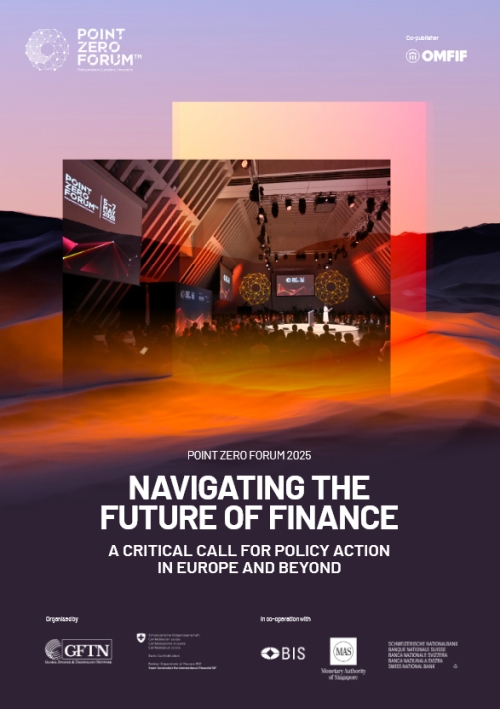
Image: Navigating the Future of Finance magazine (Point Zero Forum)
The 2025 Point Zero Forum (Jun 24-26) in Zurich drew 1,350 participants from 66 countries, including over 20% from public sector institutions. Across 121 sessions spanning 95 hours, 329 speakers explored the future of finance and technology. These numbers matter because the forum is where central banks, regulators, and institutions compare notes on what is implementable now, not just what's aspirational.
For Canadian fintechs, the conversations in Zurich are a warning and an opportunity. Europe is moving quickly to reset its financial infrastructure. Canada risks lagging unless it adapts. Read the post 2025 Point Zero Forum magazine, "A Critical Call for Policy Action in Europe and Beyond" (24 page PDF)
Offline payments and infrastructure security were considered a matter of national sovereignty, not just technology. Danmarks Nationalbank warned: “Without power, many offline payments methods aren’t viable,” linking payments directly to energy security.
The world’s largest stablecoin Tether confirmed it will leave Europe because of reserve and regulatory requirements. This shows that Europe is treating payments, AI, and data as part of its sovereignty strategy.
Canada has its own domestic payment systems operated by Payments Canada, but Canada still doesn't have live operating real-time retail payment rails. In cloud services, Canadian banks and fintechs are still dependent on American providers like AWS, Microsoft, and Google.
Central banks are now focused on tokenized settlement. The Swiss National Bank said: “Price stability is our main focus also in challenging times,” while the European Central Bank stressed that central bank money must remain “available and useful” in tokenized markets.
The Bank of England suggested that oversight of stablecoins may evolve as the “singleness of money” assumption is tested.
The Bank of Canada paused it's digital dollar research initiative. Europe and the U.K. are moving faster. Canadian fintechs should design tokenized solutions that can connect to global settlement networks, not just domestic payment systems.
The Basel framework assigns a 1,250% risk weight to exposures on public blockchains compared to standard weights for permissioned systems. That number explains why institutions are cautious about public chains even as liquidity scale requires them.
Solana’s Lily Liu argued that “the 5.5bn people on the internet” can only be reached through open infrastructure, while regulators noted that immutability makes reversals and sanctions enforcement difficult. The likely outcome is a dual architecture with permissioned networks for issuance and compliance, and public networks for liquidity and settlement.
Canadian institutions face the same Basel capital rules as peers in other markets. Without clear guidance on the use of public versus permissioned networks, Canadian fintechs may find it harder to connect to global liquidity pools.
68% of EU businesses say they struggle to understand their obligations under the EU AI Act, holding back investment. Global wealth manager, Julius Baer’s COO estimated that customer focused AI tools could generate revenue within 6 to 12 months.
At the forum, agentic AI systems were demoed handling insurance claims with observability features allowing human review. The key issue is still accountability with policymakers worrying about loss of control as AI systems become more autonomous.
Canada has not finalized its AI regulation but offers a voluntary AI code of conduct, giving fintechs some near term flexibility. But any deployment that scales internationally will need to comply with EU and U.S. standards. The strategic opportunity is to pilot auditable AI now while preparing for global regulatory alignment.
S&P projects global private equity will grow from $15 trillion in 2025 to $18 trillion by 2027. Citi and SIX Digital Exchange announced tokenized access to late-stage pre-IPO equities on SDX, launching in Q3 2025.
Tokenization will improve collateral usability and ownership visibility, but not resolve fundamental illiquidity or opaque valuations.
Canada has a growing private capital market but no regulated digital exchange on the scale of SIX. Canadian fintechs could position themselves as infrastructure providers for tokenized funds and secondary liquidity, complementing global platforms instead of competing directly.
At the forum, speakers pointed out that some carbon credits were issued for projects expected to reduce emissions over 30 years, even though the land rights lasted only 10 years. That kind of mismatch reduces trust in the market.
Bringing carbon credits into mainstream finance could help spread risk and attract more investment. But for the market to work, credits must be backed by strong certification, insurance to cover project failures, and common standards that everyone follows.
Canada has compliance carbon pricing systems, but its voluntary carbon credit market is smaller and less standardized compared to Europe and Asia. Canadian fintechs could carve out a leadership role by building platforms that prioritize data integrity and risk coverage.
Canada must decide whether to keep pace with progressing markets in Europe and Asia or risk being shut out of global settlement networks. If Europe can move from pilots to architecture, Canadian fintechs must not stand still.
The National Crowdfunding & Fintech Association (NCFA Canada) is a financial innovation ecosystem that provides education, market intelligence, industry stewardship, networking and funding opportunities and services to thousands of community members and works closely with industry, government, partners and affiliates to create a vibrant and innovative fintech and funding industry in Canada. Decentralized and distributed, NCFA is engaged with global stakeholders and helps incubate projects and investment in fintech, alternative finance, crowdfunding, peer-to-peer finance, payments, digital assets and tokens, artificial intelligence, blockchain, cryptocurrency, regtech, and insurtech sectors. Join Canada's Fintech & Funding Community today FREE! Or become a contributing member and get perks. For more information, please visit: www.ncfacanada.org
| | |
|---|---|---|
| | |
Sep 6, 2025

Image: Freepik
An IT program can change the direction of someone’s life in just a few short years.
After enrolling in technology courses, I’ve seen friends who once worked retail jobs land careers in software engineering.
What makes these programs stand out is not only the technical skills they teach but the confidence they give to problem-solvers who want to innovate.
In a rapidly digital world, employers don’t just want degrees.
They want proof that a person can apply knowledge — whether it’s writing code, protecting a network, or analyzing large sets of data.
IT program opportunities bridge that gap by combining classroom instruction with practical experience.
This real-world connection makes graduates valuable from day one.
When I first stepped into a networking lab, the hum of servers and blinking router lights made me realize IT wasn’t about theory — it was about solving real problems.
That moment taught me that learning to troubleshoot under pressure was more valuable than memorizing definitions.
Programs that focus on hands-on labs give students a head start.
It’s one thing to read about cybersecurity breaches in a textbook.
It’s another to run a simulated attack-defense drill where you defend against intrusions in real time.
Technology schools now offer different tracks depending on career goals.
For example:
Each path allows students to dive deep rather than skim the surface, which is why graduates often transition smoothly into specialized roles.
A close colleague of mine once worked as a graphic designer.
She always felt drawn to data but didn’t know where to start.
After joining a technology program, she completed projects in machine learning that landed her a role at a mid-sized consulting firm.
Her first assignment involved optimizing data pipelines for a healthcare client.
That’s when she told me, “I realized my creativity wasn’t gone — I was just applying it to numbers instead of colors.”
This is the power of structured education: it allows hidden strengths to surface.
One of the most exciting developments in recent years is the inclusion of AI consulting programs within technology schools.
These programs don’t just teach students how to code.
They teach them how to advise businesses on integrating AI responsibly.
Students learn to:
By combining technical training with consulting skills, these graduates position themselves at the intersection of technology and strategy.
Employers consistently highlight three traits they see in graduates of strong programs:
When I hired interns for a data analytics project, the ones who had completed structured IT coursework needed less onboarding.
They understood version control, SQL databases, and cloud dashboards — skills that typically take months to learn on the job.
Despite all the talk about algorithms and cloud servers, IT education is deeply human.
I remember working late nights on group projects where frustration turned into breakthroughs.
Those experiences mirrored real-world teamwork, where communication mattered just as much as code.
Students not only graduate with technical expertise but also with collaboration skills, project management habits, and the ability to explain tech concepts to non-technical people.
That last skill often separates a good technologist from a great one.
As more schools integrate artificial intelligence and consulting practices, the future of tech education looks promising.
Virtual labs, remote internships, and AI-powered learning platforms will expand access.
Students from different backgrounds will be able to break into tech without relocating to major cities.
Industry partnerships will also grow stronger.
Imagine learning cloud computing directly from engineers at Amazon or data science through real healthcare datasets.
This trend ensures that graduates aren’t just keeping pace with industry — they’re helping set the pace.
An IT program is more than a collection of courses.
It’s a launchpad for careers in AI, cybersecurity, software, and cloud infrastructure.
It empowers students to move from theory to practice, from interest to expertise.
I’ve seen firsthand how these programs turn curiosity into careers.
And with AI consulting becoming a critical skill set, technology schools offering specialized training will continue to shape the next generation of innovators.
The National Crowdfunding & Fintech Association (NCFA Canada) is a financial innovation ecosystem that provides education, market intelligence, industry stewardship, networking and funding opportunities and services to thousands of community members and works closely with industry, government, partners and affiliates to create a vibrant and innovative fintech and funding industry in Canada. Decentralized and distributed, NCFA is engaged with global stakeholders and helps incubate projects and investment in fintech, alternative finance, crowdfunding, peer-to-peer finance, payments, digital assets and tokens, artificial intelligence, blockchain, cryptocurrency, regtech, and insurtech sectors. Join Canada's Fintech & Funding Community today FREE! Or become a contributing member and get perks. For more information, please visit: www.ncfacanada.org
| | |
|---|---|---|
| | |


August 26th, 2025

January 4th, 2024

June 1st, 2021

September 9th, 2020

July 9th, 2018

January 3rd, 2018

September 25th, 2017

June 20th, 2017

May 10th, 2017

December 14th, 2016