




Karsten Wenzlaff, Advisor
August 26th, 2025
Karsten Wenzlaff is a Crowdfunding and Fintech Expert from Germany. He is Secretary-General of Digit[...]


Sep 24, 2025
Image courtesy of Flipper AI DEX
The Open Network (TON) Telegram games leverage blockchain technology to offer decentralized, secure, and transparent gaming for all users. Beginners can enjoy simple and readily accessible gameplay by playing TON games on Telegram. These games provide you with a simple way to explore the growing world of crypto and blockchain technology powered by Telegram’s vast user base. There are several Telegram gaming products that incorporate decentralization, smart contracts, and blockchain integration. Decentralization enables game data and logic to be shared across a network of computers securely and transparently. From ensuring fairness to creating monetary reward opportunities, TON offers several benefits to gamers.
Telegram’s platform not only offers opportunities for dApps within the ecosystem, but it also introduces user-friendly in-game economies. This combination lets developers build more advanced and interactive crypto gaming applications that players can trust. As more users continue to embrace TON, you can expect to see new and innovative gaming solutions that blend entertainment with real-life monetary benefits. Here are some great reasons to play Telegram TON games as a beginner.
Telegram TON games come with minimalistic designs. They are developed with simple and engaging gameplay in mind. This makes them vital entertainment tools for beginners looking to transform their online crypto gaming experiences. For those who prefer short gaming sessions, TON could be the perfect way to escape from everyday distractions and experience fun to the max. Newcomers can utilize reliable decentralized exchanges, like Flipper DEX, to earn free crypto tokens, including NOTCOIN. You can find tutorials and guidance to level up your skills and achieve your objectives in no time.
Potential for real rewards is another huge benefit of playing Telegram TON games. Popular play-to-earn Telegram models like TON allow users to accumulate virtual financial assets by completing basic tasks like tapping and swiping. You can convert your in-game currencies into actual crypto tokens like NOT and Hamster Kombat. Another great reason to play Telegram games is their low-cost entry. Beginners can start earning money without making any initial investment. While some Telegram crypto games offer upgrades or features that users can choose to purchase, it’s worth noting that these are not always required to start.
Thanks to the built-in community and social features, Telegram TON games lets players engage with their friends or join squads to conduct missions and compete on leaderboards. If you want to add fun and a social layer to your crypto gaming experience, you should consider taking advantage of TON Telegram games. Social media referral awards help create bonuses for beginners who invite their friends to play. These are primarily designed to motivate more players to explore the expanding world of Telegram games and boost their earning potential.
TON stands out in the blockchain ecosystem due to its relatively high speed and affordable transaction fees. Whether you’re a beginner or pro, you can interact with the crypto space directly and benefit from smooth experiences in a low-risk environment. There is no doubt that TON-based wallet integration is one of the easiest entry points into web3.
Telegram TON crypto games have gained widespread popularity lately thanks to their ease of access and community-driven experiences. The remarkable success of The Open Network onboarding millions of web3 users has played a key role in enabling beginners to build their digital assets portfolios.
 The National Crowdfunding & Fintech Association (NCFA Canada) is a financial innovation ecosystem that provides education, market intelligence, industry stewardship, networking and funding opportunities and services to thousands of community members and works closely with industry, government, partners and affiliates to create aa vibrant and innovative fintech and funding industry in Canada. Decentralized and distributed, NCFA is engaged with global stakeholders and helps incubate projects and investment in fintech, alternative finance, crowdfunding, peer-to-peer finance, payments, digital assets and tokens, artificial intelligence, blockchain, cryptocurrency, regtech, and insurtech sectors. Join Canada's Fintech & Funding Community today FREE! Or become a contributing member and get perks. For more information, please visit: www.ncfacanada.org
 |  |  |
|---|---|---|
 |  |  |
Crypto | Sep 22, 2025

Image: Freepik/krakenimages.com
On September 20, 2025, Coinbase CEO Brian Armstrong announced that NBA star Kevin Durant had regained access to his Coinbase account nearly ten years after first buying Bitcoin, and then initially purchasing it for around $650 per Bitcoin in 2015, implying a whopping gain of more than 17,000% ten years later.
Armstrong confirmed the recovery on X, which followed Durant’s story earlier in the week at the CNBC x Boardroom Game Plan summit in Santa Monica. Durant described how he first bought Bitcoin in 2014–2015
We got this fixed. Account recovery complete! https://t.co/TWYFpQkXsb
— Brian Armstrong (@brian_armstrong) September 19, 2025
Durant’s first exposure to Bitcoin came around 2014–2015, when he says he “started watching YouTube videos” about the emerging digital asset. Intrigued, he encouraged his agent, Rich Kleiman, to take a closer look. Their enthusiasm was quickly cooled when, according to Kleiman, their business manager “said, ‘No, don’t do that.’ So we didn’t.”
That might have been the end of the story if not for a party hosted by venture capitalist Ben Horowitz. Kleiman recounted how they heard Bitcoin mentioned repeatedly that night, and “we woke up the next day and said, ‘We have to do this.’” From there, they invested in Bitcoin and later became early backers of Coinbase through their firm Thirty Five Ventures.
According to Coindesk, Durant’s entry point was near $650 per Bitcoin in 2015, a level that makes his eventual recovery especially striking. With Bitcoin trading above $115,000 in September 2025, that original purchase reflects a gain of more than 17,000%, a staggering return on investment that Durant could only access once his Coinbase account was unlocked nearly a decade later.
Durant’s lost account access resulted in type of “forced hodling” through multiple market cycles. Chainalysis-based research on permanently lost Bitcoin estimates millions of crypto assets are out of reach because people have lost their passwords or recovery keys. That reduces the amount available to trade and makes the asset more scarce. Durant’s case shows that being locked out by accident can sometimes lead to big gains, but it also reveals the real danger for everyday users who may never regain access to their accounts.
Coinbase outlines strict processes for regaining access if emails or two factor devices are lost. Users may need to reset forgotten passwords, recover two factor authentication, or provide identity documents through account access troubleshooting. Many users report challenges completing these steps. After Durant’s recovery, social media threads filled with complaints from customers who have been locked out for years.
In response, Armstrong reposted a detailed thread from his support team on X, promising product improvements and faster support. Coinbase also maintains VIP service tiers for high volume traders. Reuters published an article in August 2025 about widespread user frustration with locked accounts and the Verge covered investigations into delays in customer support. Clearly more work needs to be done by Coinbase to support all customers, and not just celebrities that might be prioritized for obvious reasons.
Durant's experience of lost keys and account access can happen to even the most sophisticated investors, causing an incredible amount of frustration. Prevention is the best protection. Coinbase advises enabling multiple two factor authentication methods, including hardware keys, and updating recovery emails and phone numbers regularly.
Also, users should evaluate the benefits and risks of storing crypto on exchanges versus self custody options using a secure wallet. Digital asset investors should only work with crypto exchanges that offer reliable recovery workflows and strong customer support.
Thanks to Durant's celebrity status, consumer protection from lost keys and account access is back in the news. For Durant, it's another story and a drop in the bucket but for regulators and industry leaders it's a recurring lessons that equitable account recovery and strong consumer support is essential to wider adoption. While new trading features are also being developed and released, crypto exchanges and leaders need to prioritize safeguarding access for all users.
The National Crowdfunding & Fintech Association (NCFA Canada) is a financial innovation ecosystem that provides education, market intelligence, industry stewardship, networking and funding opportunities and services to thousands of community members and works closely with industry, government, partners and affiliates to create aa vibrant and innovative fintech and funding industry in Canada. Decentralized and distributed, NCFA is engaged with global stakeholders and helps incubate projects and investment in fintech, alternative finance, crowdfunding, peer-to-peer finance, payments, digital assets and tokens, artificial intelligence, blockchain, cryptocurrency, regtech, and insurtech sectors. Join Canada's Fintech & Funding Community today FREE! Or become a contributing member and get perks. For more information, please visit: www.ncfacanada.org
| | |
|---|---|---|
| | |
Sep 17, 2025
In 2025, cloud mining and XRP mining are emerging as two key trends in the rapidly growing cryptocurrency market. Together, they herald a future of instant, efficient, and flexible digital finance. Platforms like NB HASH are making this vision a reality by providing investors with reliable income streams, transparent contracts, and easy-to-use mining tools, making access to digital assets easier than ever.
For those who want to profit from mining without facing the financial and technical challenges of traditional mining, NB HASH is a new cloud mining platform. On NB HASH’s website, users can directly purchase XRP mining contracts and other cryptocurrency mining contracts without buying or maintaining expensive equipment or paying high electricity bills.
The greatest strength of NB HASH lies in its simplicity. From registration to daily rewards, everything is fully automated and easy to use. Whether you are a beginner or an experienced investor, NB HASH enables you to enjoy stable returns from cloud mining and XRP mining with minimal investment.
By combining simplicity, accessibility, and profitability, NB HASH stands out in the cloud mining sector. Its key benefits include:
The real question is not just “Why cloud mining?” but “Why NB HASH?”
NB HASH’s unique strength lies in balancing trust and profitability.
In the past, many cloud mining companies were criticized for unsustainable models or hidden fees. NB HASH takes a different approach:
Because of this, NB HASH appeals to both large enterprises seeking stable profits and individuals looking for passive income.
NB HASH lowers entry barriers by offering various reward mechanisms for both new users and loyal investors:
Even users without initial investment can experience the platform through bonuses, view their daily earnings, and then decide whether to scale up.
Bitcoin remains the king of mining, but XRP is rapidly reshaping the crypto landscape.
Thanks to its low fees and lightning-fast transactions, XRP is widely adopted for international payments and cross-border remittances.
By 2025, cloud mining platforms like NB HASH will rely heavily on XRP. For users who prefer simple, low-cost withdrawals, XRP is an ideal choice—mining rewards can be redeemed in various currencies.
Moreover, with banks and payment processors increasingly adopting Ripple’s blockchain technology, XRP has significant long-term potential. Investors benefit from both immediate mining revenue and future growth prospects.
The crypto market never sleeps, and XRP has recently taken the spotlight. Several major financial institutions have announced they will adopt Ripple’s blockchain for cross-border transactions. This has boosted investor confidence, making XRP one of the top-performing altcoins in 2025.
Meanwhile, XRP mining continues to boom, fueled by institutional investment. Ethereum is also making progress with scalability upgrades, enhancing its appeal for decentralized applications.
Together, these trends prove that cryptocurrency is no longer a niche industry—it is going mainstream. Leading cloud mining platforms like NB HASH are offering everyday users a secure and reliable way to join this global movement.
Cloud mining is no longer just a buzzword—it has become a valuable tool for passive cryptocurrency income. With the growing popularity of XRP and other mainstream cryptocurrencies, investors have more options than ever.
NB HASH is at the forefront of this revolution, delivering secure, transparent, and profitable cloud mining solutions. With attractive rewards, easy-to-use features, and consistent returns, it provides ordinary users with a safe gateway into the crypto world.
By combining the advantages of XRP mining and cloud mining, NB HASH offers investors a clear path toward financial freedom and wealth independence.
👉 Click here to claim your exclusive reward today!
The National Crowdfunding & Fintech Association (NCFA Canada) is a financial innovation ecosystem that provides education, market intelligence, industry stewardship, networking and funding opportunities and services to thousands of community members and works closely with industry, government, partners and affiliates to create aa vibrant and innovative fintech and funding industry in Canada. Decentralized and distributed, NCFA is engaged with global stakeholders and helps incubate projects and investment in fintech, alternative finance, crowdfunding, peer-to-peer finance, payments, digital assets and tokens, artificial intelligence, blockchain, cryptocurrency, regtech, and insurtech sectors. Join Canada's Fintech & Funding Community today FREE! Or become a contributing member and get perks. For more information, please visit: www.ncfacanada.org
| | |
|---|---|---|
| | |
Sep 16, 2025

Image: Pixabay/nattanan23
As Canada’s digital finance landscape continues to evolve, focus across multiple industries has shifted towards trust-building. One sector that has undergone remarkable transformation and growth is iGaming, particularly the well-regulated online casino sector.
Much of the success of the broader iGaming industry has been its unique ability to foster trust among players through licensing, secure transactions, and robust player protection measures.
These key transparency elements are also now beginning to serve as valuable lessons for the fintech industry, which often faces challenges in establishing and maintaining consumer confidence.
With that said, here is a more in-depth look at some of the fundamental lessons that Canada’s digital finance sector can learn from the burgeoning iGaming industry.
The iGaming industry, which is home to real-money betting sites such as online casinos, sportsbooks, bingo & lottery sites and other legally permitted betting platforms, can teach leaders in Canada’s digital finance sector several key lessons, some of which include:
A major part of consumer trust in the iGaming sector is its comprehensive and well-matured regulatory framework. Regulated online casinos operate under strict guidelines set by official government bodies, which help to ensure adherence to fair play, responsible gambling practices, and consumer protection.
Canada’s main licensing authorities/gaming commissions not only prevent fraud but also impose penalties on those who violate regulations, which further reinforces public confidence and fosters a sense of trust in this sector.
Establishing a similar framework could also be advantageous for companies operating in the fintech industry. While many fintech companies are largely regulated, the lack of uniformity across jurisdictions can create confusion for consumers.
By focusing on adopting clearer regulations and standardised compliance measures, the wider fintech industry can further enhance its credibility. Additionally, transparency in business operations, such as clearly outlining fees and terms of service, can boost consumer confidence and foster trust.
In the digital finance sector, security must remain a top priority. Consumers must feel assured that their sensitive personal and financial information is protected from cyber threats and other fraudulent activities.
The iGaming industry has made significant strides in this area by implementing state-of-the-art technology to ensure secure transactions.
This includes multi-factor authentication, one-time passcodes to protect payments, and 128-bit or higher SSL (Secure Socket Layer) encryption measures, which protect user accounts from unauthorised access and fraud.
Fintech organisations can learn from these strategies by investing in the latest security technologies and actively demonstrating their commitment to protecting customer data.
Transparency regarding cybersecurity measures and established protocols for addressing potential data breaches can further enhance customer trust. Keeping customers informed about how their data is being used and secured can put their minds at ease and enhance the relationship between consumers and fintech providers/solutions.
In the iGaming industry, player protection is paramount. Licensed and regulated online casino platforms prioritise responsible gambling through tools such as deposit limits, spending caps, win/loss limits, and so on, and they provide readily available support resources for locally and internationally accredited, non-profit problem gambling organisations.
This proactive approach not only safeguards players but also fosters a positive community attitude.
Similarly, fintech companies can create a more trustworthy environment by prioritising consumer protection. By offering features like budget tracking, spending alerts, and responsible lending practices, fintech can demonstrate a commitment to consumer well-being.
Education on financial practices and solutions is also critical, which entails equipping customers with the knowledge to make far more informed financial decisions, which significantly helps cultivate trust and transparency.
As Canada’s digital finance sector evolves, the iGaming industry will no doubt continue to offer many other crucial lessons in trust-building.
By embracing strict regulatory practices, securing transactions, prioritising consumer protection, and fine-tuning its framework, fintech companies can also improve trust.
In today’s digital payments era, building trust is essential. Adopting these lessons from the iGaming industry could not only enhance the reputation of digital finance companies but also create a safer landscape for consumers.
The National Crowdfunding & Fintech Association (NCFA Canada) is a financial innovation ecosystem that provides education, market intelligence, industry stewardship, networking and funding opportunities and services to thousands of community members and works closely with industry, government, partners and affiliates to create aa vibrant and innovative fintech and funding industry in Canada. Decentralized and distributed, NCFA is engaged with global stakeholders and helps incubate projects and investment in fintech, alternative finance, crowdfunding, peer-to-peer finance, payments, digital assets and tokens, artificial intelligence, blockchain, cryptocurrency, regtech, and insurtech sectors. Join Canada's Fintech & Funding Community today FREE! Or become a contributing member and get perks. For more information, please visit: www.ncfacanada.org
| | |
|---|---|---|
| | |
Sep 15, 2025

Image: Pexels/Alesia Kozik
Fintech keeps nudging online gambling into a different shape. Not in one big leap, more like a series of quick steps. Blockchain, AI, digital wallets, and mobile-first rails are taking the lead, or at least that’s how it looks from recent rollouts. People want speed, privacy, and fewer hoops to jump through. One stat often cited: around 35% of global online casino operators supported crypto in early 2024, per the European Business Review.
Platforms have answered with provably fair mechanics, faster withdrawals, and fees that drift toward zero. AI is seeping into everything from gameplay suggestions to risk checks. New payment links try to satisfy regulators as much as players, which is harder than it sounds. This isn’t just a tech upgrade. It is slowly changing how players pay, play, and decide whom to trust. Both sides of the table feel it, and the ripple seems set to carry into 2025 and, probably, a bit beyond.
Crypto-friendly online casino now list Bitcoin, Ethereum, and a handful of stablecoins as routine options. Some sites go further, running almost entirely on-chain, which can mean near-instant deposits and withdrawals for local and cross-border users. Compared with bank transfers, wait times have dropped from days to minutes in many cases. A few platforms even enable peer-to-peer movement of funds, trimming out processors and, usually, costs. The old banking rails aren’t always required. Privacy tends to improve, too, because identities can be minimal or encrypted on decentralised ledgers.
The bigger shift may be transparency. Immutable records log bets, outcomes, and payouts so players can check results themselves. That “provably fair” idea, noted by Morningstar, appears to build confidence and draw in younger, more crypto-native audiences. Access expands as well. Where banking controls are tight, crypto can offer a route in. Trends flagged by RadCred suggest that more than 60% of new crypto casino sign-ups in 2025 could come from outside North America and Western Europe. If anything, crypto and blockchain still look like the sector’s loudest fintech swing.
Contactless options and e-wallets now feel standard on major platforms. Integrations with tools like GCash make deposits and payouts feel almost casual, which, admittedly, is the point. Speed leads. Instead of the old waiting windows, balances appear quickly, sometimes immediately. Security gets a boost as well through two-factor checks and encrypted channels. For the online casino market, where trust and immediacy matter, these payment features have become non-negotiable.
Mobile-first design tracks the broader iGaming pivot to phones. Most players, it seems, have left desktops behind, and their payment habits followed. Apps are being tuned for one-tap flows, biometrics, and live balances that update without fuss. TechSpective reports that e-wallet adoption can cut payment drop-off by about 27%. Operators benefit on the back end, too, with automated compliance screens and lower fraud exposure. It’s not only a UX story. Payment innovation tends to raise operational efficiency and make audits easier, which keeps both customers and regulators relatively satisfied.
AI now threads through much of the customer journey. Recommendation engines learn from play patterns to surface games a player might actually enjoy. Bonuses adjust on the fly. European Business Review points to retention improving by as much as 32% in year one for some adopters, though results vary.
There’s a safety angle, too. Models scan for risk signals and can flag patterns that resemble harmful play, then nudge for a pause or trigger a cool-off. Support has shifted as well. Chatbots handle quick questions instantly, so human agents focus on tougher issues. Net result: platforms feel more responsive while still ticking the social responsibility box. AI’s weight in both satisfaction and compliance strategies seems to be growing, even if the playbooks are still being refined.
Security has not been an afterthought. Biometric logins, end-to-end encryption, and in some cases blockchain-backed ledgers protect accounts and transactions. For plenty of players, confidence that outcomes and funds cannot be quietly altered matters as much as speed. The Maui News reported a 19% drop in cyber-fraud across major online gambling markets after multi-factor authentication and newer encryption standards rolled out in late 2024, which is encouraging if not a cure-all.
Meanwhile, social layers are getting thicker. Multiplayer modes, chat features, and live events turn solitary spins into shared moments. With 5G helping out, live gaming holds up on the go. Under the hood, fintech automation tightens payment flows, reduces fraud risk, and sharpens compliance accuracy. Put together, stronger security, richer community tools, and smoother operations have pushed usage and revenue higher, with sector reports putting 2023 global revenues above $95 billion. It could climb further, though cycles have a way of surprising us.
As payments accelerate, responsible gambling has to keep pace. Operators are leaning on AI to spot risk earlier and step in sooner. Self-exclusion and spend caps are, by now, standard kit. Payment blocks and faster ID checks add another layer, slowing unauthorized access and helping prevent harm.
Regulators increasingly expect these protections to ship alongside convenience, not after it. For the ecosystem to stay healthy, technology and accountability need to move together. Sustainable progress, ideally, gives players more control and clearer support. The exact balance is still being worked out, and maybe that’s healthy progress rather than a finished product.
The National Crowdfunding & Fintech Association (NCFA Canada) is a financial innovation ecosystem that provides education, market intelligence, industry stewardship, networking and funding opportunities and services to thousands of community members and works closely with industry, government, partners and affiliates to create aa vibrant and innovative fintech and funding industry in Canada. Decentralized and distributed, NCFA is engaged with global stakeholders and helps incubate projects and investment in fintech, alternative finance, crowdfunding, peer-to-peer finance, payments, digital assets and tokens, artificial intelligence, blockchain, cryptocurrency, regtech, and insurtech sectors. Join Canada's Fintech & Funding Community today FREE! Or become a contributing member and get perks. For more information, please visit: www.ncfacanada.org
| | |
|---|---|---|
| | |
Crypto | Sep 9, 2025
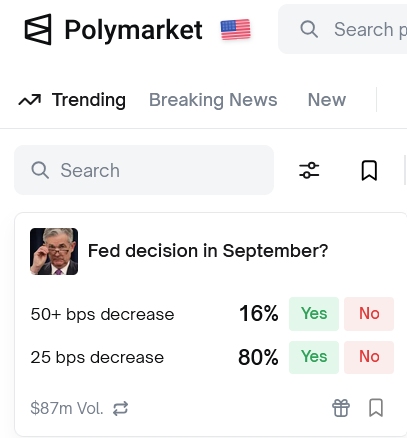
Image from Polymarket website
Polymarket has regained the ability to operate in the United States after acquiring a CFTC regulated and licensed derivatives exchange QCEX for $112 million in July 2025. Soon after the acquisition the Commodity Futures Trading Commission issued a no action letter that relaxed certain reporting and recordkeeping rules tied to event contracts, clearing the way for Polymarket to relaunch in the U.S. after being blocked since 2022 and paying a $1.4 million fine for operating without registration as part of a settlement with the CFTC.
Chief Executive Shayne Coplan highlighted the speed of the approval, writing on X that the green light from the CFTC had been 'accomplished in record timing.'
Polymarket has been given the green light to go live in the USA by the @CFTC.
Credit to the Commission and Staff for their impressive work. This process has been accomplished in record timing.
Stay tuned https://t.co/NVziTixpqO
— Shayne Coplan 🦅 (@shayne_coplan) September 3, 2025
The relaunch it seems was in a politically charged setting. Days before the approval, Donald Trump Jr. disclosed that he had invested through 1789 Capital and accepted an advisory role. The timing of Trump Jr.’s advisory role at Polymarket has raised questions about the influence of politics in a market that depends on regulatory relief.
Not all regulators support the path taken. Outgoing Commissioner Kristin Johnson argued that retail traders face significant risks and that the agency should move beyond case by case exemptions. In her view, the CFTC should create formal rules on which event contracts are permissible instead of leaving gaps in oversight.
Polymarket’s value comes from what people trade. Its most recent markets show how diverse those bets can be.
Traders currently assign about a 7% chance that Donald Trump will leave office before the end of 2025.
At the start of 2025, Polymarket listed more than 65% odds of a U.S. recession. By mid summer, that figure had fallen to 20% after a pause in new tariffs lowered fears. Economists note that these contracts reflect sentiment rather than guaranteed outcomes.
Social and sports betting examples are also trendy, such as the Taylor Swift and Travis Kelce engagement market. A trader turned $12,000 into $50,000 after betting on the couple’s announcement. Another user invested just over $2,000 the day before and made about $3,100 in profit. The odds jumped from 24% to 41% within a single day. No different in how the odds shift around in an in play betting app.
Unexpected outcomes can produce even larger returns or losses. During the papal conclave in May, Cardinal Robert Prevost was trading at only 1%. A bettor who backed him turned $1,059 into more than $63,000 after he became Pope Leo XIV. Total volume on papal betting markets reached about $40 million across Polymarket and Kalshi, another prediction marketplace.
Polymarket’s journey from fine to license shows how quickly a fintech can move from penalty to legitimacy once regulators are engaged, and the importance of building on licensed infrastructure. The markets themselves are worth monitoring, as they mirror real time sentiment. While not perfect market predictors, they are increasingly visible and sometimes a useful barometer for policymakers, investors, and punters alike.
The National Crowdfunding & Fintech Association (NCFA Canada) is a financial innovation ecosystem that provides education, market intelligence, industry stewardship, networking and funding opportunities and services to thousands of community members and works closely with industry, government, partners and affiliates to create aa vibrant and innovative fintech and funding industry in Canada. Decentralized and distributed, NCFA is engaged with global stakeholders and helps incubate projects and investment in fintech, alternative finance, crowdfunding, peer-to-peer finance, payments, digital assets and tokens, artificial intelligence, blockchain, cryptocurrency, regtech, and insurtech sectors. Join Canada's Fintech & Funding Community today FREE! Or become a contributing member and get perks. For more information, please visit: www.ncfacanada.org
| | |
|---|---|---|
| | |
Data Breach | Sep 9, 2025

Image: Freepik/Rawpixel.com
On September 5 2025, Wealthsimple (WS) confirmed that a data security breach occurred on August 30. The company emphasized that it “acted quickly and in a few hours the issue was contained. Our security team, with the help of external experts, immediately began a thorough investigation.”
The breach exposed sensitive personal data including contact details, government IDs submitted at signup, financial account numbers, IP addresses, Social Insurance Numbers, and dates of birth.
All accounts remain secure, and “no funds were accessed or stolen. No passwords were compromised… All accounts remain fully secure.” Less than 1% of clients were impacted out of WS's client base of about three million.
The breach resulted from a compromised component in a third party software package described by the company as “written by a trusted third party”. Wealthsimple confirmed the incident was not linked to any Salesforce breaches circulating in the media.
They said, “We learned that a specific software package had been compromised.” No attackers have been publicly identified, and the specific vendor has not been disclosed.
Wealthsimple detected the compromise on August 30 and contained it within hours. By 10:30 AM EST on September 5 the company had emailed all affected clients and published its public update in the Help Centre at 14:43 ET. The statement included: “If you did not receive an email from us about this, your data was not impacted.”
Wealthsimple is offering every impacted client two years of free credit monitoring, dark web monitoring, identity theft protection, and insurance. Regulators and law enforcement were notified in alignment with standard protocols.
According to the PR statement that Wealthsimple provided NCFA Canada with:
"We apologize for this incident, which happened as a result of a third-party vulnerability. We informed impacted clients as quickly as possible and set up complimentary credit and dark web monitoring, as well as identity theft protections. Significantly less than 1% of our clients were affected. We’re continually strengthening our security infrastructure and have already made improvements to prevent this type of issue from happening again."
Wealthsimple confirmed that improved protections have been implemented to better protect against similar threats.
While technical details weren't disclosed, the breach confirms that even the most advanced fintech platforms are only as resilient as their weakest external link (AKA supply chain risk).
Fintech firms must treat vendor risk management with the same rigor applied to their in house systems, including rigorous assessments of third party dependencies, continuous monitoring of software integrity, well rehearsed incident response plans, and transparent communication with clients and regulators.
For policymakers and regulators, the incident raises important questions about oversight. How can industry standards for supply chain risk be established and enforced before breaches occur?
Trust is the most vital currency. Companies of all sizes must ensure that every link from internal databases to external software is secure to protect clients and preserve consumer and business confidence.
The National Crowdfunding & Fintech Association (NCFA Canada) is a financial innovation ecosystem that provides education, market intelligence, industry stewardship, networking and funding opportunities and services to thousands of community members and works closely with industry, government, partners and affiliates to create aa vibrant and innovative fintech and funding industry in Canada. Decentralized and distributed, NCFA is engaged with global stakeholders and helps incubate projects and investment in fintech, alternative finance, crowdfunding, peer-to-peer finance, payments, digital assets and tokens, artificial intelligence, blockchain, cryptocurrency, regtech, and insurtech sectors. Join Canada's Fintech & Funding Community today FREE! Or become a contributing member and get perks. For more information, please visit: www.ncfacanada.org
| | |
|---|---|---|
| | |


August 26th, 2025

January 4th, 2024

June 1st, 2021

September 9th, 2020

July 9th, 2018

January 3rd, 2018

September 25th, 2017

June 20th, 2017

May 10th, 2017

December 14th, 2016