




Karsten Wenzlaff, Advisor
August 26th, 2025
Karsten Wenzlaff is a Crowdfunding and Fintech Expert from Germany. He is Secretary-General of Digit[...]


Crypto Crime | July 16, 2025
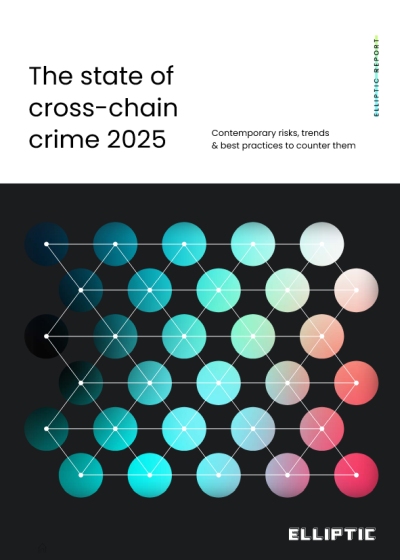
Image: The State of Cross Chain Crime in 2025 (Elliptic Report Cover)
Just in, according to Elliptic’s State of Cross-Chain Crime 2025 report, illegal activity involving decentralized exchanges, bridges, and swap services reached $21.8 billion in 2025 so far, more than 3x the figure in 2023 ($7 billion) and 5x in 2022 ($4 billion). This trend highlights how criminals are exploiting DEXs, cross-chain bridges, and coin swap services to hide money transfers across multiple blockchains.
Elliptic reports that 33% of complex crypto crime investigations use more than 3 blockchains. Another 27% involve over 5 blockchains, while 20% span more than 10. Chain-hopping is a technique that allows criminals, both big and small, to move assets quickly from one chain to another to confuse investigators.
In one confirmed case, a North Korean related wallet moved stolen funds through Bitcoin, Ethereum, Arbitrum, Base, and Tron, all in succession with that single operation using a total of 48 coordinated swaps.
Coin swap platforms have become a preferred laundering tool for ransomware groups, darknet markets, and offshore gambling operations. Unlike DEXs or bridges, these services are centralized, often use privacy-focused Telegram chat service, and allow anonymous swaps between chains with no KYC.
Some operate in regions under sanctions, including Crimea. Elliptic also confirmed that North Korean hackers laundered $200 million of the $1.46 billion Bybit theft through a service called eXch. The platform refused to cooperate with law enforcement and was later shut down by German and Dutch authorities.
Many of the methods used by criminals involve a mix of asset swaps, bridges, gas fee financing, and privacy coins. Elliptic's report confirms that over 300 bridge combinations are being traced automatically using virtual value transfer events (VVTEs), a forensic analytics method developed by Elliptic to automatically trace the source and destination of cross-chain transactions, especially those that pass through bridges.
This automation is a lifeline to investigations and allows regulators, compliance teams, and law enforcement to trace cross-chain fund flows in seconds instead of hours. Elliptic now supports more than 50 blockchains, making it one of the most comprehensive tools available for risk detection.
The scale and speed of illicit activity are outpacing traditional compliance methods. Without updated tools and policies, Canadian fintechs and financial institutions face rising legal, reputational, and regulatory risk. It feels like we've been saying this for a while now, but the use of advanced tracking, wallet screening, and automated compliance solutions are no longer optional, and in fact essential for protecting the integrity of Canada's growing digital finance sector.
 The National Crowdfunding & Fintech Association (NCFA Canada) is a financial innovation ecosystem that provides education, market intelligence, industry stewardship, networking and funding opportunities and services to thousands of community members and works closely with industry, government, partners and affiliates to create a vibrant and innovative fintech and funding industry in Canada. Decentralized and distributed, NCFA is engaged with global stakeholders and helps incubate projects and investment in fintech, alternative finance, crowdfunding, peer-to-peer finance, payments, digital assets and tokens, artificial intelligence, blockchain, cryptocurrency, regtech, and insurtech sectors. Join Canada's Fintech & Funding Community today FREE! Or become a contributing member and get perks. For more information, please visit: www.ncfacanada.org
 |  |  |
|---|---|---|
 |  |  |
Funding | July 16, 2025
Image courtesy of Quandri
Vancouver and Boston-based insurtech Quandri has raised US$12 million to accelerate the rollout of its AI-powered Renewal Intelligence Platform across the Canadian and U.S. insurance markets. The round was led by Framework Venture Partners, with follow-on investments from FUSE and Defined Capital, and strategic backing from Intact Ventures. To date Quandri has raised over US$20 million since founding in 2021.
The new capital will fuel a hiring push, deepen AI engineering capacity, and support the opening of a new U.S. office in Boston alongside the expansion of its Vancouver headquarters.
"We’ve had strong conviction in our vision from day one, but having new investors like Framework and Intact supporting our journey adds real momentum," said Jackson Fregeau, co-founder and CEO. "Their support affirms the value we’re delivering to brokerages and agencies, and gives us the insight and fuel we need to keep pushing the industry forward."
In a recent interview with the National Crowdfunding and Fintech Association (NCFA), Quandri co-founder and CEO Jackson Fregeau shared additional insights on the company’s platform, market traction, and future plans.

Image: Quandri Co-founders, Jackson Fregeau (CEO) and Jamieson Fregeau (President)
Quandri’s Renewal Intelligence Platform is designed specifically to automate renewal servicing workflows for insurance brokerages and agencies. It stands out in a crowded insurtech space due to its deep contextual understanding of insurance data, its focused product design, and its high degree of configurability.
Jackson Fregeau, co-founder and CEO:
"What differentiates us as a business is threefold.
First, deep intelligence. We ingest millions of insurance policies every month, and our AI has a deep understanding of underwriting guidelines across all regulatory environments in North America. This means we have a deep insurance context and can apply this to the automation of a process — taking it all the way to communication with a client, thanks to the trust our customers have in us.
Second, focus. We chose a clear focus area and spent our time driving as much value as possible. With renewals as an example, we aren’t just automating the process — we’re driving additional revenue through cross-selling and upselling, while also increasing retention rates.
Third, a high degree of configurability. Our AI can analyze hundreds of variables on a single renewal to surface insights and deliver action. Our customers can configure all of this if they want, to build a highly personalized and relevant experience for their clients."
Brokerages using Quandri have reported major productivity and revenue improvements.
"We’ve seen customers save over 6,000 hours a year by automating their renewal review process — work that previously required full teams to manually review documents," said Fregeau. "For example, one of our customers repurposed over 5% of their workforce — 10 of 200 employees — shifting experienced team members into higher-impact roles that support growth and improve the client experience.
"In another case, one brokerage reported a 350% return on investment in just a few months — proof that this isn’t just about saving time. It’s about unlocking a more resilient, scalable way to run a brokerage. And the benefits go beyond operational efficiency; one brokerage reported a 2% increase in client retention, driven by the ability to proactively reach out to customers with consistent, value-based renewal conversations."
Quandri has been operating in the U.S. for the past two years, but has seen significant acceleration over the last 12 months.
"The biggest learning has been about market dynamics. It’s 50 different markets, with a high degree of fragmentation and regionalism," said Fregeau. "Understanding how this all worked, and ensuring our platform could support this complexity was very important.
"What we did find consistent across the board is that brokers and agents are facing the same core challenges: shrinking margins, excessive manual work, and insufficient time for clients. If anything, the urgency for AI-powered solutions feels even greater in the U.S., where scale and complexity make these pain points harder to ignore."

Quandri team June 2025
The company plans to hire more than 40 people before the end of 2025 and has opened a new 15,000-square-foot office in Vancouver to support its growth.
"Our priorities are expanding our integrations so we can serve more customers across the U.S. who want to use our platform," said Fregeau. "We’re also hyper-focused on growing our engineering team to drive deeper AI capabilities and scale our impact across the broker and agent servicing stack."
Fregeau also offered reflections on scaling a fintech business into the U.S., especially for Canadian startups.
"While there is work when it comes to data localization, regulatory alignment, and compliance, those aren’t significant hurdles to overcome. The larger barriers are related to your product-market fit (PMF). Don’t assume PMF in one market will translate to the other — even though they may look similar, they are different.
"Do your due diligence, interview prospects, understand the real pains in the market and what’s different from your home market. It will take time to learn this, and that's okay, because it's worth it. However, we initially underestimated the differences and could have made better decisions had we been more open-minded in the beginning."
Fregeau added:
"There’s massive opportunity, so go for it. Getting to 70% operational isn’t that hard — the hard part is taking something that works in 70% of cases, and making it work in the enterprise 95% of the time, predictably and consistently. Otherwise, you won’t get adoption, renewals or expansions. Listen to your customers, but also know when you need to give them something that they aren’t asking for that will solve the root of their problem. There is no secret formula besides hard work and doing the gritty things right, day in and day out, over a long period of time."
Quandri's recent financing round highlights the demand for specialized, AI powered tools built for legacy industries. By focusing on renewals and customer engagement in a data-drien environment, Quandri is helping clients boost operational gains and capture longer term strategic value. Expanding product suite and footprint across North America, Quandri's stack could become foundational infrastructure for insurance broker operations.
The National Crowdfunding & Fintech Association (NCFA Canada) is a financial innovation ecosystem that provides education, market intelligence, industry stewardship, networking and funding opportunities and services to thousands of community members and works closely with industry, government, partners and affiliates to create a vibrant and innovative fintech and funding industry in Canada. Decentralized and distributed, NCFA is engaged with global stakeholders and helps incubate projects and investment in fintech, alternative finance, crowdfunding, peer-to-peer finance, payments, digital assets and tokens, artificial intelligence, blockchain, cryptocurrency, regtech, and insurtech sectors. Join Canada's Fintech & Funding Community today FREE! Or become a contributing member and get perks. For more information, please visit: www.ncfacanada.org
| | |
|---|---|---|
| | |
Research | July 14, 2025

Image: Freepik/stockking
A new study from MIT and partner universities, "Your Brain on ChatGPT" shows that using ChatGPT during essay writing reduces brain activity, memory recall, and feelings of ownership over the work. The study included EEG scans, human interviews, and AI scoring, and concluded that essays completed with the help of ChatGPT often looked polished, they led to lower mental effort and weakened learning.
The findings are red flags for any parent with kids in school using ChatGPT frequently for tasks AND also professionals in other sectors including fintech that rely on chatGPT for everyday tasks.
Brain scans showed that students using ChatGPT had the lowest levels of brain connectivity, especially in the alpha and beta frequency bands. These waves are linked to attention and executive thinking. Students who wrote without tools had the strongest brain engagement (See: Figure 1, pg 1).
This takeaway is particularly shocking. After writing, 83% of ChatGPT users couldn’t quote anything from their essays, and none could quote accurately. Only 11% of the students using search engines or writing without tools had the same issue (See: pg 31).
Only 50% of the ChatGPT group said the work felt like theirs. Of course almost all students in the 'brain only' group said they fully owned their writing (See: pg 32).
The AI essays often use the same phrases, structure, and focus on the same topics. The Natural Language Processing analysis shows that the variety of words used and topics explored were much lower than in essays written without AI support (See: Summary of Results, pg 3).
Although essays written with the help of ChatGPT received high marks from both human and AI judges, they lacked strategic integration and complex thinking. The authors called this a “surface benefit with hidden costs” (See: pg 3).
The learnings from this study directly impact financial technology companies. Many roles in fintech now rely on daily interaction and use of generative AI tools like ChatGPT, Gemini, Claude, Grok, or Amazon's Nova. While these tools boost speed and productivity, they will likely lead to reduced learning, memory loss, and lower capacity to make effective decisions over time. Below are five examples of how this could play out in a fintech business setting.
Human call centre support agents that rely too much on AI to provide customers with quick and accurate responses, could find that they lose their ability to explain policies clearly, troubleshoot issues, or respond creatively.
If supporting complex financial products, this type of low recall and engagement ability is a risk.
Analysts using LLMs to write summaries or market updates may understand less of the data they’re reporting. Over time, this reduces their ability to identify trends, make forecasts, or provide insightful context beyond what AI benchmarking provides.
PMs who use ChatGPT to write roadmaps, product and UI/UX specs could find themselves suddenly missing the deep thinking needed to balance tech feasibility, user needs, and regulation. AI can help write the document but a less than focused PM may not fully get the reasoning behind it.
Compliance staff using AI to draft internal policies could easily miss critical legal nuances. A polished draft that's considered 'confidently complete' by ChatGPT could contain subtle errors or regulatory gaps, causing major issues or backlash.
Entry-level staff using ChatGPT to write emails, explain APIs, or summarize client meetings might look super productive but are learning less. If that's the case, then their reliance on ChatGPT will weaken their longer term skill growth and reduces the quality of future fintech leadership.
High-quality output without high-quality thinking may look efficient but can quietly lower capability.
This study shows that while ChatGPT improves the speed and polish of writing, it comes at a cost. Users are less mentally engaged, remember less of what they create/co-create, and feel less connected to their work.
In fintech, similar over reliance on chatGPT for writing could lead to weaker analysis, skill development, and reduced capacity to do regular job-orientated tasks. Fintechs should keep their brains are sharp as possible, or develop AI systems/tools that augment human thinking, not replace it.
The National Crowdfunding & Fintech Association (NCFA Canada) is a financial innovation ecosystem that provides education, market intelligence, industry stewardship, networking and funding opportunities and services to thousands of community members and works closely with industry, government, partners and affiliates to create a vibrant and innovative fintech and funding industry in Canada. Decentralized and distributed, NCFA is engaged with global stakeholders and helps incubate projects and investment in fintech, alternative finance, crowdfunding, peer-to-peer finance, payments, digital assets and tokens, artificial intelligence, blockchain, cryptocurrency, regtech, and insurtech sectors. Join Canada's Fintech & Funding Community today FREE! Or become a contributing member and get perks. For more information, please visit: www.ncfacanada.org
| | |
|---|---|---|
| | |
Quantum | June 25, 2025
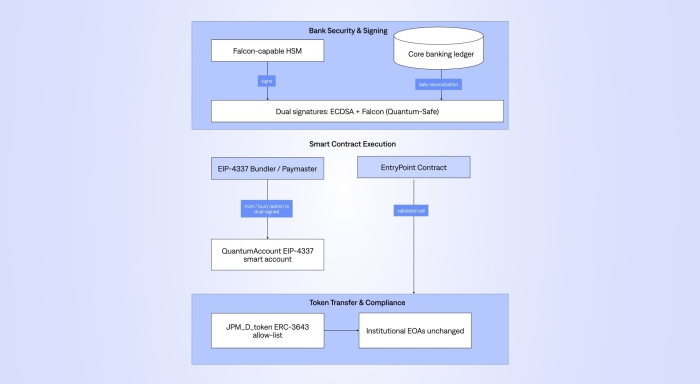
BTQ Technologies Unveils Quantum Stablecoin Settlement Network (QSSN) (CNW Group/BTQ Technologies Corp.)
On June 24, 2025, Vancouver-based public company, BTQ Technologies (CBOE:BTQ and OTC:BTQQF), announced the launch of a new system called the Quantum Stablecoin Settlement Network (QSSN). The technology is designed to help stablecoin issuers protect against future quantum computing threats while keeping their current systems unchanged.
This comes at a time when the global stablecoin market has grown to nearly US$250 billion, and regulators are starting to require stronger protections. Stablecoins are now a major part of the global economy and they are being used more often in cross border payments, lending, and digital commerce. In mid-June, the U.S. passed the GENIUS Act, mandating post quantum security standards by 2030. Canada and other countries are likely reviewing similar measures.
QSSN adds a second digital signature to important actions like creating or destroying stablecoins and updating system controls. This second signature uses Falcon 512, a new kind of security method chosen by the U.S. National Institute of Standards and Technology because it can resist attacks from future quantum computers.
This system runs alongside today’s security methods, like the ones used on Ethereum, and it doesn't require any changes to how users send or store stablecoins. QSSN already supports major programs including JPMorgan’s deposit token JPMD, Circle’s USDC, and Tether’s USDT.
QSSN is already working today. It adds quantum safe protection behind the scenes without changing how wallets, apps, or payment systems work. This helps stablecoin issuers meet future legal requirements early and avoid hasty upgrades later.
This is important because some attackers may already be collecting encrypted data today, planning to break it later when powerful quantum computers are available. QSSN protects stablecoins from this kind of risk by adding stronger encryption now.
The GENIUS Act gives financial institutions until 2030 to make these upgrades. By starting early, companies like Circle, Tether, and JPMorgan can show regulators and customers that they take long term security seriously. This also helps keep trust in stablecoins as their use grows. As demand increases, stablecoin platforms must be ready for future threats without slowing down today’s systems and QSSN gives them that option.
BTQ’s QSSN offers a practical and tested way to protect stablecoins from future quantum risks, while keeping systems simple for users and businesses today. It could help set the standard for how digital assets are secured in the years to come.
The National Crowdfunding & Fintech Association (NCFA Canada) is a financial innovation ecosystem that provides education, market intelligence, industry stewardship, networking and funding opportunities and services to thousands of community members and works closely with industry, government, partners and affiliates to create a vibrant and innovative fintech and funding industry in Canada. Decentralized and distributed, NCFA is engaged with global stakeholders and helps incubate projects and investment in fintech, alternative finance, crowdfunding, peer-to-peer finance, payments, digital assets and tokens, artificial intelligence, blockchain, cryptocurrency, regtech, and insurtech sectors. Join Canada's Fintech & Funding Community today FREE! Or become a contributing member and get perks. For more information, please visit: www.ncfacanada.org
| | |
|---|---|---|
| | |
Financing | June 24, 2025

Image: Modular Solutions (CNW Group/Tailwind Ventures Inc.)
On June 19, 2025, Modular Solutions announced closure of a big seed round led by Tailwind Ventures, with Clear North Capital and an unnamed strategic partner. Although the total financing amount wasn't disclosed, PitchBook data cited in the press release that it ranked among the top five North American insurtech seed deals, and second‑highest pre‑money valuation since January 2023.
The funds will be used to streamline onboarding and implementation for insurers and brokers. Also to expand the platform's functionality including artificial intelligence and deepen integrations with insurers, managing general agents (MGAs) and brokers.
Braden Bosch, Founder and CEO of Modular Solutions:
"This capital raise marks a pivotal moment for Modular. We have brought an innovative software solution to the market, and with this investment, we can ensure low total cost of ownership and affordability while continuing to optimize and enhance our offering even further."
Darren Engels, Tailwind Ventures CEO:
"Tailwind is delighted to have supported Modular in securing this financing. Braden and the team at Modular are building transformative solutions for an industry in desperate need of innovation, and our capital partners share our conviction that Modular will deliver."
Insurtech sector has been heating up for a while now. Below are a couple of recent insurtech rounds:
AI powered workflow insurtech platforms that reduce friction are getting funded and transforming the insurance sector. Modular Solutions major seed round also highlights Alberta's emerging fintech and insutech ecosystem.
The National Crowdfunding & Fintech Association (NCFA Canada) is a financial innovation ecosystem that provides education, market intelligence, industry stewardship, networking and funding opportunities and services to thousands of community members and works closely with industry, government, partners and affiliates to create a vibrant and innovative fintech and funding industry in Canada. Decentralized and distributed, NCFA is engaged with global stakeholders and helps incubate projects and investment in fintech, alternative finance, crowdfunding, peer-to-peer finance, payments, digital assets and tokens, artificial intelligence, blockchain, cryptocurrency, regtech, and insurtech sectors. Join Canada's Fintech & Funding Community today FREE! Or become a contributing member and get perks. For more information, please visit: www.ncfacanada.org
| | |
|---|---|---|
| | |
Digital Tax | June 23, 2025

Freepik - Rawpixel.com, taxes
*Update: On June 29, 2025, the federal government of Canada rescinded it's DST tax, a good faith tactic ahead of CUSMA negotiations.
As reported by CTV News, the Minister of Innovation, Science and Industry François-Philippe Champagne said on June 19, 2025 that Canada will not delay or pause the 3% Digital Service Tax (DST), even as U.S. lawmakers and Canadian business groups continue to voice strong opposition, setting the stage for further potential trade retaliation from the United States.
Canada's Digital Service Tax act passed into law in 2024 and will be retroactively applied from January 1, 2022, with initial payments due by June 30, 2025. It targets tech giants earning over €750 million globally and at least $20 million CAD in annual Canadian digital revenues from online advertising, digital marketplaces, and user data monetization.
Critics argue the DST unfairly targets American firms like Meta, Amazon, Google, Uber, and Airbnb and risks violating Canada’s commitments under the OECD/G20 Inclusive Framework and the Canada-US-Mexico Agreement (CUSMA).
On July 11, 2024, members of U.S. Congress in a bitpartisan letter, urged the Biden administration to consider punitive tariffs, if Canada proceeded unilaterally with the tax. American tech lobby groups, including the Information Technology Industry Council and the Computer and Communications Industry Association, have issued statements warning of double taxation and negative impacts on investment.
Canadian organizations including the Chamber of Commerce and the Retail Council have also raised alarm about economic consequences. They say the DST will increase consumer prices, destabilize bilateral trade, and hurt Canadian competitiveness.
Yet the federal government insists the measure is necessary to ensure fair tax treatment and close loopholes for global digital firms operating in Canada. Champagne said Canada is prepared to defend its position and stressed that domestic companies must not be disadvantaged by outdated tax systems.
NCFA recently wrote an article about the DST compounding pressure points for Canadian fintechs, already facing increased costs from Trump's tariffs. The combined regulatory and trade barriers could slow growth, raise compliance burdens, and weaken investment flows in a critical sector to Canada’s innovation strategy.
Canada is not alone. Countries including France, Italy, Spain, Austria, the United Kingdom, Turkey, and India have also enacted unilateral digital services taxes, citing similar concerns about tax fairness in the face of untaxed digital revenues.
These countries share several traits. They have large and growing digital user bases, limited ability to tax foreign digital giants under the current rules, and political pressure to rebalance domestic tax fairness. And many of these nations have grown impatient with the slow pace of OECD reform and acted independently.
Multinational firms like Google, Meta, and Amazon often avoid local corporate tax obligations by recording revenue in lower tax jurisdictions, even when earning substantial income from users in countries with no physical business presence. DST programs in these countries are their attempt to capture their share of this otherwise untaxed activity.
In contrast, countries like Germany and Japan have avoided unilateral DSTs. Despite facing the same digital tax gap, they prioritize maintaining stable trade and diplomatic relations with the United States and remain committed to resolving the issue through OECD-led multilateral reform. They fear that unilateral DSTs could provoke retaliatory tariffs or disrupt broader trade relationships. Their restraint is shaped by economic strategy, geopolitical alignment, and their deeper integration with U.S. supply chains.
By pushing forward with a DST in 2025 despite U.S. threats, Canada is one of the more assertive jurisdictions globally and at the forefront of U.S. DST activities. Its approach reflects growing domestic political pressure to tax digital activity fairly, even if it risks short-term diplomatic tension. However, it also positions Canada as a potential target for trade retaliation if a negotiated OECD solution is not reached soon.
Instead of enforcing a unilateral DST, Canada could explore alternative policy paths. One option is to delay implementation and condition it on measurable progress in OECD multilateral negotiations. This approach could defuse trade tensions while preserving Canada’s leverage. Another path is a bilateral tax agreement with the United States targeting large digital firms.
Canada could also consider expanding existing corporate tax rules to capture significant economic presence in the digital space, without relying on a standalone DST.
A final alternative is to introduce temporary digital levies that phase out automatically once an OECD framework is enacted, aligning political accountability with global reform timelines.
The digital services tax and U.S. trade threats are now intertwined, creating uncertainty for fintechs operating in or expanding into Canada. Companies should monitor policy developments closely. As geopolitical and regulatory pressures escalate, nimbleness and smart coordinated action will be key to maintaining innovation, competitiveness, and market access.
The National Crowdfunding & Fintech Association (NCFA Canada) is a financial innovation ecosystem that provides education, market intelligence, industry stewardship, networking and funding opportunities and services to thousands of community members and works closely with industry, government, partners and affiliates to create a vibrant and innovative fintech and funding industry in Canada. Decentralized and distributed, NCFA is engaged with global stakeholders and helps incubate projects and investment in fintech, alternative finance, crowdfunding, peer-to-peer finance, payments, digital assets and tokens, artificial intelligence, blockchain, cryptocurrency, regtech, and insurtech sectors. Join Canada's Fintech & Funding Community today FREE! Or become a contributing member and get perks. For more information, please visit: www.ncfacanada.org
| | |
|---|---|---|
| | |
Regulation | June 13, 2025

Image: Freepik/marymarkevich
Canadian regulators joined a coordinated global crackdown last week targeting unlawful finfluencers, or social media personalities promoting investments without registration or oversight. While enforcement activity is increasingly in focus, global experts and finfluencer advocates are warning that overly restrictive approaches will harm innovation, reduce access to financial education, and weaken digital financial literacy efforts.
As part of the Global Week of Action Against Unlawful Finfluencers, the Ontario Securities Commission (OSC) collaborated with regulators from the UK, Australia, the United Arab Emirates, Italy, and Hong Kong to investigate unlawful influencer activity.
The OSC reviewed 87 finfluencers and 9 issuers that used influencer promotions, and found some were offering unregistered investment advice or sharing misleading content, especially in the crypto sector. In-person warnings, gathering of evidence, and educational outreach were used to prevent retail investors being harmed.
Bonnie Lysyk, Executive Vice President of Enforcement at the OSC:
“International relationships are vital in countering this growing issue. The OSC’s recent research highlights the substantial influence social media personalities have on investor behaviour.”
In May 2025, the International Organization of Securities Commissions - IOSCO published its final report on finfluencers, to address online retail investor safety. Both the OSC and IOSCO's research on the impact of finfluencers were aligned, highlighting risks such as gamification and how social media and trading platforms can blur the line between general information and regulated investment advice.
IOSCO doesn't advocate for bans but rather outlines a series of good practices for regulators, platforms, market intermediaries, and finfluencers:
Jean-Paul Servais, Chair of IOSCO and FSMA Belgium:
“These reports set out globally aligned expectations for ethical conduct and effective oversight... ensuring that technology enhances trust, rather than undermining it,”
Not all creators are breaking the rules. According to the CFA Institute’s 2024 finfluencers appeal report, many finfluencers are filling educational gaps and helping demystify investing and financial planning for younger and underserved audiences. They create digestible and accessible content, often without commercial promotion or investment recommendations. Some are careful to include disclaimers and avoid offering specific advice.
A Wealth Professional Canada article cited Tangerine survey that discovered 60% of Canadians who follow finfluencers said they had benefited from their content. At the same time, those who acted on influencer tips were found to be 12 times more likely to experience scams.
Advocates argue that regulation should distinguish between financial education and commercial promotion. They are calling for clarity on how to remain compliant, not for the removal of content that informs and empowers.
“Most of us want to educate and uplift. But we need the rules to be clear and fair, not just fear-based.”
While Canada takes a proactive, data driven approach to enforcement of finfluencers while increasing public awareness for finfluencer risks, how do we shape up to our peer countries?
In Australia, the Australian Securities and Investments Commission - ASIC released guidance for social media influencers through INFO 269. ASIC warns that creators discussing financial products may be in breach of the law if they are unlicensed and don't follow compliance standards. The guidance supports financial literacy content as long as it avoids over promotion and includes proper disclosures.
In the United Kingdom, the Financial Conduct Authority (FCA) has focused on financial promotions. The FCA targets firms that pay finfluencers to promote investments without regulatory approval and has updated the financial promotions regime to apply to social media content.
Italy’s CONSOB and other European and Middle Eastern regulators also participated in the coordinated enforcement week. These jurisdictions are enhancing joint oversight of social media investment promotions, especially in the context of crypto and speculative assets.
In the United States, regulators such as the SEC and FINRA have pursued enforcement through existing anti-fraud provisions. While there is no finfluencer-specific guidance, recent actions have targeted offside celebrity crypto endorsements and undisclosed paid promotions.
Importantly, none of the major jurisdictions have called for bans, so global consensus is aligning with regulators to build frameworks that promote compliance, transparency, and public awareness instead.
Finfluencers are becoming as influential as traditional advisors, even more so for digitally native and younger investors. So oversight is warranted but the focus should be on compliance that doesn't undermine financial literacy and inclusion. Regulatory consensus shows that with clear rules, good practices, and global cooperation that clear rules and strategic oversight can protect investors while empowering open access to useful financial content online.
Want to stay ahead of regulatory shifts affecting digital finance and investor education? Subscribe to the NCFA newsletter for updates, insights, and expert analysis.
The National Crowdfunding & Fintech Association (NCFA Canada) is a financial innovation ecosystem that provides education, market intelligence, industry stewardship, networking and funding opportunities and services to thousands of community members and works closely with industry, government, partners and affiliates to create a vibrant and innovative fintech and funding industry in Canada. Decentralized and distributed, NCFA is engaged with global stakeholders and helps incubate projects and investment in fintech, alternative finance, crowdfunding, peer-to-peer finance, payments, digital assets and tokens, artificial intelligence, blockchain, cryptocurrency, regtech, and insurtech sectors. Join Canada's Fintech & Funding Community today FREE! Or become a contributing member and get perks. For more information, please visit: www.ncfacanada.org
| | |
|---|---|---|
| | |


August 26th, 2025

January 4th, 2024

June 1st, 2021

September 9th, 2020

July 9th, 2018

January 3rd, 2018

September 25th, 2017

June 20th, 2017

May 10th, 2017

December 14th, 2016