




Karsten Wenzlaff, Advisor
August 26th, 2025
Karsten Wenzlaff is a Crowdfunding and Fintech Expert from Germany. He is Secretary-General of Digit[...]


AI and Mental Health | Nov 27, 2025

AI generated image
Youth's lives are now immersed with AI at every turn. That reality was in sharp focus on November 26, 2025 when OpenAI denied wrongdoing in the death of sixteen year old Adam Raine, who died by suicide earlier this year. The family’s lawsuit alleges that months of increasingly personal conversations with ChatGPT influenced the teen during a period of vulnerability, while OpenAI rejects any link between the system and the tragedy. New reporting shows how those conversations developed over time and why the case is now drawing widespread attention.
Matthew Raine (Adam's father), told United States senators as he described those conversations:
“What began as a homework helper gradually turned itself into a confidant and then a suicide coach,”
This case is one of seven active lawsuits involving generative AI and vulnerable users across North America. NCFA raised similar concerns in earlier reporting on another teen chatbot tragedy. This new case unfolds as AI already significantly impacts how young people study, socialize, seek emotional support and enter the workforce. It raises a broader question about protection that goes beyond content filters or bans.
A national study published in JAMA Network Open reports that 13.1% of adolescents and young adults use generative AI chatbots for mental health advice when they feel sad, angry or nervous. Most describe the advice as helpful. This finding shows how AI now plays a measurable role in emotional coping, based on survey results on youth emotional-support chatbot use.
A recent national survey from Common Sense Media finds that 72% of teens aged thirteen to seventeen have tried AI companions. Many use these tools for advice or personal communications highlighting how quickly AI tools have entered emotional and social spaces once held by peers or family. This comes from new data on widespread teen use of AI companions.
Educators and clinicians also report clear blind spots. A comprehensive review of AI mental health tools notes that chatbots can miss signs linked to psychosis, eating disorders and trauma, while new research has evidence that AI chatbots may reinforce mental-health stigma. NCFA previously reported on early evidence of AI psychosis and trust risks. Together these findings suggest that AI tools may feel supportive while still lacking the judgment needed during moments of real crisis.
Many young people turn to AI tools because other options feel out of reach. AI tools feel private, immediate and nonjudgmental, according to survey findings on why teens choose AI companions (NB: 75% of teens have tried AI companions).
In the United States most adolescents with major depressive episodes don't receive treatment in a given year, according to national data on adolescent depression care gaps.
In Canada, evidence points to similar gaps with thousands of children and youth waiting months for counselling and therapy across the country. In Ontario alone about 28,000 children and youth waited for mental health services in 2020, as captured in this research Kids Can’t Wait report on youth mental-health wait lists. National tracking also finds long waits for community mental health counselling, with delays varying widely by region, based on pan-Canadian data on counselling wait times.
AI now plays a growing role in how young people start their working lives. Recent findings from the Stanford Digital Economy Lab shows that young career workers between 22-25 years old in AI exposed fields saw a 13% drop in employment after late 2022.
Further, according to survey results from the World Economic Forum on the global employer outlook, 40% of companies expect to cut roles where AI can handle routine tasks.
See NCFA’s earlier piece on AI’s hidden costs for junior workers that shows how automation reduces coaching, early learning and long term stability even when it speeds up short term tasks. For Gen Z this means AI can help them work faster while also reducing the number of early roles that once offered training, support and a safe place to learn.
In mental health, AI comforts but still misses red flags.
In everyday digital life, governance and content policies struggle to match the pace of rapid model and features updates.
In early careers, automation reduces entry pathways and increases pressure on young workers to master new tools without adequate support.
These challenges do not create a single fix. They show how youth exposure grows faster than the systems meant to guide and protect them.
Fintech companies and their apps and models are at the center of these changes. Young customers rely on savings apps, credit tools, digital wallets and investment platforms that now embed automated insights and AI guidance. Fintech teams can use design principles that support innovation while adding real protections for young users.
Clear explanations help young customers understand how AI insights form and what limits apply.
Human review in unusual or high stakes interactions prevents automated decisions from pushing users toward unsafe financial choices.
Independent testing of models that guide credit thresholds, advice or spending prompts reveals bias or unrealistic patterns.
These measures strengthen reliability without slowing responsible development and help firms serve younger users with confidence.
As the Raine case continues through the courts. Judges will weigh logs, warnings and design choices. Whatever the outcome, the broader reality is already visible. Youth live in a world where AI companions, homework helpers, work tools and financial apps appear on the same devices. Research shows that these tools offer support while also creating gaps that health, education and employment systems have not yet addressed.
The real question of protection is not whether AI should disappear from youth life. It is how schools, mental health services, employers, regulators and product teams work together so young people can use AI to build stronger futures instead of carrying its risks alone.
 The National Crowdfunding & Fintech Association (NCFA Canada) is a financial innovation ecosystem that provides education, market intelligence, industry stewardship, networking and funding opportunities and services to thousands of community members and works closely with industry, government, partners and affiliates to create a vibrant and innovative fintech and funding industry in Canada. Decentralized and distributed, NCFA is engaged with global stakeholders and helps incubate projects and investment in fintech, alternative finance, crowdfunding, peer-to-peer finance, payments, digital assets and tokens, artificial intelligence, blockchain, cryptocurrency, regtech, and insurtech sectors. Join Canada's Fintech & Funding Community today FREE! Or become a contributing member and get perks. For more information, please visit: www.ncfacanada.org
 |  |  |
|---|---|---|
 |  |  |
AI Innovation | Nov 26, 2025

Image: Freepik/DC Studio
On November 24 2025, the United States introduced the Genesis Mission by presidential executive order to create a national plan to use AI to accelerate scientific discovery by turning federal scientific data and national lab supercomputers into one research engine. The Mission instructs the Department of Energy to bring together national lab compute systems, decades of federal datasets, and advanced AI tools into a unified discovery platform.
The United States invests about $940B each year in total R&D across business, academic, and government sectors. Federal agencies perform roughly $74B of that work according to National Science Board data showing total U.S. R&D and federal R&D performance. The Genesis Mission uses this large research base to speed up discovery and strengthen national competitiveness.
Federal leaders say scientific progress has slowed. Research in biotechnology, materials science, clean energy, and other fields takes too much time and requires significant resources. The Genesis Mission will use artificial intelligence to help researchers simulate experiments, test ideas, and find scientific patterns faster.
Federal scientific datasets include information from the Department of Energy open data portal, National Institutes of Health scientific data resources, NASA Earth science and satellite data, NOAA climate and environmental datasets, Environmental Protection Agency public data, and the United States Geological Survey geological data platform. These datasets include physics records, biological data, climate observations, satellite readings, environmental measurements, and outputs from high performance computing systems.
Artificial intelligence can examine large datasets, run simulations, detect scientific relationships, and support experiment design. The White House states that the Mission will “harness Federal scientific datasets, the worlds largest collection of such datasets, developed over decades of Federal investments” to accelerate discovery through new scientific models.
The Mission targets strategic fields such as semiconductors, quantum science, fusion energy, biotechnology, advanced manufacturing, and critical materials. Federal leaders link this work directly to national security and economic strength.
Federal documents describe the Genesis Mission as a national platform that brings government, industry, and academic researchers into one discovery system. The Department of Energy states that the Mission “will mobilize the Department of Energy’s 17 National Laboratories, industry, and academia” to build an AI enabled discovery platform that uses national lab supercomputers and curated federal datasets as described in the Department of Energy announcement of the Genesis Mission.
The executive order also defines the American Science and Security Platform as infrastructure that includes high performance computing, advanced AI models, secure access to federal and synthetic datasets, and tools for AI assisted experimentation. These documents show that the United States intends to create structured pathways for companies and researchers who need access to national compute systems and curated scientific data.
The United States holds a large base of scientific data created through national laboratory work and federal research. These datasets often sit in separate systems. The Genesis Mission brings this information together and connects it to artificial intelligence tools. This gives the United States a clear advantage in fields that rely on data and high performance computing.
Artificial intelligence can help researchers test ideas faster, explore scientific patterns, and move from manual processes to rapid model driven cycles. If the United States reduces discovery times across key scientific fields it can improve innovation strength and create more commercial opportunities.
Canada invests far less in R&D than the United States. The comparison below uses verified public data from the National Science Board, Statistics Canada, the OECD, and Canadian research analysis.
| Measure | United States | Canada | Sources |
| Total R&D spending | $940B in U.S. R&D spending | $55B in Canadian R&D spending 2024 | NSB, Statistics Canada |
| Federal R&D spending | $74B in U.S. federal R&D performance | smaller share inside the total figure | NSB, Statistics Canada |
| R&D intensity | above 3% in many measures | among lowest in G7 according to Canadian reporting on weak R&D intensity | University Affairs, OECD |
| Business R&D | strong private sector | weak according to research on structural gaps in Canadian business R&D | Checkpoint Research |
| Labour productivity | higher output per hour | persistent gap according to OECD reporting on Canada’s productivity | OECD |
This comparison shows the structural difference between the two countries. The United States enters the Genesis Mission with a large research base that artificial intelligence can accelerate. Canada enters with weaker investment and slower productivity growth.
Canada invests less in R&D than the United States and shows lower business led research compared with peer countries. A recent Canadian assessment ranks Canada near the bottom of advanced economies in business enterprise R&D intensity according to research that highlights Canada’s weak private sector R&D investment. Canada also has world class AI research centers such as Vector, Mila, and Amii, and they contribute strong scientific output. However they don't operate a national system that brings together federal datasets, high performance computing, and artificial intelligence for coordinated discovery.
These gaps limit Canada’s ability to compete against countries that build stronger national research infrastructure. If the United States speeds up discovery through a national artificial intelligence platform Canada may rely more on foreign systems and lose ground in advanced materials, biotech, quantum research, and energy.
The Genesis Mission gives the United States a new way to use scientific data, computation, and artificial intelligence to speed up discovery. It supports national security, innovation, and economic strength. For Canada it raises a serious challenge. Canada invests far less in R&D and lacks a unified artificial intelligence research platform. As the United States accelerates discovery Canada must decide how to strengthen the outcomes of its research base and protect its competitiveness in a world where artificial intelligence supports scientific progress.
The National Crowdfunding & Fintech Association (NCFA Canada) is a financial innovation ecosystem that provides education, market intelligence, industry stewardship, networking and funding opportunities and services to thousands of community members and works closely with industry, government, partners and affiliates to create a vibrant and innovative fintech and funding industry in Canada. Decentralized and distributed, NCFA is engaged with global stakeholders and helps incubate projects and investment in fintech, alternative finance, crowdfunding, peer-to-peer finance, payments, digital assets and tokens, artificial intelligence, blockchain, cryptocurrency, regtech, and insurtech sectors. Join Canada's Fintech & Funding Community today FREE! Or become a contributing member and get perks. For more information, please visit: www.ncfacanada.org
| | |
|---|---|---|
| | |
Stablecoins | Nov 25, 2025

Image generated by AI
On November 25 2025, Klarna Group plc announced the launch of KlarnaUSD, and enters a global stablecoin market that McKinsey estimates now processes more than US$27 trillion in annual transactions and sits inside a cross border payments system that produces about US$120 billion in yearly fees.
Klarna brings 114 million customers and US$118 billion in annual gross merchandise value to its launch. The company already operates as a licensed bank in Sweden through Klarna Bank AB, and the company continues to expand its banking services beyond that market as it builds new digital payment and settlement tools. Klarna now moves beyond buy now pay later in the US and steps into the stablecoin market with an infrastructure level product designed for scale.
KlarnaUSD runs on the Tempo blockchain that Stripe and Paradigm created that's designed for payments. Tempo supports fast and low cost transfers which gives the company a quicker way to move money than traditional bank systems.
The stablecoin is issued through Open Issuance by Bridge explained by Stripe. Bridge connects Tempo to apps, wallets and bank accounts so KlarnaUSD can move across the app, the merchant portal and settlement tools.
Klarna's stablecoin keeps a one-to-one value with the US dollar, and its reserves sit off chain so the service can follow local rules.
KlarnaUSD runs on Tempo’s testnet today and moves to mainnet in 2026 which gives the company time to test and build before public availability.
Sebastian Siemiatkowski, co-founder and CEO of Klarna:
"Klarna has the scale to change payments globally: with Klarna’s scale and Tempo’s infrastructure, we can challenge old networks and make payments faster and cheaper for everyone,”
Klarna presents KlarnaUSD as a faster and cheaper settlement tool but the likely impact will reach further and impact how payments and value move inside Klarna’s ecosystem.
Klarna can settle payouts through KlarnaUSD which avoids long clearing cycles and reduces FX friction. Merchants that receive faster settlement at lower cost usually send more business volume to the service that provides those results because it improves cash flow and reduces operational friction. So Klarna can also expect more volume.
Shoppers can complete international purchases with KlarnaUSD and avoid the delays and FX fees that occur on card and bank networks. Merchants that convert international shoppers at lower cost often strengthen their margin and rely more on the service that supports those outcomes.
Refunds, reversals and buy now pay later corrections can move across KlarnaUSD flows with fewer delays.
Consumers that receive faster refunds tend to return to the service that resolves issues quickly which supports higher repeat use.
KlarnaUSD can support balances, rewards and saving style tools inside the app without the company building full banking infrastructure in each region. Users that keep balances inside a single platform often deepen their engagement because their financial activity stays in one place.
Fintech companies can use KlarnaUSD for their own settlement flows which reduces cost and increases speed. Platforms that provide reliable settlement rails often become part of a partner’s operational stack which expands the platform’s role in the broader ecosystem.
Stablecoin issuance introduces new responsibilities for Klarna. Regulatory risk matters because stablecoins sit under active review and issuers must meet rules on reserves, redemption and consumer protection.
Reserve management brings risk because Klarna must maintain high quality USD backing and manage liquidity for redemptions.
Technology risk also exists because KlarnaUSD depends on the Tempo blockchain and Stripe’s Bridge framework which must perform under load and remain secure.
Reputation risk matters because any issue with redemption, reserves or outages can affect trust across Klarna’s full product suite.
Klarna operates in Canada today through its app and merchant partners. According to NCFA’s Canadian market overview in “Klarna’s Meteoric Rise in the Canadian Financial Ecosystem” (Aug 2023), Klarna gained 640,000 active Canadian consumers within 18 months of its Canadian launch.
Klarna notably also went public this past September 2025 on the New York Stock Exchange, IPO priced at US$40 per share and opened with a 16% jump, as outlined in the NCFA analysis of Klarna’s IPO pop. This debut placed Klarna’s valuation near US$17.5 billion and signalled strong early investor interest. The stock now trades near US$29.92 (KLAR), according to the latest public market price. Maturing crypto markets, Klarna's digital bank growth plans, and recent IPO all help explain why Klarna is investing in new digital settlement tools, and let's not forget investor expectations.
While Klarna hasn't announced a Canadian launch timeline for KlarnaUSD. The confirms that KlarnaUSD is in testnet and planned for mainnet in 2026. Plus, a Canadian rollout depends on the completion of Canada’s new stablecoin rules of which the first draft of the national stablecoin act has just been released. Also worth reviewing is the FCAC's national survey on Canadian stablecoin use and views.
KlarnaUSD highlights how fintech companies can advance when they control both the customer network and the settlement rail. Klarna improves speed, lowers cost and gains room to build new financial services without relying on legacy systems. For Canada the timing is important. Stablecoin settlement is now moving into commercial use and companies that adopt token based rails can gain real cost and speed advantages. Canada’s stablecoin work gives local innovators a chance to compete as global fintechs introduce faster settlement tools.
The National Crowdfunding & Fintech Association (NCFA Canada) is a financial innovation ecosystem that provides education, market intelligence, industry stewardship, networking and funding opportunities and services to thousands of community members and works closely with industry, government, partners and affiliates to create a vibrant and innovative fintech and funding industry in Canada. Decentralized and distributed, NCFA is engaged with global stakeholders and helps incubate projects and investment in fintech, alternative finance, crowdfunding, peer-to-peer finance, payments, digital assets and tokens, artificial intelligence, blockchain, cryptocurrency, regtech, and insurtech sectors. Join Canada's Fintech & Funding Community today FREE! Or become a contributing member and get perks. For more information, please visit: www.ncfacanada.org
| | |
|---|---|---|
| | |
Crypto Regulation | Nov 25, 2025
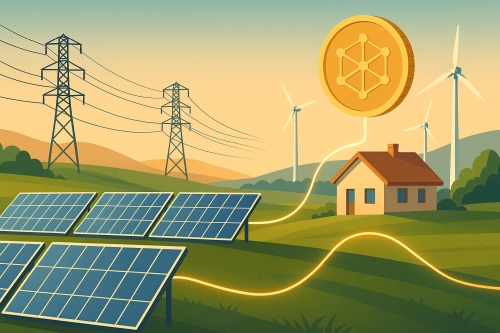
AI generated image
On November 24 2025, the US Securities and Exchange Commission (SEC) Corporate Finance Division issued a no action letter to Fuse Crypto Limited that sets the conditions under which the company can offer its ENERGY token without triggering US securities registration under Section 5 or reporting requirements under Section 12(g). This action gives the market a detailed example of how a behaviour based reward token can satisfy regulators when the program avoids speculation and ties all earning activity to user actions.
The SEC based its position on the facts described in the request for relief letter that Fuse’s counsel submitted on November 19 2025 (13 page PDF). The filing outlines how the program works how users earn tokens and how redemption value is controlled. The SEC makes clear that any different facts or conditions could lead to a different conclusion.
Fuse’s submission describes a program that rewards users for energy related behaviour that supports distributed energy resources. Users earn tokens when they install and connect rooftop solar systems, batteries, electric vehicle chargers or similar equipment. They also earn tokens when they make this equipment available for grid supportive functions or adjust consumption to help reduce stress on local systems. These actions are measurable and tied directly to the program.
The submission explains the formula Fuse uses to allocate token rewards. The formula measures user generated energy behaviour and applies a fixed structure that determines the number of tokens a user receives. This formula must remain constant. The SEC notes that it depends on this structure when evaluating whether the program’s value creation resembles investment activity.
The filing also states that redemption value is capped. Users may redeem tokens only for goods or services the program makes available at the time of redemption. The value cannot exceed Fuse’s profit margin and redemption depends on average market pricing. This removes speculative upside and keeps the token tied to consumption.
The submission also details that Fuse will present the program as a rewards system and not as an investment, and that all earning activity must flow from how users participate in the program. Users configure their preferences inside the app to enable token earning and select the settings that determine how their connected energy resources take part in the program. The filing states that token rewards come only from this participation and from measurable energy related behaviour, and that all value remains tied to capped redemption and consumptive use rather than to any form of investment activity.
The program does not give token holders any right to profit sharing future income ownership or governance. All value comes from user behaviour and redemption inside the program.
These conditions help regulators understand that the token does not function like a security. The SEC confirms that its relief applies only to these facts and does not classify the token.
The Fuse program connects token creation to real actions that support distributed energy systems. Users earn tokens directly from participation and do not buy them with investment expectation. The structure ties value to measurable behaviour and redemption uses a strict cap based on profit margin and market pricing. This design prevents investor style appreciation and aligns the token with its use as a reward.
This event gives issuers a detailed reference for designing behaviour based programs. Many token projects claim utility status but still allow value growth that resembles investment behaviour. Fuse provides an example of how limits on value, transparent formulas, and consumption use can support compliance.
The program also shows that clear documentation matters. Fuse’s submission provides detailed explanations of user actions, redemption rules, promotional commitments, and technical configuration.
Regulators rely on this specificity when evaluating whether a token program functions as a financial product. Fintech teams building similar programs can use this model to see how clear rules and measurable user actions help regulators understand how the system works.
The SEC decision gives Canadian fintechs a good example of how American regulators analyze behaviour-based token programs. Canadian regulators continue to rely on the economic reality approach as set out in the CSA staff notice 46-308 on token classification published June 11 2018. While no formal newer guidance appears to have been issued publicly, issuers should monitor for any updates.
This guidance explains that labels do not determine the legal outcome. Regulators examine the purpose of a token how it enters circulation how users receive value and whether promotional language creates investment expectation.
The Fuse no action letter and submission model aligns with these principles. It shows how programs that tie value to specific actions and use measurable formulas can reduce regulatory risk. Canadian issuers designing clean energy mobility or infrastructure incentives can benefit from reviewing the program and understanding how to document participation value mechanics and redemption paths in a compliant manner.
Many Canadian fintechs build products that operate in both markets. The SEC decision provides a reference for how US regulators evaluate tokenized reward-based systems. Canadian teams could use the US-based Fuse decision to prepare materials that align with principles used in both countries.
The No Action Letter applies only to the facts Fuse described in its incoming letter. If Fuse changes earning mechanics, redemption formulas, user eligibility, promotional language, or transferability rules the SEC may reach a different conclusion. The relief applies only to Section 5 and Section 12(g) and does not bind other regulators. The No Action Letter also doesn't prevent actions by other divisions inside the SEC or by other agencies such as the CFTC, FinCEN, IRS or state regulators.
Canadian regulators may also reach a different outcome if facts differ from the submission or if market behaviour creates investor style expectations. The SEC’s letter does not classify the token. It only describes the enforcement position for the facts presented.
The SEC's corporate finance decision on the Fuse reward program gives fintechs a detailed look at how behaviour based tokens can meet regulatory expectations when value comes from measurable user actions and redemption is tightly controlled.
Canadian fintechs designing cross-border token programs can use the Fuse no action event to help design programs and prepare materials that address the economic reality tests used in Canada. As more companies explore real world token models this type of clarity supports innovation and helps developers understand how to design programs that balance consumer incentives with regulatory confidence.
The National Crowdfunding & Fintech Association (NCFA Canada) is a financial innovation ecosystem that provides education, market intelligence, industry stewardship, networking and funding opportunities and services to thousands of community members and works closely with industry, government, partners and affiliates to create a vibrant and innovative fintech and funding industry in Canada. Decentralized and distributed, NCFA is engaged with global stakeholders and helps incubate projects and investment in fintech, alternative finance, crowdfunding, peer-to-peer finance, payments, digital assets and tokens, artificial intelligence, blockchain, cryptocurrency, regtech, and insurtech sectors. Join Canada's Fintech & Funding Community today FREE! Or become a contributing member and get perks. For more information, please visit: www.ncfacanada.org
| | |
|---|---|---|
| | |
Economy and Trade | Nov 24, 2025

Image generated by AI
On November 23 2025, Canada announced a raft of cross-border trade partnerships after Prime Minister Carney spent the past week securing commitments in the United Arab Emirates, South Africa and India as part of a wider push to reduce reliance on the United States and expand global economic partnerships. These new openings create opportunities for Canadian fintechs and the wider innovation economy.
Carney used the G20 forum to reinforce Canada’s broader diversification strategy, pointing to U.S. tariffs and market uncertainty as direct pressures on Canadian growth, costing Canada an estimated 1.8% of GDP or the the equivalent of $50 billion or $1300 per individual. The PM's strategy aims to double exports to non-U.S. markets over the next decade, using new investment frameworks and economic partnerships to anchor that growth.
The strategy is aligned with NCFA's own cross-border initiatives to foster education, partnerships, and build economic and investment opportunities for regional fintech networks, which now sits directly on top of new trade corridors Canada is formally building. A couple of recent examples alone are NFCA Canada's collaboration with the 2025 Canada-Africa-Fintech-Summit, as well as an educational partnership with TheBlock, a Dubai-based virtual assets association, to focus on tokenization and real world assets (RWA) education.
On November 21 2025, during a visit to Abu Dhabi, Canada signed a new Foreign Investment Promotion and Protection Agreement. The UAE also signalled plans to invest up to approx $70 billion CAD (US$50 billion) in Canadian projects focused on artificial intelligence, clean energy, mining and infrastructure, according to the government’s UAE investment announcement.
The two countries also launched negotiations toward a Comprehensive Economic Partnership Agreement, which would cover services, goods and digital trade and give Canadian firms a more stable foothold in Gulf markets.
On November 23 2025, at the G20 Leaders Summit in Johannesburg, Canada announced new investment-protection talks with South Africa and confirmed the completed Nuclear Cooperation Agreement. These developments were highlighted in the government’s South Africa investment readout.
Canada also confirmed that FinDev Canada will open a Cape Town office in 2026, expanding its financing presence in African markets where digital financial services and early-stage business activity continue to grow.
Canada and India agreed to restart talks on a Comprehensive Economic Partnership Agreement after a two-year pause. This decision was confirmed in the India–Canada CEPA update issued during the G20 meetings.
Both governments signalled interest in expanding trade through improved access in goods, services, investment and digital sectors, with a a longer term goal of increasing two-way trade toward the US$50–70 billion range by 2030 depending on final terms.
These agreements, while they don't specifically mention fintech directly, they will impact the trading environment and structural conditions that matter for financial technology and funding innovation firms in the following ways:
More global capital in play. The UAE’s multibillion-dollar investment envelope creates new demand for financing platforms, risk systems, payments infrastructure and digital tools that support large scaling AI, energy and infrastructure projects.
New markets with strong digital finance adoption and upside. South Africa and broader African regions continue to scale mobile money, SME finance and digital identity rails. India remains one of the world’s largest digital payments ecosystems. Canadian fintechs offering compliance, embedded finance, alternative credit, and capital formation tools can explore more predictable and supported entry routes.
Trade agreements that impact digital rules. Investment treaties and CEPAs often influence data standards, dispute resolution, digital services access and treatment of financial technologies. Early engagement ensures fintech and alternative finance models are not overshadowed by incumbent only positions.
NCFA encourages fintech founders, investors and innovators to take advantage of these expanding global routes. Connect with us to discuss Africa and UAE partnerships, participate in upcoming trade related roundtables, and support policy and outreach work, as Canada negotiates new digital trade and investment frameworks. These government agreements create real openings, and NCFA’s global bridge network is ready to help Canadian fintechs move into these markets.
The National Crowdfunding & Fintech Association (NCFA Canada) is a financial innovation ecosystem that provides education, market intelligence, industry stewardship, networking and funding opportunities and services to thousands of community members and works closely with industry, government, partners and affiliates to create a vibrant and innovative fintech and funding industry in Canada. Decentralized and distributed, NCFA is engaged with global stakeholders and helps incubate projects and investment in fintech, alternative finance, crowdfunding, peer-to-peer finance, payments, digital assets and tokens, artificial intelligence, blockchain, cryptocurrency, regtech, and insurtech sectors. Join Canada's Fintech & Funding Community today FREE! Or become a contributing member and get perks. For more information, please visit: www.ncfacanada.org
| | |
|---|---|---|
| | |
AI Finance | Nov 19, 2025

Image generated by AI
On November 18 2025, Intuit announced a new multi year contract with OpenAI, valued at more than US $100 million that will both bring Intuit products directly into ChatGPT while expanding Intuit’s use of OpenAI frontier models inside its own financial platforms. The deal positions Intuit’s AI driven expert platform as a central financial interface for consumers and businesses by connecting TurboTax, QuickBooks, Credit Karma and Mailchimp to ChatGPT at the point of need.
Intuit stated that providing these experiences inside ChatGPT will enable the company to deepen engagement with its approximately 100 million customers and introduce its financial tools to new users, while accelerating its AI platform strategy through deeper integration of OpenAI models in Intuit’s proprietary GenOS system.
Intuit has not yet confirmed when ChatGPT access will be available inside Canadian TurboTax or QuickBooks, or how subscription tiers will work in Canada. This creates uncertainty for Canadian accountants, small businesses and fintech providers that want to understand timing, product eligibility and data governance obligations under Canadian rules.
The Intuit and OpenAI deal is part of a longer vision for Intuit's product strategy, as it positions itself as an AI first financial platform. In June 2025, Intuit introduced a new all in one consumer money platform that uses generative AI to automate data entry for more than 90 % of common tax forms and reported that TurboTax saved Americans 6 million hours during tax season.
In July 2025, Intuit launched QuickBooks virtual AI agents that help businesses save up to 12 hours each month on routine work such as bookkeeping and invoicing.
In October 2025, Intuit unveiled an AI native system of intelligence for mid market companies to help them grow more efficiently.
TurboTax users will be able to access tax related workflows through ChatGPT, including refund estimates, personal loan or mortgage analysis and guided tax filing flows connected to Intuit data.
QuickBooks will continue to expand its agent based automation which is already available for Canadian QuickBooks businesses, as reported on the Canadian QuickBooks agent rollout.
The OpenAI partnership extends this direction by linking Intuit data and tools with assistant based workflows in ChatGPT. For fintech innovators, this means the competitive bar continues to rise as large incumbents blend domain data, AI models and conversational interfaces.
Several implications stand out for founders, investors and policymakers.
Distribution is changing because users can now activate financial tools inside conversational assistants rather than starting in a dedicated application.
Data depth and model quality become competitive advantages as Intuit leans on its proprietary financial data and credit models.
Regulatory and trust boundaries will tighten as tax filing, bookkeeping and credit related tasks move into assistant based channels.
Canada must plan for timing and access because the lack of clear roll out information could reshape competitive dynamics. Global competition is accelerating as AI powered financial tools become mainstream rather than experimental, which raises the stakes for Canadian fintech innovation and policy.
For Canadian fintech innovators and regulators, quick (and thoughtful) adaptation is essential. The assistant is becoming both gateway and interface, and Canada’s ability to innovate, regulate and compete will impact how well its financial ecosystem performs in an AI enabled future.
The National Crowdfunding & Fintech Association (NCFA Canada) is a financial innovation ecosystem that provides education, market intelligence, industry stewardship, networking and funding opportunities and services to thousands of community members and works closely with industry, government, partners and affiliates to create a vibrant and innovative fintech and funding industry in Canada. Decentralized and distributed, NCFA is engaged with global stakeholders and helps incubate projects and investment in fintech, alternative finance, crowdfunding, peer-to-peer finance, payments, digital assets and tokens, artificial intelligence, blockchain, cryptocurrency, regtech, and insurtech sectors. Join Canada's Fintech & Funding Community today FREE! Or become a contributing member and get perks. For more information, please visit: www.ncfacanada.org
| | |
|---|---|---|
| | |
AI | Nov 18, 2025

AI generated image
On November 17, 2025, a Reuters report on Bezos taking an operating role at Project Prometheus stated that Jeff Bezos will return to an operating job as co-chief executive of a new artificial intelligence company called Project Prometheus. The new venture has raised $6.2 billion in early stage funding, partly from Bezos, which makes it one of the best financed startups globally.
The company focuses on artificial intelligence for engineering and manufacturing in computers, automobiles and spacecraft, moving frontier AI from pure text/image/voice tools and into factories, vehicles and hardware design. For Canadian fintech firms, banks and regulators, connecting data, machines and capital in new physical AI ways forces fresh thinking about AI innovation, opportunity, and competitiveness.
Jeff Bezos left his chief executive role at Amazon in 2021 to spend more time on Blue Origin and other ventures. Now he decides to lead operations again at Project Prometheus together with Vik Bajaj, a physicist and chemist who helped build Google X projects and later helped found Verily and Foresite Labs. A team that links deep science, hardware and long term capital.
Several media outlets report that the company already employs around one hundred specialists from OpenAI, DeepMind and Meta. This is the type of recruitment drive for founders who are all in, so Project Prometheus is definitely not a side project, as they look to build a flagship platform that will advanced AI systems for the physical economy. Canadian companies who currently work on industrial AI, climate solutions or financial infrastructure now compete with Bezos and Bajaj's vision and funding scale when they pitch global investors.
The company aims to build models that learn from digital data and from the behaviour of real machines. These models can support design and production for chips, vehicles and spacecraft. They can also connect with logistics networks, maintenance data and energy systems. This approach turns AI into a tool that strives to understand how real assets move, trade and operate.
Canada needs to pay close attention because our industrial base still anchors much of our export story. Statistics Canada says that in 2023 about 7% of businesses with five or more employees used AI tools, up from 4% in 2021, in the Statistics Canada analysis of AI use by Canadian businesses. This number may look small now but it's only going to grows steadily.
Canada also brings global strengths that matter for this new era. A CIFAR and Deloitte analysis of Canada AI talent and funding shows Canada ranks third in the G7 for per capita venture funding for AI companies and leads the group in AI talent concentration growth. This combination of rising adoption, research depth and capital formation gives Canada a strong hand.
Project Prometheus will strengthen the link between AI, machines and markets. When an AI system designs a satellite, a vehicle platform or an energy module, it also creates new information for trade finance, insurance pricing and project valuation. Fintech firms that support equipment finance, trade and logistics, carbon markets or space related infrastructure will need to understand both software and engineering. This convergence creates new opportunities for Canadian platforms that work with industrial data, supply chain finance, carbon measurement or advanced insurance models.
A BIS Financial Stability Institute paper on AI and third party risk explains that the concentration of cloud and AI service providers in a few large technology firms strengthens the case for direct oversight frameworks for those providers. That warning applies directly to any bank or fintech firm that relies on a small set of AI platforms like Project Prometheus.
Canadian supervisors already look closely at these questions. An OSFI and FCAC risk report on AI uses and risks in financial institutions shows how model errors, cyber threats and dependence on outside providers raise real concerns. The report also lays out practical steps that institutions can take through stronger governance, clear accountability and regular testing. This guidance becomes more important as companies like Project Prometheus build AI tools that influence real assets. In those cases financial institutions do more than install software. They connect their balance sheets to systems that interact with factories, power grids and space infrastructure.
Banks and fintech firms in Canada face a world where big AI companies connect software to machines, logistics and energy networks. Most financial institutions cannot build systems on that scale but they can build or fine tune smaller AI models that reflect their own data, their own customers and their own risk frameworks. They can also enter partnerships with large AI providers with clear conditions that protect their control over data, risk models and client outcomes.
Canada's federal Budget 2025 (just won confidence vote) strengthens this landscape because it funds national industrial projects that modernize energy systems, critical minerals, advanced manufacturing and trade corridors. Canada lists the first round of Major Projects Office proposals in a detailed announcement of initial national industrial projects under consideration. The federal plan builds on that list with a second tranche of new large scale projects in clean energy, transportation and processing.
These investments create the physical base that real economy AI systems need. When Canada strengthens energy supply, logistics networks and advanced manufacturing, it gives domestic fintechs, lenders and asset managers room to design AI powered financial products tied to real projects in Canada. This connection matters because AI that shapes chips, satellites or factory layouts increases demand for project finance, equipment leasing, structured credit and supply chain platforms. Canadian fintechs can step into those roles when they align their products with national industrial priorities and work with banks, regulators and investors to support the firms that build in the physical economy.
Project Prometheus spotlights AIs new phase where software, machines and finance converge. Canada already holds strong cards in AI research, talent, and new generational industrial investment projects, but those strengths will matter only if fintech firms, banks, regulators, government, and investors act together. They need to push adoption inside Canadian firms, align regulation with innovation and design funding models that support ambitious industrial AI projects at home.
The National Crowdfunding & Fintech Association (NCFA Canada) is a financial innovation ecosystem that provides education, market intelligence, industry stewardship, networking and funding opportunities and services to thousands of community members and works closely with industry, government, partners and affiliates to create a vibrant and innovative fintech and funding industry in Canada. Decentralized and distributed, NCFA is engaged with global stakeholders and helps incubate projects and investment in fintech, alternative finance, crowdfunding, peer-to-peer finance, payments, digital assets and tokens, artificial intelligence, blockchain, cryptocurrency, regtech, and insurtech sectors. Join Canada's Fintech & Funding Community today FREE! Or become a contributing member and get perks. For more information, please visit: www.ncfacanada.org
| | |
|---|---|---|
| | |


August 26th, 2025

January 4th, 2024

June 1st, 2021

September 9th, 2020

July 9th, 2018

January 3rd, 2018

September 25th, 2017

June 20th, 2017

May 10th, 2017

December 14th, 2016