





Karsten Wenzlaff, Advisor
August 26th, 2025
Karsten Wenzlaff is a Crowdfunding and Fintech Expert from Germany. He is Secretary-General of Digit[...]


July 2, 2025

The Canadian retail trading ecosystem has witnessed incredible growth in the last decade, but there’s still time for you to make your mark in the highly competitive and cut-throat space. There are lots of strategies, but the one you choose should be built on a foundation featuring TradingView and MetaTrader. Here are a handful of exciting features that will help you stand out as a Canadian retail trader. Are you ready? Let’s take a deep dive into features you can use to ensure success.
If you’re not using TradingView, you’re doing your investment dreams a disservice because this platform operates as a one-stop shop for everything you need to start and succeed as a retail assets trader. Every trader, from retailers investing $100 to whales investing more than $5 million, trusts and uses this forex trading app. Here are a few amazing features.
Charts are an essential lifeline to traders because they help you visualize things in ways you never thought possible. Use the right charts long enough and you’ll begin to think in charts and visualize things in graphs, bars, and pies. Few trading resources offer better charting support and infrastructure than TradingView. You’re getting access to the best-created, most relevant data in a way that makes sense to everyone from new investors to veteran traders. You’re on your way to succeeding as a Canadian CFD investor when you have the most up-to-date and best0visualized data sets in the world thanks to Advanced Charting features on TradingView.

Growing as an assets trader is great, but imagine how much better it would be to go through your journey with thousands of like-minded people who are experiencing similar things. The social networking features available on TradingView expose you to a new world of possibilities. Social communities are often compromised by people who try to push fraudulent products, services, or events, which is why the community management processes on these platforms are always on point. Community managers are always on duty to ensure conversations are on point and mutual respect is adhered to.
New traders may be surprised to learn that multi-device functionality wasn’t a thing until recently. In the past, the user experiences of PC users and mobile users were very different; it felt like using two completely different products. TradingView was one of the first investment products that put in the effort to make experiences across different platforms similar and comparable.
Whether you’re a newbie or you’ve been trading online since the advent of the internet, MetaTrader is an inescapable brand, and odds are you’ve come across this exciting service. Here are three reasons why this service continues to grow and endure over years and “investment generations.”

The power of automation cannot be overstated when trading with platforms like MT4. Imagine being able to set parameters, kickstart trades, and go about your day. The most amazing thing about such a platform is that it works to accommodate your life and schedule. If you’re a retail trader who’s yet to embrace the power of automating your trades, you’re missing out on numerous positive experiences, not to mention advice from expert human advisors and specialized bots on how to approach certain trades. MT4 wins when you do, which is why the platform is committed to helping you overcome bottlenecks.
Trading on your terms is something many people never thought about until MetaTrader helped make it the norm in the industry. There are hundreds (sometimes thousands) of different analytics tools to choose from; you can pick and choose between them as you wish. The only thing stopping you is the size of your screen and the limits of your imagination. Customization also covers what you see because it’s now possible to change how different features appear on the screen and when you see them. The possibilities are endless.
Have you ever tried to integrate APis and found that your chosen service doesn’t support your chosen broker? If you’re an MT4 user, you’ll most likely not relate to this statement because few services come close to the quality and volume of broker integration like MetaTrader 4. It doesn’t matter where you live or where you’re trading from, you should be able to work with the broker of your choice.
Are you ready to take the trading and investment world by storm? The first step is learning how you can make the most of the features TradingView and MetaTrader 4 have to offer. You might be shocked by what you learn.
 The National Crowdfunding & Fintech Association (NCFA Canada) is a financial innovation ecosystem that provides education, market intelligence, industry stewardship, networking and funding opportunities and services to thousands of community members and works closely with industry, government, partners and affiliates to create a vibrant and innovative fintech and funding industry in Canada. Decentralized and distributed, NCFA is engaged with global stakeholders and helps incubate projects and investment in fintech, alternative finance, crowdfunding, peer-to-peer finance, payments, digital assets and tokens, artificial intelligence, blockchain, cryptocurrency, regtech, and insurtech sectors. Join Canada's Fintech & Funding Community today FREE! Or become a contributing member and get perks. For more information, please visit: www.ncfacanada.org
 |  |  |
|---|---|---|
 |  |  |
Crypto | July 2, 2025

On June 27, 2025, the U.S. Securities and Exchange Commission (SEC) officially approved the conversion of Grayscale’s Digital Large Cap Fund (GDLC) into a spot exchange traded fund (ETF). The fund is now listed on NYSE Arca, offering investors access to five major crypto assets in one regulated product. It's the first time that a U.S. spot ETF includes not just Bitcoin and Ethereum but also Solana, XRP and Cardano, establishing a new precedent for how diversified crypto products can be structured and approved under SEC oversight.
The Grayscale Digital Large Cap ETF largely follows the CoinDesk Large Cap Select Index, which rebalances monthly. As of July 1, 2025, the fund holds:
GDLC now offers direct access to these assets through a public listing.
Prior to this approval, GDLC operated as a closed-end trust on OTC markets. It lacked daily liquidity and tradeed at a discount or premium to the fund’s net asset value. The new ETF lets large investors swap crypto directly for shares in the fund, and vice versa, which helps align market prices with the actual value of the crypto held.
Grayscale completed the conversion of approx $775 million USD in assets by the SEC’s July 2 compliance deadline, making the ETF now the largest multi-crypto fund of its kind in the United States.
This is the first time U.S. investors can now access a range of large-cap crypto assets, beyond just Bitcoin and Ethereum, through a regulated spot ETF. It reduces the need to manage separate holdings or rely on offshore exchanges.
Analysts now estimate a 95% likelihood that ETFs for XRP, Solana, and Litecoin will be approved in the U.S. later this year. Major firms including Bitwise and Franklin Templeton have already submitted filings.
This approval reinforces legal and regulatory precedent and build's on Grayscale’s 2023 legal victory, which challenged the agency’s rejection of a Bitcoin ETF. That ruling continues to impact how the SEC responds to ETF applications. It also highlights the SEC's evolving policy on crypto including assets that were previously under regulatory scrutiny such as XRP. The SEC is now clearly willing to consider broader crypto exposure in compliant funds, even while legal classification questions remain up in the air.
The door to broader index-based crypto products is likely to follow, such as new ETFs tied to crypto indices, sector themes, and/or platform categories. See NCFA’s article on the crypto ETF battle intensifying with XRP, Solana, and Dogecoin.
Canada continues to lead with crypto ETF adoption. The Purpose XRP ETF launched on the TSX on June 18, 2025, while Canadian investors already have access to ETFs for Bitcoin, Ethereum, and Solana. See also NCFA’s report on Canada’s first Solana spot ETF with staking.
For Canadian fintechs and investors, growing alignment in North American regulation signals an opportunity to expand services built around compliant digital asset products. As U.S. markets open up to a wider mix of crypto ETFs, Canadian firms offering custody, compliance, or portfolio tools will be well positioned to support cross-border demand and deepen product innovation.
The National Crowdfunding & Fintech Association (NCFA Canada) is a financial innovation ecosystem that provides education, market intelligence, industry stewardship, networking and funding opportunities and services to thousands of community members and works closely with industry, government, partners and affiliates to create a vibrant and innovative fintech and funding industry in Canada. Decentralized and distributed, NCFA is engaged with global stakeholders and helps incubate projects and investment in fintech, alternative finance, crowdfunding, peer-to-peer finance, payments, digital assets and tokens, artificial intelligence, blockchain, cryptocurrency, regtech, and insurtech sectors. Join Canada's Fintech & Funding Community today FREE! Or become a contributing member and get perks. For more information, please visit: www.ncfacanada.org
| | |
|---|---|---|
| | |
Crypto Adoption | June 27, 2025
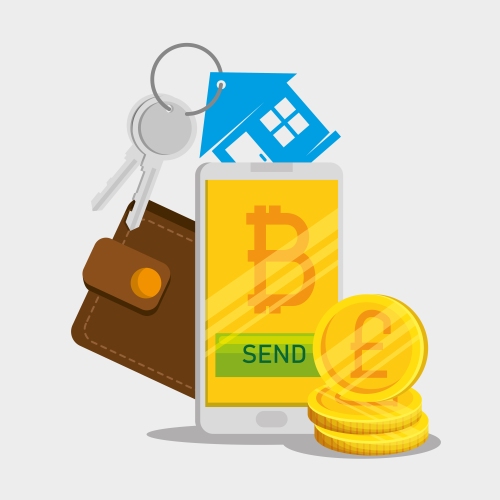
Image: Freepik/studiogstock
For the first time, cryptocurrency is being considered in U.S. mortgage financing. On June 25, 2025, the Federal Housing Finance Agency (FHFA) told Fannie Mae and Freddie Mac to prepare proposals that would let homebuyers include crypto assets when being assessed for their mortgage applications.
In a public post on X, FHFA Director Bill Pulte said this change supports the U.S. goal of becoming a global leader in crypto. The order allows crypto to be included as a financial reserve, meaning lenders could soon treat some digital assets the same way they treat cash or stocks when reviewing mortgage risk. This is not a new rule yet but it's the start of a planning phase where the agencies will write and review draft policies.
After significant studying, and in keeping with President Trump’s vision to make the United States the crypto capital of the world, today I ordered the Great Fannie Mae and Freddie Mac to prepare their businesses to count cryptocurrency as an asset for a mortgage.
SO ORDERED pic.twitter.com/Tg9ReJQXC3
— Pulte (@pulte) June 25, 2025
Remarkable to see the crypto sentiment change so rapidly in the United States. This latest change reflects the wider effort by U.S. officials to include digital assets in traditional finance. An article in Barron’s noted that reserve rules may apply to bitcoin, ether, and other widely held tokens. The Washington Post also reported concerns about volatility, especially with some tokens rising or falling by 40% or more in a single day.
While this directive applies only in the United States, it sends a strong message. If crypto is accepted in mainstream mortgage reviews, financial technology firms in Canada may start building new tools to support similar models. That could include connecting wallets to mortgage applications or building credit models that accept tokenized savings.
For Canadian fintechs focused on lending, payments, or digital identity, this is an early signal of significant changes to come. With more Canadians holding crypto, pressure will likely grow for Canadian regulators to respond or risk falling behind global standards. That's what happens when your a country deemed 'fast follower'.
The National Crowdfunding & Fintech Association (NCFA Canada) is a financial innovation ecosystem that provides education, market intelligence, industry stewardship, networking and funding opportunities and services to thousands of community members and works closely with industry, government, partners and affiliates to create a vibrant and innovative fintech and funding industry in Canada. Decentralized and distributed, NCFA is engaged with global stakeholders and helps incubate projects and investment in fintech, alternative finance, crowdfunding, peer-to-peer finance, payments, digital assets and tokens, artificial intelligence, blockchain, cryptocurrency, regtech, and insurtech sectors. Join Canada's Fintech & Funding Community today FREE! Or become a contributing member and get perks. For more information, please visit: www.ncfacanada.org
| | |
|---|---|---|
| | |
Stablecoins | June 27, 2025
On June 24 2025, in chapter 3 of its Annual Economic Report, "The next generation monetary and financial system" (38 page PDF), the Bank for International Settlements (BIS) warns that stablecoins fail to function as real money. The report arrives just as the United States moves closer to signing the GENIUS Act into law, a federal bill that would bring stablecoin issuers under formal supervision.
The report outlines how stablecoins fail to meet the key tests of singleness, elasticity, and integrity, which defines whether a payment instrument can be accepted at face value, scale with economic needs, and operate safely in the broader financial system.
BIS Report states
“Stablecoins perform poorly when assessed against the three tests for serving as the mainstay of the monetary system,”
The BIS applies three core tests to any money-like instrument, and casts serious doubt whether private stablecoins can ever serve as a true foundation for payments or monetary exchange, even if regulated.
The BIS also says broader risks to financial stability, including potential fire sales of safe assets held in reserve and cross-border flows that could undermine monetary sovereignty in emerging markets.
The GENIUS Act has now passed the Senate with strong bipartisan support and is moving to the House for consideration but does not treat stablecoins as public money. It takes a supervisory approach while explicitly banning certain features, key provisions include:
The bill has advanced in both the House Financial Services and Senate Banking committees and has bipartisan backing. Supporters argue that clear rules are needed to protect consumers and prevent runs on poorly backed coins. But the BIS report raises a bigger question. Even if stablecoins are regulated, should they be foundational to the payment system at all?
While Canada has not yet introduced comparable legislation as the GENIUS Act in the U.S., the BIS developments will influence local debates. Stablecoins are already used by some Canadians for crypto trading, remittances, and access to foreign currency.
The Bank of Canada has shelved retail CBDC development while continuing digital currency research and scenario planning, and OSFI is developing crypto exposure guidance for regulated financial institutions.
If the US establishes a regulated market while the BIS encourages a public infrastructure model, Canadian policymakers and fintechs may need to navigate both. That includes deciding whether to integrate regulated stablecoins, develop domestic alternatives, or back a central bank issued platform.
Both public institutions and private developers are building in parallel but the debate is no longer theoretical, and Canada's choices made now will impact financial systems as they grow and evolve.
The National Crowdfunding & Fintech Association (NCFA Canada) is a financial innovation ecosystem that provides education, market intelligence, industry stewardship, networking and funding opportunities and services to thousands of community members and works closely with industry, government, partners and affiliates to create a vibrant and innovative fintech and funding industry in Canada. Decentralized and distributed, NCFA is engaged with global stakeholders and helps incubate projects and investment in fintech, alternative finance, crowdfunding, peer-to-peer finance, payments, digital assets and tokens, artificial intelligence, blockchain, cryptocurrency, regtech, and insurtech sectors. Join Canada's Fintech & Funding Community today FREE! Or become a contributing member and get perks. For more information, please visit: www.ncfacanada.org
| | |
|---|---|---|
| | |
Coinbase | June 25, 2025

Image: Freepik/macrovector
Coinbase secures a Markets in Crypto Assets (MiCA) licence in Luxembourg and unlocks access to all 27 EU member states under one regulatory framework. The licence allows Coinbase to provide regulated custody, trading, and token services across Europe without reapplying in each country.
MiCA is the EU’s first unified crypto regulation. It sets common rules for disclosures, capital requirements, and consumer protection. Coinbase is among the first major global exchanges to receive full MiCA approval, joining a wave of early adopters now operating across the EU under a unified licence. Market wide compliance in the EU is now real, and opens up a single market of 450 million people under consistent regulatory oversight.
Canada uses a mix of federal registration through FINTRAC and provincial securities oversight. While there is a securities passport system under the Canadian Securities Administrators (CSA), it's not uniformly applied across all provinces. Ontario, for example, requires dual filings. The system also does not unify crypto regulation or streamline compliance across federal and provincial levels.
In contrast, MiCA offers a single licence with direct access across all EU countries. For Canadian fintechs, this structural difference adds complexity and slows growth. Canada’s fintech sector must now compete with peers operating under unified rules, faster timelines, and lower costs.
In a June 2025 opinion piece for Cointelegraph, Jillian Friedman, COO of Symbiotic, warned that Canada risks losing ground:
“While other countries move toward integrating crypto into their financial systems, Canada is lagging, costing the country capital, talent and competitiveness.”
Crypto policy was grossly missing from all federal party platforms during the 2025 election, a “missed opportunity” at a time when early-stage VC activity is dropping and top STEM talent continues to leave. Friedman doubled down on Canada's issues including:
She argues that Canada should move quickly to unlock access to capital, offer tax incentives, and remove policy barriers if it wants to remain competitive.
Several global firms have followed Coinbase in securing MiCA licences:
While several MiCA-licensed firms also operate in Canada the split below shows how global players are prioritizing the EU as a unified growth market, while (possibly) treating Canada as a smaller fragmented market.
| Firm | MiCA Licence | Canadian Operation |
| Coinbase | Yes | Yes (OSC restricted dealer) |
| Crypto.com | Yes | Yes (OSC restricted dealer) |
| OKX | Yes | No active registration |
| Bitpanda | Yes | No active registration |
| Bybit | Yes | Previously fined in Ontario; no active registration |
| BitGo | Yes | No known retail presence |
MiCA offers a clear example of how coordinated regulation can improve access, speed, and investor confidence. Prime Minister Mark Carney’s pledge to reduce interprovincial trade barriers could open the door to change, but digital asset policy must be part of the conversation.
Without reducing regulatory burden and interprovincial barriers, Canada risks falling behind not because of lack of innovation but because of unclear rules that limit scale, delay market access, and create friction for investors.
The National Crowdfunding & Fintech Association (NCFA Canada) is a financial innovation ecosystem that provides education, market intelligence, industry stewardship, networking and funding opportunities and services to thousands of community members and works closely with industry, government, partners and affiliates to create a vibrant and innovative fintech and funding industry in Canada. Decentralized and distributed, NCFA is engaged with global stakeholders and helps incubate projects and investment in fintech, alternative finance, crowdfunding, peer-to-peer finance, payments, digital assets and tokens, artificial intelligence, blockchain, cryptocurrency, regtech, and insurtech sectors. Join Canada's Fintech & Funding Community today FREE! Or become a contributing member and get perks. For more information, please visit: www.ncfacanada.org
| | |
|---|---|---|
| | |
Crowdfunding | June 25, 2025
On June 24, 2025, the eufyMake E1 UV Printer officially became the highest funded project in Kickstarter history; raising over $61 million from more than 17,000 backers, surpassing the previous record of $41.7 million. The compact printer offers plug and print functionality and can print on a wide range of materials including metal, leather, and glass. Pricing at $499 helped attract broad consumer interest during its 30-day campaign window.
According to the release, the campaign launched on April 29 and exceed $10 million in the first 14 hours, and then became Kickstarter's all time funding leader in less than a month. This is a monstrous achievement and moment to celebrate for non-investment crowdfunding in 2025.
In recent years, most attention in alternative finance has shone a spotlight on equity crowdfunding, token sales, and hybrid fintech models. Yet the record breaking and live E1 crowdfunding campaign shows that reward-based crowdfunding can still raise significant funding at global scale when a product fits the market.
Kickstarter campaigns offer backers early access to physical products without offering ownership. This lowers legal and regulatory barriers, making the model especially attractive for consumer hardware, creative tools, and design-led products.
For Canadian entrepreneurs, makers, and platforms, the E1 campaign is a reminder that product-led innovation can still be funded directly by users, backers, and supporters. A strong value proposition, clear use case, and professional campaign execution with digital-first product marketing can still generate global momentum on reward-based platforms.
Canadian companies that are not yet ready or suitable for venture equity funding or tokenization may find reward crowdfunding a valuable first step to validate demand, generate working capital, and build a user base. Interested in snagging one of these incredible printers? There's 66 hours to go. Be part of a record breaking campaign: https://www.kickstarter.com/projects/ankermake/eufymake-e1-the-first-personal-3d-textured-uv-printer
The National Crowdfunding & Fintech Association (NCFA Canada) is a financial innovation ecosystem that provides education, market intelligence, industry stewardship, networking and funding opportunities and services to thousands of community members and works closely with industry, government, partners and affiliates to create a vibrant and innovative fintech and funding industry in Canada. Decentralized and distributed, NCFA is engaged with global stakeholders and helps incubate projects and investment in fintech, alternative finance, crowdfunding, peer-to-peer finance, payments, digital assets and tokens, artificial intelligence, blockchain, cryptocurrency, regtech, and insurtech sectors. Join Canada's Fintech & Funding Community today FREE! Or become a contributing member and get perks. For more information, please visit: www.ncfacanada.org
| | |
|---|---|---|
| | |
Canada-Africa | June 24, 2025

Image: Freepik AI
Canada’s development finance institution, FinDev Canada, has partnered with DEG (Germany), OeEB (Austria), and ILX (Netherlands) to provide a USD 100 million syndicated loan to Access Bank in Nigeria. This investment will directly support micro, small and medium-sized enterprises (MSMEs) and promote women’s economic empowerment.
MSMEs provide about 86% of jobs in Nigeria but still face major financing challenges. This loan facility will allow Access Bank to expand financial and non-financial services to underserved groups, including rural businesses, agribusinesses, and women-led enterprises. FinDev Canada is contributing $25 million USD towards this initiative to help increase access to credit, training, and market opportunities.
At least 30% of the loan proceeds are earmarked for women-owned businesses. Access Bank will offer reduced interest rates, business education, and networking support. This is FinDev Canada’s second investment in Access Bank (their first was a $50M loan facility in July 2024) and is fully aligned with the 2X Challenge, an international framework launched at the G7 Summit in 2018 promoting women’s participation in economic growth.
Lori Kerr, CEO of FinDev Canada:
“We can empower women entrepreneurs, develop underserved markets, and support job creation."
Launching the first ever global Canada-Africa strategy in early March, and now this follow-on loan facility is a clear signal that Canada is expanding it's financial presence in Africa by supporting fintech infrastructure, sustainable finance, and inclusive business frameworks and models. Access Bank currently operates in 24 countries serving over 60 million customers and has a large digital footprint and a track record of innovation.
Recent data from the 2025 Nigeria FinTech Survey Report by Column confirms this growth: over 23% of young Nigerians now use fintech apps for saving, with digital platforms like Opay, Palmpay, and Kuda seeing wide adoption. The 18 to 44 age bracket reports more than 56% saving consistently (most use multiple apps), indicating demand for integrated financial services. This tech-savvy generation is actively budgeting and planning for their financial futures despite economic instability, making Nigeria a high-potential market for digital finance investment.
This deal is aligned with one of the key impacts of the inaugural Canada-Africa Fintech Summit (CAFS) 2025 taking place in Toronto from August 5-8, 2025 to drive practical collaboration between Canadian and African partners across finance and innovation. Nigeria accounts for 28% of Africa’s fintech activity and remains one of the highest growth digital finance markets on the continent.
Mobilizing Canadian capital to support financial infrastructure and innovative start-ups can unlock commercial opportunity. NCFA and CAFS participants attending sessions like “Purpose, Profit, Planet” or “From Strategy to Scale” can use this as a live case study of what cross-border investment looks like when it combines capital, digital access, and market growth at scale. Tickets on sale now
The National Crowdfunding & Fintech Association (NCFA Canada) is a financial innovation ecosystem that provides education, market intelligence, industry stewardship, networking and funding opportunities and services to thousands of community members and works closely with industry, government, partners and affiliates to create a vibrant and innovative fintech and funding industry in Canada. Decentralized and distributed, NCFA is engaged with global stakeholders and helps incubate projects and investment in fintech, alternative finance, crowdfunding, peer-to-peer finance, payments, digital assets and tokens, artificial intelligence, blockchain, cryptocurrency, regtech, and insurtech sectors. Join Canada's Fintech & Funding Community today FREE! Or become a contributing member and get perks. For more information, please visit: www.ncfacanada.org
| | |
|---|---|---|
| | |


August 26th, 2025

January 4th, 2024

June 1st, 2021

September 9th, 2020

July 9th, 2018

January 3rd, 2018

September 25th, 2017

June 20th, 2017

May 10th, 2017

December 14th, 2016