




Karsten Wenzlaff, Advisor
August 26th, 2025
Karsten Wenzlaff is a Crowdfunding and Fintech Expert from Germany. He is Secretary-General of Digit[...]


July 10, 2026

AI Image: Cryptocurrencies give us a chance to get closer to the action
The way that digital finance and mainstream entertainment have come together has given us a variety of new ways to enjoy our favorite activities. Sports fans are among the people who can most appreciate these changes, so let’s take a look at how cryptocurrencies are enhancing the way they interact with their chosen teams and sports.
The arrival of online sportsbooks was one of the most notable events for sports in recent times. Being able to find the latest, updated odds from events around the planet was a massive step forward. It means that we can now just as easily bet on the NHL, the NBA, or a table tennis tournament from the other side of the world. Many sportsbooks also provide casino games, ensuring they offer fans a well-rounded platform with lots of options.
Of course, finding a fast and safe way of moving funds in and out of these platforms was the next big challenge. Since it’s a fast-moving industry, fans need to be able to make deposits swiftly and securely, while they also want the security of being able to make rapid withdrawals with complete safety. Traditional fiat methods have been used to good effect, but the growing use of cryptocurrencies allows fans to take advantage of a highly secure and almost instant transfer process.
Looking at this online casino in Canada, we can see that Bitcoin (BTC), Ethereum (ETH), and Tether (USDT) are among the tokens accepted. These are some of the biggest cryptocurrencies in the market, meaning that they offer deep liquidity. Transfer times vary across networks, although most are completed almost instantly. Fees also vary, with most offering an extremely cost-effective approach.
The transfer process is simple once you understand the basics. Fans need to buy their chosen token first, which is usually done through an exchange. The next step is to send the cryptocurrencies to a self-custody wallet, and from there to the sportsbook’s wallet.
Given the added privacy with digital assets, this could also be viewed as a way to ensure that there is a buffer between the user’s main bank account and their gambling account. Some folks like to have a layer of separation, and cryptocurrencies make this significantly easier.
Fan tokens have emerged as one of the most interesting uses of cryptocurrencies. Soccer teams like Manchester City and PSG are among the top options for anyone looking for fan tokens. With fan tokens recently getting the green light in the US, Chiliz has an agreement with the NFL and NBA that lets them offer digital perks without minting any specific team tokens.
The right to vote on fan matters is one of the key aspects of fan tokens, since the holders of these tokens are offered the chance to vote on issues such as team outfits and fan chants. Arguably the first example came from Italy in 2019, when fans of Juventus voted for Song 2 by Blur as the team’s goal celebration music. Barcelona and PSG token holders have also successfully voted on their teams’ music choices in recent years.
In North America, the Professional Fighter League has used fan tokens to help choose the entrance anthems for fighters and also to set the questions to be asked at official press conferences. In the NASCAR world, Roush Fenway Racing (now RFK Racing) launched the first fan token and gave holders the opportunity to vote on various themes and designs.
The UFC went a step further by giving its token holders the chance to attend weigh-ins as VIP guests. This token also has a mechanism where the user’s number of tokens is applied to work out their exact voting power.
Digital assets can also be used to carry out real-world matchday transactions. The first example of Bitcoin being used by a major sports franchise came from the Sacramento Kings in 2014, when they teamed up with the BitPay payment processor. As well as entrance tickets, fans were able to use BTC to pay for official team merchandise at the store.
The NFL has also moved in the same direction. The Tennessee Titans provide a good example, as this franchise accepts BTC for season tickets and corporate sponsorship payments. We can also see the example of the Houston Texans, who accept BTC for the booking of luxury suites at games. In the wider sports world, FIFA naming Kraken their Official Crypto Exchange Supporter of the FIFA World Cup 2026 is a clear sign of how deeply embedded crypto has become in sports.
Whether you want to place a bet, buy a ticket, or help make fan decisions, cryptocurrencies have been playing an increasingly large role in the way you enjoy your favorite sports. By choosing the right tokens and determining how to use them, you can get more out of your sports-based entertainment.
 The National Crowdfunding & Fintech Association (NCFA Canada) is a financial innovation ecosystem that provides education, market intelligence, industry stewardship, networking and funding opportunities and services to thousands of community members and works closely with industry, government, partners and affiliates to create a vibrant and innovative fintech and funding industry in Canada. Decentralized and distributed, NCFA is engaged with global stakeholders and helps incubate projects and investment in fintech, alternative finance, crowdfunding, peer-to-peer finance, payments, digital assets and tokens, artificial intelligence, blockchain, cryptocurrency, regtech, and insurtech sectors. Join Canada's Fintech & Funding Community today FREE! Or become a contributing member and get perks. For more information, please visit: www.ncfacanada.org
 |  |  |
|---|---|---|
 |  |  |
July 9, 2026 | NCFA Market Activity | Payments And Money Movement, SME Finance And Business Banking, Fintech And Innovation
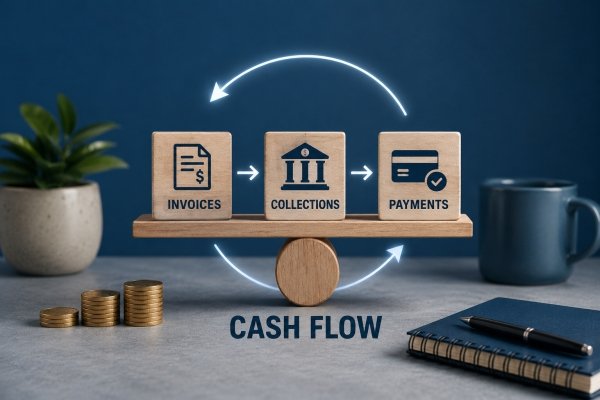
On July 7, 2026, Winnipeg based Telpay announced that it acquired Notch Financial, a Toronto based accounts receivable automation company. Terms weren't disclosed.
The acquisition brings accounts receivable, invoicing and payment collection together with Telpay’s existing payment, payroll and approval workflows, expanding the platform from payment execution toward SME cash flow management.
Mark Loewen, President of Telpay, said:
"Businesses don’t lose sleep over how payments are processed, they worry about whether they’ll have the cash they need when they need it."
Notch Adds Receivables To Telpay who has spent more than 40 years helping businesses manage money going out through supplier payments, payroll and approval workflows. Notch adds the incoming cash side, including invoices, collections and receivables visibility.
The transaction confirms that Telpay is going from payments execution toward cash flow control for Canadian SMEs.
The acquisition comes as Canadian small businesses are paying closer attention to receivables, working capital and payment timing.
Payment timing remains an important operating indicator for Canadian SMEs. See: Canadian Small Business Revenue Turns Negative In Q4.
Cash flow pressure doesn't always come from a lack of sales. It can come from slow collections, manual invoicing, fragmented approvals or poor visibility into what cash is actually available. That's why AR and AP automation are becoming core SME infrastructure rather than back office software.
The same trend appears in Open Finance SME Capital Access, where fresh invoice, payment, account and cash flow data can support faster credit decisions and better liquidity tools.
Payment companies are expanding beyond transaction processing into the operating layer around cash flow. See: Lloyds Expands SME Payments With Stripe Infrastructure.
The strategic question though is who owns the actual SME relationship? The account, the payment workflow, the operating data or the cash flow tools.
Telpay now covers both sides of SME cash flow: (1) Outgoing payments through supplier payments and payroll, and (2) Incoming cash through invoicing, collections and receivables visibility.
The platform value increases when a business can see both sides without stitching together separate tools.
Jordan Huck, CEO of Notch, said:
"Together, we see tremendous opportunities to deliver even more value as businesses manage every aspect of their cash flow."
Will Canadian SME payment platforms win by processing transactions, or by owning the cash flow workflow around invoices, collections, approvals and working capital?
The National Crowdfunding & Fintech Association (NCFA Canada) is a financial innovation ecosystem that provides education, market intelligence, industry stewardship, networking and funding opportunities and services to thousands of community members and works closely with industry, government, partners and affiliates to create a vibrant and innovative fintech and funding industry in Canada. Decentralized and distributed, NCFA is engaged with global stakeholders and helps incubate projects and investment in fintech, alternative finance, crowdfunding, peer to peer finance, payments, digital assets and tokens, artificial intelligence, blockchain, cryptocurrency, regtech, and insurtech sectors. Join Canada's Fintech & Funding Community today FREE! Or become a contributing member and get perks. For more information, please visit: [www.ncfacanada.org](http://www.ncfacanada.org)
| | |
|---|---|---|
| | |
July 9, 2026

Source: Bazoom
The Canadian online gambling sector is largely dominated by foreign brands - but domestic operators, and local companies supplying back-end tech or other services to the big names, are also booming. With the market now worth $9.5 billion a year in revenues, picks and shovels are proving a profitable investment.
This piece will look two key domestic brands in Canada's online gambling space, as well as why they're currently not on the level of international competition. And then analyze the potential state of the market going forward, including a new launch in Alberta.
Canada's online gambling system is currently fragmented. The most populous province of Ontario has it's own regulated and licensed market, with Alberta soon set to follow that model. The other states are served by a mix of provincial-backed operators and offshore operators across the globe.
One of the biggest international operators serving markets across North America is Stake. A look at something like the Stake promo code page at Sportsbook Review tells you there's a lot of interest in this one operator's offers and the comparison sites that break them down for players. If you want to compare the offers, you can find more information here, which also shows how competitive the market is, with customers expecting detailed analysis before making a choice.
Despite being a popular market, the prior state of regulations has limited the capacity for Canadian gambling brands directly serving Canadian players. Before Ontario opened its market in 2022 such an operation would have been illegal in many provinces. But in 2026, this has changed. There are now several large Canadian-based gambling companies that directly supply Canadians and keep revenues and taxes in the local economy.
Examples include theScore Bet, Betty and Bet99 among others. Although these brands can't compete with international giants that dominate the market, they are nevertheless making respectable revenues. TheScore Bet is probably the biggest and most established operator. However, although still based in Toronto it is now a subsidiary of American giant Penn Entertainment.
As well as B2C online gambling, Canadian companies are also big in the B2B gambling space. Bragg Group, based in Toronto, provides back-end gaming services for many international gambling brands including those now licensed in Ontario, while Geocomply, based in Vancouver, is a global provider of geolocation technology used to ringfence online gambling in certain jurisdictions worldwide.
Canada's homegrown gambling operations have done well from the Ontario market. However, with big competition from established US brands and offshore operators elsewhere, expanding the locally-licensed market to Alberta will be seen as a massive opportunity.
All three of the Canadian-based betting platforms mentioned above have applied for a license in Alberta, to launch when the market opens.
With the total custom expected to hit an estimated $400 million operators (before the 22% revenue sharing agreement with province) in just the opening half year. That means even if local operators take a smaller slice of the pie than giants like DraftKings and FanDuel, the revenue potential is still significant.
Provincially owned betting platform PlayAlberta may also remain a significant player. Although it failed to attract enough attention away from the offshore market for the government to be entirely happy with it, the site still has its players. However, rumours are now the government is going to get tax money from private operators it no longer sees the expense of running it as worthwhile and so rumors are it could be for sale to private operators.
Then there are the back-end tech suppliers poised to profit, whoever wins the market share race in Alberta. Among Bragg Gaming's clients are many local and international operators - including both DraftKings and FanDuel.
While the Canadian gambling market is booming, and possibly set to see even further growth when Alberta's market opens, things have not always been straightforward for operators or public opinion.
Politicians and the public are more aware than ever of responsible gambling, and compliance costs for Canadian-based gambling operators are high. They also face advertising restrictions that international offshore operators do not nationally, although regulators in Ontario have been looking to curb both kinds of gambling advertising.
Customer acquisition costs are also high, especially when operators compete on a new market. Alberta will offer another chance for smaller Canadian gambling brands to start on a new playing field against the big operators. However the financial clout of FanDuel, for example, often allows them to offer bigger bonuses. Because they can more easily swallow the cost of a player getting lucky of the bonus and winning big.
Nevertheless, in a competitive market that is new for Albertan customers, a locally-based option may prove well placed. Only time will tell. Certainly many companies are betting on Alberta, with more than 45 operators registered for launch ahead of the July 13 opening day. With Ontario's market posting huge revenues and tax dollars since 2022, few would bet against a similarly successful launch.
The National Crowdfunding & Fintech Association (NCFA Canada) is a financial innovation ecosystem that provides education, market intelligence, industry stewardship, networking and funding opportunities and services to thousands of community members and works closely with industry, government, partners and affiliates to create a vibrant and innovative fintech and funding industry in Canada. Decentralized and distributed, NCFA is engaged with global stakeholders and helps incubate projects and investment in fintech, alternative finance, crowdfunding, peer-to-peer finance, payments, digital assets and tokens, artificial intelligence, blockchain, cryptocurrency, regtech, and insurtech sectors. Join Canada's Fintech & Funding Community today FREE! Or become a contributing member and get perks. For more information, please visit: www.ncfacanada.org
| | |
|---|---|---|
| | |
July 8, 2026 | NCFA Market Activity | SME Finance And Business Banking, Artificial Intelligence And Data, Digital Identity And Trust, Cybersecurity And Fraud, Fintech And Innovation

On July 7, 2026, Equifax announced a definitive agreement to acquire Círculo de Crédito, a Mexican credit information services company, for a $750 million enterprise value. The companies expect the transaction to close in the fourth quarter of 2026, subject to closing conditions and regulatory review.
Círculo de Crédito operates consumer and commercial credit bureau services in Mexico. Equifax says the company serves more than 1,700 bank, retail, fintech, small business lending, microfinance and telecommunications customers, with 2 billion tradelines covering 80 million validated identities.
The deal expands Equifax’s international credit data footprint in Mexico, which Equifax describes as one of the fastest growing credit markets globally. Círculo de Crédito generated an estimated $134 million in revenue for the 12 months ended June 30, 2026, up 31%, with $62 million of adjusted EBITDA.
Equifax says Círculo de Crédito uses alternative data, including gig economy transactions, utility payment history and telecommunications payment history. Mexico has a large underbanked population. Mexico is a market where more than 25% of the population lacks access to formal financial products and nearly 44% does not have a bank account.
Alternative data can help lenders assess thin file borrowers, informal workers, microbusinesses and consumers without deep traditional credit histories. It can also help challenge questions about consent, data quality, explainability, model governance and consumer protection when credit access depends on broader data signals.
More data can widen access, but only if lenders can show how the data is collected, governed, explained and challenged.
Equifax says the acquisition gives Círculo de Crédito customers access to Equifax cloud native capabilities, EFX.AI technology, identity protection and fraud prevention offerings.
Following closing, Círculo de Crédito will join the Equifax International business. Juan Manuel Ruiz Palmieri and the existing Círculo de Crédito team are expected to continue leading the company.
The acquisition also continues Equifax’s expansion strategy. CEO Mark W. Begor said Círculo de Crédito would be Equifax’s 17th bolt on acquisition in the past six years, bringing the total for that period to nearly $5 billion.
Lenders increasingly rely on identity coverage, alternative data, fraud controls and AI assisted underwriting to expand credit access. That same data quality issue appears in AI Won't Solve SME Finance Without Better Data, where the core problem is not model ambition, but whether business data is trusted, verified and usable.
That connects directly to Canada’s own SME finance debate. NCFA recently examined why SME loan competition in Canada is under review, including lender concentration, switching friction and access barriers for smaller firms.
It also fits the Open Finance SME Capital Access opportunity area, where SME data, credit access and open finance are already linked.
More data can support credit access. The hard part is proving that expanded data use remains accurate, explainable and fair.
Can alternative data expand credit access without creating new blind spots in consent, model governance and borrower recourse?
The National Crowdfunding & Fintech Association (NCFA Canada) is a financial innovation ecosystem that provides education, market intelligence, industry stewardship, networking and funding opportunities and services to thousands of community members and works closely with industry, government, partners and affiliates to create a vibrant and innovative fintech and funding industry in Canada. Decentralized and distributed, NCFA is engaged with global stakeholders and helps incubate projects and investment in fintech, alternative finance, crowdfunding, peer to peer finance, payments, digital assets and tokens, artificial intelligence, blockchain, cryptocurrency, regtech, and insurtech sectors. Join Canada's Fintech & Funding Community today FREE! Or become a contributing member and get perks. For more information, please visit: [www.ncfacanada.org](http://www.ncfacanada.org)
| | |
|---|---|---|
| | |
July 8, 2026 | NCFA Insight | Artificial Intelligence And Data, Risk Compliance And Regtech, Digital Identity And Trust, Cybersecurity And Fraud, Fintech And Innovation

On July 7, 2026, Lightworks, Scotiabank, Sun Life and TELUS launched The AI Consortium to jointly build critical AI control infrastructure in Canada. Lightworks will operate the consortium’s infrastructure and coordinate deployment across members.
The first project is an Agentic Control Plane, described as a system for enterprise visibility and control across models, agents, users and inference pipelines (think regulated enterprises). Future projects named in the release include an AI Operations Center and AI Token Exchange.
The announcement points to the reality that Canadian regulated enterprises are beginning to pool the control systems they’ll need before agentic AI reaches banking, insurance, telecom, compliance, fraud, advice and operations at scale.
The consortium model solves a practical problem. AI control infrastructure is expensive to build alone. Banks, insurers and telecom firms have similar needs around agent visibility, permissioning, audit trails, inference monitoring, incident response, cyber controls, governance evidence and internal authority.
Building those controls separately inside every firm creates duplicated cost and slower learning.
Pooling engineering, research and governance resources can lower build costs, spread deployment lessons across members and create shared IP that Canadian firms can improve together.
There is also a competitive angle. Large U.S. AI firms are already building control points around cloud platforms, chips, data centres, model access, enterprise tools and distribution. The AI Infrastructure Partnership from BlackRock, Global Infrastructure Partners, Microsoft and MGX was designed to invest in data centres and supporting power infrastructure, with a stated goal of mobilizing up to $100 billion including debt financing.
Canadian firms can buy AI tools from global providers, but the risk is eroding domestic sovereignty as buying isn't the same as control.
If banks, insurers and telecom firms rely entirely on outside platforms for agent permissions, runtime monitoring, audit evidence and governance records, they risk becoming downstream users of systems they can't shape and certainly not control. Shared Canadian infrastructure gives them a way to build capability, retain control knowledge and compete before foreign platforms define how enterprise AI is governed.
Collaboration also creates governance questions. If member firms rely on common systems for agent permissions, policy enforcement, monitoring, logging and deployment standards, that shared system becomes important infrastructure. Governance, failure handling, evidence retention, security incidents, membership, commercialization and Canadian IP will all shape whether the model becomes durable.
Those questions come with any shared system that becomes strategically important.
Traditional AI tools may summarize documents, classify records or support customer service. Agentic systems can act across tools, workflows and data environments, which alters the risk profile.
Companies need to know which agents are active, which models they use, which users can deploy them, what systems they can touch, what actions need human approval, how outputs are logged and how failures are detected.
The consortium’s Agentic Control Plane directly targets that problem by focusing on visibility and control across models, agents, users and inference pipelines.
The UK FCA’s Mills Review examines how AI may affect retail financial services, consumers, firms, markets and regulation. Reuters reported that the review raised concerns around AI driven financial advice, customer harm, fraud, cyber risk and reliance on a small number of technology providers.
Singapore is already more specific on agentic finance. The Monetary Authority of Singapore’s Safeguards for Agentic Finance at Runtime work focuses on how AI agents in financial services can operate safely, securely and reliably.
Regulated firms need more than AI principles. They need controls that define what agents can do, how human oversight is triggered, what gets recorded and how firms respond when something goes wrong.
Scotiabank and Sun Life's participation make this financially relevant.
Agentic AI could eventually support customer service, claims handling, fraud monitoring, compliance workflows, credit support, treasury operations, internal software development and employee productivity. Those are implications, not confirmed consortium use cases.
AI agents in financial services may touch sensitive data, regulated advice boundaries, customer records, third party tools, payment workflows, fraud controls and internal decision processes. The more useful agents become, the more important it becomes to know who approved them, what they accessed, what they did and how exceptions are handled.
Control infrastructure needs to come before wider spread deployment.
The consortium also fits a wider Canadian AI infrastructure theme.
In May 2026, the Government of Canada and TELUS advanced work on sovereign AI infrastructure. That project is separate from the consortium and should not be conflated with it.
Still, the direction is consistent. Canada is trying to build more domestic AI capability rather than rely only on external platforms.
Sovereign AI is not only compute. For regulated sectors, it also means governance systems, audit evidence, agent controls, security practices and operational knowledge that Canadian firms can shape directly.
Industry consortiums usually appear when a problem is too expensive, risky or systemically important for firms to solve alone. Financial services has seen this pattern before in shared utilities, payment systems, identity programs, fraud controls, standards bodies and market infrastructure. AI is entering similar territory because the costs and risks are common across regulated firms.
The consortium structure could create practical benefits, such as common controls, faster security learning, better incident response patterns, shared governance evidence and stronger procurement leverage with external AI providers.
This trend aligns with agentic AI risk and governance, where the core issue isn't only what agents can do, but who controls them. It also connects to regulated AI control gaps around data, vendors, fraud and operational risk.
The financial crime angle is important too. AI, programmable finance and financial crime are converging as bad actors use automation while regulated firms try to strengthen controls.
For NCFA's Financial Innovation Map, the relevant nodes include Agentic Finance, AI Governance, Digital Identity And Trust, Regtech, Cybersecurity And Fraud, Operational Risk, permissioned agents, auditability and sovereign AI infrastructure.
Follow-up questions are whether additional regulated firms join, whether regulators reference the model, whether the AI Operations Center is launched, and how the AI Token Exchange is defined in practical terms.
Will the consortium publish standards, audit methods or governance patterns? Does it commercialize infrastructure beyond founding members? Does it create shared security practices? Does it become a Canadian regulated sector AI utility?
If Canadian firms build shared AI control infrastructure to reduce cost, learn faster and compete with global platforms, who governs the control system once agentic AI becomes critical to banking, insurance and telecom operations?
The National Crowdfunding & Fintech Association (NCFA Canada) is a financial innovation ecosystem that provides education, market intelligence, industry stewardship, networking and funding opportunities and services to thousands of community members and works closely with industry, government, partners and affiliates to create a vibrant and innovative fintech and funding industry in Canada. Decentralized and distributed, NCFA is engaged with global stakeholders and helps incubate projects and investment in fintech, alternative finance, crowdfunding, peer to peer finance, payments, digital assets and tokens, artificial intelligence, blockchain, cryptocurrency, regtech, and insurtech sectors. Join Canada's Fintech & Funding Community today FREE! Or become a contributing member and get perks. For more information, please visit: [www.ncfacanada.org](http://www.ncfacanada.org)
| | |
|---|---|---|
| | |
July 8, 2026

Adopt a consistent staking strategy. Establish a clear plan regarding how much to wager on each round. For instance, consider starting with a small portion of your balance and gradually adjusting your bet size based on your winnings or losses. This method helps in preserving funds while allowing for potential growth.
Optimize your timing for adjustments. It’s critical to recognize patterns in previous outcomes, not for predictions but to inform your next move. For example, if you notice a series of low multipliers, increasing your bet size slightly on the next roll might yield better returns. Monitor rounds closely for any potential trends that can guide your decisions.
Manage your emotions effectively. Maintaining composure during both winning and losing streaks is essential. Establish a fixed profit goal and a loss limit to avoid risky behavior. By sticking to predetermined limits, you ensure that your approach remains disciplined, preventing impulsive decisions that could lead to significant losses.
Engage in community discussions focused on techniques and experiences. Connecting with fellow participants can provide valuable insights and enhance your understanding of various tactics. Sharing knowledge can help refine your own methods and highlight effective practices that might not be immediately obvious.
To excel in the environment of this platform, mastering the mechanics is crucial. The primary aspect of play revolves around multiplying your bet amount before a specific point is reached. Pay close attention to the multiplier that increases throughout the round, which affects potential winnings. Observing previous rounds can provide insights on patterns, helping to devise a betting strategy that minimizes risks in crash games.
Each round presents a varying multiplier, influenced by complex algorithms. The multipliers can exponentially rise; hence, understanding the peak points from past statistics can guide decisions. Players often choose to cash out at a particular multiplier based on calculated risk tolerance. Regularly tracking the averages can result in informed choices regarding when to retrieve funds or increase stakes.
Another significant element is the volatility factor. Some sessions may exhibit moderate increases while others may be erratic. Analyzing this variability aids in setting expectations and adjusting gameplay accordingly. Balancing risk and reward within your limit is imperative; setting boundaries protects you from substantial losses during streaks of unpredictability.
Establishing a clear bankroll management strategy is advisable. Adequate planning involves determining the total available funds and dividing them into sessions, ensuring sustainable play. This approach minimizes the risk of depleting your resources quickly and allows players to engage consistently over time, creating more opportunities for favorable outcomes.
Lastly, players should consider the psychological aspect of gameplay. Remaining calm and making rational decisions amidst rising multipliers is fundamental. Emotional choices can lead to impulsive betting behavior, which often culminates in losses. Adopting a disciplined mindset aids in maintaining focus and sticking to your predefined strategies for a more successful experience.
Set a clear budget before participating. Determine the maximum amount you are willing to risk for a session and stick to it. This clearly defined limit will help you avoid impulsive decisions that could lead to excessive losses.
Consider adopting a staking plan that aligns with your risk tolerance. For instance, the flat betting approach, where you bet the same amount each round, can provide stability. Alternatively, a percentage-based method allows you to adjust your bets according to your bankroll fluctuations, ensuring a more flexible strategy.
Monitor your performance closely. Keep track of wins and losses to analyze trends in your betting patterns. This data can provide insights into your decision-making process, helping you make adjustments to your approach for better results.
Set specific time limits for your gaming sessions. Limiting the duration can protect you from losing track of your bankroll. Regular breaks can also refresh your mind, enabling clearer decision-making during gameplay.
Refrain from chasing losses. If you experience a downturn, avoid the temptation to increase your bets in hopes of recovering quickly. Such behavior often leads to more significant losses and can derail your budget.
Finally, know when to withdraw. If you've reached a notable profit, consider cashing out a portion of your winnings. This tactic can help secure gains and prevent the entirety of your bankroll from being at risk in subsequent rounds.
Monitor history closely to identify patterns. Data from active sessions reveals fluctuations in multipliers; consistent peaks often indicate optimal cash-out moments. Tracking these trends assists in determining the best times for withdrawal, significantly enhancing profit potential.
Utilize a mathematical approach by calculating average multipliers over several periods. A table outlining these averages can help clarify key cash-out points. For example:
| Time Interval | Average Multiplier |
| Last 30 Minutes | 1.75 |
| Last 1 Hour | 1.85 |
| Last 3 Hours | 2.00 |
| Last 6 Hours | 1.90 |
Consider the volatility index; a higher index suggests that you should adjust cash-out timing to avoid risky scenarios. Aim for consistent multipliers over a period of time to secure better returns. Early cash-outs during unstable spikes can minimize losses.
Evaluate player statistics. Observing withdrawals of other users can inform individual strategies. A rise in communal cash-outs often precedes downturns, thereby indicating a better time for personal withdrawals.
Incorporate psychological factors into decision-making. Emotional responses to rapid changes can lead to poor choices; maintaining a rational approach is key. Establish preset limits for cashing out to adhere strictly to your strategy during gameplay.
Finally, consider external influences such as player activity during peak hours. Busy periods often lead to increased volatility and risk, while quieter times may present safer opportunities for cashing out. Balancing these elements leads to more calculated financial choices.
The National Crowdfunding & Fintech Association (NCFA Canada) is a financial innovation ecosystem that provides education, market intelligence, industry stewardship, networking and funding opportunities and services to thousands of community members and works closely with industry, government, partners and affiliates to create a vibrant and innovative fintech and funding industry in Canada. Decentralized and distributed, NCFA is engaged with global stakeholders and helps incubate projects and investment in fintech, alternative finance, crowdfunding, peer-to-peer finance, payments, digital assets and tokens, artificial intelligence, blockchain, cryptocurrency, regtech, and insurtech sectors. Join Canada's Fintech & Funding Community today FREE! Or become a contributing member and get perks. For more information, please visit: www.ncfacanada.org
| | |
|---|---|---|
| | |
July 7, 2026 | NCFA Feature | Digital Assets Blockchain And Tokenization, Capital Markets And Market Infrastructure, Wealthtech And Investing, Risk Compliance And Regtech, Fintech And Innovation

Tokenized funds are past the easy headline.
The first question was whether fund shares could be represented onchain. That answer is already visible across tokenized treasuries, money market funds, private credit, institutional credit, and fund wrappers.
The harder question is whether regulated fund shares can work across chains, collateral markets, stablecoin reserves, DeFi venues, and treasury workflows without breaking the fund rules that make them investable in the first place.
A June 2026 LayerZero and Centrifuge report frames that next milestone around composability. The report argues that issuance is largely done and the next phase is whether tokenized funds can preserve NAV discipline, settlement rules, compliance controls, fund accounting, and transfer restrictions while reaching more onchain markets.
That is the real tokenized fund story. It's not about the token, but the operating model.
Stablecoins are built around continuous pricing. A dollar backed token is supposed to hold close to one dollar, and market participants can usually observe pricing in real time.
Fund shares work differently.
A tokenized treasury fund, private credit fund, institutional credit product, or equity index fund depends on net asset value. NAV may be calculated daily, weekly, monthly, or on another cycle. Investors subscribe and redeem through fund processes. Redemptions can be queued. Pricing can be batch based. Transferability can depend on investor status, jurisdiction, holding periods, and fund documents.
That difference may sound technical, but it changes everything.
A tokenized fund share cannot be treated like a freely transferable stablecoin if the fund still has to respect pricing cycles, investor eligibility, compliance limits, and accounting rules. A transfer across chains isn't just a simple token movement from A to B. It's also a fund record, a compliance event, and a possible accounting update among other future requirements.
The report’s strongest section is its discussion of NAV and pricing across chains.
If a fund share exists on several chains, every venue needs the same fund state. NAV updates have to reach each chain. Subscription and redemption requests need to flow into one fund process. Assets in transit between chains must not distort the fund’s accounting.
The report warns that a tokenized fund can technically travel across chains and still be mispriced if the operating controls are weak. It also points to stale price risk, where investors could receive different economics depending on which chain has the current NAV and which one still has old pricing.
That's why tokenized fund composability is harder than basic bridging.
A fund issuer isnt only asking whether the token can appear on Ethereum, Base, Arbitrum, Solana, or another network. The issuer has to ask whether pricing, compliance, settlement, and fund records stay synchronized when investors use different chains.
That is the kind of detail most tokenization commentary skips.
Regulated fund shares come with rules.
LayerZero and Centrifuge propose a hub and spoke model. One hub chain holds the authoritative fund state. Spoke chains handle local distribution. The hub handles functions such as accounting, pricing, share class management, investment processing, redemption processing, and policy enforcement.
That design is useful because it describes a problem the market has to solve, even if another provider uses a different architecture.
If compliance updates have to be manually replicated across every chain, the operating burden grows quickly. If a fund manager can update rules once and have NAV, transfer restrictions, allowlists, and accounting propagate from one source of truth, multi chain fund distribution becomes easier to manage.
RWA.xyz lists tokenized U.S. government debt at about $14.86 billion. The LayerZero and Centrifuge report cites broader RWA assets above $30 billion, with U.S. Treasuries around $15 billion and private credit near $6 billion.
Franklin Templeton’s OnChain U.S. Government Money Fund provides another reference point. Franklin says the fund invests at least 99.5% of assets in U.S. government securities, cash, and fully collateralized repurchase agreements. The fund listed $813.5 million in total net assets as of May 31, 2026.
WisdomTree is also testing fund liquidity in a new way. WisdomTree said SEC exemptive relief lets it support 24/7 trading and instant settlement for tokenized money market fund shares against USDC.
These are examples of a wider trend. Tokenization is finding scale in collateral and cash, where fund shares, money market products, and tokenized treasuries can support treasury management, collateral mobility, and settlement use cases rather than simply sit in a wallet.
Tokenized funds are no longer only about representing assets onchain. They are testing liquidity, settlement, collateral, treasury, and distribution models that conventional fund systems were not designed to support.
The LayerZero and Centrifuge report identifies stablecoin reserve strategies as one of the clearest use cases for tokenized funds.
Stablecoin issuers need reserve assets that are liquid, low risk, auditable, and productive enough to support yield strategies where permitted. Tokenized treasury and institutional credit funds can exist closer to the onchain systems where stablecoins already circulate.
While it doesn't mean every stablecoin reserve should become a DeFi strategy, it means tokenized funds are becoming more relevant where cash, collateral, settlement, and yield meet.
BlackRock’s stablecoin reserve push shows the same market pull from another direction. Institutional asset managers want tokenized cash products to serve digital dollar users who need regulated yield and liquidity rather than idle balances.
This is where fund composability becomes a business issue. A tokenized fund that can’t support reserve operations, collateral use, redemption timing, and compliance controls will struggle to serve the markets now asking for it.
Open DeFi composability clashes with regulated fund controls.
A fund cannot simply let any wallet hold, transfer, pledge, wrap, or trade its shares if those shares remain subject to securities rules, investor restrictions, transfer limits, or fund documents.
The report describes two ways to manage the tension.
The first is permissioned market structures. The fund share stays inside a controlled environment, while approved participants build lending, repo, collateral, or liquidity functions around it.
The second is deRWA style wrapping. A compliant fund share can sit inside a controlled wrapper, while another token gives DeFi users exposure to the economic position. That structure can separate compliant origination from wider DeFi distribution, but it also creates new questions about risk, transparency, liquidity, and investor understanding.
If wrappers make regulated fund exposure more usable, they may expand distribution. If wrappers hide too much complexity, they may create new conduct and disclosure problems. The market needs clarity on what investors hold, who controls redemption, how NAV is calculated, and what happens when liquidity disappears.
IOSCO’s 2025 tokenization report provides useful balance. It says tokenization may improve settlement, collateral mobility, transparency, and operational efficiency, but it also identifies risks tied to market integrity, investor protection, settlement assets, token representation, DLT dependency, and links with crypto markets.
Tokenized funds aren't automatically safer because they are onchain. They may reduce some frictions while introducing others. Smart contracts can improve automation, but fund administration still needs legal accuracy, investor records, custody, valuation controls, reporting, redemption rules, and oversight.
IOSCO also notes that adoption remains limited and that efficiency gains are uneven. That is a good reality check of the hype. Tokenized funds may be entering a more serious phase, but they still need credible settlement assets, interoperability, and operating controls before they can scale across mainstream capital markets.
The practical question for regulators is not whether tokenization is good or bad. The question is which parts of the fund process can become programmable without weakening investor protection or market integrity.
Canada’s tokenization discussion often starts with issuance, digital securities, and investor access.
But there's a deeper question for Canadian capital markets to answer. Can fund operations keep up?
That includes transfer agency, dealer controls, exempt market distribution, custody, compliance records, NAV operations, stablecoin settlement, investor reporting, tax records, and secondary liquidity. If those pieces remain fragmented, tokenized funds may exist onchain without becoming more useful to issuers or investors.
This also fits existing NCFA question work around tokenized RWAs and market infrastructure. The next advancement is whether regulated fund shares can become usable across venues while preserving the rules that make them credible.
It also fits NCFA’s Financial Innovation Map, including tokenized funds, transfer agents, compliant distribution, fund administration, tokenized collateral, stablecoin reserves, and capital markets technology.
The next phase of tokenized funds will be less glamorous than issuance.
It will involve NAV propagation, compliance messages, investor record synchronization, redemption queues, settlement timing, chain specific distribution, custody controls, and fund accounting.
That is where real opportunity is currently.
Tokenized funds will scale if the fund machinery underneath them can support pricing, settlement, compliance, and investor protection across the places where demand is forming.
If tokenized funds now need NAV, compliance, settlement, and investor records to work across chains, will the biggest opportunity belong to issuers or to the companies building the fund plumbing underneath them?
The National Crowdfunding & Fintech Association (NCFA Canada) is a financial innovation ecosystem that provides education, market intelligence, industry stewardship, networking and funding opportunities and services to thousands of community members and works closely with industry, government, partners and affiliates to create a vibrant and innovative fintech and funding industry in Canada. Decentralized and distributed, NCFA is engaged with global stakeholders and helps incubate projects and investment in fintech, alternative finance, crowdfunding, peer to peer finance, payments, digital assets and tokens, artificial intelligence, blockchain, cryptocurrency, regtech, and insurtech sectors. Join Canada's Fintech & Funding Community today FREE! Or become a contributing member and get perks. For more information, please visit: www.ncfacanada.org
| | |
|---|---|---|
| | |


August 26th, 2025

January 4th, 2024

June 1st, 2021

September 9th, 2020

July 9th, 2018

January 3rd, 2018

September 25th, 2017

June 20th, 2017

May 10th, 2017

December 14th, 2016