




Karsten Wenzlaff, Advisor
August 26th, 2025
Karsten Wenzlaff is a Crowdfunding and Fintech Expert from Germany. He is Secretary-General of Digit[...]


March 11, 2026

Image: Pexels/Maksim Goncharenok
Alberta’s digital market has matured. A glance at the pipes tells you. High-speed coverage in the province was projected to hit 97.6% in 2025, up from 89.4% in 2022, so more households can shop, bank, invest, stream, and compare offers without the old friction of weak access. Once that baseline exists, people stop praising access itself. They start judging the finer points. They look at speed, proof, tone, and whether a platform wastes their time.
That shift matters to vendors, founders, advisers, and investors because tech driven buyers rarely arrive as blank slates. CIRA’s 2024 research found that 62% of Canadians typically spend time online for banking, 44% for shopping, and 37% for product research. So by the time a person lands on a site, that person often carries a short list, a firm suspicion, and a thumb poised over the back button. In Alberta’s e-economy, the real contest starts after the click.
You can see the same pattern in riskier categories where trust has to earn its keep. Someone looking into an online casino in Alberta may well scan Casino.org Canada for rankings built around game range, payment methods, bonuses, safety notes, and user value before opening any operator site. That habit tells you plenty. People want a guide, then a clean platform, then a quick way to verify whether the promise survives contact with the page. In that sense, they shop the way a good hockey referee works a crease scrum. Eyes low, whistle ready, no romance.
Privacy now sits near the front of the queue because buyers have seen too much nonsense. A 2025 Canadian Marketing Association report found that 87% of Canadians shop online, 90% are at least somewhat concerned about the privacy of their personal information online, and 77% are at least somewhat likely to switch brands if a brand fails to protect their data well. That is a direct commercial signal. Flashy design still helps, yet clear consent, plain language, and sensible data use do more for conversion than another polished hero image ever will.
That same report adds a useful twist. About 73% of Canadians say they are comfortable sharing information when they get something concrete back, such as discounts or a better shopping experience, while 41% find cookie pop ups irritating. So the lesson is blunt. People will trade data for value, though they want the terms in daylight and the controls close at hand. A strong Alberta platform makes that exchange legible.
Money is where digital confidence either firms up or walks out. The Bank of Canada found that Interac e-Transfer was the most popular payment alternative in 2023, used by 58% of Canadians, while 45% reported using a mobile app for payments. In the 2024 survey, Interac e-Transfer still led, with just under half of Canadians using it in the past year, and mobile payment ranked second at just over a third. That matters because users expect familiar rails, quick confirmation, and fewer dead ends between intent and settlement.
You can also see why fintech keeps slipping into ordinary conversation rather than living in its own little glass box. The Bank of Canada began supervising payment service providers under the Retail Payment Activities Act in September 2025, with registration rules already underway before that, and Payments Canada describes the coming Real Time Rail as an instant, data-rich payment system. To a consumer, that translates into a simple expectation. You should be able to move funds, confirm identity, and track status without feeling as though the platform was assembled during the second Bush administration.
Crypto still draws attention, though the shopping signal remains modest. The Bank of Canada’s 2023 Methods of Payment survey found that less than 3% of Canadians had used cryptocurrency as a payment method. So when Albertans ask for crypto support, many are asking for optional flexibility or treasury relevance rather than a wholesale rewrite of checkout. Serious users still look for ordinary virtues first. If they can pay with confidence, withdraw without drama, and reconcile records later without needing a magnifying glass and a long lie down.
The smartest operators in Alberta’s e-economy know that clarity sells because confusion leaks revenue. That applies to retail, wealth apps, funding portals, and wagering sites alike. The Alberta Securities Commission notes that start-up crowdfunding operates under defined exemptions and filing rules, which means a credible platform has to make deal terms, issuer facts, limits, and process steps easy to grasp. Investors and novice users both reward that kind of discipline. Nobody enjoys feeling clever for decoding a page that should have spoken plain English from the start.
This is also where service and interface meet. If a person cannot tell what happens after clicking fund, verify, withdraw, reserve, or join, the platform has already started to lose. CIRA found that 22% of Canadians said they changed their home internet or mobile plan in the past year to save money, which points to a broader habit of active comparison. People review terms, switch faster, and punish friction. Alberta buyers may love a sharp deal, though they love an easy exit even more, because an easy exit proves the platform respects them.
Alberta’s e-economy asks for competence with good manners. The consumer who moves from a bank app to a crowdfunding portal to a retail site to a gaming review page carries the same core demands into each stop. Keep it secure. Keep it swift. Keep it legible. Then add enough personality that the place feels alive. That is the whole trick, and it's no trick at all.
 The National Crowdfunding & Fintech Association (NCFA Canada) is a financial innovation ecosystem that provides education, market intelligence, industry stewardship, networking and funding opportunities and services to thousands of community members and works closely with industry, government, partners and affiliates to create a vibrant and innovative fintech and funding industry in Canada. Decentralized and distributed, NCFA is engaged with global stakeholders and helps incubate projects and investment in fintech, alternative finance, crowdfunding, peer-to-peer finance, payments, digital assets and tokens, artificial intelligence, blockchain, cryptocurrency, regtech, and insurtech sectors. Join Canada's Fintech & Funding Community today FREE! Or become a contributing member and get perks. For more information, please visit: www.ncfacanada.org
 |  |  |
|---|---|---|
 |  |  |
Mar 10, 2026 | NCFA Market Activity | Alternative Finance And Consumer Lending

On March 10 2026, Canadaian non bank, non prime consumer lender goeasy Ltd. released a financial and operational update ahead of its fourth quarter earnings report and said it expects about $178M in incremental charge offs tied mainly to its LendCare business. The company said total net charge offs for the quarter rise to about $331M and its allowance for credit losses increases by about $86M. goeasy share price tanked over 40% on the news.
The disclosure was significant enough that CIRO imposed a temporary trading halt pending the news release.
goeasy said its full year 2025 net charge off rate is about 12.9% and now expects that figure to rise into the mid teens in 2026 before improving in 2027. The company also warned the deterioration could create pressure under certain financing covenants and said it has entered into an accommodation agreement with lenders while negotiating amendments to its credit facilities.
goeasy withdrew its previously issued fourth quarter 2025 outlook and its three year forecast while management reassesses portfolio performance and the impact on the business. The company also said it will suspend its dividend and halt share buybacks under its normal course issuer bid in order to preserve capital while it works through higher losses and funding discussions.
Although this is a specific company event, the implications are beyond one issuer. goeasy is one of the most visible publicly listed companies in Canada’s alternative lending market, and developments at a large lender often influence how investors, warehouse lenders, and institutional funding partners view risk across the wider non bank consumer credit sector.
When a lender withdraws forecasts, increases loss reserves, and begins negotiating covenant relief, the market typically responds swiftly. Funding partners may tighten terms, demand more protection, or become more selective about similar credit exposures. It doesn't mean every lender faces the same situation, but it makes investors and new capital cautious.
For Canadian fintech lenders and point of sale financing platforms, it means a tighter credit cycle that will impact underwriting discipline, funding flexibility, and covenant headroom as much as origination growth. Companies that rely on institutional funding or structured facilities need clear visibility into portfolio performance and the ability to react quickly if delinquencies or losses begin to rise.
This update does not change financial infrastructure or market rules on its own, but it does highlight how quickly stress in non prime consumer lending can influence investor sentiment and capital availability across the sector.
The National Crowdfunding & Fintech Association (NCFA Canada) is a financial innovation ecosystem that provides education, market intelligence, industry stewardship, networking and funding opportunities and services to thousands of community members and works closely with industry, government, partners and affiliates to create a vibrant and innovative fintech and funding industry in Canada. Decentralized and distributed, NCFA is engaged with global stakeholders and helps incubate projects and investment in fintech, alternative finance, crowdfunding, peer-to-peer finance, payments, digital assets and tokens, artificial intelligence, blockchain, cryptocurrency, regtech, and insurtech sectors. Join Canada's Fintech & Funding Community today FREE! Or become a contributing member and get perks. For more information, please visit: www.ncfacanada.org
| | |
|---|---|---|
| | |
Mar 10, 2026 | NCFA Fintech Market Activity | Wealthtech And AI Operations

Image: Freepik AI/kjpargeter
On Mar 10 2026, FutureVault launched its AI Advisor Insights Engine in Toronto, which turns documents already stored in client vaults into real time insights and automated advisor workflows.
FutureVault sells digital vault and intelligent document processing tools to wealth management and financial services firms. Its platform focuses on document storage plus data extraction and workflow automation, with security and governance positioning that includes SOC 2 Type II and PCI DSS compliance.
Daniel Kenny, CEO FutureVault:
“Every financial institution sits on a massive amount of intelligence inside client documents, but historically that information has been incredibly difficult to access or operationalize.”
Client vaults hold tax documents, estate files, insurance policies, account forms, and portfolio reports. The new AI system aims to automate the need for manual reviews across fragmented systems, then output the content into meeting prep summaries, documentation checks, and secure requests for missing files.
Advisors and operations teams spend hours chasing documents, extracting details, and confirming completeness for onboarding, reviews, and compliance. A system that structures document data, links it across a client vault, and triggers follow up tasks can reduce that manual load and shorten cycle times, especially in firms that already run large vault volumes.
Another advantage is control. The launch positions the engine around private LLM infrastructure, granular permissions at the document and data level, and audit ready logging. That's important because wealth firms need traceable access, clear retention, and defensible compliance controls inside workflows.
When documents start driving workflows automatically, what becomes harder to replace: the advisor front end, or the system that controls document access, audit trails, and the actions that follow?
The National Crowdfunding & Fintech Association (NCFA Canada) is a financial innovation ecosystem that provides education, market intelligence, industry stewardship, networking and funding opportunities and services to thousands of community members and works closely with industry, government, partners and affiliates to create a vibrant and innovative fintech and funding industry in Canada. Decentralized and distributed, NCFA is engaged with global stakeholders and helps incubate projects and investment in fintech, alternative finance, crowdfunding, peer-to-peer finance, payments, digital assets and tokens, artificial intelligence, blockchain, cryptocurrency, regtech, and insurtech sectors. Join Canada's Fintech & Funding Community today FREE! Or become a contributing member and get perks. For more information, please visit: www.ncfacanada.org
| | |
|---|---|---|
| | |
Mar 9, 2026 | NCFA Fintech Market Activity | Lending And Consumer Finance

Image: Freepik/senivpetro
On Mar 9 2026, autologiQ acquired FIX4’s dealer network and repair financing originations, effective immediately.
Imagine that a customer is hit with a high cost repair, the dealer or service centre needs payment to start or finish the work, and financing becomes the bridge. autologiQ’s EasyPay product positions itself as a repair, maintenance, and upgrades financing option with two loan types, asset based loans and credit based loans.
autologiQ is an Oakville based automotive services and financing platform. Its LinkedIn page lists a 2017 founding year and core focus areas that include digital platforms, repair financing, and automotive services. See autologiQ company profile.
FIX4 operates in a similar market with a dedicated repair loan product and an authorized service centre network. On its website, it says FIX4's car repair loan platform can approve claims within minutes and markets to targets customers who cannot cover emergency repair bills. FIX4 repair loan offer includes product terms such as up to $10,000 over 36 months.
Jeffrey Newhouse, CEO autologiQ:
“This acquisition aligns with autologiQ’s strategy to expand our advisory services and offer repair finance and insurance solutions to Canadian automotive dealerships, building on our strong foundation in the automotive aftermarket.”
The practical impact of this deal is distribution plus origination flow. Dealers that previously used FIX4 now route repair financing through autologiQ’s EasyPay while keeping immediate payment on repair invoices in the dealer workflow.
This is also a consumer credit channel that can grow quietly. Repair finance is somewhere between a credit card and a personal loan, but it's delivered at the point of need, when the customer has limited time and limited alternatives. Platforms that control dealer distribution and approval flow can compound volume faster than platforms that only compete on rate.
As more dealerships embed repair financing at checkout, does the advantage move to the platform that controls dealer distribution and approvals rather than the platform that only funds the loan?
The National Crowdfunding & Fintech Association (NCFA Canada) is a financial innovation ecosystem that provides education, market intelligence, industry stewardship, networking and funding opportunities and services to thousands of community members and works closely with industry, government, partners and affiliates to create a vibrant and innovative fintech and funding industry in Canada. Decentralized and distributed, NCFA is engaged with global stakeholders and helps incubate projects and investment in fintech, alternative finance, crowdfunding, peer-to-peer finance, payments, digital assets and tokens, artificial intelligence, blockchain, cryptocurrency, regtech, and insurtech sectors. Join Canada's Fintech & Funding Community today FREE! Or become a contributing member and get perks. For more information, please visit: www.ncfacanada.org
| | |
|---|---|---|
| | |
March 10, 2026
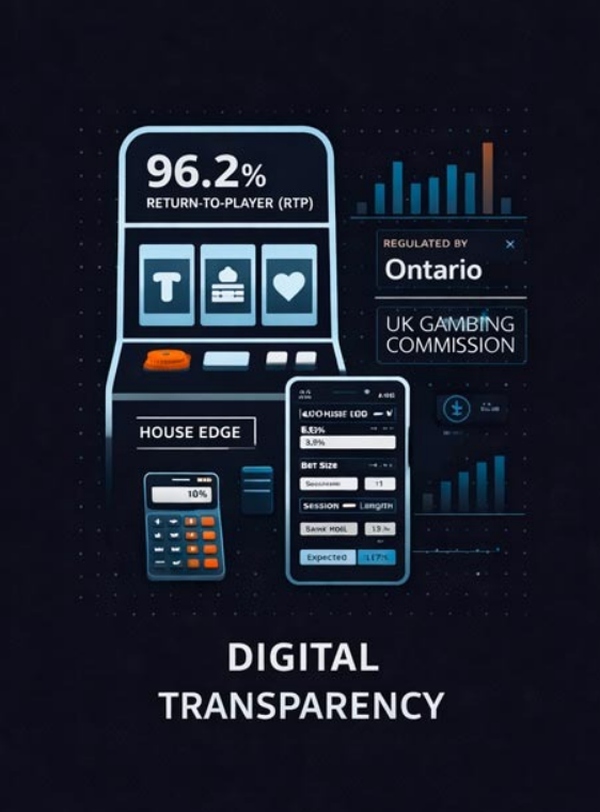
The fintech revolution has trained an entire generation of consumers to expect real-time data, clear fee structures, and algorithmic fairness from every platform that touches their money. Open banking, commission-free trading dashboards, and instant payment confirmations have established a baseline of transparency that didn't exist a decade ago. Now that same expectation is spilling into adjacent sectors, and the digital entertainment industry is finding that the old model of opaque mechanics no longer works for a consumer base raised on fintech-grade disclosure.
This shift is particularly visible across the iGaming sector, where a convergence of regulatory pressure, blockchain verification, and consumer demand has created a new class of data-transparent platforms. For fintech professionals and investors, the patterns emerging here are worth watching closely. They mirror the same transparency dynamics that reshaped banking, lending, and investment management over the past ten years, and they point toward a broader standard that will likely define consumer expectations across all digital financial services.
Before the fintech wave, consumers accepted a remarkable level of opacity in financial products. Credit card fees were buried in fine print. Investment management costs were layered across multiple disclosure documents. Currency exchange rates at banks included undisclosed markups. Fintech companies built entire businesses by simply making these costs visible.
TransferWise, now Wise, didn't invent a new foreign exchange mechanism. It made the existing markup visible and offered a lower one. Robinhood didn't create a new kind of stock trading. It eliminated commissions and showed real-time portfolio data on a mobile screen. In both cases, the competitive advantage wasn't technological sophistication but rather a commitment to showing consumers exactly what they were paying and exactly what they were getting.
According to PwC's Global Financial Services report, trust remains the single most important factor in consumer adoption of digital financial products. Yet the report also found that less than 30% of consumers globally feel they fully understand the fee structures of the financial products they use. The gap between expectation and reality is where fintech innovation continues to find its most fertile ground.
The digital entertainment space is now passing through the same transparency inflection point that banking experienced between 2015 and 2020. Regulatory bodies in Ontario, the UK, Malta, and several EU jurisdictions have moved beyond simple licensing requirements toward mandating specific mathematical disclosures. Return-to-player (RTP) percentages, variance classifications, and house edge figures are increasingly required to be published at the point of consumer interaction, not buried in terms and conditions.
Ontario's iGaming market, launched in April 2022 under the Alcohol and Gaming Commission of Ontario (AGCO), is a particularly instructive case for Canadian fintech observers. The regulatory framework requires licensed operators to display game-level RTP data and to submit their random number generators to independent auditing firms. This is functionally identical to how securities regulators require fund managers to disclose management expense ratios and historical performance data. The principle is the same: consumers making financial decisions deserve access to the quantitative parameters that determine their likely outcomes.
What makes the current moment different from previous disclosure requirements is the emergence of independent consumer tools that go beyond what regulators mandate. Platforms like gambling calculators allow users to input specific game parameters, including house edge, bet size, session length, and bankroll, to model their expected outcomes before committing funds. This is the iGaming equivalent of a mortgage amortization calculator or a compound interest simulator: a tool that translates abstract mathematical parameters into personalized, actionable projections. The fact that such tools now exist and attract meaningful traffic signals a shift in consumer behavior from passive participation to active quantitative analysis.
This consumer-side demand for calculable transparency aligns with broader fintech trends. The same user who models their mortgage payments on Ratehub, tracks their investment returns on Wealthsimple, and monitors their credit score on Borrowell now expects comparable analytical tools in every domain where money changes hands.

If regulatory disclosure provides the baseline, blockchain technology is building the verification layer. The concept of "provably fair" systems, where cryptographic hashing allows users to independently verify that an outcome was generated randomly and was not manipulated after their action, represents one of the most interesting applied use cases for distributed ledger technology outside of cryptocurrency itself.
The mechanism is straightforward in principle. Before a game round begins, the platform generates a server seed and provides the user with a hashed version. The user can supply their own client seed. After the round, the server seed is revealed, and the user (or any third-party auditor) can run the hash function to verify that the outcome matches the pre-committed parameters. Tampering after the fact is cryptographically impossible.
For the fintech community, provably fair systems are a practical demonstration of how blockchain can solve a real trust problem without requiring a full decentralized architecture. The platform still operates centrally. The games still run on conventional servers. But the verification layer, the part that matters most for consumer trust, uses the same cryptographic principles that secure cryptocurrency transactions. It's a pragmatic middle ground between fully centralized and fully decentralized models, and it's gaining traction faster than many pure DeFi applications.
According to the World Economic Forum's report on global fintech resilience, the ability to provide verifiable, tamper-proof records of financial transactions is one of the key value propositions driving blockchain adoption across regulated industries. The iGaming sector is proving that this value proposition translates effectively to consumer-facing products, not just institutional back-end infrastructure.
The transparency conversation extends beyond mathematics and into behavioral design. Fintech platforms have spent years developing AI-driven systems to detect fraudulent transactions, flag unusual account activity, and nudge users toward healthier financial behaviors. Wealthsimple's spending insights, for example, categorize expenditures and highlight patterns that users might not notice on their own. Banking apps send alerts when spending exceeds normal ranges.
The iGaming industry is adopting parallel approaches, partly driven by regulation and partly by competitive pressure from operators who recognize that long-term customer value depends on sustainable engagement rather than short-term extraction. Machine learning models now monitor player behavior patterns and flag indicators that correlate with problematic use: rapid increases in deposit frequency, session lengths that extend well beyond historical norms, and chasing behavior where bet sizes increase following losses.
The most sophisticated platforms use these signals to intervene proactively. Interventions range from gentle nudges, similar to the spending alerts in banking apps, to mandatory cooling-off periods and self-exclusion tools. Ontario's regulatory framework includes specific requirements for operator-initiated interventions, making this a compliance obligation rather than an optional feature.
From a fintech design perspective, this represents an important evolution. The first wave of fintech disruption was about making things easier: easier payments, easier investing, easier borrowing. The current wave increasingly focuses on making things safer, incorporating behavioral science and AI to protect users from their own cognitive biases. The iGaming sector's accelerated adoption of these tools, driven by the higher stakes involved, is generating insights and frameworks that will eventually flow back into mainstream financial product design.
Perhaps the most direct connection between fintech innovation and the digital entertainment sector is payment infrastructure. The iGaming industry's requirements for instant deposits, real-time withdrawals, multi-currency support, and robust identity verification have made it one of the most demanding use cases for modern payment systems.
Interac e-Transfer, which processes over one billion transactions annually in Canada, has become a standard payment rail for Ontario's licensed iGaming operators. The integration requirements have pushed Interac to develop faster settlement capabilities and more sophisticated fraud detection systems, improvements that benefit the entire Canadian payment ecosystem. Similarly, the industry's early adoption of cryptocurrency payment rails and stablecoin settlement layers has provided real-world transaction volume for technologies that are still largely theoretical in other financial services contexts.
For fintech startups building payment infrastructure, the digital entertainment vertical offers something valuable: high transaction volume, strong user expectations around speed and reliability, and regulatory frameworks that demand robust KYC and AML compliance. Several Canadian payment fintechs have used iGaming as an initial vertical, then expanded the infrastructure they built into adjacent sectors like e-commerce and subscription services.
Canada's approach to iGaming regulation offers a useful case study in how regulatory sandboxes can balance innovation with consumer protection. Ontario's decision to create a regulated market rather than maintaining prohibition has generated significant tax revenue, estimated at over $200 million annually, while giving regulators direct oversight of operator practices.
The regulatory model shares structural similarities with the sandbox approaches that several Canadian provincial securities regulators have adopted for fintech products. The Canadian Securities Administrators' Regulatory Sandbox, for instance, allows fintech firms to test innovative products in a live market under modified regulatory requirements. Both frameworks rest on the same principle: that a controlled, transparent regulatory environment produces better outcomes for consumers than either prohibition or a regulatory vacuum.
For the fintech ecosystem, the cross-pollination of regulatory approaches between financial services and digital entertainment is creating interesting opportunities. RegTech companies that developed AML compliance tools for banking are finding ready markets in iGaming. Identity verification firms that built their technology for fintech onboarding are applying the same infrastructure to age verification and player authentication. The regulatory convergence is driving a convergence of service providers, and Canadian companies are particularly well positioned because the country's regulatory frameworks in both sectors are relatively advanced by global standards.
The digital entertainment industry's rapid adoption of fintech principles, quantitative transparency, blockchain verification, AI-driven behavioral protection, and advanced payment infrastructure, is not a peripheral development. It is a preview of the consumer expectations that will define every sector where financial risk and digital interaction overlap.
The users driving this shift are not a niche demographic. They are the same consumers who use mobile banking, invest through digital platforms, and expect every financial interaction to come with complete data visibility. Their insistence on transparency in entertainment spending is a natural extension of the transparency they already demand from their financial service providers.
For fintech founders, investors, and ecosystem builders, the key takeaway is that transparency is no longer a differentiator. It is becoming the minimum standard for any platform that touches consumer money, regardless of the specific vertical. The tools, frameworks, and regulatory models being developed at this intersection of fintech and digital entertainment will likely define consumer financial technology's next chapter, not just in Canada, but globally.
The National Crowdfunding & Fintech Association (NCFA Canada) is a financial innovation ecosystem that provides education, market intelligence, industry stewardship, networking and funding opportunities and services to thousands of community members and works closely with industry, government, partners and affiliates to create a vibrant and innovative fintech and funding industry in Canada. Decentralized and distributed, NCFA is engaged with global stakeholders and helps incubate projects and investment in fintech, alternative finance, crowdfunding, peer-to-peer finance, payments, digital assets and tokens, artificial intelligence, blockchain, cryptocurrency, regtech, and insurtech sectors. Join Canada's Fintech & Funding Community today FREE! Or become a contributing member and get perks. For more information, please visit: www.ncfacanada.org
| | |
|---|---|---|
| | |
Mar 10, 2026 | NCFA Fintech Market Activity | Wealthtech And Consumer Finance

On March 4 2026, Robinhood unveiled new family finance products at its Take Flight event, adding a family investing experience, custodial and trust accounts, expanded managed investing tools, a new Platinum Card, and new Gold perks.
Vlad Tenev, CEO said:
“Robinhood will be the financial superapp for families to invest, plan, and grow wealth across generations.”
The platform continues to push further beyond retail trading and into family account oversight, wealth transfer, premium credit, and long term asset management. The new family hub is built to let households group accounts by family member, choose which accounts are visible, and assign permissions from view only access to full authority. Custodial accounts are rolling out now, while trust accounts and the family hub begin rolling out later this year.
This launch builds on an earlier NCFA analysis of Robinhood's wealthtech push and lifestyle finance strategy, but the new announcement goes further by tying family visibility, investing, credit, and wealth transfer into one customer experience.
The scale behind the launch is material. The platform reports 27.2 million funded customers, $324 billion in total platform assets, and $4.5 billion in 2025 revenue. That revenue rose 52% from 2024. Managed investing is also getting bigger. The firm says Robinhood Strategies now serves more than $1.5 billion in assets under management across more than 250,000 funded customers.
On the money side, it says there are more than 700,000 Gold Card customers with over $10 billion in annualized spend, while Robinhood Banking has more than 50,000 funded customers and over $800 million in cash deposits to date.
The premium card launch shows where the model is heading. The new invite only card carries a $695 annual fee and comes with richer travel, dining, and wellness benefits. That pricing puts the platform into a higher value segment as it tries to deepen relationships with customers whose financial lives are getting more complex.
When a platform bundles enough strategic product that can handle family account access, children’s investing, trust structures, managed portfolios, cash, and premium spending, it's getting closer to owning the main financial relationship in the household. That should raise eyebrows for banks, wealth platforms, and fintechs that still treat investing, credit, and family finance as separate product lines.
The National Crowdfunding & Fintech Association (NCFA Canada) is a financial innovation ecosystem that provides education, market intelligence, industry stewardship, networking and funding opportunities and services to thousands of community members and works closely with industry, government, partners and affiliates to create a vibrant and innovative fintech and funding industry in Canada. Decentralized and distributed, NCFA is engaged with global stakeholders and helps incubate projects and investment in fintech, alternative finance, crowdfunding, peer-to-peer finance, payments, digital assets and tokens, artificial intelligence, blockchain, cryptocurrency, regtech, and insurtech sectors. Join Canada's Fintech & Funding Community today FREE! Or become a contributing member and get perks. For more information, please visit: www.ncfacanada.org
| | |
|---|---|---|
| | |
March 9, 2026

Modern gaming platforms often contain thousands of titles, making navigation an essential part of the user experience. Allyspin Casino is an example of a platform where structured menus, game categories, and filtering systems help users move through a very large catalogue of digital games. Allyspin includes over 7,500 slot titles, more than 300 jackpot games, over 200 virtual card and table games, and more than 250 live dealer games. It is exactly this variety in which the interface plays a central role in how players discover content.
One of the main ways platforms organize thousands of games is through clear category structures. Instead of presenting titles in one long list, games are divided into sections such as Top, New, Popular, Exclusive, Megaways, and Bonus Buys.
This approach allows users to quickly filter the catalogue according to their interests. For example, players interested in newly released games can browse the “New” section, while those looking for widely played titles may explore the “Popular” category. Platforms such as Allyspin Casino rely on these types of categories to simplify navigation through extensive libraries.
Large gaming platforms often rely heavily on visual browsing. Instead of text-based menus alone, games are displayed through colorful thumbnails that show the theme and design of each title.
Slots with mythology themes, fruit-style machines, or adventure-inspired designs appear side by side, making the discovery process similar to browsing streaming platforms. On this casino platform, games such as mythology-themed slots or colorful arcade-style titles are displayed in grid layouts, allowing users to scan multiple options quickly. This visual organization helps players recognize familiar game styles and decide what to explore next.
Another important navigation feature is filtering by game mechanics or format. Modern gaming platforms host many different types of games, including:
Instead of searching manually, users can access these formats through dedicated navigation sections. Allyspin Casino organizes its catalogue with clearly separated menus for slots, live casino games, jackpots, and instant titles. This structure helps players move between different gaming styles without scrolling through unrelated titles.
Game providers also play a role in discovery. Many players follow specific studios known for particular mechanics or themes.
Platforms often include provider filters, allowing users to browse games from developers such as Play’n GO, Microgaming, Playtech, or Betsoft. This feature makes it easier to locate familiar titles or explore new releases from trusted studios. On Allyspin Casino, dozens of providers contribute to the catalogue, and filtering by developer becomes another pathway for exploring the platform’s extensive library.
As online game catalogues continue to expand, navigation tools have become as important as the games themselves. Category menus, visual browsing grids, provider filters, and format-based sections all help players explore large collections efficiently. The interface used by this casino illustrates how modern gaming platforms structure their content so users can discover new titles within increasingly large digital game libraries.
The National Crowdfunding & Fintech Association (NCFA Canada) is a financial innovation ecosystem that provides education, market intelligence, industry stewardship, networking and funding opportunities and services to thousands of community members and works closely with industry, government, partners and affiliates to create a vibrant and innovative fintech and funding industry in Canada. Decentralized and distributed, NCFA is engaged with global stakeholders and helps incubate projects and investment in fintech, alternative finance, crowdfunding, peer-to-peer finance, payments, digital assets and tokens, artificial intelligence, blockchain, cryptocurrency, regtech, and insurtech sectors. Join Canada's Fintech & Funding Community today FREE! Or become a contributing member and get perks. For more information, please visit: www.ncfacanada.org
| | |
|---|---|---|
| | |


August 26th, 2025

January 4th, 2024

June 1st, 2021

September 9th, 2020

July 9th, 2018

January 3rd, 2018

September 25th, 2017

June 20th, 2017

May 10th, 2017

December 14th, 2016