




Karsten Wenzlaff, Advisor
August 26th, 2025
Karsten Wenzlaff is a Crowdfunding and Fintech Expert from Germany. He is Secretary-General of Digit[...]


March 5, 2026 | NCFA Feature | Capital Markets And Policy And Regulation

On March 4 2026, Bank of Canada Governor Tiff Macklem discussed how non bank finance can amplify stress in debt markets during remarks at the Global Risk Institute in Toronto. He pointed at two pressure points that matter for Canada right now:
Macklem puts a clear number on hedge fund demand in Canada:
"In Canada, they purchase up to 50% of Government of Canada bonds sold at auction and account for a big portion of secondary market trading.”
Hedge funds aren't just active in Canada. Similar patterns show up across many major economies. Hedge funds now hold a significant share of government debt outside central banks and large institutions. When government bond markets become unstable, the effects spread quickly. Mortgage rates, business loans, and corporate borrowing costs all move with government bond yields, so shifts in that market ripple through the entire economy.
The Bank highlights the repo market because repo borrowing funds many leveraged bond trades. A repo (repurchase agreement), works like a very short term loan. An investor borrows cash and posts government bonds as collateral, then agrees to buy those bonds back a day or a few days later.
Macklem says many hedge fund bond positions rely on this type of borrowing and are often highly leveraged. The structure makes markets sensitive to sudden changes in funding conditions.
He explains that “globally, about half have an overnight maturity. And haircuts are low zero or negative more than 80% of the time.” If lenders raise collateral requirements or reduce lending, investors may need to sell bonds quickly to reduce leverage.
When several large investors unwind positions at the same time, liquidity can vanish and prices can fall sharply. Macklem points to past episodes where this dynamic played out, including the global dash for cash at the start of the pandemic, the United Kingdom gilt crisis in 2022, and stress in the United States Treasury market in 2023.
Macklem also focuses on private credit because transparency is more difficult than in public markets:
“The opacity of private credit means investors may not have enough information about the quality of loans held in their funds.”
If defaults rise and investors rush for exits, he warns that the strain can spill into public credit markets. Canada connects to this risk because Canadian institutions invest in private credit globally, and funding links can pull stress back into the regulated system through liquidity needs and cross border channels.
The Bank of Canada is also changing how it plans to conduct its repo transactions. In a market notice, the Bank says it will join the Canadian Collateral Management Service tri party platform for its domestic repo operations by early 2027. CCMS is a market utility launched by TMX Group and Clearstream that helps participants move collateral, manage substitutions, and automate settlement for repo trades.
The Bank also says it intends to clear its repo operations through the Canadian Derivatives Clearing Corporation once TMX completes upgrades to expand central clearing services. CDCC acts as a central counterparty that guarantees settlement if one side of a trade fails.
The goal is to support stronger collateral management, reduce counterparty risk, and encourage broader use of modern repo infrastructure in Canada.
More lending and market activity now happens via non-bank firms who often use short term funding that can tighten quickly, not just traditional banks. When that happens, pressure in debt markets can build fast. Canadian institutions need better visibility into funding conditions, leverage, and collateral movement across markets. Fintech companies that help banks monitor liquidity, collateral, and repo exposures in near real time can fill an important gap.
At the same time, stronger market infrastructure matters for Canada’s competitiveness. Investors and dealers gravitate to markets that settle trades smoothly and manage collateral efficiently, especially during periods of stress.
 The National Crowdfunding & Fintech Association (NCFA Canada) is a financial innovation ecosystem that provides education, market intelligence, industry stewardship, networking and funding opportunities and services to thousands of community members and works closely with industry, government, partners and affiliates to create a vibrant and innovative fintech and funding industry in Canada. Decentralized and distributed, NCFA is engaged with global stakeholders and helps incubate projects and investment in fintech, alternative finance, crowdfunding, peer-to-peer finance, payments, digital assets and tokens, artificial intelligence, blockchain, cryptocurrency, regtech, and insurtech sectors. Join Canada's Fintech & Funding Community today FREE! Or become a contributing member and get perks. For more information, please visit: www.ncfacanada.org
 |  |  |
|---|---|---|
 |  |  |
Mar 2, 2026 | NCFA Fintech Market Activity | Funding Access And Market Structure
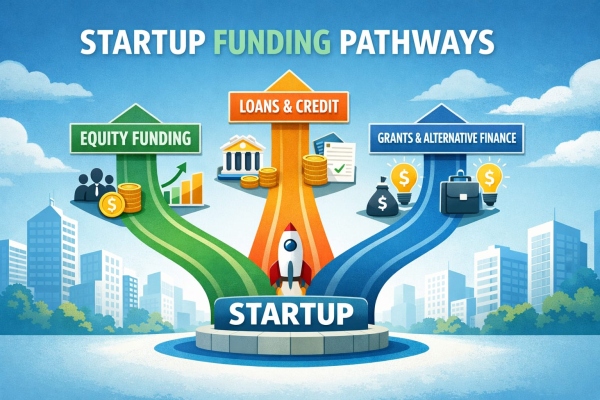
On March 2 2026, FrontFundr and Swoop launched a funding partnership that brings equity, debt, and specialized financing into one coordinated path for Canadian startups.
FrontFundr enters the partnership with more than 69,000 investors, more than $336 million in processed investments, more than 35,000 transactions, and more than 285 successful raises.
Peter-Paul Van Hoeken, Founder & CEO of FrontFundr:
“Raising capital is rarely straightforward, and founders shouldn’t have to navigate fragmented options alone. By partnering with Swoop, we’re giving startups a single, coordinated path to financing, so they can focus on building their business instead of managing complexity.”
Swoop Finance, launched in the UK in 2018, adds a broader financing reach with more than $2.5 billion in completed funding for more than 282,000 global customers. Together, that combines community based equity access with a wider range of debt and structured funding options.
Daire Burke, Head of Swoop North America
“Canadian startups need access to both capital and guidance to grow efficiently. Working together with FrontFundr allows us to combine our expertise in loans, grants, and financing solutions with FrontFundr’s equity crowdfunding platform, creating a seamless funding experience for founders.”
Founders rarely use one funding tool from start to scale. Equity can fund product development and early traction. Loans, lines of credit, grants, asset-backed financing, acquisition finance, and other structured products can support working capital, expansion, and specific transactions. A combined and simplified path can reduce friction at a time when founders still lose time moving between separate funding providers.
For Canada, this points to a more connected funding stack at a time when Canadian venture funding pressure continues to make capital access one of the hardest constraints on startup growth. The stronger platforms offer more than one product, and help founders match the right capital to the right stage with less delay and less administrative drag.
For founders and investors, access to capital is becoming a workflow issue as much as a supply issue. Platforms that combine investor reach, financing options, and execution support can become more valuable than standalone marketplaces.
As startup funding gets harder to piece together, does long term value move to platforms that control more of the capital journey, not just one part of it?
The National Crowdfunding & Fintech Association (NCFA Canada) is a financial innovation ecosystem that provides education, market intelligence, industry stewardship, networking and funding opportunities and services to thousands of community members and works closely with industry, government, partners and affiliates to create a vibrant and innovative fintech and funding industry in Canada. Decentralized and distributed, NCFA is engaged with global stakeholders and helps incubate projects and investment in fintech, alternative finance, crowdfunding, peer-to-peer finance, payments, digital assets and tokens, artificial intelligence, blockchain, cryptocurrency, regtech, and insurtech sectors. Join Canada's Fintech & Funding Community today FREE! Or become a contributing member and get perks. For more information, please visit: www.ncfacanada.org
| | |
|---|---|---|
| | |
Feb 26, 2026 | NCFA Fintech Market Activity | Lending Consumer Credit And Private Credit

Image: Freepik/Credit
On February 25 2026, Toronto headquartered public fintech lender Propel Holdings (TSX PRL) announced a US $60 million forward flow commitment from Mesirow managed funds to purchase loans originated through its new Freshline product to be provided by Column N.A, as the company builds out its next phase of U.S. product expansion.
Propel uses AI driven underwriting and brands including Fora Credit, CreditFresh, MoneyKey, and QuidMarket to deliver over one million loans and more than $2B in credit to consumers underserved by traditional institutions.
Freshline is set to launch in Q1 and will offer unsecured personal loans to a new underserved customer segment and additional geographies not currently served by Propel. Under the structure,
Propel provides the technology, underwriting, and servicing, while Mesirow purchases eligible receivables. That gives Propel a committed capital channel to support origination growth without forcing every new loan onto its own balance sheet.
Consumer lenders can grow demand for loans but still struggle if funding cannot keep up with new originations. A forward flow program (arrangement where an investor agrees to buy a set of loans originated by another party) helps solve that by connecting loan production to a committed institutional buyer. That steady funding source can make planning easier and allow lenders to grow without relying as much on one off fundraising or their own balance sheet capacity.
Propel is aligning product expansion with committed institutional purchasing capacity at the same time. For operators, that can mean smoother scaling if underwriting and servicing stay within expectations.
This structure fits private credit on the funding side. The borrower receives an unsecured consumer loan, but the capital backing that loan comes from private investment funds rather than deposits or a public market issuance. In a forward flow arrangement, the investor agrees to buy newly originated loans that meet defined criteria, creating direct exposure to loan performance through a private bilateral program.
That makes this meaningfully different from a warehouse line or a securitization. A warehouse line usually provides secured financing against receivables, while securitization packages loans into a broader capital markets transaction. Forward flow sits closer to programmatic private credit because the investor buys production directly as it is originated. Simply put, this is fintech originated consumer credit funded through institutional private credit capital.
Canadian fintechs should watch this because it shows how a local platform can pair product expansion with a U.S. funding structure built for repeat origination. In lending, distribution may open the door, but stable capital is what keeps a product moving once volume rises.
It also raises the bar for what matters operationally. When funding becomes more committed and programmatic, long term advantage may depend less on pure marketing reach and more on underwriting consistency, servicing quality, and the ability to keep institutional buyers confident through multiple credit cycles.
If more fintech lenders lock in forward flow capital, does the real moat move away from customer acquisition and toward underwriting discipline, servicing execution, and funding durability?
The National Crowdfunding & Fintech Association (NCFA Canada) is a financial innovation ecosystem that provides education, market intelligence, industry stewardship, networking and funding opportunities and services to thousands of community members and works closely with industry, government, partners and affiliates to create a vibrant and innovative fintech and funding industry in Canada. Decentralized and distributed, NCFA is engaged with global stakeholders and helps incubate projects and investment in fintech, alternative finance, crowdfunding, peer-to-peer finance, payments, digital assets and tokens, artificial intelligence, blockchain, cryptocurrency, regtech, and insurtech sectors. Join Canada's Fintech & Funding Community today FREE! Or become a contributing member and get perks. For more information, please visit: www.ncfacanada.org
| | |
|---|---|---|
| | |
Feb 23, 2026 | NCFA Fintech Market Activity | Digital Assets Blockchain And Tokenization

On February 20 2026, Ledn announced the first ever investment grade asset backed securities transaction in the digital asset industry, placing Bitcoin secured consumer loans into a capital markets format designed for institutional fixed income buyers.
Reporting on presale ratings and collateral detail indicates the transaction totalled about $188M and referenced a collateral pool of 5,441 Bitcoin backed consumer loans secured by 4,078.87 Bitcoin with an aggregate presale collateral value near $330M. S&P Global Ratings assigned preliminary ratings to two tranches, signalling that crypto secured loan performance can be assessed within traditional credit frameworks.
An asset backed security (ABS) pools loans and converts expected borrower payments into tradable bonds. In this structure, the underlying assets are Bitcoin collateralized consumer loans, which places operational emphasis on custody safeguards, liquidation triggers, valuation discipline, and reporting transparency.
For additional background on how crypto backed loans operate at the borrower level, this Fintech Fridays episode, Bitcoin backed loans and putting your crypto to work, provides context with Ledn Co-founder Mauricio Di Bartolomeo.
The Ledn issuance positions securitization as a funding diversification path. Instead of relying only on balance sheet capital or warehouse facilities, loan originators can distribute credit risk to bond investors, expanding lending capacity without requiring traditional bank balance sheet support.
Structure changes market access. A crypto lending desk can fund loans directly, but a rated ABS wrapper introduces buyers who operate under fixed income mandates and portfolio risk frameworks. That development moves crypto secured credit closer to mainstream credit market infrastructure.
The transaction also reinforces operational expectations. Securitization forces clarity around collateral custody, margin maintenance, liquidation speed, valuation timing, and stress scenario performance. If these controls prove reliable in market cycles, securitized crypto credit could evolve into a recognized institutional allocation sleeve.
Ledn represents a Canadian founded crypto finance platform now operating globally. Prior milestones include Tether investing in Ledn to expand crypto credit access and Ledn receiving VASP regulatory approval in the Cayman Islands, which together strengthen its institutional positioning and reporting posture.
If institutional investors begin treating crypto secured ABS pools as a defined allocation sleeve, Canadian originated platforms that demonstrate transparent collateral management and disciplined underwriting could gain access to funding channels that operate beyond domestic banking constraints.
If securitized crypto credit continues to mature, the competitive edge may hinge less on yield and more on collateral governance, transparency, and investor distribution relationships.
Crypto secured lending is beginning to compete not only on returns, but on structure, reporting discipline, and institutional investability.
The National Crowdfunding & Fintech Association (NCFA Canada) is a financial innovation ecosystem that provides education, market intelligence, industry stewardship, networking and funding opportunities and services to thousands of community members and works closely with industry, government, partners and affiliates to create a vibrant and innovative fintech and funding industry in Canada. Decentralized and distributed, NCFA is engaged with global stakeholders and helps incubate projects and investment in fintech, alternative finance, crowdfunding, peer-to-peer finance, payments, digital assets and tokens, artificial intelligence, blockchain, cryptocurrency, regtech, and insurtech sectors. Join Canada's Fintech & Funding Community today FREE! Or become a contributing member and get perks. For more information, please visit: www.ncfacanada.org
| | |
|---|---|---|
| | |
Feb 4, 2026 | NCFA Fintech Market Activity | Funding and Capital Markets

Image: Freepik
On February 4 2026, NEO Financial announced it secured $68.5 million in equity capital from more than 100 Canadian investors to accelerate its securitization strategy and support further growth of its lending and credit products. The round includes participation from Alberta Investment Management Corporation (AIMCo), Northleaf Capital Partners, Plaza Ventures, Sandstone Asset Management, and Caldwell Growth Opportunities Fund. These are not typical venture participants. They are institutional capital allocators with deep experience in private credit, structured finance, and asset-backed investing.
NEO positions the raise as strengthening its balance sheet to expand its asset-backed funding programs and diversify capital sources tied to its consumer and merchant credit offerings. The company isn't raising capital simply to extend runway. It's raising capital specifically to support securitization activity that allows the company to recycle lending capital through structured vehicles and continue originating credit without relying solely on sponsor-bank facilities or traditional debt lines.
NEO reports that it serves millions of Canadians across retail and business financial products and has already built a sizeable loan portfolio through point of sale financing, credit products, and merchant services. Securitization allows that loan book to become a capital markets asset rather than a balance sheet constraint.
For Canadian fintech lenders, this represents a maturation point. Early growth in fintech credit often depends on venture equity and warehouse funding. Long term scale depends on access to institutional capital markets that can absorb receivables and recycle liquidity. NEO's financing is a sign that Canadian institutional investors are increasingly comfortable backing fintech platforms that combine lending operations with disciplined capital markets execution.
Andrew Chau, Co-Founder and CEO, NEO Financial:
"This investment supports the continued expansion of our securitization strategy and strengthens our ability to scale credit products responsibly for Canadians and businesses across the country."
When fintech lenders can turn their loan portfolios into new funding through securitization, does access to capital markets become the main factor separating national scale players from niche credit providers?
This raise shows how NEO is tying its lending growth directly to capital markets capability. Platforms that can convert loan origination into structured investment assets will have a structural advantage as lending volumes grow.
The National Crowdfunding & Fintech Association (NCFA Canada) is a financial innovation ecosystem that provides education, market intelligence, industry stewardship, networking and funding opportunities and services to thousands of community members and works closely with industry, government, partners and affiliates to create a vibrant and innovative fintech and funding industry in Canada. Decentralized and distributed, NCFA is engaged with global stakeholders and helps incubate projects and investment in fintech, alternative finance, crowdfunding, peer-to-peer finance, payments, digital assets and tokens, artificial intelligence, blockchain, cryptocurrency, regtech, and insurtech sectors. Join Canada’s Fintech & Funding Community today FREE! Or become a contributing member and get perks. For more information, please visit: www.ncfacanada.org
| | |
|---|---|---|
| | |
Jan 27, 2026 | NCFA Fintech Market Activity | Payments and Market Infrastructure

Image: Freepik
On January 27 2026, Payments Canada confirmed the admission of five new payment service provider members, expanding direct access to Canada’s core payments infrastructure. The new members are Wise Payments Canada, Float, KOHO, Paramount Commerce, and Brim Financial.
The update matters because Payments Canada membership is a structural gate into clearing, settlement, and rule participation. In practice, it determines which fintechs can connect more directly to payment rails instead of relying entirely on sponsor banks.
Payments Canada states that its systems clear and settle more than $411B in transactions every business day. Direct participation changes how PSPs manage cost, reliability, product design, and compliance as transaction volumes scale.
The five firms admitted represent different operating models inside the Canadian fintech market.
1. Wise Payments Canada brings cross-border money movement and FX infrastructure.
2. Float focuses on spend management and corporate cards for businesses.
3. KOHO operates in consumer finance with prepaid and budgeting products.
4. Paramount Commerce provides payment processing and orchestration services.
5. Brim Financial combines card issuing with embedded loyalty and digital banking infrastructure.
Membership also arrives during Canada’s ongoing payments reform cycle. PSPs are integrating with the Retail Payment Activities Act supervisory framework while also positioning for broader access to faster payments and data enabled services. Direct participation reduces dependency on intermediaries at the same time regulatory accountability increases.
As more PSPs gain direct access to payment rails, does competition shift toward pricing and features, or toward operational reliability and compliance execution?
The admission of five new PSPs in a single update shows Payments Canada steadily widening the circle of direct participants. The next test is whether this access translates into faster product launches, lower costs, or clearer accountability for end users as Canada’s payments system modernizes.
The National Crowdfunding & Fintech Association (NCFA Canada) is a financial innovation ecosystem that provides education, market intelligence, industry stewardship, networking and funding opportunities and services to thousands of community members and works closely with industry, government, partners and affiliates to create a vibrant and innovative fintech and funding industry in Canada. Decentralized and distributed, NCFA is engaged with global stakeholders and helps incubate projects and investment in fintech, alternative finance, crowdfunding, peer to peer finance, payments, digital assets and tokens, artificial intelligence, blockchain, cryptocurrency, regtech, and insurtech sectors. Join Canada's Fintech & Funding Community today FREE! Or become a contributing member and get perks. For more information, please visit: www.ncfacanada.org
| | |
|---|---|---|
| | |
Fintech Financing | Jan 27, 2026

Image: Freepik/rawpixel.com
On January 26 2026, Toronto-based Fintech Float Financial announced $100M in debt financing to expand its business finance for Canadian small to medium sized companies. The release says the debt facility is provided by Silicon Valley Bank, which is now part of First Citizens Bank (a tier one Canadian bank), supporting its business accounts and working capital products and could unlock more than $1.5B in annualized spending power for small and medium sized enterprises.
Float confirms the financing supports two core offerings. The first is its business accounts product, which advertises interest rates of up to 4% on balances and a base rate increase from 2% to 3% across all customers. The second is Float Charge, a short term working capital product designed to provide flexible financing to businesses that don't always fit traditional bank lending models.
Float reports that more than 6,000 Canadian businesses now use its platform across technology, professional services, hospitality, retail, and non-profit sectors. Many of these companies manage fragmented banking tools, slow credit decisions, and cash balances that earn little return. Float positions its platform as a way to bring payments, expenses, cash management, and short term credit together in a single operating layer.
The $100M consists entirely of debt facilities (not equity capital) and expands Float’s balance sheet capacity, allowing it to fund customer deposits and extend working capital without diluting ownership.
Under this model, growth depends less on valuation milestones and more on execution. Underwriting discipline, funding costs, and credit performance determine how effectively this capital translates into sustainable product usage. Balance sheet financing accelerates expansion, but it also tightens the link between growth and risk management.
The participation of Silicon Valley Bank and a tier one Canadian bank suggests institutional comfort with Float’s underwriting approach, controls, and operating maturity. Rather than competing head on for SME relationships, banks increasingly deploy capital through fintech platforms that already sit inside day to day business workflows.
This arrangement allows banks to extend reach while fintechs handle product design, customer experience, and ongoing engagement. As scale increases, performance expectations rise with it, especially around credit quality and liquidity management.
Float’s financing shows how non-bank platforms continue to move closer to the centre of SME finance by bundling yield, payments, and short term credit into a single product stack. It's an offering aimed at helping many Canadian businesses experiencing common friction around fragmented tools, slow access to credit, and idle cash.
This development also feeds into competition and regulatory context for SME finance in Canada. NCFA recently published an article discussing Why SME loan competition in Canada is under review, with outcomes potentially affecting how both traditional banks and fintechs serve business customers; that review underscores why innovations in working capital and deposit products matter now. Float’s latest financing and product expansion follows its $70M Series B that aimed to innovate business finance and boost investor confidence in alternative SME credit models.
This financing also comes against a backdrop where Canadian regulators previously took action on the Canadian branch of Silicon Valley Bank to protect creditors and facilitate an orderly transition after wider SVB distress and evolving regulatory oversight for cross-border banking and fintech collaboration.
If Float maintains credit performance and continues to win primary business relationships, this model could gain traction in how some SMEs manage deposits and working capital. If losses rise or growth slows, balance sheet leverage can quickly become a constraint too.
The National Crowdfunding & Fintech Association (NCFA Canada) is a financial innovation ecosystem that provides education, market intelligence, industry stewardship, networking and funding opportunities and services to thousands of community members and works closely with industry, government, partners and affiliates to create a vibrant and innovative fintech and funding industry in Canada. Decentralized and distributed, NCFA is engaged with global stakeholders and helps incubate projects and investment in fintech, alternative finance, crowdfunding, peer-to-peer finance, payments, digital assets and tokens, artificial intelligence, blockchain, cryptocurrency, regtech, and insurtech sectors. Join Canada's Fintech & Funding Community today FREE! Or become a contributing member and get perks. For more information, please visit: www.ncfacanada.org
| | |
|---|---|---|
| | |


August 26th, 2025

January 4th, 2024

June 1st, 2021

September 9th, 2020

July 9th, 2018

January 3rd, 2018

September 25th, 2017

June 20th, 2017

May 10th, 2017

December 14th, 2016