




Karsten Wenzlaff, Advisor
August 26th, 2025
Karsten Wenzlaff is a Crowdfunding and Fintech Expert from Germany. He is Secretary-General of Digit[...]


Crypto Adoption | June 27, 2025
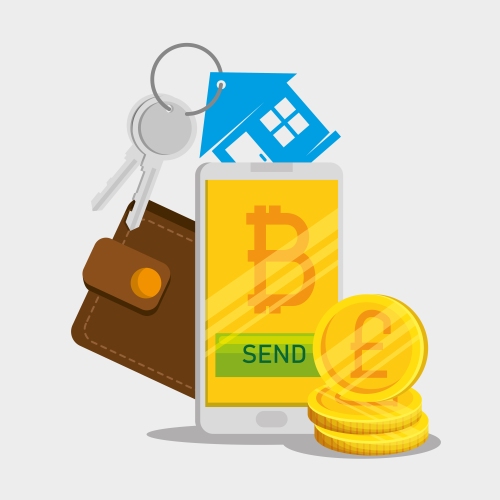
Image: Freepik/studiogstock
For the first time, cryptocurrency is being considered in U.S. mortgage financing. On June 25, 2025, the Federal Housing Finance Agency (FHFA) told Fannie Mae and Freddie Mac to prepare proposals that would let homebuyers include crypto assets when being assessed for their mortgage applications.
In a public post on X, FHFA Director Bill Pulte said this change supports the U.S. goal of becoming a global leader in crypto. The order allows crypto to be included as a financial reserve, meaning lenders could soon treat some digital assets the same way they treat cash or stocks when reviewing mortgage risk. This is not a new rule yet but it's the start of a planning phase where the agencies will write and review draft policies.
After significant studying, and in keeping with President Trump’s vision to make the United States the crypto capital of the world, today I ordered the Great Fannie Mae and Freddie Mac to prepare their businesses to count cryptocurrency as an asset for a mortgage.
SO ORDERED pic.twitter.com/Tg9ReJQXC3
— Pulte (@pulte) June 25, 2025
Remarkable to see the crypto sentiment change so rapidly in the United States. This latest change reflects the wider effort by U.S. officials to include digital assets in traditional finance. An article in Barron’s noted that reserve rules may apply to bitcoin, ether, and other widely held tokens. The Washington Post also reported concerns about volatility, especially with some tokens rising or falling by 40% or more in a single day.
While this directive applies only in the United States, it sends a strong message. If crypto is accepted in mainstream mortgage reviews, financial technology firms in Canada may start building new tools to support similar models. That could include connecting wallets to mortgage applications or building credit models that accept tokenized savings.
For Canadian fintechs focused on lending, payments, or digital identity, this is an early signal of significant changes to come. With more Canadians holding crypto, pressure will likely grow for Canadian regulators to respond or risk falling behind global standards. That's what happens when your a country deemed 'fast follower'.
 The National Crowdfunding & Fintech Association (NCFA Canada) is a financial innovation ecosystem that provides education, market intelligence, industry stewardship, networking and funding opportunities and services to thousands of community members and works closely with industry, government, partners and affiliates to create a vibrant and innovative fintech and funding industry in Canada. Decentralized and distributed, NCFA is engaged with global stakeholders and helps incubate projects and investment in fintech, alternative finance, crowdfunding, peer-to-peer finance, payments, digital assets and tokens, artificial intelligence, blockchain, cryptocurrency, regtech, and insurtech sectors. Join Canada's Fintech & Funding Community today FREE! Or become a contributing member and get perks. For more information, please visit: www.ncfacanada.org
 |  |  |
|---|---|---|
 |  |  |
Stablecoins | June 27, 2025
On June 24 2025, in chapter 3 of its Annual Economic Report, "The next generation monetary and financial system" (38 page PDF), the Bank for International Settlements (BIS) warns that stablecoins fail to function as real money. The report arrives just as the United States moves closer to signing the GENIUS Act into law, a federal bill that would bring stablecoin issuers under formal supervision.
The report outlines how stablecoins fail to meet the key tests of singleness, elasticity, and integrity, which defines whether a payment instrument can be accepted at face value, scale with economic needs, and operate safely in the broader financial system.
BIS Report states
“Stablecoins perform poorly when assessed against the three tests for serving as the mainstay of the monetary system,”
The BIS applies three core tests to any money-like instrument, and casts serious doubt whether private stablecoins can ever serve as a true foundation for payments or monetary exchange, even if regulated.
The BIS also says broader risks to financial stability, including potential fire sales of safe assets held in reserve and cross-border flows that could undermine monetary sovereignty in emerging markets.
The GENIUS Act has now passed the Senate with strong bipartisan support and is moving to the House for consideration but does not treat stablecoins as public money. It takes a supervisory approach while explicitly banning certain features, key provisions include:
The bill has advanced in both the House Financial Services and Senate Banking committees and has bipartisan backing. Supporters argue that clear rules are needed to protect consumers and prevent runs on poorly backed coins. But the BIS report raises a bigger question. Even if stablecoins are regulated, should they be foundational to the payment system at all?
While Canada has not yet introduced comparable legislation as the GENIUS Act in the U.S., the BIS developments will influence local debates. Stablecoins are already used by some Canadians for crypto trading, remittances, and access to foreign currency.
The Bank of Canada has shelved retail CBDC development while continuing digital currency research and scenario planning, and OSFI is developing crypto exposure guidance for regulated financial institutions.
If the US establishes a regulated market while the BIS encourages a public infrastructure model, Canadian policymakers and fintechs may need to navigate both. That includes deciding whether to integrate regulated stablecoins, develop domestic alternatives, or back a central bank issued platform.
Both public institutions and private developers are building in parallel but the debate is no longer theoretical, and Canada's choices made now will impact financial systems as they grow and evolve.
The National Crowdfunding & Fintech Association (NCFA Canada) is a financial innovation ecosystem that provides education, market intelligence, industry stewardship, networking and funding opportunities and services to thousands of community members and works closely with industry, government, partners and affiliates to create a vibrant and innovative fintech and funding industry in Canada. Decentralized and distributed, NCFA is engaged with global stakeholders and helps incubate projects and investment in fintech, alternative finance, crowdfunding, peer-to-peer finance, payments, digital assets and tokens, artificial intelligence, blockchain, cryptocurrency, regtech, and insurtech sectors. Join Canada's Fintech & Funding Community today FREE! Or become a contributing member and get perks. For more information, please visit: www.ncfacanada.org
| | |
|---|---|---|
| | |
Coinbase | June 25, 2025

Image: Freepik/macrovector
Coinbase secures a Markets in Crypto Assets (MiCA) licence in Luxembourg and unlocks access to all 27 EU member states under one regulatory framework. The licence allows Coinbase to provide regulated custody, trading, and token services across Europe without reapplying in each country.
MiCA is the EU’s first unified crypto regulation. It sets common rules for disclosures, capital requirements, and consumer protection. Coinbase is among the first major global exchanges to receive full MiCA approval, joining a wave of early adopters now operating across the EU under a unified licence. Market wide compliance in the EU is now real, and opens up a single market of 450 million people under consistent regulatory oversight.
Canada uses a mix of federal registration through FINTRAC and provincial securities oversight. While there is a securities passport system under the Canadian Securities Administrators (CSA), it's not uniformly applied across all provinces. Ontario, for example, requires dual filings. The system also does not unify crypto regulation or streamline compliance across federal and provincial levels.
In contrast, MiCA offers a single licence with direct access across all EU countries. For Canadian fintechs, this structural difference adds complexity and slows growth. Canada’s fintech sector must now compete with peers operating under unified rules, faster timelines, and lower costs.
In a June 2025 opinion piece for Cointelegraph, Jillian Friedman, COO of Symbiotic, warned that Canada risks losing ground:
“While other countries move toward integrating crypto into their financial systems, Canada is lagging, costing the country capital, talent and competitiveness.”
Crypto policy was grossly missing from all federal party platforms during the 2025 election, a “missed opportunity” at a time when early-stage VC activity is dropping and top STEM talent continues to leave. Friedman doubled down on Canada's issues including:
She argues that Canada should move quickly to unlock access to capital, offer tax incentives, and remove policy barriers if it wants to remain competitive.
Several global firms have followed Coinbase in securing MiCA licences:
While several MiCA-licensed firms also operate in Canada the split below shows how global players are prioritizing the EU as a unified growth market, while (possibly) treating Canada as a smaller fragmented market.
| Firm | MiCA Licence | Canadian Operation |
| Coinbase | Yes | Yes (OSC restricted dealer) |
| Crypto.com | Yes | Yes (OSC restricted dealer) |
| OKX | Yes | No active registration |
| Bitpanda | Yes | No active registration |
| Bybit | Yes | Previously fined in Ontario; no active registration |
| BitGo | Yes | No known retail presence |
MiCA offers a clear example of how coordinated regulation can improve access, speed, and investor confidence. Prime Minister Mark Carney’s pledge to reduce interprovincial trade barriers could open the door to change, but digital asset policy must be part of the conversation.
Without reducing regulatory burden and interprovincial barriers, Canada risks falling behind not because of lack of innovation but because of unclear rules that limit scale, delay market access, and create friction for investors.
The National Crowdfunding & Fintech Association (NCFA Canada) is a financial innovation ecosystem that provides education, market intelligence, industry stewardship, networking and funding opportunities and services to thousands of community members and works closely with industry, government, partners and affiliates to create a vibrant and innovative fintech and funding industry in Canada. Decentralized and distributed, NCFA is engaged with global stakeholders and helps incubate projects and investment in fintech, alternative finance, crowdfunding, peer-to-peer finance, payments, digital assets and tokens, artificial intelligence, blockchain, cryptocurrency, regtech, and insurtech sectors. Join Canada's Fintech & Funding Community today FREE! Or become a contributing member and get perks. For more information, please visit: www.ncfacanada.org
| | |
|---|---|---|
| | |
Quantum | June 25, 2025
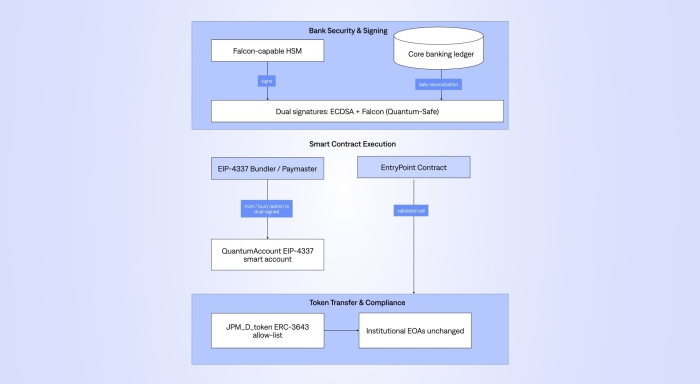
BTQ Technologies Unveils Quantum Stablecoin Settlement Network (QSSN) (CNW Group/BTQ Technologies Corp.)
On June 24, 2025, Vancouver-based public company, BTQ Technologies (CBOE:BTQ and OTC:BTQQF), announced the launch of a new system called the Quantum Stablecoin Settlement Network (QSSN). The technology is designed to help stablecoin issuers protect against future quantum computing threats while keeping their current systems unchanged.
This comes at a time when the global stablecoin market has grown to nearly US$250 billion, and regulators are starting to require stronger protections. Stablecoins are now a major part of the global economy and they are being used more often in cross border payments, lending, and digital commerce. In mid-June, the U.S. passed the GENIUS Act, mandating post quantum security standards by 2030. Canada and other countries are likely reviewing similar measures.
QSSN adds a second digital signature to important actions like creating or destroying stablecoins and updating system controls. This second signature uses Falcon 512, a new kind of security method chosen by the U.S. National Institute of Standards and Technology because it can resist attacks from future quantum computers.
This system runs alongside today’s security methods, like the ones used on Ethereum, and it doesn't require any changes to how users send or store stablecoins. QSSN already supports major programs including JPMorgan’s deposit token JPMD, Circle’s USDC, and Tether’s USDT.
QSSN is already working today. It adds quantum safe protection behind the scenes without changing how wallets, apps, or payment systems work. This helps stablecoin issuers meet future legal requirements early and avoid hasty upgrades later.
This is important because some attackers may already be collecting encrypted data today, planning to break it later when powerful quantum computers are available. QSSN protects stablecoins from this kind of risk by adding stronger encryption now.
The GENIUS Act gives financial institutions until 2030 to make these upgrades. By starting early, companies like Circle, Tether, and JPMorgan can show regulators and customers that they take long term security seriously. This also helps keep trust in stablecoins as their use grows. As demand increases, stablecoin platforms must be ready for future threats without slowing down today’s systems and QSSN gives them that option.
BTQ’s QSSN offers a practical and tested way to protect stablecoins from future quantum risks, while keeping systems simple for users and businesses today. It could help set the standard for how digital assets are secured in the years to come.
The National Crowdfunding & Fintech Association (NCFA Canada) is a financial innovation ecosystem that provides education, market intelligence, industry stewardship, networking and funding opportunities and services to thousands of community members and works closely with industry, government, partners and affiliates to create a vibrant and innovative fintech and funding industry in Canada. Decentralized and distributed, NCFA is engaged with global stakeholders and helps incubate projects and investment in fintech, alternative finance, crowdfunding, peer-to-peer finance, payments, digital assets and tokens, artificial intelligence, blockchain, cryptocurrency, regtech, and insurtech sectors. Join Canada's Fintech & Funding Community today FREE! Or become a contributing member and get perks. For more information, please visit: www.ncfacanada.org
| | |
|---|---|---|
| | |
Crowdfunding Regulation | June 23, 2025

Image: Freepik/rawpixel.com
As reported by Crowdfund Insider, on June 11, 2025 the U.S. House Financial Services Committee voted unanimously (51-0) to progress the ACCESS Act (H.R. 3645), a bipartisan bill seeking to modernize and expand Regulation Crowdfunding (Reg CF). The legislation would crease the cap on Reg CF offerings and reduce costly compliance obligations for early-stage businesses. Supporters say these changes are urgently needed to make equity crowdfunding more viable for smaller companies struggling with capital access and high review costs.
Rep. Dan Meuser, House Financial Services Committee:
“America’s entrepreneurs shouldn’t have to choose between raising the capital they need and paying accountants more than they plan to raise. The ACCESS Act updates outdated thresholds so the next great neighborhood brewery, tech start-up, or Main Street retailer can spend its first dollars on growth—not paperwork.”
Small businesses and startups often say that raising capital is a top barrier to growth. In the U.S., Regulation Crowdfunding allows private companies to raise money from the general public through SEC-registered broker-dealer platforms but expensive compliance costs can limit use of the pathway. According to everyone who unanimously voted for the bill on the House Financial Services Committee, increasing the exemption threshold for reviewed statements will reduce costs, improve the uptake of Reg CF, and provide early-stage smaller firms a fairer path to funding.
On the other hand, invest advocates like NASAA, warn that loosening reporting requirements could raise investor risk, but supporters say platforms and disclosure rules already provide sufficient baseline protection.
Given the current economic climate and the unanimous and the fact that both major parties support the bill means there's a good chance of being approved. If adopted by the full U.S. House and Senate, the ACCESS Act could significantly increase the use of equity crowdfunding by small businesses across the U.S.
The Canadian equivalent to Reg CF in the U.S. is National Instrument 45-110 (startup crowdfunding), which has a $1.5 million issuer cap per 12 month period without any requirement to provide reviewed or audited financial statements.
The ACCESS Act is a rare bipartisan effort to reduce friction in Reg CF capital formation for small businesses, and if passed, could significantly boost the utility of the instrument and reduce compliance burdens holding back many early stage fundraising efforts in the U.S. Canadian regulators and industry should be closely following these changes to see how they can strengthen their own equity crowdfunding frameworks under Ni 45-110.
The National Crowdfunding & Fintech Association (NCFA Canada) is a financial innovation ecosystem that provides education, market intelligence, industry stewardship, networking and funding opportunities and services to thousands of community members and works closely with industry, government, partners and affiliates to create a vibrant and innovative fintech and funding industry in Canada. Decentralized and distributed, NCFA is engaged with global stakeholders and helps incubate projects and investment in fintech, alternative finance, crowdfunding, peer-to-peer finance, payments, digital assets and tokens, artificial intelligence, blockchain, cryptocurrency, regtech, and insurtech sectors. Join Canada's Fintech & Funding Community today FREE! Or become a contributing member and get perks. For more information, please visit: www.ncfacanada.org
| | |
|---|---|---|
| | |
Digital Tax | June 23, 2025

Freepik - Rawpixel.com, taxes
*Update: On June 29, 2025, the federal government of Canada rescinded it's DST tax, a good faith tactic ahead of CUSMA negotiations.
As reported by CTV News, the Minister of Innovation, Science and Industry François-Philippe Champagne said on June 19, 2025 that Canada will not delay or pause the 3% Digital Service Tax (DST), even as U.S. lawmakers and Canadian business groups continue to voice strong opposition, setting the stage for further potential trade retaliation from the United States.
Canada's Digital Service Tax act passed into law in 2024 and will be retroactively applied from January 1, 2022, with initial payments due by June 30, 2025. It targets tech giants earning over €750 million globally and at least $20 million CAD in annual Canadian digital revenues from online advertising, digital marketplaces, and user data monetization.
Critics argue the DST unfairly targets American firms like Meta, Amazon, Google, Uber, and Airbnb and risks violating Canada’s commitments under the OECD/G20 Inclusive Framework and the Canada-US-Mexico Agreement (CUSMA).
On July 11, 2024, members of U.S. Congress in a bitpartisan letter, urged the Biden administration to consider punitive tariffs, if Canada proceeded unilaterally with the tax. American tech lobby groups, including the Information Technology Industry Council and the Computer and Communications Industry Association, have issued statements warning of double taxation and negative impacts on investment.
Canadian organizations including the Chamber of Commerce and the Retail Council have also raised alarm about economic consequences. They say the DST will increase consumer prices, destabilize bilateral trade, and hurt Canadian competitiveness.
Yet the federal government insists the measure is necessary to ensure fair tax treatment and close loopholes for global digital firms operating in Canada. Champagne said Canada is prepared to defend its position and stressed that domestic companies must not be disadvantaged by outdated tax systems.
NCFA recently wrote an article about the DST compounding pressure points for Canadian fintechs, already facing increased costs from Trump's tariffs. The combined regulatory and trade barriers could slow growth, raise compliance burdens, and weaken investment flows in a critical sector to Canada’s innovation strategy.
Canada is not alone. Countries including France, Italy, Spain, Austria, the United Kingdom, Turkey, and India have also enacted unilateral digital services taxes, citing similar concerns about tax fairness in the face of untaxed digital revenues.
These countries share several traits. They have large and growing digital user bases, limited ability to tax foreign digital giants under the current rules, and political pressure to rebalance domestic tax fairness. And many of these nations have grown impatient with the slow pace of OECD reform and acted independently.
Multinational firms like Google, Meta, and Amazon often avoid local corporate tax obligations by recording revenue in lower tax jurisdictions, even when earning substantial income from users in countries with no physical business presence. DST programs in these countries are their attempt to capture their share of this otherwise untaxed activity.
In contrast, countries like Germany and Japan have avoided unilateral DSTs. Despite facing the same digital tax gap, they prioritize maintaining stable trade and diplomatic relations with the United States and remain committed to resolving the issue through OECD-led multilateral reform. They fear that unilateral DSTs could provoke retaliatory tariffs or disrupt broader trade relationships. Their restraint is shaped by economic strategy, geopolitical alignment, and their deeper integration with U.S. supply chains.
By pushing forward with a DST in 2025 despite U.S. threats, Canada is one of the more assertive jurisdictions globally and at the forefront of U.S. DST activities. Its approach reflects growing domestic political pressure to tax digital activity fairly, even if it risks short-term diplomatic tension. However, it also positions Canada as a potential target for trade retaliation if a negotiated OECD solution is not reached soon.
Instead of enforcing a unilateral DST, Canada could explore alternative policy paths. One option is to delay implementation and condition it on measurable progress in OECD multilateral negotiations. This approach could defuse trade tensions while preserving Canada’s leverage. Another path is a bilateral tax agreement with the United States targeting large digital firms.
Canada could also consider expanding existing corporate tax rules to capture significant economic presence in the digital space, without relying on a standalone DST.
A final alternative is to introduce temporary digital levies that phase out automatically once an OECD framework is enacted, aligning political accountability with global reform timelines.
The digital services tax and U.S. trade threats are now intertwined, creating uncertainty for fintechs operating in or expanding into Canada. Companies should monitor policy developments closely. As geopolitical and regulatory pressures escalate, nimbleness and smart coordinated action will be key to maintaining innovation, competitiveness, and market access.
The National Crowdfunding & Fintech Association (NCFA Canada) is a financial innovation ecosystem that provides education, market intelligence, industry stewardship, networking and funding opportunities and services to thousands of community members and works closely with industry, government, partners and affiliates to create a vibrant and innovative fintech and funding industry in Canada. Decentralized and distributed, NCFA is engaged with global stakeholders and helps incubate projects and investment in fintech, alternative finance, crowdfunding, peer-to-peer finance, payments, digital assets and tokens, artificial intelligence, blockchain, cryptocurrency, regtech, and insurtech sectors. Join Canada's Fintech & Funding Community today FREE! Or become a contributing member and get perks. For more information, please visit: www.ncfacanada.org
| | |
|---|---|---|
| | |
Consultation | June 20, 2025
Image: Freepik
On June 19, 2025, the Canadian Securities Administrators (CSA) published Consultation Paper 81-409, proposing to modernize ETFs and how they are regulated in Canada, and is soliciting feedback.
ETFs are one of the most popular investment products in the country. Last year, Canadians invested $518 billion in ETFs, which represents about 19% of all publicly offered fund assets in Canada. Retail investors held around 62% of those ETF assets, according to the OSC ETF Study cited in the paper.
The CSA began reviewing ETF rules in 2023 to see whether the current approach still works. The review focused on key ETF features such as the way ETF units are created or redeemed by authorized dealers, how ETFs trade on exchanges, and how the price of ETF units compares to the value of their underlying investments. The CSA also considered recent international standards published by IOSCO, the global body of securities regulators.
Stan Magidson, Chair of the CSA and Chair and CEO of the Alberta Securities Commission:
“ETFs are an increasingly important investment vehicle for Canadians. This consultation will provide the CSA with important insights into the unique regulatory considerations for these products.”
The CSA is also seeking feedback on how Canadians investors access U.S. listed ETFs, either directly through broker-dealer platforms or indirectly through Canadian ETFs that hold foreign-listed funds.
More Canadians are using ETFs to invest in everything from stocks and bonds to commodities and global markets. These proposed changes are designed to protect investors, improve transparency, and support competition by making sure the rules reflect how ETFs actually work today.
The CSA is seeking input from investors, industry participants, and other stakeholders to modernize and update future ETF regulation in Canada. Comments are due by October 17, 2025.
The National Crowdfunding & Fintech Association (NCFA Canada) is a financial innovation ecosystem that provides education, market intelligence, industry stewardship, networking and funding opportunities and services to thousands of community members and works closely with industry, government, partners and affiliates to create a vibrant and innovative fintech and funding industry in Canada. Decentralized and distributed, NCFA is engaged with global stakeholders and helps incubate projects and investment in fintech, alternative finance, crowdfunding, peer-to-peer finance, payments, digital assets and tokens, artificial intelligence, blockchain, cryptocurrency, regtech, and insurtech sectors. Join Canada's Fintech & Funding Community today FREE! Or become a contributing member and get perks. For more information, please visit: www.ncfacanada.org
| | |
|---|---|---|
| | |


August 26th, 2025

January 4th, 2024

June 1st, 2021

September 9th, 2020

July 9th, 2018

January 3rd, 2018

September 25th, 2017

June 20th, 2017

May 10th, 2017

December 14th, 2016