




Karsten Wenzlaff, Advisor
August 26th, 2025
Karsten Wenzlaff is a Crowdfunding and Fintech Expert from Germany. He is Secretary-General of Digit[...]


Financing | Sep 12, 2025

Image: Freepik
More Fintech IPO activity is back on the radar as the market window reopens after a quiet stretch. NCFA has already highlighted IPO ambitions from companies like Circle, eToro, Klarna, and Gemini in our post on 10 Fintech and Crypto IPOs 2025 Boom or Bubble. This week offers two new developments as Figure (FIGR) completed its Nasdaq debut yesterday, and Lendbuzz (LBZZ) files for IPO for artificial intelligence in finance.
On September 11, Figure Technology Solutions IPO raised US$787.5 million by selling 31.5 million shares at US$25 each. The stock opened at US$44 and closed at US$31.11, a 24% gain over the offering price.
Pricing came in above the increased range of US$20–22 with strong investor demand. FIGR is currently trading at US$7.34B
Founded in 2018, Figure built its model on the Provenance blockchain to originate and manage loans. It started with home equity lines of credit (HELOCs) and has expanded into personal loans, student refinancing, and digital asset markets. Their ambition is to transform how financial products are issued and traded by using blockchain settlement infrastructure.
For investors, the Figure debut shows that blockchain-enabled lending platforms can attract significant public market support. The strong first day debut performance, pricing above the raised range, and a revenue model that combines lending with fee-based infrastructure indicates that markets are open and positive on scalaling blockchain finance.
Comparable Canadian firms might include Ledn, Nesto, Mogo, Pine or Perch. Global peers include SoFi, UpStart, or Rocket Mortgage.
On September 12, Lendbuzz filed for a US IPO with a filing that showed 38% revenue growth to US$172.9 million in the first half of 2025 compared with US$125.4 million the year before. Net income rose to US$11.1 million from US$5.6 million, showing a fintech with scale and profitability. Comparable Canadian players include Canada Drives or Clutch.
The company has originated more than US$4B in loans and is backed by Goldman Sachs and MUFG. It has strengthened its funding base through securitizations, including a US$266M transaction in July 2025 and more than US$2.1B of completed asset-backed transactions to date.
Lendbuzz's filing scope shows how artificial intelligence can unlock new credit markets. By underwriting auto loans for borrowers with little or no credit history, the company is targeting underserved but financially active consumers. It will be interesting to track how its AI models manage risk as loan volumes grow over time.
These IPOs show how blockchain lending and AI powered finance niches like auto are moving into public markets with credible scale. Canadian fintechs need to keep in mind that global markets are rewarding fintechs that address inefficiencies in credit and capital markets, useful benchmarks for innovators preparing for their own future public listings.
 The National Crowdfunding & Fintech Association (NCFA Canada) is a financial innovation ecosystem that provides education, market intelligence, industry stewardship, networking and funding opportunities and services to thousands of community members and works closely with industry, government, partners and affiliates to create aa vibrant and innovative fintech and funding industry in Canada. Decentralized and distributed, NCFA is engaged with global stakeholders and helps incubate projects and investment in fintech, alternative finance, crowdfunding, peer-to-peer finance, payments, digital assets and tokens, artificial intelligence, blockchain, cryptocurrency, regtech, and insurtech sectors. Join Canada's Fintech & Funding Community today FREE! Or become a contributing member and get perks. For more information, please visit: www.ncfacanada.org
 |  |  |
|---|---|---|
 |  |  |
Crypto | Sep 9, 2025
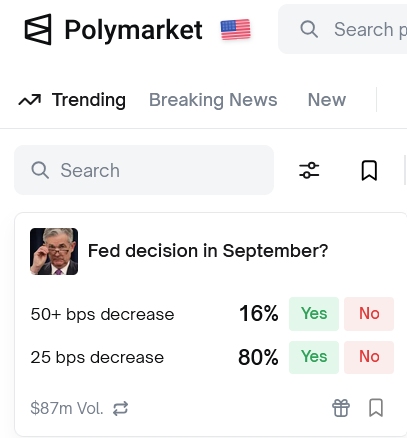
Image from Polymarket website
Polymarket has regained the ability to operate in the United States after acquiring a CFTC regulated and licensed derivatives exchange QCEX for $112 million in July 2025. Soon after the acquisition the Commodity Futures Trading Commission issued a no action letter that relaxed certain reporting and recordkeeping rules tied to event contracts, clearing the way for Polymarket to relaunch in the U.S. after being blocked since 2022 and paying a $1.4 million fine for operating without registration as part of a settlement with the CFTC.
Chief Executive Shayne Coplan highlighted the speed of the approval, writing on X that the green light from the CFTC had been 'accomplished in record timing.'
Polymarket has been given the green light to go live in the USA by the @CFTC.
Credit to the Commission and Staff for their impressive work. This process has been accomplished in record timing.
Stay tuned https://t.co/NVziTixpqO
— Shayne Coplan 🦅 (@shayne_coplan) September 3, 2025
The relaunch it seems was in a politically charged setting. Days before the approval, Donald Trump Jr. disclosed that he had invested through 1789 Capital and accepted an advisory role. The timing of Trump Jr.’s advisory role at Polymarket has raised questions about the influence of politics in a market that depends on regulatory relief.
Not all regulators support the path taken. Outgoing Commissioner Kristin Johnson argued that retail traders face significant risks and that the agency should move beyond case by case exemptions. In her view, the CFTC should create formal rules on which event contracts are permissible instead of leaving gaps in oversight.
Polymarket’s value comes from what people trade. Its most recent markets show how diverse those bets can be.
Traders currently assign about a 7% chance that Donald Trump will leave office before the end of 2025.
At the start of 2025, Polymarket listed more than 65% odds of a U.S. recession. By mid summer, that figure had fallen to 20% after a pause in new tariffs lowered fears. Economists note that these contracts reflect sentiment rather than guaranteed outcomes.
Social and sports betting examples are also trendy, such as the Taylor Swift and Travis Kelce engagement market. A trader turned $12,000 into $50,000 after betting on the couple’s announcement. Another user invested just over $2,000 the day before and made about $3,100 in profit. The odds jumped from 24% to 41% within a single day. No different in how the odds shift around in an in play betting app.
Unexpected outcomes can produce even larger returns or losses. During the papal conclave in May, Cardinal Robert Prevost was trading at only 1%. A bettor who backed him turned $1,059 into more than $63,000 after he became Pope Leo XIV. Total volume on papal betting markets reached about $40 million across Polymarket and Kalshi, another prediction marketplace.
Polymarket’s journey from fine to license shows how quickly a fintech can move from penalty to legitimacy once regulators are engaged, and the importance of building on licensed infrastructure. The markets themselves are worth monitoring, as they mirror real time sentiment. While not perfect market predictors, they are increasingly visible and sometimes a useful barometer for policymakers, investors, and punters alike.
The National Crowdfunding & Fintech Association (NCFA Canada) is a financial innovation ecosystem that provides education, market intelligence, industry stewardship, networking and funding opportunities and services to thousands of community members and works closely with industry, government, partners and affiliates to create aa vibrant and innovative fintech and funding industry in Canada. Decentralized and distributed, NCFA is engaged with global stakeholders and helps incubate projects and investment in fintech, alternative finance, crowdfunding, peer-to-peer finance, payments, digital assets and tokens, artificial intelligence, blockchain, cryptocurrency, regtech, and insurtech sectors. Join Canada's Fintech & Funding Community today FREE! Or become a contributing member and get perks. For more information, please visit: www.ncfacanada.org
| | |
|---|---|---|
| | |
Tokenization | Sep 9, 2025

AI generated
On September 8, 2025, Nasdaq announced in a Newsroom Q&A with Chuck Mack that it filed with the U.S. Securities and Exchange Commission (SEC) to allow every listed stock and exchange-traded fund on its markets to settle in tokenized form. The news is significant and was also confirmed by Reuters and if approved would be the first time a U.S. national exchange was keen to integrate blockchain settlement into the regulated equity system. If approved, the change would affect securities representing $61.6 trillion in U.S. market capitalization as of Q2 2025.
Under the 19b-4 filing to the SEC, Nasdaq proposes that each stock and ETF maintain the same CUSIP (unique 9 digit alphanumeric identifier assigned to financial instruments in the States and Canada, such as stocks, bonds, ETFs) whether traded in traditional or tokenized form. At order entry, brokers could flag trades for tokenized settlement. Execution would take place on the same order book, under the same rules, with identical rights and benefits. After execution, the Depository Trust Company (DTC) would convert the security into a blockchain token and record ownership.
Chuck Mack, Nasdaq’s Senior Vice President of North American Markets, explained the approach and stressed that from an investor’s perspective, nothing changes in how trades are placed or executed. Only the method of settlement shifts to a tokenized form:
“Our goal is to integrate digital assets into Nasdaq’s current infrastructure and systems, which will advance financial innovation while maintaining stability, fairness, and investor protection. If investors and market participants express demand for a particular approach, and we can implement it in a way that preserves market integrity, then we want to give them that choice.”
Nasdaq has indicated the first token-settled trades could occur by Q3 2026, provided that DTC’s new systems are ready. This would embed blockchain settlement directly into the most liquid equity market in the world, where average daily trading volume reached 18.4 billion shares in Q2 2025.
The filing follows the U.S. move to T+1 settlement in May 2024. Tokenization builds on that progress by layering blockchain into existing systems rather than replacing them. SEC Commissioner Hester Peirce has made clear that tokenized securities must still comply with securities laws. One way to look at tokenization is that it's not a regulatory shortcut but rather a modernization of existing infrastucture.
For the U.S., the importance lies in scale and precedent. With more than 5,400 listed companies, Nasdaq’s proposal would normalize blockchain-based settlement within the core market system. Tokenization could deliver operational savings, stronger audit trails, and new forms of fractional participation, all without fragmenting liquidity.
For Canada, Nasdaq's interest echoes the Ontario Securities Commission’s exploration of tokenized long term funds, aimed at improving investor access to complex assets. If Nasdaq’s model is approved, Canadian fintechs could explore cross-border tokenized products, while regulators will need to address custody, wallet security, and investor protections to keep pace with these developments.
Next steps is for the SEC to open the filing for public comment. If approved, tokenized settlement could begin by late 2026. For NCFAs community, this is a watershed moment as tokenization moves from pilot projects and into mainstream market regulation. The implications are significant and real with efficiency gains, lower costs, competitive pressure on other exchanges, and new opportunities for cross-border fintech innovation.
For Canada's fintech and digital asset ecosystem, aligning with these changes will be critical to remain competitive in the next phase of global capital markets.
The National Crowdfunding & Fintech Association (NCFA Canada) is a financial innovation ecosystem that provides education, market intelligence, industry stewardship, networking and funding opportunities and services to thousands of community members and works closely with industry, government, partners and affiliates to create aa vibrant and innovative fintech and funding industry in Canada. Decentralized and distributed, NCFA is engaged with global stakeholders and helps incubate projects and investment in fintech, alternative finance, crowdfunding, peer-to-peer finance, payments, digital assets and tokens, artificial intelligence, blockchain, cryptocurrency, regtech, and insurtech sectors. Join Canada's Fintech & Funding Community today FREE! Or become a contributing member and get perks. For more information, please visit: www.ncfacanada.org
| | |
|---|---|---|
| | |
Stablecoins | Sep 8, 2025

On September 8, the Tetra Digital Group announced that they raised $10 million from some of Canada’s most influential fintech and financial service leaders to launch the country’s first regulated stablecoin. Investors include Urbana Corporation, Wealthsimple, Purpose Unlimited, Shakepay, ATB Financial, National Bank of Canada, and Shopify. The strategic initiative aims to launch a Canadian dollar stablecoin in early 2026, pending regulatory approval.
Backed 1:1 by reserves held in Canada, the stablecoin will combine regulatory leadership, enhanced security, and domestic sovereignty to position Canadian businesses for success in the global digital economy.
This represents the first time in Canada that a regulated financial institution has partnered to issue a stablecoin. The initiative brings together a coalition of banks, fintechs, and technology leaders in a homegrown effort to create a trusted Canadian digital payment option. The project aligns with international efforts in other G7 countries and is designed to meet strict Canadian regulatory standards.
Didier Lavallée, CEO of Tetra Digital Group:
“Today marks a pivotal moment for Canadian financial innovation. By bringing together many of Canada’s most trusted financial institutions and companies, we’re not just launching a stablecoin – we’re supporting homegrown solutions, built by Canadians, for Canadians and ensuring we maintain economic sovereignty.”
Blair Wiley, Chief Legal Officer at Wealthsimple
“Tetra has sparked nationwide enthusiasm across century-old institutions, tech leaders, traditional financial services and those at the forefront of financial innovation. The depth of experience at the table will create a truly Canadian stablecoin solution that will open up new opportunities for businesses, consumers and homegrown talent.”
Jean Amiouny, CEO of Shakepay:
“At Shakepay, we’ve always believed in building trusted financial infrastructure that gives Canadians more choice in how they move, hold, and grow their money. This partnership reflects our commitment to pioneering technology that expands access to modern financial tools and doing so with the regulatory safeguards and user trust Canadians expect.”
With trusted issuance and custody of the stablecoin from Tetra Trust and digital tools from Tetra Unity, the group is building a complete system for digital assets. Tetra Unity is the company’s platform that helps connect and manage different digital asset services, making it easier for businesses to use these tools in one place. Combined they create a safe and compliant foundation that also gives Canadian companies the room to test new ideas, build services, and compete in the global economy with confidence.
For businesses, a Canadian stablecoin could reduce payment processing costs, speed up settlement times, and simplify cross border transactions. Companies that move money frequently whether for payroll, supplier payments, or customer refunds would gain a faster, lower friction option pinned to the Canadian dollar.
Consumers will also benefit from cheaper and more efficient remittances, as well as more flexible ways to pay and receive funds.
If approved, the Canadian stablecoin will be a huge boon for the country's digital economy, positioning itself along side other G7 countries advancing regulated stablecoin frameworks and would boost Canadian businesses participating in global commerce. Wonderful to see collaboration between both established banks and leading fintechs in a project that requires consensus on the future of digital payments.
The National Crowdfunding & Fintech Association (NCFA Canada) is a financial innovation ecosystem that provides education, market intelligence, industry stewardship, networking and funding opportunities and services to thousands of community members and works closely with industry, government, partners and affiliates to create a vibrant and innovative fintech and funding industry in Canada. Decentralized and distributed, NCFA is engaged with global stakeholders and helps incubate projects and investment in fintech, alternative finance, crowdfunding, peer-to-peer finance, payments, digital assets and tokens, artificial intelligence, blockchain, cryptocurrency, regtech, and insurtech sectors. Join Canada's Fintech & Funding Community today FREE! Or become a contributing member and get perks. For more information, please visit: www.ncfacanada.org
| | |
|---|---|---|
| | |
European Fintech | Sep 8, 2025
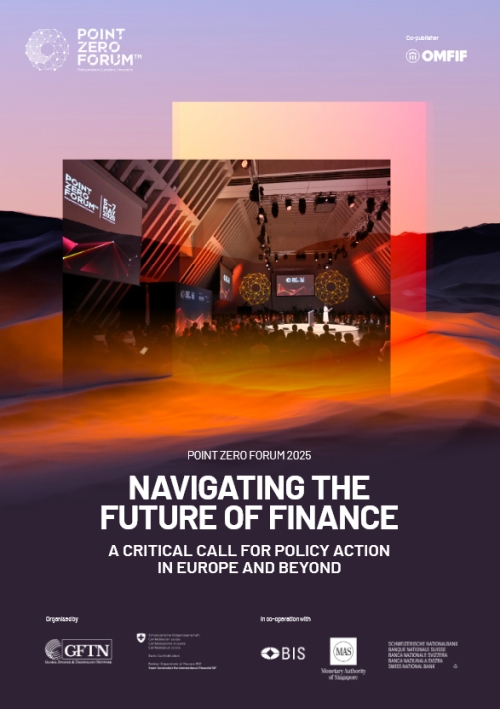
Image: Navigating the Future of Finance magazine (Point Zero Forum)
The 2025 Point Zero Forum (Jun 24-26) in Zurich drew 1,350 participants from 66 countries, including over 20% from public sector institutions. Across 121 sessions spanning 95 hours, 329 speakers explored the future of finance and technology. These numbers matter because the forum is where central banks, regulators, and institutions compare notes on what is implementable now, not just what's aspirational.
For Canadian fintechs, the conversations in Zurich are a warning and an opportunity. Europe is moving quickly to reset its financial infrastructure. Canada risks lagging unless it adapts. Read the post 2025 Point Zero Forum magazine, "A Critical Call for Policy Action in Europe and Beyond" (24 page PDF)
Offline payments and infrastructure security were considered a matter of national sovereignty, not just technology. Danmarks Nationalbank warned: “Without power, many offline payments methods aren’t viable,” linking payments directly to energy security.
The world’s largest stablecoin Tether confirmed it will leave Europe because of reserve and regulatory requirements. This shows that Europe is treating payments, AI, and data as part of its sovereignty strategy.
Canada has its own domestic payment systems operated by Payments Canada, but Canada still doesn't have live operating real-time retail payment rails. In cloud services, Canadian banks and fintechs are still dependent on American providers like AWS, Microsoft, and Google.
Central banks are now focused on tokenized settlement. The Swiss National Bank said: “Price stability is our main focus also in challenging times,” while the European Central Bank stressed that central bank money must remain “available and useful” in tokenized markets.
The Bank of England suggested that oversight of stablecoins may evolve as the “singleness of money” assumption is tested.
The Bank of Canada paused it's digital dollar research initiative. Europe and the U.K. are moving faster. Canadian fintechs should design tokenized solutions that can connect to global settlement networks, not just domestic payment systems.
The Basel framework assigns a 1,250% risk weight to exposures on public blockchains compared to standard weights for permissioned systems. That number explains why institutions are cautious about public chains even as liquidity scale requires them.
Solana’s Lily Liu argued that “the 5.5bn people on the internet” can only be reached through open infrastructure, while regulators noted that immutability makes reversals and sanctions enforcement difficult. The likely outcome is a dual architecture with permissioned networks for issuance and compliance, and public networks for liquidity and settlement.
Canadian institutions face the same Basel capital rules as peers in other markets. Without clear guidance on the use of public versus permissioned networks, Canadian fintechs may find it harder to connect to global liquidity pools.
68% of EU businesses say they struggle to understand their obligations under the EU AI Act, holding back investment. Global wealth manager, Julius Baer’s COO estimated that customer focused AI tools could generate revenue within 6 to 12 months.
At the forum, agentic AI systems were demoed handling insurance claims with observability features allowing human review. The key issue is still accountability with policymakers worrying about loss of control as AI systems become more autonomous.
Canada has not finalized its AI regulation but offers a voluntary AI code of conduct, giving fintechs some near term flexibility. But any deployment that scales internationally will need to comply with EU and U.S. standards. The strategic opportunity is to pilot auditable AI now while preparing for global regulatory alignment.
S&P projects global private equity will grow from $15 trillion in 2025 to $18 trillion by 2027. Citi and SIX Digital Exchange announced tokenized access to late-stage pre-IPO equities on SDX, launching in Q3 2025.
Tokenization will improve collateral usability and ownership visibility, but not resolve fundamental illiquidity or opaque valuations.
Canada has a growing private capital market but no regulated digital exchange on the scale of SIX. Canadian fintechs could position themselves as infrastructure providers for tokenized funds and secondary liquidity, complementing global platforms instead of competing directly.
At the forum, speakers pointed out that some carbon credits were issued for projects expected to reduce emissions over 30 years, even though the land rights lasted only 10 years. That kind of mismatch reduces trust in the market.
Bringing carbon credits into mainstream finance could help spread risk and attract more investment. But for the market to work, credits must be backed by strong certification, insurance to cover project failures, and common standards that everyone follows.
Canada has compliance carbon pricing systems, but its voluntary carbon credit market is smaller and less standardized compared to Europe and Asia. Canadian fintechs could carve out a leadership role by building platforms that prioritize data integrity and risk coverage.
Canada must decide whether to keep pace with progressing markets in Europe and Asia or risk being shut out of global settlement networks. If Europe can move from pilots to architecture, Canadian fintechs must not stand still.
The National Crowdfunding & Fintech Association (NCFA Canada) is a financial innovation ecosystem that provides education, market intelligence, industry stewardship, networking and funding opportunities and services to thousands of community members and works closely with industry, government, partners and affiliates to create a vibrant and innovative fintech and funding industry in Canada. Decentralized and distributed, NCFA is engaged with global stakeholders and helps incubate projects and investment in fintech, alternative finance, crowdfunding, peer-to-peer finance, payments, digital assets and tokens, artificial intelligence, blockchain, cryptocurrency, regtech, and insurtech sectors. Join Canada's Fintech & Funding Community today FREE! Or become a contributing member and get perks. For more information, please visit: www.ncfacanada.org
| | |
|---|---|---|
| | |
Sep 6, 2025

Photo by Mariia Shalabaieva on Unsplash
Canada’s financial system is globally respected for its stability, but innovation can no longer remain on the sidelines. With open banking frameworks advancing and regulators sharpening their stance on digital assets, questions of accessibility and transparency are more pressing than ever. Canadians are increasingly engaging with digital assets, not just as speculative investments but as essential tools for financial participation in a modern economy.
At the center of this shift sits the crypto wallet. More than a technological accessory, wallets are now a cornerstone of digital finance—granting individuals the ability to manage, transfer, and safeguard assets while bridging the divide between traditional banking and decentralized networks.
A crypto wallet is not merely a digital storage unit—it is a direct gateway to blockchain ecosystems. Unlike conventional bank accounts, which rely on third parties, wallets allow users to control their assets directly. There are two primary models: custodial, where a provider manages the private keys, and non-custodial, where individuals hold full responsibility.
For Canadian investors, this choice is critical. Custodial solutions can simplify access, but they also carry counterparty risks if a provider fails. By contrast, non-custodial tools such as crypto wallet platforms place full control into the user’s hands, aligning with the ethos of financial sovereignty. This distinction underscores why wallets are more than conveniences—they are instruments of independence.
Canada was among the first jurisdictions to approve crypto ETFs, signaling openness to innovation. Yet today’s regulatory direction is more cautious. Authorities are pressing for tighter oversight on platforms, disclosures, and compliance standards. For wallets, this regulatory momentum could lead to higher requirements for transparency, consumer protections, and cyber resilience.
The broader integration of wallets into payment infrastructure has already begun. With certain crypto firms gaining access to Canada’s payment rails, the stage is set for wallets to become interoperable with fiat systems. In practice, Canadians could soon experience frictionless transfers between digital assets and traditional currency.
Security remains the defining benchmark for wallets. Cyberattacks, phishing attempts, and compromised keys are persistent risks. Regulators are expected to demand greater consumer protections, prompting providers to adopt advanced safeguards, including multi-factor authentication, hardware-based cold storage, and clear user disclosures. For Canadians, the environment may become safer, but responsibility will remain personal: users must still learn how to manage and protect their own access credentials.
Beyond regulation, consumer behavior is reshaping the market. Millennials and Gen Z are particularly comfortable with digital finance, and many view cryptocurrency as integral to both their financial strategy and personal identity. For these demographics, wallets are not just repositories of value—they are access points to decentralized finance, digital collectibles, and new forms of online interaction.
Knowledge gaps, however, continue to slow adoption. Many Canadians still lack clarity on how wallets function, how private keys should be safeguarded, or the differences between custodial and non-custodial services. Education will therefore be essential. Financial literacy programs, regulatory guidance, and industry-led initiatives can help new participants enter the market with the awareness necessary to protect themselves while taking advantage of new opportunities.
Canada’s transition toward open banking presents an opportunity to align wallets with mainstream financial infrastructure. If wallets can integrate seamlessly with bank APIs, Canadians could one day manage both digital assets and traditional finances within unified platforms. Such interoperability could transform wallets from alternative tools into standard components of financial life.
Financial institutions are also moving into this space. Banks and fintechs are exploring wallets not only for crypto but for tokenized securities, carbon credits, and digital identity management. On the retail side, adoption is accelerating, with wallets increasingly used for remittances, cross-border commerce, and even philanthropic donations. These diverse applications highlight the wallet’s evolution from niche technology into core infrastructure.
Around the world, governments are racing to define their digital finance frameworks. The United States, the European Union, and key Asian markets are setting clearer policies that balance innovation with accountability. Canada must decide whether to keep pace or risk losing ground in global competitiveness.
For consumers and institutions alike, wallets represent far more than a trend. They are the building blocks of digital economies, enabling direct engagement with decentralized networks and laying the foundation for new models of commerce. In Canada’s financial future, wallets will not sit on the margins—they will be central to how value moves, how identity is verified, and how trust is maintained.
The National Crowdfunding & Fintech Association (NCFA Canada) is a financial innovation ecosystem that provides education, market intelligence, industry stewardship, networking and funding opportunities and services to thousands of community members and works closely with industry, government, partners and affiliates to create a vibrant and innovative fintech and funding industry in Canada. Decentralized and distributed, NCFA is engaged with global stakeholders and helps incubate projects and investment in fintech, alternative finance, crowdfunding, peer-to-peer finance, payments, digital assets and tokens, artificial intelligence, blockchain, cryptocurrency, regtech, and insurtech sectors. Join Canada's Fintech & Funding Community today FREE! Or become a contributing member and get perks. For more information, please visit: www.ncfacanada.org
| | |
|---|---|---|
| | |
Sep 4, 2025

Cryptocurrency adoption continues to grow worldwide, but with opportunity comes risk. Among the most common threats faced by digital asset holders are phishing attacks. Unlike technical hacks that exploit blockchain code, phishing targets the weakest link in the chain: human behavior. Scammers pose as trusted sources to trick users into handing over their private keys or connecting to fraudulent websites, leading to irreversible asset loss.
Understanding how phishing works and knowing how to identify warning signs are essential steps for protecting your funds. This guide explains what phishing in crypto looks like, the most common tactics scammers use, and practical strategies to keep your wallet safe.
A phishing attack is a form of social engineering where attackers impersonate legitimate companies, wallets, or exchanges in order to deceive users. Their goal is simple: gain access to sensitive data such as recovery phrases, private keys, or login credentials. Once obtained, funds can be drained instantly, with little to no chance of recovery.
Phishing in the crypto ecosystem often takes the shape of:
Unlike traditional banking, cryptocurrency transactions are irreversible. If funds are sent to a scammer’s address, there is no central authority to intervene. This is why vigilance and proactive defense are critical for every investor.
When evaluating different wallet solutions, security should always be a top priority. For example, some guides highlight the best Ripple wallet options for users holding XRP, ensuring they choose tools with robust protection against common scams.
Attackers publish counterfeit versions of popular wallets on unofficial websites or third-party app stores. Once downloaded, these apps are programmed to intercept recovery phrases and siphon assets.
Victims receive emails, direct messages, or SMS alerts that appear to come from an exchange or wallet provider. They often warn of “account suspensions” or “urgent security updates” and contain malicious links.
Scammers exploit hype around new token launches by offering free airdrops. Connecting a wallet to claim them can grant hidden permissions that drain assets. Some fraudulent tokens even mimic legitimate ones by using similar names and ticker symbols.
Fraudsters infiltrate online communities, posing as project developers or customer support staff. Once trust is built, they ask users to “verify” accounts by sharing sensitive details.
Recognizing the signs of phishing can prevent costly mistakes.
Users should slow down whenever they encounter unexpected requests and verify authenticity before interacting.
Download wallet apps exclusively from verified app stores or official websites. Bookmark authentic domains to avoid typosquatting.
Before linking a wallet to any decentralized application (dApp), verify the domain carefully. Scammers often set up fake interfaces to capture login details.
Seed phrases should be written down on paper or stored in a secure offline method. Avoid screenshots, cloud storage, or sending them over messaging apps.
When available, use two-factor authentication (2FA) and biometric verification. Although private keys remain the ultimate control, added safeguards can help protect access.
Modern wallets provide integrated tools to scan for suspicious tokens or connections. Using a trusted provider like Bitget Wallet allows users to benefit from features designed to identify potential threats in real time.
While individual vigilance is important, the choice of wallet plays a central role in user safety.
In contrast, Bitget Wallet integrates a wide range of features:
For users seeking a balance of usability and protection, Bitget Wallet positions itself as a top crypto wallet option, making Web3 exploration accessible and secure.
Managing digital assets does not need to be overwhelming. With Bitget Wallet, you can safely explore the latest memecoins, store stablecoins securely, and transact across blockchains. Start by choosing a top crypto wallet that combines security, flexibility, and ease of use.
Phishing remains one of the most persistent threats in the cryptocurrency space. By understanding how scams work, learning to recognize red flags, and practicing safe storage habits, investors can significantly reduce their risk exposure. The right wallet acts as both a tool and a safeguard, offering features designed to keep users one step ahead of malicious actors.
Strong security requires both awareness and the right technology. Download Bitget Wallet today to secure your stablecoins, trade memecoins, and manage assets across 130+ blockchains with confidence.
The National Crowdfunding & Fintech Association (NCFA Canada) is a financial innovation ecosystem that provides education, market intelligence, industry stewardship, networking and funding opportunities and services to thousands of community members and works closely with industry, government, partners and affiliates to create a vibrant and innovative fintech and funding industry in Canada. Decentralized and distributed, NCFA is engaged with global stakeholders and helps incubate projects and investment in fintech, alternative finance, crowdfunding, peer-to-peer finance, payments, digital assets and tokens, artificial intelligence, blockchain, cryptocurrency, regtech, and insurtech sectors. Join Canada's Fintech & Funding Community today FREE! Or become a contributing member and get perks. For more information, please visit: www.ncfacanada.org
| | |
|---|---|---|
| | |


August 26th, 2025

January 4th, 2024

June 1st, 2021

September 9th, 2020

July 9th, 2018

January 3rd, 2018

September 25th, 2017

June 20th, 2017

May 10th, 2017

December 14th, 2016