




Karsten Wenzlaff, Advisor
August 26th, 2025
Karsten Wenzlaff is a Crowdfunding and Fintech Expert from Germany. He is Secretary-General of Digit[...]


Crypto Regulation | Feb 6, 2025

Image: Commissioner Hester M. Peirce
On Jan 21, 2025, the U.S. Securities and Exchange Commission (SEC) announced the formation of a Crypto 2.0 Task Force dedicated to the development of a comprehensive and clear regulatory framework for digital assets. The task force, led by Commissioner Peirce (aka Crypto Mom), has recently published a post on the SEC's website titled 'The Journey Begins' that serves as the starting point of much work ahead, and sets the tone and direction of a new chapter of crypto regulations in the United States.
For years, the SEC has been criticized for its "regulation by enforcement" approach and thumbing down innovative crypto firms without providing a clear regulatory framework. The result has been a train wreck that caused frustration among crypto entrepreneurs and investors who were forced to walk down a path of uncertainty and unnecessary risk.
Peirce acknowledged these challenges in her new role:
"It took us a long time to get into this mess, and it is going to take us some time to get out of it."
The newly formed Crypto Task Force is chaired by Peirce with Richard Gabbert serving as Chief of Staff and Taylor Asher as Chief Policy Advisor. They are charting a new course with a mandate that includes:
In her post, Commissioner Peirce laid out the following ten priorities that will guide the task force's work:
All told, the task force is a welcomed policy shift in how in the SEC approaches crypto. One that is moving from a reactive enforcement by regulation approach to one that is a proactive regulatory framework. One of transparency and stakeholder engagement. However in her note, Commissioner Peirce stresses the need for patience:
"We need to do this in an orderly, practical, and legally defensible way."
The SEC has launched a consultation process, inviting crypto industry participants such as startups, investors, developers, and policymakers to share their insights and help create the future of digital asset regulation (i.e., voice concerns, suggest improvements), and engage directly with regulators to build a robust and effective framework. Crypto Mom and the Task Force highlight that successful regulation requires collaboration.
The SEC has launched a dedicated webpage for the crypto task force and welcomes feedback via email (crypto@sec.gov). Industry participants are encouraged to submit written comments, request meetings, and take part in discussions about potential regulatory changes. With active participation from the crypto community, we're hopeful that the final destination benefits all stakeholders in the digital asset ecosystem.
 The National Crowdfunding & Fintech Association (NCFA Canada) is a financial innovation ecosystem that provides education, market intelligence, industry stewardship, networking and funding opportunities and services to thousands of community members and works closely with industry, government, partners and affiliates to create a vibrant and innovative fintech and funding industry in Canada. Decentralized and distributed, NCFA is engaged with global stakeholders and helps incubate projects and investment in fintech, alternative finance, crowdfunding, peer-to-peer finance, payments, digital assets and tokens, artificial intelligence, blockchain, cryptocurrency, regtech, and insurtech sectors. Join Canada's Fintech & Funding Community today FREE! Or become a contributing member and get perks. For more information, please visit: www.ncfacanada.org
 |  |  |
|---|---|---|
 |  |  |
Crypto Regulation | Feb 5, 2025

Image: Freepik/wirestock
President Trump's newly appointed 'Crypto Czar', David Sacks, held his inaugural press conference yesterday to outline the administration's vision for Bitcoin and digital assets, signalling a positive shift in U.S. policy. One that provides clear and transparent regulation and policies that will make the U.S. the global leader in digital assets and crypto. Below are the key takeaways from the event.
During the conference Sacks addressed the elephant in the room -- that is the lack of regulatory clarity, by saying he's spoken to countless of crypto entrepreneurs who expressed, "The number one thing founders have told me they need is clarity. They just want to know what the rules are so they can follow them." Sacks announced the formation of a federal digital asset working committee dedicated to developing a regulatory framework that balances oversight with innovation. The working group's mandate includes establishing rules for digital asset issuance and operations with a particular focus on stablecoins.
This approach is most welcomed by anyone in crypto, as the SEC of the prior administration faced criticism for ambiguity and regulating by enforcement, which stifled innovation in the U.S. digital asset ecosystem.
Stablecoins were clearly a focus at the press conference. Senator Bill Hagerty introduced a new bill known as the Guiding and Establishing National Innovation for U.S. Stablecoins (GENIUS) Act that would create two levels of oversight for stablecoin issuers. Large companies holding more than $10 billion in assets would be regulated by federal authorities, while smaller issuers would continue to be supervised at the state level. The bill also requires stablecoin issuers to provide monthly reports on their reserves to ensure that they have suitable backing, enhance transparency and trust, and strengthen the role of the U.S. dollar in digital finance.
Stablecoins play an imperative role in cross-border payments and decentralized finance. By incorporating stablecoins into the regulatory framework, the U.S. plans to position the dollar as a dominant force in the digital economy to ensure capital flows through regulated U.S. channels rather than offshore alternatives.
Previously, U.S. crypto regulation was fragmented across agencies like the SEC and CFTC, causing considerable friction. Now, there's a bipartisan working group with members from the House and Senate's Financial Services, Banking, and Agriculture Committees all working together aiming to create a unified comprehensive legislative approach. Lawmakers including Senator Tim Scott and Representative French Hill emphasized the importance of keeping innovation in the U.S.
Czar Sacks confirmed that the administration is actively evaluating a Strategic Bitcoin Reserve. While details are limited, such a move is akin to the government considering Bitcoin as part of its national reserves, similar to how central banks hold gold today. If implicated, it would legitimize Bitcoin's role as a reserve asset, boost institutional confidence, and increase demand for bitcoin and digital assets broadly. But it's early days and requires further research and political/financial support.
The administration discussed plans for a market structure bill aimed at providing clear regulatory guidelines for digital assets. This proposed legislation will likely be modelled after the Financial Innovation and Technology for the 21st Century Act (FIT21), which previously passed the House with bipartisan support.
Senator Tim Scott, Chairman of the Senate Banking Committee, highlighted the urgency of this initiative and that both the market structure and stablecoin bills are priorities for the administration's first 100 days, and that the stablecoin bill would likely advance first followed by the market structure legislation.
This press conference marks the turning point in crypto regulation in the U.S. towards a pro-innovation, regulation-driven digital asset ecosystem. This shift raises an important question. How will these regulatory developments impact Canadian companies operating in both markets? Canada should not be left behind and consider adopting a structured framework to support and retain innovation in the crypto fintech sector.
The National Crowdfunding & Fintech Association (NCFA Canada) is a financial innovation ecosystem that provides education, market intelligence, industry stewardship, networking and funding opportunities and services to thousands of community members and works closely with industry, government, partners and affiliates to create a vibrant and innovative fintech and funding industry in Canada. Decentralized and distributed, NCFA is engaged with global stakeholders and helps incubate projects and investment in fintech, alternative finance, crowdfunding, peer-to-peer finance, payments, digital assets and tokens, artificial intelligence, blockchain, cryptocurrency, regtech, and insurtech sectors. Join Canada's Fintech & Funding Community today FREE! Or become a contributing member and get perks. For more information, please visit: www.ncfacanada.org
| | |
|---|---|---|
| | |
Innovation | Feb 4, 2025

Image: Big Ideas 2025 Ark Invest
ARK Invest just dropped their annual Big Ideas 2025 report (148 page PDF) covering the disruptive tech trends that are game-changing industries and global economies. It provides insight into a lot of investment ideas backed with charts and data. Below are the highlights and compelling data points along with their fintech impact.
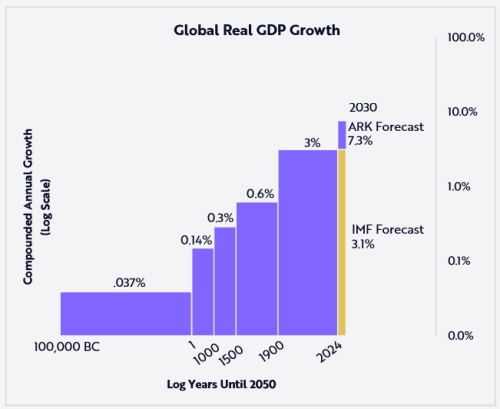
The interconnected fields of AI, robotics, blockchain, energy, and biotech are converging, creating new efficiencies, business models, economic growth, and investment opportunities at an unprecedented pace.
AI agents are changing industries by making decisions automatically, streamlining tasks, and helping people work more efficiently. These smart systems will play a big role in businesses, finance, and healthcare, as well as in everyday life as they improve customer service, digital marketing and provide automated financial advice.
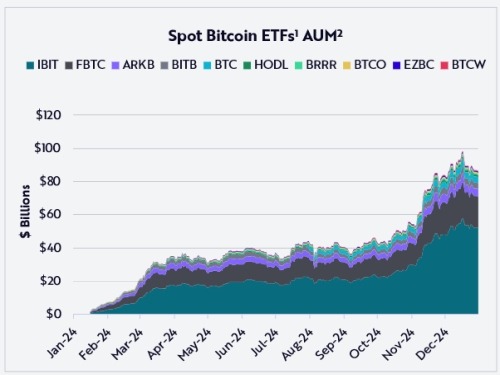
Spot Bitcoin ETF AUM Ark Invest Big Ideas 2025
Bitcoin’s evolution into a mainstream financial asset is being driven by institutional adoption, regulatory clarity, its role as a hedge against inflation, and store of wealth. ETFs and corporate adoption are solidifying its place in global finance. Bitcoin’s adoption will drive new financial products, including tokenized assets, decentralized finance (DeFi) lending, and institutional custody solutions.
Stablecoins are changing the way money moves across borders by making payments faster, cheaper, and more efficient than traditional banks. They connect cryptocurrency with regular money, making digital payments easier, helping more people access financial services, and influencing new rules for digital currencies.
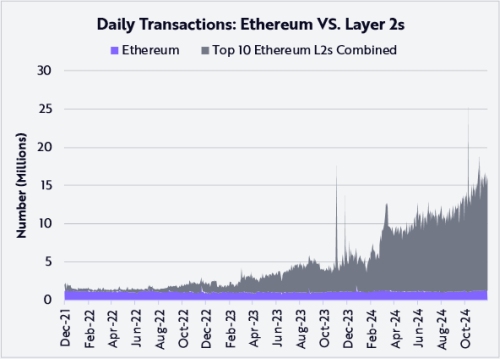
Image: Ethereum vs L2 Daily Transactions (Ark Invest, Big Ideas 2025)
Blockchain scalability will drive growth in DeFi, NFT markets, and enterprise blockchain adoption with solutions such as Layer 2 networks, rollups, and modular architectures are significantly lowering transaction costs and increasing network efficiency. This shift is paving the way for mainstream adoption of decentralized applications.
Autonomous vehicles (robotaxis) will reduce transportation costs, making personal car ownership less necessary, incentivize infrastructure investment and create new financing models for mobility-as-a-service platforms.
AI logistics and smart delivery systems are reducing costs and optimizing supply chain efficiency, creating opportunities in supply chain management solutions and financing of autonomous fleet operations.
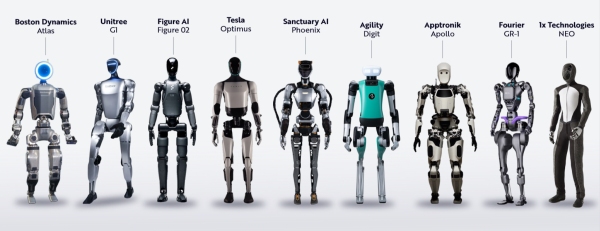
Image: Humanoid Robots Debuting Globally (Ark Invest, Big Ideas 2025)
The rise of AI humanoid robots is changing labour markets and improving manufacturing efficiency. Increased automation will drive investment in robotics startups, manufacturing solutions, and AI workforce solutions.
Breakthroughs in battery technology and renewable energy are reducing dependency on fossil fuels. The shift to decentralized energy creates opportunities in cleantech financing, energy trading, and carbon credit markets.
AI is improving quickly and moving toward Artificial General Intelligence (AGI), which will change how decisions are made, improve risk management, and create new investment opportunities in automation.
The accelerated growth, convergence and adoption of emerging technologies will require new regulatory frameworks, increased infrastructure investments, and a massive shift in market development strategies. Whether it’s the mainstreaming of digital assets or the advancement of artificial intelligence the future is arriving faster than we imagined, and those who adapt will be well positioned for whatever comes next.
The National Crowdfunding & Fintech Association (NCFA Canada) is a financial innovation ecosystem that provides education, market intelligence, industry stewardship, networking and funding opportunities and services to thousands of community members and works closely with industry, government, partners and affiliates to create a vibrant and innovative fintech and funding industry in Canada. Decentralized and distributed, NCFA is engaged with global stakeholders and helps incubate projects and investment in fintech, alternative finance, crowdfunding, peer-to-peer finance, payments, digital assets and tokens, artificial intelligence, blockchain, cryptocurrency, regtech, and insurtech sectors. Join Canada's Fintech & Funding Community today FREE! Or become a contributing member and get perks. For more information, please visit: www.ncfacanada.org
| | |
|---|---|---|
| | |
Crypto | Feb 3, 2025

Image: Freepik/jcomp
Canada’s Purpose Investments announced that they officially filed a preliminary prospectus to Canadian regulators to launch an XRP exchange-traded fund (ETF), which may beat American competitors to market. The proposed XRP ETF will provide investors with direct exposure to XRP through a regulated investment vehicle, which further expands on its pioneering role of launching the world's first Bitcoin and Ether ETFs in the crypto sector in early 2021.
Som Seif, Founder and CEO of Purpose Investments:
"At Purpose, we remain steadfast in our commitment to innovation and to bridging the gap between traditional and decentralized finance. As XRP sees increasing adoption and institutional interest, we believe an ETF can offer investors a transparent and familiar way to access it within a regulated framework."
Although this would be North America’s first spot XRP ETF, similar products already exist overseas such as Swiss-based 21Shares XRP ETP (AXRP), which trades on several European exchanges and is fully backed by XRP with currently $500 million USD AUM.
At the same time, U.S. firms such as Grayscale, Bitwise, WisdomTree, Canary Capital, and 21Shares have all submitted applications to launch their own XRP ETFs however the SEC has yet to greenlight any of these proposals. Approval of XRP ETFs in the U.S. is still being held up by the legal saga between Ripple and the SEC. Most recently, the SEC has filed an appeal against a previous court ruling that partially favoured Ripple, with Ripple’s response due by April 16, 2025. As a result, many industry experts believe that Canada’s more favourable regulatory stance could help Purpose Investments get its product to market first. Time will tell.
XRP isn’t the only crypto ETF game in town. Bitwise recently submitted a filing for a Dogecoin ETF, which would be the first meme-based digital asset ETF. Also, the Chicago Board Options Exchange (CBOE) has made it's third attempt to gain approval for a Solana ETF.
There's no question that the return of Donald Trump to the White House is promising for a crypto-friendly regulatory approach in the United States, as compared to the previous administration's SEC's regulate by enforcement approach under Gary Gensler. Thus, many experts are hopeful that this new regulatory shift will accelerate the approval process for the numerous crypto ETFs on hold in the queue including XRP, Dogecoin, and Solana.
The change in regulatory sentiment can be seen on Polymarket where the probability of an XRP ETF getting approved in the U.S. in 2025 has risen to 80%.
Adding to the regulatory discussions, David Sacks, the U.S. Digital Asset Czar, is set to host a press conference on the future of digital assets tomorrow at 2:30PM ET, which may provide insights into the governments views of crypto regulations and ETF approvals.
With both Canadian and U.S. regulators reviewing applications and a new sheriff in town, investors are watching the developments closely. The potential approval of multiple crypto ETFs would significantly improve market access to a new basket of cryptocurrencies while boosting adoption and liquidity for digital assets.
The National Crowdfunding & Fintech Association (NCFA Canada) is a financial innovation ecosystem that provides education, market intelligence, industry stewardship, networking and funding opportunities and services to thousands of community members and works closely with industry, government, partners and affiliates to create a vibrant and innovative fintech and funding industry in Canada. Decentralized and distributed, NCFA is engaged with global stakeholders and helps incubate projects and investment in fintech, alternative finance, crowdfunding, peer-to-peer finance, payments, digital assets and tokens, artificial intelligence, blockchain, cryptocurrency, regtech, and insurtech sectors. Join Canada's Fintech & Funding Community today FREE! Or become a contributing member and get perks. For more information, please visit: www.ncfacanada.org
| | |
|---|---|---|
| | |
CBDCs | Feb 4, 2025

Image: Freepik/master1305
While Canada paused its retail CBDC project last year, the Bank of Canada (BoC) recently published a 35 page report on "Privacy-Enhancing Technologies (PETs) for CBDC Solutions" while the UK is advancing its digital pound initiative and has provided an update. Trump explicitly banned CBDCs in the U.S. due to privacy issues upon taking office. This article looks at each country's latest approach to compare and contrast.
As digital payments become more commonly accepted globally, central banks are rethinking the role of currencies in the digital age - aka, Central Bank Digital Currencies (CBDCs), which are largely about modernizing the infrastructure of the financial system. However, governments are approaching CBDCs differently, reflecting differences in monetary policy but also concerns about privacy, financial sovereignty, and security. There are two main use cases being researched including retail and wholesale.
You can think about Retail CBDCs as a 'digital dollar' which are designed for use by the general public to support daily transactions, savings, and digital payments. They promise to increase financial inclusion by providing easy access to digital financial services, even for individuals who are unbanked - meaning individuals/households that do not have access to traditional banking services such as savings/checking accounts or credit from a formal financial institution. Privacy protection and efficiency are key benefits but public trust in data security is paramount for retail CBDC success.
Wholesale CBDCs, on the other hand, are used by financial institutions for bank to bank transfers and could improve cross-border payments, reduce costs and enhance financial market stability. By optimizing interbank settlements, wholesale CBDCs can also strengthen liquidity management on a global scale.
A shared global concern is privacy protection. As digital currencies including CBDCs become more widely used, protecting sensitive financial data is essential other the financial system runs the risk of payment surveillance from hackers, bad actors, institutions, and government. Global cooperation between governments to ensure interoperability and compliance standards is critical, if CBDCs are to ever be adopted in a way that balances economic growth with financial privacy.
In September 2024, the Bank of Canada stopped its work on a retail CBDCs after researching them for several years (see: Bank of Canada’s Latest on CBDC Implementation) citing that most Canadians were not interested in using a digital Canadian dollar. But they are continuing to research PETs like zero-knowledge proofs (ZKPs) and homomorphic encryption that offer privacy solutions that keep user data kept confidential while still enabling financial activities such as compliance checks and fraud prevention.
The report acknowledges several limitations with PETs though including slower transaction speeds due to the complexity of encrypting/processing large volumes of data. More sophisticated software and compute resources are required, raising costs. There is also scalability concerns which are still in early development stages. Lastly, any PET must still meet compliance requirements like anti-money laundering (AML) and counter-terrorism financing (CFT) while preserving user privacy, which is still a difficult act to balance.
The Bank of England (BoE) is still working on the Digital Pound project to modernize the country's payment infrastructure and support financial inclusion as the usage of cash in the UK declines. On Jan 14, 2025 the BoE published a progress update on their findings.
In addition to the digital pound providing a secure and efficiency alternative to traditional payment systems, the BoE is exploring the potential to improve the efficiency of financial markets and cross-border payments, making the digital pound more versatile than just a retail transaction and savings tool.
One of their top priorities is tackling privacy concerns to gain public trust, and designing the digital pound to allow secure transactions while protecting personal data. Another challenge is interoperability with existing systems like credit cards and mobile payments. The digital pound has to integrate seamlessly for a smooth transition between traditional and digital finance. As more central banks investigate the potential of their own CBDCs, the UK's work on the digital pound project will certainly position them to take a leading role in crafting the future of digital currencies while maintaining their financial sovereignty.
In contrast to Canada and the UK, the U.S. has opted to ban CBDCs. On January 23, 2025, as part of the "Strengthening American Leadership in Digital Financial Technology" executive order, President Donald Trump effectively prohibited federal agencies from pursuing any sort of CBDC development largely over privacy and government control concerns (and desire to protect the existing financial infrastructure).
The U.S. government is however pursuing Stablecoins, seen more as a market driven solution that can offer the faster and cheaper benefits of digital currencies without the associated risks of a government issued form of digital money. This approach encourages more private sector innovation but raises questions about potential risks to consumers and financial stability.
Varying approaches to CBDCs and digital money highlight the complexities of balancing between financial innovation, privacy protection, and regulatory compliance. Global cooperation will be essential to address privacy concerns and ensure interoperability and security.
The National Crowdfunding & Fintech Association (NCFA Canada) is a financial innovation ecosystem that provides education, market intelligence, industry stewardship, networking and funding opportunities and services to thousands of community members and works closely with industry, government, partners and affiliates to create a vibrant and innovative fintech and funding industry in Canada. Decentralized and distributed, NCFA is engaged with global stakeholders and helps incubate projects and investment in fintech, alternative finance, crowdfunding, peer-to-peer finance, payments, digital assets and tokens, artificial intelligence, blockchain, cryptocurrency, regtech, and insurtech sectors. Join Canada's Fintech & Funding Community today FREE! Or become a contributing member and get perks. For more information, please visit: www.ncfacanada.org
| | |
|---|---|---|
| | |
Conference | Jan 31, 2025

We’re excited to announce that NCFA is a Community Partner for Consensus Toronto 2025, the premier global conference for blockchain, AI, Web3, and digital assets hosted by Coindesk. The flagship event is happening May 14-16, 2025, in Toronto Canada, and is anticipating 15,000+ industry leaders, investors, developers, policymakers, and visionaries to explore the most pressing topics and innovations driving the future of technology and finance.
With world class speakers, innovative showcases, hackathon and awesome networking, Consensus Toronto promises to be an unparalleled opportunity for companies and innovators looking to get ahead in the world of crypto and digital finance. Attendees will gain exclusive insights into Bitcoin, Ethereum, DeFi, NFTs, DAOs, metaverse advancements, AI integration, regulatory developments, and investment strategies. The conference also features workshops, side events, and investor meetups, making it a great platform for forging connections and discovering new opportunities in the blockchain and emerging tech space. .
✅ Connect with 15,000+ industry leaders, developers, and visionaries
✅ Explore cutting-edge advancements in blockchain, AI, and decentralized finance
✅ Network at exclusive side events and investor meetups
✅ Gain insights from leading speakers shaping the future of tech
This is the last chance to take advantage of early discounts. Take advantage of our 15% discount before ticket prices go up!
How to Claim Deal
🔗 Register now: https://go.coindesk.com/NCFA
💰 Use promo code: NCFACANADA15 at checkout
Don’t miss this opportunity to be part of the conversation that’s driving the future of digital innovation. Secure your tickets today! 🚀
📢 Tag us and let us know if you’re attending! #ConsensusTO #NCFACanada
📲 Follow @consensus2025 and @NCFACanada on X and @Coindesk on LinkedIn for updates!
The National Crowdfunding & Fintech Association (NCFA Canada) is a financial innovation ecosystem that provides education, market intelligence, industry stewardship, networking and funding opportunities and services to thousands of community members and works closely with industry, government, partners and affiliates to create a vibrant and innovative fintech and funding industry in Canada. Decentralized and distributed, NCFA is engaged with global stakeholders and helps incubate projects and investment in fintech, alternative finance, crowdfunding, peer-to-peer finance, payments, digital assets and tokens, artificial intelligence, blockchain, cryptocurrency, regtech, and insurtech sectors. Join Canada's Fintech & Funding Community today FREE! Or become a contributing member and get perks. For more information, please visit: www.ncfacanada.org
| | |
|---|---|---|
| | |
Fintech | Jan 31, 2025

Image: TMTG website
On Jan 29 2025, Trump Media & Technology Group (TMTG, operator of Truth Social and Truth+) announced an expansion into financial services under a brand new fintech platform called Truth.Fi to provide alternative investment options to people in the 'patriot economy' or that want to align with America-first philosophy and opportunities outside of big tech or Wall Street.
According to the release, the TMTG board has approved an initial investment of up to $250 million from its $700 million cash treasury. The funds will be custodied by Charles Schwab and split into various accounts including (1) exchange traded funds; (2) separately managed accounts; and (3) Bitcoin and digital assets. An affiliate of Yorkville Advisors will be the Registered Investment Advisor on record and advise on investments and strategy likely focused on U.S. growth, manufacturing, and energy related companies aligned with the patriot economy.
Devin Nunes, TMTG CEO and Chairman:
"We look forward to launching Truth.Fi, introducing TMTG's investment vehicles, and unlocking synergies. Truth.Fi is a natural expansion of the Truth Social movement. We began by creating a free-speech social media platform, added an ultra-fast TV streaming service, and now we're moving into investment products and decentralized finance. Developing American First investment vehicles is another step toward our goal of creating a robust ecosystem through which American patriots can protect themselves from the ever-present threat of cancellation, censorship, debanking, and privacy violations committed by Big Tech and woke corporations."
This isn’t happening in a vacuum. Elon Musk’s X is also expanding into finance and on the same day as Truth.Fi launched, Linda Yaccarino the CEO of X announced that X Money digital wallet will launch later in 2025 in partnership with Visa Direct who will allow American users to fund, send payments, tip creators and eventually make purchases directly in the app. It's part of Musk's bigger, longer term vision of turning X into a super app, kind of like WeChat but for global users.
Maybe (but not immediately). Truth.Fi is focused on investments and wealth creation while X money is targeting real time global payments. Having said that, with crypto, financial independence, free speech, and alternative finance as overlapping themes between the two models, there's bound to be crossover at one point so expect some deals and/or fireworks and the possibility of real competition in the longer term.
This is an obvious wrinkle given Trump's energy policies currently who are pushing for more oil and fossil fuel production 'drill baby drill' and deregulation, which contrasts with Musk's Tesla model built on the promise of a renewable future.
Tesla's sales have been struggling lately due to rising competition and higher interest rates aren't helping either. If Trump applies 25% tariffs on Canada's oil exports then gas prices will be more expensive for Americans, making EVs more attractive causing friction. On the other hand, if Trump manages to lower gas prices then EVs will become less attractive.
Trump Media is looking to build an altfi ecosystem that aligns with its worldview. If Truth.Fi works, it could change how groups of the population invest but there will no doubt be roadblocks from regulators and competition from incumbent financial players. Meanwhile, Musk is walking a tight rope working within the Trump administration while also running his various global companies X, Tesla and SpaceX, each with their own agenda. Fintech, media, egos, ambition, and politics collide.
The National Crowdfunding & Fintech Association (NCFA Canada) is a financial innovation ecosystem that provides education, market intelligence, industry stewardship, networking and funding opportunities and services to thousands of community members and works closely with industry, government, partners and affiliates to create a vibrant and innovative fintech and funding industry in Canada. Decentralized and distributed, NCFA is engaged with global stakeholders and helps incubate projects and investment in fintech, alternative finance, crowdfunding, peer-to-peer finance, payments, digital assets and tokens, artificial intelligence, blockchain, cryptocurrency, regtech, and insurtech sectors. Join Canada's Fintech & Funding Community today FREE! Or become a contributing member and get perks. For more information, please visit: www.ncfacanada.org
| | |
|---|---|---|
| | |


August 26th, 2025

January 4th, 2024

June 1st, 2021

September 9th, 2020

July 9th, 2018

January 3rd, 2018

September 25th, 2017

June 20th, 2017

May 10th, 2017

December 14th, 2016