




Karsten Wenzlaff, Advisor
August 26th, 2025
Karsten Wenzlaff is a Crowdfunding and Fintech Expert from Germany. He is Secretary-General of Digit[...]


Launch | Feb 5, 2025

Image from Build Canada's website
As Canada faces a tense period of trade disputes and tariffs from the U.S. and with growing concerns over competitiveness, productivity, investment and innovation, leading Canadian tech entrepreneurs have launched a new initiative called 'Build Canada', a public platform to push forward policy solution ideas to strengthen Canada's economy. Waiting for government is no longer an option. Build Canada aims to provide concrete, actionable policy recommendations to help the the country remain globally competitive and adapt to economic challenges.
Build Canada is a public platform that releases weekly policy proposals that offer actionable ideas and practical solutions that government officials and policymakers can use to address Canada’s most pressing economic challenges such as exporting to new markets, encouraging investment via smarter policies, strengthen innovation but supporting entrepreneurs and nurturing a culture that celebrates ambition and success.
Build Canada is led by experienced entrepreneurs and business leaders who want to help Canada thrive:
And backed by some of Canada’s top tech leaders:
And many more as the initiative grows...
The group has already published four policy proposals called 'memos', each addressing an economic or social issue:
Encourages Canadians to take more pride in their country by recognizing and celebrating achievements in business, technology, and innovation.
The goal is to create a culture where innovation, ambition, and success are celebrated, inspiring more Canadians to build and contribute to the country’s future.
This proposal suggests having one set of national rules for transportation that would be managed by Transport Canada, making it easier for new technology to be approved and used across the country. Now, businesses face different rules in each province and city, which makes it harder to launch innovations like electric vehicles, self-driving cars, and drones. A single, national system would speed up approvals and help Canada become a global leader in transportation technology.
This proposal suggests changing Canada’s immigration system to focus more on bringing in highly skilled workers who can help grow the economy. The goal is to attract the best talent and business leaders to help Canada stay competitive and drive innovation. It recommends:
This proposal suggests fixing Canada’s disconnected health record system to make healthcare more connected, convenient, and better and more efficient for everyone, recommending:
Build Canada is launching alongside another major policy initiative recently announced, The Canadian SHIELD Institute, founded with a $10 million donation from Jim Balsillie, co-founder of the Council of Canadian Innovators, focused on:
As Canada navigates economic uncertainty, shifting trade relationships, and increasing global competition, waiting for government action is no longer enough. Build Canada is just getting started with more entrepreneurs and business leaders joining the initiative. Help strengthen Canada's economy, one policy at a time.
 The National Crowdfunding & Fintech Association (NCFA Canada) is a financial innovation ecosystem that provides education, market intelligence, industry stewardship, networking and funding opportunities and services to thousands of community members and works closely with industry, government, partners and affiliates to create a vibrant and innovative fintech and funding industry in Canada. Decentralized and distributed, NCFA is engaged with global stakeholders and helps incubate projects and investment in fintech, alternative finance, crowdfunding, peer-to-peer finance, payments, digital assets and tokens, artificial intelligence, blockchain, cryptocurrency, regtech, and insurtech sectors. Join Canada's Fintech & Funding Community today FREE! Or become a contributing member and get perks. For more information, please visit: www.ncfacanada.org
 |  |  |
|---|---|---|
 |  |  |
Innovation | Feb 4, 2025

Image: Big Ideas 2025 Ark Invest
ARK Invest just dropped their annual Big Ideas 2025 report (148 page PDF) covering the disruptive tech trends that are game-changing industries and global economies. It provides insight into a lot of investment ideas backed with charts and data. Below are the highlights and compelling data points along with their fintech impact.
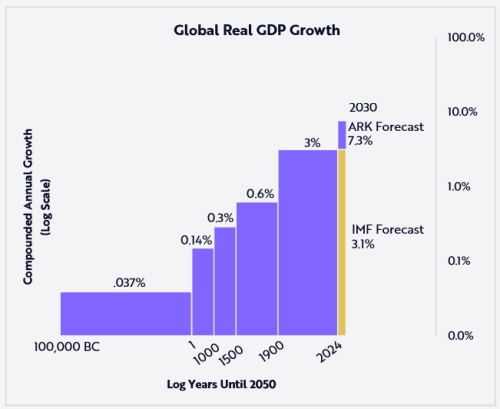
The interconnected fields of AI, robotics, blockchain, energy, and biotech are converging, creating new efficiencies, business models, economic growth, and investment opportunities at an unprecedented pace.
AI agents are changing industries by making decisions automatically, streamlining tasks, and helping people work more efficiently. These smart systems will play a big role in businesses, finance, and healthcare, as well as in everyday life as they improve customer service, digital marketing and provide automated financial advice.
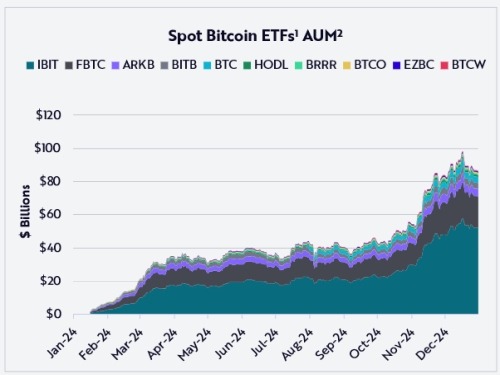
Spot Bitcoin ETF AUM Ark Invest Big Ideas 2025
Bitcoin’s evolution into a mainstream financial asset is being driven by institutional adoption, regulatory clarity, its role as a hedge against inflation, and store of wealth. ETFs and corporate adoption are solidifying its place in global finance. Bitcoin’s adoption will drive new financial products, including tokenized assets, decentralized finance (DeFi) lending, and institutional custody solutions.
Stablecoins are changing the way money moves across borders by making payments faster, cheaper, and more efficient than traditional banks. They connect cryptocurrency with regular money, making digital payments easier, helping more people access financial services, and influencing new rules for digital currencies.
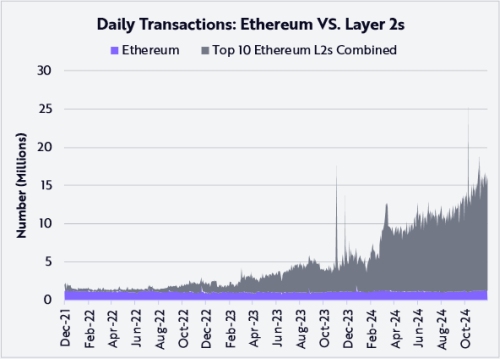
Image: Ethereum vs L2 Daily Transactions (Ark Invest, Big Ideas 2025)
Blockchain scalability will drive growth in DeFi, NFT markets, and enterprise blockchain adoption with solutions such as Layer 2 networks, rollups, and modular architectures are significantly lowering transaction costs and increasing network efficiency. This shift is paving the way for mainstream adoption of decentralized applications.
Autonomous vehicles (robotaxis) will reduce transportation costs, making personal car ownership less necessary, incentivize infrastructure investment and create new financing models for mobility-as-a-service platforms.
AI logistics and smart delivery systems are reducing costs and optimizing supply chain efficiency, creating opportunities in supply chain management solutions and financing of autonomous fleet operations.
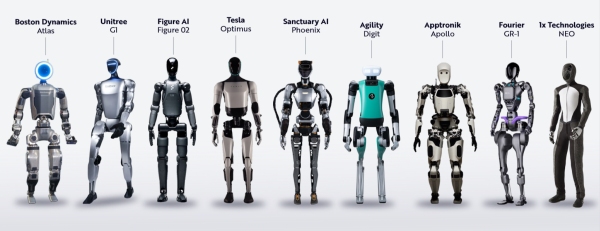
Image: Humanoid Robots Debuting Globally (Ark Invest, Big Ideas 2025)
The rise of AI humanoid robots is changing labour markets and improving manufacturing efficiency. Increased automation will drive investment in robotics startups, manufacturing solutions, and AI workforce solutions.
Breakthroughs in battery technology and renewable energy are reducing dependency on fossil fuels. The shift to decentralized energy creates opportunities in cleantech financing, energy trading, and carbon credit markets.
AI is improving quickly and moving toward Artificial General Intelligence (AGI), which will change how decisions are made, improve risk management, and create new investment opportunities in automation.
The accelerated growth, convergence and adoption of emerging technologies will require new regulatory frameworks, increased infrastructure investments, and a massive shift in market development strategies. Whether it’s the mainstreaming of digital assets or the advancement of artificial intelligence the future is arriving faster than we imagined, and those who adapt will be well positioned for whatever comes next.
The National Crowdfunding & Fintech Association (NCFA Canada) is a financial innovation ecosystem that provides education, market intelligence, industry stewardship, networking and funding opportunities and services to thousands of community members and works closely with industry, government, partners and affiliates to create a vibrant and innovative fintech and funding industry in Canada. Decentralized and distributed, NCFA is engaged with global stakeholders and helps incubate projects and investment in fintech, alternative finance, crowdfunding, peer-to-peer finance, payments, digital assets and tokens, artificial intelligence, blockchain, cryptocurrency, regtech, and insurtech sectors. Join Canada's Fintech & Funding Community today FREE! Or become a contributing member and get perks. For more information, please visit: www.ncfacanada.org
| | |
|---|---|---|
| | |
Tariffs | Feb 3, 2025

Image: Freepik/master1305
The 25% tariffs on Canadian imports into the U.S. (and 10% on energy) have been temporarily paused following a phone call between U.S. President Donald Trump and Canadian Prime Minister Justin Trudeau. The decision comes after Canada agreed to strengthen border security and take further action against fentanyl trafficking, which the U.S. cited as a key justification for the tariffs. The 30-day suspension gives both countries time to negotiate a broader economic and security agreement.
Justin Trudeau, Prime Minister of Canada shared on X:
"I just had a good call with President Trump. Canada is implementing our $1.3 billion border plan — reinforcing the border with new choppers, technology and personnel, enhanced coordination with our American partners, and increased resources to stop the flow of fentanyl. Nearly 10,000 frontline personnel are and will be working on protecting the border.
In addition, Canada is making new commitments to appoint a Fentanyl Czar, we will list cartels as terrorists, ensure 24/7 eyes on the border, launch a Canada- U.S. Joint Strike Force to combat organized crime, fentanyl and money laundering.
I have also signed a new intelligence directive on organized crime and fentanyl and we will be backing it with $200 million. Proposed tariffs will be paused for at least 30 days while we work together."
Following the agreement, Canada is temporarily suspending its planned counter-tariffs on U.S. goods. Ontario Premier Doug Ford confirmed that retaliatory tariffs would not proceed for now, advising that Canada should focus on strengthening trade ties with other partners, including China and the European Union. Ontario was set to remove U.S. alcohol from LCBO shelves Monday night. The province was also going to rip up a $100 million deal with Elon Musk’s Starlink for satellite internet service in Northern Ontario.
With a 30-day deadline, Canada must work quickly to secure a long-term resolution. The next phase of negotiations will likely center on border security measures, trade adjustments, and economic incentives to satisfy U.S. concerns without triggering further trade disruptions. If no agreement is reached within the 30-day period, the tariffs could still take effect, escalating tensions between the two countries. For now, the agreement provides relief for Canadian businesses and consumers, but the outcome remains uncertain as negotiations continue.
We're all consumers. Here are just a few links you may be interested in. Do your research and make the right choice and support/buy Canadian products:
The National Crowdfunding & Fintech Association (NCFA Canada) is a financial innovation ecosystem that provides education, market intelligence, industry stewardship, networking and funding opportunities and services to thousands of community members and works closely with industry, government, partners and affiliates to create a vibrant and innovative fintech and funding industry in Canada. Decentralized and distributed, NCFA is engaged with global stakeholders and helps incubate projects and investment in fintech, alternative finance, crowdfunding, peer-to-peer finance, payments, digital assets and tokens, artificial intelligence, blockchain, cryptocurrency, regtech, and insurtech sectors. Join Canada's Fintech & Funding Community today FREE! Or become a contributing member and get perks. For more information, please visit: www.ncfacanada.org
| | |
|---|---|---|
| | |
Conference | Jan 31, 2025

We’re excited to announce that NCFA is a Community Partner for Consensus Toronto 2025, the premier global conference for blockchain, AI, Web3, and digital assets hosted by Coindesk. The flagship event is happening May 14-16, 2025, in Toronto Canada, and is anticipating 15,000+ industry leaders, investors, developers, policymakers, and visionaries to explore the most pressing topics and innovations driving the future of technology and finance.
With world class speakers, innovative showcases, hackathon and awesome networking, Consensus Toronto promises to be an unparalleled opportunity for companies and innovators looking to get ahead in the world of crypto and digital finance. Attendees will gain exclusive insights into Bitcoin, Ethereum, DeFi, NFTs, DAOs, metaverse advancements, AI integration, regulatory developments, and investment strategies. The conference also features workshops, side events, and investor meetups, making it a great platform for forging connections and discovering new opportunities in the blockchain and emerging tech space. .
✅ Connect with 15,000+ industry leaders, developers, and visionaries
✅ Explore cutting-edge advancements in blockchain, AI, and decentralized finance
✅ Network at exclusive side events and investor meetups
✅ Gain insights from leading speakers shaping the future of tech
This is the last chance to take advantage of early discounts. Take advantage of our 15% discount before ticket prices go up!
How to Claim Deal
🔗 Register now: https://go.coindesk.com/NCFA
💰 Use promo code: NCFACANADA15 at checkout
Don’t miss this opportunity to be part of the conversation that’s driving the future of digital innovation. Secure your tickets today! 🚀
📢 Tag us and let us know if you’re attending! #ConsensusTO #NCFACanada
📲 Follow @consensus2025 and @NCFACanada on X and @Coindesk on LinkedIn for updates!
The National Crowdfunding & Fintech Association (NCFA Canada) is a financial innovation ecosystem that provides education, market intelligence, industry stewardship, networking and funding opportunities and services to thousands of community members and works closely with industry, government, partners and affiliates to create a vibrant and innovative fintech and funding industry in Canada. Decentralized and distributed, NCFA is engaged with global stakeholders and helps incubate projects and investment in fintech, alternative finance, crowdfunding, peer-to-peer finance, payments, digital assets and tokens, artificial intelligence, blockchain, cryptocurrency, regtech, and insurtech sectors. Join Canada's Fintech & Funding Community today FREE! Or become a contributing member and get perks. For more information, please visit: www.ncfacanada.org
| | |
|---|---|---|
| | |
Fintech | Jan 31, 2025

Image: TMTG website
On Jan 29 2025, Trump Media & Technology Group (TMTG, operator of Truth Social and Truth+) announced an expansion into financial services under a brand new fintech platform called Truth.Fi to provide alternative investment options to people in the 'patriot economy' or that want to align with America-first philosophy and opportunities outside of big tech or Wall Street.
According to the release, the TMTG board has approved an initial investment of up to $250 million from its $700 million cash treasury. The funds will be custodied by Charles Schwab and split into various accounts including (1) exchange traded funds; (2) separately managed accounts; and (3) Bitcoin and digital assets. An affiliate of Yorkville Advisors will be the Registered Investment Advisor on record and advise on investments and strategy likely focused on U.S. growth, manufacturing, and energy related companies aligned with the patriot economy.
Devin Nunes, TMTG CEO and Chairman:
"We look forward to launching Truth.Fi, introducing TMTG's investment vehicles, and unlocking synergies. Truth.Fi is a natural expansion of the Truth Social movement. We began by creating a free-speech social media platform, added an ultra-fast TV streaming service, and now we're moving into investment products and decentralized finance. Developing American First investment vehicles is another step toward our goal of creating a robust ecosystem through which American patriots can protect themselves from the ever-present threat of cancellation, censorship, debanking, and privacy violations committed by Big Tech and woke corporations."
This isn’t happening in a vacuum. Elon Musk’s X is also expanding into finance and on the same day as Truth.Fi launched, Linda Yaccarino the CEO of X announced that X Money digital wallet will launch later in 2025 in partnership with Visa Direct who will allow American users to fund, send payments, tip creators and eventually make purchases directly in the app. It's part of Musk's bigger, longer term vision of turning X into a super app, kind of like WeChat but for global users.
Maybe (but not immediately). Truth.Fi is focused on investments and wealth creation while X money is targeting real time global payments. Having said that, with crypto, financial independence, free speech, and alternative finance as overlapping themes between the two models, there's bound to be crossover at one point so expect some deals and/or fireworks and the possibility of real competition in the longer term.
This is an obvious wrinkle given Trump's energy policies currently who are pushing for more oil and fossil fuel production 'drill baby drill' and deregulation, which contrasts with Musk's Tesla model built on the promise of a renewable future.
Tesla's sales have been struggling lately due to rising competition and higher interest rates aren't helping either. If Trump applies 25% tariffs on Canada's oil exports then gas prices will be more expensive for Americans, making EVs more attractive causing friction. On the other hand, if Trump manages to lower gas prices then EVs will become less attractive.
Trump Media is looking to build an altfi ecosystem that aligns with its worldview. If Truth.Fi works, it could change how groups of the population invest but there will no doubt be roadblocks from regulators and competition from incumbent financial players. Meanwhile, Musk is walking a tight rope working within the Trump administration while also running his various global companies X, Tesla and SpaceX, each with their own agenda. Fintech, media, egos, ambition, and politics collide.
The National Crowdfunding & Fintech Association (NCFA Canada) is a financial innovation ecosystem that provides education, market intelligence, industry stewardship, networking and funding opportunities and services to thousands of community members and works closely with industry, government, partners and affiliates to create a vibrant and innovative fintech and funding industry in Canada. Decentralized and distributed, NCFA is engaged with global stakeholders and helps incubate projects and investment in fintech, alternative finance, crowdfunding, peer-to-peer finance, payments, digital assets and tokens, artificial intelligence, blockchain, cryptocurrency, regtech, and insurtech sectors. Join Canada's Fintech & Funding Community today FREE! Or become a contributing member and get perks. For more information, please visit: www.ncfacanada.org
| | |
|---|---|---|
| | |
FCAC | Jan 30, 2025

Image: Shereen Benzvy Miller New FCAC Commissioner
The government of Canada recently appointed Shereen Benzvy Miller as its new Commissioner of the The Financial Consumer Agency of Canada (FCAC), effective November 7, 2024 for a 5 year term (succeeding Werner Liedtke, interim Commissioner). Benzvy Miller brings a wealth of experience with over two decades of public service leadership in human rights advocacy, regulatory oversight, and digital service innovation in her roles as Senior Assistant Deputy Minister of Service Innovation at Shared Services Canada and Deputy Chair of Refugee Protection at the Immigration and Refugee Board of Canada and various other leadership roles.
The FCAC recently published an interview with Benzvy Miller offering insight into her driving mission, approach, and challenge ahead at the FCAC for the next several years. One that seeks to ensure Canada's financial sector continues to be fair, transparent and consumer-focused.
"The way that you create trust in the financial system is to make people feel seen, understood and respected."
To build trust in finance, fintech companies need to make sure people feel valued and are treated fairly. Financial services and the processes, transactions, and fees should be transparent, secure, and personalized. Digital banks and fintechs need to implement robust security and data protection while offering clear pricing and user-friendly services to reduce uncertainty.
"Financial literacy for children has to involve more than identifying different currencies, because most children may never see currency in their hands. Money will not be a tactile thing for today’s generation."
Earning trust is more than just security, it's also about education and financial literacy. By providing digital tools and addressing financial literacy challenges, fintechs can help consumers to manage their finances in modern times whether that be through AI powered advisors, budget tracking apps, or blockchain security, fintechs who protect and empower consumers to improve their financial literacy and informed decisions are well aligned with the FCAC's mission. Recognizing that younger generations primarily interact with digital money, fintechs have an important responsibility to create innovations that serve all Canadians and just a select few.
"A financial service provider, whether it’s a bank or a fintech, needs to put the consumer at the centre for all the services that it offers. This kind of consumer protection is not a 'nice to have."
Benzvy Miller emphasizes the need for a consumer-first approach where financial services must be designed to protect individuals. Companies that are working in areas like fair lending, or privacy-first digital banking, and even ethical AI are establishing new standards for responsible innovation. For fintechs, balancing innovation with regulation means finding ways to introduce new products while ensuring consumer protection. Startups and scale-ups should work closely with regulators to design solutions that are innovative, adaptable, and secure, or consumer-centric solutions that improve accessibility and affordability.
Benzvy Miller also acknowledges the growing role of fintech, digital banking, and alternative finance in how it's improving Canada's economy. While she supports innovation, the sweet spot is the need for balanced regulations that protect consumers without stifling progress.
"I will want Canadians to make sure they fully understand what it means to own and control their financial information and who to share it with, to ensure that the actors that they're engaging with and agreeing to give their information to are not bad actors."
A major focus of Benzvy Miller’s tenure as the new FCAC Commissioner will be overseeing Canada’s Consumer-Driven Banking Framework, otherwise known as open banking. This framework will enable Canadians to securely access and share their financial data with trusted financial technology companies, increasing competition and improving financial services and choice for consumers.
Based on experience from other jurisdictions that have successfully implemented open banking such as in the UK, open banking also fosters financial transparency and empowers consumers. It's fintechs that are creating seamless integrations with banks and other financial institutions to offer better financial planning and more competitive financial services to the every day consumer.
It was announced in the 2024 federal budget that open banking it Canada would be delayed until 2026, to the dismay of industry who have been waiting for years for the initiative to be realized but with the appointment of the Benzvy Miller there's hope that the FCAC can finalize the implementation and oversight framework on this new timeline without any further delays or risks to the project.
"Collaboration is key. By working together, regulators, industry leaders, and consumer advocates can build a financial system that works for everyone."
Benzvy Miller is expected to work closely with fintech leaders, regulators, and consumer advocacy groups to create policies that protect consumers while also embracing digital innovation. Her role in shaping how Canada’s financial system adapts to emerging technologies from consumer-driven banking to the implementation of AI is highly significant for the future of fintech regulation in Canada.
The National Crowdfunding & Fintech Association of Canada (NCFA) has advocated for many many years for a progressive regulatory environment that supports innovation while also protecting consumers and fostering trust. Based on her interview, Benzvy Miller's vision aligns pretty well with NCFA's mission and we will continue monitor and provide updates on how these developments impact the industry.
The National Crowdfunding & Fintech Association (NCFA Canada) is a financial innovation ecosystem that provides education, market intelligence, industry stewardship, networking and funding opportunities and services to thousands of community members and works closely with industry, government, partners and affiliates to create a vibrant and innovative fintech and funding industry in Canada. Decentralized and distributed, NCFA is engaged with global stakeholders and helps incubate projects and investment in fintech, alternative finance, crowdfunding, peer-to-peer finance, payments, digital assets and tokens, artificial intelligence, blockchain, cryptocurrency, regtech, and insurtech sectors. Join Canada's Fintech & Funding Community today FREE! Or become a contributing member and get perks. For more information, please visit: www.ncfacanada.org
| | |
|---|---|---|
| | |
AI | Jan 27, 2025

Image courtesy of Freepik AI
On January 27, 2025 the Competition Bureau of Canada published the results of its consultation on artificial intelligence (AI) and competition on March 20 based on inputs from 28 stakeholders from global tech firms to startups, academics and consumer advocacy groups, outlining key issues and opportunities of AI in Canada. The findings highlight a pressing need for Canada to balance innovation with fair competition.
Stakeholders agree that AI is a game-changer in business, forging innovation in sectors like finance, healthcare, and transportation, and opening up endless possibilities but it also brings real challenges that Canada needs to address head on. AI relies on access to high quality data, compute power and specialized expertise making it challenging for smaller businesses to enter the space or compete.
Perhaps the biggest concern is the dominance of AI by a handful of large big tech companies like Google, Amazon and Microsoft who control most of the AI infrastructure like data centers, supercomputers and AI chips. This concentration of power isn't new to Canada who is fine with a handful of large banks controlling the majority of the country's financial assets. While Canada has many AI players such as Cohere (Canadian government invested $240 million), Element AI (sold to ServiceNow in U.S.), Waabi, Peak Power, Tenstorrent, Deep Genomics (see CVCA post on growth of Canadian AI by investment mapped), and is recognized for its strong AI research leaders, they do not necessarily operate at the same scale as the likes of big U.S. or Chinese tech companies like OpenAI or Google. As with all forms of high concentration of power, it creates significant barriers for innovative startups and smaller firms to access the resources to train and deploy competitive AI models, however this could change with DeepSeek's disruption. Will Canadian AI firms be able to compete effectively globally, if they are dwarfed in size by their competitor's resources.
Large players could also control the AI supply chain by not allowing smaller competitors to access the infrastructure and tech needed to develop AI systems. Exclusive partnership agreements could also adversely impact competition. Could large players shut off access to critical AI inputs in a type of tariff trade war?
Last December 2024, the Canadian government announced the Canadian Sovereign AI Compute Strategy, a $2 billion investment over 5 years aimed at reducing the reliance on foreign tech giants and strengthen Canada's AI infrastructure but will it be enough when the U.S. has launched a $500 billion Stargate AI infrastructure project?
AI tools such as algorithmic pricing can unintentionally lead to anti competitive practices, when for example, a system automatically adjusts prices to align with competitors - price collusion that's hard to detect and regulate.
The report talks about accountability when AI systems become more autonomous and complex, who is responsible for the outcome of their decisions. While not a new point, the risk is a legal and ethical challenge where AI generates biased or harmful decisions. Think for example a loan approval of auto hiring process.
Another major concern of course is the distribution of misinformation and rise of fake AI generated content like deepfakes, fake reviews etc that mislead consumers, damage trust, and give unscrupulous businesses an unfair/unethical business advantage.
The recommendations in the report are quite high level and scattered throughout the report but here they are in a simple format.
The consultation makes one thing clear. AI offers enormous potential for Canada but its benefits won’t be evenly shared unless Canada takes deliberate and strategic action.
The Competition Bureau’s AI and competition consultation report stressed the importance for Canada to address big tech dominance, support Canadian innovation, and ensure fairness in the AI market. The Canadian Sovereign AI Compute Strategy is promising but must come with robust policies, global collaboration, and targeted investments to level the playing field.
The National Crowdfunding & Fintech Association (NCFA Canada) is a financial innovation ecosystem that provides education, market intelligence, industry stewardship, networking and funding opportunities and services to thousands of community members and works closely with industry, government, partners and affiliates to create a vibrant and innovative fintech and funding industry in Canada. Decentralized and distributed, NCFA is engaged with global stakeholders and helps incubate projects and investment in fintech, alternative finance, crowdfunding, peer-to-peer finance, payments, digital assets and tokens, artificial intelligence, blockchain, cryptocurrency, regtech, and insurtech sectors. Join Canada's Fintech & Funding Community today FREE! Or become a contributing member and get perks. For more information, please visit: www.ncfacanada.org
| | |
|---|---|---|
| | |


August 26th, 2025

January 4th, 2024

June 1st, 2021

September 9th, 2020

July 9th, 2018

January 3rd, 2018

September 25th, 2017

June 20th, 2017

May 10th, 2017

December 14th, 2016