



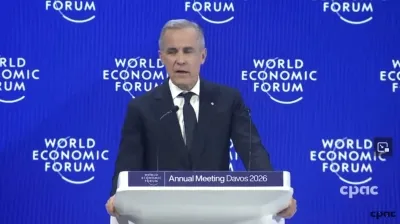

Karsten Wenzlaff, Advisor
August 26th, 2025
Karsten Wenzlaff is a Crowdfunding and Fintech Expert from Germany. He is Secretary-General of Digit[...]


Conference | Jan 31, 2025

We’re excited to announce that NCFA is a Community Partner for Consensus Toronto 2025, the premier global conference for blockchain, AI, Web3, and digital assets hosted by Coindesk. The flagship event is happening May 14-16, 2025, in Toronto Canada, and is anticipating 15,000+ industry leaders, investors, developers, policymakers, and visionaries to explore the most pressing topics and innovations driving the future of technology and finance.
With world class speakers, innovative showcases, hackathon and awesome networking, Consensus Toronto promises to be an unparalleled opportunity for companies and innovators looking to get ahead in the world of crypto and digital finance. Attendees will gain exclusive insights into Bitcoin, Ethereum, DeFi, NFTs, DAOs, metaverse advancements, AI integration, regulatory developments, and investment strategies. The conference also features workshops, side events, and investor meetups, making it a great platform for forging connections and discovering new opportunities in the blockchain and emerging tech space. .
✅ Connect with 15,000+ industry leaders, developers, and visionaries
✅ Explore cutting-edge advancements in blockchain, AI, and decentralized finance
✅ Network at exclusive side events and investor meetups
✅ Gain insights from leading speakers shaping the future of tech
This is the last chance to take advantage of early discounts. Take advantage of our 15% discount before ticket prices go up!
How to Claim Deal
🔗 Register now: https://go.coindesk.com/NCFA
💰 Use promo code: NCFACANADA15 at checkout
Don’t miss this opportunity to be part of the conversation that’s driving the future of digital innovation. Secure your tickets today! 🚀
📢 Tag us and let us know if you’re attending! #ConsensusTO #NCFACanada
📲 Follow @consensus2025 and @NCFACanada on X and @Coindesk on LinkedIn for updates!
 The National Crowdfunding & Fintech Association (NCFA Canada) is a financial innovation ecosystem that provides education, market intelligence, industry stewardship, networking and funding opportunities and services to thousands of community members and works closely with industry, government, partners and affiliates to create a vibrant and innovative fintech and funding industry in Canada. Decentralized and distributed, NCFA is engaged with global stakeholders and helps incubate projects and investment in fintech, alternative finance, crowdfunding, peer-to-peer finance, payments, digital assets and tokens, artificial intelligence, blockchain, cryptocurrency, regtech, and insurtech sectors. Join Canada's Fintech & Funding Community today FREE! Or become a contributing member and get perks. For more information, please visit: www.ncfacanada.org
 |  |  |
|---|---|---|
 |  |  |
Fintech | Jan 31, 2025

Image: TMTG website
On Jan 29 2025, Trump Media & Technology Group (TMTG, operator of Truth Social and Truth+) announced an expansion into financial services under a brand new fintech platform called Truth.Fi to provide alternative investment options to people in the 'patriot economy' or that want to align with America-first philosophy and opportunities outside of big tech or Wall Street.
According to the release, the TMTG board has approved an initial investment of up to $250 million from its $700 million cash treasury. The funds will be custodied by Charles Schwab and split into various accounts including (1) exchange traded funds; (2) separately managed accounts; and (3) Bitcoin and digital assets. An affiliate of Yorkville Advisors will be the Registered Investment Advisor on record and advise on investments and strategy likely focused on U.S. growth, manufacturing, and energy related companies aligned with the patriot economy.
Devin Nunes, TMTG CEO and Chairman:
"We look forward to launching Truth.Fi, introducing TMTG's investment vehicles, and unlocking synergies. Truth.Fi is a natural expansion of the Truth Social movement. We began by creating a free-speech social media platform, added an ultra-fast TV streaming service, and now we're moving into investment products and decentralized finance. Developing American First investment vehicles is another step toward our goal of creating a robust ecosystem through which American patriots can protect themselves from the ever-present threat of cancellation, censorship, debanking, and privacy violations committed by Big Tech and woke corporations."
This isn’t happening in a vacuum. Elon Musk’s X is also expanding into finance and on the same day as Truth.Fi launched, Linda Yaccarino the CEO of X announced that X Money digital wallet will launch later in 2025 in partnership with Visa Direct who will allow American users to fund, send payments, tip creators and eventually make purchases directly in the app. It's part of Musk's bigger, longer term vision of turning X into a super app, kind of like WeChat but for global users.
Maybe (but not immediately). Truth.Fi is focused on investments and wealth creation while X money is targeting real time global payments. Having said that, with crypto, financial independence, free speech, and alternative finance as overlapping themes between the two models, there's bound to be crossover at one point so expect some deals and/or fireworks and the possibility of real competition in the longer term.
This is an obvious wrinkle given Trump's energy policies currently who are pushing for more oil and fossil fuel production 'drill baby drill' and deregulation, which contrasts with Musk's Tesla model built on the promise of a renewable future.
Tesla's sales have been struggling lately due to rising competition and higher interest rates aren't helping either. If Trump applies 25% tariffs on Canada's oil exports then gas prices will be more expensive for Americans, making EVs more attractive causing friction. On the other hand, if Trump manages to lower gas prices then EVs will become less attractive.
Trump Media is looking to build an altfi ecosystem that aligns with its worldview. If Truth.Fi works, it could change how groups of the population invest but there will no doubt be roadblocks from regulators and competition from incumbent financial players. Meanwhile, Musk is walking a tight rope working within the Trump administration while also running his various global companies X, Tesla and SpaceX, each with their own agenda. Fintech, media, egos, ambition, and politics collide.
The National Crowdfunding & Fintech Association (NCFA Canada) is a financial innovation ecosystem that provides education, market intelligence, industry stewardship, networking and funding opportunities and services to thousands of community members and works closely with industry, government, partners and affiliates to create a vibrant and innovative fintech and funding industry in Canada. Decentralized and distributed, NCFA is engaged with global stakeholders and helps incubate projects and investment in fintech, alternative finance, crowdfunding, peer-to-peer finance, payments, digital assets and tokens, artificial intelligence, blockchain, cryptocurrency, regtech, and insurtech sectors. Join Canada's Fintech & Funding Community today FREE! Or become a contributing member and get perks. For more information, please visit: www.ncfacanada.org
| | |
|---|---|---|
| | |
FCAC | Jan 30, 2025

Image: Shereen Benzvy Miller New FCAC Commissioner
The government of Canada recently appointed Shereen Benzvy Miller as its new Commissioner of the The Financial Consumer Agency of Canada (FCAC), effective November 7, 2024 for a 5 year term (succeeding Werner Liedtke, interim Commissioner). Benzvy Miller brings a wealth of experience with over two decades of public service leadership in human rights advocacy, regulatory oversight, and digital service innovation in her roles as Senior Assistant Deputy Minister of Service Innovation at Shared Services Canada and Deputy Chair of Refugee Protection at the Immigration and Refugee Board of Canada and various other leadership roles.
The FCAC recently published an interview with Benzvy Miller offering insight into her driving mission, approach, and challenge ahead at the FCAC for the next several years. One that seeks to ensure Canada's financial sector continues to be fair, transparent and consumer-focused.
"The way that you create trust in the financial system is to make people feel seen, understood and respected."
To build trust in finance, fintech companies need to make sure people feel valued and are treated fairly. Financial services and the processes, transactions, and fees should be transparent, secure, and personalized. Digital banks and fintechs need to implement robust security and data protection while offering clear pricing and user-friendly services to reduce uncertainty.
"Financial literacy for children has to involve more than identifying different currencies, because most children may never see currency in their hands. Money will not be a tactile thing for today’s generation."
Earning trust is more than just security, it's also about education and financial literacy. By providing digital tools and addressing financial literacy challenges, fintechs can help consumers to manage their finances in modern times whether that be through AI powered advisors, budget tracking apps, or blockchain security, fintechs who protect and empower consumers to improve their financial literacy and informed decisions are well aligned with the FCAC's mission. Recognizing that younger generations primarily interact with digital money, fintechs have an important responsibility to create innovations that serve all Canadians and just a select few.
"A financial service provider, whether it’s a bank or a fintech, needs to put the consumer at the centre for all the services that it offers. This kind of consumer protection is not a 'nice to have."
Benzvy Miller emphasizes the need for a consumer-first approach where financial services must be designed to protect individuals. Companies that are working in areas like fair lending, or privacy-first digital banking, and even ethical AI are establishing new standards for responsible innovation. For fintechs, balancing innovation with regulation means finding ways to introduce new products while ensuring consumer protection. Startups and scale-ups should work closely with regulators to design solutions that are innovative, adaptable, and secure, or consumer-centric solutions that improve accessibility and affordability.
Benzvy Miller also acknowledges the growing role of fintech, digital banking, and alternative finance in how it's improving Canada's economy. While she supports innovation, the sweet spot is the need for balanced regulations that protect consumers without stifling progress.
"I will want Canadians to make sure they fully understand what it means to own and control their financial information and who to share it with, to ensure that the actors that they're engaging with and agreeing to give their information to are not bad actors."
A major focus of Benzvy Miller’s tenure as the new FCAC Commissioner will be overseeing Canada’s Consumer-Driven Banking Framework, otherwise known as open banking. This framework will enable Canadians to securely access and share their financial data with trusted financial technology companies, increasing competition and improving financial services and choice for consumers.
Based on experience from other jurisdictions that have successfully implemented open banking such as in the UK, open banking also fosters financial transparency and empowers consumers. It's fintechs that are creating seamless integrations with banks and other financial institutions to offer better financial planning and more competitive financial services to the every day consumer.
It was announced in the 2024 federal budget that open banking it Canada would be delayed until 2026, to the dismay of industry who have been waiting for years for the initiative to be realized but with the appointment of the Benzvy Miller there's hope that the FCAC can finalize the implementation and oversight framework on this new timeline without any further delays or risks to the project.
"Collaboration is key. By working together, regulators, industry leaders, and consumer advocates can build a financial system that works for everyone."
Benzvy Miller is expected to work closely with fintech leaders, regulators, and consumer advocacy groups to create policies that protect consumers while also embracing digital innovation. Her role in shaping how Canada’s financial system adapts to emerging technologies from consumer-driven banking to the implementation of AI is highly significant for the future of fintech regulation in Canada.
The National Crowdfunding & Fintech Association of Canada (NCFA) has advocated for many many years for a progressive regulatory environment that supports innovation while also protecting consumers and fostering trust. Based on her interview, Benzvy Miller's vision aligns pretty well with NCFA's mission and we will continue monitor and provide updates on how these developments impact the industry.
The National Crowdfunding & Fintech Association (NCFA Canada) is a financial innovation ecosystem that provides education, market intelligence, industry stewardship, networking and funding opportunities and services to thousands of community members and works closely with industry, government, partners and affiliates to create a vibrant and innovative fintech and funding industry in Canada. Decentralized and distributed, NCFA is engaged with global stakeholders and helps incubate projects and investment in fintech, alternative finance, crowdfunding, peer-to-peer finance, payments, digital assets and tokens, artificial intelligence, blockchain, cryptocurrency, regtech, and insurtech sectors. Join Canada's Fintech & Funding Community today FREE! Or become a contributing member and get perks. For more information, please visit: www.ncfacanada.org
| | |
|---|---|---|
| | |
AI | Jan 27, 2025

Image courtesy of Freepik AI
On January 27, 2025 the Competition Bureau of Canada published the results of its consultation on artificial intelligence (AI) and competition on March 20 based on inputs from 28 stakeholders from global tech firms to startups, academics and consumer advocacy groups, outlining key issues and opportunities of AI in Canada. The findings highlight a pressing need for Canada to balance innovation with fair competition.
Stakeholders agree that AI is a game-changer in business, forging innovation in sectors like finance, healthcare, and transportation, and opening up endless possibilities but it also brings real challenges that Canada needs to address head on. AI relies on access to high quality data, compute power and specialized expertise making it challenging for smaller businesses to enter the space or compete.
Perhaps the biggest concern is the dominance of AI by a handful of large big tech companies like Google, Amazon and Microsoft who control most of the AI infrastructure like data centers, supercomputers and AI chips. This concentration of power isn't new to Canada who is fine with a handful of large banks controlling the majority of the country's financial assets. While Canada has many AI players such as Cohere (Canadian government invested $240 million), Element AI (sold to ServiceNow in U.S.), Waabi, Peak Power, Tenstorrent, Deep Genomics (see CVCA post on growth of Canadian AI by investment mapped), and is recognized for its strong AI research leaders, they do not necessarily operate at the same scale as the likes of big U.S. or Chinese tech companies like OpenAI or Google. As with all forms of high concentration of power, it creates significant barriers for innovative startups and smaller firms to access the resources to train and deploy competitive AI models, however this could change with DeepSeek's disruption. Will Canadian AI firms be able to compete effectively globally, if they are dwarfed in size by their competitor's resources.
Large players could also control the AI supply chain by not allowing smaller competitors to access the infrastructure and tech needed to develop AI systems. Exclusive partnership agreements could also adversely impact competition. Could large players shut off access to critical AI inputs in a type of tariff trade war?
Last December 2024, the Canadian government announced the Canadian Sovereign AI Compute Strategy, a $2 billion investment over 5 years aimed at reducing the reliance on foreign tech giants and strengthen Canada's AI infrastructure but will it be enough when the U.S. has launched a $500 billion Stargate AI infrastructure project?
AI tools such as algorithmic pricing can unintentionally lead to anti competitive practices, when for example, a system automatically adjusts prices to align with competitors - price collusion that's hard to detect and regulate.
The report talks about accountability when AI systems become more autonomous and complex, who is responsible for the outcome of their decisions. While not a new point, the risk is a legal and ethical challenge where AI generates biased or harmful decisions. Think for example a loan approval of auto hiring process.
Another major concern of course is the distribution of misinformation and rise of fake AI generated content like deepfakes, fake reviews etc that mislead consumers, damage trust, and give unscrupulous businesses an unfair/unethical business advantage.
The recommendations in the report are quite high level and scattered throughout the report but here they are in a simple format.
The consultation makes one thing clear. AI offers enormous potential for Canada but its benefits won’t be evenly shared unless Canada takes deliberate and strategic action.
The Competition Bureau’s AI and competition consultation report stressed the importance for Canada to address big tech dominance, support Canadian innovation, and ensure fairness in the AI market. The Canadian Sovereign AI Compute Strategy is promising but must come with robust policies, global collaboration, and targeted investments to level the playing field.
The National Crowdfunding & Fintech Association (NCFA Canada) is a financial innovation ecosystem that provides education, market intelligence, industry stewardship, networking and funding opportunities and services to thousands of community members and works closely with industry, government, partners and affiliates to create a vibrant and innovative fintech and funding industry in Canada. Decentralized and distributed, NCFA is engaged with global stakeholders and helps incubate projects and investment in fintech, alternative finance, crowdfunding, peer-to-peer finance, payments, digital assets and tokens, artificial intelligence, blockchain, cryptocurrency, regtech, and insurtech sectors. Join Canada's Fintech & Funding Community today FREE! Or become a contributing member and get perks. For more information, please visit: www.ncfacanada.org
| | |
|---|---|---|
| | |
WEF | Jan 24, 2025

Image: Davos 2025 Annual Meeting (WEF website)
The World Economic Forum is currently hosting Davos 2025, its annual meeting in Switzerland, from January 20 to 24. This year's theme is “Collaboration for the Intelligent Age” bringing together global leaders, innovators, and policymakers to address pressing global issues around geopolitics, economic transformation, AI advancements, and the future of sustainable finance. While over 50 heads of state and government are participating, a number of prominent leaders are not participating like Indian Prime Minister Narendra Modi and Chinese President Xi Jinping, likely due to differing global priorities.. Below is an overview of select speeches relevant to fintech and their implications for the sector.
The U.S. President Donald Trump spoke virtually and delivered an aggressive agenda to stimulate economic growth, highlighting priorities including deregulation, energy independence, and domestic manufacturing. He declared that, “Under the Trump administration, there will be no better place on Earth to create jobs, build factories, or grow a company than right here in the good old USA”. He also announced $500 billion in private sector funding for AI infrastructure known as Stargate Project, and stressed that the U.S. was open for business and a hub for innovation. Trump also plans to slash corporate taxes to 15%.
Additional points from Trump's speech:
The implications of Trump’s policies should make it easier for businesses to operate -- supporting innovation and growth, cutting regulations, lowering interest rates, and investing in AI technology.
All of these changes provide fintech companies with opportunities to grow in areas like credit services or AI driven financial tools. Tariffs and trade rules may also encourage fintech firms to build and operate within the U.S. markets (although the tariffs being talked about are largely applied to physical goods).
In the European Commission President's speech by Ursula von der Leyen, she urged Europe to lead tech innovation while maintaining its regulatory frameworks. She also mentioned the importance of public-private collaborations and streamlining regulations to close the innovation gap. Asking for global cooperation to ensure ethical AI implementation and sustainable growth.
"we are likely to continue to see a frequent use of economic tools, such as sanctions, export controls and tariffs. [Its] important that we balance the imperative of safeguarding our security with our opportunity to innovate and improve our prosperity."
Europe’s commitment to balancing innovation with strong regulations, signals an opportunity for fintechs focusing on compliance and sustainability. Companies that align with ESG standards could gain a competitive edge in Europe.
Former UK Prime Minister Tony Blair discussed the game-changing potential of AI in public services. He referenced Togo’s rapid development of a digital payments platform (learn more)during COVID-19 as an example of innovation driven by strong leadership. “Properly harnessed, AI can transform healthcare, education, and governance,” he said emphasizing the importance of top-down support for such initiatives. There's potential for fintechs to lead in areas like public sector payment systems, digital identity verification, and financial inclusion. Collaboration with governments could accelerate fintech adoption globally, and produce a massive win-win.
Ukraine’s President Volodymyr Zelenskyy highlighted Europe’s strategic importance in global security and economic cooperation, urging Europe to align its priorities with its allies and avoid taking a backseat to geopolitical risks. There's a role for fintech to facilitate cross-border collaboration, facilitating secure transactions and financial innovation to support economic stability.
China’s Vice-Premier Ding Xuexiang talked about the importance of multilateral cooperation to address global economic fragmentation, calling for open global markets and greater collaboration. With many calling for improved collaboration, it signals opportunities for the development of integrated payment systems for more streamlined global transactions.
“Trade wars have no winners.”
Cyril Ramaphosa’s Vision for South Africa
South African President Cyril Ramaphosa discussed Africa’s potential to lead in fintech innovation. He highlighted Africa's milestones and growth in digital transformation while calling for greater economic integration to unlock new opportunities. Africa's growing fintech ecosystem and underbanked population is a great opportunity for partnerships between global fintech firms and African governments to provide scalable and inclusive solutions that can support financial access and education for underserved populations.
“Technology is key to driving financial inclusion and economic growth across Africa."
Argentinian President Javier Milei advocated for transparency and economic freedom while criticizing interventionist policies. He urged countries to embrace libertarian principles. His speech signals a more open and competitive market for fintechs in Argentina, supporting regional fintech growth and innovation.
“The winds of change are blowing in the West.”
While the final day at Davos 2025 still remains to be seen, the convergence of technology, governance, and sustainability are key to the future of global finance, partnerships and collaboration.
Without a doubt the fintech sector will play a critical role in driving resilience, growth, inclusivity and innovation in the age of intelligence.
The National Crowdfunding & Fintech Association (NCFA Canada) is a financial innovation ecosystem that provides education, market intelligence, industry stewardship, networking and funding opportunities and services to thousands of community members and works closely with industry, government, partners and affiliates to create a vibrant and innovative fintech and funding industry in Canada. Decentralized and distributed, NCFA is engaged with global stakeholders and helps incubate projects and investment in fintech, alternative finance, crowdfunding, peer-to-peer finance, payments, digital assets and tokens, artificial intelligence, blockchain, cryptocurrency, regtech, and insurtech sectors. Join Canada's Fintech & Funding Community today FREE! Or become a contributing member and get perks. For more information, please visit: www.ncfacanada.org
| | |
|---|---|---|
| | |
Crypto Regulation | Jan 23, 2025

Image of the White House Executive Order
O January 23, 2025, President Donald Trump made good on his promise to the crypto sector by signing a new executive order titled "Strengthening American Leadership in Digital Financial Technology" aimed at boosting innovation, providing regulatory clarity, banning the establishment of Central Bank Digital Currencies *CBDCs) and protecting financial freedom, and exploring a national digital asset 'stockpile' (read: reserve).
A key component of the order is the establishment of a Presidential Working Group on Digital Asset Markets which includes leaders from the Treasury, Justice Department, Commerce, and other major federal agencies. Within 180 days, the group will propose a federal framework to regulate digital assets focusing on structure, consumer protection, and risk management.
Note the Presidential Working Group is different than the SEC's Crypto 2.0 task force led by Commissioner Hester Peirce who is tasked with establishing a clear regulatory framework for crypto, addressing issues like market integrity and investor protection within the scope of the SEC.
A mix of enthusiasm and skepticism.
Katherine Kirkpatrick Bos, General Counsel at StarkWare told MarketWatch:
“has been a very positive stretch. I honestly don’t even know how to process this much good news for crypto at once.”
David Sacks, Chair of the newly formed Presidential Working Group on Digital Asset Markets said at an industry event:
“The war on crypto is over. This is the beginning of America reclaiming its position as the world’s innovation leader.”
Nathan McCauley, CEO and co-founder of crypto company Anchorage Digital on Reuters:
"Today’s crypto executive order marks a sea change in U.S. digital asset policy. By taking a whole-of-government approach to crypto, the Administration is making a significant first step toward writing clear, consistent rules of the road."
Some critics have raised ethical concerns over the launch and promotion of Trump's meme coin $Trump, due to conflicts of interest. They also have questions about the long term implications and market oversight.
This executive order positions the U.S. as a serious player in the global crypto space. By banning CBDCs, protecting industry access to banking, and proposing a strategic Bitcoin reserve, President Donald Trump and his administration are making a bold and clear statement about their vision for the future of finance.
The National Crowdfunding & Fintech Association (NCFA Canada) is a financial innovation ecosystem that provides education, market intelligence, industry stewardship, networking and funding opportunities and services to thousands of community members and works closely with industry, government, partners and affiliates to create a vibrant and innovative fintech and funding industry in Canada. Decentralized and distributed, NCFA is engaged with global stakeholders and helps incubate projects and investment in fintech, alternative finance, crowdfunding, peer-to-peer finance, payments, digital assets and tokens, artificial intelligence, blockchain, cryptocurrency, regtech, and insurtech sectors. Join Canada's Fintech & Funding Community today FREE! Or become a contributing member and get perks. For more information, please visit: www.ncfacanada.org
| | |
|---|---|---|
| | |
AI Infrastructure | Jan 22, 2025

Image: Freepik/Racool studio
As reported by CNN on January 21, 2025, President Donald Trump in collaboration with OpenAI CEO Sam Altman, Oracle CTO Larry Ellison, and SoftBank CEO Masavoshi Son announced a $500 billion AI infrastructure initiative called Stargate Project, which aims to establish the United States as a global leader in artificial intelligence infrastructure. It's one of the most ambitious AI infrastructure investments in history with plans to spend $500B over four years to build advanced data centers and systems.
Shortly after the announcement, no other than one of Trump's closest advisors, Elon Musk, criticized the project stating that the primary backer, SoftBank, has well under $10B secured:
Elon Musk, wrote on X:
“They don’t actually have the money. SoftBank has well under $10B secured. I have that on good authority.”
Sam Altman quickly responded to Musk:
“wrong, as you surely know. want to come visit the first site already under way? this is great for the country. i realize what is great for the country isn’t always what’s optimal for your companies, but in your new role i hope you’ll mostly put (America) first.”
Karoline Leavitt, White House press secretary:
“President Trump is very excited about this infrastructure announcement in the field of AI, which is obviously growing, and something the United States of America needs to capitalize on, because our adversaries, such as China, are very advanced in this field. So, the American people should take President Trump and those CEOs’ words for it -– these investments are coming to our great country, and American jobs are coming along with them.”
Many believe that Musk's concerns simply mirror how Stargate could threaten his own ventures (in other words, it's somewhat personal). Musk and OpenAI CEO Sam Altman also have a history of competitive friction with Musk suing OpenAI over abandoning its non profit roots for commercial aspirations. Musk probably see's OpenAI's growing influence at the White House, signalling the broader challenges of aligning private sector interests with national technical goals.
One of the key goals of the project is to expand AI infrastructure by constructing new data centers with cutting edge tech for training AI models. The first phase is a 10 building site in Abilene, Texas, with each facility's footprint measuring 500,000 square feet. In total, there are plans to expand to 20 buildings across multiple locations across the U.S.
The project is expected to generate hundreds of thousands jobs in construction, tech, and related industries and drive re-industrialization in the U.S. via strategic investments in technology, reinforcing America's position as global AI leader amidst growing competition from players like China. This includes the capabilities to protect and enhance critical national security interests.
Financial backers of the project in phase 1 include OpenAI, SoftBank, Oracle, and MGX who are starting with a $100 billion investment. As reported on QZ and CNN, the funding amounts below are being circulated:
As the U.S. plows ahead with its AI infrastructure development projects, Canada must consider the importance of investing in its own AI infrastructure and capabilities to maintain global competitiveness. On December 5, 2024, the Canadian government launched a CAD $2 billion Canadian Sovereign AI Compute Strategy to strengthen Canada's position that allocates CAD $700 million to develop and expand new data centers in Canada to support innovation and research, CAD $1 billion towards building soverign supercomputing infrastructure, and CAD $300 million to provide computing resources to small and medium sized enterprises to help commercialize AI projects.
While Canada’s CAD $2 billion investment is significant, compared with the U.S.’s $500 billion Stargate initiative, it's a drop in a leaky bucket. Having said that, Canada has punched above its weight accounting for about 10% of the world's top AI researchers with AI Pioneer Geoffrey Hinton recently winning the 2024 Nobel Prize in Physics. The funding gap highlights the importance of Canada's need for securing strong private sector partnerships and focusing on sustainability and maintaining a leadership position in responsible AI development.
AI is the future of global competitiveness. As global leaders invest heavily in AI infrastructure, Canada must accelerate its own initiatives and funding to compete while maintaining committed to ethical and inclusive AI development.
The National Crowdfunding & Fintech Association (NCFA Canada) is a financial innovation ecosystem that provides education, market intelligence, industry stewardship, networking and funding opportunities and services to thousands of community members and works closely with industry, government, partners and affiliates to create a vibrant and innovative fintech and funding industry in Canada. Decentralized and distributed, NCFA is engaged with global stakeholders and helps incubate projects and investment in fintech, alternative finance, crowdfunding, peer-to-peer finance, payments, digital assets and tokens, artificial intelligence, blockchain, cryptocurrency, regtech, and insurtech sectors. Join Canada's Fintech & Funding Community today FREE! Or become a contributing member and get perks. For more information, please visit: www.ncfacanada.org
| | |
|---|---|---|
| | |


August 26th, 2025

January 4th, 2024

June 1st, 2021

September 9th, 2020

July 9th, 2018

January 3rd, 2018

September 25th, 2017

June 20th, 2017

May 10th, 2017

December 14th, 2016
