




Karsten Wenzlaff, Advisor
August 26th, 2025
Karsten Wenzlaff is a Crowdfunding and Fintech Expert from Germany. He is Secretary-General of Digit[...]


NCFA Release | May 28, 2025

Canada-Africa Fintech Summit Aug 5-8, 2025 x NCFA
Toronto, ON – May 28, 2025 – The National Crowdfunding & Fintech Association of Canada (NCFA) is proud to announce a strategic partnership with the inaugural Canada-Africa Fintech Summit (CAFS), taking place from August 5 to 8, 2025, at the Sheraton Centre Toronto Hotel in downtown Toronto. This groundbreaking event will bring together fintech leaders, investors, policymakers, startups, and ecosystem builders from across Canada and the African continent to accelerate cross-border collaboration, mobilize capital, and drive inclusive innovation.
The strategic partnership aims to drive cross-border fintech growth, innovation, capital, and advance policy discussions and comes at a pivotal moment, following the release of Canada’s official Canada-Africa Strategy, which outlines a renewed commitment to building economic ties, investment, and digital cooperation between the two regions.
Africa’s fintech sector is experiencing explosive growth and global recognition. The continent has become a proving ground for digital financial innovation and a growing magnet for global capital. Here’s why it matters:
The infrastructure, capital, and consumer demand are already in place. While only a few fintechs currently operate at scale across both Canada and Africa, the opportunity is open. Now is the time for founders, investors, and policymakers to turn this into a two-way fintech bridge, and CAFS 2025 is where that future takes shape.
NCFA is working closely with CAFS organizers to help shape a dynamic agenda that connects Canadian fintechs and investors to growth opportunities in Africa while also supporting African fintechs looking to enter the Canadian market and tap into its innovation ecosystem.
Craig Asano, NCFA Founder and CEO:
“CAFS 2025 represents a historic opportunity to connect two of the most innovative and entrepreneurial fintech ecosystems. We’re excited to support a platform that brings together the talent, tools, and investment needed to build truly global ventures.”
Lots more speakers confirmed and more to come. Full agenda coming soon.
Dr. Segun Aina, President of the African Fintech Network and CAFS Co-Convenor:
“This isn’t just another fintech event—it’s a catalyst for shared opportunity. We’re fostering the relationships and strategies needed to scale inclusive fintech solutions across continents.”
# # #
About NCFA Canada
The National Crowdfunding & Fintech Association of Canada (NCFA) is a global fintech association based in Canada that champions financial innovation and supports a vibrant fintech ecosystem through education, market intelligence, advocacy, and strategic partnerships. NCFA works with startups, investors, regulators, and stakeholders across fintech, web3, blockchain, crypto, AI, open banking, and alternative finance to drive inclusive growth and real-world impact.
About the Canada-Africa Fintech Summit (CAFS)
The Canada-Africa Fintech Summit (CAFS) is a global platform connecting fintech leaders, investors, startups, and policymakers from Canada and Africa. Focused on collaboration, investment, and innovation, CAFS accelerates scalable fintech solutions and sustainable economic growth. The 2025 edition in Toronto marks the Summit’s inaugural launch.
Inquiries:
Craig Asano
Founder and CEO, NCFA Canada
casano@ncfacanada.org
 The National Crowdfunding & Fintech Association (NCFA Canada) is a financial innovation ecosystem that provides education, market intelligence, industry stewardship, networking and funding opportunities and services to thousands of community members and works closely with industry, government, partners and affiliates to create a vibrant and innovative fintech and funding industry in Canada. Decentralized and distributed, NCFA is engaged with global stakeholders and helps incubate projects and investment in fintech, alternative finance, crowdfunding, peer-to-peer finance, payments, digital assets and tokens, artificial intelligence, blockchain, cryptocurrency, regtech, and insurtech sectors. Join Canada's Fintech & Funding Community today FREE! Or become a contributing member and get perks. For more information, please visit: www.ncfacanada.org
 |  |  |
|---|---|---|
 |  |  |
May 28, 2025

Photo credit
High-performing brands aren’t just looking to exist in a marketplace. They’re looking to dominate it. That means the solution they choose can’t just be functional. It has to be scalable, smart, and built for the way people actually buy today.
Here’s what sets the decision-making process apart when you’re a brand that plays to win.
No brand wants to spend months stuck in implementation purgatory. Top brands look for marketplace solutions that get them up and running fast without sacrificing quality. Bonus points if the platform supports headless commerce or plug-and-play integrations with their existing tech stack.
Generic doesn't cut it anymore. High-performing brands want every product recommendation, search result, and landing page to feel custom-tailored to the shopper. A marketplace solution needs to have native personalization or the ability to layer on AI and behavioral insights in real time.
If you can’t track it, you can’t grow it. Top-tier brands expect powerful dashboards, real-time reporting, and actionable insights baked in. They're not waiting for monthly reports. They want to pivot strategies mid-week based on live performance data.
A marketplace is only as strong as its vendors. The best solutions make it easy to onboard, manage, and support third-party sellers. Think intuitive dashboards, automated payouts, product syncing, and easy-to-navigate compliance tools.
No one’s looking to add more manual work. High-performing brands want automation that takes real work off their plate. Inventory syncing, pricing rules, fraud prevention, order routing. It all needs to be smart, accurate, and hands-off once configured.
Templates are fine. But high-growth brands need to stand out. They want freedom to customize design, user flow, and features without relying on dev teams 24/7, which is why custom marketplace solutions are a smart move for brands that refuse to settle for templates.
Ambitious brands don’t plan for today. They plan for what’s next. That means their marketplace solution needs to grow with them—international expansion, new verticals, seasonal volume spikes—all without crashing under pressure or hiking up hidden fees. Brands aligned with growth often gravitate toward platforms that rethink traditional infrastructure, like those described in Harvard Business Review’s analysis of what makes an online marketplace disruptive.
Shoppers don’t care if they’re browsing Instagram, Google, or your site. The experience needs to be seamless. Marketplace leaders want solutions optimized for SEO, fast-loading mobile UX, and social commerce integrations that convert.
Especially for enterprise brands, compliance isn’t optional. They expect airtight security protocols, GDPR and CCPA support, and reliable uptime. Trust is everything, and the right solution makes sure it’s never at risk.
Finally, high-performing brands want partners, not just platforms. They look for marketplace solutions that offer strategic support, fast response times, and proactive help. Because when something breaks, they need someone who doesn’t just reply, they fix it.
The gap between good and great isn’t just about having a marketplace. It’s about having the right one. High-performing brands know that. They choose solutions that amplify their brand, empower their team, and make shopping feel like magic.
If your marketplace solution isn’t checking these boxes, it’s not built for growth. And your competitors are already moving on without you.
The National Crowdfunding & Fintech Association (NCFA Canada) is a financial innovation ecosystem that provides education, market intelligence, industry stewardship, networking and funding opportunities and services to thousands of community members and works closely with industry, government, partners and affiliates to create a vibrant and innovative fintech and funding industry in Canada. Decentralized and distributed, NCFA is engaged with global stakeholders and helps incubate projects and investment in fintech, alternative finance, crowdfunding, peer-to-peer finance, payments, digital assets and tokens, artificial intelligence, blockchain, cryptocurrency, regtech, and insurtech sectors. Join Canada's Fintech & Funding Community today FREE! Or become a contributing member and get perks. For more information, please visit: www.ncfacanada.org
| | |
|---|---|---|
| | |
Innovation | May 17, 2025

Image: 2025 Throne Speech, Building Canada Strong
Today, on May 27, 2025, King Charles III delivered Canada’s Speech from the Throne in person for the first time since 1957. It's a symbolic speech that outlined a comprehensive and forward looking agenda with national priorities of productivity, sovereignty, security, and innovation. It sets the tone for the 45th Parliament, emphasizing the need to "build the strongest economy in the G7" and to act with urgency in a world that is "a more dangerous and uncertain place than at any point since the Second World War." Download the speech from the Throne (PDF format).
“An opportunity for Canada to embark on the largest transformation of its economy since the Second World War.”
For the National Crowdfunding & Fintech Association of Canada (NCFA), the speech is highly relevant as it recognized the role of technology, capital, and small businesses and innovators in strengthening Canada's resilience and leadership.
Among the speech's most impactful economic promises:
"By removing these barriers... we will unleash a new era of growth... It will enable Canada to become the world's leading energy superpower... and hub for science and innovation."
For fintechs, this means fewer roadblocks when expanding across provinces. Instead of trying to figure out the patchwork of rules and approvals (remember three versions of equity crowdfunding when it first rolled out?), it could become faster and easier to launch and scale services coast to coast. This policy change can make a real difference for founders of scaling companies.
Create Build Canada Homes, a new housing sector built around modular and prefabricated construction, and providing financing for developers of affordable homes.
"The Government will... invest in the growth of the prefabricated and modular housing industry."
This will help open up new doors for fintechs building tools for mortgage access, construction financing, digital real estate platforms, and tenant services. Housing isn’t just about buildings. It’s also about people, families, and community, and fintech will be essential to making it all work faster and more affordable than before (at least that's the promise and opportunity/challenge facing us all).
The speech confirms Canada’s intention to join the ReArm Europe initiative to strategically align with EU partners to invest in transatlantic security and reduce reliance on U.S. military supply chains.
"The Government will protect Canada's sovereignty by rebuilding, rearming, and reinvesting in the Canadian Armed Forces... joining ReArm Europe."
This was a clear assertion of independence in the face of recent U.S. trade tariffs and annexation rhetoric from President Donald Trump.
U.S. Ambassador to Canada Pete Hoekstra, speaking before the throne speech, commented:
"If there's a message in there, there's easier ways to send messages. Just give me a call. Carney can call the president at any time."
Prime Minister Mark Carney, during a separate meeting, made Canada’s position unambiguous:
“It’s not for sale. It won’t be for sale. Ever.”
There are significant fintech implications around today's security which includes cybersecurity, fraud protection, and digital infrastructure to name a few. For fintechs working on compliance, identity verification, and borderless payment systems, Canada's new defense approach may boost demand for more secure, scalable tech. Not just in government systems but also for startups and businesses that need to keep their customer data safe of any threats and meet rising expectations for trust and transparency.
The Canadian Government will cap temporary foreign workers and international students at 5% of the population by 2027 to restore trust in immigration while still attracting top talent.
The speech also reinforced protections for Indigenous rights, the French language, and Quebec culture, declaring:
"The French language and the Quebec culture are at the heart of the Canadian identity."
For fintechs focused on serving newcomers whether through digital banking, remittances, or providing other financial tools, this change will impact user growth. At the same time it offers an opportunity to design better tools for Canadians returning from abroad, and to focus on higher-skilled immigration pathways that better align with long term economic priorities (and less on a shotgun approach).
Government operating spending will be capped at 2% annual growth. Waste will be cut and duplication eliminated, which will allow more capital to be diverted to companies and economic growth initiatives. Technology will be used to help improve public sector productivity.
"Spend less so Canadians can invest more."
For fintech innovators, this means new tech and tools will be used more than ever to make the government more productive and efficient. So, whether you're in regtech, payments, or digital ID, there's opportunity to help the public sector modernize, cut costs, and serve Canadians better.
A comprehensive Throne Speech in the face of geopolitical tension, population pressures like aging and rapid growth in certain regions, and growing economic pressure. For NCFA's community of fintech and innovation stakeholders, the policies announced will create new opportunities for a country that is in need of an renewal and/or overhaul.
“The Crown... stands proudly as a symbol of Canada today, in all her richness and dynamism.”
The National Crowdfunding & Fintech Association (NCFA Canada) is a financial innovation ecosystem that provides education, market intelligence, industry stewardship, networking and funding opportunities and services to thousands of community members and works closely with industry, government, partners and affiliates to create a vibrant and innovative fintech and funding industry in Canada. Decentralized and distributed, NCFA is engaged with global stakeholders and helps incubate projects and investment in fintech, alternative finance, crowdfunding, peer-to-peer finance, payments, digital assets and tokens, artificial intelligence, blockchain, cryptocurrency, regtech, and insurtech sectors. Join Canada's Fintech & Funding Community today FREE! Or become a contributing member and get perks. For more information, please visit: www.ncfacanada.org
| | |
|---|---|---|
| | |
Fintech Data Research and Strategy | May 25, 2025

Image created by AI, Personas based on real data from 2024 Financial Lives, FCA
Four FCA personas reveal where fintech innovation must go next
On May 16, 2025, the Financial Conduct Authority (FCA) published one of the richest datasets ever on UK consumer financial behaviour, resilience, and preferences called, "Financial Lives 2024 survey". It's an annual snapshot taken ever 2-3 years and offers valuable benchmarks and insights into how financial institutions, fintechs and financial engineers can translate this data into strategy.
There are 18 excel sheets with various tabs covering survey responses for almost 1300 survey questions pertaining to a wide range of topics such as attitudes and product/service ownership of payments, retail banking, consumer investments, general insurance and protection, mortgages, credits and loans, assets and debts, cash savings, advice/guidance and pension. There's also tracker data tables for comparing and analyzing changes over time across 2017, 2020, 2020 and 2024 surveys.
Drawing directly from the FCA 2024 Financial Lives survey results, we created 4 personas that reveal who is underserved, gaps in the ecosystem, and where fintechs, banks, and credit unions should consider focusing on to rebuild trust and relevance.
Amira is a young adult struggling with inconsistent income from various gigs, rising living costs, and a heavy reliance on credit. She is digitally active but financially stretched and uncertain as to who she can trust. Survey data shows:
Fintechs should build real-time tools that show all credit and BNPL use in one place, including spending limits, that help users like Amira avoid taking on more debt than they can handle. Adding clear, user-led budgeting flows into existing BNPL workflows can help bridge shortfalls and help build trust with transparency.
Stella is an older consumer who likes to avoid debt, prefers analog channels, and feels underserved by digitally native services. She values trust and simplicity highly and struggles to access new tools. Survey data shows:
Financial institutions should consider creating hybrid formats that combine print materials with digital access points, such as QR codes linking to audio summaries. ESG and pension tools can be made more accessible with phone helplines and in-branch tutorials to help consumers who lack confidence to gain confidence and fill in comprehension gaps.
Rohan is a confident, digitally native, and actively manages savings, investments, and often finds himself switching providers to maximize value. He expects clarity, ESG transparency, and integrated experiences.
Rohan needs a unified dashboard that lets him integrate his finances across pension, savings, and ESG investments. Fintechs can lead here by offering smart comparison tools that verify impact metrics, automate vendor switching, and offer ESG guidance within the same experience.
John is a middle-aged adult that is juggling aging kids, debt, complex commitments, and low financial resilience. He is time-poor, questions everything, and is stuck with outdated, fragmented financial tools. The survey shows:
Institutions must prioritize credit and debt consolidation tools for this segment by offering personalized paths and support towards financial recovery. Embedding phone or online chat support into their digital journeys can help reduce friction, while demonstrating quick wins to build confidence and encourage engagement.
We've come up with the following table that matches the 4 personas with specific fintech strategies tailored to their behaviours, needs, and gaps, all based on the FCA's 2024 financial lives data, and to support product design, channel strategy, and business model decisions.
| Persona | Product Opportunity | Channel Strategy | Business Model Insight | Ecosystem Gap |
| Amira – Young Borrower | BNPL budgeting + affordability | Mobile-first, embedded in BNPL apps | Freemium with affiliate links to trusted debt tools | Risk-aware BNPL integrations |
| Stella – Conservative Saver | Print-to-digital ESG education | Branches, phone, community agents | Subscription or pay-per-use legacy planning tools | Print-digital pension guidance |
| Rohan – Digital Builder | ESG + switch optimizer dashboard | Self-serve, in-app investing hubs | B2C SaaS with optional robo-advice tier | ESG decision confidence |
| John – Overloaded Middle | Modular savings + credit coach | Web app + human phone fallback | Hybrid subscription + nonprofit partnership model | Blended digital advice models |
Each of the 4 personas created actually represents thousands of real individuals and their financial lives in 2024, caught between fragmented services and changing financial needs.
The profiles above are designed to help fintechs and institutions develop a targeted roadmap based on clearly defined, data-driven groups with targeted solutions, to help provide responsible and more inclusively designed financial products/services for underserved groups in need. A similar survey in Canada would probably produce similar results.
The National Crowdfunding & Fintech Association (NCFA Canada) is a financial innovation ecosystem that provides education, market intelligence, industry stewardship, networking and funding opportunities and services to thousands of community members and works closely with industry, government, partners and affiliates to create a vibrant and innovative fintech and funding industry in Canada. Decentralized and distributed, NCFA is engaged with global stakeholders and helps incubate projects and investment in fintech, alternative finance, crowdfunding, peer-to-peer finance, payments, digital assets and tokens, artificial intelligence, blockchain, cryptocurrency, regtech, and insurtech sectors. Join Canada's Fintech & Funding Community today FREE! Or become a contributing member and get perks. For more information, please visit: www.ncfacanada.org
| | |
|---|---|---|
| | |
Bitcoin Pizza Day | May 23, 2025

Image created with the help of AI (excuse typos)
From a $41 Pizza Order to a $1.1 Billion Milestone. On May 22, 2010, a Florida-based programmer named Laszlo Hanyecz paid 10,000 BTC for two Papa John's pizzas. At the time, the two pizzas were worth about $41. Fast forward 15 years later, and that transaction stands as one of the most iconic moments in crypto history.
It was the first time a digital currency went from concept to a real business commerce transaction. That moment laid the groundwork and fuelled 15 years of decentralized innovation. It showed the world what happens when a community network agrees on value (or something that's valuable), not just in code, but in practice.
Since that time, the price of Bitcoin has continued to increase in value significantly.
WordPress began accepting BTC in 2012. Expedia and Overstock followed in 2014.
In 2014, the same 10,000 BTC would have been worth about $2.3 million.
In 2020, MicroStrategy (now Strategy), led the corporate charge by pioneering the acquisition of BTC as a reserve asset, buying 21,454 bitcoins in August 2020.
By 2021, El Salvador had gone a step further, declaring Bitcoin legal tender. Tesla made headlines in 2021 with a $1.5 billion investment. By then, that value climbed to $91 million.
Between 2023 and 2024, major players like Stripe, PayPal , and Visa built crypto integration directly into their payment platforms.
In 2024, Fidelity , BlackRock and a total of 11 issuers entered the space with Bitcoin ETFs and custodial offerings.
And in 2025, the market value of those two pizzas is at over $1.1 billion.
Every year, crypto communities celebrate May 22 as a symbol of decentralized resilience. Pizza giveaways, digital art drops, and grassroots meetups from Barcelona to Bangkok to Toronto. But remember, the largest lesson isn't about the increase in price or value.
It's about believing in possibilities and building outside the institution, the margins. Bitcoin Pizza Day is digital moment that that reminds us that a financial revolution can begin with a single offer or transaction. Sometimes, that's all it takes. Two pizzas are enough to change the world. Do you believe?
The National Crowdfunding & Fintech Association (NCFA Canada) is a financial innovation ecosystem that provides education, market intelligence, industry stewardship, networking and funding opportunities and services to thousands of community members and works closely with industry, government, partners and affiliates to create a vibrant and innovative fintech and funding industry in Canada. Decentralized and distributed, NCFA is engaged with global stakeholders and helps incubate projects and investment in fintech, alternative finance, crowdfunding, peer-to-peer finance, payments, digital assets and tokens, artificial intelligence, blockchain, cryptocurrency, regtech, and insurtech sectors. Join Canada's Fintech & Funding Community today FREE! Or become a contributing member and get perks. For more information, please visit: www.ncfacanada.org
| | |
|---|---|---|
| | |
Fintech Financing | May 22, 2025
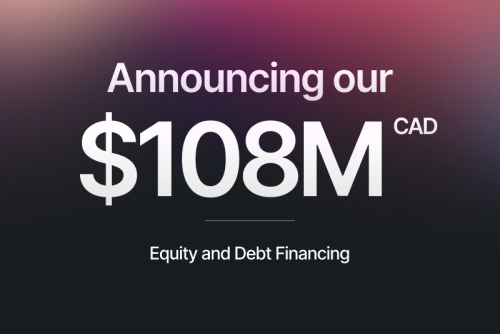
Image: Keep Announces 108M funding
On May 20, 2025, Toronto-based fintech Keep revealed that it raised C$108 million in new funding to reinvent small business finance in Canada. The funding round includes C$33 million in equity financing led by Tribe Capital, plus C$71 million credit facility from Treville Capital, and C$4 million in venture debt from Silicon Valley Bank.
Founded by Oliver Takach and Helson Taveras, Keep is specifically designed for Canadian small and medium sized businesses (SMEs or SMBs) and provides an integrated financial suite of tools, such as automated expense management, a rewards-based business credit card, multi-currency accounts, and flexible global bill payments.
Oliver Takach, CEO Keep said in a CEO letter:
Keep was born from that frustration. I went into the branch. Twice. I signed personal guarantees. I paid fees no one could explain. And in the end, they still wouldn’t give me a business credit card.”
Canada’s small business sector is the backbone of the economy, contributing more than 40% of GDP and accounts for over 98 percent of all employer businesses. Keep estimates that the small business banking market in Canada is worth $500B, which is dominated by legacy institutions who continue to rely on paper-based underwriting, limited tools and integrations, and haven't adapted products to align with modern workflows or regulatory requirements.
Yet, many entrepreneurs remain locked out of fast, reliable credit and banking tools, which is what Keep's platform is designed to solve. Since launching in 2022, Keep has on-boarded over 3,000 SMBs across a range of industries, and has surpassed C$20 million in annualized revenue. The company also reports a 300% net dollar retention rate, reflecting strong adoption and satisfaction.
Glen Napier, CEO of James G Armour & Co.:
"With Keep, we've cut our financial admin time by 80%. The integration of their products was seamless and helped us double our revenue in just six months. What used to take weeks with traditional banks now happens instantly."
Keep operates in a competitive domestic market that includes startups like Float, Loop, and Venn, aiming to differentiate itself by providing an all-in-one model that integrates core financial tools rather than offering individual product solutions.
Investor confidence seems to agree with the strategy. The latest found has attracted both returning and new backers including Rebel Fund, Liquid2 Ventures, Cambrian, and Assurant Ventures, as well as individual investors from Stripe, Coinbase, Robinhood, Plaid, and Chime.
Takach said, "By 2027, we aim to serve 100,000 small businesses across Canada and help them save over a quarter billion dollars in fees annually.”
Backed by global investors, the Canadian fintech industry keeps getting stronger. Keep's emergence from stealth to grow founder-led financial infrastructure to support how entrepreneurs actually operate will help close gaps left by traditional banks. Domestic competition is heating up.
The National Crowdfunding & Fintech Association (NCFA Canada) is a financial innovation ecosystem that provides education, market intelligence, industry stewardship, networking and funding opportunities and services to thousands of community members and works closely with industry, government, partners and affiliates to create a vibrant and innovative fintech and funding industry in Canada. Decentralized and distributed, NCFA is engaged with global stakeholders and helps incubate projects and investment in fintech, alternative finance, crowdfunding, peer-to-peer finance, payments, digital assets and tokens, artificial intelligence, blockchain, cryptocurrency, regtech, and insurtech sectors. Join Canada's Fintech & Funding Community today FREE! Or become a contributing member and get perks. For more information, please visit: www.ncfacanada.org
| | |
|---|---|---|
| | |
Venture Capital Fund | May 21, 2025

Image: Velocity Fund II, General Partners, Akash Vaswani and Ross Robinson
On May 13, 2025, Velocity Fund II (VFII), an early-stage venture capital fund that spawned from the University of Waterloo's globally renowned Velocity incubator, announced its first close at US$10 million in committed capital. This development comes at a time when Canada's startup landscape's early stage funding is showing signs of strain.
VFII is managed independently by general partners Akash Vaswani and Ross Robinson, targeting investments in deep tech, health tech, and software ventures. The fund is backed by a strong group of limited partners, including Graphite Ventures, the AngelList Systematic Fund of Funds, the University of Waterloo’s endowment, and several wealthy alumni.
The University of Waterloo previously made history by becoming the first Canadian post-secondary institution to invest from its endowment into an independent VC fund. VFII has since evolved from that initial concept into a fully operational fund, already investing in five early-stage companies, such as Voltra Energy and Handshake.
According to the Canadian Venture Capital and Private Equity Association, Q1 2025 had just $1.26 billion invested across 116 deals, the lowest deal count since 2020. Pre-seed investments plummeted to $12 million, and seed-stage deal counts are at a five-year low.
Kim Furlong, CEO CVCA
"These early investments are the pipeline for future growth. A weakening at the foundation threatens the innovation economy we’ve worked hard to build."
VFII aims to be the first investor in new startups and to offer more than just money. The fund helps founders by connecting them with mentors, partners, and other resources in the Velocity community. This is especially important now, when many investors are pulling back from early-stage companies.
The VFII fund's approach spotlights a new model where instead of relying only on private investors, universities and public institutions are starting to play a bigger role. While the University of Waterloo provides funding from its endowment (the endowment in total is approx half a billion in 2023/24), the fund is run independently by experienced venture partners. Further, many of the investors into VFII are wealthy alumni wanting to give back. They are committed and aligned backers and want to help Canada's startup ecosystem grow over the long term, event when market conditions get rough. VFII is a great example of how institutions can step in to support innovation and help promising startups grow.
Another example of a VC fund that spun out of a public institution's role is Framework Venture Partners, which was spun out of BDC Capital's IT Venture Fund in 2018. Co-founded by Peter Misek and Andrew Lugsdin (both former partners at BDC), Misek in an interview with Betakit said, "The deal was, if we hit certain benchmarks, we could spin out. We hit those benchmarks far faster than they thought; we ended up hitting them in less than three years, and in 2018, Framework was born.”
New early stage funding models are more important than ever, as deal funding is harder to secure from traditional venture capital firms who are growing more selective and risk adverse. Canadian institutions attract a large amount of domestic investment capital, and if other institutions follow Waterloo's lead, it could help restore confidence in the startup pipeline and strengthen the country's longer term innovation capacity.
The National Crowdfunding & Fintech Association (NCFA Canada) is a financial innovation ecosystem that provides education, market intelligence, industry stewardship, networking and funding opportunities and services to thousands of community members and works closely with industry, government, partners and affiliates to create a vibrant and innovative fintech and funding industry in Canada. Decentralized and distributed, NCFA is engaged with global stakeholders and helps incubate projects and investment in fintech, alternative finance, crowdfunding, peer-to-peer finance, payments, digital assets and tokens, artificial intelligence, blockchain, cryptocurrency, regtech, and insurtech sectors. Join Canada's Fintech & Funding Community today FREE! Or become a contributing member and get perks. For more information, please visit: www.ncfacanada.org
| | |
|---|---|---|
| | |


August 26th, 2025

January 4th, 2024

June 1st, 2021

September 9th, 2020

July 9th, 2018

January 3rd, 2018

September 25th, 2017

June 20th, 2017

May 10th, 2017

December 14th, 2016