




Karsten Wenzlaff, Advisor
August 26th, 2025
Karsten Wenzlaff is a Crowdfunding and Fintech Expert from Germany. He is Secretary-General of Digit[...]


Apr 23, 2026 | NCFA Fintech Market Activity | Artificial Intelligence And Data, Capital Markets And Funding

On April 20, 2026, AVAX One announced plans for an initial 10 MW Tier 3 AI and HPC powered land project in Alberta. The site's designed for at least 10 MW of total capacity, including 7 MW of mission critical power, expected to be ready for client deployment in Q1 2027. The project is estimated to cost between $30-35 million.
A 10 MW build is large enough to support a real first deployment for AI and high performance computing workloads. AVAX One also describes the design as scalable in 10 MW increments, which makes this first project a template for future buildout rather than a one-off asset.
Under the planned definitive agreement, BlueFlare Energy Solutions will act as development manager and owner’s representative, handling site identification, engineering, permitting, procurement, and construction. BlueFlare brings the energy and project execution layer. AVAX One brings the public market vehicle and the capital formation angle.
The site will generate its own power instead of relying fully on the grid. It will mainly use natural gas, including gas that would otherwise be wasted, with batteries and backup generators to keep it running without interruption. That approach avoids delays and limits from the main power grid, which is slowing down new AI data center projects.
This is the core strategy. Secure low cost, reliable power first, then contract the powered land to compute customers. The release points to a long term infrastructure agreement with a qualified edge compute client once the site is completed. AVAX One isn’t trying to run massive cloud platforms. It’s focusing on providing something those platforms need most right now: reliable power that’s ready to use for data centers.
Alberta offers a practical advantage with low cost natural gas, brownfield energy assets, and a permitting environment that can support faster deployment than heavily constrained grid markets. That reduces time to market as well as operating cost for AI and High Performance Computing (HPC) infrastructure.
The project also fits the company’s current operating base. Earlier in April, AVAX One reported preliminary Q1 2026 revenue update of about $2.4 million, more than doubling sequentially, while continuing to expand digital asset mining operations. It also acquired 220 Bitmain S21 Pro miners, increasing total hash rate capacity by about 33% from roughly 150 PH/s to over 200 PH/s. That's relevant because mining and AI infrastructure rely on the same core input: power.
Mining can produce near term cash flow from existing energy infrastructure. AI and HPC can support longer duration contracts and higher value workloads once powered land is ready. AVAX One is cleverly bridging one model to finance the next.
Power is becoming the gatekeeper for AI infrastructure. Companies that secure it early can deploy faster and lock in compute customers before capacity tightens.
 The National Crowdfunding & Fintech Association (NCFA Canada) is a financial innovation ecosystem that provides education, market intelligence, industry stewardship, networking and funding opportunities and services to thousands of community members and works closely with industry, government, partners and affiliates to create a vibrant and innovative fintech and funding industry in Canada. Decentralized and distributed, NCFA is engaged with global stakeholders and helps incubate projects and investment in fintech, alternative finance, crowdfunding, peer-to-peer finance, payments, digital assets and tokens, artificial intelligence, blockchain, cryptocurrency, regtech, and insurtech sectors. Join Canada's Fintech & Funding Community today FREE! Or become a contributing member and get perks. For more information, please visit: www.ncfacanada.org
 |  |  |
|---|---|---|
 |  |  |
April 22, 2026

Canada's online casino sector enters 2026 as one of the most data-rich verticals in the country's digital economy. Ontario's private-operator framework, open since April 2022, has pushed annual online wagering past CAD 82 billion, and Alberta's own private-operator market went live in mid-2025 with a similar structure. That volume, combined with the card-level telemetry operators already collect, has turned Canadian online casinos into an obvious testbed for the same AI and personalisation stack that Canadian fintech has been building on the wealth and payments side for the past five years.
The practical effect is visible in how bonuses are priced, how promo codes are matched to players, and how casino brands like LeoVegas Canada, Casumo Canada, BetVictor Canada, Spin Casino, and Jackpot City now decide what welcome offer a new sign-up sees on their first visit. What used to be a flat welcome package pinned to a homepage banner has turned into a dynamic offer grid, served in real time and recalculated every few hours. For a fintech audience, the interesting part is not the marketing itself but the underlying bonus-matching engines, player-lifetime-value models, and payment-rail integrations with Interac e-Transfer, Trustly Canada, iDebit, and Instadebit that quietly power the whole experience.
Canadian players who want to compare the current welcome packages side by side typically start with an independent directory that aggregates the active casino promo codes in Canada across licensed operators, because those listings surface the wagering requirement, game weighting, expiry window, and maximum cashout on a single screen instead of forcing a tab-by-tab review of each casino's terms page. This kind of structured comparison data is also what AI matching engines on the operator side ingest to benchmark their own promo pricing.
Three market structures now coexist in Canada. Ontario runs a private-operator model where licensed brands such as 888casino Canada, Betway Canada, BetVictor Canada, LeoVegas Canada, Casumo Canada, and PokerStars Canada compete directly for the same players. Alberta replicated that framework in mid-2025, bringing a second province into private-operator territory. British Columbia and Quebec remain on provincial-lottery-only models through PlayNow and Loto-Québec, which means their promo code economics are set centrally rather than by a competitive operator cohort. The Canadian Criminal Code remains the underlying legal framework, and Bill C-218 opened single-event sports betting across the country in 2021, which is what allowed the Ontario and Alberta casino frameworks to attach parlay and live-bet products to their core slots and table offerings.
Market sizing estimates vary, but the consensus range for Canadian online casino gross gaming revenue in 2025 is roughly CAD 2 billion, with Ontario contributing the majority and Alberta ramping from a standing start. That revenue is spread across more than forty active operator brands in Ontario alone, which is why differentiation has moved away from headline bonus size and toward how well an operator's personalisation stack matches the right promo code, game recommendation, and deposit path to the right player at the right moment. Betano Canada and Pinnacle have also expanded their Canadian casino and sportsbook cross-sell in parallel, which has pulled more recreational players into the online casino funnel and given operator analytics teams a broader behavioural sample to train bonus models on. The practical upshot is that a Canadian casino player in 2026 sees a promo code grid that has been silently AB-tested against thousands of similar players in the same cohort.
A Canadian casino promo code is a short alphanumeric string that maps to a specific bonus configuration inside the operator's offer management system. The headline number on a landing page is only the first of roughly seven parameters a player actually needs to read. The real economic value of a promo code is determined by wagering requirement, game weighting, minimum-odds restrictions on any sportsbook portion, expiry window, maximum cashout, maximum bet per spin while the bonus is active, and whether the bonus is sticky or non-sticky relative to the deposit.
Independent aggregators that publish a current list of casino promo codes in Canada normalise all seven parameters across operators so the comparison is apples-to-apples. That matters because a 200 percent match with a 50x wagering requirement on slots-only is almost always worse in expected value than a 100 percent match with 25x wagering and a broader game mix, even though the first number looks larger. The aggregator model is also why operators increasingly price their bonuses against competitive benchmarks rather than against last year's internal calendar.
Promo Code Structure Comparison Across Canadian Operators
| Operator | Welcome Offer Type | Typical Wagering | Expiry | Max Cashout |
| LeoVegas Canada | Match + free spins | 35x bonus | 14 days | CAD 5,000 |
| Casumo Canada | Match + spins tiered | 30x bonus | 30 days | CAD 2,500 |
| BetVictor Canada | Match, sticky | 40x bonus | 7 days | CAD 1,000 |
| Spin Casino | Staggered match over deposits | 50x bonus | 7 days | CAD 10,000 |
| Jackpot City | Match on first deposit | 50x bonus | 7 days | CAD 7,500 |
| 888casino Canada | Match + no-deposit spins | 30x bonus | 14 days | CAD 2,000 |
The shift from static welcome packages to dynamic offers runs on two model families. The first is the bonus-matching engine, which takes a prospect's acquisition channel, device, deposit method, and early-session behaviour, and returns the specific promo code variant that maximises conversion to a first deposit without eroding contribution margin. The second is a player-lifetime-value prediction model that uses the first seven to fourteen days of activity to estimate a twelve-month net revenue figure, which then feeds into reload-bonus pricing for that specific player.
Canadian operators building these stacks rely on many of the same research groups that serve the country's wealthtech sector. The Vector Institute in Toronto, Mila in Montreal, and Amii in Edmonton all produce graduates who move between fintech and iGaming roles, and the Pan-Canadian AI Strategy has funded infrastructure that both sides use. For a closer look at how the same personalisation techniques travel across Canadian financial services, NCFA coverage of AI-powered personalisation in financial services walks through how AI-driven customer profiling has matured on the banking and payments side, and the parallels to how a casino's offer engine behaves are direct.
Promo code mechanics only work if the money moves fast enough to support them. In Canada, Interac e-Transfer is the dominant deposit rail for online casinos, with Instadebit, iDebit, Trustly Canada, Visa Direct, and PaySafe vouchers filling the rest of the mix. Trustly Canada's Pay N Play integration has been particularly consequential because it folds identity verification and account funding into a single flow, which cuts the time between a promo code redemption and an active bonus balance to seconds.
AI is now layered onto the payment rail itself. Operators use fraud-scoring models at the deposit step to separate genuine first-time players from bonus abusers who cycle through cards and e-wallets to farm welcome offers. The same models flag suspicious withdrawal patterns on the way out, which keeps the house edge on promo code economics intact and protects the operator's ability to keep offering aggressive welcome packages. Payment speed also influences which promo code a player actually claims: a 48-hour payout rail cannot realistically support a low-wagering no-deposit bonus the way a near-instant rail can.
Payment Rails Used by Canadian Online Casinos
| Payment Rail | Typical Deposit Speed | Typical Withdrawal Speed | Common Minimum |
| Interac e-Transfer | Near-instant | 4 to 24 hours | CAD 10 |
| Trustly Canada (Pay N Play) | Near-instant | Same-day possible | CAD 20 |
| Instadebit | Near-instant | 1 to 3 business days | CAD 10 |
| iDebit | Near-instant | 1 to 3 business days | CAD 10 |
| Visa Direct | Near-instant | 1 to 3 business days | CAD 10 |
| PaySafe voucher | Near-instant | Withdrawals routed elsewhere | CAD 10 |
The same behavioural data that powers bonus targeting also powers the responsible-play side of the stack. Canadian operators now deploy intervention models that flag rapid deposit escalation, loss-chasing sequences, overnight-session clustering, and sudden increases in average bet size. When the model's confidence crosses a threshold, the player sees a soft intervention such as a session-time prompt, a temporary deposit-limit suggestion, or a cooldown. The better implementations combine this with a visible self-exclusion path and an option to route the player to not-for-profit support services.
The interesting design question is how aggressively a promo code engine should be allowed to retarget a player who has just been flagged by the responsible-play model. Mature Canadian operators suppress bonus outreach entirely for flagged players for a defined cooldown, which means the personalisation stack has to accept constraints from the safeguarding stack. That alignment is what separates a credible 2026 operator from a legacy brand that bolts AI onto the marketing side without touching the player-protection layer. Canadian self-exclusion infrastructure such as Ontario's centralised self-exclusion registry and the provincial options available elsewhere give operators a clean technical handoff, but the editorial question of when to pause a promo code feed and when to resume one remains a live product decision. The operators who get that decision right tend to be the ones whose responsible-play and marketing teams share a single dashboard rather than two competing ones.
Year three of Ontario's private-operator market has settled into a clear pattern. Headline bonus inflation has slowed because the top operators all benchmark each other's promo codes weekly, which compresses the spread. Differentiation has shifted to game mix, exclusive studio content, loyalty program design, and payout speed. Smaller operators compete on tighter niches such as live-dealer-first, crash-game-first, or sportsbook-forward cross-sell into casino. Alberta's first year has mirrored Ontario's first year almost exactly, with the same operators leading market entry and the same promo code archetypes being tested.
For a detailed trade-press view of how competition has evolved since launch, BetaKit's one-year review of Ontario's iGaming market tracks the operator-by-operator dynamics and the strategic moves brands have made as the market has matured. The piece also covers how acquisition costs have climbed as the top of the funnel has thickened, which is another reason operators have leaned harder on AI-driven personalisation: when paid acquisition gets more expensive, the economic return on better onsite matching goes up in lockstep.
Product roadmaps at Canadian online casinos in 2026 are converging on a shared set of bets. Bonus-matching engines are moving from rule-based to model-based, with reinforcement learning being tested by several of the larger brands to optimise long-run player value rather than next-deposit conversion. Loyalty programs are being redesigned so that tier progression reflects sustained healthy play rather than raw volume, which is partly a response to public scrutiny of high-roller economics. Affiliate and aggregator relationships are being renegotiated as attribution models get smarter at identifying which promo code exposures actually drive incremental first-time deposits.
The cross-pollination with Canadian fintech is the quiet through-line. The same engineers who built real-time fraud scoring for Interac and the same research groups that trained the underlying models are now shipping features into Canadian casino platforms. For fintech founders watching the space, iGaming is a useful mirror for what happens when a regulated consumer market gets large enough to justify a full personalisation stack, what the unit economics look like once that stack is live, and what the operational constraints feel like when the safeguarding layer and the growth layer sit on the same data.
The National Crowdfunding & Fintech Association (NCFA Canada) is a financial innovation ecosystem that provides education, market intelligence, industry stewardship, networking and funding opportunities and services to thousands of community members and works closely with industry, government, partners and affiliates to create a vibrant and innovative fintech and funding industry in Canada. Decentralized and distributed, NCFA is engaged with global stakeholders and helps incubate projects and investment in fintech, alternative finance, crowdfunding, peer-to-peer finance, payments, digital assets and tokens, artificial intelligence, blockchain, cryptocurrency, regtech, and insurtech sectors. Join Canada's Fintech & Funding Community today FREE! Or become a contributing member and get perks. For more information, please visit: www.ncfacanada.org
| | |
|---|---|---|
| | |
Apr 22, 2026 | NCFA Fintech Market Activity | Artificial Intelligence And Data, Capital Markets And Funding
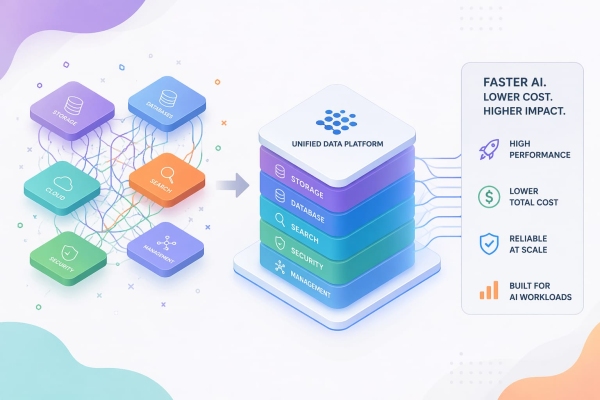
On April 22, 2026, VAST Data closed $1 billion Series F round in primary and secondary capital at a $30 billion valuation. Drive Capital and Access Industries led the round, with Fidelity, NEA, and Nvidia also participating. The valuation has more than tripled from $9.1 billion in 2023.
VAST sells the data infrastructure empowering AI systems. Its customers include xAI, CoreWeave, and the U.S. Air Force. In November, the company signed a $1.17 billion agreement with CoreWeave. Equity research by Sacra puts Vast Data at $200 million in annual recurring revenue with positive free cash flow as of January 2025. That gives the funding round a clearer base in commercial demand.
VAST is building a unified data platform rather than a single product. Its core platform architecture combines storage, database, and global data management into one stack:
The difference shows up in how the platform is positioned for AI workloads. VAST combines storage and database functions into one system and claims performance gains tied to that design, including up to 11x faster vector search at 91% lower cost, alongside six nines availability (99.9999%) and about 60% lower total cost of ownership, as outlined on its core platform page. These are vendor claims, but they reflect how the company is positioning itself in large scale AI deployments.
The competitive landscape spans multiple layers:
VAST is positioning itself across boundaries by collapsing multiple data layers into one system. That architecture targets a real constraint. AI systems don’t stall only because of compute limits. They stall when data throughput and pipelines slow down, when storage tiers introduce latency, or when separate systems create operational overhead. Adding more GPUs can increase pressure on that layer instead of fixing it.
The funding structure reinforces the point. Primary capital brings in new money to help the company grow and work more closely with large customers. Secondary capital lets early investors and employees sell some of their shares and take cash out without the company going public. This mix is common in large late stage rounds where demand is strong and companies stay private longer.
For smaller AI finance companies, the takeaway is practical. The infrastructure layer is being built by a small group of well funded players. There is no advantage in trying to replicate it. Their advantage comes from what they build on top. It’s about having unique data, strong products that solve real workflows, and access to customers. Those are the things that still decide who wins.
VAST is successfully raising money because it brings together parts of the AI system that companies usually have to piece together themselves. When computing is expensive and data slows things down, the platform that keeps data fast and accessible becomes part of the core infrastructure.
The National Crowdfunding & Fintech Association (NCFA Canada) is a financial innovation ecosystem that provides education, market intelligence, industry stewardship, networking and funding opportunities and services to thousands of community members and works closely with industry, government, partners and affiliates to create a vibrant and innovative fintech and funding industry in Canada. Decentralized and distributed, NCFA is engaged with global stakeholders and helps incubate projects and investment in fintech, alternative finance, crowdfunding, peer-to-peer finance, payments, digital assets and tokens, artificial intelligence, blockchain, cryptocurrency, regtech, and insurtech sectors. Join Canada's Fintech & Funding Community today FREE! Or become a contributing member and get perks. For more information, please visit: www.ncfacanada.org
| | |
|---|---|---|
| | |
Apr 21, 2026 | NCFA Fintech Market Activity | Capital Markets And Market Infrastructure, Lending Consumer Credit And BNPL

On April 21, 2026, Neo Financial completed a $150 million inaugural credit card securitization with BMO Capital Markets and SAF Group. It’s Neo’s first institutional capital markets transaction, and it provides the company a new way to fund lending growth beyond equity.
In February, Neo raised $68.5 million to launch its securitization program. Now the structure is live, equity set it up, and securitization is bringing in institutional capital. Neo now serves more than 1 million customers, works with more than 10,000 partners, and has raised more than $650 million since launch.
Jeff Adamson, Co-founder and Chief Commercial Officer, Neo Financial:
“Institutional capital markets evaluate credit quality with complete objectivity. Getting this done at this scale tells us the data is there and is a testament to the approach we've taken. That's the foundation we need to serve a lot more Canadians.”
Securitization converts credit card receivables (money people owe on their credit cards) into securities sold to institutional investors. That upfront capital can then be used to originate more loans. Canadian banks have relied on this model for years. For a fintech, getting the first deal done proves the credit engine can support external funding.
Equity is expensive capital for a lender, while a working securitization program can lower funding costs, expand lending capacity, and reduce reliance on repeated equity raises. Access depends on consistent asset performance.
Nur Khan, Managing Director, SAF Group:
"Our partnership with Neo reflects SAF's commitment to supporting Canada's most ambitious growth stories and highlights the strong demand for a Canadian-based provider of structured credit. We have been extremely impressed by the Neo team and the platform they are building to provide consumers with more accessible financing options across an expanding range of products."
This is a milestone few Canadian fintech lenders reach. Customer growth and funding rounds don't confirm a sustainable lending model at scale. Institutional capital does. If performance holds, this program provides a more stable funding base and sets a benchmark others will watch.
Neo now uses institutional funding as well as equity. The money it can raise depends on how well its loans perform and on market conditions. This helps it grow, but it needs steady results to keep that funding.
The National Crowdfunding & Fintech Association (NCFA Canada) is a financial innovation ecosystem that provides education, market intelligence, industry stewardship, networking and funding opportunities and services to thousands of community members and works closely with industry, government, partners and affiliates to create a vibrant and innovative fintech and funding industry in Canada. Decentralized and distributed, NCFA is engaged with global stakeholders and helps incubate projects and investment in fintech, alternative finance, crowdfunding, peer-to-peer finance, payments, digital assets and tokens, artificial intelligence, blockchain, cryptocurrency, regtech, and insurtech sectors. Join Canada's Fintech & Funding Community today FREE! Or become a contributing member and get perks. For more information, please visit: www.ncfacanada.org
| | |
|---|---|---|
| | |
Apr 21, 2026 | NCFA Insight | Capital Markets And Funding

On December 4, 2025, the European Commission published its market infrastructure reform package, including proposed changes to the DLT Pilot Regime. On March 19, 2026, the European Digital Finance Association (EDFA) sent a formal letter to the European Commission about the DLT Pilot Regime and MiCAR. It is addressed to Commissioner Maria Luís Albuquerque and DG FISMA Director-General John Berrigan.
EDFA writes on behalf of its members and the undersigned companies. The core point is that the pilot works for testing, but it does not work for scale. Firms are already trying to build tokenized issuance, trading, registry, custody, and settlement in Europe. The problem is that the current DLT Pilot rules keep those activities small, separate, and hard to repeat.
The issue is structural. The DLT Pilot allows firms to test tokenized issuance, trading, and settlement in controlled conditions. But it doesn't allow those activities to operate at scale. Issuance happens, but it stays small. Trading exists, but liquidity doesn't build. Infrastructure is in place, but it doesn't connect cleanly to the rest of the market. Until those limits are addressed, tokenized securities remain confined to pilot activity instead of forming a market where deals can regularly happen at meaningful scale.
If Brussels makes these changes, firms can issue larger deals and do it more than once. Tokenized platforms can connect to exchanges, custodians, and settlement systems instead of running separately. Companies already licensed at the national level can keep operating instead of being pushed out. And with clear settlement rules, those deals can actually trade and attract real liquidity.
If Brussels does not act, the likely outcome is also clear. Europe will keep producing tokenized deals as part of the DLT pilot, but the market will remain shallow and less commercially important. Operators will keep building, but they will be outwardly looking at jurisdictions that allow larger, cleaner, and more continuous activity.
The DLT Pilot was designed for controlled testing, and has done that. The question now is whether the framework evolves to support real market activity. If it doesn’t, tokenized securities will stay limited to small, controlled use cases. If it does, they can develop into a market with real issuance, trading, and liquidity.
The National Crowdfunding & Fintech Association (NCFA Canada) is a financial innovation ecosystem that provides education, market intelligence, industry stewardship, networking and funding opportunities and services to thousands of community members and works closely with industry, government, partners and affiliates to create a vibrant and innovative fintech and funding industry in Canada. Decentralized and distributed, NCFA is engaged with global stakeholders and helps incubate projects and investment in fintech, alternative finance, crowdfunding, peer-to-peer finance, payments, digital assets and tokens, artificial intelligence, blockchain, cryptocurrency, regtech, and insurtech sectors. Join Canada's Fintech & Funding Community today FREE! Or become a contributing member and get perks. For more information, please visit: www.ncfacanada.org
| | |
|---|---|---|
| | |
April 21, 2026 | NCFA Insight | Digital Assets Blockchain And Tokenization, Regulation And Policy

On April 21, 2026, SEC Chair Paul Atkins delivered a keynote at the Economic Club of Washington to align the agency’s crypto and capital markets agenda, calling it Advance, Clarify, Transform. The SEC is close to an innovation exemption for tokenized securities, but that exemption is not yet in the market’s hands.
That speech sets a clear claim. From January to March 2026, the SEC already put key pieces in place. It clarified how tokenized securities fit within existing law. It formalized coordination with the CFTC. It introduced a working taxonomy for crypto assets. The structure is now visible. What still matters is whether firms can use it.
In these remarks, Advance updates SEC rules for markets moving onchain. Clarify defines asset categories and jurisdictional boundaries so firms can assess compliance before launch. Transform removes constraints that limit capital formation and restrict compliant experimentation with tokenized securities.
The groundwork started in January. SEC staff outlined how tokenized securities fit within existing securities law, including issuer backed models, custodial structures, and tokenized derivatives. That same direction appears across onshore market structure discussions, where tokenized collateral, perpetuals, and retail trading models point toward a rulebook that is becoming easier to work with.
By February, the structure became clearer. Token classification and coordinated oversight came together, alongside a proposed innovation exemption for onchain activity that had not yet been published. This direction also appears across IPO burden and crypto rules, where token taxonomy and capital formation reforms begin to align.
Then in March, delivery became harder to ignore. On March 11, the SEC and CFTC formalized coordination through a memorandum of understanding. Definitions aligned. Jurisdiction became clearer. Data sharing opened up. As a result, firms operating across both regimes face less duplication and fewer conflicting requirements.
Six days later, on March 17, the SEC published its crypto asset interpretation. The release laid out a taxonomy across digital commodities, stablecoins, and digital securities. It also addressed when an asset could fall in or out of an investment contract.
The April 21 speech pulled these steps into a sequence. Define the asset. Clarify the perimeter. Align regulators. Then open a controlled lane for compliant experimentation.
One gap now matters more than the rest. The market still doesn't have a working framework for how tokenized securities can trade onchain in a compliant way.
Atkins spotlighted this issue in his recent speech and pointed to an innovation exemption that is close to release, but not yet ready for the public. Until it is, companies still lack the full mechanics needed to move from design to execution.
The taxonomy helps classify assets. Coordination reduces regulatory overlap. The March interpretation narrows legal uncertainty. Even so, firms still don’t have a clear way to bring tokenized securities to market. What remains outstatnding is whether issuers and platforms will get a clear, testable path to launch tokenized securities onchain.
This is where the competitive dynamic shows up. If the United States combines clear classification, coordinated oversight, and a usable exemption, it becomes easier for firms to decide where to build first. That affects trading infrastructure, custody rails, issuance platforms, and tokenized asset markets.
In April developments, staff guidance clarified when certain crypto interfaces did not require broker dealer registration under defined conditions. That gave firms more clarity on licensing exposure, product design, and how to bring products to market.
In Canada, regulators are now studying tokenized markets through a 2026 CSA initiative called Project Tokenization, but a unified framework for issuing or trading tokenized securities has not yet been defined.
The SEC's made the rulebook clearer. Now it has to make it usable once the innovation exemption is delivered.
The National Crowdfunding & Fintech Association (NCFA Canada) is a financial innovation ecosystem that provides education, market intelligence, industry stewardship, networking and funding opportunities and services to thousands of community members and works closely with industry, government, partners and affiliates to create a vibrant and innovative fintech and funding industry in Canada. Decentralized and distributed, NCFA is engaged with global stakeholders and helps incubate projects and investment in fintech, alternative finance, crowdfunding, peer-to-peer finance, payments, digital assets and tokens, artificial intelligence, blockchain, cryptocurrency, regtech, and insurtech sectors. Join Canada's Fintech & Funding Community today FREE! Or become a contributing member and get perks. For more information, please visit: www.ncfacanada.org
| | |
|---|---|---|
| | |
Apr 17, 2026 | NCFA Fintech Market Activity | Capital Markets And Market Infrastructure

On April 15, 2026, Wealthsimple confirmed integration with X Smart Cashtags. Canadian users can tap a ticker in X and go straight to that security’s detail page in Wealthsimple. Signed-in users land on a screen ready to review or trade. In other markets, Cashtags show real firm data and discussion, but don't yet connect directly into a brokerage.
X now keeps price charts, asset context, and related posts inside the feed. Users can check the setup without leaving the platform. Wealthsimple captures the order once the user decides to trade. X product leadership also showed the flow publicly in this product demo on X.
𝕏 has always been the best source of financial news for traders and investors. Billions of dollars are allocated every day based on what people read on Timeline.
Today we're launching our new Cashtags feature in the US and Canada on iPhone, bringing real-time financial data to… pic.twitter.com/c8s7X9gHTO
— Nikita Bier (@nikitabier) April 14, 2026
Social trading platforms have linked discussion and execution for years. What’s different here is the handoff. X holds the user inside the conversation, shows live market context, and then routes directly to a brokerage when intent is already formed.
That changes where brokerages compete. They no longer control discovery from start to finish. X controls attention and early decision-making. Wealthsimple captures execution after that point.
It's an important evolution. If discovery keeps integrating onto social platforms, brokerages will rely less on brand-led acquisition and more on conversion at the moment of trade. Speed, pricing, reliability, and trust start to matter even more once the user arrives ready to act.
Wealthsimple gains distribution from a high-attention platform where market conversations already happen. It also depends on X for that flow. The partnership trade-off will become more important when competition ramps up as other platforms build similar yet differentiated models that turn brokerage apps into downstream execution layers.
X has been heading in this direction for years, and has steadily added financial data, market context, and navigation into one surface. Smart Cashtags push conversations about markets further to where trades begin.
Interestingly, as more brokers plug into the same surface. Feeds may become more responsive to user behaviour. If that happens, X doesn't need to become a regulated brokerage, because it only needs to control the point where intent forms and connects.
Canadian regulators are already addressing this type of activity. CSA and CIRO guidance makes it clear that securities laws apply when online content influences investment decisions, including cases where users are directed toward trading platforms.
The model itself is allowed, but closer links between content and execution are likely to draw more scrutiny as expectations around disclosure and influence continue to tighten.
In this case, a post, a cashtag, and a direct path to a trade sit in the same flow. That makes it harder to separate general information from something that could be viewed as influencing a transaction.
Responsibility isn't just with creators alone. Platforms that present the content and connect users, along with the brokerages that execute the trade, may face closer scrutiny as these connections become more direct.
Social platforms are starting to control where intent forms, while brokerages compete to capture execution once that intent is already there.
The National Crowdfunding & Fintech Association (NCFA Canada) is a financial innovation ecosystem that provides education, market intelligence, industry stewardship, networking and funding opportunities and services to thousands of community members and works closely with industry, government, partners and affiliates to create a vibrant and innovative fintech and funding industry in Canada. Decentralized and distributed, NCFA is engaged with global stakeholders and helps incubate projects and investment in fintech, alternative finance, crowdfunding, peer-to-peer finance, payments, digital assets and tokens, artificial intelligence, blockchain, cryptocurrency, regtech, and insurtech sectors. Join Canada's Fintech & Funding Community today FREE! Or become a contributing member and get perks. For more information, please visit: www.ncfacanada.org
| | |
|---|---|---|
| | |


August 26th, 2025

January 4th, 2024

June 1st, 2021

September 9th, 2020

July 9th, 2018

January 3rd, 2018

September 25th, 2017

June 20th, 2017

May 10th, 2017

December 14th, 2016