



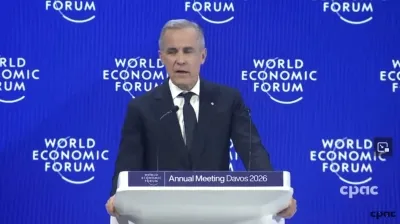

Karsten Wenzlaff, Advisor
August 26th, 2025
Karsten Wenzlaff is a Crowdfunding and Fintech Expert from Germany. He is Secretary-General of Digit[...]


Equity Crowdfunding | March 20, 2025

VEGAIN competitive matrix (VEGAIN/Frontfundr campaign)
On March 19 2025, VEGAIN, an independent Canadian sports nutrition brand, announced an expanded partnership with Raw Elements for nationwide distribution and is inviting investors to be part of its growth through a VEGAIN equity crowdfunding campaign hosted on the licensed platform, Frontfundr. This article is part of a new series at NCFA that spotlights select Canadian companies launching online investment campaigns, in support of Canadian innovation and competitiveness.
VEGAIN’s latest breakthrough is Clear Protein, a plant-based protein powder that fully dissolves in water, unlike traditional plant proteins that can be gritty. So the result is a smooth, refreshing drink that feels more like a light beverage than a heavy shake. This patent-pending innovation is set to change the way people think about plant-based sports nutrition, offering fitness and health enthusiasts a cleaner and more effective way to fuel their workouts without sacrificing taste or texture.
John Smith, CEO of VEGAIN:
"We’ve developed a game-changing protein solution that sets us apart in the market. Clear Protein provides the clean, high-quality nutrition that consumers want, in a form that’s convenient and enjoyable."
VEGAIN has secured a national distribution agreement with Raw Elements, one of Canada's leading national health distributors and key player in the wellness and health food sector. The partnership significantly expands VEGAIN's reach, making its products more widely available across Canada.
"Our collaboration with Raw Elements allows us to connect with more customers who seek clean, high-quality nutrition. This is an exciting time as we continue to scale and innovate."
To fuel its next stage of growth, VEGAIN has launched an equity crowdfunding campaign on FrontFundr and is inviting its community of supporters, customers, and investors to share in its success while helping accelerate its mission of making high quality plant-based protein more accessible. The capital raised will support expanded production capacity, increased marketing efforts, and the development of new plant-based products to meet the rising demand for sustainable nutrition.
With a coast to coast distribution deal secured, and innovation driving its growth, VEGAIN is scaling up to reach more customers across Canada. Learn more at VEGAIN's campaign page here.
 The National Crowdfunding & Fintech Association (NCFA Canada) is a financial innovation ecosystem that provides education, market intelligence, industry stewardship, networking and funding opportunities and services to thousands of community members and works closely with industry, government, partners and affiliates to create a vibrant and innovative fintech and funding industry in Canada. Decentralized and distributed, NCFA is engaged with global stakeholders and helps incubate projects and investment in fintech, alternative finance, crowdfunding, peer-to-peer finance, payments, digital assets and tokens, artificial intelligence, blockchain, cryptocurrency, regtech, and insurtech sectors. Join Canada's Fintech & Funding Community today FREE! Or become a contributing member and get perks. For more information, please visit: www.ncfacanada.org
 |  |  |
|---|---|---|
 |  |  |
Innovation | March 5, 2025

Image: Freepik
The impetus for this article is a recent interview by the Toronto Star with EQ Bank's CEO Andrew Moor. While everyone is busy dealing with the impact and new realities of North American's tariff and trade war, the primary messages in interviews like these cannot be lost, especially during times of economic crisis where Canada needs to be resilient and more competitive.
So what's the problem? Well to restate what's been stated hundreds, if not thousands, of times before, Canada’s financial system always seems to move slower than others, not because Canadians aren't innovative, but because there’s no political will to support real competition.
After being involved with fintech for over a decade, the above message always seems to reappear, either from a new fintech or investor group or as a result of another crisis or need. The harsh reality is that NCFA and fintech leaders across the country have consistently been pushing for clear, modern innovations and rules that encourage growth and competition in Canada's financial services sector but there are always delays, weak reforms, and policies that protect the big banks at the expense of progress and innovation. Open banking and payments modernization are examples of the day of the real problem. Canada drags its feet on implementing fintech innovations that would benefit consumers and businesses alike. The result is fewer opportunities, slower economic growth, and a financial system that remains behind its peers.
The argument that Canada is just slow to act on policy decisions isn’t entirely true. When the U.S. proposed and then implemented economically punishing tariffs on most Canadian imports into America, the Canadian government at all levels acted swiftly, implementing its own retaliatory countermeasures in a matter of weeks. Another example is when the Covid-19 pandemic hit, the government launched support programs at an unprecedented pace (even relative to most of its peers).
So why does fintech reform keep getting delayed? We can only surmise after so many years that the slow pace of fintech reform is about whose interests are being protected, not about government inefficiency (which is also often cited).
Andrew Moor, CEO EQ Bank:
"Prudence in banking is always good, but since 2007 we’ve only cemented the position of the largest banks further. We’ve been talking about open banking in Canada for six or seven years and we seem to be no closer to launching it."
Moor's quote stresses that while stability is important, Canada has gone too far in protecting incumbents instead of encouraging competition. The Big Five banks control over 90% of the market, which leaves consumers with little reason or ability to switch. Other countries have moved forward with regulatory changes but Canada remains paralyzed in research or consultation mode.
Open banking has been discussed in Canada for over six years and the implementation date keeps getting pushed out longer. At the time of publishing, the federal government announced that open banking will be implemented in 2026, yet there's still no commitment to a firm implementation date.
To be clear, many peer countries like the UK and Australia have adopted open banking frameworks years ago (and are moving towards open finance), allowing consumers to share their financial data with fintech companies. The result is lower fees, better banking products (choice) and real competition.
Andrew Moor CEO EQ Bank:
"We built a railway across the country in four years, and this is just a collection of computer codes and regulations, yet I’m still making the same speeches about open banking that I delivered in 2018. It’s ridiculous, and it’s embarrassing."
Moor’s frustration highlights that Canada’s delay is not due to complexity but the government's failure to prioritize fintech reform. The Canadian government should not wait for customers to demand open banking because they don’t know what they’re missing. That’s part of the problem.
This chicken-and-egg problem has locked Canadians into a system where they pay some of the highest banking fees in the world. And who benefits from these delays? The same major banks that dominate Ottawa’s lobbying circles.
It’s not just open banking. Canada’s payments infrastructure has been slow to modernize, leaving businesses and consumers dealing with high costs, delays, and inefficiencies. Even as regulators move forward with aspects of payments modernization, the slow pace of adoption means Canada still lags behind global peers who have been using real-time payment systems for years.
Andrew Moor CEO EQ Bank:
"It’s easier for us to send an EFT to a bank account in India using one of our fintech partners than it is to move money between provinces. Why is that?"
Canada’s Retail Payments Modernization initiative has started allowing companies to sign up for access, but real-time payments which are the foundation of a truly modern financial system are still not fully implemented. The Real-Time Rail (RTR) system was originally scheduled to launch in 2019 but faced multiple delays with Payments Canada most recently announcing that the system's launch would not occur before 2026, with technical builds and testing phases extending through 2025 and into 2026.
Michael Katchen, CEO of Wealthsimple:
"If Canada is serious about innovation, it needs to stop protecting the status quo and start enabling real competition."
Until the government takes control of the agenda and ensures full implementation of real-time payments, innovation in digital transactions and financial infrastructure remains stuck in molasses.
Equity crowdfunding had the potential to revolutionize early-stage investing in Canada, allowing startups to raise money from angel and retail investors instead of relying solely on banks or venture capital. But instead of introducing a single national framework, Canada created a fragmented framework with 3 sets of different rules depending on the province, making compliance costly and impractical. By the time regulators finally harmonized the rules, the damage had been done. The industry never had a real chance to succeed at the same level as its peer countries.
This problem (i.e., lack of national strategy, coordination) also appears as Canada looks for solutions to the U.S. imposed tariffs by seeking to increase trade among provinces but hits roadblocks of unnecessary costs and inefficiencies across multiple industries from finance to agriculture to energy (see: Canada's interprovincial trade barriers).
Andrew Moor CEO EQ Bank:
"Hooking up a bit of innovation would be a good thing, and it wouldn’t endanger the nation. There are so many safeguards in our banking system already."
Moor's quote reflects that competition and innovation won’t destroy Canada’s banking system but rather it will strengthen it. This conservative issue seems to go beyond fintech and is a Canadian problem.
Canada’s economy is under pressure and the tariff and trade war crisis should be used to help Canada push forward on innovation and fintech reforms. Policymakers need to stop consulting and start acting. The financial system should encourage real competition and consumer choice to make markets more resilient, not protect incumbents. Fintech entrepreneurs and investors need transparent progress and cost effective regulations, not shifting policies or a slow no.
Canada needs clear deadlines for open banking, real-time payments, and regulatory harmonization now, not in another three years. If the federal and provincial governments can’t or won’t act, then the private sector must lead. If Canada’s fintech community forms a collaborative working group to build the roadmap, consult where necessary, and take action, progress can happen without waiting for political will to catch up. If the government won’t lead, the private sector must step up or risk wasting yet another economic moment.
The National Crowdfunding & Fintech Association (NCFA Canada) is a financial innovation ecosystem that provides education, market intelligence, industry stewardship, networking and funding opportunities and services to thousands of community members and works closely with industry, government, partners and affiliates to create a vibrant and innovative fintech and funding industry in Canada. Decentralized and distributed, NCFA is engaged with global stakeholders and helps incubate projects and investment in fintech, alternative finance, crowdfunding, peer-to-peer finance, payments, digital assets and tokens, artificial intelligence, blockchain, cryptocurrency, regtech, and insurtech sectors. Join Canada's Fintech & Funding Community today FREE! Or become a contributing member and get perks. For more information, please visit: www.ncfacanada.org
| | |
|---|---|---|
| | |
Report | Feb 20, 2025

Every year, Crowdfund Capital Advisors led by Sherwood Neiss, publish their annual report based on investment crowdfunding data captured and analyzed. Their report represents one of the most comprehensive views of crowdfunding markets in the U.S. and includes deal activity, trends, insights and analysis. This article shares a few highlights. Download the free 209 page PDF report for a full review of the 2025 State of Investment Crowdfunding.
Investment or Equity crowdfunding continues to demonstrate that it's a powerful capital raising tool for startups and scale-ups, helping businesses access capital and driving innovation across the country. Over the past decade, it has enabled thousands of companies to raise capital outside traditional financing channels, offering companies choice.
As of the end of 2024, investment crowdfunding platforms collectively raised over $2.8 billion since inception, funding 7,894 issuers across 2,234 cities. This movement is not just about raising capital—it has created 437,000+ jobs and injected $9.5 billion annually into local economies. Since the launch of equity crowdfunding in 2016, the numbers clearly demonstrate impact and growth, with more upside to come:
The industry has seen rapid growth, maintaining a compounded annual growth rate (CAGR) of 32.5%. It took five years to reach the first billion dollars in investments but the second billion was raised in just 23 months.
Investment crowdfunding markets are still competitive but a few platforms continue to lead in total capital raised (see ranking in table below)
| Rank | Platform | Offerings | Capital Raised | Investors |
|---|---|---|---|---|
| 1 | Wefunder | 276 | $268.5M | 106.4K |
| 2 | StartEngine | 169 | $83.8M | 50.8K |
| 3 | Dealmaker | 56 | $43.2M | 30.2K |
| 4 | Republic | 50 | $25.0M | 21.0K |
| 5 | Honeycomb | 138 | $9.5M | 8.6K |
Recently, more capital is flowing into companies with proven revenue models. In 2024, 63% of successfully funded companies were post-revenue. This is a departure from the earlier years when riskier, pre-revenue startups dominated investment crowdfunding markets.
Investors are becoming more selective, resulting in larger check sizes but fewer deals being funded. This trend reflects a maturing market where investor confidence hinges on financial performance and strategic growth opportunities.
Technology startups in artificial intelligence, machine learning, and fintech are attracting the highest levels of investor interest. AI firms raised $312 million in 2024 alone with fintech companies following closely behind. This aligns with broader market trends where digital transformation and automation are leading investor priorities. Also, crowdfunding platforms themselves are integrating AI tools to improve decision-making and potentially increase transparency while reducing risk.
Regulation remains a hot topic as policymakers consider raising the Regulation Crowdfunding (RegCF) cap from $5M to $20M. This change could unlock larger capital raises, making equity crowdfunding a more viable option for high-growth companies. Further, discussions around tokenized securities and blockchain integration could introduce new levels of liquidity and investor participation which would further bridge the gap between private and public markets.
Investment crowdfunding has proven its ability to democratize access to capital, stimulate job creation, and fuel economic growth. With institutional investors showing increased interest and platforms refining their strategies, the next decade will likely see even greater adoption and innovation in the space.
2025 is expected to bring further growth, with the number of deals projected to rise to 1,600-1,700 offerings. Artificial intelligence investment tools and tokenized securities could provide more liquidity for investors.
The National Crowdfunding & Fintech Association (NCFA Canada) is a financial innovation ecosystem that provides education, market intelligence, industry stewardship, networking and funding opportunities and services to thousands of community members and works closely with industry, government, partners and affiliates to create a vibrant and innovative fintech and funding industry in Canada. Decentralized and distributed, NCFA is engaged with global stakeholders and helps incubate projects and investment in fintech, alternative finance, crowdfunding, peer-to-peer finance, payments, digital assets and tokens, artificial intelligence, blockchain, cryptocurrency, regtech, and insurtech sectors. Join Canada's Fintech & Funding Community today FREE! Or become a contributing member and get perks. For more information, please visit: www.ncfacanada.org
| | |
|---|---|---|
| | |
Holt Xchange | Feb 18, 2025

Image: Holt Xchange AGM 2022, Jan Arp at the podium
Holt Xchange, a venture capital fund focused on fintech innovation, has now opened its inaugural Fund I to accredited investors (only) on FrontFundr. The fund has already raised $7,464,552 or 75% of its $10M goal. There are 90 days left to invest.
Holt Xchange is backed by over a hundred years of financial expertise through five generations of Canadians. Holt Xchange builds on the financial legacy of Sir Herbert Holt, a business leader who controlled assets 10x larger than the money in circulation in Canada. As president of RBC from 1908 to 1934, he grew the bank’s assets 15x. He also played a key role in pioneering Quebec’s energy sector, founding what became Hydro-Quebec.
1. Holt Xchange is Canada's most active global fintech seed fund with 30 investments across 10 countries, including a strong focus on Canadian
2. Elite global network with 86 strategic investors (50% professional investors, 25% entrepreneurs with $100M+ exits, 25% senior executives) and 600+ fintech advisors have facilitated $250M in raised capital for portfolio companies.
3. Proven performance with portfolio companies having increased revenues 5x since initial investment. Noteworthy successes include:
Why invest now? Holt Xchange is strategically positioned to maximize returns by doubling down on high-performing portfolio companies through options, warrants, and special pricing. The fund is targeting a 2X-3X return (20% IRR potential) within its remaining <5-year lifespan.
The fintech industry is ready for significant growth with revenues projected to increase from $245 billion in 2023 to $1.5 trillion by 2030 (Global Fintech 2023 report, BCG). Currently, as fintech companies are experiencing lower valuations, it's potentially an attractive time to invest. Holt Xchange is making venture capital more accessible with a pre-built, diversified portfolio, lower minimums ($20,000 USD) and shorter lock-up periods. Available via FrontFundr and Fundserv, registered dealer-brokers.
Only accredited investors can participate in this opportunity before the 90 day window closes. For more details, visit the FrontFundr campaign page.
This article is for informational purposes only and does not constitute an offer to sell or a solicitation of an offer to buy any securities. Investments in venture capital funds involve significant risk, including potential loss of capital. Past performance does not guarantee future results. This opportunity is available to accredited investors only and may be subject to jurisdictional restrictions. Please consult with a licensed financial advisor before making any investment decisions.
The National Crowdfunding & Fintech Association (NCFA Canada) is a financial innovation ecosystem that provides education, market intelligence, industry stewardship, networking and funding opportunities and services to thousands of community members and works closely with industry, government, partners and affiliates to create a vibrant and innovative fintech and funding industry in Canada. Decentralized and distributed, NCFA is engaged with global stakeholders and helps incubate projects and investment in fintech, alternative finance, crowdfunding, peer-to-peer finance, payments, digital assets and tokens, artificial intelligence, blockchain, cryptocurrency, regtech, and insurtech sectors. Join Canada's Fintech & Funding Community today FREE! Or become a contributing member and get perks. For more information, please visit: www.ncfacanada.org
| | |
|---|---|---|
| | |
Report | Jan 30, 2025

Image: State of UK Equity Crowdfunding (Beauhurst)
According to the latest Beauhurst post on "State of Equity Crowdfunding in the UK", £324 million was raised in 2024, tracking a notable decline from its peak of £773 million in 2021. The total number of crowdfunding rounds also dropped to 297 last year, the lowest on record since 2014. Despite these challenges, investment crowdfunding is still an essential funding source for startups, and new innovations are arriving to adapt to this reality and change investor behaviours.
It's been over a decade since the crowdfunding sector hit markets to provide both companies and investors with access and opportunity to invest in private companies via regulated platforms like Crowdcube and Seedrs. The chart below shows the last decade in equity crowdfunding investment volumes:
Arguably, several factors have contributed to the downturn in UK equity crowdfunding, such as:
New incentives and innovations are emerging to help rejuvenate the sector.
1. Regulatory Adjustments for Easier Fundraising
The Financial Conduct Authority (FCA) approved changes last year after consulting on the new Public Offers and Admissions to Trading Regulations regime (POATRs) aimed at making it easier for companies to raise funds to be implemented by H1 2025. One key change is increasing the threshold for issuing prospectuses in secondary fundraisings from 20% to 75% of a company’s issued share capital. Before, if a company wanted to issue new shares and raise funds from investors, they had to provide a detailed legal prospectus if they were selling more than 20% of their existing shares. Now, that threshold has been raised to 75% so fewer companies will need to go through the costly and time consuming process. This change will help growing businesses to attract more investment more efficiently, helping them scale. Also see new regime for public offer platforms.
2. Growth of Secondary Markets
Investors are increasingly gaining access to more liquidity and deals on secondary markets. Platforms such as Crowdcube and Republic Europe now facilitate secondary sales, which allows early investors to sell (some of) their equity before a company reaches an IPO or acquisition. This change is aimed at addressing the lack of liquidity, one of the biggest challenges in equity crowdfunding markets.
3. Crowdfunding as a Strategic Scale-up Expansion Tool
Some types of established companies use equity crowdfunding for not just capital but also as a way to engage their customers. For example, Gocycle used equity crowdfunding to introduce its new range of e-bikes to secure investment and strengthen brand loyalty at the same time.
1. Sunswap raised £17.3 million (Developing zero emission transport refrigeration systems)
2. Plum raised £2.7 million then raised £16 million series B shortly after (Fintech platform helping users automate saving and investments)
3. MishiPay raised £3.3 million (Retail payment solution, scan and pay via mobile devices)
4. WatchHouse raised £7.17 million (High-end coffee chain expanding across London)
The UK equity crowdfunding sector is in a period of transition. Even though capital and deal volumes have declined in recent years, new regulatory changes and evolving incentives offer potential for renewed growth. The FCA’s changes to fundraising rules, the rise of secondary markets, and the strategic use of crowdfunding by more established companies could reinvigorate investor interest.
The National Crowdfunding & Fintech Association (NCFA Canada) is a financial innovation ecosystem that provides education, market intelligence, industry stewardship, networking and funding opportunities and services to thousands of community members and works closely with industry, government, partners and affiliates to create a vibrant and innovative fintech and funding industry in Canada. Decentralized and distributed, NCFA is engaged with global stakeholders and helps incubate projects and investment in fintech, alternative finance, crowdfunding, peer-to-peer finance, payments, digital assets and tokens, artificial intelligence, blockchain, cryptocurrency, regtech, and insurtech sectors. Join Canada's Fintech & Funding Community today FREE! Or become a contributing member and get perks. For more information, please visit: www.ncfacanada.org
| | |
|---|---|---|
| | |
Investment Crowdfunding | Jan 4, 2025

Image: Investment Crowdfunding Ecosystem Report 2024, Crowdfund Capital Advsiors
Thanks to NCFA Advisor and Principal at Crowdfund Capital Advisors, Sherwood 'Woodie' Neiss for putting together and publishing the 2024 Investment Crowdfunding Ecosystem Report which is available for download at no charge. It's a mammoth task to track and analyze so much transactional data, year after year, so hats off and much credit where it's due.
This article draws on the data and insights from the report to keep you informed of the latest equity crowdfunding trends. In a high interest rate environment where traditional venture capital slowed, investment crowdfunding continued to forge new capital volumes while creating jobs and reinvesting billions (yes, that's billions) back into local economies in the U.S. the focus of the report.
Sherwood Neiss, Principal of Crowdfund Capital Advisors:
"Crowdfunding isn’t just about raising money—it’s about fostering ecosystems of innovation, jobs, and intergenerational wealth."
Equity Crowdfunding campaigns raised a total of $547 million in 2024, thanks to parallel offerings, which combine retail and accredited investor funding. Without parallel offerings, standalone Regulation Crowdfunding (RegCF) from retail investors only raised $375 million (down from it's peak of $554 million in 2021), continuing a 3 year slide. In our mind, equity crowdfunding always combined retail + accredited investors but parallel offerings makes strategic sense as they can tap into different networks with the appropriate exemptions.
One statistic that jumps out is the impact that RegCF has had on job creation. In 2024, investment crowdfunding supported companies created 110,976 jobs which is a whopping 1625% increase from the 6,432 jobs that were generated from crowdfunding in 2016.
The average crowdfunded company employs approx 10 people, which is also double the workforce size from earlier years. These businesses are small to medium sized enterprises (SMEs) that are often community-focused and reinvest in their growth locally creating a positive ripple effect in the economy.
Investors are becoming more and more confident in crowdfunded businesses, as there are more and more success stories and a broader range of companies that are raising investment crowdfunding capital.
Pre-revenue startups that were crowdfunded, achieved an individual median valuation of $10 million, which has doubled from $5 million in 2016. Post-revenue companies achieved an individual median valuation of $20 million, demonstrating that scaling companies with proven revenue models attract greater interest in investment crowdfunding markets. These trends reflect the maturity of crowdfunding markets and the ability to facilitate capital for companies of all stages of development. See: Revolut’s Crowdfunding Success from Start-up to $45 Billion
Crowdfunded businesses reinvested $26 billion back into the economy in 2024, according to the report. That's an astonishing figure but not entirely surprising given that many are local, community-based SMEs who understand organic growth and the need to reinvest in their communities and local economies.
This reinvestment figure works out to a 10x economic multiplier. By way of comparison, we've been in many meetings where either government or philanthropic entities are seeking ROIs of up to 3x for their capital commitments. 10x ripple can make waves.
The combination of parallel offering by raising capital via RegCF AND Rule 506(c) exemptions is a growing trends that allows companies to attract capital from both retail and accredited investors. It also streamlines their campaigns and messaging, and demonstrates how crowdfunding markets are evolving to meet the needs of all types of investors.
As original visioned, investment crowdfunding isn't just about 'equity offerings'. In fact in 2024, 32% of campaigns were structured as debt or revenue sharing agreements. Model flexibility offers a variety of businesses more ways to crowdfund while catering to varying investor preferences, and ensures there are options for a wide range of industries and companies of various sizes/types.
Equity Crowdfunding continues to break down geographic barriers. In 2024, over 53% of capital was invested outside traditional tech hubs like California, New York, and Massachusetts.
As access to capital is democratized, innovators and entrepreneurs in smaller cities and even rural areas are becoming empowered to brings their ideas to life, levelling the playing field while promoting innovation across the country.
Crowdfunding capital is more resilient than traditional VC/PE capital, as it is stickier and their own capital invested for the right reasons which is often beyond pure profit and aligned to support innovation, a community venture or aligned value/purpose. With enough years behind its belt, investment crowdfunding capital is finally showing it's strength as a reliable alternative to traditional channels. And with a 10x multiplier ripple effect on local economies and job creation, it's long term value is evident in community development and economic growth.
Investment Crowdfunding is not just about raising money but about connecting everyday investors with innovative businesses and creating ecosystems of growth. In 2024, crowdfunding proved its ability to democratize finance, empower entrepreneurs, and drive measurable economic impacts. For entrepreneurs, policymakers, and investors, the message is clear:
"Crowdfunding is a vital tool for raising capital and driving innovation and economic growth in today's inclusive economy."
The National Crowdfunding & Fintech Association (NCFA Canada) is a financial innovation ecosystem that provides education, market intelligence, industry stewardship, networking and funding opportunities and services to thousands of community members and works closely with industry, government, partners and affiliates to create a vibrant and innovative fintech and funding industry in Canada. Decentralized and distributed, NCFA is engaged with global stakeholders and helps incubate projects and investment in fintech, alternative finance, crowdfunding, peer-to-peer finance, payments, digital assets and tokens, artificial intelligence, blockchain, cryptocurrency, regtech, and insurtech sectors. Join Canada's Fintech & Funding Community today FREE! Or become a contributing member and get perks. For more information, please visit: www.ncfacanada.org
| | |
|---|---|---|
| | |
Report | Nov 28, 2024

Image: Global Asset and Wealth Management Survey 2024 (PwC)
PwC recently published a report called the 2024 Global Asset and Wealth Management Survey which was designed to evaluate perspectives on disruptive technologies in Asset and Wealth Management (AWM) industry from two key groups:
Below are 3 data-driven takeaways for fintech innovators and investors.
According to survey responders in aggregate, there's currently a mismatch between institutional investors and asset managers when it comes to demand for tokenized assets. While 59% of institutional investors believe technologies like blockchain will reduce barriers to investment, only 18% of asset managers currently offer digital assets as part of their portfolios.
This gap is an opportunity for fintech firms to build the infrastructure that makes digital assets accessible, compliant, and secure. Fintechs can act as the bridge between institutional demand and hesitant asset managers by blockchain platform solutions for tokenized trading or custody.

Image: Asset and Wealth Management Survey (PwC), Tokenization Gaining Popularity Across AWM Industry
Tokenization is one of the fastest growing trends in finance and is transforming the wealth management industry. It's not a pipe dream. It's here today and fundamentally changing how assets like private equity and real estate are managed and accessed. The tokenized investment market is projected to grow from $40 billion in 2023 to more than $317 billion by 2028 (annual growth rate exceeding 50%). More than 50% of institutional investors rank private equity as their preferred tokenized asset class followed by real estate and infrastructure.
Fintechs can build tools and trading systems to support asset managers and investors and help them access this growing market.
As the next generation of investors receive the 'great wealth transfer' from boomers and older generations handing down assets, there's real pressure on wealth managers to be comfortable with and use wealth management technologies. Younger investors will inherit $68 trillion over the next decade.
As investment interest grows for tokenization, and the great wealth transfer continues to younger and more tech savvy investors, there will be a growing demand for fintech, blockchain, AI, and wealthtech solutions. Fintech companies have a great opportunity to lead, innovate and command the future of wealth management.
The National Crowdfunding & Fintech Association (NCFA Canada) is a financial innovation ecosystem that provides education, market intelligence, industry stewardship, networking and funding opportunities and services to thousands of community members and works closely with industry, government, partners and affiliates to create a vibrant and innovative fintech and funding industry in Canada. Decentralized and distributed, NCFA is engaged with global stakeholders and helps incubate projects and investment in fintech, alternative finance, crowdfunding, peer-to-peer finance, payments, digital assets and tokens, artificial intelligence, blockchain, cryptocurrency, regtech, and insurtech sectors. Join Canada's Fintech & Funding Community today FREE! Or become a contributing member and get perks. For more information, please visit: www.ncfacanada.org
| | |
|---|---|---|
| | |



August 26th, 2025

January 4th, 2024

June 1st, 2021

September 9th, 2020

July 9th, 2018

January 3rd, 2018

September 25th, 2017

June 20th, 2017

May 10th, 2017

December 14th, 2016
