




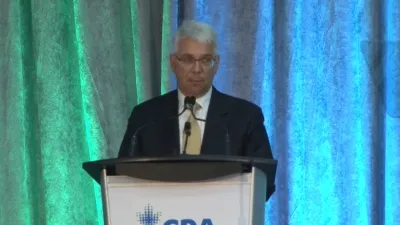

Karsten Wenzlaff, Advisor
August 26th, 2025
Karsten Wenzlaff is a Crowdfunding and Fintech Expert from Germany. He is Secretary-General of Digit[...]


July 21, 2026 | NCFA Market Activity | Digital Assets, Lending Consumer Credit And BNPL, Embedded Finance

On July 21, 2026, APX Lending launched its Canadian Lending as a Service platform with Netcoins. Eligible users can access crypto backed loans inside the Netcoins app while APX provides the capital, underwriting, compliance, collateral management, technology and servicing behind the product.
Netcoins is the first Canadian platform to go live on the infrastructure. The rollout builds on an existing relationship rather than starting from zero. BIGG Digital Assets invested in APX and announced the Netcoins partnership in May 2025, and Netcoins later added an in app lending page and calculator while the companies worked toward full integration.
The new launch turns APX’s securities law relief into infrastructure another Canadian platform can distribute. APX can now place its lending system behind a partner’s customer relationship rather than relying only on borrowers who arrive through its own channel.
Netcoins brings the app, customer relationship and regulated crypto trading channel. Netcoins became one of Canada’s early restricted dealer crypto platforms in 2021. It is owned by publicly traded BIGG Digital Assets, which combines Netcoins with blockchain analytics and compliance technology under a compliance first operating model.
APX runs the lending operation behind the interface. It supplies capital, reviews each application, performs the required account appropriateness assessment, manages collateral, handles servicing and monitors loan to value levels around the clock. APX or a wholly owned special purpose vehicle remains the lender under the loan agreement.
The partnership lets Netcoins add credit without creating its own lending balance sheet, underwriting team or collateral controls. APX gains distribution through an established Canadian platform, while Netcoins can add a new revenue line and give customers another reason to keep assets inside its ecosystem.
The model resembles other forms of embedded lending infrastructure, but the collateral is digital. The customer sees a loan inside a familiar platform even though a specialist provider operates the credit system behind it.
Netcoins’ lending page currently shows loans starting at C$10,000 or USDC 10,000, using Bitcoin or Ether as collateral. Terms can run for up to 60 months, and the displayed interest rate starts at 12.99%. Final terms and eligibility are determined during APX’s application process.
Borrowers can access Canadian dollars or USDC without a conventional credit check, but the loan is secured by crypto. If the collateral value falls, the loan to value ratio rises. APX can require more collateral or partial repayment and may liquidate assets when the applicable threshold is reached.
The April 2025 OSC decision permits APX to accept Bitcoin and Ether unless the principal regulator approves another asset. It also requires client disclosures, account appropriateness reviews and third party custody controls. The relief is time limited, expires three years after the decision and should not be treated as a general precedent for other lenders.
APX says collateral is held in segregated BitGo Trust cold storage, remains visible on chain and is not pooled, re-lent or rehypothecated. Customers should still understand that crypto collateral is not protected by the Canadian Investor Protection Fund and can be sold if the loan breaches its terms.
Netcoins adds crypto backed credit to trading, custody, staking and card products without building a lending operation internally.
APX Lending supplies regulated credit infrastructure, capital, collateral controls and servicing behind partner branded experiences.
Ledn operates a specialist Bitcoin backed lending business and has connected crypto loans with institutional funding markets.
Canadian crypto platforms that focus mainly on trading and custody may now need to decide whether lending belongs in their product mix.
Banks and fintechs could eventually use similar infrastructure if they want to offer digital asset secured credit without holding or operating the full crypto lending stack.
The commercial appeal is clear, but do users understand who is doing what?
Netcoins controls the experience, but APX approves and services the loan. Customers need clear information about the lender, collateral transfer, interest costs, margin notices, liquidation rules, data sharing and complaint handling before they apply.
Andrei Poliakov has followed this compliance first approach before. In a 2019 NCFA interview with Coinberry, he described the goal of building a trusted Canadian crypto business with supportive banking and long term operating discipline.
Coinberry was later acquired by WonderFi for C$38.5 million as regulatory costs encouraged consolidation. APX applies that experience to shared infrastructure that several platforms may be able to use rather than each one building a separate lending operation.
If the model performs well, APX could become a common lending layer behind several crypto platforms. If servicing, disclosures or liquidations create friction, the platform presenting the loan will share the reputational cost.
Will APX become the lending layer behind several Canadian crypto platforms, or will larger exchanges eventually build or acquire their own credit infrastructure?
Andrei Poliakov founded APX Lending in 2023 after helping build Coinberry, one of Canada’s early regulated crypto trading platforms. APX focused on secured credit that lets borrowers access liquidity without selling Bitcoin or Ether.
APX LendingCrypto backed lending built around regulated infrastructure
FormationA new lender develops after the Coinberry operating experience
Private FundingEarly financing details not publicly disclosed
CanadaA compliance first route into digital asset credit
Crypto HoldersIndividuals and businesses seeking liquidity without selling
Custody First LendingSegregated collateral and no rehypothecation
APX began with a founder who had already worked through Canadian crypto compliance, banking and custody challenges. The new company applied that experience to lending rather than another trading platform.
 The National Crowdfunding & Fintech Association (NCFA Canada) is a financial innovation ecosystem that provides education, market intelligence, industry stewardship, networking and funding opportunities and services to thousands of community members and works closely with industry, government, partners and affiliates to create a vibrant and innovative fintech and funding industry in Canada. Decentralized and distributed, NCFA is engaged with global stakeholders and helps incubate projects and investment in fintech, alternative finance, crowdfunding, peer-to-peer finance, payments, digital assets and tokens, artificial intelligence, blockchain, cryptocurrency, regtech, and insurtech sectors. Join Canada's Fintech & Funding Community today FREE! Or become a contributing member and get perks. For more information, please visit: www.ncfacanada.org
 |  |  |
|---|---|---|
 |  |  |
July 20, 2026 | NCFA Market Activity | Lending Consumer Credit And BNPL, Embedded Finance, Banking And Credit

On July 20, 2026, OnePay launched personal loans ranging from US$1,000 to US$50,000 through a new partnership with Upgrade. Eligible customers can check rates, review an offer, accept the terms and manage repayment without leaving the OnePay app.
OnePay is the consumer finance platform backed by Walmart and Ribbit Capital. Its app already offers banking, high yield savings, a digital wallet, credit cards, investing, crypto, credit building and point of sale lending. Customers who bank through OnePay may receive funds as soon as the same day. Annual percentage rates range from 7.74% to 35.99%, depending on eligibility.
Upgrade provides and services the loans, while Cross River Bank issues them. OnePay controls the app experience and customer distribution. That division of work gives OnePay a lending product without requiring it to build the full underwriting, funding and servicing operation internally.
Personal loans extend that relationship beyond everyday payments and retail financing. The new product is designed for debt consolidation, major purchases and unexpected expenses rather than financing a single transaction at Walmart checkout.
Point of sale lending helps complete a purchase. A personal loan gives OnePay a role in a customer’s wider balance sheet and monthly cash flow. A borrower may use the proceeds to refinance higher cost debt, fund a large expense or cover an emergency.
OnePay says the application can use information customers have already supplied, reducing repeated data entry. That may improve conversion, but it also makes data permissions and decision responsibilities more important. Customers need to understand which company holds their information, which institution makes the loan and who controls servicing or collection decisions.
The expansion follows OnePay’s work with Synchrony on a Walmart credit card program and Klarna on OnePay Later. Together, those products give the app several ways to serve consumers across everyday spending, retail financing, credit building and larger borrowing.
Upgrade brings the credit machinery behind the product. The company has delivered more than US$50 billion in credit to over 8 million customers since 2017 across personal loans, cards, buy now pay later, home improvement and auto financing.
For Upgrade, the OnePay agreement adds distribution through an app connected to millions of consumers and Walmart’s retail ecosystem. Instead of acquiring every borrower through its own brand, Upgrade can supply lending inside another company’s customer relationship.
This is the same operating structure seen across embedded finance. The distributor owns the interface and customer traffic, while a regulated bank and specialist technology provider supply the financial product behind it.
That structure can lower customer acquisition costs and shorten product development. It also creates dependencies. OnePay relies on Upgrade’s underwriting and servicing performance. Upgrade relies on OnePay to present the product responsibly and bring suitable borrowers into the funnel. Cross River Bank carries the regulated lending role.
OnePay combines Walmart linked distribution with banking, payments, rewards and credit inside one app.
Upgrade supplies underwriting, loan technology and servicing rather than requiring OnePay to build those capabilities.
SoFi offers personal loans inside a broader consumer finance relationship that includes banking and investing.
Robinhood is also extending beyond its original product into a wider lifestyle finance relationship spanning investing, credit, banking and rewards, although OnePay brings Walmart linked retail distribution rather than a brokerage led customer base. See NCFA’s analysis of Robinhood’s lifestyle finance strategy.
LendingClub competes in unsecured personal credit with a bank funded model and direct consumer acquisition.
Major banks already hold deposits and customer data, but may offer slower applications or less integrated digital experiences.
Personal loans could deepen OnePay’s role in customers’ financial lives, especially when borrowing, banking, payments and rewards sit inside the same app. Will the app's convenience produce durable trust rather than simply more credit volume is the question.
Pricing near the top of the 35.99% APR range carries the clearest risk. Approval may be fast, but repayment can become difficult when the loan is used for an emergency or to consolidate existing debt.
OnePay will also carry much of the reputational impact even when lending decisions and servicing sit with partners. Unclear terms, poor servicing or aggressive collections could affect how customers view the wider platform.
Canadian banks, retailers and fintechs face the same trade-off. Embedded lending through consented financial data could help companies add credit faster, but the business controlling the interface still needs to make pricing, data use, lender identity and repayment responsibility clear.
Can OnePay turn Walmart scale distribution into a primary consumer finance relationship, or will it remain a storefront for credit products supplied by banks and specialist lenders?
Angus McDonald and Chris Bayley founded Cover Genius after encountering fragmented insurance distribution while operating an online travel business. RentalCover became the first use case for combining digital distribution, policy administration and claims support.
RentalCoverRental vehicle protection distributed through digital booking platforms
LaunchA focused first product built around a clear travel use case
Founder LedEarly development preceded the company’s later institutional funding rounds
Travel And MobilityRental car bookings across multiple countries
Travel PlatformsOnline travel agencies and rental car booking businesses
Integrated ProtectionInsurance offered inside the booking flow rather than through a separate purchase
The first product mattered because it gave Cover Genius a practical route into a difficult market. The company learned the operating work before expanding the platform.
The National Crowdfunding & Fintech Association (NCFA Canada) is a financial innovation ecosystem that provides education, market intelligence, industry stewardship, networking and funding opportunities and services to thousands of community members and works closely with industry, government, partners and affiliates to create a vibrant and innovative fintech and funding industry in Canada. Decentralized and distributed, NCFA is engaged with global stakeholders and helps incubate projects and investment in fintech, alternative finance, crowdfunding, peer-to-peer finance, payments, digital assets and tokens, artificial intelligence, blockchain, cryptocurrency, regtech, and insurtech sectors. Join Canada's Fintech & Funding Community today FREE! Or become a contributing member and get perks. For more information, please visit: www.ncfacanada.org
| | |
|---|---|---|
| | |
July 15, 2026 | NCFA Market Activity | Cross Border Payments And FX, Banking And Credit, Digital Assets

On July 14, 2026, Flex raised US$70 million in a Series B1 led by Halo Fund and launched Flex Global, a cross border financial platform for internationally active business owners. The service combines multi currency accounts, payments, cards, private credit and stablecoin settlement while keeping the underlying digital asset infrastructure out of the customer experience.
The financing came six months after Flex raised a US$60 million Series B. Flex says it has now secured US$180 million in equity and US$300 million in debt. Reuters reported that the new round valued the company at about US$1.2 billion, based on information from a person close to the transaction. Flex didn’t disclose the valuation.
Flex Global extends the company’s private credit, business finance, personal finance, payments and financial operations platform into international accounts, currency conversion and stablecoin settlement. Flex says the service will support 32 currencies across more than 100 countries.
The customer doesn’t need to understand or manage the digital asset infrastructure. Stablecoins operate beneath a conventional financial interface while the business owner sees accounts, balances, payments and financial tools.
That design addresses a persistent gap between stablecoin payment potential and business adoption. Most companies aren’t looking for a token product. They want faster settlement, usable currencies, predictable access to funds and one record of what happened.
Flex is trying to make the underlying rail invisible while expanding the amount of the owner’s financial relationship it can control.
Flex Global is designed to let business owners hold and transfer value across markets through the same platform they use for credit, cards, payments and financial operations.
Stablecoins can provide a common settlement asset between two financial endpoints. The platform still needs to handle customer verification, currency conversion, transaction monitoring, liquidity, local payout access and reconciliation.
That operating bundle is more important than the token transfer itself. NCFA has seen the same model in Levl’s connection between bank and stablecoin rails, where the commercial product joins digital settlement with accounts, payment access and financial infrastructure.
Flex applies that mechanism to a direct owner relationship rather than selling infrastructure to another bank or payment company.
The customer value proposition is straightforward. An internationally active owner may currently use separate providers for business accounts, cards, foreign exchange, payments, working capital, expense management and personal finance. Flex wants to consolidate those products around one customer record and one financial interface.
Flex targets profitable middle market business owners whose needs often sit between small business banking and institutional private banking.
Founder and CEO Zaid Rahman has described the customer group as owners of businesses earning millions or tens of millions of dollars in annual revenue. They may manage several companies, international suppliers, personal investments, employees and private credit needs without the finance department of a large corporation.
The firm says it has onboarded a few thousand customers and is growing at roughly four times its prior year level. Reuters reported a nine figure annualized revenue run rate. The company plans to increase its team from about 110 people to more than 200 by the end of 2026.
Its platform brings several financial functions into the same commercial relationship:
Private credit gives Flex a different economic position from a payment application that earns mainly from transaction fees. The company can potentially earn across lending, interchange, payment services and software while using one product to distribute another.
Flex’s AI products support that integration. Beacon is positioned as a financial intelligence tool for owners, while the wider platform is designed to use customer financial data across credit and operating workflows.
Public disclosures don’t provide enough information to determine how much work its AI systems complete independently, how human review is applied or whether the tools improve financial outcomes. Those questions become more important as Flex handles more credit and payment activity.
The competitive group spans several fintech categories. Flex overlaps with:
The strategic difference is customer scope. Many competitors specialize in one financial job. Flex is trying to serve a narrow customer segment across several jobs.
That can improve distribution economics because the company doesn’t need to acquire a new customer for every product. It can also create operating complexity as more credit, payment, compliance and personal finance responsibilities sit inside one interface.
Stablecoin infrastructure is finding its clearest commercial role where conventional payment systems are slow, fragmented or unavailable outside banking hours.
Cross border business payments fit that profile. A company may need to coordinate foreign exchange, correspondent banks, payment cut off times, local accounts, compliance checks and reconciliation before the recipient can use the funds.
A stablecoin can shorten the settlement portion. It doesn’t complete the entire payment job.
The Noah and Cedar trade payment model shows how compliance, virtual accounts, foreign exchange and payout access must operate around stablecoin settlement before businesses have a usable product.
Flex is assembling similar functions inside an owner finance platform. The user may never hold a private key or choose a blockchain. Stablecoins become one part of treasury and payment execution rather than a separate asset decision.
That abstraction has commercial value because most businesses care about cost, speed, reliability and access to funds. They don’t necessarily care which settlement system transfers value between providers.
The model also creates dependencies. Flex must coordinate banking partners, stablecoin issuers, payment networks, liquidity providers and local market access. Customers will need clear information about where funds are held, which entity provides each service and what happens when a payment can’t be completed.
Canada’s regulatory position is becoming clearer after the enactment of its federal stablecoin framework. Implementation still depends on regulations, Bank of Canada supervision and alignment with payments, AML, securities and prudential requirements.
Canadian founders with international operations often assemble banking, cards, currency conversion, lending and treasury through separate providers. That challenge is consistent with Canada’s cross border interoperability gap, where strong domestic infrastructure hasn’t yet produced equally strong international payment performance.
Flex Global shows what a consolidated alternative could look like. It also creates a competitive question for Canadian banks and fintechs. Who owns the customer relationship when the payment rail becomes invisible and the platform spans both the business and its owner?
Flex is betting that middle market owners form a concentrated and valuable segment that conventional fintech platforms haven’t served as a complete financial category.
Cross border payments can become an entry point for accounts, cards, treasury, private credit and personal finance. Each product can supply more operating information and make the wider platform harder to replace.
The tension is execution. A product covering more than 100 countries can’t rely on one uniform banking, regulatory or liquidity structure. Availability may differ by customer location, business type, payment corridor, currency and partner.
Flex has raised enough capital to expand the platform, hire staff and acquire customers. The next proof is whether it can deliver reliable international financial services without passing the complexity underneath them back to the customer.
Will internationally active business owners consolidate banking, payments, credit and personal finance with one platform, or continue separating those services across specialized providers?
Zaid Rahman founded Flex to provide financial products for profitable middle market business owners whose business and personal needs often fall between small business fintech and institutional private banking.
FlexFinancial platform founded by Zaid Rahman
LaunchOwner focused financial products
Venture BackedInstitutional equity supports product development
United StatesProfitable middle market businesses
Business OwnersOwners with complex company and personal finances
Segment FocusPositioned between small business fintech and private banking
Flex began with a defined customer segment rather than one narrow product. That customer focus created room to add credit, payments, business finance and personal finance around the same owner relationship.
The National Crowdfunding & Fintech Association (NCFA Canada) is a financial innovation ecosystem that provides education, market intelligence, industry stewardship, networking and funding opportunities and services to thousands of community members and works closely with industry, government, partners and affiliates to create a vibrant and innovative fintech and funding industry in Canada. Decentralized and distributed, NCFA is engaged with global stakeholders and helps incubate projects and investment in fintech, alternative finance, crowdfunding, peer to peer finance, payments, digital assets and tokens, artificial intelligence, blockchain, cryptocurrency, regtech, and insurtech sectors. Join Canada's Fintech & Funding Community today FREE! Or become a contributing member and get perks. For more information, please visit: [www.ncfacanada.org](http://www.ncfacanada.org)
| | |
|---|---|---|
| | |
July 15, 2026 | NCFA Market Activity | Lending Consumer Credit And BNPL, Banking And Credit, Artificial Intelligence And Data

On July 15, 2026, Clutch launches its Lending Automation System (LAS), an end to end lending automation platform built specifically for credit unions. Twelve institutions ranging from US$256 million to US$6 billion in assets have selected it.
The product is designed around a different operating assumption than a conventional loan origination system. Straightforward applications can proceed from intake through decisioning and funding without waiting for a lender to manually advance each step. Applications that need judgment enter a structured staff workflow with the relevant member data, policy checks and required tasks already organized.
Clutch says institutions using the platform have recorded a 1.4x increase in funded loans, application and account opening times that are 2 to 4x faster, and 70% to 85% of loan applications processed automatically through fraud screening and underwriting, with the remaining applications routed to staff when judgment is required. Those are company reported results, but they describe a more substantial operating change than placing a digital form in front of an existing manual process.
The commercial issue is lending capacity. Credit unions compete through member knowledge and relationship service, yet many still rely on staff intensive workflows that become more expensive as application volumes rise. Clutch is trying to separate the loans that require judgment from those that mainly require verified data, policy execution and process completion.
The system combines three parts.
Digital Account Opening and Loan Origination captures applications through online, mobile, branch, call centre and dealership channels. Clutch says the application process can take less than five minutes.
Fastlane applies the credit union’s lending policies, bureau information, verification data and existing member relationship data. That can include account history, prior repayment behaviour, tenure and the depth of the member’s relationship with the institution. The system then sends eligible applications toward funding or identifies the files that need further review.
Clutch Fulfillment handles the exception workflow. Instead of presenting staff with a general queue and an incomplete file, it creates specific tasks, surfaces the relevant context and enforces the credit union’s policy requirements.
Automation is useful when the institution already knows what decision it would make if the required data were available and verified. Human review remains valuable when:
The platform therefore doesn’t eliminate underwriting judgment. It concentrates staff attention on the applications where judgment has more value.
Nicholas Hinrichsen, Co-founder and CEO of Clutch:
“Some loans don't need a person in the middle, they need a system that can move at the speed the member expects.”
Clutch’s operating claim is that a long standing member with strong repayment history and substantial savings shouldn’t wait several days for a routine answer. The risk is that relationship data, automated verification and policy logic still need to be accurate, explainable and consistently governed. Faster processing doesn’t reduce the lender’s responsibility for fair lending, fraud controls, model oversight or credit performance.
The U.S. credit union system remains large but continues to consolidate. The National Credit Union Administration reported 4,250 federally insured credit unions, 145.8 million members, US$2.48 trillion in assets and US$1.73 trillion in loans at the end of the first quarter of 2026. The number of institutions fell by 161 over 12 months.
Operating costs are also rising. NCUA data show non interest expense increased 7.6% year over year in the first quarter, with employee compensation and benefits accounting for more than half of the increase. That creates a direct commercial case for software that can process more applications without requiring staffing to rise at the same rate.
Clutch’s launch group spans institutions with US$256 million to US$6 billion in assets. That range is important because smaller credit unions usually have less technology staff, less capacity to manage complex integrations and fewer specialized underwriters. A phased model that begins with digital intake and automated decisions, then expands into full workflow automation, may be easier to adopt than a complete lending-system replacement.
A San Francisco company Clutch was founded in 2020 by Nicky Hinrichsen and Chris Coleman. It raised a US$65 million Series B in January 2025, bringing total reported funding above US$106 million, and launched its Fastlane automated decisioning and fulfillment engine in July 2025. Clutch now says it serves more than 175 credit unions and 25 million members.
Its reported scale gives LAS a distribution advantage. The company can sell the new system into an installed base already using its origination, deposit opening and engagement products. It can also draw on operational data from multiple institutions when refining product workflows, although each credit union still needs its own policies, controls and risk tolerances.
Clutch competes in a crowded field that includes core banking providers, loan origination vendors, digital onboarding platforms and automated underwriting companies. MeridianLink, Origence, Jack Henry, nCino, Blend, Amount, Fiserv and Finastra all address parts of lending intake, decisioning, workflow or servicing.
The distinction Clutch is offering is credit union specialization. It says LAS was developed over two years with credit union leaders and is priced, integrated and designed around the cooperative operating model rather than adapted from a general bank platform.
A platform that joins application capture, automated decisioning and exception handling can reduce handoffs between products. Each handoff creates delay, duplicate work and another opportunity for the member to abandon the application.
NCFA has already seen the same operating pressure in adjacent lending markets. Conexus backing JUDI.AI connects credit union capital with AI cash flow underwriting for small business loans. TD’s Trust Science deployment brings income verification and AI decisioning into a large bank lending workflow. FintechWerx’s Ruby Loans agreement targets AI-native SME origination for credit unions.
These systems address different borrowers and institutions, but the pattern is consistent. Lending technology is progressing from front end digitization toward data verification, decisioning, workflow control and funding.
For Canadian credit unions, the Clutch launch is relevant even though the initial deployment is U.S. focused. Canada is already seeing coordinated digital banking modernization. Canadian institutions face different provincial rules, market structures, core providers and lending practices. Can relationship based lenders automate routine credit work without weakening oversight or losing the human judgment that differentiates them?
Can credit unions automate enough of the lending process to compete on speed while preserving the relationship judgment that differentiates them?
Nicky Hinrichsen and Chris Coleman founded Clutch in 2020 and focused the company on digital lending for credit unions. The initial product helped institutions originate loans online without replacing their core systems.
ClutchFounded by Nicky Hinrichsen and Chris Coleman
LaunchDigital lending for credit unions
Venture BackedEarly institutional funding supports product development
United StatesCredit union market
Credit UnionsCommunity and cooperative financial institutions
Digital OriginationCompetes with lending technology and origination providers
Clutch entered through a defined institutional market rather than selling a general lending stack. That focus created the product knowledge and distribution base for a wider credit union operating platform.
The National Crowdfunding & Fintech Association (NCFA Canada) is a financial innovation ecosystem that provides education, market intelligence, industry stewardship, networking and funding opportunities and services to thousands of community members and works closely with industry, government, partners and affiliates to create a vibrant and innovative fintech and funding industry in Canada. Decentralized and distributed, NCFA is engaged with global stakeholders and helps incubate projects and investment in fintech, alternative finance, crowdfunding, peer-to-peer finance, payments, digital assets and tokens, artificial intelligence, blockchain, cryptocurrency, regtech, and insurtech sectors. Join Canada's Fintech & Funding Community today FREE! Or become a contributing member and get perks. For more information, please visit: www.ncfacanada.org
| | |
|---|---|---|
| | |
July 9, 2026 | NCFA Market Activity | Banking And Lending, Artificial Intelligence And Data, Digital Identity And Trust, Risk Compliance And Regtech, Fintech And Innovation

On July 7, 2026, Trust Science announced a bank wide Master Services Agreement with TD to improve loan approval and origination turnaround times.
TD is initially using Trust Science’s income verification and reporting capabilities to support fast, secure, real time loan decisioning. TD Auto Finance Canada is the first TD business to use the capability and has begun rolling it out through 5,500 authorized dealers across Canada.
This is a practical in market AI lending infrastructure signal. A major Canadian bank is applying real time income verification and credit decisioning technology inside an active loan origination channel, starting with auto finance where speed, dealer experience and risk controls all paramount.
Income verification remains one of lending’s most stubborn workflow problems.
Borrowers want fast answers. Dealers want clean handoffs. Lenders need enough verified income evidence to make a responsible decision without slowing the application down. That tension is especially visible in auto finance, where the lending decision often happens inside a sales process.
Trust Science has built its platform around AI assisted credit decisioning, risk management and consumer reporting. The TD rollout extends that platform into real time income verification, giving lenders verified borrower information earlier in the loan origination process.
Real time income verification is a direct open finance use case. Permissioned financial data can help verify income, assess affordability, support cash flow analysis, flag fraud risk and reduce onboarding friction. See: Open Finance SME Capital Access.
TD Auto Finance gives Trust Science a high volume lending channel where verification speed affects the borrower, dealer and lender at the same time.
Michael McGhee, SVP and Head of TD Auto Finance Canada, said Trust Science’s solution helps TD offer dealers and clients “a simpler and faster way to do business with us.”
Trust Science positions itself as an AI powered credit decisioning and risk management platform, a licensed Consumer Reporting Agency and Canada’s third modern credit bureau.
Canada’s credit market has long been dominated by large incumbent bureaus and traditional credit files. Trust Science is competing from a different angle now with income verification, alternative data, AI decisioning, workflow automation and fraud reduction.
Evan Chrapko, founder and CEO of Trust Science, said TD is using the company’s real time decisioning platform and proprietary processes to get loan decisions made “as quickly as possible with less risk.”
That's the commercial promise. The regulatory and trust challenge is whether AI assisted decisioning can improve speed while keeping lending evidence accurate, explainable and fair.
AI credit decisioning only works when the underlying data is reliable.
Income, identity, fraud signals and borrower information have to be verified before automation can add value. Otherwise, faster decisioning only pushes weak inputs through the system faster.
Faster lending workflows need stronger verification controls. See: How Fraud Broke The Old Rules Of Trust And Verification.
That applies directly to lending. Faster origination is useful only if the lender can trust the borrower evidence, detect fraud and explain the decision path.
Will real time income verification become standard infrastructure for AI assisted lending, or stay limited to high speed channels like dealer finance?
The National Crowdfunding & Fintech Association (NCFA Canada) is a financial innovation ecosystem that provides education, market intelligence, industry stewardship, networking and funding opportunities and services to thousands of community members and works closely with industry, government, partners and affiliates to create a vibrant and innovative fintech and funding industry in Canada. Decentralized and distributed, NCFA is engaged with global stakeholders and helps incubate projects and investment in fintech, alternative finance, crowdfunding, peer to peer finance, payments, digital assets and tokens, artificial intelligence, blockchain, cryptocurrency, regtech, and insurtech sectors. Join Canada's Fintech & Funding Community today FREE! Or become a contributing member and get perks. For more information, please visit: [www.ncfacanada.org](http://www.ncfacanada.org)
| | |
|---|---|---|
| | |
July 8, 2026 | NCFA Market Activity | SME Finance And Business Banking, Artificial Intelligence And Data, Digital Identity And Trust, Cybersecurity And Fraud, Fintech And Innovation

On July 7, 2026, Equifax announced a definitive agreement to acquire Círculo de Crédito, a Mexican credit information services company, for a $750 million enterprise value. The companies expect the transaction to close in the fourth quarter of 2026, subject to closing conditions and regulatory review.
Círculo de Crédito operates consumer and commercial credit bureau services in Mexico. Equifax says the company serves more than 1,700 bank, retail, fintech, small business lending, microfinance and telecommunications customers, with 2 billion tradelines covering 80 million validated identities.
The deal expands Equifax’s international credit data footprint in Mexico, which Equifax describes as one of the fastest growing credit markets globally. Círculo de Crédito generated an estimated $134 million in revenue for the 12 months ended June 30, 2026, up 31%, with $62 million of adjusted EBITDA.
Equifax says Círculo de Crédito uses alternative data, including gig economy transactions, utility payment history and telecommunications payment history. Mexico has a large underbanked population. Mexico is a market where more than 25% of the population lacks access to formal financial products and nearly 44% does not have a bank account.
Alternative data can help lenders assess thin file borrowers, informal workers, microbusinesses and consumers without deep traditional credit histories. It can also help challenge questions about consent, data quality, explainability, model governance and consumer protection when credit access depends on broader data signals.
More data can widen access, but only if lenders can show how the data is collected, governed, explained and challenged.
Equifax says the acquisition gives Círculo de Crédito customers access to Equifax cloud native capabilities, EFX.AI technology, identity protection and fraud prevention offerings.
Following closing, Círculo de Crédito will join the Equifax International business. Juan Manuel Ruiz Palmieri and the existing Círculo de Crédito team are expected to continue leading the company.
The acquisition also continues Equifax’s expansion strategy. CEO Mark W. Begor said Círculo de Crédito would be Equifax’s 17th bolt on acquisition in the past six years, bringing the total for that period to nearly $5 billion.
Lenders increasingly rely on identity coverage, alternative data, fraud controls and AI assisted underwriting to expand credit access. That same data quality issue appears in AI Won't Solve SME Finance Without Better Data, where the core problem is not model ambition, but whether business data is trusted, verified and usable.
That connects directly to Canada’s own SME finance debate. NCFA recently examined why SME loan competition in Canada is under review, including lender concentration, switching friction and access barriers for smaller firms.
It also fits the Open Finance SME Capital Access opportunity area, where SME data, credit access and open finance are already linked.
More data can support credit access. The hard part is proving that expanded data use remains accurate, explainable and fair.
Can alternative data expand credit access without creating new blind spots in consent, model governance and borrower recourse?
The National Crowdfunding & Fintech Association (NCFA Canada) is a financial innovation ecosystem that provides education, market intelligence, industry stewardship, networking and funding opportunities and services to thousands of community members and works closely with industry, government, partners and affiliates to create a vibrant and innovative fintech and funding industry in Canada. Decentralized and distributed, NCFA is engaged with global stakeholders and helps incubate projects and investment in fintech, alternative finance, crowdfunding, peer to peer finance, payments, digital assets and tokens, artificial intelligence, blockchain, cryptocurrency, regtech, and insurtech sectors. Join Canada's Fintech & Funding Community today FREE! Or become a contributing member and get perks. For more information, please visit: [www.ncfacanada.org](http://www.ncfacanada.org)
| | |
|---|---|---|
| | |
July 8, 2026 | NCFA Market Activity | SME Finance And Business Banking, Artificial Intelligence And Data, Payments And Money Movement, Digital Identity And Trust, Risk Compliance And Regtech

On July 7, 2026, Vancouver-based Canadian fintech company FintechWerx International Software Services Inc. announced that it entered an intellectual property and technology asset purchase agreement to acquire Ruby Loans, a small and medium sized Canadian business lending platform.
FintechWerx agrees to acquire the technology from 1431575 B.C. Ltd., an arm’s length vendor. Closing is still subject to the usual conditions, including corporate, regulatory and Canadian Securities Exchange approvals.
FintechWerx is paying up to $825,000. The package includes $100,000 in cash on closing, 728,862 common shares at a deemed price of $0.6174 per share, and up to $275,000 in milestone payments through additional shares.
Ruby Loans is positioned as an AI native loan origination infrastructure for credit unions and other financial institutions, helping prepare decision ready SME loan files before human underwriting review.
While the purchase price is modest, the operating problem is not.
The OECD’s 2026 Canada SME financing profile says small business lending in Canada reached $160.1 billion in 2024, up from $134.8 billion in 2023. Small businesses represented 11.7% of total outstanding business loans.
Statistics Canada reported that 25.7% of Canadian SMEs requested debt financing in 2023. The most common products were business credit cards, lines of credit and term loans.
SME finance is often judged by capital availability, while the borrower experience depends on workflow. A lender can have capital and still lose time to incomplete files. A business can need liquidity and still get stuck in repeated document requests. Also worth noting that SME loan competition in Canada is currently under review.
That kind of friction is costly in the current climate. Tariffs, input costs and uncertain demand are putting pressure on many Canadian SMEs. CFIB reported in March 2026 that 68% of Canadian small business owners continued to say they were negatively affected by U.S. tariffs.
FintechWerx already provides merchant onboarding, payment processing, identity verification, fraud mitigation and data services. Ruby Loans adds AI native SME loan origination technology to that platform.
Ruby Loans automates borrower intake, document collection and policy based pre screening before a lending officer reviews an application. The platform includes a configurable policy rules engine, automated applicant interview and Accept, Review or Decline dashboard.
George Hofsink, CEO of FintechWerx, said about the acquisition:
"Represents a strategic expansion of our financial infrastructure capabilities" and "creates significant opportunities to enhance the Ruby Loans platform through our data, analytics and AI initiatives."
Credit unions have local relationships and member trust. They also face capacity limits. Small business lending can take time because the files are messy, the borrower story is specific and the final human oversight credit judgment takes time.
Ruby Loans targets the file preparation burden at the credit union level. The borrower starts the inquiry. The platform collects information, applies the institution’s policy rules and prepares a more complete file before the lending officer reviews it.
NCFA recently covered a similar partnership with Conexus backing JUDI.AI for credit union SME lending. JUDI.AI is a separate company, but the signal is aligned. Canadian credit union channels are looking for SME lending tools that improve speed without weakening underwriting discipline.
Fred Zdan, founder of Ruby Loans, said he built the platform to simplify a lending process that has been complex and time consuming for borrowers and lenders. FintechWerx also plans discussions to appoint Zdan as executive chair and CEO of FinanceWerx Solutions Inc., a wholly owned subsidiary.
The agentic AI claim only is only as good as the data and evidence given to lenders. The opportunity is decision support, not autonomous credit approval (yet).
AI won't fix a poor intake workflow either. Missing documents, weak identity checks and scattered borrower data make analytics less reliable. Structured borrower files give lenders a better base to work from.
For regulated lenders, AI can help flag gaps, apply policy rules and route files. Human review still has to carry the credit judgment.
FintechWerx’s existing fraud and identity capabilities could become relevant here. Online SME lending needs speed, but it also needs trust. NCFA unveiled this in How Fraud Broke The Old Rules Of Trust And Verification, which looks at how digital fraud is forcing financial firms to strengthen identity checks, transaction monitoring and verification controls. SME lending faces the same challenge as more borrower activity shifts online.
Can Canadian credit unions use AI native loan origination to speed up SME credit while keeping human judgment at the centre of underwriting?
The National Crowdfunding & Fintech Association (NCFA Canada) is a financial innovation ecosystem that provides education, market intelligence, industry stewardship, networking and funding opportunities and services to thousands of community members and works closely with industry, government, partners and affiliates to create a vibrant and innovative fintech and funding industry in Canada. Decentralized and distributed, NCFA is engaged with global stakeholders and helps incubate projects and investment in fintech, alternative finance, crowdfunding, peer to peer finance, payments, digital assets and tokens, artificial intelligence, blockchain, cryptocurrency, regtech, and insurtech sectors. Join Canada's Fintech & Funding Community today FREE! Or become a contributing member and get perks. For more information, please visit: [www.ncfacanada.org](http://www.ncfacanada.org)
| | |
|---|---|---|
| | |



August 26th, 2025

January 4th, 2024

June 1st, 2021

September 9th, 2020

July 9th, 2018

January 3rd, 2018

September 25th, 2017

June 20th, 2017

May 10th, 2017

December 14th, 2016
