




Karsten Wenzlaff, Advisor
August 26th, 2025
Karsten Wenzlaff is a Crowdfunding and Fintech Expert from Germany. He is Secretary-General of Digit[...]


July 10, 2026
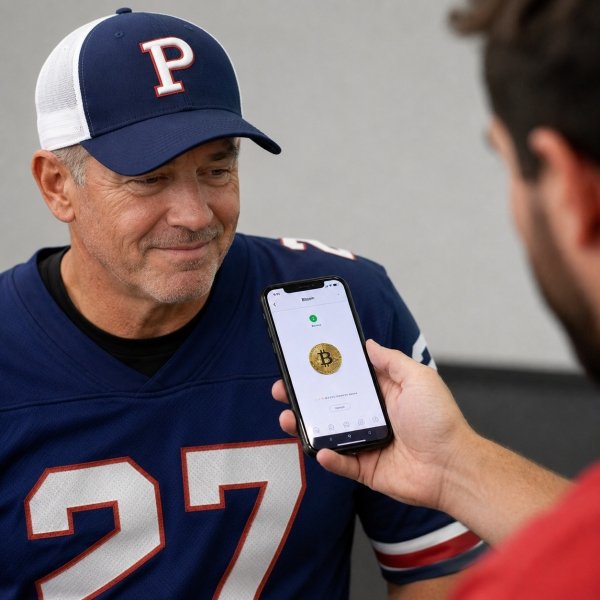
AI Image: Cryptocurrencies give us a chance to get closer to the action
The way that digital finance and mainstream entertainment have come together has given us a variety of new ways to enjoy our favorite activities. Sports fans are among the people who can most appreciate these changes, so let’s take a look at how cryptocurrencies are enhancing the way they interact with their chosen teams and sports.
The arrival of online sportsbooks was one of the most notable events for sports in recent times. Being able to find the latest, updated odds from events around the planet was a massive step forward. It means that we can now just as easily bet on the NHL, the NBA, or a table tennis tournament from the other side of the world. Many sportsbooks also provide casino games, ensuring they offer fans a well-rounded platform with lots of options.
Of course, finding a fast and safe way of moving funds in and out of these platforms was the next big challenge. Since it’s a fast-moving industry, fans need to be able to make deposits swiftly and securely, while they also want the security of being able to make rapid withdrawals with complete safety. Traditional fiat methods have been used to good effect, but the growing use of cryptocurrencies allows fans to take advantage of a highly secure and almost instant transfer process.
Looking at this online casino in Canada, we can see that Bitcoin (BTC), Ethereum (ETH), and Tether (USDT) are among the tokens accepted. These are some of the biggest cryptocurrencies in the market, meaning that they offer deep liquidity. Transfer times vary across networks, although most are completed almost instantly. Fees also vary, with most offering an extremely cost-effective approach.
The transfer process is simple once you understand the basics. Fans need to buy their chosen token first, which is usually done through an exchange. The next step is to send the cryptocurrencies to a self-custody wallet, and from there to the sportsbook’s wallet.
Given the added privacy with digital assets, this could also be viewed as a way to ensure that there is a buffer between the user’s main bank account and their gambling account. Some folks like to have a layer of separation, and cryptocurrencies make this significantly easier.
Fan tokens have emerged as one of the most interesting uses of cryptocurrencies. Soccer teams like Manchester City and PSG are among the top options for anyone looking for fan tokens. With fan tokens recently getting the green light in the US, Chiliz has an agreement with the NFL and NBA that lets them offer digital perks without minting any specific team tokens.
The right to vote on fan matters is one of the key aspects of fan tokens, since the holders of these tokens are offered the chance to vote on issues such as team outfits and fan chants. Arguably the first example came from Italy in 2019, when fans of Juventus voted for Song 2 by Blur as the team’s goal celebration music. Barcelona and PSG token holders have also successfully voted on their teams’ music choices in recent years.
In North America, the Professional Fighter League has used fan tokens to help choose the entrance anthems for fighters and also to set the questions to be asked at official press conferences. In the NASCAR world, Roush Fenway Racing (now RFK Racing) launched the first fan token and gave holders the opportunity to vote on various themes and designs.
The UFC went a step further by giving its token holders the chance to attend weigh-ins as VIP guests. This token also has a mechanism where the user’s number of tokens is applied to work out their exact voting power.
Digital assets can also be used to carry out real-world matchday transactions. The first example of Bitcoin being used by a major sports franchise came from the Sacramento Kings in 2014, when they teamed up with the BitPay payment processor. As well as entrance tickets, fans were able to use BTC to pay for official team merchandise at the store.
The NFL has also moved in the same direction. The Tennessee Titans provide a good example, as this franchise accepts BTC for season tickets and corporate sponsorship payments. We can also see the example of the Houston Texans, who accept BTC for the booking of luxury suites at games. In the wider sports world, FIFA naming Kraken their Official Crypto Exchange Supporter of the FIFA World Cup 2026 is a clear sign of how deeply embedded crypto has become in sports.
Whether you want to place a bet, buy a ticket, or help make fan decisions, cryptocurrencies have been playing an increasingly large role in the way you enjoy your favorite sports. By choosing the right tokens and determining how to use them, you can get more out of your sports-based entertainment.
 The National Crowdfunding & Fintech Association (NCFA Canada) is a financial innovation ecosystem that provides education, market intelligence, industry stewardship, networking and funding opportunities and services to thousands of community members and works closely with industry, government, partners and affiliates to create a vibrant and innovative fintech and funding industry in Canada. Decentralized and distributed, NCFA is engaged with global stakeholders and helps incubate projects and investment in fintech, alternative finance, crowdfunding, peer-to-peer finance, payments, digital assets and tokens, artificial intelligence, blockchain, cryptocurrency, regtech, and insurtech sectors. Join Canada's Fintech & Funding Community today FREE! Or become a contributing member and get perks. For more information, please visit: www.ncfacanada.org
 |  |  |
|---|---|---|
 |  |  |
July 10, 2026

Financial technology organizations are often able to grow - employing staff from different countries - these companies use international recruitment to address high workloads, find highly trained employees and enter new geographical areas. Many professionals, like software engineers, data researchers and client service experts, prefer roles that allow them to work from any location. While these hiring practices are beneficial, businesses are responsible for managing the specific challenges involved.
Worker classification is a primary factor for companies to manage when they hire across borders. Organizations that identify their staff correctly are able to prevent legal disputes and avoid the loss of money. Businesses that operate in multiple countries have fewer administrative tasks when they clearly define the legal status of their international workers.
Worker classification is the process where an organization determines if a person is an employee or an independent contractor. Companies are required to follow specific guidelines to establish the legal status of their workers. Government agencies and courts evaluate the degree of control an employer has and how much independence a worker maintains to make this decision. Please be aware that the label a company gives to a worker is not the only factor that determines their status.
This consideration is particularly important for companies that staff internationally. The status of a worker who provides services from abroad can change depending on the country where they originate. As such, businesses should understand the implications of classifying employees as independent contractors outside their jurisdiction.
Businesses can suffer adverse financial and legal consequences from misclassifying workers. For instance, companies may incur substantial expenses by following court orders mandating retroactive payments of payroll taxes, overtime, and social benefits. In addition, businesses must consider litigation costs in any resulting disputes over misclassification.
Companies that hire internationally must navigate complex legal frameworks when classifying their workers. Most jurisdictions allow businesses to employ independent contractors on either a full-time or part-time basis. However, certain countries require organizations to treat such workers like employees. It can be challenging to ensure that employment terms abide by all applicable statutory requirements in different jurisdictions. As such, companies may find themselves facing adverse consequences when trying to establish long-term contracts for workers based abroad. To mitigate these risks, businesses turn to local attorneys and a Toronto Employment Lawyer to understand the implications before hiring.
How a company classifies its workers influences how the business functions. Management must recognize the administrative tasks and legal requirements that apply to different categories of workers - these arrangements are important because they change how the company processes payroll, manages benefits plus protects private data. Leaders are able to use this information to plan their workforce and lower the risk of legal disputes.
The status of a worker is what defines their specific legal rights but also responsibilities. Individuals who are employees are usually eligible for more protections and company provided benefits than those who are independent contractors. If a company understands these distinctions, it is able to follow the law as well as maintain a consistent hiring process - this knowledge is necessary for organizations that intend to grow in multiple countries and use the specific abilities of their staff effectively.
The financial technology industry is subject to many regulations. Companies are required to dedicate time and money to follow laws regarding data privacy, security for digital information plus financial reporting. This commitment to compliance is also necessary when businesses hire staff. Classification of workers is an important process because these organizations manage private data and perform money transfers for customers. Organizations that hire people in other countries are encouraged to monitor legal changes but also speak with an employment lawyer. Audits are a helpful tool to identify problems and lower risks before a company hires remote employees.
Fintech companies often find benefits in hiring employees from other countries - this approach allows businesses to grow and find qualified workers in a larger market. All staff members must follow the same professional requirements regardless of their location. Management teams are responsible for creating clear rules for international hiring to keep processes uniform and minimize potential problems.
Rules change depending on the country - businesses are more successful when they monitor legal updates. A detailed plan for following laws is necessary because international employment is complex - these strategies are also important for keeping the trust of investors and protecting the public image of the company.
The National Crowdfunding & Fintech Association (NCFA Canada) is a financial innovation ecosystem that provides education, market intelligence, industry stewardship, networking and funding opportunities and services to thousands of community members and works closely with industry, government, partners and affiliates to create a vibrant and innovative fintech and funding industry in Canada. Decentralized and distributed, NCFA is engaged with global stakeholders and helps incubate projects and investment in fintech, alternative finance, crowdfunding, peer-to-peer finance, payments, digital assets and tokens, artificial intelligence, blockchain, cryptocurrency, regtech, and insurtech sectors. Join Canada's Fintech & Funding Community today FREE! Or become a contributing member and get perks. For more information, please visit: www.ncfacanada.org
| | |
|---|---|---|
| | |
July 9, 2026 | NCFA Market Activity | Fintech AI/ML, Data-driven, Automation, Generative AI, Enterprise, Scaleup, Fintech And Innovation

Wealth firms can’t automate revenue operations if the upstream data that's feeding billing, advisor compensation and reporting still needs manual repair.
On July 8, 2026, Toronto based PureFacts announced a strategic partnership with WealthTechs to launch new data aggregation and ingestion capability for wealth and asset management firms.
PureFacts will license and embed WealthTechs’ data aggregation and connectivity technology into its platform. The company will use the technology to connect, normalize and validate data before it enters revenue workflows.
Those workflows are high stakes. PureFacts supports fee billing, advisor compensation, practice management and revenue intelligence.
Robert Madej, Founder and CEO of PureFacts, said:
"This partnership with WealthTechs marks an important step forward in our mission to empower wealth firms with a trusted data foundation."
Wealth management has a data plumbing problem inside revenue operations.
Account records, transactions, portfolio data, fee schedules, householding rules and advisor relationships often come from different systems. The business still has to turn that data into client fees, advisor compensation, reporting and management insight.
PureFacts describes its platform as Revenue Performance Management software. Its product set includes fees and billing, advisor compensation, practice management and revenue book of record. WealthTechs brings an ingestion layer that turns source data into usable operating data.
Revenue, compensation and compliance teams all depend on the same underlying data. If that data is inconsistent, every workflow downstream inherits the problem.
PureFacts says the partnership supports future agentic AI capability, but the initial work starts with cleaner data.
Data has to be connected before it can be used. It has to be normalized before it can be compared. It has to be validated before a firm can trust automation inside billing, compensation or advisor operations.
The same requirement is emerging across wealth management. See: FutureVault Ships Agentic Document Intelligence For Advisors.
Agentic AI is even riskier since it may initiate a workflow, recommend an action or help resolve an exception. In wealth operations, that means the data layer needs controls, auditability and clear ownership before automation scales.
The partnership gives PureFacts a deeper data ingestion capability for revenue operations. Not AI as a headline. AI as the downstream beneficiary of cleaner enterprise data.
Can wealth firms deploy agentic AI in revenue operations before they solve data aggregation, normalization and validation?
The National Crowdfunding & Fintech Association (NCFA Canada) is a financial innovation ecosystem that provides education, market intelligence, industry stewardship, networking and funding opportunities and services to thousands of community members and works closely with industry, government, partners and affiliates to create a vibrant and innovative fintech and funding industry in Canada. Decentralized and distributed, NCFA is engaged with global stakeholders and helps incubate projects and investment in fintech, alternative finance, crowdfunding, peer to peer finance, payments, digital assets and tokens, artificial intelligence, blockchain, cryptocurrency, regtech, and insurtech sectors. Join Canada's Fintech & Funding Community today FREE! Or become a contributing member and get perks. For more information, please visit: [www.ncfacanada.org](http://www.ncfacanada.org)
| | |
|---|---|---|
| | |
July 9, 2026 | NCFA Market Activity | Payments And Money Movement, SME Finance And Business Banking, Fintech And Innovation
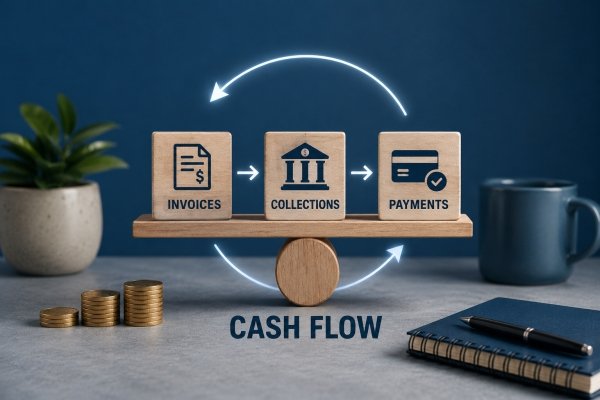
On July 7, 2026, Winnipeg based Telpay announced that it acquired Notch Financial, a Toronto based accounts receivable automation company. Terms weren't disclosed.
The acquisition brings accounts receivable, invoicing and payment collection together with Telpay’s existing payment, payroll and approval workflows, expanding the platform from payment execution toward SME cash flow management.
Mark Loewen, President of Telpay, said:
"Businesses don’t lose sleep over how payments are processed, they worry about whether they’ll have the cash they need when they need it."
Notch Adds Receivables To Telpay who has spent more than 40 years helping businesses manage money going out through supplier payments, payroll and approval workflows. Notch adds the incoming cash side, including invoices, collections and receivables visibility.
The transaction confirms that Telpay is going from payments execution toward cash flow control for Canadian SMEs.
The acquisition comes as Canadian small businesses are paying closer attention to receivables, working capital and payment timing.
Payment timing remains an important operating indicator for Canadian SMEs. See: Canadian Small Business Revenue Turns Negative In Q4.
Cash flow pressure doesn't always come from a lack of sales. It can come from slow collections, manual invoicing, fragmented approvals or poor visibility into what cash is actually available. That's why AR and AP automation are becoming core SME infrastructure rather than back office software.
The same trend appears in Open Finance SME Capital Access, where fresh invoice, payment, account and cash flow data can support faster credit decisions and better liquidity tools.
Payment companies are expanding beyond transaction processing into the operating layer around cash flow. See: Lloyds Expands SME Payments With Stripe Infrastructure.
The strategic question though is who owns the actual SME relationship? The account, the payment workflow, the operating data or the cash flow tools.
Telpay now covers both sides of SME cash flow: (1) Outgoing payments through supplier payments and payroll, and (2) Incoming cash through invoicing, collections and receivables visibility.
The platform value increases when a business can see both sides without stitching together separate tools.
Jordan Huck, CEO of Notch, said:
"Together, we see tremendous opportunities to deliver even more value as businesses manage every aspect of their cash flow."
Will Canadian SME payment platforms win by processing transactions, or by owning the cash flow workflow around invoices, collections, approvals and working capital?
The National Crowdfunding & Fintech Association (NCFA Canada) is a financial innovation ecosystem that provides education, market intelligence, industry stewardship, networking and funding opportunities and services to thousands of community members and works closely with industry, government, partners and affiliates to create a vibrant and innovative fintech and funding industry in Canada. Decentralized and distributed, NCFA is engaged with global stakeholders and helps incubate projects and investment in fintech, alternative finance, crowdfunding, peer to peer finance, payments, digital assets and tokens, artificial intelligence, blockchain, cryptocurrency, regtech, and insurtech sectors. Join Canada's Fintech & Funding Community today FREE! Or become a contributing member and get perks. For more information, please visit: [www.ncfacanada.org](http://www.ncfacanada.org)
| | |
|---|---|---|
| | |
July 9, 2026 | NCFA Market Activity | Banking And Lending, Artificial Intelligence And Data, Digital Identity And Trust, Risk Compliance And Regtech, Fintech And Innovation

On July 7, 2026, Trust Science announced a bank wide Master Services Agreement with TD to improve loan approval and origination turnaround times.
TD is initially using Trust Science’s income verification and reporting capabilities to support fast, secure, real time loan decisioning. TD Auto Finance Canada is the first TD business to use the capability and has begun rolling it out through 5,500 authorized dealers across Canada.
This is a practical in market AI lending infrastructure signal. A major Canadian bank is applying real time income verification and credit decisioning technology inside an active loan origination channel, starting with auto finance where speed, dealer experience and risk controls all paramount.
Income verification remains one of lending’s most stubborn workflow problems.
Borrowers want fast answers. Dealers want clean handoffs. Lenders need enough verified income evidence to make a responsible decision without slowing the application down. That tension is especially visible in auto finance, where the lending decision often happens inside a sales process.
Trust Science has built its platform around AI assisted credit decisioning, risk management and consumer reporting. The TD rollout extends that platform into real time income verification, giving lenders verified borrower information earlier in the loan origination process.
Real time income verification is a direct open finance use case. Permissioned financial data can help verify income, assess affordability, support cash flow analysis, flag fraud risk and reduce onboarding friction. See: Open Finance SME Capital Access.
TD Auto Finance gives Trust Science a high volume lending channel where verification speed affects the borrower, dealer and lender at the same time.
Michael McGhee, SVP and Head of TD Auto Finance Canada, said Trust Science’s solution helps TD offer dealers and clients “a simpler and faster way to do business with us.”
Trust Science positions itself as an AI powered credit decisioning and risk management platform, a licensed Consumer Reporting Agency and Canada’s third modern credit bureau.
Canada’s credit market has long been dominated by large incumbent bureaus and traditional credit files. Trust Science is competing from a different angle now with income verification, alternative data, AI decisioning, workflow automation and fraud reduction.
Evan Chrapko, founder and CEO of Trust Science, said TD is using the company’s real time decisioning platform and proprietary processes to get loan decisions made “as quickly as possible with less risk.”
That's the commercial promise. The regulatory and trust challenge is whether AI assisted decisioning can improve speed while keeping lending evidence accurate, explainable and fair.
AI credit decisioning only works when the underlying data is reliable.
Income, identity, fraud signals and borrower information have to be verified before automation can add value. Otherwise, faster decisioning only pushes weak inputs through the system faster.
Faster lending workflows need stronger verification controls. See: How Fraud Broke The Old Rules Of Trust And Verification.
That applies directly to lending. Faster origination is useful only if the lender can trust the borrower evidence, detect fraud and explain the decision path.
Will real time income verification become standard infrastructure for AI assisted lending, or stay limited to high speed channels like dealer finance?
The National Crowdfunding & Fintech Association (NCFA Canada) is a financial innovation ecosystem that provides education, market intelligence, industry stewardship, networking and funding opportunities and services to thousands of community members and works closely with industry, government, partners and affiliates to create a vibrant and innovative fintech and funding industry in Canada. Decentralized and distributed, NCFA is engaged with global stakeholders and helps incubate projects and investment in fintech, alternative finance, crowdfunding, peer to peer finance, payments, digital assets and tokens, artificial intelligence, blockchain, cryptocurrency, regtech, and insurtech sectors. Join Canada's Fintech & Funding Community today FREE! Or become a contributing member and get perks. For more information, please visit: [www.ncfacanada.org](http://www.ncfacanada.org)
| | |
|---|---|---|
| | |
July 9, 2026 | NCFA Market Activity | Artificial Intelligence And Data, Risk Compliance And Regtech, Cybersecurity And Fraud, Digital Identity And Trust, Payments And Money Movement, Digital Assets Blockchain And Tokenization

On July 8, the Cambridge Digital Innovation & Regulation Initiative (C:>DIR), hosted by Financial Innovation for Impact (Fii), launched the Global Agentic Regulator Hackathon. Applications are NOW OPEN for a worldwide challenge that brings together policymakers, regulators, AI researchers, engineers, financial institutions, fintechs, RegTechs, SupTechs, academics and technology innovators to develop practical, explainable and deployable agentic AI prototypes for public authorities. The National Crowdfunding & Fintech Association of Canada (NCFA) is participating as an Ecosystem Partner to help promote the initiative across global fintech ecosystems, including Canada's fintech, AI and innovation networks.
The virtual hackathon runs from July 8 to September 18, 2026, with concept note submissions due by July 31. It carries a US$100,000 prize pool, and winning teams will also be invited to present at the Singapore FinTech Festival, hosted by GFTN. The launch is supported by the BIS Innovation Hub, Global Financial Innovation Network (GFIN), Digital Regulation Cooperation Forum (DRCF), and a global group of supporters, ecosystem partners and academic institutions.
AI agents are already operating in financial services. The next question is whether regulators will have the tools to supervise them.
According to the organizers, the CCAF 2026 AI in Financial Services Global Report found that 58% of fintechs and 47% of traditional financial institutions are adopting agentic AI, compared with 28% of regulators. That gap is important because AI agents can recommend, transact, monitor, route, execute and coordinate across systems faster than traditional supervisory processes were designed to handle.
This is why the hackathon is strategically important. It treats agentic AI as a supervision and infrastructure issue, not just a productivity tool. Public authorities need better ways to monitor risks, test model behaviour, understand accountability and respond to market activity that can develop at machine speed.
Participants will develop prototypes across six challenge areas:
These themes reflect where financial supervision is likely to be tested first as AI systems begin initiating transactions, interacting with digital assets, providing financial guidance and coordinating increasingly complex financial activities.
For founders, researchers, fintech teams, RegTechs and infrastructure providers, the opportunity is not simply to build smarter AI. It is to help shape the supervisory capabilities that may define trusted digital finance as autonomous systems become more common.
The breadth of organizations involved is a strong signal. With regulatory partners, global financial innovation networks, technology firms, academic institutions and ecosystem groups participating, the hackathon shows that agentic AI oversight is becoming a shared public and private sector priority.
For Canadian participants, the timing is also practical. Canada has strengths in artificial intelligence, financial services, digital identity, payments, cybersecurity, digital assets and regulatory innovation. This gives Canadian builders a chance to contribute to global supervisory tools before standards and operating models become more established internationally.
The organizers are seeking multidisciplinary teams that combine regulatory knowledge with technical expertise, including:
| Milestone | Date |
| Preliminary round opens | July 8, 2026 |
| Concept submissions close | July 31, 2026 |
| Teams selected | August 4 to August 14, 2026 |
| Virtual build phase | September 1 to September 8, 2026 |
| Global demonstrations and regulator voting | September 15, 2026 |
| Winners announced at the C:>DIR Summit, Cambridge | September 18, 2026 |
Applications for the preliminary round are open until July 31, 2026. Regulators, AI researchers, engineers, fintechs, RegTechs, SupTechs, financial institutions, universities and technology innovators are invited to submit concept notes and develop practical agentic AI prototypes for the future of financial supervision.
Read the full challenge details and submit your application through the official C:>DIR Global Agentic Regulator Hackathon page.
The National Crowdfunding & Fintech Association (NCFA Canada) is a financial innovation ecosystem that provides education, market intelligence, industry stewardship, networking and funding opportunities and services to thousands of community members and works closely with industry, government, partners and affiliates to create a vibrant and innovative fintech and funding industry in Canada. Decentralized and distributed, NCFA is engaged with global stakeholders and helps incubate projects and investment in fintech, alternative finance, crowdfunding, peer-to-peer finance, payments, digital assets and tokens, artificial intelligence, blockchain, cryptocurrency, regtech, and insurtech sectors. Join Canada's Fintech & Funding Community today FREE! Or become a contributing member and get perks. For more information, please visit: www.ncfacanada.org
| | |
|---|---|---|
| | |
July 9, 2026

Most people think personal injury claims are won or lost in court. That's not how it works. The outcome gets decided long before trial, during the evidence-gathering phase. Strong documentation is what separates a settlement that actually covers your losses from a rejection letter sitting in your mailbox.
This article walks through exactly what evidence matters, how to collect it, and why insurers and courts in Halifax and across Nova Scotia weigh each type the way they do. Let's break down the main categories of evidence you'll need to build a winning claim.
Fault is everything. Without evidence that someone else caused your injury, no stack of medical records will get you a single dollar. What the insurer or court is really asking: did another party act carelessly, and did that carelessness directly cause your harm?
https://www.preszlerlaw-ns.com/ is where many injured Nova Scotians start once they realize how critical the liability question becomes. Fault evidence includes photos of the accident scene, dashcam or security camera footage, police reports from collisions, and witness statements gathered immediately after the incident. Each piece strengthens the picture that the defendant's conduct fell below a reasonable standard of care. And here's the catch: you need to move fast. Surveillance footage gets overwritten within 24 to 72 hours; witnesses' memories blur within days. In slip-and-fall cases, document that hazardous condition before the property owner fixes it. In car accidents, get the police collision report number at the scene so you can pull the full report later. A solid chain of fault evidence? That's your legal foundation.
Medical evidence pulls double duty. It connects your injuries to the accident, and it shows how serious those injuries really are. Insurance adjusters challenge both points routinely.
Your medical records should include:
Here's what catches people off guard: gaps in treatment. Insurers see missed appointments or delayed care and assume your injuries weren't that bad. Attend every appointment, follow your doctor's advice, and ask your providers to write down your symptoms at each visit. When a provider notes your condition matches a specific type of accident, that connection becomes extremely powerful. A written opinion from a specialist, an orthopaedic surgeon, neurologist, or similar, carries far more weight than a general note and is often requested in cases involving lasting or permanent damage. Keep every document, every referral letter, every test result in one organized place.
Compensation isn't just pain and suffering. You're entitled to claim actual financial losses, and you'll need documentation to back up every amount you ask for.
The most common financial loss categories:
Collect pay stubs, letters from your employer confirming missed time, recent tax returns, and receipts for everything related to recovery. Self-employed claimants get extra scrutiny, income is harder to prove, so bank statements, client invoices, and accountant letters all help. But here's the truth: don't assume the insurer will calculate your losses fairly. They won't. You have to present a clear, documented picture of exactly what this injury has cost you, both from day one and looking forward.
Your own story is evidence. Courts and insurers listen closely to how consistently and credibly you describe what the injury does to your daily life.
Start a pain journal right after the accident. Write entries daily or several times a week, capturing:
A journal kept faithfully over months beats a general statement made years later. Document conversations with your doctor about how you feel, and make sure those match what's in your medical file. When your journal, your medical records, and what you say all line up, adjusters and judges take notice. Any inconsistency gets used against you; consistency builds credibility. Personal accounts matter most in soft-tissue claims, chronic pain cases, or trauma cases where objective test results might be sparse.
Complex claims almost always need expert evidence. No matter how thorough your own documentation is, certain aspects require professional credentials to carry weight in court.
Common experts in Nova Scotia personal injury claims include:
Expert reports cost money, but they're often essential for serious injuries or significant wage loss claims. And when the defence hires its own expert, you get a battle of credentials and methods, which is why report quality matters enormously. Talk to your lawyer early about which experts will strengthen your particular case. In Nova Scotia, expert reports must be shared with the other side before trial, so getting them done early gives you time to shore up any weak points before a formal hearing happens.
Winning a personal injury claim in Halifax comes down to the strength and completeness of your evidence across five areas: proof of fault, medical documentation, financial loss records, your personal account, and expert opinions. Each one supports the others. Gaps in any single area give the insurer a reason to reduce or reject your claim. Start collecting evidence from day one, keep it all organized, and work with a lawyer who knows how to prepare and present that evidence inside Nova Scotia's legal system.
The National Crowdfunding & Fintech Association (NCFA Canada) is a financial innovation ecosystem that provides education, market intelligence, industry stewardship, networking and funding opportunities and services to thousands of community members and works closely with industry, government, partners and affiliates to create a vibrant and innovative fintech and funding industry in Canada. Decentralized and distributed, NCFA is engaged with global stakeholders and helps incubate projects and investment in fintech, alternative finance, crowdfunding, peer-to-peer finance, payments, digital assets and tokens, artificial intelligence, blockchain, cryptocurrency, regtech, and insurtech sectors. Join Canada's Fintech & Funding Community today FREE! Or become a contributing member and get perks. For more information, please visit: www.ncfacanada.org
| | |
|---|---|---|
| | |


August 26th, 2025

January 4th, 2024

June 1st, 2021

September 9th, 2020

July 9th, 2018

January 3rd, 2018

September 25th, 2017

June 20th, 2017

May 10th, 2017

December 14th, 2016