




Karsten Wenzlaff, Advisor
August 26th, 2025
Karsten Wenzlaff is a Crowdfunding and Fintech Expert from Germany. He is Secretary-General of Digit[...]


Report | Nov 28, 2024

Image: Global Asset and Wealth Management Survey 2024 (PwC)
PwC recently published a report called the 2024 Global Asset and Wealth Management Survey which was designed to evaluate perspectives on disruptive technologies in Asset and Wealth Management (AWM) industry from two key groups:
Below are 3 data-driven takeaways for fintech innovators and investors.
According to survey responders in aggregate, there's currently a mismatch between institutional investors and asset managers when it comes to demand for tokenized assets. While 59% of institutional investors believe technologies like blockchain will reduce barriers to investment, only 18% of asset managers currently offer digital assets as part of their portfolios.
This gap is an opportunity for fintech firms to build the infrastructure that makes digital assets accessible, compliant, and secure. Fintechs can act as the bridge between institutional demand and hesitant asset managers by blockchain platform solutions for tokenized trading or custody.

Image: Asset and Wealth Management Survey (PwC), Tokenization Gaining Popularity Across AWM Industry
Tokenization is one of the fastest growing trends in finance and is transforming the wealth management industry. It's not a pipe dream. It's here today and fundamentally changing how assets like private equity and real estate are managed and accessed. The tokenized investment market is projected to grow from $40 billion in 2023 to more than $317 billion by 2028 (annual growth rate exceeding 50%). More than 50% of institutional investors rank private equity as their preferred tokenized asset class followed by real estate and infrastructure.
Fintechs can build tools and trading systems to support asset managers and investors and help them access this growing market.
As the next generation of investors receive the 'great wealth transfer' from boomers and older generations handing down assets, there's real pressure on wealth managers to be comfortable with and use wealth management technologies. Younger investors will inherit $68 trillion over the next decade.
As investment interest grows for tokenization, and the great wealth transfer continues to younger and more tech savvy investors, there will be a growing demand for fintech, blockchain, AI, and wealthtech solutions. Fintech companies have a great opportunity to lead, innovate and command the future of wealth management.
 The National Crowdfunding & Fintech Association (NCFA Canada) is a financial innovation ecosystem that provides education, market intelligence, industry stewardship, networking and funding opportunities and services to thousands of community members and works closely with industry, government, partners and affiliates to create a vibrant and innovative fintech and funding industry in Canada. Decentralized and distributed, NCFA is engaged with global stakeholders and helps incubate projects and investment in fintech, alternative finance, crowdfunding, peer-to-peer finance, payments, digital assets and tokens, artificial intelligence, blockchain, cryptocurrency, regtech, and insurtech sectors. Join Canada's Fintech & Funding Community today FREE! Or become a contributing member and get perks. For more information, please visit: www.ncfacanada.org
 |  |  |
|---|---|---|
 |  |  |
Crypto | Nov 27, 2024

Image: Freepik
Trump Media & Technology Group (TMTG) who owns Truth Social recently filed a trademark application to the U.S. Patent and Trademark Office (USPTO) for "TruthFi", a cryptocurrency payment platform on November 18, 2024.
Based on the trademark application filing, TruthFi will be a platform to facilitate cryptocurrency transactions, so digital asset services could involve a digital wallet, card payment processing, asset management, custody or trading. Details and launch date were not mentioned but the filing aligns with TMTGs announcement to expand into digital asset services.
As Trump broadens his interest and assets in the world of crypto, it raises questions about conflict of interest issues given that Trump has dual roles as President-elect AND the owner of businesses that could benefit from favourable regulations. Also, Trump has previously declined to divest from his business empire and has not suggested that he has plans to do so during his upcoming term.
Richard Painter, Ethics lawyer:
“It’s a huge problem but it’s not a Trump specific problem. Just like it’s a huge problem that members of Congress are trading crypto while they fail to pass legislation regulating crypto and accept huge amounts of donations from the crypto industry.
President Trump ought to do what every other president has done: Divest personal assets, Trump Organization assets, everything that creates a conflict of interest with his official duties. And that includes Truth Social and crypto.”
Trump's new trademark and growing interest in cryptocurrency shows how closely his businesses are getting involved with the crypto world.
As his administration takes office in the new year, the decisions it makes about crypto regulation will shape the future of the sector in the U.S. while also likely benefiting his own companies profit.
The National Crowdfunding & Fintech Association (NCFA Canada) is a financial innovation ecosystem that provides education, market intelligence, industry stewardship, networking and funding opportunities and services to thousands of community members and works closely with industry, government, partners and affiliates to create a vibrant and innovative fintech and funding industry in Canada. Decentralized and distributed, NCFA is engaged with global stakeholders and helps incubate projects and investment in fintech, alternative finance, crowdfunding, peer-to-peer finance, payments, digital assets and tokens, artificial intelligence, blockchain, cryptocurrency, regtech, and insurtech sectors. Join Canada's Fintech & Funding Community today FREE! Or become a contributing member and get perks. For more information, please visit: www.ncfacanada.org
| | |
|---|---|---|
| | |
November 27, 2024

Image: Unsplash/Brian Wangenheim
Bitcoin has long been celebrated as a decentralized digital currency and a store of value. However, its functionality has traditionally been limited to peer-to-peer transactions and as a store of value.
In recent years, the landscape has shifted with the emergence of Decentralized Finance (DeFi) on Bitcoin, expanding its utility beyond simple transactions to encompass a wide array of financial services. This evolution is transforming Bitcoin from a static asset into a dynamic platform for financial innovation.
Read on to learn more about the growing DeFi ecosystem on Bitcoin.
Decentralized Finance (DeFi) refers to a suite of financial services built on blockchain technology that operate without traditional intermediaries like banks or brokers.
By leveraging smart contracts—self-executing contracts with the terms directly written into code—DeFi platforms enable users to engage in activities such as lending, borrowing, trading, and earning interest in a decentralized, permissionless manner. This paradigm shift offers greater accessibility, transparency, and control over financial assets.
While Ethereum has been the frontrunner in the DeFi space due to its robust smart contract capabilities, Bitcoin's entry into DeFi marks a significant milestone.
Historically, Bitcoin's scripting language lacked the flexibility required for complex smart contracts, limiting its use cases. However, technological advancements and the development of Layer 2 solutions have paved the way for DeFi applications on the Bitcoin network.
To overcome Bitcoin's inherent limitations, developers have introduced Bitcoin Layer 2 protocols that enhance its functionality. Examples of three exciting off-chain scaling protocols include Rootstock (RSK), Stacks, and Build on Bitcoin (BOB).
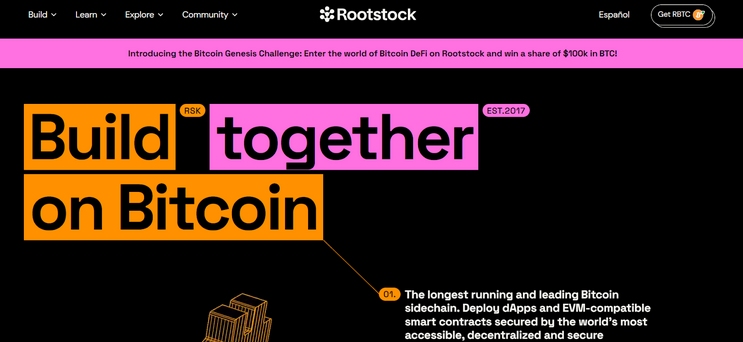
RSK is a sidechain that brings smart contract capabilities to Bitcoin. Using a two-way peg, it allows BTC to be converted into rBTC, which can then be utilized in various DeFi applications built on the RSK platform.
This integration enables functionalities such as lending, borrowing, and trading within the Bitcoin ecosystem.
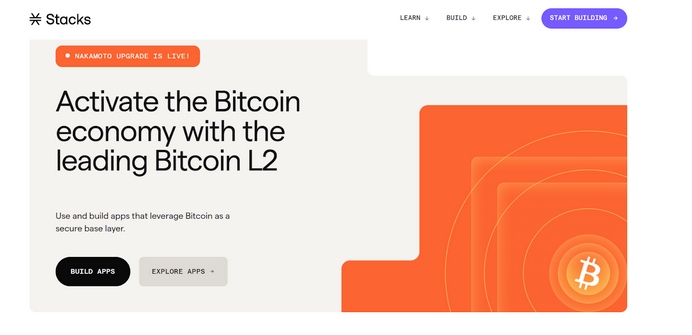
Stacks is a Layer 2 platform that introduces smart contracts and decentralized applications (dApps) to Bitcoin. It operates using a unique consensus mechanism called Proof of Transfer (PoX), which anchors Stacks' security to the Bitcoin blockchain.
This design allows developers to build complex applications while benefiting from Bitcoin's security and stability.

BOB is a hybrid layer-2 solution that combines the security of Bitcoin with the versatility of Ethereum. It allows developers familiar with the Ethereum Virtual Machine (EVM) to start building on Bitcoin immediately, utilizing best-in-class EVM tooling, wallets, analytics, and blockchain infrastructure.
BOB inherits security from Bitcoin's Proof of Work (PoW) consensus mechanism, contributing to Bitcoin's economy and providing usable decentralization for builders today. Additionally, BOB connects to both Bitcoin and Ethereum, sourcing liquidity from the two largest blockchain ecosystems and positioning itself as a leading solution for DeFi mass adoption.
The integration of DeFi into the Bitcoin ecosystem has led to the development of various applications that mirror traditional financial services.
Platforms like Sovryn, built on RSK and BoB, offer decentralized trading services where users can swap tokens directly from their wallets without relying on centralized exchanges. This model enhances security and reduces the risk of hacks associated with centralized platforms.
Bitcoin DeFi protocols such as ALEX on Stacks or Liquidium on the Bitcoin network enable users to lend their assets to earn interest or borrow against their holdings. These services operate without intermediaries, providing more favorable terms and greater accessibility to users worldwide.
Stablecoins pegged to fiat currencies are being introduced on Bitcoin's network through platforms like Sovryn's Sovryn Dollar (DLLR). These assets offer stability in value, making them suitable for everyday transactions and as a hedge against volatility.
Wallets designed for DeFi, such as the Xverse DeFi Wallet, OKX Wallet, and Leather, are gaining traction within the Bitcoin community. These wallets not only provide a secure way to store bitcoin but also integrate features like token swaps and access to DeFi applications on Layer 2 solutions. Their user-friendly interfaces make it easier for users to interact with the Bitcoin DeFi ecosystem.
The integration of DeFi into the Bitcoin ecosystem is still in its nascent stages but holds significant promise.
As technological advancements continue and Layer 2 solutions mature, Bitcoin's role in the DeFi space is expected to expand. This evolution could lead to a more inclusive financial system, leveraging Bitcoin's security and decentralization to offer a wide array of financial services to users globally.
The rise of DeFi on Bitcoin represents a pivotal development in the cryptocurrency landscape. By extending Bitcoin's functionality beyond a store of value to a platform for decentralized financial services, it opens new avenues for innovation and adoption.
The National Crowdfunding & Fintech Association (NCFA Canada) is a financial innovation ecosystem that provides education, market intelligence, industry stewardship, networking and funding opportunities and services to thousands of community members and works closely with industry, government, partners and affiliates to create a vibrant and innovative fintech and funding industry in Canada. Decentralized and distributed, NCFA is engaged with global stakeholders and helps incubate projects and investment in fintech, alternative finance, crowdfunding, peer-to-peer finance, payments, digital assets and tokens, artificial intelligence, blockchain, cryptocurrency, regtech, and insurtech sectors. Join Canada's Fintech & Funding Community today FREE! Or become a contributing member and get perks. For more information, please visit: www.ncfacanada.org
| | |
|---|---|---|
| | |
Crypto | Nov 26, 2024

Image: Jut a chill guy, Phillips Banks
Imagine logging onto social media and seeing your favourite viral meme like a cute pet or a celebrity's name turned into a cryptocurrency. At first it might feel like a quirky corner of internet culture but beneath the surface of the world of meme coins is arguably a ticking ticking time bomb with a growing number of legal disputes, ethical dramas, and financial volatility. Welcome to the latest iteration of the wild west of crypto.
Meme coins are cryptocurrencies that draw their identity from internet jokes or cultural references. Perhaps the most famous meme coin is 'Dogecoin'. What started off as a joke ended up making headlines with soaring market caps and high profile endorsements like Elon Musk. Meme coins thrive on social media hype but their value is driven by speculation rather than solid fundamentals. While that may be part of the fun, it's also where things go wobbly.
For example, an explosive meme coin called PNUT inspired by Peanut the squirrel (500,000 social media followers) who lived at Mark Longo's animal sanctuary in New York with Fred the raccoon. On Oct 30, state officials raided Longo's home and euthanized both animals due to laws against keeping wildlife as pets. The tragic death went viral and captured global attention during the U.S. presidential election with Elon Musk saying it was 'messed up' and DJ Vance citing 'government overreach'. Well Peanut's owner Mark Longo became furious when he found out that the crypto community had minted a coin based on his pet’s story. He called it exploitation and he fired back by launching his own token, "Justice for Pnut and Fred" and threatened a lawsuit.
In another example, Caitlyn Jenner, an American TV personality and retired Olympic gold medalist launched her own JENNER meme coin and promoted it but it landed her in legal trouble. Investors claimed her endorsement led to massive losses and that the coin was an unregistered security. Sad outcome considering what looked like a quick way to cash in on her celebrity status eventually turned into a courtroom drama.
And then there is the artist behind the viral 'Chill Guy' meme, Phillip Banks, was pissed that his work was used in multiple meme coin projects without his permission. As a result, he's pursuing legal action to reclaim control over his intellectual property which is a good reminder that behind the hype and humour, creators and artists are getting taken advantage of and bearing the brunt of exploitation.
Phillip Banks:
“Chill guy has been copyrighted. Like, legally. I'll be issuing takedowns on for-profit-related things over the next few days.”
While meme coins are all the rage because of their ability to capture cultural excitement, their value relies on viral buzz rather than actual utility or tech advancements. So meme coins are like a moth to a flame and their massive rise in popularity has created a perfect storm of legal challenges:
Meme coin tokens are changing the way we think about value, culture, and technology but they shine a light on the cracks and darker corners of crypto where there's an obvious need for better safeguards, clearer regulations, ethics and accountability, and more informed investing.
They are a magnet for both innovation and controversy. Some meme coins will mature into legitimate assets but most will be the digital Wild West of crypto. Stay safe and be aware.
The National Crowdfunding & Fintech Association (NCFA Canada) is a financial innovation ecosystem that provides education, market intelligence, industry stewardship, networking and funding opportunities and services to thousands of community members and works closely with industry, government, partners and affiliates to create a vibrant and innovative fintech and funding industry in Canada. Decentralized and distributed, NCFA is engaged with global stakeholders and helps incubate projects and investment in fintech, alternative finance, crowdfunding, peer-to-peer finance, payments, digital assets and tokens, artificial intelligence, blockchain, cryptocurrency, regtech, and insurtech sectors. Join Canada's Fintech & Funding Community today FREE! Or become a contributing member and get perks. For more information, please visit: www.ncfacanada.org
| | |
|---|---|---|
| | |
Regulation | Nov 22, 2024

Image: Freepik
On Nov 21, 2024, the U.S. Securities and Exchange Commission (SEC) announced that Gary Gensler SEC Chair will officially step down on January 20, 2025, aligning with President-elect Donald Trump's inauguration.
During his tenure as SEC Chair, Gary Gensler oversaw the aftermath of the GameStop trading frenzy, lawsuits against crypto and fintech giants like Binance, Coinbase, Uniswap, and Robinhood, enforced regulations during the SPAC boom, addressed controversies over meme stocks and market volatility from social media fuelled trading, implemented reforms in response to the Archegos Capital collapse, managed the regulatory response to the FTX bankruptcy, and negotiated the first full inspections of China-related audit firms by the Public Company Accounting Oversight Board (PCAOB).
On January 20, 2025 I will be stepping down as @SECGov Chair.
A thread 🧵⬇️
— Gary Gensler (@GaryGensler) November 21, 2024
According to the SEC's release, Gensler's key achievements:
Gensler's resignation could lead to major changes in how crypto and digital assets are regulated in the U.S. With Gensler's departure and Trump's pro-business/crypto approach, many industry experts are expecting crypto rules to become more transparent and relaxed. While Bitcoin has been on a torrid upward trajectory since the start of the year, news of Gensler's exit has pushed Bitcoin to the doorstop of $100,000 USD, it's most psychological barrier to date. So who will the next SEC Chair be and what will their approach be towards crypto?
The National Crowdfunding & Fintech Association (NCFA Canada) is a financial innovation ecosystem that provides education, market intelligence, industry stewardship, networking and funding opportunities and services to thousands of community members and works closely with industry, government, partners and affiliates to create a vibrant and innovative fintech and funding industry in Canada. Decentralized and distributed, NCFA is engaged with global stakeholders and helps incubate projects and investment in fintech, alternative finance, crowdfunding, peer-to-peer finance, payments, digital assets and tokens, artificial intelligence, blockchain, cryptocurrency, regtech, and insurtech sectors. Join Canada's Fintech & Funding Community today FREE! Or become a contributing member and get perks. For more information, please visit: www.ncfacanada.org
| | |
|---|---|---|
| | |
Crypto Policy | Nov 21, 2024

Image: Freepik/pvproductions
President-elect Donald Trump and his administration are gearing up for key leadership changes to drive innovation policy in the world's largest economy. This includes everything from appointing a new crypto-savvy SEC Chair to a new White House 'crypto czar' and the idea of a U.S sovereign wealth fund backed by digital assets. These policy changes will have ripple effects beyond American boarders. Canada needs to rethink its own strategies to remain competitive.
It's no secret that the current SEC Chair, Gary Gensler, is considering stepping down after a controversial three and a half years in the post. Reports are saying that Gensler will leave before the end of his term, as early as after U.S. thanksgiving. So with that out of the way, the race to a new SEC Chair is heating up and according to prediction market Kalshi, as of today, the top 3 leading candidates and their odds are:
The winner will redefine how the SEC approaches crypto policy potentially transitioning from what can only be called aggressive enforcement to a more collaborative approach that also benefits industry. This is one to watch however, thinking back to Gensler's appointment, the crypto industry thought he might be a positive influence on crypto given that he taught a crypto course at MIT Sloan's School of Management and understood blockchain and was also considered more progressive than his peers at the time.
Also, Trump's team is considering the creation of a White House crypto advisor position. This 'crypto czar' would act as point on federal policies related to digital assets and help bridge gaps between regulators, policymakers, and industry to help centralize decision making and establish a more transparent path for cyypto innovation in the U.S.
The CEO of Coinbase, Brian Armstrong, suggested that given America's $35 trillion dollar massive debt, the U.S. should diversify revenue sources and create a sovereign wealth fund and that crypto revenue generated would be distributed as dividends directly to every day Americans saying on X, "Every citizen then has skin in the game. Maybe Congress gets a slightly larger stake".
The idea has sparked a lively debate. Supporters like Cathie Wood of Ark Invest believes that the idea is transformative and could boost economic freedom and support long term growth. Skeptics on the other hand like Economist Peter Morici highlight the challenges saying it could work but it would require a clear source of funding and national consensus on long term objectives.
These U.S. crypto manoeuvres will only have a positive impact on crypto given how drastic the current situation is with Gensler at the helm who preferred to regulate by enforcement rather than establish a clear framework for crypto.
With the U.S. making innovative and bold moves in Crypto, the pressure is heating up for Canada to do the same to remain competitive, or risk falling behind. A friendlier crypto market in the U.S. with a clear regulatory framework could attract top Canadian crypto innovators to leave South.
Varying rules north and south of the border will create friction for companies looking to operate in both Canada and the U.S. if rules are different. There's an opportunity for Canada to align with the U.S. on fintech policies which would strengthen North American competitiveness as well.
As the U.S. is guns a blazing in crypto policy with leadership changes and bold initiatives that could significantly transform industry, Canada needs to adapt quickly to remain competitive or risk falling behind as the U.S. tries to establish itself as a global leader in blockchain innovation.
The National Crowdfunding & Fintech Association (NCFA Canada) is a financial innovation ecosystem that provides education, market intelligence, industry stewardship, networking and funding opportunities and services to thousands of community members and works closely with industry, government, partners and affiliates to create a vibrant and innovative fintech and funding industry in Canada. Decentralized and distributed, NCFA is engaged with global stakeholders and helps incubate projects and investment in fintech, alternative finance, crowdfunding, peer-to-peer finance, payments, digital assets and tokens, artificial intelligence, blockchain, cryptocurrency, regtech, and insurtech sectors. Join Canada's Fintech & Funding Community today FREE! Or become a contributing member and get perks. For more information, please visit: www.ncfacanada.org
| | |
|---|---|---|
| | |
Fintech Policy | Nov 19, 2024

Image: Chancellor of the Exchequer Rachel Reeves
The UK has a new Chancellor of the Exchequer, Rachel Reeves, who took office four months ago, delivered her first Mansion House speech on November 14, 2024 to set out her vision for the UK economy. The Chancellor is seen as the second most powerful position in the UK government after the Prime Minister, and has significant control over the country's economic direction and priorities, and works closely with businesses, financial institutions, and global partners to protect and grow the economy.
In her first major speech, the UK is doubling down with a mix of new technology and financial innovation including the creation of a stock exchange for growing businesses to using blockchain to issue government bonds. Her innovative plans reach pensions, green finance, open banking, and capital markets all to boost growth, attract investment, and make the UK a global leader in financial innovation. Here's a closer look at some of the key announced initiatives and why they matter.
Her speech announced the launch a new stock exchange by May 2025 called Platform for Innovation, Scaling Companies, and Emerging Sectors (PISCES) (Platform for Innovation, Scaling Companies, and Emerging Sectors) designed to help fast growing companies secure the scale-up funding they need to grow and succeed. Part of the idea is to shift capital markets to better support smaller companies with high potential that often face challenges in raising funds or going public.
A specialized exchange like this could help attract global investors and provide more liquidity for these companies to access. In Canada, there's the TSXV and CSE both of designed to benefit attractive startups in accessing public markets.
Reeves also announced the pilot launch of a blockchain-based platform to issue government bonds called Digital Gilt Instruments (DIGIT). By using the latest distributed ledger technology (DLT), the UK hopes to improve bond issuance by making it faster, cheaper, and more transparent. For decades, the bond issuance process has largely been untouched. A pilot like this could help transform public finance, offering insights and valuable lessons for governments globally looking to modernize their systems.
Rachel Reeves, UK Chancellor of the Exchequer
“Using distributed ledger technology for DIGIT marks a step change in how we issue government debt, making the process more efficient while maintaining investor confidence.”
Reeves announced plans to consolidate local government and work pension plans into Canadian or Australian style 'megafunds' to grow the UK economy. In doing so, she anticipates it to unlock about £80 billion for investment for infrastructure, housing, high growth initiatives. She makes it clear that this is a new strategy in how retirement savings are managed and prioritized in the UK, and such megafunds should be designed to benefit British savers instead of the Canada Pension Plan Investment Board profiting from UK assets.
Rachel Reeves, UK Chancellor of the Exchequer
"We must ensure that British savers benefit from the returns on productive assets, not just Canadian teachers and Australian professors investing in the UK."
In her speech, Reeves positioned the United Kingdom as a pioneer in sustainable finance and announced a framework for raising private capital for green projects such as wind farms and solar energy. The plan is to launch the Transition Finance Council in partnership with the City of London Corporation and industry leaders that will work to ensure companies have access to decarbonization finance.
Given Canada's renewable energy potential, Canada could establish a similar task force focused on attracting private capital for clean energy projects. Collaboration with the UK's Transition Finance Council could help accelerate global efforts to support the energy transition.
Reeves speech mentioned a few ways to recalibrate financial regulations to encourage innovation and growth without compromising stability such as overhauling consumer financial advice rules, and reducing banker pay deferral periods to attract top talent.
Rachel Reeves, UK Chancellor of the Exchequer:
“We’ve been regulating for risk, but now it’s time to regulate for growth.”
She doubled down on the UK's National Payments Vision reaffirming the UKs commitment to open banking, ensuring that customers benefit from improved services from safe data exchange.
Rachel Reeves, UK Chancellor of the Exchequer:
"We are laying the groundwork for London to remain the global hub for financial technology."
Open banking is still developing here in Canada but adoption and growth lessons from the UK can help Canada accelerate the implementation of the initiative which is called 'consumer-driven finance'.
Rachel Reeve's speech lays out a solid blueprint for using technology and smart policies to drive economic growth for the UK. It's a clear message that says in order to stay competitive, the country has to take bold steps and be open to change. Lessons that Canada should learn from.
The National Crowdfunding & Fintech Association (NCFA Canada) is a financial innovation ecosystem that provides education, market intelligence, industry stewardship, networking and funding opportunities and services to thousands of community members and works closely with industry, government, partners and affiliates to create a vibrant and innovative fintech and funding industry in Canada. Decentralized and distributed, NCFA is engaged with global stakeholders and helps incubate projects and investment in fintech, alternative finance, crowdfunding, peer-to-peer finance, payments, digital assets and tokens, artificial intelligence, blockchain, cryptocurrency, regtech, and insurtech sectors. Join Canada's Fintech & Funding Community today FREE! Or become a contributing member and get perks. For more information, please visit: www.ncfacanada.org
| | |
|---|---|---|
| | |


August 26th, 2025

January 4th, 2024

June 1st, 2021

September 9th, 2020

July 9th, 2018

January 3rd, 2018

September 25th, 2017

June 20th, 2017

May 10th, 2017

December 14th, 2016