





Karsten Wenzlaff, Advisor
August 26th, 2025
Karsten Wenzlaff is a Crowdfunding and Fintech Expert from Germany. He is Secretary-General of Digit[...]


Bank of Canada | Oct 14, 2025

While almost everyone knows and/or has come to the same conclusion at one point or another, to hear the Bank of Canada's Senior Deputy Governor Carolyn Rogers deliver the same warning at the Canadian Club in Toronto on October 9, 2025, signals that perhaps the political critics against introducing more innovation and competition in the banking industry are going to have to acquiesce or Canada's economy and living standards will continue to crumble. The Bank of Canada's speech veers from the institutions usual restraint, which was published under the speech title, 'Productivity's competitive edge'.
In short, Rogers said while Canada’s banking system remains stable, it is also highly concentrated, a structure now holding back innovation, competition, and national productivity. Below we break down some of the key and relevant quotes.
1. “It would also be hard to argue, on any objective measure, that Canada’s banking system is anything other than an oligopoly.”
Rogers’ statement cut through years of careful language. Six institutions dominate almost every part of the financial system. When a few players control access to credit, payments, and capital, competition (and thus productivity) slows. Oligopolist margins stay high not from efficiency but from market power.
Consumers face limited choice, and startups face unfair barriers that restrict their ability to grow.
Over time, and in the face of growing geopolitical risk, the impact of stagnation ripples across the economy as productivity weakens, innovation slows, and the cost of doing business is stubbornly high.
2. “The six largest banks collectively hold about 93 percent of all banking assets.”
It's immensely profitable for banks to scale without real competition. When a handful of banks dominate that are protected by the government, the incentive to innovate diminishes.
New entrants face steep obstacles that make entry prohibitively expensive. Customer mobility is low because switching banks is difficult, and incumbents have little reason to compete on service or cost.
This level of concentration kills inertia before it's had a chance to get off the ground. A sort of regulatory conservatism where policy focuses on maintaining stability instead of competition and encouraging growth.
It also contributes to the misallocation of capital, with funding often directed toward established low-risk assets instead of dynamic and productive new ventures.
3. “Many argue that this level of concentration has clear negative impacts on productivity, innovation, capital allocation, cost and consumer choice.”
The adverse impacts of this prolonged conservative approach is visible in every part of the financial system. Weakened competitive pressure keep fees high and innovation limited. Fintech firms and non banks are stifled by access restrictions and a lack of infrastructure sharing.
The dominance of large incumbents has created a drag on productivity, discouraging foreign and domestic investment in innovative financial technologies and systems. Regulators, under constant lobbying pressure from powerful incumbent players, risk capture and caution.
Consumers end up paying more, while the wider economy suffers from slower capital formation and lower economic growth.
4. “Greater contestability, more new entrants and more innovation in our financial sector would lead to competition that’s good for consumers, for productivity and for our economy.”
Rogers' speech didn't stop at the problems. She pointed directly at the solutions that are actively in Canada's financial innovation pipeline that would open markets and increase contestability (read: competition).
Real Time Rail and open banking were designed to do just that. Both initiatives aim to make payments faster and more accessible while empowering consumers to use their data to get better services.
Yet both have been slowed by lack of political urgency. Every delay reinforces the oligopoly’s power and widens Canada’s productivity gap with other advanced economies.
5. “We should lean into it.”
Rogers closed by calling for action. Canada’s stability is valuable, but without competition, it becomes stagnation. Stability alone cannot deliver growth or innovation.
The future depends on whether policymakers are willing to favour market openness, accountability, and the kind of innovation that allows new participants to compete on equal ground.
While Canada’s policymakers have inched towards open banking and Real Time Rails, political will remains uncertain. The government signalled intent in previous statements, and regulators have continued to prepare the technical frameworks.
However industry and fintech groups and business leaders need visible deadlines, transparent implementation plans, and strong data rights today, not years from now after already waiting half a decade.
But rhetoric could be changing into real momentum because Canada's back is up against the wall and success depends on whether political leaders, not only regulators, commit to timelines, accountability, and measurable progress.
The federal economic budget is due this fall, and if the statement lacks specific commitments, the oligopoly will remain untouched yet again. If it includes firm milestones, open access, and clear delivery dates, Canada could finally begin to modernize its financial infrastructure and restore productivity growth.
By calling Canada’s banking system an oligopoly, the Bank of Canada directly linked banking concentration to productivity. Real Time Rails and open banking are are linchpins to unlock competition, expand consumer choice, and modernize how money moves. The National Crowdfunding and Fintech Association of Canada continues to advocate for more competition, access to capital, and policy frameworks that enable fintech innovation.
 The National Crowdfunding & Fintech Association (NCFA Canada) is a financial innovation ecosystem that provides education, market intelligence, industry stewardship, networking and funding opportunities and services to thousands of community members and works closely with industry, government, partners and affiliates to create aa vibrant and innovative fintech and funding industry in Canada. Decentralized and distributed, NCFA is engaged with global stakeholders and helps incubate projects and investment in fintech, alternative finance, crowdfunding, peer-to-peer finance, payments, digital assets and tokens, artificial intelligence, blockchain, cryptocurrency, regtech, and insurtech sectors. Join Canada's Fintech & Funding Community today FREE! Or become a contributing member and get perks. For more information, please visit: www.ncfacanada.org
 |  |  |
|---|---|---|
 |  |  |
Oct 14, 2025
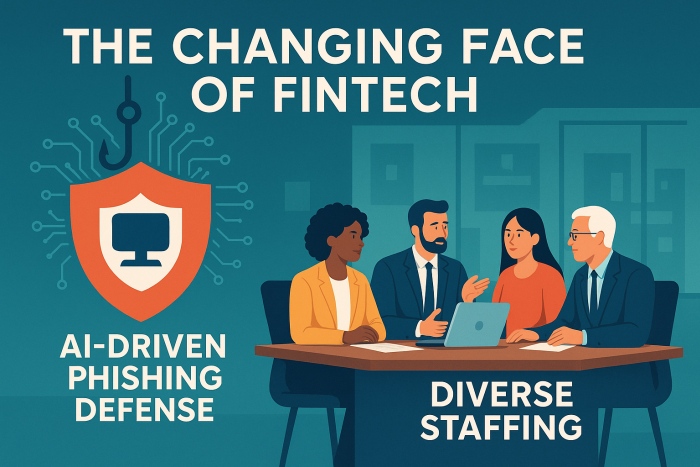
The world of fintech moves faster than most industries.
Every week brings a new regulation, an emerging technology, or a cyber threat that can change the way startups operate.
Among all these moving parts, two factors stand out as game-changers: AI-driven phishing defense and diverse staffing.
At first glance, they may seem unrelated—one is a tech safeguard, the other a people strategy—but in reality, they’re deeply connected.
Diverse staffing means building teams that represent different backgrounds, cultures, genders, and perspectives.
It’s not just about filling quotas; it’s about creating a mix of thinkers who can see problems and opportunities from multiple angles.
In fintech, where innovation and security are crucial, having diverse minds at the table helps companies anticipate risks others might overlook.
I once worked with a startup that struggled to understand why their mobile banking app wasn’t resonating with certain communities.
After bringing in a multicultural design team, they realized that small UI details—like language tone and icon choices—were alienating non-native English speakers.
Once those adjustments were made, engagement skyrocketed.
Diverse staffing isn’t a buzzword—it’s a direct path to resilience and creativity.
Startups that prioritize inclusivity create stronger internal networks and make better, faster decisions.
Phishing attacks have become one of the biggest threats to fintech.
Hackers no longer rely on sloppy scams; they use advanced AI tools to mimic authentic company communications.
In one incident I witnessed, a financial startup received what appeared to be a vendor invoice email.
The tone, logo, and even the metadata looked legitimate—but it was a targeted phishing attempt powered by AI-generated content.
Because one employee noticed subtle inconsistencies, the company avoided a potential breach worth millions.
That awareness came from training sessions led by a culturally diverse security team that understood how different communication styles could be exploited in phishing attacks.
Their unique insights into language nuances helped them spot what others missed.
AI phishing defense systems rely on machine learning to detect abnormal patterns—strange email origins, inconsistent phrasing, or odd click behavior.
But machines alone can’t interpret every context correctly.
That’s where diverse staffing bridges the gap.
People from different linguistic and cultural backgrounds can identify red flags that AI may misinterpret.
For instance, an employee fluent in multiple languages might recognize that an email claiming to be from a French client used incorrect business etiquette or spelling conventions.
A cybersecurity engineer from another region might catch phishing attempts that play on local banking jargon.
This mix of perspectives strengthens the AI’s learning loop—feeding it richer, more nuanced data to detect future threats.
Customers in fintech trust brands that understand their specific needs and communication styles.
When users see themselves represented in a company’s workforce, that trust deepens.
A diverse team doesn’t just improve cybersecurity—it enhances customer relationships and global reach.
Take digital payment startups expanding into international markets.
Having employees who understand local financial systems, traditions, and risk perceptions can make product launches smoother.
This firsthand knowledge ensures compliance with cultural expectations and helps prevent unintentional errors that could trigger regulatory scrutiny.
When I consulted for a mid-sized fintech company, their hiring process focused almost entirely on technical skills.
They had brilliant engineers, but their cybersecurity incidents kept rising.
Once they diversified their recruitment—bringing in specialists from different regions, languages, and genders—everything changed.
The team’s brainstorming sessions became more dynamic, and phishing simulations revealed a 40% improvement in detection rates.
Their success wasn’t accidental.
Diverse staffing created an environment where people felt empowered to question assumptions and propose unconventional ideas.
That mindset proved invaluable for strengthening AI defense systems and developing smarter internal training modules.
AI can process massive amounts of data faster than any person, but it lacks intuition.
Humans—especially those with varied experiences—excel at reading emotional cues, tone, and intent.
For example, a phishing email designed to mimic urgency might trick a machine’s keyword filter but feel “off” to a human reader.
A multicultural security team understands that emotional manipulation looks different across cultures.
In some regions, scammers use politeness and flattery; in others, they exploit authority and hierarchy.
Combining AI’s analytical power with these human instincts creates a more holistic defense system.
Startups thrive when teams move quickly, communicate openly, and challenge each other’s thinking.
Diversity encourages all three.
When employees come from different walks of life, discussions become richer, and blind spots get smaller.
It’s no surprise that companies with inclusive leadership outperform competitors in innovation and market growth.
In one fintech accelerator program, a group of startups was asked to pitch AI-based security solutions.
The winning team wasn’t the one with the most funding or tech power—it was the one with members from six countries and a balanced gender ratio.
Their final product succeeded because it accounted for human error, cultural behavior, and ethical considerations that others ignored.
To integrate diversity and AI defense effectively, fintech startups should:
Tomorrow’s fintech ecosystem won’t rely solely on firewalls and encryption—it will depend on the collective intelligence of humans and machines.
Diverse staffing ensures that AI systems are trained with better context and that decision-making remains human-centered.
This hybrid model of defense and inclusion isn’t just ethical; it’s strategic.
The startups that blend AI technology with human diversity won’t just survive—they’ll lead.
They’ll build systems that can outsmart cybercriminals, earn global trust, and adapt faster than ever before.
Innovation in fintech is no longer just about coding speed or funding size.
It’s about who’s sitting at the table, what experiences they bring, and how they collaborate with technology.
AI phishing defense provides the armor, but diverse staffing builds the strength behind it.
When those two forces align, fintech startups transform from vulnerable targets into resilient, future-ready organizations.
The National Crowdfunding & Fintech Association (NCFA Canada) is a financial innovation ecosystem that provides education, market intelligence, industry stewardship, networking and funding opportunities and services to thousands of community members and works closely with industry, government, partners and affiliates to create aa vibrant and innovative fintech and funding industry in Canada. Decentralized and distributed, NCFA is engaged with global stakeholders and helps incubate projects and investment in fintech, alternative finance, crowdfunding, peer-to-peer finance, payments, digital assets and tokens, artificial intelligence, blockchain, cryptocurrency, regtech, and insurtech sectors. Join Canada's Fintech & Funding Community today FREE! Or become a contributing member and get perks. For more information, please visit: www.ncfacanada.org
| | |
|---|---|---|
| | |
AI Ethics | Oct 10, 2025

Image: Freepik
On October 7, 2025, AP news reported that Deloitte Australia has agreed to refund part of a $440,000 AUD government contract for not disclosing the use of AI and delivering a 237 page welfare report to the Department of Employment and Workplace Relations (DEWR) that was riddled with AI generated errors, fabricated quote, non-existing sources and incorrect legal references.
Deloitte Australia subsequently returned part of its fee and reissued a corrected report with full disclosure that AI had been used while correcting the identified errors, raising questions around how oversight can keep pace with growing enterprise AI adoption.
According to the Guardian's analysis of Deloitte's AI mistake, the DEWR report was first published in July 2025, and not until several months later did University of Sydney researcher Chris Rudge first detect the fake academic references embedded throughout Deloitte’s report. He described the contents as clearly AI generated, such as strange book titles and misattributed legal quotes.
Senator Barbara Pocock later criticized the firm’s use of AI saying, "[Deloitte] misused AI and used it very inappropriately: misquoted a judge, used references that are non-existent”.
Shame on Deloitte. Bigger shame on Govt: $440k contract for rubbish work: “Deloitte has admitted to using generative AI for a core analytical task; but it failed to disclose this in the first place.” pic.twitter.com/QLM1Y4kp3u
— Barbara Pocock (@BarbaraPocock) October 5, 2025
The Deloitte case shows how unchecked automation can weaken confidence in institutions that depend on verified data and transparent reporting. For fintechs and financial institutions, it reinforces that every AI-assisted process from compliance to portfolio analysis needs accountable oversight and clear audit trails.
"Oversight can be human, automated, or hybrid, but it must always be explainable and verifiable."
Canadian regulators are also under pressure to ensure that AI tools used in finance meet standards of traceability and accountability. Embedding disclosure requirements, validation checkpoints, and auditable review logs can prevent governance breakdowns before they escalate.
Consulting and financial firms that apply AI ethically and responsibly will maintain (and grow) their credibility, while those that don’t risk lasting damage to their reputation. According to news reports, at least the report recommendations were in tact. Accountability is the real audit.
The National Crowdfunding & Fintech Association (NCFA Canada) is a financial innovation ecosystem that provides education, market intelligence, industry stewardship, networking and funding opportunities and services to thousands of community members and works closely with industry, government, partners and affiliates to create aa vibrant and innovative fintech and funding industry in Canada. Decentralized and distributed, NCFA is engaged with global stakeholders and helps incubate projects and investment in fintech, alternative finance, crowdfunding, peer-to-peer finance, payments, digital assets and tokens, artificial intelligence, blockchain, cryptocurrency, regtech, and insurtech sectors. Join Canada's Fintech & Funding Community today FREE! Or become a contributing member and get perks. For more information, please visit: www.ncfacanada.org
| | |
|---|---|---|
| | |
Cybersecurity | Oct 9, 2025
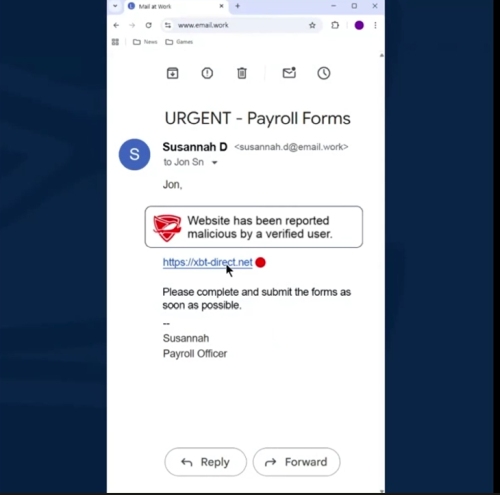
Image: Stingray Security demo image (Winner of ScamShield Challenge, Oct 2025)
On October 9, 2025, the Alberta Securities Commission (ASC) announced that Stingray Security had won first place in the ScamShield: Investor Protection Challenge, a collaborative initiative launched last year by the ASC, Edmonton Police Foundation (EPF), and Edmonton Police Service (EPS).
The challenge was created to find new ways to fight the growing problem of online crypto investment fraud. More than 30 solutions were submitted after the program’s launch in September 2024. Two concepts were chosen to move forward in January 2025, and Stingray emerged as the top solution after further testing and development.
According to the ASC’s January 2025 update, more than 60% of the $309 million in investment fraud losses in 2023 were tied to crypto scams, according to the Canadian Anti-Fraud Centre. There's an urgent need for better tools and collaboration to protect investors.
ScamShield is focused on prevention and education by combining regulatory oversight, community engagement, and fintech innovation. For fintechs, investors, and digital finance leaders, the initiative demonstrates how regulators and entrepreneurs can co-create solutions that build confidence in online markets and reduce fraud risk.
Ron Anderson, CIO/CTO at the Edmonton Police Service Innovation and Information Bureau:
"Online investment scams have emerged as a preferred method for fraudsters, exploiting the public's limited experience in the fast-changing world of digital finance. These crimes are far from victimless – behind every fraudulent scheme are hardworking individuals whose savings have been compromised. As law enforcement, our mission goes beyond holding perpetrators accountable, we must also build public confidence in the integrity of our financial systems. The Stingray Security solution is another powerful tool that investors can use to safeguard themselves and avoid becoming victims of these devastating crimes."
Canadian cybersecurity company Stingray Security developed a browser-based protection tool that identifies risky website links and blocks threats in real time. The product defends users against phishing, fake investment platforms, and other fraudulent activity linked to crypto scams. It is available free of charge and can be downloaded directly from the Google Chrome Web Store. The technology uses in-browser protection to stop malicious activity before harm occurs, offering instant protection for individuals, families, or workplaces.
Ian MacKinnon, co-founder and Chief Technology Officer of Stingray Security:
“We built Stingray so anyone can start using state-of-the-art protection in seconds, whether at work, at home, or to protect loved ones—all for free.”
Programs like ScamShield prove that regulators and entrepreneurs can collaborate to develop practical tools that deliver measurable results for investors and communities. As fraud continues to evolve, public and private cooperation will be essential to maintaining trust in digital markets and strengthening financial resilience coast to coast.
The National Crowdfunding & Fintech Association (NCFA Canada) is a financial innovation ecosystem that provides education, market intelligence, industry stewardship, networking and funding opportunities and services to thousands of community members and works closely with industry, government, partners and affiliates to create aa vibrant and innovative fintech and funding industry in Canada. Decentralized and distributed, NCFA is engaged with global stakeholders and helps incubate projects and investment in fintech, alternative finance, crowdfunding, peer-to-peer finance, payments, digital assets and tokens, artificial intelligence, blockchain, cryptocurrency, regtech, and insurtech sectors. Join Canada's Fintech & Funding Community today FREE! Or become a contributing member and get perks. For more information, please visit: www.ncfacanada.org
| | |
|---|---|---|
| | |
Sep 29, 2025

Image: Freepik/Rawpixel.com
Commercial insurance is a topic that every small business owner must eventually face. Is it worth the investment?
For many, commercial insurance can seem like just another expense on a list already filled with costs.
But look closer, and it becomes clear that commercial insurance is much more than a routine budget item; it is a vital safeguard that can secure the future of a small business against unexpected setbacks.
Small businesses operate with limited resources, which makes them especially vulnerable to unforeseen events. From lawsuits and accidents to theft and cyberattacks, a single incident can cost more than a business can afford to pay out of pocket. Small business insurance like commercial insurance steps in to absorb these shocks, covering legal fees, property repairs, settlements, and medical costs, so business owners aren’t left stranded during emergencies.
Running a small business without insurance is risky. Many entrepreneurs underestimate how frequently claims happen. A customer slipping on a wet floor, a fire damaging inventory, data theft from a cyberattack, these are real scenarios that occur more often than most people realize. Claims like these can easily spiral into six-figure costs, threatening the survival of any business without insurance protection.
One of the most compelling reasons to carry commercial insurance is financial security. Even a minor accident or lawsuit can drain years of savings or hard-earned profits. But there is more: operating without required coverage may expose a business to legal fines, penalties, or even forced closure, depending on local laws and industry regulations. Insurance helps businesses stay compliant, protect their assets, and avoid personal liability, meaning creditors can’t go after owners’ personal property to settle business debts.
Beyond direct financial protection, commercial insurance offers peace of mind that allows owners to focus on growth, rather than worrying about what could go wrong. The right insurance policy signals professionalism and reliability, reassuring clients, partners, and lenders. Many large clients or landlords won’t enter contracts unless a business can show proof of adequate coverage. This trust factor is essential for winning new deals and maintaining long-term relationships.
Additionally, working with an insurance broker can provide valuable support during claims. These experts help navigate paperwork and negotiations, ensuring fair treatment and speedy resolutions. With their guidance, business owners can get back to work faster after a loss and avoid costly mistakes.
Every small business faces unique risks. A restaurant might be concerned about fire or food safety, while a consultancy might worry about professional errors. Common types of commercial insurance include general liability, property protection, and professional liability. It’s important to map risks and buy policies tailored to actual exposures, rather than relying on generic plans or picking coverage based solely on price.
Regular reviews and updates are critical, as coverage should reflect business growth and changes. What worked when a business started may become inadequate as revenue and staff increase. Annual check-ins with a broker can help keep insurance aligned with current needs.
It’s important to know what commercial insurance does not cover. Most policies exclude routine wear and tear, intentional acts, criminal activities, and government fines. Some disasters, like major floods or earthquakes, require separate endorsements. Understanding exclusions allows business owners to add extra protection as needed and avoid surprises during a claim.
For small businesses, commercial insurance is not just worth it; it’s essential. It protects years of hard work and investment, ensures legal and financial security, enhances credibility, and offers expert support in times of crisis. Investing in the right coverage isn’t just good business sense; it’s the key to long-term stability and peace of mind.
The National Crowdfunding & Fintech Association (NCFA Canada) is a financial innovation ecosystem that provides education, market intelligence, industry stewardship, networking and funding opportunities and services to thousands of community members and works closely with industry, government, partners and affiliates to create aa vibrant and innovative fintech and funding industry in Canada. Decentralized and distributed, NCFA is engaged with global stakeholders and helps incubate projects and investment in fintech, alternative finance, crowdfunding, peer-to-peer finance, payments, digital assets and tokens, artificial intelligence, blockchain, cryptocurrency, regtech, and insurtech sectors. Join Canada's Fintech & Funding Community today FREE! Or become a contributing member and get perks. For more information, please visit: www.ncfacanada.org
| | |
|---|---|---|
| | |
Regulation | Sep 24, 2025

Image: Freepik
On September 13, 2025, Thailand froze approximately 3 million bank accounts in a sweeping anti-scam campaign. Authorities targeted around 177,000 mule accounts linked to fraud. Wisit Wisitsora of Thailand’s Digital Economy and Society Ministry stated:
“We urge the public not to panic. The suspension is only temporary.”
Banks imposed daily transfer caps ranging from 50,000 to 200,000 baht (approx. $2164 CAD - $8657 CAD at today's forex rates) and froze flagged transactions.
Commercial banks could suspend funds for three days, with police empowered to extend freezes up to seven days. While designed to curb online fraud, many individuals and small businesses described being locked out of their only source of funds, leaving households unable to pay for food or bills.
Facing backlash, regulators introduced safeguards. Innocent users can now expect restoration within hours to one day. Banks are required to notify customers of freezes via SMS or mobile banking and to unfreeze wrongly blocked funds proactively. Officials emphasized that disputed amounts are suspended, not entire balances.
Around the world, regulators from the EU to the U.S. and Canada are grappling with similar challenges as regulators expand digital fraud controls. What the Thailand case shows is that the credibility of financial systems depends not only on the strength of anti-scam tools but also on transparent safeguards.
If freezes become a blunt instrument, they risk driving people out of regulated channels and weakening financial inclusion. For fintechs and policymakers, the global lesson learned is that fraud prevention must be paired with due process to preserve trust.
Fraud-related losses in Thailand exceed 6 billion baht annually (approx $200M CAD), but freezing millions of accounts without due process undermines trust in banking.
"The Thai case clearly shows the risk when rapidly scaled enforcement collides with consumer rights. Without transparent criteria, real-time notifications, and clear appeals, innocent users face financial harm."
Legal experts warn this could expose authorities to civil claims and property rights challenges. What if citizens turn to cash, crypto, or unregulated channels instead?
Canada faced a similar backlash during the 2022 trucker protests, when the government invoked the Emergencies Act and froze over 200 bank accounts containing nearly $8M CAD without court orders. The measures were lifted within days, but the incident triggered several knee jerk reactions and lasting debate about transparency, due process, and the role of financial institutions in enforcing emergency powers.
Similar debates are underway in other regions, such as the United States with proposals like the Fairness in Banking Act, which NCFA has examined for its consumer protection impact. The common challenge is ensuring that stronger enforcement powers don't override due process or weaken trust in financial systems.
Both the Thailand crackdown and the Canadian freeze highlight how well intentioned interventions can spiral into government overreach if consumer safeguards are weak. Independent oversight, transparent criteria, communication protocols, and effective redress mechanisms are essential.
As fintechs use AI to spot fraud, regulators need to keep rules fair and accountable. Protecting consumers while keeping trust in financial services is key to Canada’s future growth and inclusion.
The National Crowdfunding & Fintech Association (NCFA Canada) is a financial innovation ecosystem that provides education, market intelligence, industry stewardship, networking and funding opportunities and services to thousands of community members and works closely with industry, government, partners and affiliates to create aa vibrant and innovative fintech and funding industry in Canada. Decentralized and distributed, NCFA is engaged with global stakeholders and helps incubate projects and investment in fintech, alternative finance, crowdfunding, peer-to-peer finance, payments, digital assets and tokens, artificial intelligence, blockchain, cryptocurrency, regtech, and insurtech sectors. Join Canada's Fintech & Funding Community today FREE! Or become a contributing member and get perks. For more information, please visit: www.ncfacanada.org
| | |
|---|---|---|
| | |
Funding | Sep 24, 2025

Image courtesy of PRNewswire, Mycroft
On Sep 22, 2025, Toronto-based AI startup Mycroft announced that their agentic AI Security and Compliance Officer has emerged from stealth with $3.5 million USD in seed funding to accelerate product development and expand its reach. The funding round was led by Luge Capital with participation from Brightspark Ventures and Graphite Ventures, alongside existing investors Ripple Ventures, Developer Capital, Antler, BoxOne Ventures, and strategic angels.
This latest round follows a $1.2 million USD pre-seed round last September 2024, reported by BetaKit. Together, the two rounds bring Mycroft’s total funding to approximately $4.7 million USD.
The new capital will go towards product enhancements, expanded go to market initiatives, and scaling up operations. According to SecurityWeek, the platform currently offers modules for cloud security, device security, application protection, and audit preparation. The strategy is a direct response to increasing demand for automation in enterprise compliance and security, as companies face escalating compliance requirements from regulators around the globe.
Security and compliance functions have traditionally been fragmented across multiple tools, manual processes, and spreadsheets. Mycroft’s core innovation is a single AI-driven platform that acts as a Security and Compliance Officer. Behind the scenes, it is powered by no-code AI agents that handle specialized workflows such as monitoring cloud infrastructure, enforcing security policies, managing incidents, and preparing for audits. This design gives companies one platform to manage security and compliance, while multiple no-code AI agents work in the background on specialized tasks.
Mike Kim, Co-founder and CEO of Mycroft:
“Security shouldn’t be a burden. It should be a superpower. Our goal is to give every company access to enterprise grade security without needing a massive team. Mycroft’s AI agents don’t just automate tasks, they elevate the way teams operate, helping them move faster and stay protected from day one.”
Although Mycroft was in stealth mode, they have already signed more than 50 customers in its first six months. Early adopters include Superwhisper, Evolo, CoVet, Unified, Willful, Wisedocs, and Weave (YC25). The rapid uptake for enterprise grade security and compliance solutions highlight clear market need, especially among fast growing tech companies.
Karim Gillani, General Partner at Luge Capital highlights the importance of placing compliance at the center of trust:
“Security and compliance have evolved from manual back office functions to front line priorities that can shape customer experiences and brand reputation. Mycroft’s AI Security and Compliance Officer is the teammate that every company needs in order to stay safe.”
The AI security sector is increasingly crowded, with startups and established firms racing to deliver solutions in cloud protection, identity management, governance, and audit readiness. Mycroft differentiates itself by focusing on autonomous agentic AI that operates with minimal configuration and delivers end to end compliance outcomes. It offers a cost efficient alternative for startups and mid sized companies that lack large security operations teams.
By integrating modules that span from device security to regulatory audit support, Mycroft aims to give scaling companies confidence to grow while maintaining compliance.
Mycroft is well positioned to pursue sectors with heavy compliance such as fintech, healthcare, and SaaS. As regulations tighten globally, demand for solutions that can act as a virtual compliance officer is expected to grow. For more details, visit Mycroft’s official site.
The National Crowdfunding & Fintech Association (NCFA Canada) is a financial innovation ecosystem that provides education, market intelligence, industry stewardship, networking and funding opportunities and services to thousands of community members and works closely with industry, government, partners and affiliates to create aa vibrant and innovative fintech and funding industry in Canada. Decentralized and distributed, NCFA is engaged with global stakeholders and helps incubate projects and investment in fintech, alternative finance, crowdfunding, peer-to-peer finance, payments, digital assets and tokens, artificial intelligence, blockchain, cryptocurrency, regtech, and insurtech sectors. Join Canada's Fintech & Funding Community today FREE! Or become a contributing member and get perks. For more information, please visit: www.ncfacanada.org
| | |
|---|---|---|
| | |



August 26th, 2025

January 4th, 2024

June 1st, 2021

September 9th, 2020

July 9th, 2018

January 3rd, 2018

September 25th, 2017

June 20th, 2017

May 10th, 2017

December 14th, 2016
