



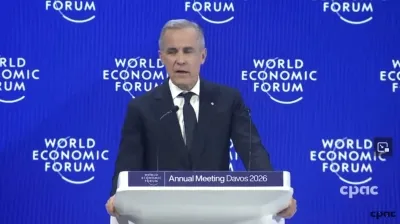

Karsten Wenzlaff, Advisor
August 26th, 2025
Karsten Wenzlaff is a Crowdfunding and Fintech Expert from Germany. He is Secretary-General of Digit[...]


Federal Budget 2025 | Nov 5, 2025

Image courtesy of AI
On November 4, 2025, the Government of Canada tabled Budget 2025, announcing targeted investments in several fintech and related sectors of interest including open banking, digital assets, artificial intelligence, and venture capital to strengthen national competitiveness and expand innovation.
NCFA welcomes these measures that taken together, form a coordinated strategy to modernize Canada’s financial system and accelerate technology adoption across sectors. While there are many parts to the 493 page PDF document designed to modernize government, stimulate investment and support key sectors of the economy (especially those being adversely impacted by the weight of Washington's tariff policy), this article focuses on 6 select areas of the budget.
Budget 2025 confirms that Canada will move forward with the Consumer-Driven Banking Act to establish a national open banking framework. Oversight will rest with the Bank of Canada, which receives $19.3 million over two years to build and supervise the system. The $36.9 million previously allocated to the Financial Consumer Agency of Canada (FCAC) will be reprofiled to align with this transition. To support cybersecurity and national security functions, $25.7 million over five years and $5 million ongoing are provided to CSIS and the RCMP.
The government also commits that Canadians will not be subject to fees when accessing and sharing their financial data under the new regime. This right will be included in federal privacy legislation to protect consumers from banks charging for data portability.
Timeline:
The data access fee ban effectively aligns Canada with the UK and Australia, where accredited fintechs can access user-permitted financial data without paying incumbent banks, creating a more level playing field for startups.
Firms should focus on accreditation, API readiness, and user consent ecosystems now, while anticipating the full rollout with data portability and write-access functionality expected in 2027. The Bank of Canada’s new role brings institutional authority to open banking, aligning Canada’s model with prudential oversight practices seen in advanced financial systems.
Budget 2025 introduces a federal framework for fiat-backed stablecoins to protect consumers and ensure financial stability. Issuers must maintain adequate reserves, provide redemption rights, and follow strict disclosure and audit rules. The Bank of Canada will oversee compliance and receive $10 million over two years starting in 2026–27, with ongoing costs of about $5 million annually recovered from issuers. The Retail Payment Activities Act will be amended to extend oversight to payment service providers dealing in prescribed stablecoins.
This is Canada's first major step towards integrating digital assets within regulated finance. Fintechs and payment firms can soon align product design with national standards for reserve management and risk controls. The framework signals Canada’s preference for stablecoins backed by traditional assets and issued under domestic supervision, distinguishing it from more permissive global approaches.
Budget 2025 strengthens financial system integrity by modernizing the Proceeds of Crime (Money Laundering) and Terrorist Financing Act and the Personal Information Protection and Electronic Documents Act. The updates ban cash transactions over $10,000, prohibit third-party cash deposits, and authorize real-time information sharing through the new Integrated Money Laundering Intelligence Partnership. FINTRAC is added to the Financial Institutions Supervisory Committee, expanding coordination with the Bank of Canada, OSFI, and the Department of Finance.
This overhaul moves compliance toward continuous data exchange rather than static reporting. For regtech and fintech firms, it expands the market for monitoring, analytics, and automation tools. By embedding FINTRAC directly within the supervisory structure, the government is creating a multi-agency model similar to the UK’s Joint Money Laundering Intelligence Taskforce. These measures are foundational to supporting open banking and payments modernization safely.
Budget 2025 commits $925.6 million over five years starting in 2025–26 to build sovereign public AI infrastructure, including a Canadian sovereign cloud for compute capacity. Of this, $800 million comes from reallocated funds. The new Minister of Artificial Intelligence and Digital Innovation will coordinate partnerships with industry and direct investments through the Canada Infrastructure Bank. Statistics Canada receives $25 million over six years and $4.5 million ongoing for AI and digital measurement programs.
The budget also reforms the Scientific Research and Experimental Development (SR&ED) tax incentive. The annual enhanced credit limit rises from $4.5 million to $6 million, and companies can elect pre-claim approval for faster reimbursements, reducing average processing from 180 days to 90 days by April 2026.
This is the largest coordinated investment in Canada’s digital productivity to date. Sovereign compute and AI infrastructure will help domestic firms train and deploy large models while maintaining data residency. The SR&ED reform improves liquidity during tight capital cycles for startups, software developers, and AI ventures by accelerating access to refundable credits. These changes directly respond to longstanding calls from the innovation community for faster turnaround and broader eligibility for digital R&D.
To expand the growth capital ecosystem, Budget 2025 allocates $1 billion over three years starting in 2026–27 to the Business Development Bank of Canada (BDC) for the Venture and Growth Capital Catalyst Initiative. This fund will leverage pension and institutional investment to scale up Canadian venture capital and support new, diverse fund managers. Additional measures include:
These measures help close gaps between early-stage funding and commercialization. The Catalyst Initiative could attract more private capital into growth-stage companies, while IP and R&D supports strengthen Canada’s intangible economy. For fintechs, this capital mobilization aligns with efforts to improve scaling conditions, enabling firms to move beyond domestic pilots into global markets. By expanding the Canada Growth Fund Venture Program and the Venture Capital Catalyst Initiative, Ottawa is trying to fill the scale-up gap where private funding has been slow to follow through.
Budget 2025 targets long-standing consumer frustrations with high fees, slow transfers, and limited access to funds. The government will review ATM and Interac e-Transfer fees charged by federally regulated institutions and will report on corrective actions in 2026.
By spring 2026, the government will also ban investment and registered account transfer fees, which average $150 per account, and mandate faster, transparent transfers. Fintechs such as Wealthsimple and Questrade have supported these measures for years, arguing they will remove switching barriers and increase competition.
Consumer access to deposited funds will also improve. The Bank Act will be amended to raise immediate access for cheque deposits from $100 to $150, close the gap between in-person and digital deposits, and shorten cheque-hold times by raising the threshold for early release from $1,500 upward.
To strengthen competition, the public-holding threshold for smaller banks and credit unions will double from $2 billion to $4 billion, supported by a new voluntary code of conduct on brokered deposit access and fair distribution.
These reforms respond directly to public frustration with high account transfer costs, after firms like Wealthsimple and Questrade called for faster, cheaper asset portability. Lower fees, faster access to money, and easier account switching will force incumbents to compete on value. Fintech companies gain room to build better portability and payments solutions within a simpler and more open regulatory landscape.
Budget 2025 delivers the clearest roadmap for a more competitive financial services sector and digital economy. Open banking, AI, and venture capital measures finally intersect within a national policy framework designed to increase innovation and resilience. The obvious challenge now is delivery and execution. Timelines must hold, interoperability standards must stay open, and public-private coordination must translate funding into outcomes. Canada has a window to jump-start competitiveness by executing on what has already been announced rather than starting new consultations. The need is there. The foundation is set. It's now time to build and execute Canada.
Subscribe to NCFA Canada’s weekly newsletter for news, analysis and updates on fintech innovation, policy, and funding.
 The National Crowdfunding & Fintech Association (NCFA Canada) is a financial innovation ecosystem that provides education, market intelligence, industry stewardship, networking and funding opportunities and services to thousands of community members and works closely with industry, government, partners and affiliates to create a vibrant and innovative fintech and funding industry in Canada. Decentralized and distributed, NCFA is engaged with global stakeholders and helps incubate projects and investment in fintech, alternative finance, crowdfunding, peer-to-peer finance, payments, digital assets and tokens, artificial intelligence, blockchain, cryptocurrency, regtech, and insurtech sectors. Join Canada's Fintech & Funding Community today FREE! Or become a contributing member and get perks. For more information, please visit: www.ncfacanada.org
 |  |  |
|---|---|---|
 |  |  |
AI | Oct 27, 2025

Image: Introducing Vibe coding in Google AI Studio (Google Blog)
On October 26, 2025, Google announcing the intro of vibe coding in Google AI Studio, a new tool that lets developers and creators use artificial intelligence to speed up software development using a mix of natural language and code. The feature is available on Google’s Gemini models, which can understand text, images, and data all at once. The idea behind vibe coding is almost like a magical pill. That is turn a detailed description of what you want to build into a working app or prototype in minutes instead of weeks.
For fintech innovators, startups and established financial institutions, it sounds like a major breakthrough given they are constantly under the gun to launch new digital services quickly to remain relevant and competitive. Vibe coding tools in theory, could make it easier to create the latest innovative solutions without hiring expensive engineering teams. But the same qualities that make it fast and flexible also raise difficult questions about privacy, data handling, and reliability when used inside regulated environments.
Vibe coding was created for builders who want to experiment without having to code everything from scratch. Inside Google AI Studio, users can describe an idea and the system automatically produces the code and interface. It works for both experienced developers and business teams who may not have deep technical skills.
That accessibility and speed of 'idea-to-prototype' is what makes it so interesting for fintechs. A startup could create an interactive demo for investors or customers overnight. A mid-sized financial institution could use it to prototype internal compliance dashboards. Even regulators could use it to explore AI tools that help monitor market risks. The experience feels less like traditional coding and more like collaborating with a digital assistant that understands what you are trying to achieve.
Financial data is among the most sensitive information in any digital system. Google’s documentation for AI security on Google Cloud describes several layers of protection, including encryption, access control, and a zero data retention option that prevents user prompts or outputs from being stored for training. The company has also rolled out AI Protection service, which helps organizations monitor and control how their AI systems interact with code and data.
Those protections are encouraging, but they depend on how a company configures its environment. The free version of AI Studio likely won't include the same protections as enterprise deployments. Unless a fintech uses Google Cloud’s managed enterprise tools with clear data governance terms, prompts and logs could still be visible to Google’s systems. This means that even simple mistakes, such as entering customer information into a test prompt, could create compliance risks.
Canadian fintechs face additional expectations under PIPEDA, OSFI’s Cyber Risk Guidelines, and FINTRAC’s data-handling rules. Any platform that processes or even touches production data must comply with encryption standards, data residency, and audit requirements.
Tools like vibe coding should be treated as development sandboxes, not as live environments for real financial transactions or personal data.
The biggest concern is not Google’s infrastructure but how the tool is used. A recent security study referenced by TechRadar found that almost half of AI-generated code samples contained security flaws.
In the trenches of a financial system, even small weakness could expose customer accounts or transaction records. Because vibe coding relies on natural language, a poorly written prompt could create vulnerabilities with unintended code or API access. Read about demos versus production
Fintechs should assume that every piece of AI code generated needs to be reviewed by a real human and pass full security testing before it's deployed. Teams should separate test environments from live systems and avoid entering any confidential or regulated data into AI development tools. Also, the same rules that apply to cloud security and 3rd party vendor management should also be applied here.
Before experimenting with vibe coding for fintechs and financial institutions, companies should confirm that their account includes enterprise security controls and written commitments on data storage, encryption, and model training exclusions.
Developers should be trained to understand prompt hygiene and privacy responsibilities. Firms should also document where and how AI tools are used in the software development process to maintain compliance with internal and external audits.
For Canadian firms, the above security practices should align with OSFI’s guidance on 3rd party technology risks, which emphasizes focus on resilience, accountability, and transparency in AI systems.
As AI systems evolve and mature, the future points to a day where developers (or any visionary that can type a prompt) can build software solutions via conversations rather than code (the ultimate communicative wrapper).
But for companies that handle financial or personal data with real obligations, governance and risk management should be on high alert. If used responsibly and with greater advancements, vibe coding could lower the cost of innovation, help startups scale faster, and give established institutions more agility in how they design financial services. Want some inspiration? Check out Google's AI Studio app gallery.
The National Crowdfunding & Fintech Association (NCFA Canada) is a financial innovation ecosystem that provides education, market intelligence, industry stewardship, networking and funding opportunities and services to thousands of community members and works closely with industry, government, partners and affiliates to create aa vibrant and innovative fintech and funding industry in Canada. Decentralized and distributed, NCFA is engaged with global stakeholders and helps incubate projects and investment in fintech, alternative finance, crowdfunding, peer-to-peer finance, payments, digital assets and tokens, artificial intelligence, blockchain, cryptocurrency, regtech, and insurtech sectors. Join Canada's Fintech & Funding Community today FREE! Or become a contributing member and get perks. For more information, please visit: www.ncfacanada.org
| | |
|---|---|---|
| | |
Compliance Enforcement | Oct 24, 2025

Image: Freepik/Rawpixel.com
On October 16 2025, Reuters reported that the Financial Transactions and Reports Analysis Centre of Canada (FINTRAC) imposed a penalty of C$176,960,190 on Xeltox Enterprises Ltd., which operates as Cryptomus (formerly Certa Payments Ltd), for serious failures to file required reports under Canada’s anti-money-laundering regime. The decision was announced publicly on October 22 2025 after a compliance examination under the Proceeds of Crime (Money Laundering) and Terrorist Financing Act. FINTRAC described it as the largest penalty in its history.
FINTRAC found that Cryptomus failed to submit suspicious transaction reports on 1,068 separate occasions during July 2024 when there were reasonable grounds to suspect links to money laundering or terrorist activity financing. It also failed to comply with a Ministerial Directive, did not maintain or update written compliance policies approved by a senior officer, and failed to assess and document the risk of money-laundering offences within its operations.
The examination also revealed that Cryptomus did not file a notification of changes to its registration information and failed to report 1,518 large virtual-currency transactions above $10,000 in July 2024. These breaches were linked to laundering proceeds from crimes including child sexual abuse material, fraud, ransomware payments, and sanctions evasion. Cryptomus had already been barred by the British Columbia Securities Commission from securities trading earlier in 2025.
Sarah Paquet, Director and Chief Executive Officer, FINTRAC:
“We are committed to working with our domestic partners and international allies to protect the safety of Canadians and the security of Canada’s economy. Given that numerous violations in this case were connected to trafficking in child sexual abuse material, fraud, ransomware payments and sanctions evasion, FINTRAC was compelled to take this unprecedented enforcement action.”
FINTRAC confirmed that in 2024–25 it issued 23 Notices of Violation of non-compliance, the largest number in a single year since it received legislative authority to levy penalties in 2008. Those penalties totalled more than $25 million before the Cryptomus case. With enforcement ramping up, it appears the agency’s oversight is widening to include both traditional financial institutions and virtual asset service providers.
As FINTRAC noted in its statement, the rapid expansion of Canada’s virtual-currency sector also brings higher risks of money laundering, terrorist financing, and sanctions evasion. The agency said strong compliance frameworks are essential to protect Canadians and safeguard the financial system.
While the fine demonstrates that Canada can act decisively after a compliance failure, it also raises questions about how proactive oversight can become. FINTRAC’s review was retrospective, relying on an examination of past activity. With digital asset volumes growing and transactions moving across borders instantly, regulators need stronger real-time tools, data sharing systems, and cooperation between provincial, federal, and global agencies.
Effective supervision must keep pace with the speed and anonymity of crypto markets without discouraging legitimate fintech innovation. For the Canadian fintech community, understand that compliance is vital for sustained growth and is a competitive necessity. Firms that verify client identities, maintain risk assessments, and document transactions can not only avoid enforcement but also build trust with users and partners.
The National Crowdfunding & Fintech Association (NCFA Canada) is a financial innovation ecosystem that provides education, market intelligence, industry stewardship, networking and funding opportunities and services to thousands of community members and works closely with industry, government, partners and affiliates to create aa vibrant and innovative fintech and funding industry in Canada. Decentralized and distributed, NCFA is engaged with global stakeholders and helps incubate projects and investment in fintech, alternative finance, crowdfunding, peer-to-peer finance, payments, digital assets and tokens, artificial intelligence, blockchain, cryptocurrency, regtech, and insurtech sectors. Join Canada's Fintech & Funding Community today FREE! Or become a contributing member and get perks. For more information, please visit: www.ncfacanada.org
| | |
|---|---|---|
| | |
Fintech Risks | Oct 20, 2025

Image: Freepik/Rawpixel.com
On October 16, 2025, Bank of Canada (BoC) Governor Tiff Macklem joined Adam Posen at the Peterson Institute for International Economics (PIIE) in Washington for a public conversation about Canada’s economic outlook and global trade. Macklem said new tariffs, slower trade, and changing supply chains are impacting the Canadian economy.
As a result, he explained that the BoC is now using several possible economic paths instead of one fixed forecast because global uncertainty has become constant. The new approach was outlined in the Bank’s July 2025 Monetary Policy Report and compares what could happen if tariffs stay the same, ease, or rise, and indicates the impact of each option on inflation, output, and interest rates.
Macklem described four forces that will impact the next 10 years for Canada:
1. Trade now clusters around three main hubs led by the United States, China, and the European Union. The United States still dominates world finance even as investors question its safe haven status, and other countries like Singpore pushing above their weight.
2. Global trade and money flows are becoming uneven again (a recurring structural issue). Some regions keep running big surpluses while others, including North America, rely more on borrowing. Macklem said this growing imbalance adds risk to the global financial system and limits how much small economies like Canada can control their outcomes.
3. He said higher tariffs and unpredictable policy weaken demand, raise costs, and reduce the efficiency of supply.
4. Canada is feeling these pressures through weaker exports, slower investment, and lower productivity growth, outcomes that no interest rate decision can reverse.
Traditional forecasts assume one view of the world. Macklem explained that the Bank now works with three possible paths. One assumes current tariffs remain. One assumes tensions ease. One assumes further escalation.
The aim is to keep inflation expectations stable while helping households and businesses adjust to uncertainty. For fintechs and lenders, strategic business planning must now be built around several credible economic futures too, and not rely on a single base case. Funding, pricing, and credit policies should be tested against each path to stay resilient no matter which reality unfolds.
Macklem explained that new tariffs and complex rules are adding cost and delay at the Canada–U.S. border, disrupting supply chains. Firms that once relied on integrated supply chains now need new suppliers, new routes, and stricter compliance to maintain trade eligibility. That adds cost and delays that ripple across sectors. Even service firms are affected through their clients and vendors.
For fintechs offering trade finance, payments, or working capital products, this environment creates opportunity but also exposure to new risks. There is demand for tools that make international transactions faster and more transparent, but also new risks tied to client sectors under pressure.
The Governor stressed that raising productivity is now essential. He pointed to faster project approvals, fewer internal trade barriers, and stronger transport links as priorities to open new pathways.
The Bank’s recent reports say that fixing long-term barriers in the economy like slow project approvals or weak competition can improve growth more than changing interest rates (aka, monetary policy).
Fintechs can build solutions that help reduce administrative frictions, such as digital identity and onboarding tools can eliminate duplication between provinces. Compliance automation and regulatory technology can shorten approval times. Procurement platforms can help smaller firms reach national customers. These are examples of direct responses to the barriers that Macklem said must be addressed.
Macklem also spoke about the neutral interest rate which is the level that keeps inflation stable without stimulating or slowing the economy. He said it may not align between Canada and the United States because productivity growth and fiscal policies differ. That divergence affects long term funding costs and the flow of investment capital.
For fintechs that borrow in U.S. dollars or rely on foreign investors, funding costs and access to cash can change even if central banks don’t move rates. The safest approach is to plan for different interest rate outcomes instead of assuming Canada and the U.S. will always move together.
When asked about digital assets, Macklem said the Bank’s work on stablecoins and a possible central bank digital currency focuses on preserving trust and value. The principle of the singleness of money means that one Canadian dollar must hold the same worth everywhere, whether in cash or digital form.
Stablecoin systems must avoid runs and guarantee convertibility. For fintech developers and innovators, it means creating systems that work within the regulated financial system, not outside. The most promising area is making international payments faster, cheaper, and clearer, while ensuring every digital dollar is fully backed and can always be redeemed.
Uncertainty is no longer an exception but a normal condition for business and policy. Every possible trade path changes inflation, growth, and the cost of capital. Fintech founders, investors, and lenders must build this thinking into their models and operations. That includes ready plans for each scenario, triggers for risk adjustments, and playbooks for client support when tariffs or rates move unexpectedly.
The firms that incorporate this discipline and governance will not only manage volatility better but also build trust with investors and customers who highly value predictability in uncertain times.
It's time for Canada to demonstrate adaptability, and treat uncertainty as a given design factor instead of a sudden surprise. Canada’s financial ecosystem, from established lenders to digital innovators, must treat uncertainty as a normal part of planning. Fintechs that adopt scenario planning, streamline processes, and improve real economy efficiency can help Canada compete globally even as the trading system fragments.
The National Crowdfunding & Fintech Association (NCFA Canada) is a financial innovation ecosystem that provides education, market intelligence, industry stewardship, networking and funding opportunities and services to thousands of community members and works closely with industry, government, partners and affiliates to create aa vibrant and innovative fintech and funding industry in Canada. Decentralized and distributed, NCFA is engaged with global stakeholders and helps incubate projects and investment in fintech, alternative finance, crowdfunding, peer-to-peer finance, payments, digital assets and tokens, artificial intelligence, blockchain, cryptocurrency, regtech, and insurtech sectors. Join Canada's Fintech & Funding Community today FREE! Or become a contributing member and get perks. For more information, please visit: www.ncfacanada.org
| | |
|---|---|---|
| | |
Anti-Fraud | Oct 20, 2025

Image: Freepik
On October 20 2025, the Department of Finance Canada released plans for a National Anti-Fraud Strategy that will be introduced through Budget 2025. The initiative is designed to combat growing financial fraud, scams, and economic abuse that affects millions of Canadians every year.
According to the Canadian Anti-Fraud Centre, Canadians lost $645 million to fraud in 2024 (almost a 300% increase since 2020), noting only 5-10% of scams are ever reported. The government says the new strategy aims to reverse that trend through prevention, data sharing, and stronger oversight across financial and digital channels.
Honourable Gary Anandasangaree, Minister of Public Safety:
“Today’s financial criminals make use of every modern tool at their disposal to try to defraud Canadians. Our government’s new Strategy is tackling head-on the threat posed by these fraudsters. A stand-alone Agency to fight financial crime is critical to maintaining confidence in our financial system, and keeping people, and their money, safe.”
As an early step, Budget 2025 will propose amendments to the Bank Act that would require banks to:
The changes are expected to strengthen consumer control and protection, especially for seniors, newcomers, and other vulnerable groups.
The government also intends to create a new Financial Crimes Agency by spring 2026. This federal agency would lead investigations into money laundering, organized crime, and online fraud, bringing together financial, legal, and law enforcement expertise to recover illicit funds. Rules to formally establish the agency is expected in 2026 after consultation with the Ministers of Justice and Public Safety.
The government will also work with banks and stakeholders to develop a voluntary Code of Conduct for the Prevention of Economic Abuse. The code will set clear expectations for how financial institutions identify and respond to economic abuse, a type of financial control and coercion that often targets women and seniors. Work will be guided by principles of victim focused support, collaboration, and financial empowerment.
Banks (perhaps with the help of financial technology providers) will play a key role as front-line institutions that can detect early signs of financial control or distress and provide safe guidance for clients to regain independence.
For fintech companies, the emerging anti-fraud legislation means there's a strong focus on consumer trust and financial resilience. Stricter fraud controls for banks will also apply to their fintech partners through compliance expectations and data standards.
Fintech firms that build strong fraud detection and digital ID tools will have an advantage, finding it easier to work with banks while everyone benefits from a safer financial system. Companies that are transparent, secure, and possess strong governance will earn public and institutional trust.
The creation of a Financial Crimes Agency also opens new opportunities for collaboration between the public and private sectors on cyber risk, data sharing, and proceeds of crime recovery.
While the full framework, funding, and timeline details will be presented at Budget 2025, protecting Canadians from financial fraud is a national priority, raising the minimum bar for a trusted digital economy.
The National Crowdfunding & Fintech Association (NCFA Canada) is a financial innovation ecosystem that provides education, market intelligence, industry stewardship, networking and funding opportunities and services to thousands of community members and works closely with industry, government, partners and affiliates to create aa vibrant and innovative fintech and funding industry in Canada. Decentralized and distributed, NCFA is engaged with global stakeholders and helps incubate projects and investment in fintech, alternative finance, crowdfunding, peer-to-peer finance, payments, digital assets and tokens, artificial intelligence, blockchain, cryptocurrency, regtech, and insurtech sectors. Join Canada's Fintech & Funding Community today FREE! Or become a contributing member and get perks. For more information, please visit: www.ncfacanada.org
| | |
|---|---|---|
| | |
Quantum | Oct 16, 2025

Image: Freepik/pikisuperstar
On October 16, 2025, Canadian company BTQ Technologies announced the first public demonstration of a quantum safe Bitcoin network using post quantum cryptography approved by the US National Institute of Standards and Technology. BTQ says its new Bitcoin software replaces current encryption with ML DSA, a stronger digital signature designed to resist future quantum attacks that meets NIST’s new post quantum security standards. The firm believes this advance could protect the $2.4 trillion dollar Bitcoin market from quantum attacks expected later this decade.
Quantum computing promises huge advances, but with it comes the threat to current cryptography, including what bitcoin's network is secured by. Researchers aim for million qubit systems before 2030, a level that could make today’s digital signatures vulnerable. The Federal Reserve study on harvest now decrypt later risks explains how attackers can store blockchain data for future decryption once quantum computers mature. BTQ is raising alarm bells that more than 6.5 million Bitcoin already expose public keys, worth hundreds of billions of dollars, and could be stolen if quantum systems gain that capability.
BTQ is pushing quantum security for digital assets. Earlier in 2025 it launched the Quantum Stablecoin Settlement Network (QSSN) to protect stablecoins under quantum threats. The company also leads standard efforts and was recently appointed chair of the QuINSA standards group to help create quantum-safe blockchain policies.
In its demo, BTQ built a version of Bitcoin where every signature uses ML DSA, a NIST-standardized post quantum algorithm. Their prototype supports wallet creation, transaction signing, mining, and verification under the new scheme. To accommodate larger signatures they increased script limits and block structure. The company released details in its Quantum Safe Bitcoin press release.
Despite the excitement experts are cautious as no independent cryptographic audit or open repository has confirmed BTQ’s claims. Changing the signature scheme that secures Bitcoin would require widespread agreement among miners, developers, and exchanges, a process that historically takes years. The firm describes its system as a demonstration, not a replacement. Until peer review validates its performance and compatibility, BTQ’s project is more like a promising proof of concept rather than a verified production network.
Quantum readiness is already entering regulatory planning. The National Security Memorandum on quantum computing directs federal agencies to prepare for migration to NIST approved cryptographic standards. If BTQ’s model scales, it could guide how institutions and regulators protect digital assets. For investors this is an early look at how future value may depend on verified quantum resilience.
BTQ plans to launch its test network before the end of 2025, followed by enterprise pilots and a main network rollout in 2026. Whether Bitcoin developers adopt these standards is still uncertain, yet the announcement places Canada at the center of the conversation about safeguarding global digital wealth. The rise of quantum safe assets is evolving into a critical piece of tech that will protect and propel the next decade of digital finance.
The National Crowdfunding & Fintech Association (NCFA Canada) is a financial innovation ecosystem that provides education, market intelligence, industry stewardship, networking and funding opportunities and services to thousands of community members and works closely with industry, government, partners and affiliates to create aa vibrant and innovative fintech and funding industry in Canada. Decentralized and distributed, NCFA is engaged with global stakeholders and helps incubate projects and investment in fintech, alternative finance, crowdfunding, peer-to-peer finance, payments, digital assets and tokens, artificial intelligence, blockchain, cryptocurrency, regtech, and insurtech sectors. Join Canada's Fintech & Funding Community today FREE! Or become a contributing member and get perks. For more information, please visit: www.ncfacanada.org
| | |
|---|---|---|
| | |
CZ | Oct 14, 2025

Image: Freepik/wirestock
Changpeng Zhao (known as CZ) pleaded guilty in November 2023 to a single count of violating the Bank Secrecy Act after U.S. authorities found Binance had failed to maintain effective anti-money laundering controls. He stepped down as CEO and was sentenced in April 2024 to four months in federal prison while paying a $50 million fine. Binance also paid $4.3 billion to settle related charges with the Department of Justice and other agencies.
In May 2025, Zhao stated publicly that he had applied for a presidential pardon from Donald Trump. The U.S. Senate Banking Committee confirmed the filing’s existence in a letter dated May 15, 2025, asking the Department of Justice and the White House to clarify whether the request was being considered. The senators cited potential conflicts of interest tied to Trump family business ventures connected to crypto ventures associated with Binance.
On October 10, 2025, journalist Charles Gasparino reported on X that White House discussions about a possible pardon were “heating up.” The New York Post followed with a story two days later describing alleged internal debates over optics as the Trump administration manages several crypto-related policy files.
The article references unnamed sources close to both Zhao and Trump, who claim the president is sympathetic to Zhao’s case but mindful of potential conflicts due to family business interests in the crypto sector.
No formal statement from the White House, the Department of Justice, Binance, or Zhao’s legal team has confirmed these discussions. The White House press office maintains a standard position of not commenting on active or potential pardons. Therefore, these claims remain based only on Gasparino's report and subsequent media coverage.
Even without confirmation, the story matters because a pardon could erase Zhao’s criminal record, reopening the possibility for U.S. financial institutions to engage with Binance or its affiliates under less restrictive compliance terms.
It could also influence broader perceptions of how the U.S. balances enforcement with innovation across the $4 trillion global digital asset market. The Senate Banking Committee’s letter highlights bipartisan concern about transparency in how executive clemency intersects with crypto business interests, and spotlights growing concerns between pro-market reform vs accountability for compliance gaps in digital finance.
As of October 14, 2025, verified information is limited to Zhao’s conviction, sentencing, fines, and his publicly acknowledged pardon petition. Otherwise, there is no public record or filing in the Office of the Pardon Attorney showing that any pardon has been granted or is under formal review.
Until official confirmation appears, the case stands as a reminder that anonymous political reporting must be treated cautiously, especially if it could affect markets and trust in financial governance.
The National Crowdfunding & Fintech Association (NCFA Canada) is a financial innovation ecosystem that provides education, market intelligence, industry stewardship, networking and funding opportunities and services to thousands of community members and works closely with industry, government, partners and affiliates to create aa vibrant and innovative fintech and funding industry in Canada. Decentralized and distributed, NCFA is engaged with global stakeholders and helps incubate projects and investment in fintech, alternative finance, crowdfunding, peer-to-peer finance, payments, digital assets and tokens, artificial intelligence, blockchain, cryptocurrency, regtech, and insurtech sectors. Join Canada's Fintech & Funding Community today FREE! Or become a contributing member and get perks. For more information, please visit: www.ncfacanada.org
| | |
|---|---|---|
| | |



August 26th, 2025

January 4th, 2024

June 1st, 2021

September 9th, 2020

July 9th, 2018

January 3rd, 2018

September 25th, 2017

June 20th, 2017

May 10th, 2017

December 14th, 2016
