




Karsten Wenzlaff, Advisor
August 26th, 2025
Karsten Wenzlaff is a Crowdfunding and Fintech Expert from Germany. He is Secretary-General of Digit[...]


June 3, 2026 | NCFA Insight | Artificial Intelligence And Data, Regulation And Policy

On June 2, 2026, the Canadian Anti Monopoly Project released Parting Clouds: Creating A Competitive Marketplace For Compute that says three American companies control 85% of Canada's public cloud market. Canada wants sovereign AI. It's a gap that Ottawa needs to address before it commits more public money to AI infrastructure.
Globally, those same three firms Amazon, Microsoft, and Google, hold about 66% of the public cloud market. AI runs on compute, but most firms access that compute through cloud platforms. The more difficult it becomes to move data, workloads, and AI services between providers, the more dependent organizations become on a small number of platforms.
Compute means the physical capacity. Think data centres, chips, GPUs, servers, storage, power, cooling, and networks. Cloud is the commercial aspect that packages that capacity into services like APIs, software tools, security controls, and platform ecosystems.
Canada can fund more compute and still leave firms locked into the same cloud stacks. That concern connects to NCFA’s earlier analysis of Canada’s AI capital flight problem, where public AI investment doesn't always translate into long term domestic value especially if customers cannot move their data, workloads, models, and services without high technical and financial costs.
The CAMP report makes that point clearly. The goal isn't simply Canadian ownership. The goal is a market where customers can switch providers without rebuilding core systems. Most Canadian firms cannot replace that stack overnight.
Federal spending tells the same story. From 2019 to 2020 through 2022 to 2023, Shared Services Canada spent $310.4M on cloud services. The report says 66% went to Microsoft, 16% to Amazon, 14% to Salesforce, and 4% to other providers.
Cloud concentration already creates switching barriers through proprietary services, opaque pricing, and weak interoperability.
AI makes those barriers harder to manage. A fraud model, compliance agent, lending workflow, or payment risk tool can become tied to a provider’s data services, model tools, security layer, and deployment environment.
Moving clouds then means more than moving storage. It can mean rebuilding how the product works.
Five firms control about 75% of global AI compute power, with Google alone controlling about 31%. That concentration shows why AI sovereignty is not only about funding more capacity. It's also about keeping customers mobile before AI markets harden around the same platforms.
The name of this section is the report's strongest warning and it should affect Ottawa's strategy.
More Canadian data centres can help. Domestic compute can support sensitive workloads, national resilience, and local AI capacity. Ottawa has already backed 44 Canadian AI compute projects, but if public funding only creates protected local gatekeepers, Canada may replace one dependency with another.
The better goal is customer mobility. Can a Canadian fintech move workloads from one provider to another? Can a public agency compare cloud pricing easily? Can a startup use AI tools without being trapped inside one ecosystem? Can sensitive workloads use Canadian infrastructure without sacrificing portability?
Ottawa should fund infrastructure, but also change the market around portability, interoperability, transparent pricing, and competition.
The CAMP report recommends using public procurement to require portable data, interoperable services, and common technical standards. It also calls for closer scrutiny of egress fees, bundling, tying, discriminatory licensing, cloud credits, and acquisitions that absorb Canadian talent and intellectual property.
This approach has tradeoffs. Procurement can move faster than legislation, but it needs technical discipline. Competition enforcement can target lock in, but cases take time. Interoperability can lower switching costs, but it will not instantly match the full global scale of AWS, Azure, or Google Cloud. Domestic infrastructure can improve resilience, but only if it avoids new lock in.
Will Canada measure AI sovereignty by domestic capacity, or by real customer choice?
Will public funding require portability, open standards, and transparent pricing?
Will Canadian fintechs and AI startups be able to move workloads across providers without rewriting core systems?
Will the strategy treat cloud concentration as a competition issue, not only an innovation issue?
Will Canada build a market where providers compete on price, performance, trust, and service quality, or one where customers stay trapped because switching costs are too high?
If a Canadian fintech cannot realistically move its AI stack from one provider to another, who holds the leverage?
 The National Crowdfunding & Fintech Association (NCFA Canada) is a financial innovation ecosystem that provides education, market intelligence, industry stewardship, networking and funding opportunities and services to thousands of community members and works closely with industry, government, partners and affiliates to create a vibrant and innovative fintech and funding industry in Canada. Decentralized and distributed, NCFA is engaged with global stakeholders and helps incubate projects and investment in fintech, alternative finance, crowdfunding, peer-to-peer finance, payments, digital assets and tokens, artificial intelligence, blockchain, cryptocurrency, regtech, and insurtech sectors. Join Canada's Fintech & Funding Community today FREE! Or become a contributing member and get perks. For more information, please visit: www.ncfacanada.org
 |  |  |
|---|---|---|
 |  |  |
June 2, 2026 | NCFA Fintech Market Activity | Capital Markets And Market Infrastructure, SME Finance And Business Banking

A New York City sports bar has turned a Knicks NBA Finals promotion into a practical prediction market case study. According to NY Sports Day coverage of the promotion, The Jeffrey ('The bar') offered customers free drinks if the Knicks won Game 1 and placed a $5,000 position on a Knicks win through Kalshi, which could pay roughly $13,500 if the Knicks won.
The sports hook is fun. The business logic is better. The bar isn't simply betting on the Knicks with a local sportsbook. It's using a prediction market 'event contract' to run a promotion with a clear downside. If the Knicks win, the contract helps fund the free drinks. If the Knicks lose, customers pay their tabs and the bar loses the $5,000 position. The owner knows the maximum contract cost before the campaign starts.
The promotion creates two linked outcomes.
If the Knicks win, qualifying drink tabs become free and the bar gives up revenue it would otherwise collect. The Kalshi position pays on that same outcome, helping offset the waived tabs.
If the Knicks lose, the Kalshi position expires worthless, but the bar keeps normal drink revenue from customers who came in to watch the game.
It's a different use case from the prediction market stories NCFA has tracked around private market valuation odds and public market sentiment. Here, the contract supports a real world promotion with a known maximum contract cost.
This second outcome is what makes the structure interesting. The bar isn't left with only a $5,000 loss. It may also have a packed room, paid tabs, food orders, longer visits, and new customers. People may spend more because the tab could become free. That excitement is part of the promotion’s value.
The key business question is did the promotion generate enough incremental gross profit to justify the $5,000 contract cost if the Knicks lost? If yes, the losing contract is a campaign expense. If the Knicks won, the payout could help cover the free drinks liability (and possibly more). Either way, the owner puts a known price on the risk.
A traditional hedge normally offsets an existing risk. The bar created the risk by offering free drinks, then used Kalshi to offset part of that exposure.
The hedge quality depends on numbers that haven't been shared publicy like expected crowd size, average tab, food sales, qualifying drink costs, gross margin, and incremental revenue created by the promotion. If free drink liability reached $15,000 and the contract paid $13,500, the bar still carries some cost (of course the owner could choose to cap the number/cost of free drinks). If the room filled up and customers paid their tabs after a Knicks loss, the $5,000 contract loss may still be covered by extra business.
A patio restaurant could run a long weekend rain campaign. Customers get 25% off if rain exceeds a defined threshold during peak patio hours. The restaurant buys a weather contract tied to the same outcome. If it rains, the contract helps fund the discount. If it stays dry, the restaurant keeps full patio revenue and treats the contract cost as part of the campaign budget.
An event organizer could offer partial refunds if a transit strike disrupts attendance. A $3,000 event contract tied to the strike outcome could help cover refunds if the strike happens. If the strike doesn't happen, attendees pay full price and the organizer loses only the known contract cost.
A tourism operator could sell a “city wins, you save” package tied to a major festival or sports bid. If the city wins and the discount triggers, the event contract helps offset the promotion. If the city loses, customers still paid for the trip and the operator knows the campaign cost in advance.
Most prediction market coverage focuses on politics, sports, forecasting, or trading activity. The bar example points to a different use case of outcome based promotions where a business knows the most it can lose before launching the campaign.
It could make a difference for small businesses. Most small operations don't have access to custom insurance, futures contracts, or sophisticated risk tools. Prediction markets are easier to understand. A business can tie a campaign to a public event, cap the contract cost, and create a promotion customers want to talk about.
The risk is that promotion design can slide into speculation if owners do not size the contract properly. As prediction market controls tighten, businesses need clearer guardrails around contract sizing, customer disclosures, and whether the activity manages a real exposure or simply adds another bet. A useful campaign starts with the business exposure, not the excitement of the event. The bar example works as a test case because the contract ($5,000), the customer offer (free drinks), and the revenue opportunity ($13,500 + promo boost) all point to the same outcome.
If prediction markets can help small businesses run outcome based promotions with a known maximum contract cost, where should regulators draw the line between practical risk management and promotional trading?
The National Crowdfunding & Fintech Association (NCFA Canada) is a financial innovation ecosystem that provides education, market intelligence, industry stewardship, networking and funding opportunities and services to thousands of community members and works closely with industry, government, partners and affiliates to create a vibrant and innovative fintech and funding industry in Canada. Decentralized and distributed, NCFA is engaged with global stakeholders and helps incubate projects and investment in fintech, alternative finance, crowdfunding, peer-to-peer finance, payments, digital assets and tokens, artificial intelligence, blockchain, cryptocurrency, regtech, and insurtech sectors. Join Canada's Fintech & Funding Community today FREE! Or become a contributing member and get perks. For more information, please visit: www.ncfacanada.org
| | |
|---|---|---|
| | |
Jun 3, 2026
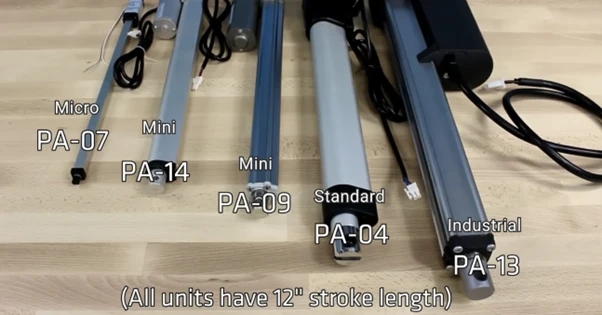
Walk through any modern facility and you're surrounded by controlled movement that most people don't examine. A hospital bed adjusting position at the touch of a button. A greenhouse vent opening in response to temperature. A conveyor gate diverting product into a secondary line without anyone pressing anything. The mechanism behind most of this is the same, and it has a name most people outside engineering have never used: an actuator.
That's changing. As automation spreads across Canadian industries, from manufacturing and agriculture to building infrastructure and healthcare, the actuator has moved from a component that engineers specify quietly to something that business decision-makers, procurement teams, and technology investors increasingly need to understand.
An actuator converts energy into mechanical motion. Depending on the energy source, that's either electrical current, compressed air, or pressurised hydraulic fluid. Depending on the application, the motion produced is either linear, a straight push or pull along a single axis, or rotary, rotation around a fixed point.
Electric linear actuators are the most relevant category for the broadest range of modern applications, and understanding how they work explains most of what matters in practice.
A motor drives a lead screw, a precisely threaded rod. A drive nut sits on the screw and meshes with the thread but is prevented from rotating. So when the screw turns, the nut has no option but to travel along it. The rod attached to the nut extends outward as the nut moves in one direction and retracts when the motor reverses.
What this produces is controlled, precise, repeatable straight-line movement from an electrical input. The relationship between motor rotation and rod travel is fixed by the thread pitch, so controlling the motor precisely means controlling the rod's position precisely. Stop the motor and the rod stops. Add position sensing and you know exactly where it is throughout its travel.
This is what makes electric actuation more capable than pneumatic alternatives for most modern applications. A pneumatic cylinder applies pressure in one direction and that's essentially it. An electric actuator can stop at any point in its travel, modulate force, hold a position, and communicate its status to a digital control system. For an era of networked, sensor-driven industrial automation, that's the relevant difference.
One characteristic of lead screw actuators that has real practical consequences is self-locking. With a fine enough thread pitch, the geometry prevents the load from backdriving the mechanism when the motor isn't powered. The rod holds its position without the motor running continuously.
For a patient positioning system that needs to hold position while the patient is settled. For an industrial fixture that needs to maintain clamping force after moving to position. For an adjustable workstation that shouldn't drift during the working day. Self-locking provides this without continuous power draw, which matters both for energy efficiency and for safety in applications where unexpected movement would be a problem.
Not every actuator is self-locking. Coarser thread pitches that prioritise speed over force may allow backdrive. Worth checking explicitly for any application where the load needs to stay put between operations.
The application range is genuinely wider than most people expect once they start looking at it properly.
In manufacturing, actuators drive automated clamping systems, press mechanisms, conveyor divert gates, and positioning equipment. The precision and repeatability they provide is what makes consistent product quality achievable at production scale without continuous human intervention.
Agriculture has become a significant application area. Irrigation control valves that open and close in response to moisture sensors. Greenhouse ventilation systems that regulate temperature automatically. Adjustable equipment on precision farming machinery. These are applications where automation changes operational efficiency in ways that manual operation simply can't match.
Building infrastructure relies on actuators more than most occupants realise. HVAC damper control in commercial buildings adjusts airflow continuously based on occupancy and air quality data. Flood barrier mechanisms operate remotely in response to water level sensors. Automated access control systems handle gate and barrier movement. In a large building, there may be hundreds of these operating simultaneously.
Healthcare is where the performance requirements are most demanding. Surgical tables, patient lift systems, infusion pumps, powered prosthetics. The precision, reliability, and safety standards for actuators in medical applications are substantially higher than in other categories, which is part of why the engineering in that segment has driven development that benefits other application areas.
Consumer applications are broader than most people notice. Electric recliners, adjustable bed bases, sit-stand desks, motorised kitchen cabinet lifts, automated vehicle tailgates. The quality difference between a well-engineered mechanism and a cheap one shows up immediately in how the movement feels.

The actuator selection process looks simple and isn't. Getting one parameter wrong creates problems that are often expensive to fix after installation.
Force rating first. The rated capacity needs to exceed the actual load with meaningful margin, not match it. A unit running at its rated maximum runs hotter and wears faster than one with capacity to spare. One and a half to two times the calculated load is reasonable for most applications. Direction of load matters as much as magnitude. Vertical lifting is the most demanding scenario. Horizontal pushing requires considerably less force for the same load. Angular applications pushing a hinged element through an arc have a force requirement that varies throughout the travel and needs to be assessed at the worst position, usually one of the end points.
Stroke length should match the required travel with some buffer. An actuator that runs out of stroke before the mechanism reaches its end position is a specification error that typically means replacing the unit.

Duty cycle is the parameter that catches people out most often. A unit rated for 20% duty cycle needs four minutes of rest for every minute of running. For a greenhouse vent that cycles twice a day this is irrelevant. For a production gate cycling every few minutes through an eight-hour shift it's the critical specification. Heat is what degrades over-cycled actuators, and the failure tends to arrive weeks after installation rather than immediately, making it easy to misattribute.
Environmental rating needs to match actual installation conditions. IP65 handles outdoor use in typical conditions. Agricultural environments with chemical exposure, food production settings requiring washdown, and coastal locations with salt corrosion all need higher ratings. The cost difference at purchase is small. The cost of premature failure in a difficult-to-access location is not.
Voltage is largely a practical question. 12V DC suits residential, mobile, and off-grid applications. 24V DC is standard in commercial and industrial settings where longer cable runs make voltage drop at lower voltage a real problem. Getting this right at the start avoids needing a converter in the installation.
Control requirements should be established before selecting the unit. A basic extend-retract application needs only a switch. An application needing precise intermediate positioning needs position feedback, Hall effect sensors or a potentiometer, built into the actuator. An application integrating with a building management system or industrial PLC needs compatible control inputs. The linear actuator range that covers all of these specifications is wider than most buyers realise when they start looking.
Electric actuation has been displacing pneumatic and hydraulic systems across a widening range of applications for two decades, driven by the advantages in controllability, digital integration, and the elimination of fluid infrastructure. The direction of industrial automation, toward more connected, more instrumented, more precisely controlled systems, continues to favour electric actuation.
For Canadian businesses evaluating automation technology, the actuator is usually not the headline component. It's the mechanism that makes the headline component work. Getting the specification right has consequences across the operational life of the equipment it's installed in, which makes it worth understanding properly rather than treating as a procurement detail.
The National Crowdfunding & Fintech Association (NCFA Canada) is a financial innovation ecosystem that provides education, market intelligence, industry stewardship, networking and funding opportunities and services to thousands of community members and works closely with industry, government, partners and affiliates to create a vibrant and innovative fintech and funding industry in Canada. Decentralized and distributed, NCFA is engaged with global stakeholders and helps incubate projects and investment in fintech, alternative finance, crowdfunding, peer-to-peer finance, payments, digital assets and tokens, artificial intelligence, blockchain, cryptocurrency, regtech, and insurtech sectors. Join Canada's Fintech & Funding Community today FREE! Or become a contributing member and get perks. For more information, please visit: www.ncfacanada.org
| | |
|---|---|---|
| | |
June 2, 2026 | NCFA Insight | Artificial Intelligence And Data, Capital Markets And Market Infrastructure, Risk Compliance And Regtech

On May 26, 2026, Liquid launched Co Invest for ChatGPT and Claude, allowing users to research markets, construct portfolios, fund accounts, and execute trades from inside an AI conversation. The platform supports more than 500 markets across stocks, ETFs, commodities, crypto, FX, prediction markets, and pre IPO opportunities. Every trade still requires user confirmation before execution.
The launch is testing a new distribution model for financial services. For two decades, brokers competed to convince customers to visit websites and download apps. Liquid is testing a different idea. This is already happening in commerce. Agent driven checkout and payments are moving purchase decisions closer to AI assistants.
What happens if the customer never leaves the AI assistant?
Traditional brokerage growth follows a familiar formula. Acquire the customer. Get them into the platform. Keep them engaged. Generate more activity inside the platform.
Co Invest reverses that process. The customer already lives inside ChatGPT or Claude. Research happens there. Portfolio construction happens there. Market comparisons happen there. The trade happens there. The broker becomes the infrastructure underneath the conversation.
The launch announcement describes Co Invest as a way to move from market question to live execution inside a single workflow. If customers increasingly begin their financial decisions inside AI assistants, brokers may need to compete for agent connectivity as aggressively as they once competed for app downloads.
Much of the discussion around AI and investing focuses on autonomous trading. Liquid's current product doesn't do that. Users must still approve all trades before execution (at least for now). The assistant can research, compare, explain, size positions, and prepare orders, but it cannot freely move money or trade without permission (aka the agentic trading model).
Perhaps before markets and regulators reach fully autonomous investing, there will be a type of 'permissioned investing' that gets iterated before then. The goal isn't unrestricted authority. It's a type of controlled automation with clear limits, permissions, and accountability.
Example: A customer could authorize an agent to purchase a specific ETF under preset conditions, apply position limits, avoid leverage, stop trading after a certain loss threshold, and require additional approval for larger transactions.
This approach may appeal to regulators, brokers, and investors because it preserves accountability while reducing friction.
The benefits are easy to understand. AI agents can monitor markets continuously, enforce risk rules consistently, compare opportunities quickly, and reduce emotional decision making.
The risks are less obvious. If millions of investors eventually rely on similar models, data sources, prompts, and optimization goals, market behaviour could become more concentrated. Markets already experience crowding through index investing, quantitative strategies, and algorithmic trading. Agentic investing could introduce a new version of the same challenge if many systems begin reaching similar conclusions at the same time.
The concern is that a large number of investors could end up acting through similar decision frameworks without fully realizing it. A model that works well for one investor may create new market risks when millions of investors use similar prompts, data sources, and optimization rules. The result could be more crowded trades, sharper reversals, and less diversity in market decision making.
If AI assistants become the place where investors start financial decisions, brokers lose some control over the customer interface and relationship.
Distribution changes and brokers may need to prove itself to the AI systems that sit between customers and financial products.
That creates a different kind of competition. Brokers may be forced to compete on permission controls, API reliability, execution quality, and audit records as much as interface design.
The broker with the most reliable AI integrations may win more order flow than the broker with the best looking app.
Canada's discussions around consumer driven banking, digital identity, AI governance, retail payment oversight, and securities regulation all intersect here. If AI assistants become a gateway to investing, accountability becomes more important than automation.
Who approved the instruction? What permissions were granted? What limits were applied? What records were created? Who supervised the activity? Those questions are more important than whether the interaction started in a brokerage app or a chatbot.
Current securities rules already apply to firms using AI, and AI is creating new audit and authorization questions for financial firms. The harder challenge is determining how responsibility should be shared when AI systems increasingly participate in financial decisions and transaction workflows.
Liquid's launch doesn't answer those questions, but it provides an early look at where the industry may be heading.
If AI assistants become the primary place where investors research markets, compare opportunities, and initiate transactions, will brokers compete for customers or compete for connectivity to the agents representing those customers?
The National Crowdfunding & Fintech Association (NCFA Canada) is a financial innovation ecosystem that provides education, market intelligence, industry stewardship, networking and funding opportunities and services to thousands of community members and works closely with industry, government, partners and affiliates to create a vibrant and innovative fintech and funding industry in Canada. Decentralized and distributed, NCFA is engaged with global stakeholders and helps incubate projects and investment in fintech, alternative finance, crowdfunding, peer-to-peer finance, payments, digital assets and tokens, artificial intelligence, blockchain, cryptocurrency, regtech, and insurtech sectors. Join Canada's Fintech & Funding Community today FREE! Or become a contributing member and get perks. For more information, please visit: www.ncfacanada.org
| | |
|---|---|---|
| | |
June 2, 2026 | NCFA Resource | Artificial Intelligence And Data

On June 2, 2026, the Bank of Canada published Canadian firm AI adoption survey data from its December 2025 Business Leaders’ Pulse. The research gives fintechs, investors, financial institutions, regulators, and policy teams a useful benchmark for assessing where Canadian businesses stand on AI use, deployment, capital spending, and employment expectations.
The resource draws on 314 firm responses. It separates personal AI use by business leaders from operational AI use inside firms. Many Canadian leaders already use AI at work, but fewer firms use AI in production, service delivery, or core business workflows.
The research helps readers compare AI awareness with real deployment:
The Bank of Canada also shows where AI use starts. Text generation ranks as the most common current application. Visual content creation and machine learning based data processing follow. Over the next three years, firms expect more use of data processing applications, which may matter more for financial services than basic content generation.
For fintechs and financial institutions, AI awareness no longer creates differentiation on its own. The harder work involves choosing real workflows, testing productivity gains, managing risk, training staff, improving data quality, and deciding where AI deserves capital spending.
Fintech founders can use the paper to test whether customer demand has reached live deployment or is still stuck in pilot mode. That helps product teams avoid building around hype alone.
Investors can use the data to assess where demand may grow for AI governance tools, workflow automation, data infrastructure, compliance technology, customer service systems, and implementation support.
Financial institutions can compare their own AI programs against broader Canadian firm expectations. The paper gives banks, credit unions, insurers, and wealth firms a clearer view of how business leaders think about investment and employment effects over the next year and the next three years.
Regulators and policymakers can use the paper to understand practical adoption barriers. Firms that do not use AI most often cite lack of usefulness for their operations. Other barriers include skills, software compatibility, ethics, cost, regulatory obstacles, and data quality.
The strength of this resource is its Canadian evidence base. It also separates personal AI use from business deployment, which makes the adoption picture more useful.
The paper also connects AI adoption with capital spending and employment expectations. Firms expect AI to have a more positive effect on capital expenditures over three years than over the next 12 months. Employment expectations look more cautious. Over three years, 18% of firms expect to hire fewer staff because of AI, while 9% expect to hire more.
The limit is survey design. The Business Leaders’ Pulse helps assess aggregate economic conditions relevant to Canadian GDP. It doesn't produce population representative estimates of firm behaviour. Readers should treat the results as useful directional evidence, not a full census of Canadian AI adoption.
Bank of Canada AI adoption survey (primary staff analytical paper on firm AI adoption, capital spending, and employment expectations)
Bank of Canada central banking AI resource (resource on AI adoption inside central banking and controlled deployment)
Canada AI productivity analysis (analysis on AI adoption, productivity, capital, and execution)
The National Crowdfunding & Fintech Association (NCFA Canada) is a financial innovation ecosystem that provides education, market intelligence, industry stewardship, networking and funding opportunities and services to thousands of community members and works closely with industry, government, partners and affiliates to create a vibrant and innovative fintech and funding industry in Canada. Decentralized and distributed, NCFA is engaged with global stakeholders and helps incubate projects and investment in fintech, alternative finance, crowdfunding, peer-to-peer finance, payments, digital assets and tokens, artificial intelligence, blockchain, cryptocurrency, regtech, and insurtech sectors. Join Canada's Fintech & Funding Community today FREE! Or become a contributing member and get perks. For more information, please visit: www.ncfacanada.org
| | |
|---|---|---|
| | |
June 2, 2026 | NCFA Feature | Capital Markets And Funding, Open Banking Open Finance And Data Sharing, Digital Assets Blockchain And Tokenization

On May 28, 2026, Wealthsimple announced IPO Access for Canadian retail investors, giving eligible clients a way to request shares in select Canadian and US initial public offerings at the offering price before public trading begins. Four days later, Robinhood completed its WonderFi acquisition and entered Canada with a regulated crypto base.
Canada’s retail finance market is turning into a contest over access, loyalty, status, and who owns the customer relationship.
Wealthsimple says IPO Access lets eligible clients review available IPOs inside the platform, submit a conditional offer to buy before public trading begins, and receive shares at the offering price if an allocation is available. Canadian IPOs and US IPOs marketed in Canada by prospectus are open to eligible clients, while US only IPOs require accredited investor status.
Clients don't automatically receive shares. Wealthsimple can only distribute the IPO shares it receives through participating investment banks, so investors may receive all, some, or none of the shares requested. IPO Access opens the door to a process long dominated by institutions and high net worth investors. Allocation size, issuer quality, investor suitability, disclosure, and demand will decide whether it becomes meaningful market access or a loyalty feature with thin supply.
If Wealthsimple ever pursued its own public listing, IPO Access would face its most visible credibility check. Can retail investors receive meaningful allocation in a high demand Canadian IPO, or only permission to submit a request?
Robinhood’s WonderFi acquisition gives it Canadian market entry through regulated crypto infrastructure. WonderFi operates Bitbuy and Coinsquare, two long running Canadian crypto platforms. When Robinhood announced the WonderFi deal in May 2025, WonderFi reported more than C$2.1B in assets under custody. The all cash transaction valued WonderFi at about C$250M, with shareholders receiving C$0.36 per share.
Robinhood is entering Canada with a larger consumer finance model (not just crypto trading). Its US strategy already reaches beyond trading into managed portfolios, premium membership, family accounts, credit products, AI tools, and lifestyle finance. Robinhood’s wealthtech and lifestyle finance push lays out the direction clearly. The company wants a larger share of the customer relationship, extending beyond trading into crypto, cash, credit, rewards, and everyday financial activity.
Wealthsimple already owns the local bank challenger position. Robinhood now has regulated crypto distribution and global brand recognition. Banks have the widest financial relationships. The competitive question is who can turn access, trust, price, rewards, and habit into the primary customer relationship.
Canadian banks still dominate deposits, lending, mortgages, advice, card relationships, business banking, and full service wealth management. Their brokerage arms have responded with lower cost trading offers, ETF promotions, digital tools, and stronger wealth integration.
Wealthsimple’s three year Billy Bishop airport partnership puts a fintech brand inside a premium travel moment that banks and card issuers have historically owned through lounges, rewards, and status. The June 1 to August 31 pop up is brand marketing. The broader agreement is more strategic, linking financial products to membership, identity, and lifestyle.
Banks can match prices, bundle accounts, and improve digital apps. Cultural relevance is harder to buy. Wealthsimple and Robinhood sell access, control, status, simplicity, and participation. Banks sell security, breadth, advice, and balance sheet strength. The winner will combine both without making the customer feel trapped.
IPO Access now has to prove allocation quality, not only product demand.
Robinhood has to show whether WonderFi becomes a crypto foothold or the base for a broader Canadian wealth and money platform.
Banks have to decide whether to respond with better access and pricing or mainly protect existing margins. They now have to defend the relationship, not just the account.
Regulators have to keep investor protection strong without blocking access models that could improve capital formation.
For NCFA's community, the capital markets innovation angle is interesting. Canada needs more public market participation, deeper retail access, stronger fintech competition, and clearer rules for digital investing. Wealthsimple’s IPO Access launch puts a practical test in the market. Robinhood’s Canada entry raises the competitive stakes.
If fintechs can give Canadians better access to IPOs, crypto, investing, rewards, and everyday money tools, will banks respond by opening up the customer relationship or by making their existing bundles harder to leave?
The National Crowdfunding & Fintech Association (NCFA Canada) is a financial innovation ecosystem that provides education, market intelligence, industry stewardship, networking and funding opportunities and services to thousands of community members and works closely with industry, government, partners and affiliates to create a vibrant and innovative fintech and funding industry in Canada. Decentralized and distributed, NCFA is engaged with global stakeholders and helps incubate projects and investment in fintech, alternative finance, crowdfunding, peer-to-peer finance, payments, digital assets and tokens, artificial intelligence, blockchain, cryptocurrency, regtech, and insurtech sectors. Join Canada's Fintech & Funding Community today FREE! Or become a contributing member and get perks. For more information, please visit: www.ncfacanada.org
| | |
|---|---|---|
| | |

Last Updated: June 3, 2026
Status: Strengthening
Organizations: CIRO, CSA, OSFI, OCC, SEC, TSXV, CSE
The answer is yes. Regulators are opening parts of finance to more firms, lighter processes, and new digital models, but the tradeoff is a higher bar for records, controls, reporting quality, investor protection, supervision, and evidence. Access is getting better for some firms. Operating without strong compliance proof is getting harder.
This is why the market access question isn't only about reducing red tape. It's about whether firms can use simpler rules, new approvals, and digital distribution without creating weak records, unclear accountability, or avoidable investor harm.
The firms to watch are the ones that can turn compliance evidence into a growth asset. Think clean data, fast records production, clear supervision, tested controls, and product design that can withstand review before a problem appears.
Strategic Takeaway
Regulators are trading old friction for stronger proof. Companies that want faster access need better evidence, cleaner controls, and stronger investor protection built into the operating model.
Click each item to expand
The Canadian Securities Administrators adopted a semi annual financial reporting pilot for eligible venture issuers listed on the TSXV and CSE.
OSFI says its streamlined approvals framework will launch in June 2026 for eligible applicants. The framework is intended to create efficiencies for targeted new entrants.
CIRO launched a review of rules for affordable tailored online investment advice, including online and hybrid advisory models.
The SEC Small Business Capital Formation Advisory Committee continued discussion on the regulatory framework for finders and private market liquidity.
Click each item to expand
CIRO launched a Disgorgement Distribution Program to return funds collected through disgorgement orders to harmed investors.
CIRO published an Enforcement Document Production Guide that takes effect May 1, 2026.
CIRO published guidance on third party electronic access to marketplaces, including order execution accounts and related gatekeeper obligations.
The evidence table also tracks counter examples where market access remains fragile, including delayed IPO timing and private market liquidity constraints.
Click each item to expand
The OCC says it is tailoring supervision for community banks by size, complexity, and risk profile, with more focus on material financial risks.
Do you agree the evidence is strengthening?
 2
 1
The National Crowdfunding & Fintech Association (NCFA Canada) is a financial innovation ecosystem that provides education, market intelligence, industry stewardship, networking and funding opportunities and services to thousands of community members and works closely with industry, government, partners and affiliates to create a vibrant and innovative fintech and funding industry in Canada. Decentralized and distributed, NCFA is engaged with global stakeholders and helps incubate projects and investment in fintech, alternative finance, crowdfunding, peer-to-peer finance, payments, digital assets and tokens, artificial intelligence, blockchain, cryptocurrency, regtech, and insurtech sectors. Join Canada's Fintech & Funding Community today FREE! Or become a contributing member and get perks. For more information, please visit: www.ncfacanada.org
| | |
|---|---|---|
| | |


August 26th, 2025

January 4th, 2024

June 1st, 2021

September 9th, 2020

July 9th, 2018

January 3rd, 2018

September 25th, 2017

June 20th, 2017

May 10th, 2017

December 14th, 2016