




Karsten Wenzlaff, Advisor
August 26th, 2025
Karsten Wenzlaff is a Crowdfunding and Fintech Expert from Germany. He is Secretary-General of Digit[...]


Feb 27, 2026 | NCFA Fintech Market Activity | Digital Assets And Token Economics

On February 24 2026, Flow Foundation completed a 50,343,896.87 FLOW buyback and burn, equal to about 3% of total supply (approx CAD $2.7M), and committed to buy at least another 50,000,000 FLOW over the coming months for treasury holdings.
The burn took place on February 23 at 12:00 PM PT. The tokens came from a mix of open market purchases and treasury funds collected between December 27 2025 and February 22 2026. The Foundation says the burn is permanent, irreversible, and verifiable on chain.
The next part of the plan is just as important. Flow says it will keep buying tokens in the open market and is working on better liquidity support and market making partnerships across multiple platforms. So, this isn't a one time burn. The Foundation is putting more treasury capital behind the token through 2026.
Three figures drive the story. First, roughly 3% of total supply is removed from circulation. Second, at least 50,000,000 more tokens are now part of the stated treasury buying plan. Third, Flow says the network is built to become net deflationary at a sustained 250 transactions per second, the point where fees collected rise above new tokens issued for staking rewards.
Flow also says staking rewards stay unchanged at about 9% APY and that token holders do not need to take any action. It's important because the Foundation is trying to reduce supply pressure without changing the current staking setup for users.
Earlier this month, 40 million users and 950 million transactions gave Flow a stronger scale story heading into this treasury move. Meaning the Foundation is supporting a token tied to a network with real usage, not just future plans.
Flow is also pushing a speed and utility case. In a recent developer update, 4 second soft finality and 10 second hard finality became part of its case for more serious onchain apps that need faster confirmation and less settlement uncertainty.
Also another update pegs Flow moving beyond earlier collectibles identity to consumer DeFi infrastructure. Taken together, the buyback, burn, liquidity support, faster settlement, and DeFi positioning all point in the same direction. Flow is trying to tighten supply while backing a larger push for deeper usage.
It is a direct treasury move backed by clear numbers and a longer runway. Flow is reducing circulating supply now, adding another minimum purchase target, and pointing to a fee model that aims to lower inflation as network usage rises. That gives the market a clearer picture of how the Foundation wants to support the token.
For builders and investors, the takeaway is simple. Token value does not depend only on ecosystem growth. It also depends on how clearly a foundation manages supply, supports trading conditions, and explains the path to a more durable network economy. In this case, Flow is putting real treasury capital behind that message.
When a blockchain foundation burns 3% of supply and commits to buy at least 50,000,000 more tokens, does treasury policy start to matter as much as product growth?
 The National Crowdfunding & Fintech Association (NCFA Canada) is a financial innovation ecosystem that provides education, market intelligence, industry stewardship, networking and funding opportunities and services to thousands of community members and works closely with industry, government, partners and affiliates to create a vibrant and innovative fintech and funding industry in Canada. Decentralized and distributed, NCFA is engaged with global stakeholders and helps incubate projects and investment in fintech, alternative finance, crowdfunding, peer-to-peer finance, payments, digital assets and tokens, artificial intelligence, blockchain, cryptocurrency, regtech, and insurtech sectors. Join Canada's Fintech & Funding Community today FREE! Or become a contributing member and get perks. For more information, please visit: www.ncfacanada.org
 |  |  |
|---|---|---|
 |  |  |
Feb 26, 2026 | NCFA Fintech Market Activity | Payments And Market Infrastructure
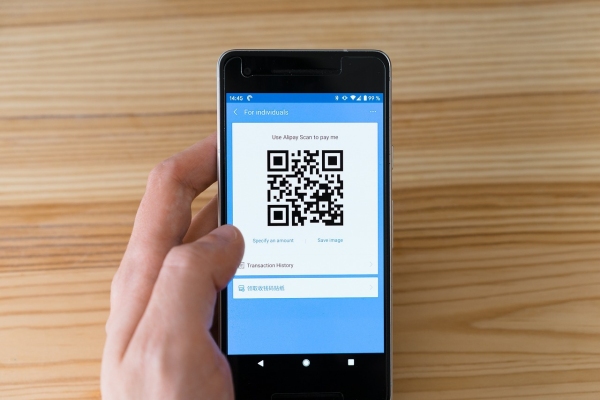
Image: Pixabay/viarami
On February 25 2026, Peoples Group announced a partnership with Fiserv to develop a next generation payments platform intended to serve financial institutions and fintechs across Canada.
The initiative combines Fiserv’s Enterprise Payments Platform with DNA core banking technology and represents one of Peoples Group’s largest technology investments. The infrastructure is designed to improve payment processing connectivity, support unified orchestration across card, account to account, and real time payment flows, and prepare for Payments Canada’s Real Time Rail environment.
The platform focuses on backend modernization rather than a consumer product launch. Peoples Bank of Canada, part of Peoples Group, continues to expand its role as a sponsor bank supporting fintech programs that rely on regulated balance sheet access, settlement infrastructure, and program management. Strengthening this capability can improve launch readiness for embedded finance, prepaid, and digital wallet partnerships while reducing reconciliation friction across payment channels.
Canadian payment modernization continues to advance in parallel to global peers, creating opportunities for infrastructure providers that invest early. Sponsor banks capable of supporting fintech scale with resilient payment processing and real time connectivity often become key enablers of ecosystem growth.
Peoples Group’s investment reflects how smaller specialized banks can play an outsized role in fintech enablement by focusing on platform capabilities rather than retail distribution.
Will deeper bank-fintech infrastructure partnerships accelerate Canada’s payment modernization timeline and expand the range of fintech products available to businesses and consumers?
The National Crowdfunding & Fintech Association (NCFA Canada) is a financial innovation ecosystem that provides education, market intelligence, industry stewardship, networking and funding opportunities and services to thousands of community members and works closely with industry, government, partners and affiliates to create a vibrant and innovative fintech and funding industry in Canada. Learn more.
| | |
|---|---|---|
| | |
February 26, 2026 | NCFA Feature | Payments And Money Movement
AI Generated Image: UK Payments Vision Delivery Committee
UK Regulatory Coordination is Clear While Canada Moves in Parallel
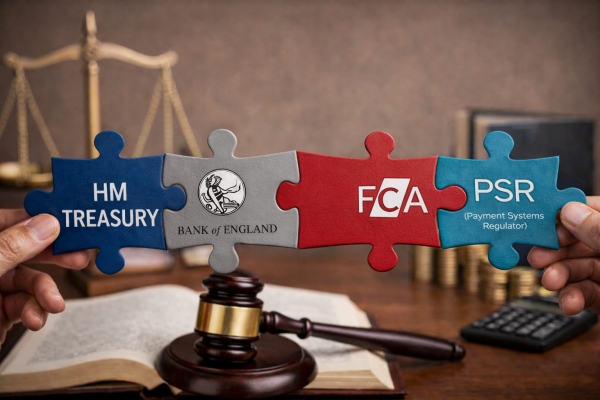
On February 26, 2026, the UK published a Payments Forward Plan (download 8 page PDF here)that gives fintechs something they rarely get in one place: a coordinated three year sequence for payments policy across HM Treasury, the Bank of England, the FCA, and the Payment Systems Regulator.
Great not just for regulatory coordination but for founders, operators, and investors who don't just need rules. They need timing, ownership, and a visible order of work and execution, which helps steer the ship and build market confidence for the future of payments, open banking, stablecoins, and digital money movement.
The Payments Forward Plan is a single sequenced plan with regulatory alignment from four regulatory authorities who collaborated on the Payments Vision Delivery Committee to execute the UK governments national payments vision. The roadmap covers retail payments, wholesale payments, and parts of digital assets, which means the UK is not treating payments as a narrow rails file. It is treating the next payments stack as a mix of bank rails, data sharing, digital money, and automation. That is what makes the document strategically useful. It gives the market a clearer view of what is coming, who carries which part of the file, and when firms should expect consultations, responses, gateways, and final rule work to land.
For as long as NCFA has been working in the financial technology sector, the UK has long been considered the 'gold standard'; the benchmark for fintech regulation for a simple reason. When regulators reduce uncertainty about what lands next, firms spend more time building and less time guessing. It gives the market a clearer path. That kind of visibility lowers planning friction across the sector and gives serious teams a better chance to line up product, compliance, and partnerships before the rest of the market catches up.
| Sector / Initiative | United Kingdom | Canada | Notes / Comments |
|---|---|---|---|
| Regulatory coordination and forward planning | One published cross regulator plan across HM Treasury, the Bank of England, the FCA, and the Payment Systems Regulator, with a visible three year sequence. | Canada now has active public workstreams across retail payments supervision, consumer driven banking, and the stablecoin framework, but those files still sit across separate policy pages. | Canada shows real movement across the same core layers. The main contrast is that the UK visibly puts more of the sequencing into one public roadmap. |
| Payments law and core policy sequencing | Q2 2026 HM Treasury consultation, Q4 2026 response, then FCA consultations and policy statements through 2027 and 2028. | Canada’s payments law sequencing is already live through the RPAA. Under the supervisory framework, PSP risk management and end user funds safeguarding requirements came into force on September 8, 2025, and firms that continue operating must meet ongoing supervision requirements. | Canada has moved from consultation into operating supervision. The UK gives a longer visible forward sequence, while Canada is already in live compliance mode on the PSP file. |
| Open banking and consumer directed data sharing | First live variable recurring payments under an industry led scheme in Q1 2026, FCA consultation in Q3 2026, and a policy statement in Q1 2027. | Canada’s Budget 2025 framework for consumer driven banking says the government will complete the Consumer Driven Banking Act, move quickly on phase one regulation after Royal Assent, and spend the next 12 to 18 months on a second phase that considers broader functionality, participant scope, and write access. See Canada Open Banking Commercialization Roadmap | Canada has a real public sequence here, even if it is not presented inside one cross regulator payments calendar. |
| Stablecoins, tokenised money, and tokenised deposits | Bank consultation work in H1 2026, final Bank rules by end 2026, FCA policy statement in mid 2026, authorisation gateway in Q3 2026, and broader regime live in October 2027. The plan also explicitly considers tokenised payments and tokenised deposits. | Canada’s official stablecoin framework says regulatory development starts after Royal Assent, continues over 12 to 18 months from early 2026, and is expected to come into force in 2027, with the Bank of Canada supervising issuers. | Both markets are active on stablecoins. The UK currently shows more visible choreography, while Canada already has a defined federal policy frame and implementation window. |
| Wholesale payments | The plan explicitly includes wholesale payments as part of the coordinated three year roadmap. | The Bank of Canada says its forward focus includes policy work on wholesale and retail payments infrastructure as part of broader payments system research and policy development. | Canada does have wholesale payments work in the official policy mix. What is less visible today is a single public milestone map that puts wholesale, retail, and digital assets on one page. |
| PSP oversight and supervisory perimeter | The forward plan folds payments supervision and upcoming rule work into one coordinated policy calendar across multiple authorities. | Under the RPAA mandate, the Bank of Canada supervises PSPs for operational risk, incident response, and end user fund protection, while the Minister of Finance handles national security screening. | Canada’s supervisory perimeter is already real and active. The distinction is not whether oversight exists. It is how visibly the next steps are sequenced in public. |
| Payments rail access and infrastructure participation | The UK plan covers retail and wholesale payments at a system level, including retail payments infrastructure design and short term enhancements to Faster Payments and Bacs by end 2026. | Canada’s membership expansion rules now let RPAA supervised PSPs apply for direct participation in Payments Canada systems, and five new PSPs were admitted on January 27, 2026: Wise, Float, KOHO, Paramount Commerce, and Brim. | Canada has moved from access policy to actual new entrants. That is a concrete infrastructure opening, even without one single national payments roadmap document. |
| CBDC and public digital money | The digital pound design phase remains active through 2026, with a blueprint and a decision on the future of the digital pound expected this year. | The Bank of Canada’s digital dollar page says it is scaling down work on a retail CBDC and shifting focus to broader payments system research and policy development, while continuing to monitor global retail CBDC developments and publish some related research. | Canada has stepped back from active retail CBDC build work and put payments supervision and infrastructure higher on the near term agenda. |
| Financial inclusion and emerging payment models | The plan explicitly includes financial inclusion and newer areas such as agentic AI payments inside the forward policy frame. | Canada’s consumer driven banking framework explicitly points to second phase work on write access and, beyond that, says the government is laying the foundation for broader open finance and open data that can support wider digital public infrastructure. | Canada is not mapping emerging payment models in the same broad way as the UK, but it's building policy groundwork that can widen payments and data driven product design over time. |
By publishing a 3 year future of payments roadmap, the UK is highlighting where it thinks the market is going. The plan explicitly pulls in open banking, stablecoins, tokenised payments, tokenised deposits, financial inclusion, agentic AI payments, and the digital pound design phase. Its fair to say that the UK sees the future of payments as an integrated stack where money movement, data access, programmable money, and automated decisioning increasingly sit in the same operating environment.
Payments firm may need to think about account access, stablecoin settlement, variable recurring payments, AI enabled workflows, and reporting standards as connected decisions, not separate roadmaps. The UK is effectively telling the market to plan that way now.
Canada’s issue is not a lack of movement. Open banking is moving. RPAA oversight is live. Stablecoin policy is taking shape. Payments Canada is widening access. The broader official backdrop is visible through Finance Canada’s financial sector policy hub. But firms still need to piece the sequence together from separate government pages, regulator actions, and infrastructure updates. That makes timing harder for founders, adds friction to internal planning, and creates more room for confusion in partner conversations.
The UK plan stands out because it cuts through that problem directly. It gives the market a more visible order of operations. Canada has substance, but not yet the same kind of single public sequencing document. That means more of the roadmap still has to be assembled by the private sector, which raises the execution burden on founders and operators who want to build ahead of policy instead of behind it.
For founders, if your business touches payments, open banking, stablecoins, treasury workflows, or digital money infrastructure, a visible sequence helps you decide what to build first, which approvals matter most, and when to line up counterparties. It also changes how you sell. Buyers trust teams that can point to named milestones and show how their roadmap lines up with them.
For investors, the plan gives a cleaner way to test whether a management team understands the path ahead or is still talking in broad trends. Companies that map product work to visible regulatory milestones usually carry less policy execution risk than companies that wait for each new rule to land before they react. That same test now applies in Canada too. The opportunity is real, but it rewards teams that can connect the dots across consumer driven banking, RPAA supervision, Payments Canada access, and stablecoin policy without waiting for one master roadmap to do it for them.
The UK has now published a cross regulator payments calendar with real ownership and visible sequencing for the next three years. Canada has real progress across the same core layers, but the path still takes more work to assemble. That is the real contrast. One market hands firms more of the map. The other still asks them to build more of it themselves. For on-going tracking of key impacts that matter most to markets, keep an eye on NCFA Fintech Whisperer Weekly Fintech Intelligence as the UK timeline advances and Canada’s separate pieces continue to progress.
The National Crowdfunding & Fintech Association (NCFA Canada) is a financial innovation ecosystem that provides education, market intelligence, industry stewardship, networking and funding opportunities and services to thousands of community members and works closely with industry, government, partners and affiliates to create a vibrant and innovative fintech and funding industry in Canada. Decentralized and distributed, NCFA is engaged with global stakeholders and helps incubate projects and investment in fintech, alternative finance, crowdfunding, peer-to-peer finance, payments, digital assets and tokens, artificial intelligence, blockchain, cryptocurrency, regtech, and insurtech sectors. Join Canada's Fintech & Funding Community today FREE! Or become a contributing member and get perks. For more information, please visit: www.ncfacanada.org
| | |
|---|---|---|
| | |
February 18 2026 | NCFA Market Insight | Digital Assets And Payments
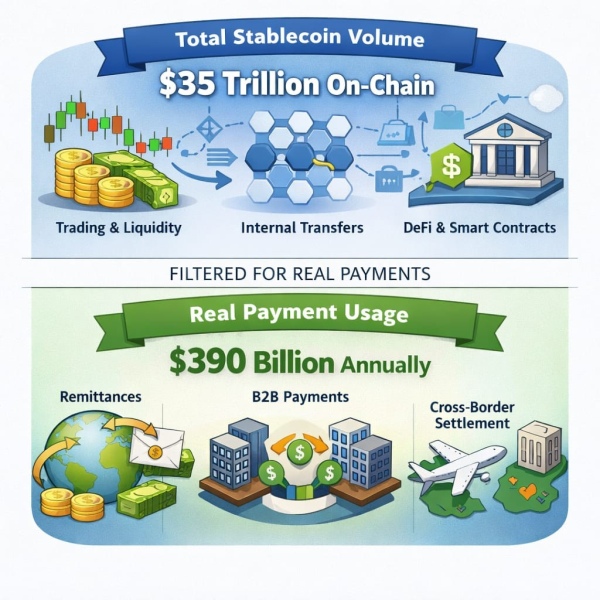
On February 18 2026, McKinsey stablecoin transaction analysis reported that stablecoins accounted for up to $35T in annual on chain transaction volume, yet most of that activity doesn't represent real world payments.
McKinsey and Artemis estimate that actual stablecoin payments run at about $390B annually (about 0.02% of global payments volume), after filtering out trading, internal exchange movements, liquidity management, and automated smart contract loops.
Public blockchains record value movement with precision, but they don't label intent. A single economic action can trigger multiple on chain steps, and large pools of stablecoins can move between wallets inside the same exchange or custodian without representing end user commerce. McKinsey uses raw volume as a starting point, not a proxy for adoption, and the methodology section explains how the team tags payment like patterns while excluding activity that reflects market structure rather than payments.
CoinDesk echoes the same measurement problem by reporting that stablecoins moved about $35T in transfers while only about 1% ties to genuine payments such as remittances and payroll. Payments industry coverage also confirms that stablecoin usage in payments is growing, yet most current activity still concentrates in internal or trading adjacent flows.
Market trackers help validate scale but they don't classify intent. CoinMarketCap aggregates stablecoin market cap and trading volume across listed tokens, which helps you track stablecoin liquidity concentration and market growth, not payments versus non payments.
Stablecoin payments represent one slice of stablecoin utility, so a payments only lens understates what stablecoins do across trading, treasury movement, DeFi collateral, and settlement workflows.
At the same time, a raw volume lens overstates payment adoption. The right reporting approach breaks stablecoin activity into functional buckets and tracks each bucket with the data source that fits it. For payments, intent classification and tagging matter. For liquidity and market structure, market cap and trading metrics matter. For payment segmentation, the underlying research partner publishes its own breakdowns that support the McKinsey approach.
If you build payment rails, you should not pitch adoption using raw on chain volume. You should show where real payment flows concentrate, how fast those flows grow, and what integration path turns that activity into revenue.
If you sell to financial institutions, you should map stablecoin opportunity to specific payment problems such as cross border B2B settlement, payroll, and corridor based remittances, then quantify addressable volume using intent filtered benchmarks like the McKinsey and Artemis estimates.
If you track policy or competitiveness, you should treat stablecoins as a measurement case study. Blockchain data looks transparent, yet it still requires more granular classification, assumptions, and cross checks to translate value movement into economic activity.
If the market keeps quoting $35T as proof of payment adoption, who sets the standard for intent based stablecoin reporting so Canada can measure real productivity and competition impact with confidence
The National Crowdfunding & Fintech Association (NCFA Canada) is a financial innovation ecosystem that provides education, market intelligence, industry stewardship, networking and funding opportunities and services to thousands of community members and works closely with industry, government, partners and affiliates to create a vibrant and innovative fintech and funding industry in Canada. Decentralized and distributed, NCFA is engaged with global stakeholders and helps incubate projects and investment in fintech, alternative finance, crowdfunding, peer-to-peer finance, payments, digital assets and tokens, artificial intelligence, blockchain, cryptocurrency, regtech, and insurtech sectors. Join Canada's Fintech & Funding Community today FREE! Or become a contributing member and get perks. For more information, please visit: www.ncfacanada.org
| | |
|---|---|---|
| | |
February 17 2026 | Market Insight | Artificial Intelligence Governance

Image: Freepik
On February 17 2026, a New York federal court ruled in United States v. Heppner that written exchanges between a defendant and Anthropic’s Claude are not protected by attorney client privilege or the work product doctrine.
The case centred on about 31 documents that recorded the defendant’s interactions with Claude. Investigators collected the files during a search after the defendant received a grand jury subpoena and understood he was under investigation. He used Claude to generate reports that outlined possible defence strategy and potential legal and factual arguments. He did this on his own rather than at the direction of his lawyer.
The court applied standard privilege rules and found the documents fell outside protection. Judge Jed S. Rakoff explained that discussions between non-lawyers were not privileged and that privilege depended on a confidential relationship with licensed counsel. The court also found the Claude conversations were not confidential because they involved a third party platform and the platform’s privacy policy alerted users that data could be collected and disclosed.
HSF Kramer’s analysis of the ruling explains how client side use of public generative AI tools could weaken privilege claims. The defendant argued that he created the Claude reports to prepare for conversations with his lawyer and later shared them with counsel. The court rejected that argument. Because the defendant used the tool independently and Claude disclaimed providing legal advice, the documents did not become privileged simply because counsel received them later.
The court reached the same result under the work product doctrine. That doctrine protects materials prepared by or at a lawyer’s direction to safeguard legal strategy. Since the defendant created the documents himself, the court found they did not reflect counsel’s mental impressions or strategy.
The defendant’s approach reflected a workflow many teams now follow. People often use generative AI to organize facts, test arguments, or prepare notes before speaking with a lawyer. In practice, AI can feel like a private drafting space. The Heppner ruling shows that this assumption creates risk because privilege depends on lawyer involvement and confidentiality at the time material is created, not later.
This decision shows how everyday AI use can create governance risk. Fintech teams often rely on generative AI to draft internal notes, explore regulatory interpretations, test legal arguments, and shape product thinking.
When teams create prompts and outputs outside privileged workflows, those materials may be treated like ordinary internal documents and may surface in litigation, investigations, or regulatory reviews.
The Heppner outcome also challenges a common assumption that AI drafts become privileged once shared with a lawyer. Timing and intent matter. If teams generate strategy or legal framing before counsel becomes involved, privilege arguments may already weaken. Enterprise AI environments may offer stronger confidentiality controls, but the decision shows privilege still depends on lawyer involvement and clear intent to obtain legal advice.
If generative AI captures early legal and strategic thinking, should fintech governance treat AI prompts with the same care as internal legal memos and executive communications?
Privilege depends on how and when material is created, not what you do with it later.
The National Crowdfunding & Fintech Association (NCFA Canada) is a financial innovation ecosystem that provides education, market intelligence, industry stewardship, networking and funding opportunities and services to thousands of community members and works closely with industry, government, partners and affiliates to create a vibrant and innovative fintech and funding industry in Canada. Decentralized and distributed, NCFA is engaged with global stakeholders and helps incubate projects and investment in fintech, alternative finance, crowdfunding, peer-to-peer finance, payments, digital assets and tokens, artificial intelligence, blockchain, cryptocurrency, regtech, and insurtech sectors. Join Canada's Fintech & Funding Community today FREE! Or become a contributing member and get perks. For more information, please visit: www.ncfacanada.org
| | |
|---|---|---|
| | |
Feb 23, 2026 | NCFA Market Activity | DAOs

On February 22 2026, Jupiter DAO closes the Net Zero Emissions option vote, moving JUP toward a supply tightening direction and a buyback first treasury posture. On chain reporting shows about 75% support for the Net Zero Emissions option and states the vote concluded at 7:00 PM ET. During the voting window, on chain analysis reports more than 24.5k votes recorded within the first 48 hours, with more than 13k individual voters backing the Proceed with Jupuary option by raw voter count, while the Net Zero Emissions option leads by voting weight at more than 73.9% during that same early period, on a voting distribution analysis that breaks down wallet counts and voting weight.
The proposal says net new emissions move from about 1.2B JUP to effectively zero, if the DAO approves the package. The proposal also states it postpones Jupuary and returns 700M tokens to the Community Cold Multisig, and it states Jupiter routes 50% of on chain revenues to open market buybacks. Jupiter already burns 3B tokens and it states founders lock tokens, including a founder lock to 2030.
Legacy allocations shape why the DAO focuses on offsets. On chain analysis reports Mercurial stakeholders receive 5% of total supply or 350m tokens, with about 182m vested by February 2026 and 168m remaining to unlock, also on the voting distribution analysis that quantifies the Mercurial allocation and vesting status.
Maker uses surplus auctions where the system auctions surplus Dai for MKR and then burns the MKR received from the winning bid, which contracts MKR supply, as described in Maker Protocol documentation on the Flapper surplus auction mechanism.
Aave documentation states the Aave DAO operates a buyback program funded by protocol revenue with a $50 million annual budget and weekly purchases that range from $250,000 to $1.75 million, with tokens sent to the DAO Ecosystem Reserve rather than burned, on Aave protocol documentation describing the buyback program budget and execution.
The proposal turns token governance into capital policy that stakeholders can measure. It targets a defined dilution outcome by moving net new emissions from about 1.2B JUP to effectively zero, and it pairs that supply stance with a stated rule that routes 50% of on chain revenues to buybacks. That combination gives the market a simple scoreboard, emissions near zero plus ongoing buy pressure funded by revenue, not inflation.
Early vote analysis shows more than 24.5k votes within 48 hours and it shows a divergence where the Jupuary option leads by raw voter count while Net Zero Emissions leads by voting weight. Token weighted voting aligns outcomes with economic exposure, but it can widen the gap between how many people show up and who decides. Fintech builders can reduce that gap with delegation tooling, transparent quorum logic, and reporting practices that make governance outcomes feel earned.
Offsets move sell pressure from the open market to treasury management. The proposal describes a treasury approach that aims to neutralize known future sell flows tied to vesting and distribution decisions, which creates a new execution test, the treasury must manage price, timing, and credibility in public. That's the same category of operational accountability that capital markets packaging requires.
Canada adds a practical lens because Canadian fintechs increasingly package products for institutional distribution where buyers demand explicit mechanics and predictable governance. Ledn’s Bitcoin backed ABS deal entering institutional markets shows how an institutional wrapper forces defined rules and clear investor expectations. Tokenized finance teams can apply that same discipline to emissions rules, treasury authority, and public reporting so partners can underwrite the model rather than debate it.
If a token stops emitting, who pays for growth and liquidity next, users through fees, builders through treasury, or the market through higher risk premiums?
The National Crowdfunding & Fintech Association (NCFA Canada) is a financial innovation ecosystem that provides education, market intelligence, industry stewardship, networking and funding opportunities and services to thousands of community members and works closely with industry, government, partners and affiliates to create a vibrant and innovative fintech and funding industry in Canada. Decentralized and distributed, NCFA is engaged with global stakeholders and helps incubate projects and investment in fintech, alternative finance, crowdfunding, peer-to-peer finance, payments, digital assets and tokens, artificial intelligence, blockchain, cryptocurrency, regtech, and insurtech sectors. Join Canada's Fintech & Funding Community today FREE! Or become a contributing member and get perks. For more information, please visit: www.ncfacanada.org
| | |
|---|---|---|
| | |
February 23, 2026 | NCFA Market Activity | Artificial Intelligence And Data

On February 21, 2026, B.C.’s premier says police are pursuing preservation orders for potential evidence held by digital services companies, including social media platforms and AI companies, after media reports tied OpenAI to the case. This isn't a new fintech policy just yet, but it puts evidence readiness into the open. If a partner asks what you can preserve and produce under lawful process, you can’t appear like a 'deer in headlights'. You need a working path.
BC Government, Office of the Premier, Media Relations:
“Reports that allege OpenAI had related intelligence before the shootings in Tumbler Ridge took place are profoundly disturbing for the victims’ families and all British Columbians. We will use all powers of government to ensure that police have the tools they need to investigate every aspect of this horrific tragedy.”
RCMP report said that the active shooter call came in at about 1:20 p.m. on February 10 and the public alert ended at 5:45 p.m. Six victims were found deceased inside the school, two victims were airlifted with serious or life threatening injuries, a third victim died during transport, and about 25 others were assessed for non life threatening injuries. RCMP also reports two additional victims were found deceased at a connected residence.
On February 13, RCMP reports more than 80 interviews took place with students, educators, and first responders, while forensic teams continued processing two scenes and a vehicle connected to the suspect. The investigative update also reported digital evidence work including witness images and videos, CCTV, and body worn camera video, and it says RCMP launched an online portal to collect more evidence, including phone footage captured inside the school.
In a BBC report, OpenAI spokesperson said that they didn't alert authorities about the account because its usage didn't meet its threshold of credible or imminent plan for serious physical harm to others...
"In June 2025, we proactively identified an account associated with this individual [Jesse Van Rootselaar] via our abuse detection and enforcement efforts, which include automated tools and human investigations to identify misuses of our models in furtherance of violent activities."
Evan Solomon, Minister of Artificial Intelligence and Digital Innovation per Globe and Mail reporting:
"Canadians expect online platforms, including OpenAI, to have robust safety protocols and escalation practices in place to protect online safety and ensure law enforcement are warned about potential violence,"
This story turns AI governance into an evidence workflow. If your product runs AI in onboarding, fraud triage, collections, or support, partners need clear answers on what the system records, what it retains, who can access it, and how the team preserves and produces records under lawful process without breaking integrity. A stakeholder may accept model error but they won’t accept uncertainty about records, access, and escalation ownership when scrutiny rises.
Financial technology companies should define escalation triggers in plain language. Name an accountable owner and a backup. Restrict log access. Set retention windows you can defend. Test a short runbook for preservation and production so the team can execute it without debate when the question lands, an be sure to provide suitable ongoing training.
If preservation orders become a more common tool when AI enters an incident, does Canada need a shared baseline for AI logging, retention, and escalation handoffs so every regulated buyer does not rebuild the same checklist from scratch?
Reuters reported that OpenAI reps have been summoned to Ottawa urgently to discuss AI safety.
Update per CTV article: Following the meeting in Ottawa with OpenAI safety leaders, federal officials said they were “deeply disturbed” and ultimately “disappointed” that warning signals tied to the Tumbler Ridge shooter were not escalated to police earlier, with AI Minister Evan Solomon stressing Canadians expect platforms to maintain “robust safety protocols and escalation practices.” OpenAI is cooperating with the RCMP but produced no immediate new safeguards, leaving ministers to seek concrete follow-up proposals.
The National Crowdfunding & Fintech Association (NCFA Canada) is a financial innovation ecosystem that provides education, market intelligence, industry stewardship, networking and funding opportunities and services to thousands of community members and works closely with industry, government, partners and affiliates to create a vibrant and innovative fintech and funding industry in Canada. Decentralized and distributed, NCFA is engaged with global stakeholders and helps incubate projects and investment in fintech, alternative finance, crowdfunding, peer-to-peer finance, payments, digital assets and tokens, artificial intelligence, blockchain, cryptocurrency, regtech, and insurtech sectors. Join Canada's Fintech & Funding Community today FREE! Or become a contributing member and get perks. For more information, please visit: www.ncfacanada.org
| | |
|---|---|---|
| | |


August 26th, 2025

January 4th, 2024

June 1st, 2021

September 9th, 2020

July 9th, 2018

January 3rd, 2018

September 25th, 2017

June 20th, 2017

May 10th, 2017

December 14th, 2016